×

Costa Rica🇨🇷 | attractionsRescate Wildlife Rescue CenterMacaw aviaries, big cats, sloth area, owl perches | things to do and best time to go

Explore Refugio Herpetológico de Costa RicaExplore Finca Educativa Don Juan

Backpacking in Rescate Wildlife Rescue Center
🌟 Highlightattraction ranked #6
By Johan Kruseman 🇳🇱 | Updated October 22, 2026

Most travelers arrive expecting a free-roaming sanctuary, but nearly every animal here lives in an enclosure for good, because injuries, imprinting or years as pets mean they could not survive in the forest. Rescate Wildlife Rescue Center sits in the Central Valley of Costa Rica, in the hills of Alajuela province, a short ride northwest of San José. Expect school groups, a fixed-path layout and an entry price that stings a little on a tight budget. Yet the aviaries ring with macaw screeches, the paths smell of wet leaves and fruit, and you stand close enough to hear a toucan crack a grape. I bought a cold blackberry smoothie at the café for about US$4 and drank it watching a sloth hang motionless over the path. Unlike the Jaguar Rescue Center on the Caribbean coast, which runs guided tours, here you wander on your own.

Discover everything you want to know in the 📖 Costa Rica Travel Guide.


example page 0 from our offline Travel Guide for Costa Rica
example page 1 from our offline Travel Guide for Costa Rica
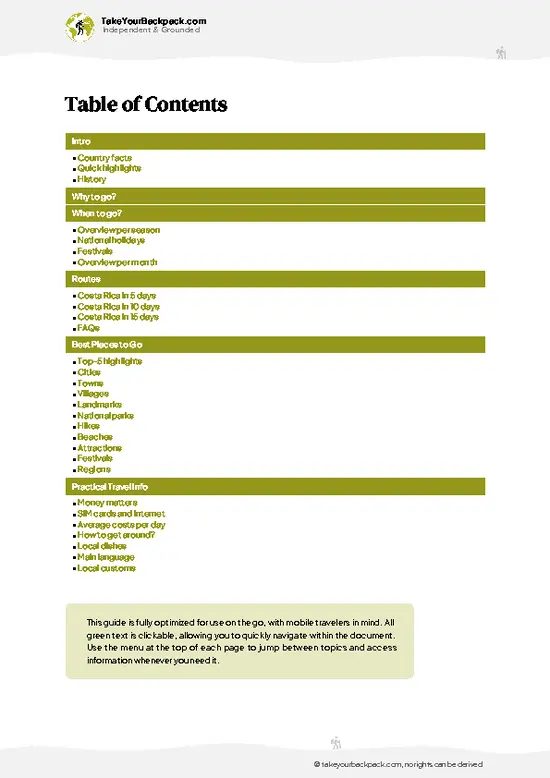
example page 2 from our offline Travel Guide for Costa Rica
example page 3 from our offline Travel Guide for Costa Rica
example page 4 from our offline Travel Guide for Costa Rica
example page 5 from our offline Travel Guide for Costa Rica
example page 6 from our offline Travel Guide for Costa Rica
example page 7 from our offline Travel Guide for Costa Rica
Loading the map 🌍
CLICK TO FILTER
cities
towns
villages
landmarks
national parks
hikes
beaches
attractions
festivals
regions
SHOW COUNTRY’S BESTSHOW ALL

✨ Why go?
Ranked #6 attraction in Costa Rica
What makes this attraction worth visiting

Rescate Wildlife Rescue Center gives you a close, unhurried look at species you may spend weeks failing to spot in the wild. Cloud forest birds hide in the canopy, and jungle cats are almost never seen on a trek. Here the scarlet and great green macaws sit at arm's length, and the big cats and sloths are easy to find. That makes it a useful stop if you are short on days or traveling with someone who is not a hiker.
The second reason is the story behind the cages. Many residents arrived confiscated from illegal trade, hit by cars or electrocuted on power lines, and the rescue and release program is what your ticket funds. Seeing the release-bound birds kept apart from permanent residents explains the conservation problem better than any sign in a national park.
It also fits the first or last … read more 👉
Rescate Wildlife Rescue Center gives you a close, unhurried look at species you may spend weeks failing to spot in the wild. Cloud forest birds hide in the canopy, and jungle cats are almost never seen on a trek. Here the scarlet and great green macaws sit at arm's length, and the big cats and sloths are easy to find. That makes it a useful stop if you are short on days or traveling with someone who is not a hiker.
The second reason is the story behind the cages. Many residents arrived confiscated from illegal trade, hit by cars or electrocuted on power lines, and the rescue and release program is what your ticket funds. Seeing the release-bound birds kept apart from permanent residents explains the conservation problem better than any sign in a national park.
It also fits the first or last day of a trip, since it sits close to the main airport.

💡 HighlightsThe experiences that define the visit

  1. Scarlet Macaw Aviaries: The signature sight, with big flocks of red, yellow and blue birds. The noise is startling and the colors are sharper than any photo.
  2. Great Green Macaw Enclosure: A rarer, endangered species whose numbers are low in Costa Rica. The birds are huge and the beak strength is obvious up close.
  3. Toucan and Aracari Aviaries: Several toucan species hop between branches at eye level, which makes photography far easier than in the forest.
  4. Sloth Area: Two-toed and three-toed sloths are often spotted slowly hanging in trees. Watching one take a full minute to reach for a leaf is oddly hypnotic.
  5. Big Cat Enclosures: Jaguars, pumas and smaller cats such as ocelots live here, and they are usually sleeping in the shade. You will not see them in the wild, so this is a rare look.
  6. Reptile and
… read more 👉
  1. Scarlet Macaw Aviaries: The signature sight, with big flocks of red, yellow and blue birds. The noise is startling and the colors are sharper than any photo.
  2. Great Green Macaw Enclosure: A rarer, endangered species whose numbers are low in Costa Rica. The birds are huge and the beak strength is obvious up close.
  3. Toucan and Aracari Aviaries: Several toucan species hop between branches at eye level, which makes photography far easier than in the forest.
  4. Sloth Area: Two-toed and three-toed sloths are often spotted slowly hanging in trees. Watching one take a full minute to reach for a leaf is oddly hypnotic.
  5. Big Cat Enclosures: Jaguars, pumas and smaller cats such as ocelots live here, and they are usually sleeping in the shade. You will not see them in the wild, so this is a rare look.
  6. Reptile and Crocodile Ponds: Caimans and crocodiles lie half submerged, and a few snakes are kept in glass terrariums where you can study their patterns safely.
  7. Monkey Enclosures: White-faced and spider monkeys swing through ropes and platforms, noisy and curious, and they are the most entertaining residents for kids.
  8. Owl and Raptor Section: Rescued owls and hawks sit on perches, and their stillness and sharp eyes make a quiet contrast to the loud macaws.
For a first visit, start with the Scarlet Macaw Aviaries, because they give you the color, noise and closeness that the rest of the walk builds on.
Spotted a mistake or missing something? Contact us.

Things to do around Rescate Wildlife Rescue Center

Ratings based on Tripadvisor reviews. When you book through this link, you support our work at no extra cost to you.

🌤️ When to go?Weather, crowds, and seasonal trade-offs

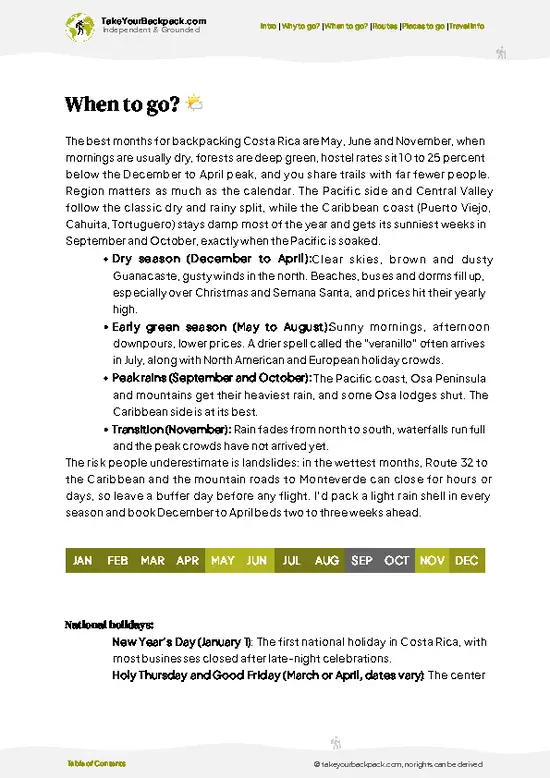
  • Dry Season (December to April): Mornings are clear and the ground is firm, so animal encounters and walking the grounds are easy. Days run 29 to 33°C (84 to 91°F), with cooler nights near 20°C (68°F). Tours fill early around Christmas and Easter, and rooms in nearby towns cost more.
  • Green Season (May to November): Expect rain most afternoons, often hard, with mornings usually dry. Temperatures sit around 24 to 30°C (75 to 86°F) and humidity is high. Crowds thin and lodging prices drop by 20 to 40 percent.
  • September and October: The wettest stretch, with roads muddy and some days rained out entirely. Volunteers and small groups are the main visitors.
  • Time of Day: Daylight lasts about 11 to 12 hours year-round. Morning tours find animals most active and the air cooler.
Book a morning slot, whatever … read more 👉
  • Dry Season (December to April): Mornings are clear and the ground is firm, so animal encounters and walking the grounds are easy. Days run 29 to 33°C (84 to 91°F), with cooler nights near 20°C (68°F). Tours fill early around Christmas and Easter, and rooms in nearby towns cost more.
  • Green Season (May to November): Expect rain most afternoons, often hard, with mornings usually dry. Temperatures sit around 24 to 30°C (75 to 86°F) and humidity is high. Crowds thin and lodging prices drop by 20 to 40 percent.
  • September and October: The wettest stretch, with roads muddy and some days rained out entirely. Volunteers and small groups are the main visitors.
  • Time of Day: Daylight lasts about 11 to 12 hours year-round. Morning tours find animals most active and the air cooler.
Book a morning slot, whatever the month, and you beat both the heat and the rain.


source: climatestotravel.comJANJanuary: excellent for travelingFEBFebruary: excellent for travelingMARMarch: excellent for travelingAPRApril: highly recommended for travelingMAYMay: highly recommended for travelingJUNJune: good for travelingJULJuly: good for travelingAUGAugust: good for travelingSEPSeptember: fair for travelingOCTOctober: fair for travelingNOVNovember: highly recommended for travelingDECDecember: excellent for traveling
costa-rica-attraction-rescate-wildlife-rescue-center v1
© Google |

✈️ The backpacker research shortcutCosta Rica Travel Guide

An offline-friendly backpacking guide with optimized travel routes, ranked highlights, transport advice, and the best areas to stay.
example page 0 from our offline Travel Guide for Costa Rica
example page 1 from our offline Travel Guide for Costa Rica
example page 2 from our offline Travel Guide for Costa Rica
example page 3 from our offline Travel Guide for Costa Rica
example page 4 from our offline Travel Guide for Costa Rica
example page 5 from our offline Travel Guide for Costa Rica
example page 6 from our offline Travel Guide for Costa Rica
example page 7 from our offline Travel Guide for Costa Rica
The digital guide (287 pages) contains:
✅ 90 highlights, ranked by travel appeal
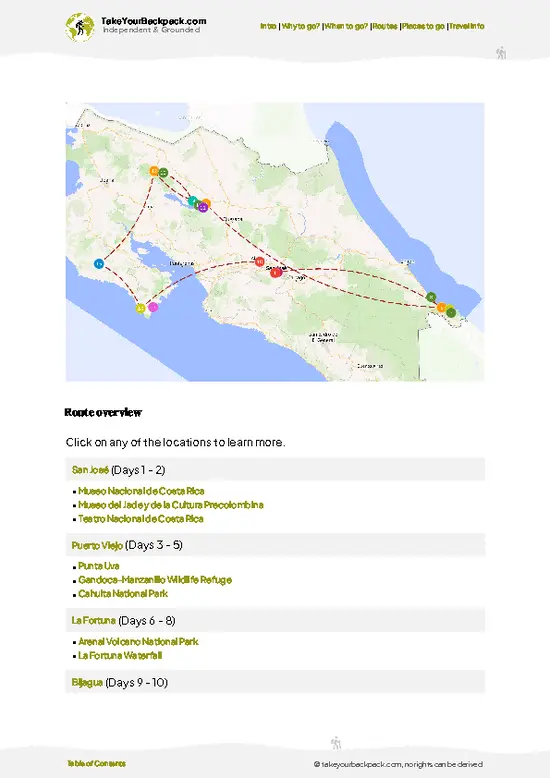
✅ Optimized 5, 10 & 15-day travel routes
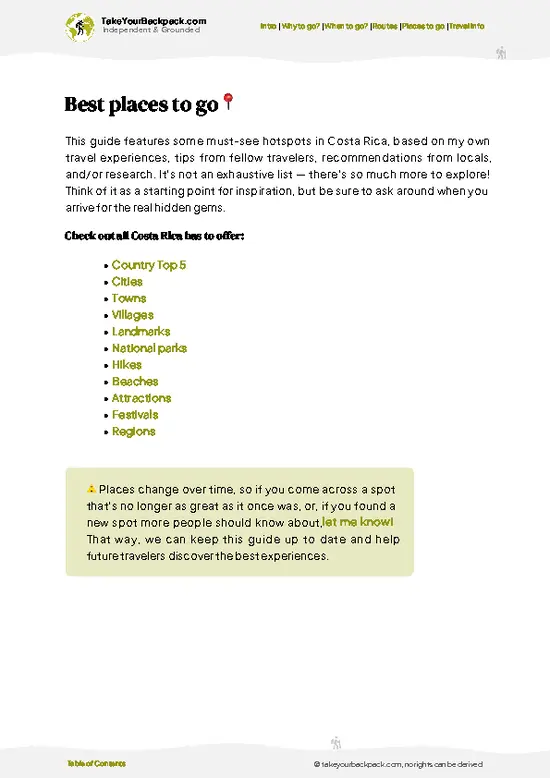
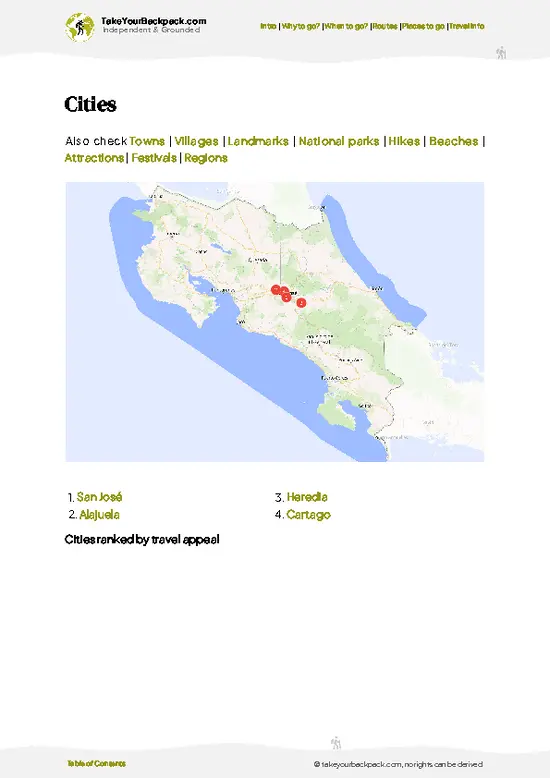
✅ Cities, national parks, landmarks, beaches
✅ How to get around
✅ Offline-friendly for travel without Wi-Fi
👉 Click to see all 30+ guide features

📅 Plan smarter in minutes, not weeks
✅ Month by month travel advice
✅ Festivals & national holidays
✅ Budget expectations

🗺️ Go to the right places, skip the overrated ones
✅ Honest pros & cons of destinations
✅ Top hikes, parks & viewpoints
✅ Lesser-known places most travelers miss
✅ Clear “worth it vs skip it” guidance

🛏️ Travel smoothly without rookie mistakes
✅ Best areas to stay
✅ Transport systems explained simply
✅ Common scams & safety advice
✅ SIM cards, money & practical tips

🌍 Understand the country, not just visit it
✅ Culture & traditions
✅ 52 Essential phrases & customs
✅ Festivals worth planning around
✅ Traveler-friendly historical context
✅ Insights that make places more meaningful

📱 Built for real travel conditions
✅ Fully downloadable PDF
✅ Works completely offline
✅ Optimized for phone use
✅ Useful in remote areas & buses
✅ Everything in one place
Stop searching, start planning
Get instant access to your full guide. 30‑day money-back guarantee.
+ Add another guide for just

By proceeding you agree to our terms.
Sent to your inbox immediately after payment • 100% Secure Checkout
Best Backpacking Travel Advisor 2025 tourism awardBest Backpacking
Travel Advisor
2025
What others say about Take Your Backpack Guides:
⭐⭐⭐⭐⭐
Fantastic, amazing amount of information!
⭐⭐⭐⭐⭐
My goodness this is amazing, it's what I've been looking for hats off too you!
⭐⭐⭐⭐⭐
I think this is absolutely BRILLIANT
⭐⭐⭐⭐
Very complete and informative. It's still missing places, but I gotta to commend you
⭐⭐⭐⭐⭐
This is truly amazing, thank you, can't wait to explore it with my kids!
⭐⭐⭐⭐⭐
Awesome resource, thank you!
⭐⭐⭐⭐⭐
This is amazing! Can't wait to explore the ones I haven't seen
⭐⭐⭐⭐
I love this! Well done, great idea.
⭐⭐⭐⭐⭐
Thanks for taking the time to make this gem!
⭐⭐⭐⭐⭐
This might be the best website I've ever seen.
⭐⭐⭐⭐⭐
Congratulations, and thank you so much for your work; it's incredibly valuable.
⭐⭐⭐⭐
In all seriousness I think you did a great job pointing out the important spots
⭐⭐⭐⭐⭐
10/10 very good
⭐⭐⭐⭐⭐
As someone who's only just starting to visit regularly this is awesome, thank you.
⭐⭐⭐⭐
Thank you very much! I'm going to visit my dad, it's going to be very useful!
⭐⭐⭐⭐⭐
This is really cool! We'll be travelling for the first time and this definitely come in handy.
⭐⭐⭐⭐⭐
You are now our minister of culture, congratulations 👨‍💼
⭐⭐⭐⭐⭐
Just wanted to tell you that this is a pearl! Going to follow your recommendations.
⭐⭐⭐⭐⭐
This is so cool. I'll definitely be using the resource for my travels soon.
⭐⭐⭐⭐⭐
This is very impressive! Good work.
⭐⭐⭐⭐⭐
This is an amazing and informative site. Very well done!

🛏️ Where to stay?Best areas and accommodation options

The best base for Rescate Wildlife Rescue Center is the town of Atenas, a short drive from the grounds, with its small central park, bakeries and a few guesthouses that attract volunteers and long-stay travelers. It is quiet, safe to walk at night, and cheaper than the coast. Dorm beds run about US$12 to 20, and private rooms US$30 to 55.
Alajuela, near the international airport, is the practical choice for early flights or late arrivals. It has the widest range of hostels, a lively central market and frequent buses to San José, so you can meet other backpackers easily. It is a busier, more urban … read more 👉
The best base for Rescate Wildlife Rescue Center is the town of Atenas, a short drive from the grounds, with its small central park, bakeries and a few guesthouses that attract volunteers and long-stay travelers. It is quiet, safe to walk at night, and cheaper than the coast. Dorm beds run about US$12 to 20, and private rooms US$30 to 55.
Alajuela, near the international airport, is the practical choice for early flights or late arrivals. It has the widest range of hostels, a lively central market and frequent buses to San José, so you can meet other backpackers easily. It is a busier, more urban base with some petty theft near the bus terminal, so keep valuables close.
San José works if you want nightlife and a social hostel scene in the Barrio Escalante and Barrio Amón neighborhoods. Stay in those districts rather than the downtown core after dark. Expect to arrange a taxi, shuttle or rental car for the trip out to the center. For most budget travelers, Atenas gives the calmest nights and the shortest ride to the animals.

👛 Costs (as of 22 October 2026)How expensive it really is

Rescate Wildlife Rescue Center costs about US$75 to 110 a day for a backpacker who books the guided tour and stays nearby.
CategoryBudget RangeLocal Reality
Guided tour or entryUS$25 to 45General admission covers a self-guided walk; guided tours cost extra by reservation.
Accommodation (high season)US$15 to 35Dorm beds or simple guesthouse rooms in Atenas or Alajuela.
Accommodation (green season)US$10 to 25Lower rates and easy walk-in availability.
Local transportUS$3 to 20Public buses cost a few dollars, while taxis or shuttles from Atenas cost more.
FoodUS$12 to 25A casado (rice, beans, meat) at a local soda costs US$5 to 8.
ExtrasUS$5 to 10Snacks, water and a donation or small souvenir. Pay in colones or by card.
Total Daily BudgetUS$75 to 110Per person, per day, in high season.
⚠️ Prices can change and everyone travels differently, so take this as a rough guide. Hope it helps you plan your adventure!

FAQFrequently asked questions about Rescate Wildlife Rescue Center

Plan on 2 to 3 hours at Rescate Wildlife Rescue Center for the standard guided visit. Add about 1 to 1.5 hours each way if you are coming from San José or Alajuela. Tours usually run in the morning, so most travelers make it a half-day outing.
Rescate Wildlife Rescue Center is worth the fee if you want to see rescued animals up close with a guide who explains their rehabilitation. Expect to pay roughly US$25 to 45 for a tour, which supports animal care. It is a more ethical alternative to commercial zoos, though you will not see the huge enclosures of larger parks.
Reaching Rescate Wildlife Rescue Center is easiest by rental car or private shuttle from Alajuela or San José, about 45 to 90 minutes depending on traffic. Buses run to Atenas for US$2 to 4, and a taxi from town costs around US$10 to 25. Book your visit ahead and confirm the exact meeting point.
⚠️ Things can change over time, so always validate details locally before you go.

Other Costa Rican attractions near Rescate Wildlife Rescue Center

Explore more nearby:


💡 Not sure where to go next?
Create a personalized itinerary for Costa Rica including Rescate Wildlife Rescue Center and the places that fit your trip.

Generate my itinerary

👉 Discover all attractions

Or checkout all Costa Rica has to offer (think cities, towns, villages, national parks, hikes, beaches, festivals)
Country photo of Costa Rica

We 💚 feedbackKey takeaways before you go

Rescate Wildlife Rescue Center works best early in the morning, when the birds are loudest, the cats are still awake and the tour buses have not arrived. Dry months from December to April are easier for walking the paths. I would bring a refillable bottle and plan an unhurried two or three hours.

✈️ When did I visit Costa Rica?
Costa Rica I visited during my half year trip through South and Central America back in 2003

✍️ Help improve this page!
The information on this page is based on my own backpacking experience in Costa Rica, supplemented with up-to-date research and feedback from other travelers. Travel details can change, so if you notice anything outdated or incomplete, feel free to let me know.


🙋‍♂️ Give feedback

👋 Meet the founderWho’s Behind Take Your Backpack?

Johan, backpacker and founder of TakeYourBackpackHi, I’m Johan (Netherlands 🇳🇱), the creator of TakeYourBackpack. Over the past 3 decades, I’ve backpacked through 90+ countries across six continents, gaining extensive experience with independent travel, long-term trips, and overland routes.

This site is built on a combination of firsthand travel experience and carefully curated insights from other backpackers. Many guides are based on places I’ve personally visited, while others bring together tips, observations, and practical advice shared by trusted travelers I’ve met along the way.

The goal is to provide realistic, experience-driven guidance — not generic itineraries — so you can explore destinations with better context, clearer expectations, and more confidence.