×

Cuba🇨🇺 | national parksCiénaga de Zapata National ParkSawgrass birding, Zapata sparrow, crocodile lagoon, Cueva de los Peces cenote | things to do and best time to go

Explore Sendero Enigma de las RocasExplore Desembarco del Granma National Park

Backpacking in Ciénaga de Zapata
🏆 Top picknational park ranked #2
By Johan Kruseman 🇳🇱 | Updated October 23, 2026

Bring binoculars to the bird-watching spots near Soplillar, where the Zapata sparrow, found nowhere else on earth, hides in the sawgrass. Ciénaga de Zapata National Park covers the Zapata Peninsula in the south of Cuba, a flat wetland of swamp, mangrove and dry forest that is the largest in the Caribbean. It is not a hiking park in the mountain sense. Trails are short and flat, and the real draw is wildlife: Cuban crocodiles, flamingos, the tiny bee hummingbird, and over 200 bird species. Skip the crocodile farm's tourist theatrics if you are short on time, and spend the hours on a dawn birding walk instead, because birds go quiet by mid-morning. Public transport is thin, so a guide from a casa particular saves wasted days. Arriving at Playa Larga, I stepped out into mud-sweet air with a land crab crossing the road. Crowds are light. The last thing you hear at dusk is the chorus of frogs in the reeds.

Discover everything you want to know in the 📖 Cuba Travel Guide.


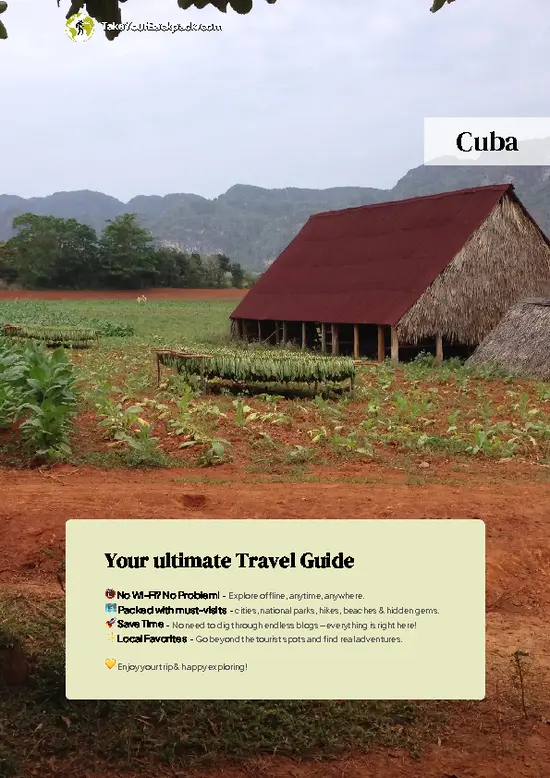
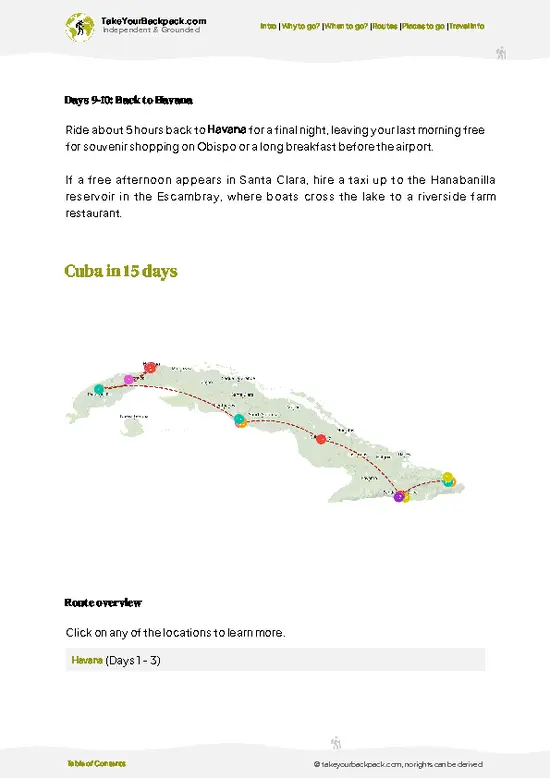
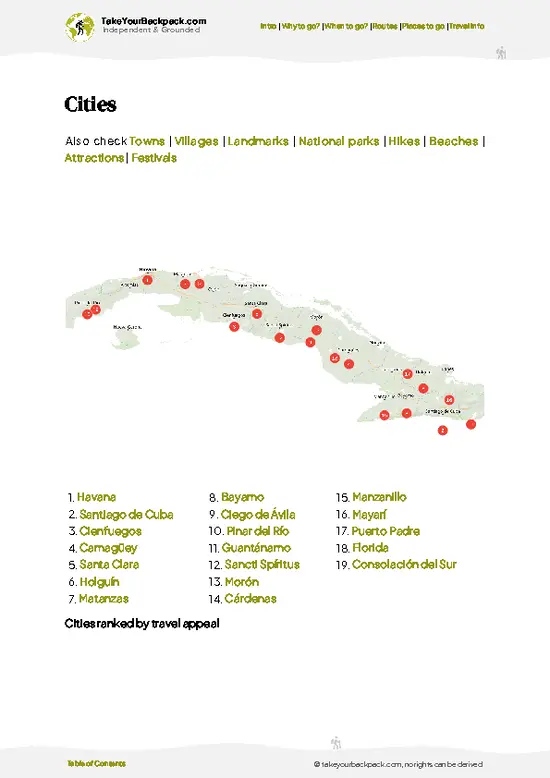
example page 0 from our offline Travel Guide for Cuba
example page 1 from our offline Travel Guide for Cuba
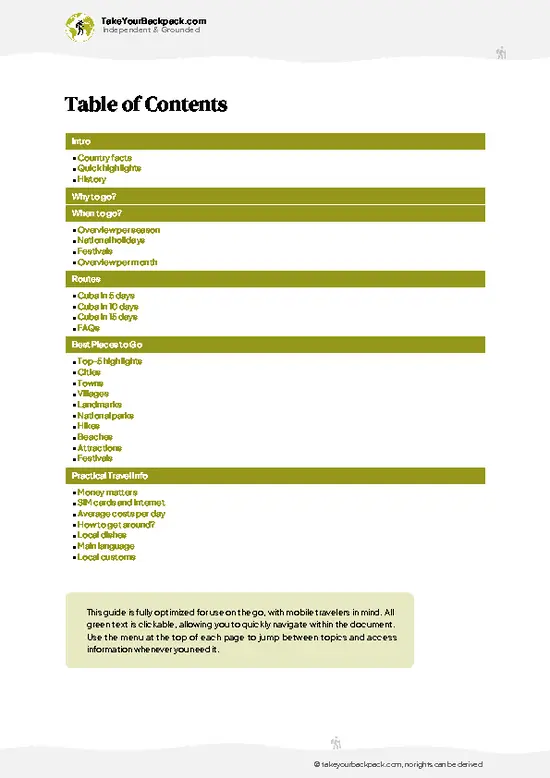
example page 2 from our offline Travel Guide for Cuba
example page 3 from our offline Travel Guide for Cuba
example page 4 from our offline Travel Guide for Cuba
example page 5 from our offline Travel Guide for Cuba
example page 6 from our offline Travel Guide for Cuba
example page 7 from our offline Travel Guide for Cuba
Loading the map 🌍
CLICK TO FILTER
cities
towns
villages
landmarks
national parks
hikes
beaches
attractions
festivals
SHOW COUNTRY’S BESTSHOW ALL

✨ Why go?
Ranked #2 national park in Cuba
What makes this national park worth exploring

Ciénaga de Zapata National Park suits backpackers who want wildlife without a tour bus. The peninsula is wide and flat, so a rented bicycle or a shared taxi takes you between villages, and casas particulares in Playa Larga and Playa Girón put you within reach of the main sites on your own schedule. The park holds the only home of the Zapata wren, Zapata rail and Zapata sparrow, which makes it a serious stop for birders who would otherwise need expensive expeditions. Local guides at Santo Tomás and Bermejas work for modest fees and know exactly where the bee hummingbird feeds, which beats wandering blind. Add the clear cenotes and reef-lined walls for snorkeling and diving at Playa Girón, and a few days fill easily. Self-guided travel works for the coast and the cenotes. For rarities and the … read more 👉
Ciénaga de Zapata National Park suits backpackers who want wildlife without a tour bus. The peninsula is wide and flat, so a rented bicycle or a shared taxi takes you between villages, and casas particulares in Playa Larga and Playa Girón put you within reach of the main sites on your own schedule. The park holds the only home of the Zapata wren, Zapata rail and Zapata sparrow, which makes it a serious stop for birders who would otherwise need expensive expeditions. Local guides at Santo Tomás and Bermejas work for modest fees and know exactly where the bee hummingbird feeds, which beats wandering blind. Add the clear cenotes and reef-lined walls for snorkeling and diving at Playa Girón, and a few days fill easily. Self-guided travel works for the coast and the cenotes. For rarities and the swamp interior, hire a guide; the roads are confusing and the birds hide well.

💡 HighlightsThe experiences that define the visit

  1. Guamá Crocodile Farm (Boca de Guamá): Breeding station for the Cuban and American crocodile, with a replica Taíno village on islands in a lagoon reached by boat. Touristy, but it explains the conservation work.
  2. Laguna del Tesoro: The largest lake in Cuba, ringed by reeds and mangroves, where boats glide over water and herons, jacanas and kingfishers appear.
  3. Las Salinas Wildlife Refuge: Coastal lagoons and salt flats southwest of Playa Larga where flamingos, ibis, spoonbills and waders gather by the thousand in season.
  4. Santo Tomás: Small village and base for guided birdwatching trips toward the Zapata rail and the Zapata wren, plus swamp boat rides.
  5. Bermejas: Forest area with guides that know where to find the bee hummingbird, the smallest bird on earth, along with the Cuban trogon and tody.
  6. Soplillar:
… read more 👉
  1. Guamá Crocodile Farm (Boca de Guamá): Breeding station for the Cuban and American crocodile, with a replica Taíno village on islands in a lagoon reached by boat. Touristy, but it explains the conservation work.
  2. Laguna del Tesoro: The largest lake in Cuba, ringed by reeds and mangroves, where boats glide over water and herons, jacanas and kingfishers appear.
  3. Las Salinas Wildlife Refuge: Coastal lagoons and salt flats southwest of Playa Larga where flamingos, ibis, spoonbills and waders gather by the thousand in season.
  4. Santo Tomás: Small village and base for guided birdwatching trips toward the Zapata rail and the Zapata wren, plus swamp boat rides.
  5. Bermejas: Forest area with guides that know where to find the bee hummingbird, the smallest bird on earth, along with the Cuban trogon and tody.
  6. Soplillar: Sawgrass habitat for the Zapata sparrow, with early morning walks the best time.
  7. Cueva de los Peces: A deep freshwater cenote beside the sea, easy to snorkel, with colorful fish and a short walk from the road.
  8. Playa Girón: Beach and dive base for the reef wall just offshore, with the Bay of Pigs museum a short walk away.
Ciénaga de Zapata National Park charges small fees at Guamá and for the boat trips, and guides for birding are best booked a day ahead through your casa particular.
Spotted a mistake or missing something? Contact us.

🌤️ When to go?Best time to explore Ciénaga de Zapata

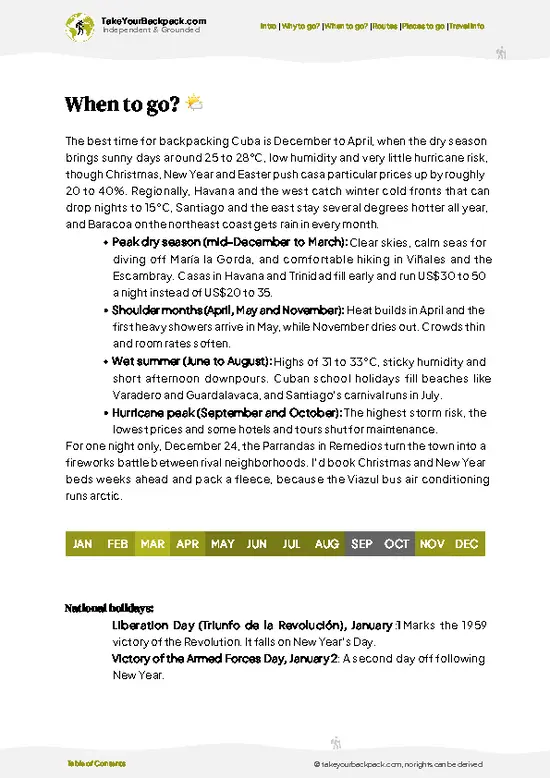
  • Dry Season (November to April): Days run 24 to 29°C (75 to 84°F), nights drop to 16 to 20°C (61 to 68°F), and the marshy trails dry out. Birding is at its peak, with migrants joining Zapata wren and Zapata sparrow, and about 11 to 12 hours of daylight. Casa particular rates and Havana transfers cost the most from December to February.
  • Wet Season (May to October): Expect 30 to 34°C (86 to 93°F), heavy humidity, afternoon downpours and mosquitoes that make the swamp edges miserable. Daylight stretches to about 13 hours. Crowds are thin and rooms are easy to find at lower rates.
  • Hurricane Window (August to October): Storms can close roads to Playa Larga and Playa Girón and cancel boat trips on the Laguna del Tesoro.
  • Diving and Snorkeling: Water at Playa Girón stays 25 to 29°C (77 to 84°F) all year,
… read more 👉
  • Dry Season (November to April): Days run 24 to 29°C (75 to 84°F), nights drop to 16 to 20°C (61 to 68°F), and the marshy trails dry out. Birding is at its peak, with migrants joining Zapata wren and Zapata sparrow, and about 11 to 12 hours of daylight. Casa particular rates and Havana transfers cost the most from December to February.
  • Wet Season (May to October): Expect 30 to 34°C (86 to 93°F), heavy humidity, afternoon downpours and mosquitoes that make the swamp edges miserable. Daylight stretches to about 13 hours. Crowds are thin and rooms are easy to find at lower rates.
  • Hurricane Window (August to October): Storms can close roads to Playa Larga and Playa Girón and cancel boat trips on the Laguna del Tesoro.
  • Diving and Snorkeling: Water at Playa Girón stays 25 to 29°C (77 to 84°F) all year, with the best visibility in the dry months.
Go in February or March for the best mix of dry trails, active birds and fewer holiday crowds.


source: climatestotravel.comJANJanuary: excellent for travelingFEBFebruary: excellent for travelingMARMarch: excellent for travelingAPRApril: highly recommended for travelingMAYMay: fair for travelingJUNJune: fair for travelingJULJuly: fair for travelingAUGAugust: fair for travelingSEPSeptember: below average for travelingOCTOctober: fair for travelingNOVNovember: highly recommended for travelingDECDecember: excellent for traveling
cuba-national-park-cienaga-de-zapata-national-park v1
© Google |

✈️ The backpacker research shortcutCuba Travel Guide

An offline-friendly backpacking guide with optimized travel routes, ranked highlights, transport advice, and the best areas to stay.
example page 0 from our offline Travel Guide for Cuba
example page 1 from our offline Travel Guide for Cuba
example page 2 from our offline Travel Guide for Cuba
example page 3 from our offline Travel Guide for Cuba
example page 4 from our offline Travel Guide for Cuba
example page 5 from our offline Travel Guide for Cuba
example page 6 from our offline Travel Guide for Cuba
example page 7 from our offline Travel Guide for Cuba
The digital guide (327 pages) contains:
✅ 113 highlights, ranked by travel appeal
✅ Optimized 5, 10 & 15-day travel routes
✅ Cities, national parks, landmarks, beaches
✅ How to get around
✅ Offline-friendly for travel without Wi-Fi
👉 Click to see all 30+ guide features

📅 Plan smarter in minutes, not weeks
✅ Month by month travel advice
✅ Festivals & national holidays
✅ Budget expectations

🗺️ Go to the right places, skip the overrated ones
✅ Honest pros & cons of destinations
✅ Top hikes, parks & viewpoints
✅ Lesser-known places most travelers miss
✅ Clear “worth it vs skip it” guidance

🛏️ Travel smoothly without rookie mistakes
✅ Best areas to stay
✅ Transport systems explained simply
✅ Common scams & safety advice
✅ SIM cards, money & practical tips

🌍 Understand the country, not just visit it
✅ Culture & traditions
✅ 52 Essential phrases & customs
✅ Festivals worth planning around
✅ Traveler-friendly historical context
✅ Insights that make places more meaningful

📱 Built for real travel conditions
✅ Fully downloadable PDF
✅ Works completely offline
✅ Optimized for phone use
✅ Useful in remote areas & buses
✅ Everything in one place
Stop searching, start planning
Get instant access to your full guide. 30‑day money-back guarantee.
+ Add another guide for just

By proceeding you agree to our terms.
Sent to your inbox immediately after payment • 100% Secure Checkout
Best Backpacking Travel Advisor 2025 tourism awardBest Backpacking
Travel Advisor
2025
What others say about Take Your Backpack Guides:
⭐⭐⭐⭐⭐
Fantastic, amazing amount of information!
⭐⭐⭐⭐⭐
My goodness this is amazing, it's what I've been looking for hats off too you!
⭐⭐⭐⭐⭐
I think this is absolutely BRILLIANT
⭐⭐⭐⭐
Very complete and informative. It's still missing places, but I gotta to commend you
⭐⭐⭐⭐⭐
This is truly amazing, thank you, can't wait to explore it with my kids!
⭐⭐⭐⭐⭐
Awesome resource, thank you!
⭐⭐⭐⭐⭐
This is amazing! Can't wait to explore the ones I haven't seen
⭐⭐⭐⭐
I love this! Well done, great idea.
⭐⭐⭐⭐⭐
Thanks for taking the time to make this gem!
⭐⭐⭐⭐⭐
This might be the best website I've ever seen.
⭐⭐⭐⭐⭐
Congratulations, and thank you so much for your work; it's incredibly valuable.
⭐⭐⭐⭐
In all seriousness I think you did a great job pointing out the important spots
⭐⭐⭐⭐⭐
10/10 very good
⭐⭐⭐⭐⭐
As someone who's only just starting to visit regularly this is awesome, thank you.
⭐⭐⭐⭐
Thank you very much! I'm going to visit my dad, it's going to be very useful!
⭐⭐⭐⭐⭐
This is really cool! We'll be travelling for the first time and this definitely come in handy.
⭐⭐⭐⭐⭐
You are now our minister of culture, congratulations 👨‍💼
⭐⭐⭐⭐⭐
Just wanted to tell you that this is a pearl! Going to follow your recommendations.
⭐⭐⭐⭐⭐
This is so cool. I'll definitely be using the resource for my travels soon.
⭐⭐⭐⭐⭐
This is very impressive! Good work.
⭐⭐⭐⭐⭐
This is an amazing and informative site. Very well done!

🛏️ Where to stay?How to pick the right area

Casas particulares in Playa Larga and Playa Girón are the best base for backpackers, since the park has almost no formal lodging beyond a few state-run hotels and cabins. Playa Larga sits at the head of the Bay of Pigs, close to the Zapata wren and bee hummingbird habitat around Soplillar and Las Salinas, and has the most casas, usually US$20 to 35 a room with breakfast and dinner offered for a few dollars more. Playa Girón, about 35 km (22 miles) southeast, is better for snorkeling and diving off the rocky shore and for the invasion museum, with similar casa prices. Both villages are small, so … read more 👉
Casas particulares in Playa Larga and Playa Girón are the best base for backpackers, since the park has almost no formal lodging beyond a few state-run hotels and cabins. Playa Larga sits at the head of the Bay of Pigs, close to the Zapata wren and bee hummingbird habitat around Soplillar and Las Salinas, and has the most casas, usually US$20 to 35 a room with breakfast and dinner offered for a few dollars more. Playa Girón, about 35 km (22 miles) southeast, is better for snorkeling and diving off the rocky shore and for the invasion museum, with similar casa prices. Both villages are small, so arrange meals with your host. Inside the park, Guamá has state-run thatched cabins on the Laguna del Tesoro from about US$35 to 60 a night, and Hotel Playa Larga and Hotel Playa Girón offer basic all-inclusive-style rooms at US$50 to 90. Australia, a tiny village near Guamá, has a few casas. Many travelers also come from Cienfuegos or Havana, but a night or two inside the swamp saves long drives and gives you dawn birding.

👛 Costs (as of 23 October 2026)What things cost and how to budget

Ciénaga de Zapata National Park costs most backpackers about US$48 to 98 a day, with a total near US$68 in high season once casa, meals, guide and local transport are counted. Prices are in US dollars here, though most travelers pay locals in cash Cuban pesos or foreign currency depending on the provider, so carry plenty of cash since cards are rarely accepted.
CategoryBudget RangeLocal Reality
Entrance feesUS$5 to 10Charged separately at sites such as Guamá, Laguna del Tesoro and Las Salinas, not as a single park ticket.
Accommodation (high season)US$20 to 35A room in a casa particular in Playa Larga or Playa Girón; rates drop a little in the wet season.
FoodUS$10 to 18Casa dinners of fish, rice, beans and plantains run US$6 to 10, and breakfast US$3 to 5.
Local transportUS$3 to 10Shared taxis
… read more 👉
Ciénaga de Zapata National Park costs most backpackers about US$48 to 98 a day, with a total near US$68 in high season once casa, meals, guide and local transport are counted. Prices are in US dollars here, though most travelers pay locals in cash Cuban pesos or foreign currency depending on the provider, so carry plenty of cash since cards are rarely accepted.
CategoryBudget RangeLocal Reality
Entrance feesUS$5 to 10Charged separately at sites such as Guamá, Laguna del Tesoro and Las Salinas, not as a single park ticket.
Accommodation (high season)US$20 to 35A room in a casa particular in Playa Larga or Playa Girón; rates drop a little in the wet season.
FoodUS$10 to 18Casa dinners of fish, rice, beans and plantains run US$6 to 10, and breakfast US$3 to 5.
Local transportUS$3 to 10Shared taxis between Playa Larga and Playa Girón cost a few dollars; a day taxi is more.
Guides and activitiesUS$10 to 25A birding guide runs about US$15 to 25; snorkeling gear rental about US$5 to 10.
Total Daily BudgetUS$48 to 98About US$68 for a typical day with one guided outing.


source: cubatravel.cu
⚠️ Prices can change and everyone travels differently, so take this as a rough guide. Hope it helps you plan your adventure!

🥾 TrailsBest hikes in Ciénaga de Zapata national park

Ciénaga de Zapata National Park is made for short, flat walks, not long treks, with wildlife and wetland landscapes as the main reward. Most routes are guided, and you start from villages or reserve gates.
  • Bermejas Trail: A short forest walk of roughly 2 to 3 km, about 1.5 to 2 hours with a guide. Easy, flat and shaded, passing dry forest where the bee hummingbird and Cuban trogon appear.
  • Soplillar Walk: A short, easy walk through sawgrass and scrub, about 1 to 2 hours. Best at dawn for the Zapata sparrow.
  • Santo Tomás Swamp Routes: Guided walks and boat trips through reeds and flooded forest, 2 to
… read more 👉
Ciénaga de Zapata National Park is made for short, flat walks, not long treks, with wildlife and wetland landscapes as the main reward. Most routes are guided, and you start from villages or reserve gates.
  • Bermejas Trail: A short forest walk of roughly 2 to 3 km, about 1.5 to 2 hours with a guide. Easy, flat and shaded, passing dry forest where the bee hummingbird and Cuban trogon appear.
  • Soplillar Walk: A short, easy walk through sawgrass and scrub, about 1 to 2 hours. Best at dawn for the Zapata sparrow.
  • Santo Tomás Swamp Routes: Guided walks and boat trips through reeds and flooded forest, 2 to 4 hours. Wet and muddy in rainy months, easy in effort, with the chance of rail and wren sightings.
  • Las Salinas Shore: Informal flat tracks along lagoons, 1 to 3 hours. Open and shadeless, with flamingos and waders in view.
  • Cueva de los Peces Path: A brief walk from the road to the cenote, about 10 minutes, followed by swimming or snorkeling.
Terrain is flat, damp and often buggy, so mosquito repellent, closed shoes and water matter. Difficulty is easy throughout, though heat and humidity tire you faster than the distance suggests. Wildlife is the point: crocodiles, flamingos, iguanas and endemic birds, with early starts giving the best sightings.
Access is by road from Havana or Cienfuegos with Viazul buses stopping at Playa Larga and Playa Girón, after which you rely on shared taxis or bicycle rental. Crowds stay thin outside Guamá, which draws tour groups from Varadero. Entry fees are small and charged per site or per guided trip, usually under US$10 to 15, and guides are paid separately.
⚠️ Hiking info can sometimes be outdated or inaccurate. Before you hit the trail, check the latest conditions with locals. If you do spot anything that's off, I'd love to hear from you, so I can update it for fellow travelers.

🛡️ SafetyScams, Hazards, and Annoyances

Ciénaga de Zapata is flat, well-trodden and low-risk, and the main nuisances are heat, insects and mud rather than danger. Midday temperatures in summer reach the low 30s °C (90s °F), so start birding or walking at dawn, carry at least 2 to 3 liters of water per person and wear a hat. Mosquitoes and sand flies are fierce around the swamp, especially at dusk and in the wet season, so bring DEET repellent and long, light sleeves. Trails to Las Salinas and Soplillar are mostly sandy or rocky tracks, so sturdy closed shoes help. Crocodiles live in the marshes and at the Guamá breeding farm. Don’t swim in freshwater lagoons or canals, and keep your hands out of the boat. Hire a local guide for bird sites, since tracks are unsigned and finding the endemic species alone is difficult. Bring cash and … read more 👉
Ciénaga de Zapata is flat, well-trodden and low-risk, and the main nuisances are heat, insects and mud rather than danger. Midday temperatures in summer reach the low 30s °C (90s °F), so start birding or walking at dawn, carry at least 2 to 3 liters of water per person and wear a hat. Mosquitoes and sand flies are fierce around the swamp, especially at dusk and in the wet season, so bring DEET repellent and long, light sleeves. Trails to Las Salinas and Soplillar are mostly sandy or rocky tracks, so sturdy closed shoes help. Crocodiles live in the marshes and at the Guamá breeding farm. Don’t swim in freshwater lagoons or canals, and keep your hands out of the boat. Hire a local guide for bird sites, since tracks are unsigned and finding the endemic species alone is difficult. Bring cash and any medication, because shops and pharmacies are sparse. Hurricane warnings in late summer are the one hazard to track.

FAQCommon questions from travelers

Two to three days is enough for Ciénaga de Zapata National Park if you want to see the main sites. Day one can cover Guamá and the Laguna del Tesoro, day two the birding at Soplillar and Las Salinas, and a third day suits snorkeling at Caleta Buena or Playa Girón. Birders chasing the Zapata wren and bee hummingbird often add a fourth morning.
Visiting Ciénaga de Zapata National Park without a car is possible but slow, since sites are spread over roughly 4,500 square km. Viazul and shared taxis run from Havana to Playa Larga in about 3 hours, with taxis costing about US$20 to 30 per person. Once there, hire a taxi or a guide’s car for US$30 to 60 a day, or rent a bicycle or scooter in Playa Larga and Playa Girón.
Yes, Ciénaga de Zapata National Park has no single entry gate, so you pay fees at individual sites. Expect roughly US$5 to 10 for places like Guamá and Laguna del Tesoro, with extra for boat rides, and no permit is required for general visits. Birding guides, typically US$15 to 25, are the practical way to reach restricted bird areas, and cash is the safest way to pay.
⚠️ Things can change over time, so always validate details locally before you go.

Other Cuban national parks near Ciénaga de Zapata

Explore more nearby:


💡 Not sure where to go next?
Create a personalized itinerary for Cuba including Ciénaga de Zapata and the places that fit your trip.

Generate my itinerary

👉 Discover all national parks

Or checkout all Cuba has to offer (think cities, towns, villages, national parks, hikes, beaches, festivals)
Country photo of Cuba

We 💚 feedbackKey takeaways before you go

Ciénaga de Zapata National Park trips go wrong when travelers arrive at mid-morning expecting birds and find them gone. Get it right by booking a guide the night before and starting at first light, when the Zapata birds call. I would skip the crocodile show and put that money toward a guide.

✈️ When did I visit Cuba?
As part of my 1.5 year travel around the world trip, I visited Cuba for 6 weeks in February, March 2016, being extremely lucky that that coincided with the free concert of The Rolling Stones.

✍️ Help improve this page!
The information on this page is based on my own backpacking experience in Cuba, supplemented with up-to-date research and feedback from other travelers. Travel details can change, so if you notice anything outdated or incomplete, feel free to let me know.


🙋‍♂️ Give feedback

👋 Meet the founderWho’s Behind Take Your Backpack?

Johan, backpacker and founder of TakeYourBackpackHi, I’m Johan (Netherlands 🇳🇱), the creator of TakeYourBackpack. Over the past 3 decades, I’ve backpacked through 90+ countries across six continents, gaining extensive experience with independent travel, long-term trips, and overland routes.

This site is built on a combination of firsthand travel experience and carefully curated insights from other backpackers. Many guides are based on places I’ve personally visited, while others bring together tips, observations, and practical advice shared by trusted travelers I’ve met along the way.

The goal is to provide realistic, experience-driven guidance — not generic itineraries — so you can explore destinations with better context, clearer expectations, and more confidence.