
×

Cuba🇨🇺 | townsGibarasea cliffs, colonial grid, fishing port | things to do and best time to go

Explore ViñalesExplore Nuevitas

Backpacking in Gibara
🌟 Highlighttown ranked #6
By Johan Kruseman 🇳🇱 | Updated September 4, 2026

Your first real decision in Gibara is whether to treat it as a slow, salt-in-the-air pause or to rush through on a Holguín–Baracoa sprint. That choice matters, because Gibara rewards time: the town moves at the pace of the sea, not your bus schedule. Sitting on Cuba’s north coast in Holguín province, it’s a compact port town where the light hits peeling facades and the bay at the same soft angle, especially late afternoon. For backpackers, it’s more scenic detour than logistical hub: a walkable colonial core, a breezy malecón, caves and coastal viewpoints close enough for half-day trips. Buses and shared taxis from Holguín make it reachable but not hyper-connected, which keeps crowds low and nights quiet. Cheaper and calmer than Guardalavaca’s resorts, less intense than Holguín city, Gibara works best as a one- or two-night base for sea air, conversations, and a reset.

Discover everything you want to know in the 📖 Cuba Travel Guide.


Get your Cuba guide
121 ranked highlights, routes & tips, works offline (450 pages)
Loading the map 🌍
CLICK TO FILTER
cities
towns
villages
landmarks
national parks
hikes
beaches
attractions
festivals
regions
SHOW COUNTRY’S BESTSHOW ALL

✨ Why go?
Ranked #6 town in Cuba
What makes it a must-see town

Gibara draws backpackers for its convenience as a base for exploring Cuba’s natural and cultural treasures. Nestled near stunning hikes and pristine beaches, it offers easy access to the Sierra de Nipe and the Atlantic coast. The town’s walkable streets are lined with colorful colonial buildings, inviting you to wander and soak in the atmosphere.

Accommodations are primarily small-scale guesthouses and hostels, fostering a friendly, communal vibe where solo travelers and small groups can easily connect. You’ll find local food experiences that are authentic and affordable, from street vendors to cozy family-run eateries.

Most travelers tend to linger a few days, soaking up the laid-back pace and engaging with locals. Gibara feels more like a quiet retreat than a bustling hub, making it … read more 👉
Gibara draws backpackers for its convenience as a base for exploring Cuba’s natural and cultural treasures. Nestled near stunning hikes and pristine beaches, it offers easy access to the Sierra de Nipe and the Atlantic coast. The town’s walkable streets are lined with colorful colonial buildings, inviting you to wander and soak in the atmosphere.

Accommodations are primarily small-scale guesthouses and hostels, fostering a friendly, communal vibe where solo travelers and small groups can easily connect. You’ll find local food experiences that are authentic and affordable, from street vendors to cozy family-run eateries.

Most travelers tend to linger a few days, soaking up the laid-back pace and engaging with locals. Gibara feels more like a quiet retreat than a bustling hub, making it ideal for slow travelers and those seeking a genuine Cuban experience. If you appreciate a blend of nature, culture, and community, Gibara is a perfect stop on your journey.
Want to include Gibara in your Cuba route?
Create a personalized Cuba itinerary that includes Gibara and the places that fit your trip — based on your travel style, budget, and available time. Get your route in seconds.

Generate my trip

💡 HighlightsThe experiences that define the visit

  • El Malecón de Gibara — The seafront walk where fishermen mend nets, kids jump into the bay, and the light at sunset makes the battered façades glow. Best low-cost evening hangout for people-watching and meeting locals.
  • Parque (Plaza) Central — The town’s social heart: benches, street vendors, and colonial buildings around a shady square. It’s where you’ll feel Gibara’s everyday rhythm, especially on market days.
  • Museo Municipal de Gibara — Small but focused local museum with photos, objects and stories about Gibara’s maritime past and cultural life. Great for context before you wander the streets.
  • Casa de la Cultura / talleres comunitarios — A functioning cultural center where artists rehearse, there are occasional exhibitions, and you can often catch live music or a workshop. Real local
read more 👉
  • El Malecón de Gibara — The seafront walk where fishermen mend nets, kids jump into the bay, and the light at sunset makes the battered façades glow. Best low-cost evening hangout for people-watching and meeting locals.
  • Parque (Plaza) Central — The town’s social heart: benches, street vendors, and colonial buildings around a shady square. It’s where you’ll feel Gibara’s everyday rhythm, especially on market days.
  • Museo Municipal de Gibara — Small but focused local museum with photos, objects and stories about Gibara’s maritime past and cultural life. Great for context before you wander the streets.
  • Casa de la Cultura / talleres comunitarios — A functioning cultural center where artists rehearse, there are occasional exhibitions, and you can often catch live music or a workshop. Real local culture, not a staged tourist show.
  • La Iglesia Parroquial y su plaza — The main parish church and the square around it offer simple architecture, local devotion, and a calm spot to observe daily Cuban rituals and hear choirs on Sundays.
  • El Puerto y la lonja de pescado — The working harbor and fish market: raw, noisy, and very much alive. Watch boats come in, buy fresh fish from a vendor, or book a short local boat ride.
  • Paseo por las calles coloniales — Wandering the patchwork of pastel houses, wooden balconies, and graffitied walls is half the point of Gibara—small discoveries (a hidden café, a mural, a friendly neighbor) are everywhere.
  • El pequeño teatro/cine del pueblo — The local theater that becomes a hive of activity during the town’s film events; even outside festival time you can sometimes catch screenings, plays, or community shows.
  • Cementerio histórico — An atmospheric, quiet place that tells the town’s stories through old tombs and inscriptions; offers a different, reflective way to understand Gibara’s past and families.
  • Mirador y puntos altos sobre la bahía — Short climbs or stairways that reward you with sweeping views of the bay, the town’s rooftops, and fishing boats—perfect for photos and to map your next wandering route.
Nearby day trips worth doing are Cayo Saetía (wildlife, beaches and a safari-like feel), the beaches of Costa Esmeralda/Guardalavaca, and the nearby salt flats; my personal favorite for a day trip is Cayo Saetía.
Spotted a mistake or missing something? Contact us.

🏘️ NeighborhoodsNeighborhood guide to Gibara

Gibara is a charming coastal town in Cuba that offers a unique blend of history, culture, and stunning landscapes. Here’s how to navigate its neighborhoods like a pro.

Centro Histórico
This is the heart of Gibara, where colonial architecture meets vibrant street life. The vibe is lively, especially during the evenings when locals gather. It’s walkable, with everything from cafes to art galleries within a few blocks. Prices are reasonable, making it ideal for both short and longer stays. The nightlife is modest but enjoyable, with local music spilling into the streets.

Playa de Gibara
If you’re after sun and sand, this area is your go-to. The beach is beautiful, and the atmosphere is laid-back. It’s a bit quieter than Centro Histórico, perfect for those looking to relax. Accommodations … read more 👉
Gibara is a charming coastal town in Cuba that offers a unique blend of history, culture, and stunning landscapes. Here’s how to navigate its neighborhoods like a pro.

Centro Histórico
This is the heart of Gibara, where colonial architecture meets vibrant street life. The vibe is lively, especially during the evenings when locals gather. It’s walkable, with everything from cafes to art galleries within a few blocks. Prices are reasonable, making it ideal for both short and longer stays. The nightlife is modest but enjoyable, with local music spilling into the streets.

Playa de Gibara
If you’re after sun and sand, this area is your go-to. The beach is beautiful, and the atmosphere is laid-back. It’s a bit quieter than Centro Histórico, perfect for those looking to relax. Accommodations here can be pricier, but the ocean views are worth it. Transport options are limited, so plan to walk or rent a bike.

Barrio de los Pescadores
This neighborhood offers an authentic glimpse into local life. The scent of fresh seafood fills the air, and you’ll find fishermen mending nets. It’s less touristy, making it a great spot for longer stays if you want to immerse yourself in the culture. Walkability is decent, but be prepared for a few uneven paths. Nightlife is minimal, so it’s best for those seeking peace.

Each area has its own charm, making Gibara a place where every corner reveals something special.

⌛️ 1 dayA smart one-day plan

Gibara, Cuba, is a slice of coastal charm that feels like stepping into a vibrant painting. With its pastel-colored buildings and the salty breeze from the Atlantic, this town offers a refreshing break from the more tourist-trodden paths of Cuba. The streets hum with the sounds of locals chatting, and the air is rich with the scent of fresh seafood and the distant notes of a guitar strumming.

Start your morning at the bustling Mercado Municipal. The market is alive with vendors selling everything from ripe mangoes to handmade crafts. Grab a fresh guava juice and a pastelito, a flaky pastry filled with savory goodness. As you wander through the stalls, take in the vibrant colors and the friendly banter; it’s a perfect introduction to the local culture.

In the afternoon, head to the picturesque … read more 👉
Gibara, Cuba, is a slice of coastal charm that feels like stepping into a vibrant painting. With its pastel-colored buildings and the salty breeze from the Atlantic, this town offers a refreshing break from the more tourist-trodden paths of Cuba. The streets hum with the sounds of locals chatting, and the air is rich with the scent of fresh seafood and the distant notes of a guitar strumming.

Start your morning at the bustling Mercado Municipal. The market is alive with vendors selling everything from ripe mangoes to handmade crafts. Grab a fresh guava juice and a pastelito, a flaky pastry filled with savory goodness. As you wander through the stalls, take in the vibrant colors and the friendly banter; it’s a perfect introduction to the local culture.

In the afternoon, head to the picturesque Plaza de la Libertad. Here, you can admire the iconic white church, Iglesia de San Fulgencio, and the surrounding colonial architecture. Don’t miss the chance to stroll along the Malecón, where the waves crash against the rocks, creating a soothing soundtrack. For a unique experience, venture to the nearby neighborhood of La Loma, where you’ll find local artists showcasing their work. It’s a quieter area, often overlooked by tourists, but it’s where you can truly feel the heartbeat of Gibara.

As the sun begins to set, make your way to the waterfront for a meal at a local paladar, like El Balcón. Savor a plate of grilled fish while watching the sky turn shades of orange and pink. After dinner, take a leisurely walk back through the cobblestone streets, soaking in the warm glow of the street lamps and the laughter of locals. This day in Gibara isn’t just about seeing; it’s about feeling the rhythm of a town that dances to its own beat.
Turn your Gibara visit into an Cuba adventure
Build a complete Cuba route with Gibara, hidden gems, must-see destinations, and realistic travel times included.

Generate my trip

🌤️ When to go?Seasonal considerations and timing


  • Topic: Weather – Gibara’s dry season from November to April offers clear skies and minimal rain, making it ideal for exploring without soggy boots or damp gear. The wet season, May to October, brings heavy showers and humidity that can weigh down your energy and gear.

  • Topic: Temperature – Expect highs around 28-31°C (82-88°F) in the dry months, perfect for daytime hikes and beach dips. The wet season heats up slightly, with humidity pushing the feel closer to 35°C (95°F), which can sap your stamina fast.

  • Topic: Daylight Hours – Around 11 to 12 hours of daylight year-round, but the dry season’s clearer skies make mornings and evenings feel sharper and more vibrant, ideal for photography and long walks.

  • Topic: Crowds – Peak tourist flow hits December through March, especially around
read more 👉

  • Topic: Weather – Gibara’s dry season from November to April offers clear skies and minimal rain, making it ideal for exploring without soggy boots or damp gear. The wet season, May to October, brings heavy showers and humidity that can weigh down your energy and gear.

  • Topic: Temperature – Expect highs around 28-31°C (82-88°F) in the dry months, perfect for daytime hikes and beach dips. The wet season heats up slightly, with humidity pushing the feel closer to 35°C (95°F), which can sap your stamina fast.

  • Topic: Daylight Hours – Around 11 to 12 hours of daylight year-round, but the dry season’s clearer skies make mornings and evenings feel sharper and more vibrant, ideal for photography and long walks.

  • Topic: Crowds – Peak tourist flow hits December through March, especially around holidays. Visiting just before or after this window means fewer people, more authentic local interactions, and better room rates.

  • Topic: Seasonal Activities – The dry season aligns with Gibara’s cultural festivals, like the International Festival of the Caribbean in July, which is a sensory feast but also a crowd magnet. Plan accordingly if you want the vibe without the crush.

  • Topic: Price Fluctuations – Accommodation and transport costs spike during the dry season’s peak months. Booking early or aiming for shoulder months can save you money without sacrificing the experience.


Pro-tip: Aim for late April or early November—weather’s still kind, crowds thin, and prices dip, giving you the best balance of comfort and authenticity in Gibara.


source: climatestotravel.comJANJanuary: highly recommended for travelingFEBFebruary: highly recommended for travelingMARMarch: highly recommended for travelingAPRApril: highly recommended for travelingMAYMay: fair for travelingJUNJune: fair for travelingJULJuly: good for travelingAUGAugust: fair for travelingSEPSeptember: fair for travelingOCTOctober: fair for travelingNOVNovember: highly recommended for travelingDECDecember: highly recommended for traveling
when-to-go

✈️ The backpacker research shortcutCuba Travel Guide

An offline-friendly backpacking guide with optimized travel routes, ranked highlights, transport advice, and the best areas to stay.
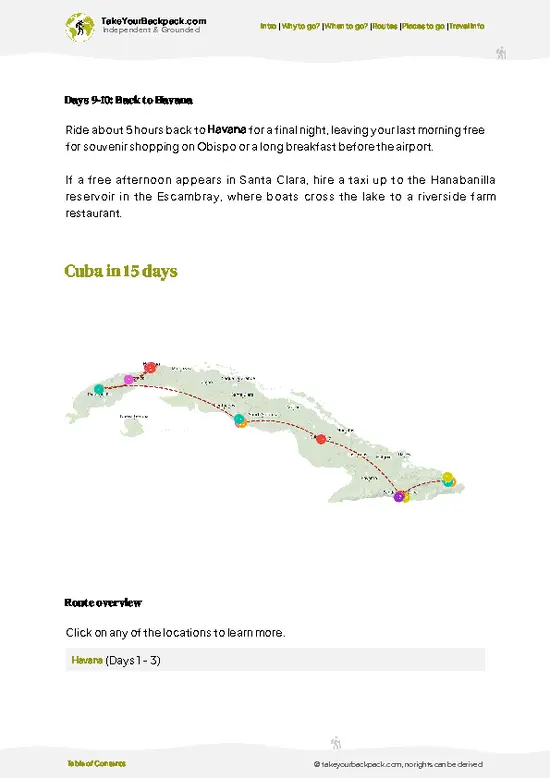
example page 0 from our offline Travel Guide for Cuba
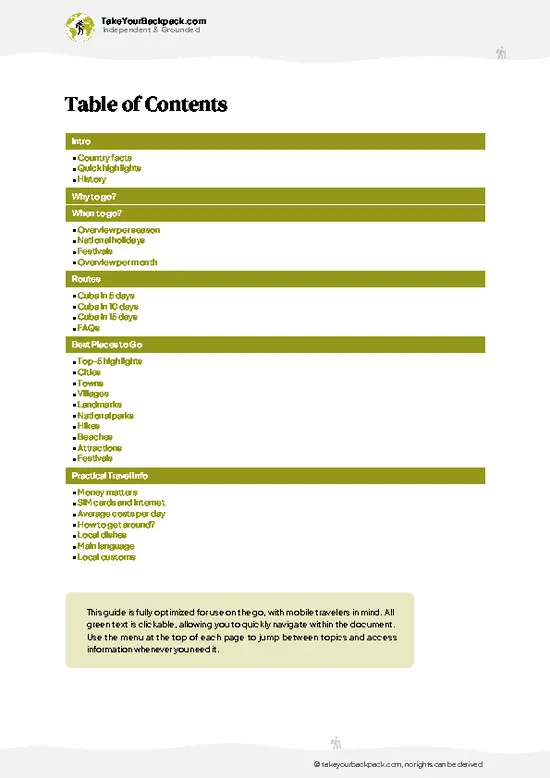
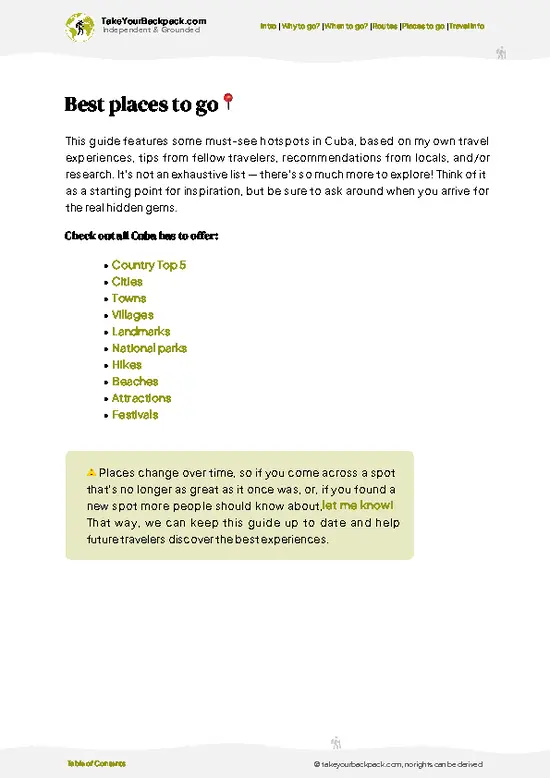
example page 1 from our offline Travel Guide for Cuba
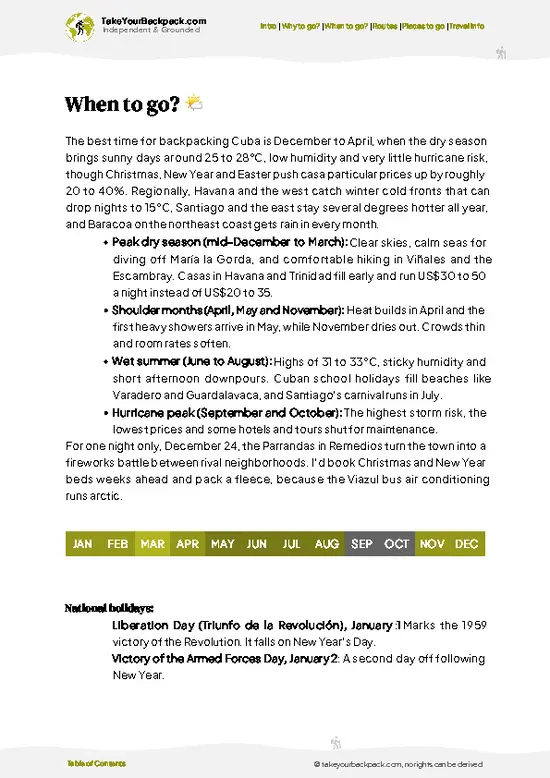
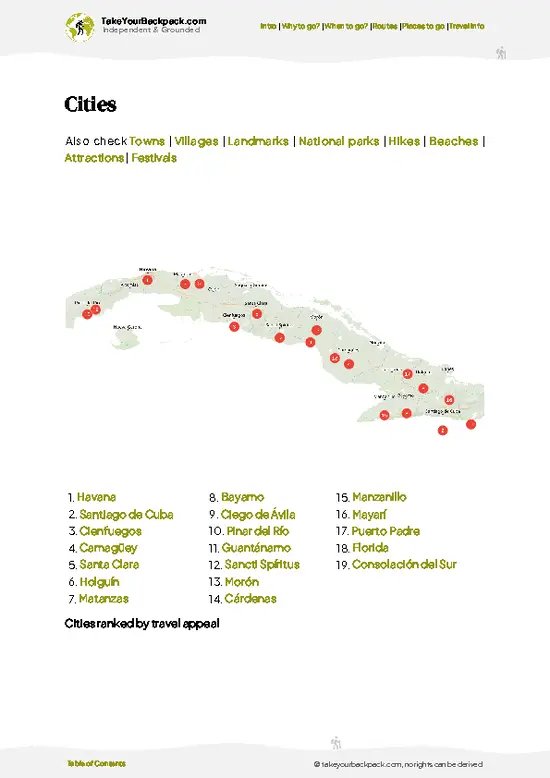
example page 2 from our offline Travel Guide for Cuba
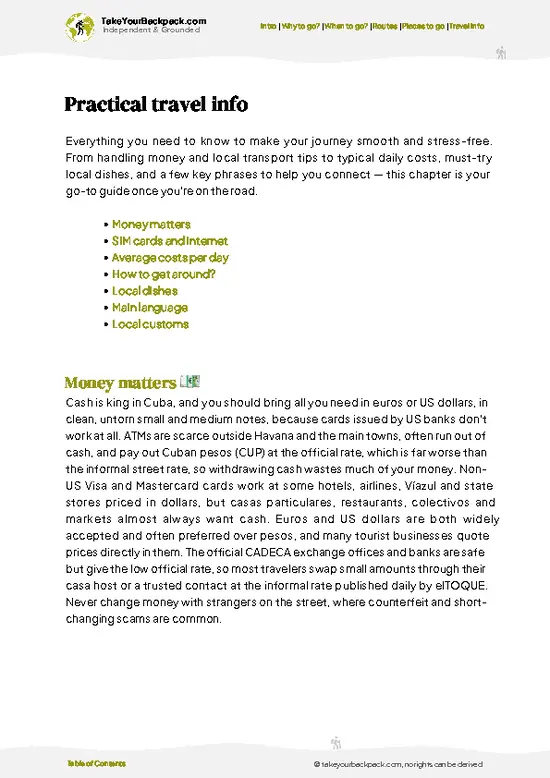
example page 3 from our offline Travel Guide for Cuba
example page 4 from our offline Travel Guide for Cuba
example page 5 from our offline Travel Guide for Cuba
example page 6 from our offline Travel Guide for Cuba
example page 7 from our offline Travel Guide for Cuba
The digital guide (450 pages) contains:
121 highlights, ranked by travel appeal
Optimized 5, 10 & 15-day travel routes
Cities, national parks, landmarks, beaches
How to get around
Offline-friendly for travel without Wi-Fi
👉 Click to see all 30+ guide features

📅 Plan smarter in minutes, not weeks
Month by month travel advice
Festivals & national holidays
Budget expectations

🗺️ Go to the right places, skip the overrated ones
Honest pros & cons of destinations
Top hikes, parks & viewpoints
Lesser-known places most travelers miss
Clear “worth it vs skip it” guidance

🛏️ Travel smoothly without rookie mistakes
Best areas to stay
Transport systems explained simply
Common scams & safety advice
SIM cards, money & practical tips

🌍 Understand the country, not just visit it
Culture & traditions
52 Essential phrases & customs
Festivals worth planning around
Traveler-friendly historical context
Insights that make places more meaningful

📱 Built for real travel conditions
Fully downloadable PDF
Works completely offline
Optimized for phone use
Useful in remote areas & buses
Everything in one place
Save weeks of stressful planning
Get instant access to your full guide. 30‑day money-back guarantee.
+ Add another guide for just US$7.80

By proceeding you agree to our terms.
Sent to your inbox immediately after payment • 100% Secure Checkout
Best Backpacking Travel Advisor 2025 tourism awardBest Backpacking
Travel Advisor
2025
What others say about Take Your Backpack Guides:
⭐⭐⭐⭐⭐
Fantastic, amazing amount of information!
⭐⭐⭐⭐⭐
My goodness this is amazing, it's what I've been looking for hats off too you!
⭐⭐⭐⭐⭐
I think this is absolutely BRILLIANT
⭐⭐⭐⭐
Very complete and informative. It's still missing places, but I gotta to commend you
⭐⭐⭐⭐⭐
This is truly amazing, thank you, can't wait to explore it with my kids!
⭐⭐⭐⭐⭐
Awesome resource, thank you!
⭐⭐⭐⭐⭐
This is amazing! Can't wait to explore the ones I haven't seen
⭐⭐⭐⭐
I love this! Well done, great idea.
⭐⭐⭐⭐⭐
Thanks for taking the time to make this gem!
⭐⭐⭐⭐⭐
This might be the best website I've ever seen.
⭐⭐⭐⭐⭐
Congratulations, and thank you so much for your work; it's incredibly valuable.
⭐⭐⭐⭐
In all seriousness I think you did a great job pointing out the important spots
⭐⭐⭐⭐⭐
10/10 very good
⭐⭐⭐⭐⭐
As someone who's only just starting to visit regularly this is awesome, thank you.
⭐⭐⭐⭐
Thank you very much! I'm going to visit my dad, it's going to be very useful!
⭐⭐⭐⭐⭐
This is really cool! We'll be travelling for the first time and this definitely come in handy.
⭐⭐⭐⭐⭐
You are now our minister of culture, congratulations 👨‍💼
⭐⭐⭐⭐⭐
Just wanted to tell you that this is a pearl! Going to follow your recommendations.
⭐⭐⭐⭐⭐
This is so cool. I'll definitely be using the resource for my travels soon.
⭐⭐⭐⭐⭐
This is very impressive! Good work.
⭐⭐⭐⭐⭐
This is an amazing and informative site. Very well done!

🛏️ Where to stay?Best areas and accommodation options

In Gibara, the best spot for backpackers is the historic center, where the air carries a salty breeze mixed with the faint scent of old wood and seaweed. This area pulses with life—locals chatting on stoops, street musicians tuning their guitars, and the occasional clatter of bicycles on cobblestones. It’s safe, compact, and social, making it easy to strike up conversations with fellow travelers or residents over a cheap café cubano. Hostels here are modest but welcoming, often run by locals who double as informal guides, offering tips that no guidebook can match.

Compared to the quieter, more … read more 👉
In Gibara, the best spot for backpackers is the historic center, where the air carries a salty breeze mixed with the faint scent of old wood and seaweed. This area pulses with life—locals chatting on stoops, street musicians tuning their guitars, and the occasional clatter of bicycles on cobblestones. It’s safe, compact, and social, making it easy to strike up conversations with fellow travelers or residents over a cheap café cubano. Hostels here are modest but welcoming, often run by locals who double as informal guides, offering tips that no guidebook can match.

Compared to the quieter, more residential outskirts, the historic center puts you right in the thick of Gibara’s character. You’ll find yourself wandering narrow streets lined with pastel houses, catching impromptu salsa sessions or spotting fishermen mending nets by the harbor. The vibe is relaxed but engaging—perfect for solo backpackers craving connection without sacrificing safety.

Staying here means you’re never far from the town’s main square, markets, and the waterfront promenade, where the light shifts dramatically at sunset, rewarding your patience with a scene that feels like a private show. It’s the kind of place where the “hard” part—navigating a small town with limited English—turns into a rich, sensory adventure.

🚌 Getting aroundGetting around like a local

Gibara moves at its own pace—more like a lazy river than a rushing stream. The sun drapes the streets in a warm, golden haze by mid-morning, and locals drift through the town with a relaxed rhythm that resists the tick-tock of rigid schedules. You won’t find a strict timetable here; instead, you’ll catch the flow by watching the ebb and swell of daily life. The scent of saltwater mingles with frying fish from the market, and the occasional honk of a moto signals a new passenger ready to hop on. This is a place where intuition beats the clock, but knowing the right moves will save you time and frustration, especially if you’re on a budget.


  • Walking: Gibara’s compact center is best explored on foot. The cobblestone streets and pastel-colored buildings invite slow strolls, and most key spots—like
read more 👉
Gibara moves at its own pace—more like a lazy river than a rushing stream. The sun drapes the streets in a warm, golden haze by mid-morning, and locals drift through the town with a relaxed rhythm that resists the tick-tock of rigid schedules. You won’t find a strict timetable here; instead, you’ll catch the flow by watching the ebb and swell of daily life. The scent of saltwater mingles with frying fish from the market, and the occasional honk of a moto signals a new passenger ready to hop on. This is a place where intuition beats the clock, but knowing the right moves will save you time and frustration, especially if you’re on a budget.


  • Walking: Gibara’s compact center is best explored on foot. The cobblestone streets and pastel-colored buildings invite slow strolls, and most key spots—like the Plaza Mayor, the fishing docks, and local eateries—are within a 15-minute walk of each other. Walking costs nothing, lets you soak in the salty breeze, and reveals the town’s character in every cracked wall and street vendor’s call.


  • Shared Taxis (Colectivos): These are the lifeblood of local transit. They run without a strict schedule but start filling up around 7:30 AM and taper off by early evening. Expect to pay about 5 CUP (Cuban Pesos) for a short ride. They’re cramped but efficient, darting through narrow streets faster than a tourist bus ever could. Flag one down anywhere along main roads; they leave once full, so timing your arrival when locals gather is key.


  • Motos (Motorcycle Taxis): If you’re in a hurry or carrying gear, motos are your best bet. They’re everywhere, especially near the bus station and market. Prices hover around 10-20 CUP depending on distance. Motos weave through traffic and cobblestones with ease, but be ready for a bumpy ride and hold on tight—the wind carries the scent of the sea and diesel in equal measure.


  • Local Buses: For longer trips outside Gibara, local buses connect to nearby towns like Holguín. They run early morning departures, around 6:00 AM to 9:00 AM, and again mid-afternoon. Tickets are cheap, roughly 15-20 CUP, but expect slow travel with frequent stops. These buses are less about comfort and more about immersion—perfect if you want to see the countryside and chat with locals.

👛 Costs (as of 4 September 2026)How expensive it really is

Backpacking in Gibara, Cuba, offers a raw, authentic slice of Cuban life, and knowing the daily costs helps you plan without surprises.
  • Dorm Accommodation: Expect to pay around $10 to $15 USD per night in a casa particular dorm or shared room. These are basic but clean, often with a fan and a local host who can share insider tips. Private rooms run higher, but dorms keep it budget-friendly.
  • Meals: Street food and local paladares (small private restaurants) dominate here. A typical meal costs between $3 and $6 USD. Think fresh seafood caught nearby, rice and beans, and tropical fruit. Breakfast might be a simple coffee and pastry for $1.50 to $2.
  • Local Transport: Gibara is small, so walking covers most ground. For longer trips or to nearby beaches, local buses or shared taxis cost about
read more 👉
Backpacking in Gibara, Cuba, offers a raw, authentic slice of Cuban life, and knowing the daily costs helps you plan without surprises.
  • Dorm Accommodation: Expect to pay around $10 to $15 USD per night in a casa particular dorm or shared room. These are basic but clean, often with a fan and a local host who can share insider tips. Private rooms run higher, but dorms keep it budget-friendly.
  • Meals: Street food and local paladares (small private restaurants) dominate here. A typical meal costs between $3 and $6 USD. Think fresh seafood caught nearby, rice and beans, and tropical fruit. Breakfast might be a simple coffee and pastry for $1.50 to $2.
  • Local Transport: Gibara is small, so walking covers most ground. For longer trips or to nearby beaches, local buses or shared taxis cost about $1 to $3 USD. Don’t expect frequent schedules—flexibility is key.
  • Basic Activities/Entry Fees: Most cultural sites and beaches are free or ask for a small donation around $1 to $2 USD. Guided tours or boat trips can run $10 to $20 USD, but you can often negotiate directly with locals for better rates.
  • Miscellaneous Expenses: Budget $2 to $5 USD for bottled water, snacks, or occasional internet access at a local Wi-Fi hotspot. Keep some cash handy for tips or unexpected small purchases.

All told, you’re looking at roughly $20 to $35 USD per day to cover the essentials in Gibara. It’s a place where the slower pace and simple pleasures reward patience and a flexible spirit. The modest costs reflect the town’s unpolished charm, so every dollar saved here goes toward soaking in the genuine Cuban atmosphere rather than tourist gloss.


source: cubatravel.cu
⚠️ Prices can change and everyone travels differently, so take this as a rough guide. Hope it helps you plan your adventure!

🚌 Day tripsExploring the surroundings

Gibara, Cuba, is a charming base for backpackers eager to explore the surrounding treasures. With its laid-back vibe and colorful streets, it’s the perfect launchpad for day trips that blend culture, nature, and adventure.

Trip to Playa Caletones
Just a short 30-minute ride from Gibara, Playa Caletones offers a slice of paradise without the crowds. The soft, white sand and turquoise waters invite you to unwind. Bring a picnic; there are no vendors here, which means you can enjoy the beach in peace. The best time to visit is during the dry season, from November to April, when the sun shines bright and the sea is calm. A common mistake? Forgetting sunscreen—those rays can be relentless. Expect to spend around $10 on transport and snacks.
👉 Explore Playa Caletones

Trip to Holguín
About … read more 👉
Gibara, Cuba, is a charming base for backpackers eager to explore the surrounding treasures. With its laid-back vibe and colorful streets, it’s the perfect launchpad for day trips that blend culture, nature, and adventure.

Trip to Playa Caletones
Just a short 30-minute ride from Gibara, Playa Caletones offers a slice of paradise without the crowds. The soft, white sand and turquoise waters invite you to unwind. Bring a picnic; there are no vendors here, which means you can enjoy the beach in peace. The best time to visit is during the dry season, from November to April, when the sun shines bright and the sea is calm. A common mistake? Forgetting sunscreen—those rays can be relentless. Expect to spend around $10 on transport and snacks.
👉 Explore Playa Caletones

Trip to Holguín
About an hour away, Holguín is a vibrant city bursting with life. Explore the bustling markets and savor local dishes like congrí and yuca. Climb the 458 steps to Loma de la Cruz for panoramic views that make the effort worthwhile. The trip is best during the cooler months, from December to February, when the heat is more bearable. Budget around $15 for transport and a meal. Many first-timers miss the chance to chat with locals—don’t be shy; they’re eager to share stories.
👉 Explore Holguín

Trip to La Mensura National Park
For nature lovers, La Mensura National Park is a must. Roughly 90 minutes from Gibara, this park is a haven for hiking and birdwatching. The trails wind through lush greenery, and the air is filled with the scent of damp earth and wildflowers. Aim for early morning visits to catch the wildlife at its most active. The entrance fee is minimal, around $5, plus transport costs. A common pitfall is underestimating the trail difficulty—wear sturdy shoes and bring plenty of water.


Trip to Cayo Saetía
If you’re up for a bit of adventure, Cayo Saetía is about two hours away, but the journey is worth it. Known for its wild horses and stunning beaches, it feels like stepping into a postcard. You can rent a bike or take a guided tour to explore the island. The best time to go is during the dry season, when the weather is perfect for swimming. Expect to spend around $20 for transport and activities. Many backpackers overlook the guided tours, but they can enhance your experience with local insights.
👉 Explore Cayo Saetía
Want to know what more Cuba offers?
The Cuba Travel Guide describes 121 highlights, from cities to national parks, from beaches to hikes

Get the Travel Guide -

🛡️ SafetyTraveler Safety Guide

Gibara is generally safe, but like any place, a little awareness goes a long way. Stick to well-lit areas at night, especially along the waterfront. The soft glow of street lamps can be inviting, but avoid dimly lit side streets where fewer eyes are watching.

Solo travelers should blend in; dress modestly and keep your belongings close. A crossbody bag is ideal—easy to access but harder for someone to snatch.

Watch for common scams, like overly friendly locals offering to guide you to “the best” spots for a fee. Politely decline and trust your instincts.

Annoyances can include persistent vendors; a firm but friendly “no, gracias” usually does the trick. Embrace the local pace, and remember: patience is part of the experience. Enjoy the vibrant life around you, and let the charm of Gibara unfold at its own rhythm.

FAQFrequently asked questions about Gibara

Yes, Gibara is worth visiting for its authentic Cuban charm, colonial architecture, and vibrant cultural scene, especially during the annual Festival de Cine Pobre in July. It offers a quieter alternative to more tourist-heavy destinations in Cuba.
Two to three days are sufficient to explore Gibara's main attractions, including its historic center, beaches, and local festivals. This allows time to enjoy the town's relaxed atmosphere and nearby natural sites without rushing.
Yes, Gibara can be visited as a day trip from Holguín, which is about 45 kilometers away. The trip takes roughly an hour each way by car or bus, making it feasible for a day visit if you start early.
⚠️ Things can change over time, so always validate details locally before you go.

Other Cuban towns near Gibara

Explore more nearby:

  • Banes—archaeological sites, banana plantations, inland hills| 46 km away
  • San Luis—agricultural center, railway depot, open plains| 107 km away
  • Nuevitas—industrial harbor, mangrove coast, cargo docks| 127 km away

💡 Not sure where to go next?
Create a personalized itinerary for Cuba including Gibara and the places that fit your trip.

Generate my itinerary

👉 Discover all towns

Or checkout all Cuba has to offer (think cities, towns, villages, national parks, hikes, beaches, festivals)
Country photo of Cuba

We 💚 feedbackWhat to keep in mind

Gibara’s charm lies in its vibrant streets, where the scent of fresh seafood mingles with the salty breeze. You’ll find locals eager to share stories, making every moment feel genuine. But be ready for a slower pace; amenities can be sparse, and Wi-Fi is a luxury. Embrace the disconnect. The reward? A deeper connection to the island’s soul, where every sunset feels like a personal gift.

✈️ When did I visit Cuba?
As part of my 1.5 year travel around the world trip, I visited Cuba for 6 weeks in February, March 2016, being extremely lucky that that coincided with the free concert of The Rolling Stones.

✍️ Help improve this page!
The information on this page is based on my own backpacking experience in Cuba, supplemented with up-to-date research and feedback from other travelers. Travel details can change, so if you notice anything outdated or incomplete, feel free to let me know.


🙋‍♂️ Give feedback

👋 Meet the founderWho’s Behind Take Your Backpack?

Johan, backpacker and founder of TakeYourBackpackHi, I’m Johan (Netherlands 🇳🇱), the creator of TakeYourBackpack. Over the past decade, I’ve backpacked through 80+ countries across six continents, gaining extensive experience with independent travel, long-term trips, and overland routes.

This site is built on a combination of firsthand travel experience and carefully curated insights from other backpackers. Many guides are based on places I’ve personally visited, while others bring together tips, observations, and practical advice shared by trusted travelers I’ve met along the way.

The goal is to provide realistic, experience-driven guidance — not generic itineraries — so you can explore destinations with better context, clearer expectations, and more confidence.

Get full Cuba guide •
Instant download • 121 highlights • Full Offline guide