×

Czechia🇨🇿 | best beachesYour Guide to the 3 Best beaches in Czechia

Czechia has no coastline, which makes a “best beaches” page a bit like a ranking of the country’s mountains in Denmark. Still, sandy lake shores, flooded sandpits and river bends do the job, and Czechs take them seriously. South Bohemia’s pond country and the northern sandstone lakes lean toward pine forest and campsites, while Prague’s riverside spots are urban and busy on hot weekends. Entry is often free or a few dollars, and most places are reachable by train plus a short walk. For independent travelers, the trick is choosing between a social, beer-in-hand swim and a quiet, mosquito-adjacent one.

By Johan Kruseman 🇳🇱 | Updated October 19, 2026
Explore the best attractions in Czechia

Why go?Key Factors That Shape the Experience

Czechia is landlocked, hemmed in by Germany, Poland, Slovakia and Austria, so every swim here happens in fresh water. No tides, no surf, no salt in your eyes. What the country has instead is a long habit of making its own shoreline. Medieval fishermen dug thousands of ponds in South Bohemia, and 20th-century mining left flooded quarries and sandpits that now double as swimming holes. The result is a beach culture built around cottage weekends, camping and the chata, the country cabin that a surprising share of Czech families keep.

That shapes what you should expect. Beaches here are local leisure spaces, not resort strips, so you will find a kiosk selling fried cheese and beer, a volleyball net and a sloping grass lawn more often than a sunbed row. Sand exists, but it is patchy, and water … read more 👉
Czechia is landlocked, hemmed in by Germany, Poland, Slovakia and Austria, so every swim here happens in fresh water. No tides, no surf, no salt in your eyes. What the country has instead is a long habit of making its own shoreline. Medieval fishermen dug thousands of ponds in South Bohemia, and 20th-century mining left flooded quarries and sandpits that now double as swimming holes. The result is a beach culture built around cottage weekends, camping and the chata, the country cabin that a surprising share of Czech families keep.

That shapes what you should expect. Beaches here are local leisure spaces, not resort strips, so you will find a kiosk selling fried cheese and beer, a volleyball net and a sloping grass lawn more often than a sunbed row. Sand exists, but it is patchy, and water can be cool and murky compared with the Mediterranean. Quality also varies with algae, which can close a swimming spot for days in hot summers, and authorities publish water-quality ratings that are worth checking before you pack the towel.

Choose Czechia for low costs, easy trains and a very local scene. Skip it if turquoise water and guaranteed sun are the goal.
Our Approach to Ranking
The list of best beaches in Czechia is created based on beauty, vibe, water quality, activities, and surrounding scenery. If you feel a beach is missing in this list, please let us know.

When to go?Best Time to Visit Czechia for beaches

Best months for swimming: Late June to August is the window, because water temperatures in lakes and ponds reach roughly 20 to 25°C and daytime air runs around 24 to 30°C. Heat waves can push past 35°C, which is when everyone in the country heads for the same shoreline.
Shoulder seasons: May and September are fine for a walk, a picnic and a very brave dip, but water often sits at 12 to 18°C. Many kiosks, lifeguard posts and campsite facilities open only from roughly late May or June and close by early or mid September, so a May visit can mean a beautiful empty shore with no beer to go with it. Spring and early autumn bring showers, while July and August can still produce sharp afternoon thunderstorms, so a dry morning does not guarantee a dry evening.
Crowds and prices: Weekends from late June … read more 👉
Best months for swimming: Late June to August is the window, because water temperatures in lakes and ponds reach roughly 20 to 25°C and daytime air runs around 24 to 30°C. Heat waves can push past 35°C, which is when everyone in the country heads for the same shoreline.
Shoulder seasons: May and September are fine for a walk, a picnic and a very brave dip, but water often sits at 12 to 18°C. Many kiosks, lifeguard posts and campsite facilities open only from roughly late May or June and close by early or mid September, so a May visit can mean a beautiful empty shore with no beer to go with it. Spring and early autumn bring showers, while July and August can still produce sharp afternoon thunderstorms, so a dry morning does not guarantee a dry evening.
Crowds and prices: Weekends from late June to August are the busiest, especially near Prague and in popular South Bohemian areas, and the Czech school holidays run from July through August. Midweek is calmer by a wide margin. Campsites and cabins cost more in peak summer, and booking ahead for weekends helps. Winter is not a beach season, though some lakes see ice skating instead, which is a different sport entirely.

beach hoppingHow to Combine beaches Into One Trip

How many days to plan: A trip combining several beaches in Czechia needs 5 to 8 days, and stretching it to 10 only makes sense if you want to add hiking or cities between swims. The country is compact, so the real constraint is not distance but the fact that beaches sit away from rail lines.
Grouping and direction: The sensible clusters are South Bohemia around České Budějovice and Třeboň, the northern sandstone and lake region reached via Liberec or Česká Lípa, and the Prague area with its riverside and nearby quarry options. Start in Prague, head south, then loop north, or reverse it if you fly out of another city. Prague to České Budějovice by train takes about 2 to 2.5 hours, and Prague to Liberec around 1.5 to 2 hours by train or bus. Moving directly between South Bohemia and the north … read more 👉
How many days to plan: A trip combining several beaches in Czechia needs 5 to 8 days, and stretching it to 10 only makes sense if you want to add hiking or cities between swims. The country is compact, so the real constraint is not distance but the fact that beaches sit away from rail lines.
Grouping and direction: The sensible clusters are South Bohemia around České Budějovice and Třeboň, the northern sandstone and lake region reached via Liberec or Česká Lípa, and the Prague area with its riverside and nearby quarry options. Start in Prague, head south, then loop north, or reverse it if you fly out of another city. Prague to České Budějovice by train takes about 2 to 2.5 hours, and Prague to Liberec around 1.5 to 2 hours by train or bus. Moving directly between South Bohemia and the north is slower, so return through Prague.
Time per stop: Allow one night, ideally two, per region. A single beach needs a half day to a full day, but add transfer time for the bus or the last stretch on foot.
Common planning mistakes: Travelers often cram three swim spots into one day, then spend the afternoon on a rural bus that runs twice. Check the return timetable first, since Sunday and holiday services thin out. Another habit is booking only weekends, which means the busiest days and highest prices. Build the route around midweek stops and use weekends for quieter areas.

The ListTop beaches of Czechia

1 Žluté lázně

urban riverbank, sports courts, grassy lawns

Join locals sunbathing on the grass, play beach volleyball, or relax with a drink by the Vltava’s edge in the city.

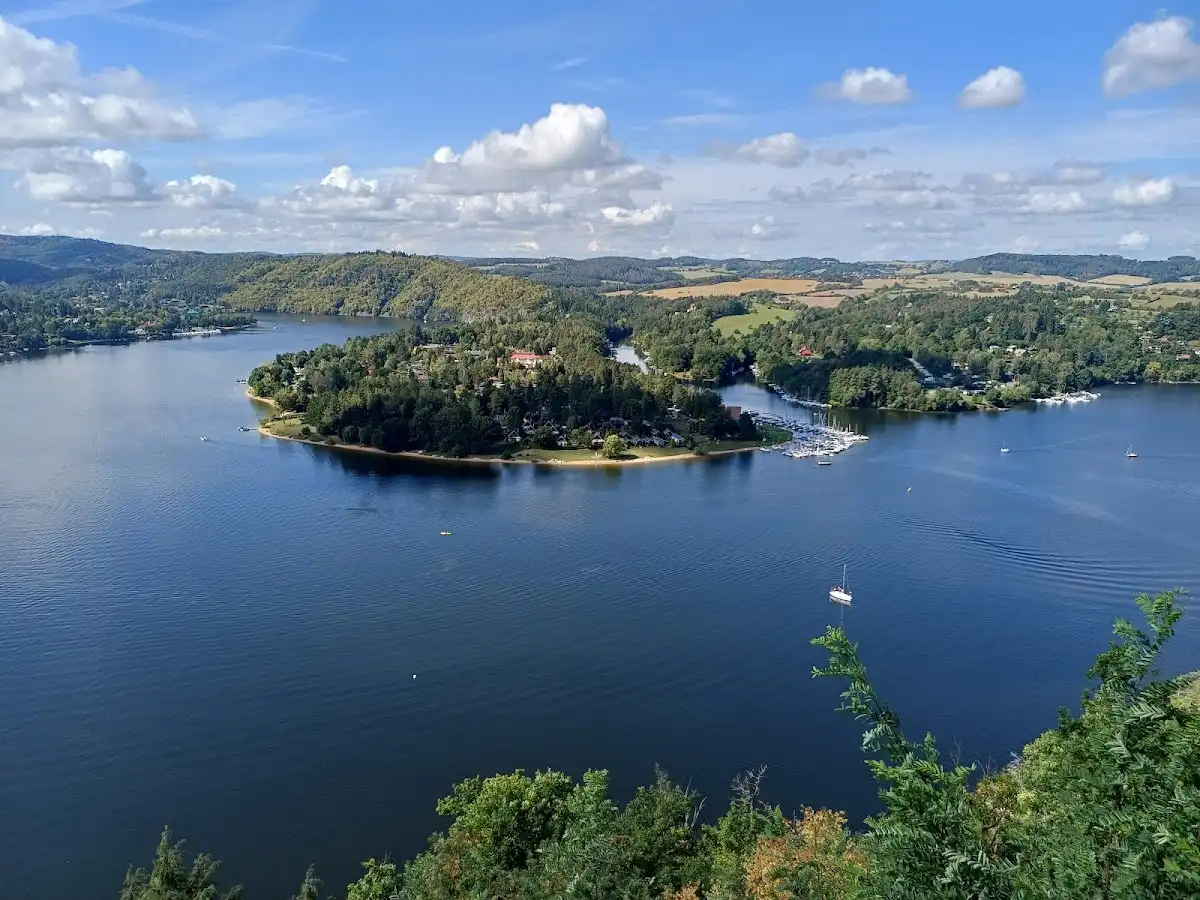
2 Slapská přehrada

forest backdrop, steep cliffs, boat rentals

Swim beneath wooded slopes, rent a paddleboat, or picnic on grassy terraces overlooking deep blue water framed by dramatic hills.

czechia-beach-slapska-prehrada
© Google |

3 Nechranice

windy reservoir, sailing scene, pebble shore

Watch sailboats cut across open water while anglers line the rocky banks and breezes keep the air fresh even on hot days.

Loading the map 🌍

Expert viewTips and Advice from Travelers

How many beaches to visit: Three to four swim stops is the right number for a trip of a week or so. Czech water is pleasant, but it is not the point of the country, and a fifth lake begins to look suspiciously like the fourth. Pick different kinds so each one earns its place, and keep the rest of the days for towns, castles and beer.
Which kind for which traveler: Social travelers should pick a riverside or city-edge spot, where beer stands, volleyball and a lively crowd are the draw, and the train gets you home. Campers and hikers do best at forest lakes and sandstone-region shores, where the swim comes after a walk and the evening ends with a fire pit. Travelers who want space should choose South Bohemian ponds, which are wide, shallow, warm in July and often nearly empty midweek. Skip any … read more 👉
How many beaches to visit: Three to four swim stops is the right number for a trip of a week or so. Czech water is pleasant, but it is not the point of the country, and a fifth lake begins to look suspiciously like the fourth. Pick different kinds so each one earns its place, and keep the rest of the days for towns, castles and beer.
Which kind for which traveler: Social travelers should pick a riverside or city-edge spot, where beer stands, volleyball and a lively crowd are the draw, and the train gets you home. Campers and hikers do best at forest lakes and sandstone-region shores, where the swim comes after a walk and the evening ends with a fire pit. Travelers who want space should choose South Bohemian ponds, which are wide, shallow, warm in July and often nearly empty midweek. Skip any shoreline marketed as a resort near a road junction. It will have parking, noise and a sandwich queue, and very little else.
What it costs: Expect US$35 to 60 a day (roughly 800 to 1,400 CZK) when you mix hostel beds or campsites with kiosk food and local transport. Camping runs about 200 to 450 CZK per person a night. Beach entry is often free, though managed lakes and swimming areas charge around 50 to 150 CZK, and parking can add 50 to 200 CZK. A kiosk lunch of fried cheese or a sausage and a beer costs about 150 to 250 CZK. Regional trains and buses commonly cost 100 to 400 CZK per leg, so a beach day with transport lands near 400 to 800 CZK including food.
Safety: The main hazards are cold water, sudden storms and algae. Cyanobacteria blooms can close beaches in hot spells, so check the posted water-quality notice or the national water-quality map before you swim. Flooded quarries can be deep and cold, with steep drop-offs and unseen debris, so stay in marked swimming areas. Lightning on open shorelines is a real risk, so leave the water at the first rumble.
Local etiquette: Nudity is relaxed at many Czech lakes, and naturist stretches are common and usually signposted, so do not be surprised by it, and do not photograph people. Keep voices down in the evening, carry out your trash and never light fires outside designated spots. Bring cash in koruna, because many kiosks do not take cards, and bring your own towel and flip-flops, because rented loungers are not a given.

✈️ The backpacker research shortcutCzechia Travel Guide

An offline-friendly backpacking guide with optimized travel routes, ranked highlights, transport advice, and the best areas to stay.
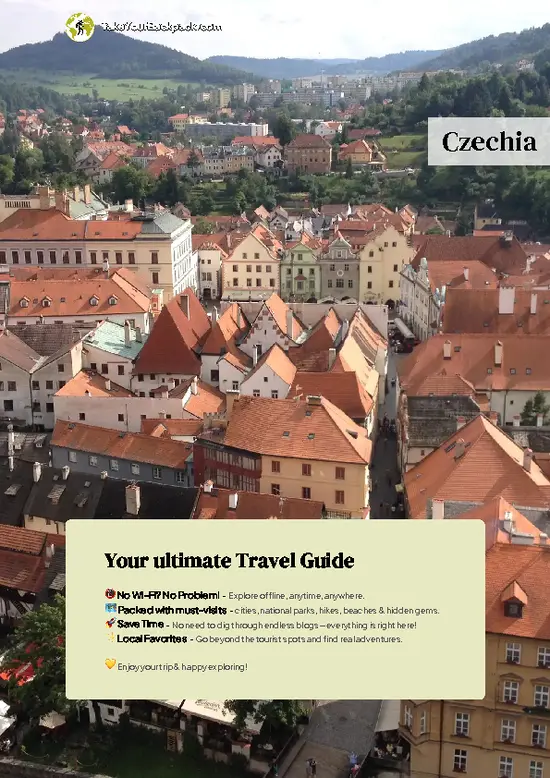
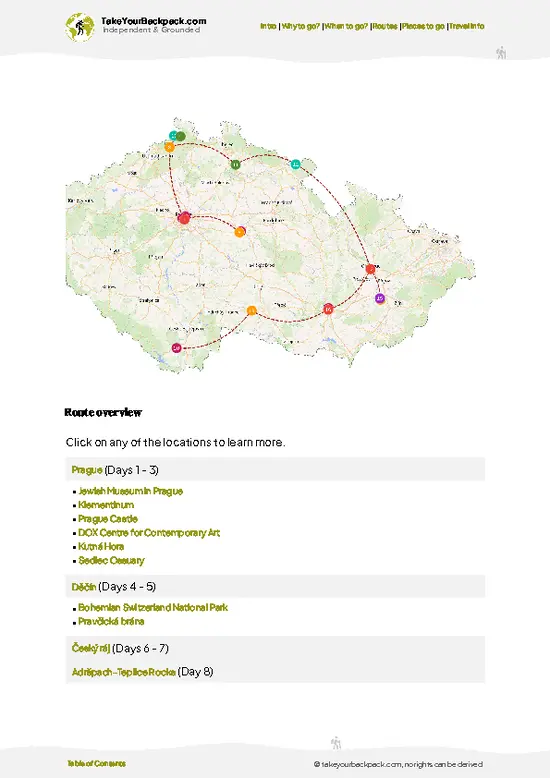
example page 0 from our offline Travel Guide for Czechia
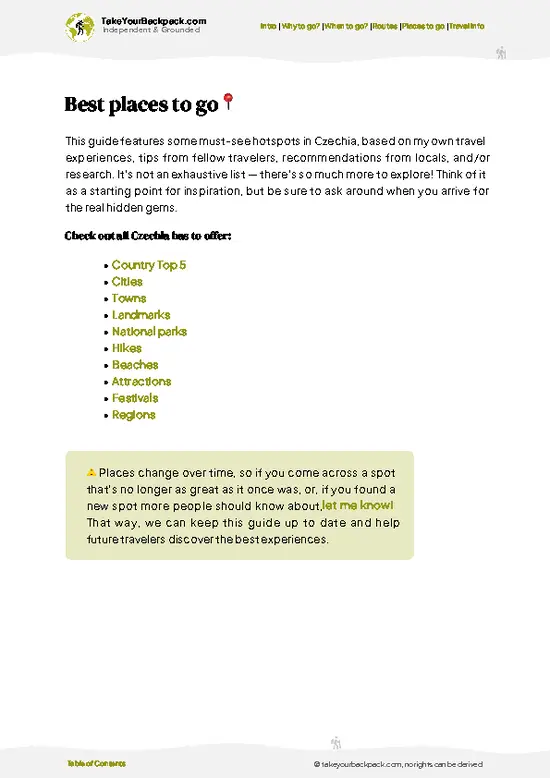
example page 1 from our offline Travel Guide for Czechia
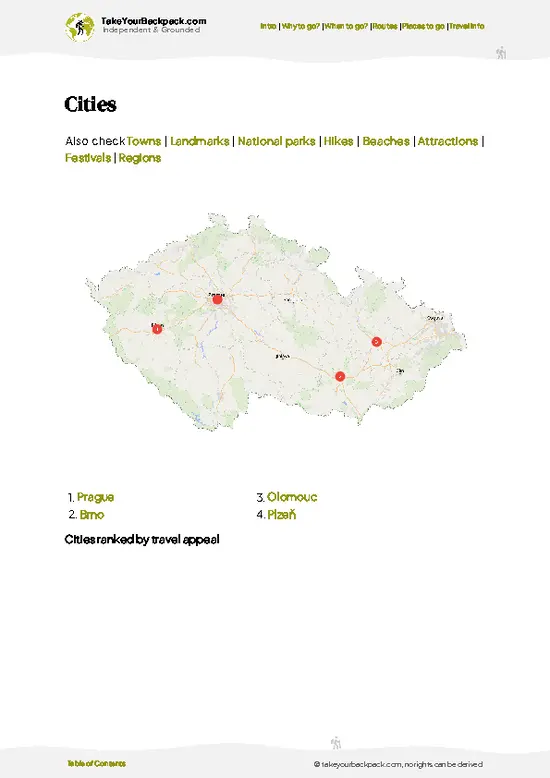
example page 2 from our offline Travel Guide for Czechia
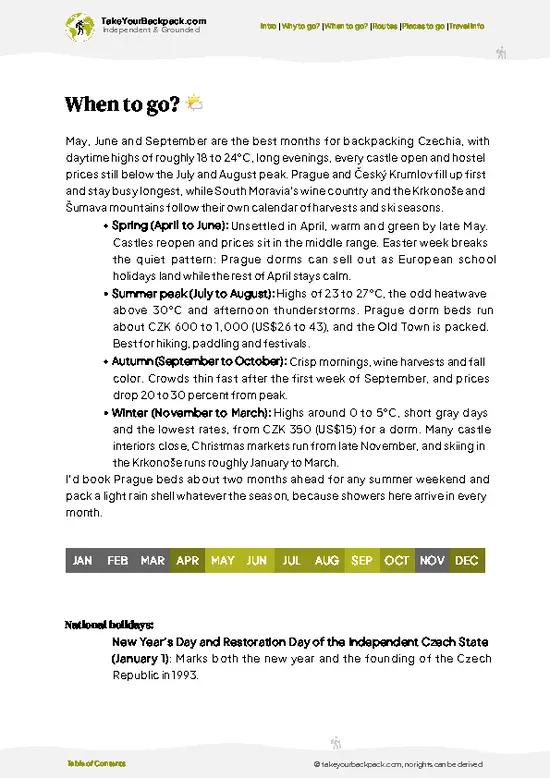
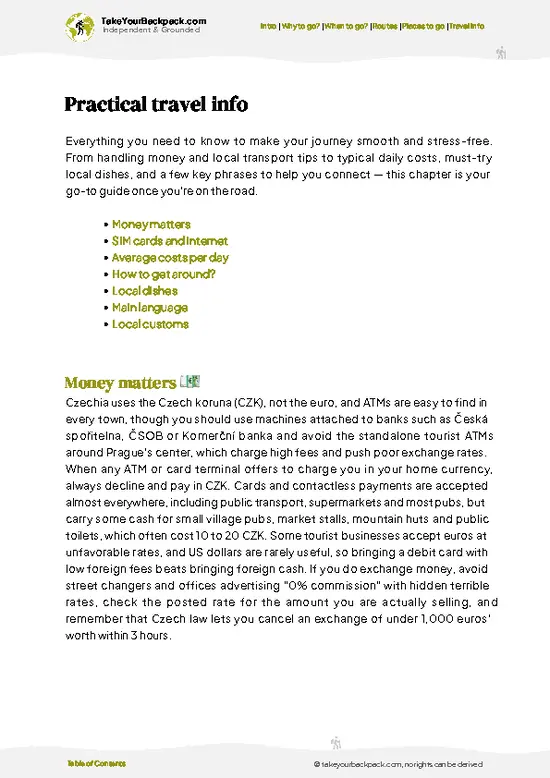
example page 3 from our offline Travel Guide for Czechia
example page 4 from our offline Travel Guide for Czechia
example page 5 from our offline Travel Guide for Czechia
example page 6 from our offline Travel Guide for Czechia
example page 7 from our offline Travel Guide for Czechia
The digital guide (321 pages) contains:
✅ 88 highlights, ranked by travel appeal
✅ Optimized 5, 10 & 15-day travel routes
✅ Cities, national parks, landmarks, beaches
✅ How to get around
✅ Offline-friendly for travel without Wi-Fi
👉 Click to see all 30+ guide features

📅 Plan smarter in minutes, not weeks
✅ Month by month travel advice
✅ Festivals & national holidays
✅ Budget expectations

🗺️ Go to the right places, skip the overrated ones
✅ Honest pros & cons of destinations
✅ Top hikes, parks & viewpoints
✅ Lesser-known places most travelers miss
✅ Clear “worth it vs skip it” guidance

🛏️ Travel smoothly without rookie mistakes
✅ Best areas to stay
✅ Transport systems explained simply
✅ Common scams & safety advice
✅ SIM cards, money & practical tips

🌍 Understand the country, not just visit it
✅ Culture & traditions
✅ 52 Essential phrases & customs
✅ Festivals worth planning around
✅ Traveler-friendly historical context
✅ Insights that make places more meaningful

📱 Built for real travel conditions
✅ Fully downloadable PDF
✅ Works completely offline
✅ Optimized for phone use
✅ Useful in remote areas & buses
✅ Everything in one place
Stop searching, start planning
Get instant access to your full guide. 30‑day money-back guarantee.
+ Add another guide for just

By proceeding you agree to our terms.
Sent to your inbox immediately after payment • 100% Secure Checkout
Best Backpacking Travel Advisor 2025 tourism awardBest Backpacking
Travel Advisor
2025
What others say about Take Your Backpack Guides:
⭐⭐⭐⭐⭐
Fantastic, amazing amount of information!
⭐⭐⭐⭐⭐
My goodness this is amazing, it's what I've been looking for hats off too you!
⭐⭐⭐⭐⭐
I think this is absolutely BRILLIANT
⭐⭐⭐⭐
Very complete and informative. It's still missing places, but I gotta to commend you
⭐⭐⭐⭐⭐
This is truly amazing, thank you, can't wait to explore it with my kids!
⭐⭐⭐⭐⭐
Awesome resource, thank you!
⭐⭐⭐⭐⭐
This is amazing! Can't wait to explore the ones I haven't seen
⭐⭐⭐⭐
I love this! Well done, great idea.
⭐⭐⭐⭐⭐
Thanks for taking the time to make this gem!
⭐⭐⭐⭐⭐
This might be the best website I've ever seen.
⭐⭐⭐⭐⭐
Congratulations, and thank you so much for your work; it's incredibly valuable.
⭐⭐⭐⭐
In all seriousness I think you did a great job pointing out the important spots
⭐⭐⭐⭐⭐
10/10 very good
⭐⭐⭐⭐⭐
As someone who's only just starting to visit regularly this is awesome, thank you.
⭐⭐⭐⭐
Thank you very much! I'm going to visit my dad, it's going to be very useful!
⭐⭐⭐⭐⭐
This is really cool! We'll be travelling for the first time and this definitely come in handy.
⭐⭐⭐⭐⭐
You are now our minister of culture, congratulations 👨‍💼
⭐⭐⭐⭐⭐
Just wanted to tell you that this is a pearl! Going to follow your recommendations.
⭐⭐⭐⭐⭐
This is so cool. I'll definitely be using the resource for my travels soon.
⭐⭐⭐⭐⭐
This is very impressive! Good work.
⭐⭐⭐⭐⭐
This is an amazing and informative site. Very well done!

🛏️ Where to stay?Where to Stay: Czechia Edition

Czechia has plenty of hostels and budget guesthouses, with Prague dorm beds usually running 400 to 800 CZK (about US$17 to 35) and private rooms in smaller towns often cheaper. In Prague, Staré Město (Old Town) and Nové Město (New Town) put you within walking distance of the main sights and late bars but cost the most and get loud, Žižkov has cheaper beds and dive-bar nightlife a short tram ride out, and leafy Vinohrady or Holešovice trade a 10 to 20 minute commute for quieter streets and local cafés. Outside the capital, Brno has a lively student-driven hostel scene around its compact center, while Český Krumlov fills its small old-town guesthouses fast in summer, so book ahead there.

If you … read more 👉
Czechia has plenty of hostels and budget guesthouses, with Prague dorm beds usually running 400 to 800 CZK (about US$17 to 35) and private rooms in smaller towns often cheaper. In Prague, Staré Město (Old Town) and Nové Město (New Town) put you within walking distance of the main sights and late bars but cost the most and get loud, Žižkov has cheaper beds and dive-bar nightlife a short tram ride out, and leafy Vinohrady or Holešovice trade a 10 to 20 minute commute for quieter streets and local cafés. Outside the capital, Brno has a lively student-driven hostel scene around its compact center, while Český Krumlov fills its small old-town guesthouses fast in summer, so book ahead there.

If you enjoy meeting fellow travelers, consider choosing hostels with high ratings for atmosphere. On the other hand, if you prefer having your own space, a hotel might be a better option.

CzechiaExplore Beyond This Category

👋 Meet the founderWho’s Behind Take Your Backpack?

Johan, backpacker and founder of TakeYourBackpackHi, I’m Johan (Netherlands 🇳🇱), the creator of TakeYourBackpack. Over the past 3 decades, I’ve backpacked through 90+ countries across six continents, gaining extensive experience with independent travel, long-term trips, and overland routes.

This site is built on a combination of firsthand travel experience and carefully curated insights from other backpackers. Many guides are based on places I’ve personally visited, while others bring together tips, observations, and practical advice shared by trusted travelers I’ve met along the way.

The goal is to provide realistic, experience-driven guidance — not generic itineraries — so you can explore destinations with better context, clearer expectations, and more confidence.