×

Czechia🇨🇿 | best attractionsYour Guide to the 10 Best attractions in Czechia

Czechia (or Czech Republic) packs an absurd number of castles, chateaux and medieval town squares into a country smaller than South Carolina, so choosing matters more than finding. Prague is the obvious magnet: crowded, photogenic and priced accordingly. Head into Bohemia or Moravia and entry fees drop, queues vanish and the beer gets cheaper than the bottled water. Trains and buses reach nearly every town, which makes independent travel and backpacking easy, though a few castles sit a walk from the station. Expect indoor tours, a guide who reads from a script, and a lot of well-preserved stone.

By Johan Kruseman 🇳🇱 | Updated October 19, 2026
Explore the best festivals in Czechia

Why go?Key Factors That Shape the Experience

Czechia sits at the crossroads of Europe, and every empire that passed through left something behind. The Habsburgs, the Holy Roman emperors, the Hussites and the Communists all built, fortified or repurposed things, and the country was spared the heavy bombing that flattened much of its neighbors. The result is an unusually intact historic fabric: medieval town centers, hundreds of castles and chateaux, and Baroque churches that survived mostly because nobody got around to knocking them down.

Geography adds a second layer. Sandstone rock towns, forested hills and spa valleys sit within a few hours of each other, so variety comes cheap. The rail and bus network is dense and inexpensive, and signs, tickets and staff in major sites usually handle English without drama.

Before committing, know … read more 👉
Czechia sits at the crossroads of Europe, and every empire that passed through left something behind. The Habsburgs, the Holy Roman emperors, the Hussites and the Communists all built, fortified or repurposed things, and the country was spared the heavy bombing that flattened much of its neighbors. The result is an unusually intact historic fabric: medieval town centers, hundreds of castles and chateaux, and Baroque churches that survived mostly because nobody got around to knocking them down.

Geography adds a second layer. Sandstone rock towns, forested hills and spa valleys sit within a few hours of each other, so variety comes cheap. The rail and bus network is dense and inexpensive, and signs, tickets and staff in major sites usually handle English without drama.

Before committing, know three things. Many castles and chateaux sell guided tours only, at fixed times, often in Czech unless you pay for an English slot. Most close on Mondays and shut outside the main season, from roughly November to March. And attractions here lean toward history and architecture, so travelers wanting big-ticket adventure sports or dramatic mountains will find a gentler menu. For everyone else, it is a rare place where depth costs little and the beer is a fair reward for all that standing in cold stone rooms.
Our Approach to Ranking
The list of best attractions in Czechia is created based on cultural significance or entertainment value. If you feel a attraction is missing in this list, please let us know.

When to go?Best Time to Visit Czechia for attractions

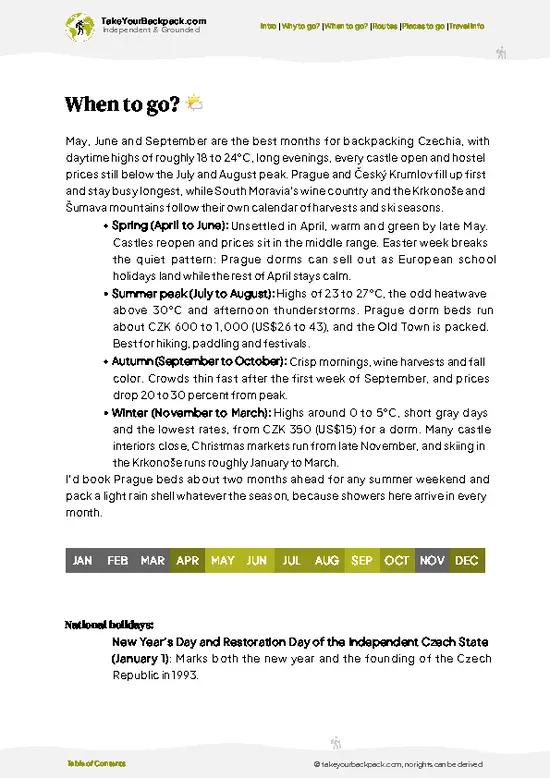
Best months and why: May, June and September are the best months for attractions in Czechia, with daytime highs of about 15 to 24°C, most sites fully open and queues far shorter than in midsummer. Czechia has a continental climate, which means all four seasons show up and none of them apologizes.

Summer, shoulder seasons and winter: July and August bring 22 to 30°C and the heaviest crowds, especially in Prague and Český Krumlov, where accommodation can run 30 to 60 percent above spring rates. Thunderstorms are common, so a rainy afternoon is a fine excuse for an indoor tour. April and October are shoulder months with 8 to 16°C, lighter crowds and the odd castle still on reduced hours. Many chateaux and castles open only on weekends in April and October, and close entirely from roughly November … read more 👉
Best months and why: May, June and September are the best months for attractions in Czechia, with daytime highs of about 15 to 24°C, most sites fully open and queues far shorter than in midsummer. Czechia has a continental climate, which means all four seasons show up and none of them apologizes.

Summer, shoulder seasons and winter: July and August bring 22 to 30°C and the heaviest crowds, especially in Prague and Český Krumlov, where accommodation can run 30 to 60 percent above spring rates. Thunderstorms are common, so a rainy afternoon is a fine excuse for an indoor tour. April and October are shoulder months with 8 to 16°C, lighter crowds and the odd castle still on reduced hours. Many chateaux and castles open only on weekends in April and October, and close entirely from roughly November to March, so check ahead.

Winter runs about -5 to 3°C, with snow likely in the mountains of the Krkonoše and Šumava and in Bohemian-Moravian uplands. Prague stays open and is atmospheric, and December markets push prices up for a few weeks, but countryside sites go quiet or shut. Rain falls year-round, peaking in summer, with roughly 500 to 700 mm annually in lowland areas and more in the mountains. Pack layers, because a May morning can feel like March.

attraction hoppingHow to Combine attractions Into One Trip

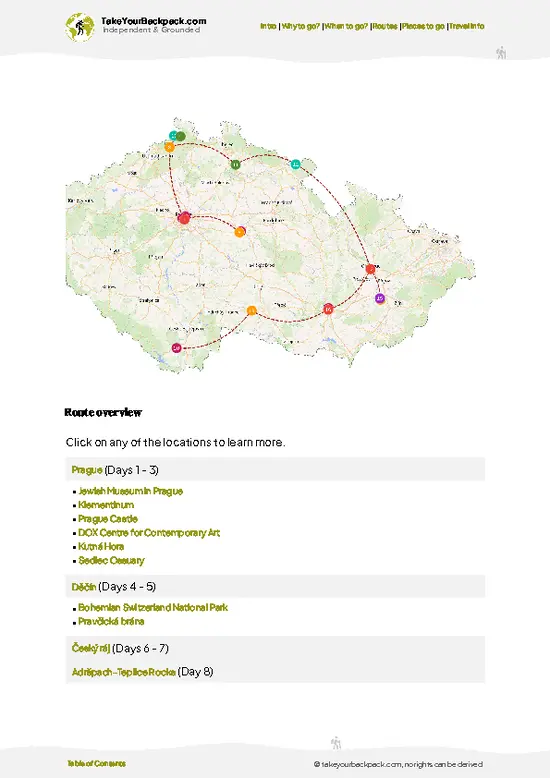
How many days to plan: A trip combining several attractions in Czechia needs 7 to 10 days, which is enough to cover Prague plus two or three other regions without living on a train platform.

Grouping regions and direction: Start in Prague, the transport hub, then radiate outward. Central and South Bohemia cluster well, with trains from Prague to Kutná Hora in about an hour and to České Budějovice in roughly 2.5 hours. From there, buses link on to South Bohemian towns. Moravia works as a second loop: Brno is about 2.5 hours from Prague by train and acts as a base for the surrounding area. Travel in one direction, Prague to the south, then east into Moravia, and finish with a train or bus back, rather than doubling back. Northern Bohemia and the rock towns pair better with a separate trip from … read more 👉
How many days to plan: A trip combining several attractions in Czechia needs 7 to 10 days, which is enough to cover Prague plus two or three other regions without living on a train platform.

Grouping regions and direction: Start in Prague, the transport hub, then radiate outward. Central and South Bohemia cluster well, with trains from Prague to Kutná Hora in about an hour and to České Budějovice in roughly 2.5 hours. From there, buses link on to South Bohemian towns. Moravia works as a second loop: Brno is about 2.5 hours from Prague by train and acts as a base for the surrounding area. Travel in one direction, Prague to the south, then east into Moravia, and finish with a train or bus back, rather than doubling back. Northern Bohemia and the rock towns pair better with a separate trip from Prague or Dresden.

Time per stop and common mistakes: Allow half a day for a small town or chateau, a full day for larger sites, and 2 to 3 days for Prague. Travel between regions usually takes 2 to 4 hours. The classic mistake is cramming three castles into one day, forgetting that tours start at fixed times and rural buses thin out after mid-afternoon. Another is skipping Monday closures. Plan one major stop a day, check timetables the night before, and treat any castle reached by a village bus as its own mission.

The ListTop attractions of Czechia

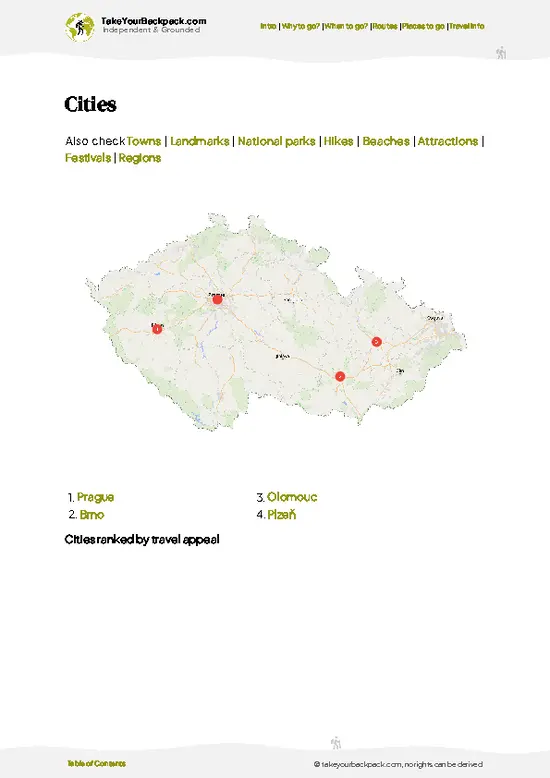
1 Prague Castle

cathedral spires, royal courtyards, mosaic gates

Wander through vast grounds featuring palaces, gardens, and St. Vitus Cathedral, with layered architecture spanning centuries of Czech history.

czechia-attraction-prague-castle
© Google |

2 Český Krumlov Castle

hilltop fortress, painted tower, preserved stage machinery

Climb castle courtyards and visit a rare Baroque theatre, where original stage sets and mechanisms remain intact for guided tours.

czechia-attraction-cesky-krumlov-castle
© Google |

3 Sedlec Ossuary

ossuary chapel, human skulls, gothic crypt

Step inside a chapel decorated with thousands of human bones, arranged into chandeliers, coats of arms, and haunting sculptures.

czechia-attraction-sedlec-ossuary
© Google |

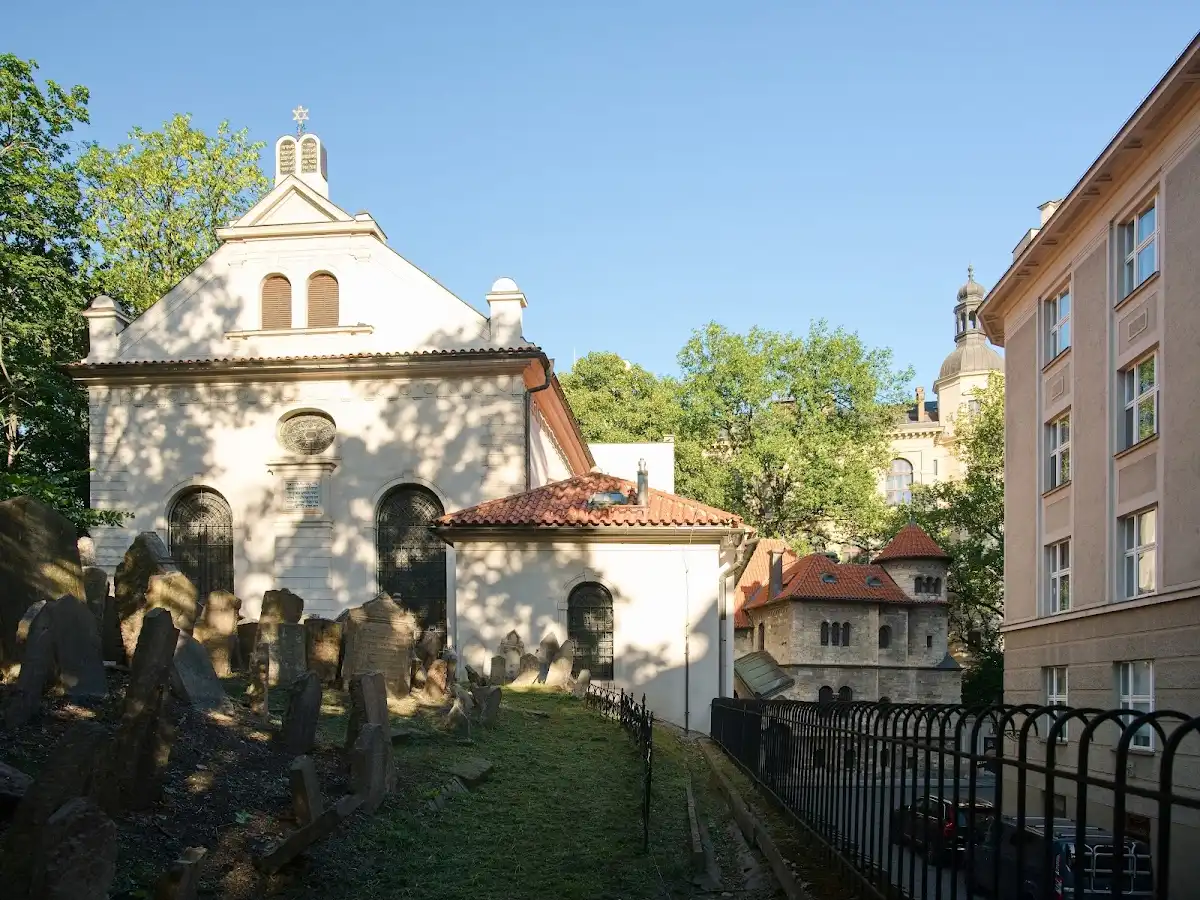
4 Jewish Museum in Prague

layered gravestones, synagogue exhibits, centuries-old tombs

Trace Jewish history through narrow paths lined with tilted headstones and museum collections documenting Prague’s Jewish community.

czechia-attraction-jewish-museum-in-prague
© Google |

5 Villa Tugendhat

modernist architecture, glass walls, Mies van der Rohe design

Tour a pioneering modern home featuring open-plan interiors, custom furnishings, and panoramic garden views through floor-to-ceiling windows.

czechia-attraction-villa-tugendhat
© Google |

6 Vyšehrad

rampart views, underground passages, rotunda chapel

Explore hilltop fortifications overlooking the Vltava, with leafy parks, ancient burial sites, and vaulted tunnels beneath the ramparts.

czechia-attraction-vysehrad
© Google |

7 Klementinum

astronomical tower, frescoed library, rare manuscripts

Tour a sprawling complex with a renowned library, astronomical instruments, and panoramic city views from the historic tower.

8 Terezín Memorial

former garrison town, Holocaust remembrance, museum exhibitions

Reflect at a site used as a wartime ghetto and prison, with barracks, cemeteries, and exhibits documenting the lives of its inhabitants.

9 Pilsner Urquell Brewery

brew kettles, lager cellars, tasting halls

Follow the brewing process from copper tanks to underground lagering tunnels, ending with a glass of unfiltered Pilsner tapped from the barrel.

czechia-attraction-pilsner-urquell-brewery
© Google |

10 Dolní Vítkovice Industrial Area

blast furnaces, steelworks, industrial heritage

Walk through repurposed factory grounds where towering machinery and rusted pipes reveal the region’s industrial transformation and cultural revival.

czechia-attraction-dolni-vitkovice-industrial-area
© Google |

11 Estates Theatre

classical stage, Mozart premiere, ornate auditorium

Attend a performance in a venue where Mozart debuted Don Giovanni, surrounded by preserved interiors and centuries-old acoustics.

12 National Theatre

riverfront landmark, gilded interiors, opera and ballet

Watch Czech opera or ballet in a grand building overlooking the Vltava, known for its gold-capped roof and detailed murals.

13 Labyrinth under the Cabbage Market

subterranean passages, medieval cellars, market square

Descend beneath Brno’s central market to navigate a network of chambers once used for food storage, wine aging, and city defense.

14 Škoda Museum

vintage cars, automotive prototypes, factory origins

View classic vehicles and early engineering designs in a museum tracing the evolution of Czech automotive manufacturing from bicycles to modern cars.

15 DOX Centre for Contemporary Art

modern exhibitions, rooftop airship, urban gallery

Experience rotating installations and provocative works in a converted factory, with striking architecture and a rooftop zeppelin structure.

Think you know Czechia?

Prove you’re a true local — uncover 5 lesser-known attractions in Czechia that locals tend to keep to themselves.
Loading the map 🌍

Expert viewTips and Advice from Travelers

How many attractions to visit: Aim for one major attraction per day, and no more than 6 to 8 in a 10-day trip. Czech sites are often tour-based, so each one eats two to three hours once you add the wait for the next slot, and the fifth chateau starts to look suspiciously like the fourth. Fewer, better-chosen stops leave room for wandering, which is what backpacking is for.

What to prioritize: History lovers should spend on castles, monasteries and one of the big Prague sites, because the depth here is exceptional. If you prefer outdoors, put rock towns, forests and hiking first, and use one town-based sight as a rainy-day fallback. Culture and nightlife travelers can stay city-based and add a single day trip. Skip the second and third guided chateau tour if you are not into furniture and … read more 👉
How many attractions to visit: Aim for one major attraction per day, and no more than 6 to 8 in a 10-day trip. Czech sites are often tour-based, so each one eats two to three hours once you add the wait for the next slot, and the fifth chateau starts to look suspiciously like the fourth. Fewer, better-chosen stops leave room for wandering, which is what backpacking is for.

What to prioritize: History lovers should spend on castles, monasteries and one of the big Prague sites, because the depth here is exceptional. If you prefer outdoors, put rock towns, forests and hiking first, and use one town-based sight as a rainy-day fallback. Culture and nightlife travelers can stay city-based and add a single day trip. Skip the second and third guided chateau tour if you are not into furniture and portraits, and skip anything in Prague’s Old Town that charges for a view you can get free from a bridge or a hill. The crowded clock-and-square circuit is worth ten minutes, not an afternoon.

What it costs: A realistic budget is US$40 to 70 a day outside Prague and US$60 to 100 inside it, covering a hostel dorm, meals, local transport and one or two entries. Entry fees for castles and chateaux typically run about 150 to 400 CZK (US$7 to 18), and Prague’s headline sights can cost 250 to 500 CZK (US$11 to 22). English tours often add 50 to 150 CZK (US$2 to 7), and are worth paying when the Czech tour is the only alternative. Regional trains and buses cost about 100 to 300 CZK (US$4 to 13) per leg. Combined passes in Prague are poor value unless you plan to see many sites in two days, so do the sums first.

Safety and etiquette: Czechia is safe, and the main risk is pickpockets in tourist-heavy parts of Prague, particularly on crowded trams and around the main squares. Keep phones and wallets in zipped pockets. Use licensed taxis or ride apps rather than hailing cars on the street, since airport and center overcharging is a known nuisance. Photography rules vary, and many interiors ban flash or all photos unless you buy a permit, so look for the sign before you raise the camera. Shoe covers are sometimes provided in chateaux, and you are expected to wear them. Dress modestly in active churches and keep voices low. Most sites accept cards, but small rural ones sometimes want cash, so carry a few hundred crowns. Finally, learn dobrý den (hello) and děkuji (thank you). A cheerful attempt, even a mangled one, tends to get you a warmer reception than perfect English.

✈️ The backpacker research shortcutCzechia Travel Guide

An offline-friendly backpacking guide with optimized travel routes, ranked highlights, transport advice, and the best areas to stay.
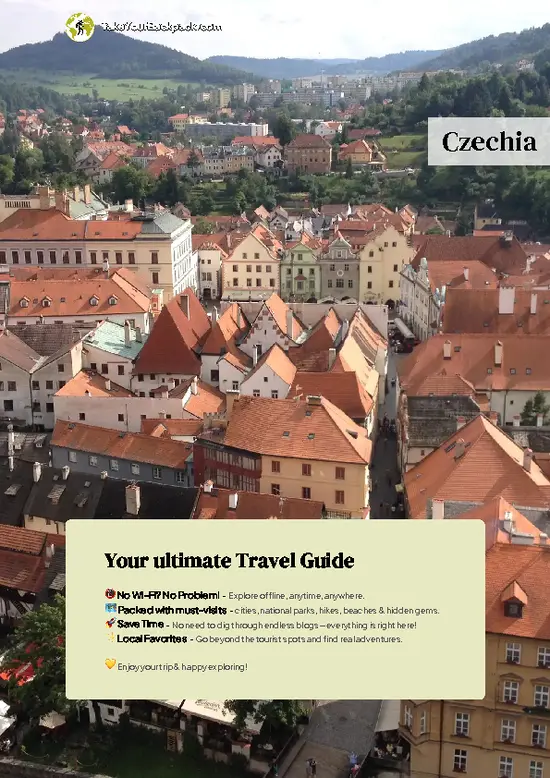
example page 0 from our offline Travel Guide for Czechia
example page 1 from our offline Travel Guide for Czechia
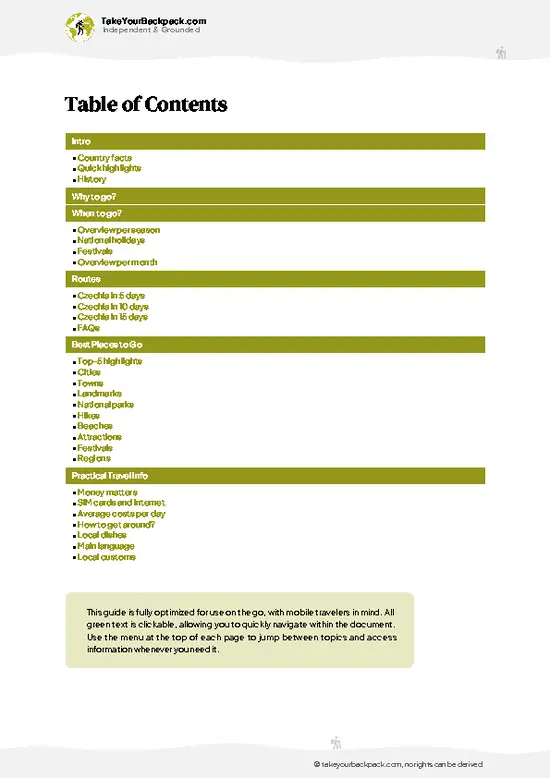
example page 2 from our offline Travel Guide for Czechia
example page 3 from our offline Travel Guide for Czechia
example page 4 from our offline Travel Guide for Czechia
example page 5 from our offline Travel Guide for Czechia
example page 6 from our offline Travel Guide for Czechia
example page 7 from our offline Travel Guide for Czechia
The digital guide (321 pages) contains:
✅ 88 highlights, ranked by travel appeal
✅ Optimized 5, 10 & 15-day travel routes
✅ Cities, national parks, landmarks, beaches
✅ How to get around
✅ Offline-friendly for travel without Wi-Fi
👉 Click to see all 30+ guide features

📅 Plan smarter in minutes, not weeks
✅ Month by month travel advice
✅ Festivals & national holidays
✅ Budget expectations

🗺️ Go to the right places, skip the overrated ones
✅ Honest pros & cons of destinations
✅ Top hikes, parks & viewpoints
✅ Lesser-known places most travelers miss
✅ Clear “worth it vs skip it” guidance

🛏️ Travel smoothly without rookie mistakes
✅ Best areas to stay
✅ Transport systems explained simply
✅ Common scams & safety advice
✅ SIM cards, money & practical tips

🌍 Understand the country, not just visit it
✅ Culture & traditions
✅ 52 Essential phrases & customs
✅ Festivals worth planning around
✅ Traveler-friendly historical context
✅ Insights that make places more meaningful

📱 Built for real travel conditions
✅ Fully downloadable PDF
✅ Works completely offline
✅ Optimized for phone use
✅ Useful in remote areas & buses
✅ Everything in one place
Stop searching, start planning
Get instant access to your full guide. 30‑day money-back guarantee.
+ Add another guide for just

By proceeding you agree to our terms.
Sent to your inbox immediately after payment • 100% Secure Checkout
Best Backpacking Travel Advisor 2025 tourism awardBest Backpacking
Travel Advisor
2025
What others say about Take Your Backpack Guides:
⭐⭐⭐⭐⭐
Fantastic, amazing amount of information!
⭐⭐⭐⭐⭐
My goodness this is amazing, it's what I've been looking for hats off too you!
⭐⭐⭐⭐⭐
I think this is absolutely BRILLIANT
⭐⭐⭐⭐
Very complete and informative. It's still missing places, but I gotta to commend you
⭐⭐⭐⭐⭐
This is truly amazing, thank you, can't wait to explore it with my kids!
⭐⭐⭐⭐⭐
Awesome resource, thank you!
⭐⭐⭐⭐⭐
This is amazing! Can't wait to explore the ones I haven't seen
⭐⭐⭐⭐
I love this! Well done, great idea.
⭐⭐⭐⭐⭐
Thanks for taking the time to make this gem!
⭐⭐⭐⭐⭐
This might be the best website I've ever seen.
⭐⭐⭐⭐⭐
Congratulations, and thank you so much for your work; it's incredibly valuable.
⭐⭐⭐⭐
In all seriousness I think you did a great job pointing out the important spots
⭐⭐⭐⭐⭐
10/10 very good
⭐⭐⭐⭐⭐
As someone who's only just starting to visit regularly this is awesome, thank you.
⭐⭐⭐⭐
Thank you very much! I'm going to visit my dad, it's going to be very useful!
⭐⭐⭐⭐⭐
This is really cool! We'll be travelling for the first time and this definitely come in handy.
⭐⭐⭐⭐⭐
You are now our minister of culture, congratulations 👨‍💼
⭐⭐⭐⭐⭐
Just wanted to tell you that this is a pearl! Going to follow your recommendations.
⭐⭐⭐⭐⭐
This is so cool. I'll definitely be using the resource for my travels soon.
⭐⭐⭐⭐⭐
This is very impressive! Good work.
⭐⭐⭐⭐⭐
This is an amazing and informative site. Very well done!

🛏️ Where to stay?Top Places to Consider Staying

Czechia has plenty of hostels and budget guesthouses, with Prague dorm beds usually running 400 to 800 CZK (about US$17 to 35) and private rooms in smaller towns often cheaper. In Prague, Staré Město (Old Town) and Nové Město (New Town) put you within walking distance of the main sights and late bars but cost the most and get loud, Žižkov has cheaper beds and dive-bar nightlife a short tram ride out, and leafy Vinohrady or Holešovice trade a 10 to 20 minute commute for quieter streets and local cafés. Outside the capital, Brno has a lively student-driven hostel scene around its compact center, while Český Krumlov fills its small old-town guesthouses fast in summer, so book ahead there.

If you … read more 👉
Czechia has plenty of hostels and budget guesthouses, with Prague dorm beds usually running 400 to 800 CZK (about US$17 to 35) and private rooms in smaller towns often cheaper. In Prague, Staré Město (Old Town) and Nové Město (New Town) put you within walking distance of the main sights and late bars but cost the most and get loud, Žižkov has cheaper beds and dive-bar nightlife a short tram ride out, and leafy Vinohrady or Holešovice trade a 10 to 20 minute commute for quieter streets and local cafés. Outside the capital, Brno has a lively student-driven hostel scene around its compact center, while Český Krumlov fills its small old-town guesthouses fast in summer, so book ahead there.

If you enjoy meeting fellow travelers, consider choosing hostels with high ratings for atmosphere. On the other hand, if you prefer having your own space, a hotel might be a better option.

CzechiaMore Places Across Czechia

👋 Meet the founderWho’s Behind Take Your Backpack?

Johan, backpacker and founder of TakeYourBackpackHi, I’m Johan (Netherlands 🇳🇱), the creator of TakeYourBackpack. Over the past 3 decades, I’ve backpacked through 90+ countries across six continents, gaining extensive experience with independent travel, long-term trips, and overland routes.

This site is built on a combination of firsthand travel experience and carefully curated insights from other backpackers. Many guides are based on places I’ve personally visited, while others bring together tips, observations, and practical advice shared by trusted travelers I’ve met along the way.

The goal is to provide realistic, experience-driven guidance — not generic itineraries — so you can explore destinations with better context, clearer expectations, and more confidence.