×

Czechia🇨🇿 | best hikesYour Guide to the 11 Best hikes in Czechia

Hikes in Czechia come with a safety net most countries can only dream of: a red, blue, green or yellow stripe painted on a tree every few hundred meters, plus a pub waiting at the end. The Krkonoše and Bohemian Switzerland draw weekend crowds from Prague, while Šumava and the Beskydy stay quieter and cheaper. The sandstone towers of Český ráj and the Adršpach area sit close to rail lines, which suits independent travel without a car. Expect beer at around 40 to 70 CZK even on summits, and expect to share the path with retirees who outpace you in sandals.

By Johan Kruseman 🇳🇱 | Updated October 19, 2026
Explore the best beaches in Czechia

Why go?Key Factors That Shape the Experience

Czechia is one of the easiest countries in Europe to hike without planning anything, and the reason is a 1888 trail-marking system run by the Czech Tourist Club (KČT). Its color-coded stripes cover tens of thousands of kilometers, and the signposts show walking times in hours, not distances. Hiking here is a national habit, so the infrastructure follows: a mountain hut (chata) with hot goulash appears just when your enthusiasm fades.

The geography is modest. The highest point, Sněžka, reaches 1,603 meters, so this is low-to-mid mountain walking, not alpine terrain. Sandstone rock cities, forested ridges and border highlands define the landscape, and a good map matters more than technical gear. Anyone chasing glaciers or multi-day wilderness will be disappointed.

The borders matter too. Several … read more 👉
Czechia is one of the easiest countries in Europe to hike without planning anything, and the reason is a 1888 trail-marking system run by the Czech Tourist Club (KČT). Its color-coded stripes cover tens of thousands of kilometers, and the signposts show walking times in hours, not distances. Hiking here is a national habit, so the infrastructure follows: a mountain hut (chata) with hot goulash appears just when your enthusiasm fades.

The geography is modest. The highest point, Sněžka, reaches 1,603 meters, so this is low-to-mid mountain walking, not alpine terrain. Sandstone rock cities, forested ridges and border highlands define the landscape, and a good map matters more than technical gear. Anyone chasing glaciers or multi-day wilderness will be disappointed.

The borders matter too. Several of the best areas are national parks with rules about staying on marked trails, and wild camping is generally not allowed. Sleeping happens in huts, pensions or designated camps, which makes planning more important than the gentle terrain suggests. Trains and buses reach most trailheads cheaply, though rural services thin out sharply on Sundays and holidays. Bring cash for small huts, because a remote kiosk may not have heard of card readers. Stamina is rarely tested; patience with timetables is.
How the List Was Created
The list of best hikes in Czechia is created based on scenery, challenge, trail quality, landmarks, and overall enjoyment. If you feel a hike is missing in this list, please let us know.

When to go?Best Time to Visit Czechia for hikes

Best months for hiking: The best months for hiking in Czechia are May to June and September to early October, when daytime highs sit around 15 to 22°C, trails are dry and the forests are either freshly green or turning gold. Summer works too, but July and August bring highs of 22 to 30°C in lowland areas and thunderstorms that arrive in the afternoon with no apology.

Shoulder seasons and winter: April and late October are quiet and cheaper, yet mountain paths in the Krkonoše and Šumava can hold snow or mud, and some huts close for maintenance. From November to March, hiking is realistic only with proper boots, and in high areas with spikes. Snow often lies on ridges above 1,000 meters from December to March, and temperatures drop to -5 to -15°C on exposed summits. Some sandstone-area paths … read more 👉
Best months for hiking: The best months for hiking in Czechia are May to June and September to early October, when daytime highs sit around 15 to 22°C, trails are dry and the forests are either freshly green or turning gold. Summer works too, but July and August bring highs of 22 to 30°C in lowland areas and thunderstorms that arrive in the afternoon with no apology.

Shoulder seasons and winter: April and late October are quiet and cheaper, yet mountain paths in the Krkonoše and Šumava can hold snow or mud, and some huts close for maintenance. From November to March, hiking is realistic only with proper boots, and in high areas with spikes. Snow often lies on ridges above 1,000 meters from December to March, and temperatures drop to -5 to -15°C on exposed summits. Some sandstone-area paths and gorge boat trips close in winter.

Crowds and prices: Weekends and Czech school holidays (July and August) fill the popular parks, and accommodation near trailheads can rise by 20 to 40 percent. Midweek visits in June or September give the same views with fewer selfie sticks. Annual rainfall is roughly 500 to 800 mm in the lowlands and over 1,000 mm in the mountains, with summer the wettest season.

hike hoppingHow to Combine hikes Into One Trip

How long to allow: A trip combining several hikes in Czechia needs 7 to 12 days, which gives each region enough time without turning the schedule into a rail timetable exam.

Which regions pair well: Prague works as the transport hub. Bohemian Switzerland and the sandstone areas to the north sit about 1.5 to 2.5 hours away by train and bus, and Český ráj and the Krkonoše follow a loose arc to the northeast, around 1.5 to 3 hours from the capital. The Šumava lies southwest, 3 to 4 hours away. The Beskydy and Jeseníky sit far east near Ostrava and Olomouc, so they are best treated as a separate leg, 4 to 5 hours by train from Prague. A sensible direction is north first, then east, finishing in Moravia, and avoiding a return through Prague.

Time per stop and common mistakes: Plan 2 to 3 days … read more 👉
How long to allow: A trip combining several hikes in Czechia needs 7 to 12 days, which gives each region enough time without turning the schedule into a rail timetable exam.

Which regions pair well: Prague works as the transport hub. Bohemian Switzerland and the sandstone areas to the north sit about 1.5 to 2.5 hours away by train and bus, and Český ráj and the Krkonoše follow a loose arc to the northeast, around 1.5 to 3 hours from the capital. The Šumava lies southwest, 3 to 4 hours away. The Beskydy and Jeseníky sit far east near Ostrava and Olomouc, so they are best treated as a separate leg, 4 to 5 hours by train from Prague. A sensible direction is north first, then east, finishing in Moravia, and avoiding a return through Prague.

Time per stop and common mistakes: Plan 2 to 3 days per region, including arrival time, since many trailheads depend on a bus that runs only a few times a day. The usual mistake is trying to fit in four regions in a week and spending half of it in transit. Another is relying on weekend travel: rural buses cut services on Sundays and holidays. Pick two or three areas, book the first and last nights, and leave a buffer day for weather. The country is compact, but timetables are not generous.

The ListTop hikes of Czechia

1 Sněžka

Czech Republic’s highest point, border crossing, alpine tundra

Reach the country’s tallest summit via steep paths or cable car, traversing exposed slopes and crossing into Poland at the top.

2 Adršpach-Teplice Rocks

sandstone labyrinths, narrow crevices, sculpted towers

Navigate a maze of towering rock formations, passing through tight corridors and discovering secluded viewpoints along marked trails.

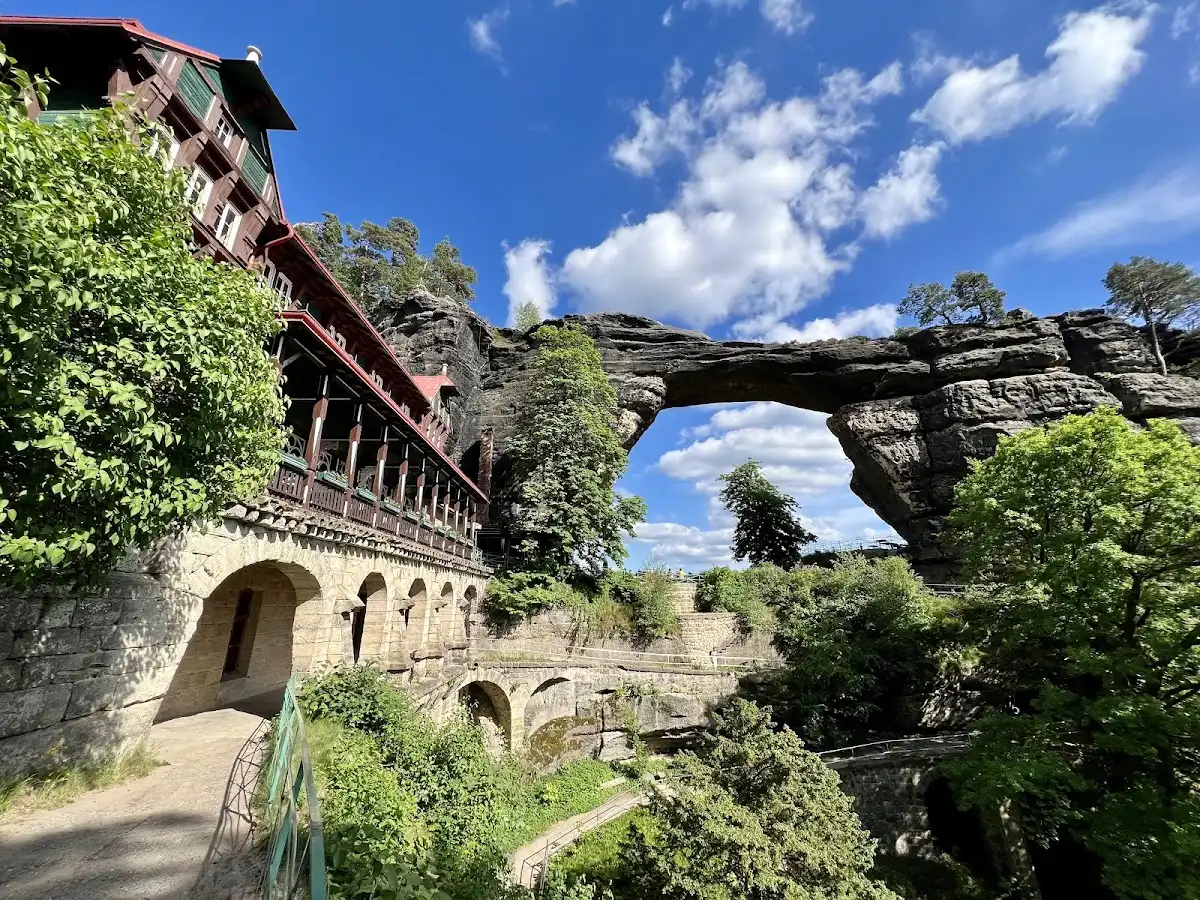
3 Pravčická brána

natural stone arch, sandstone cliffs, forested canyons

Walk through wooded valleys and rocky passages to reach the largest natural arch in Europe, with side trails to scenic overlooks.

czechia-hike-pravcicka-brana
© Google |

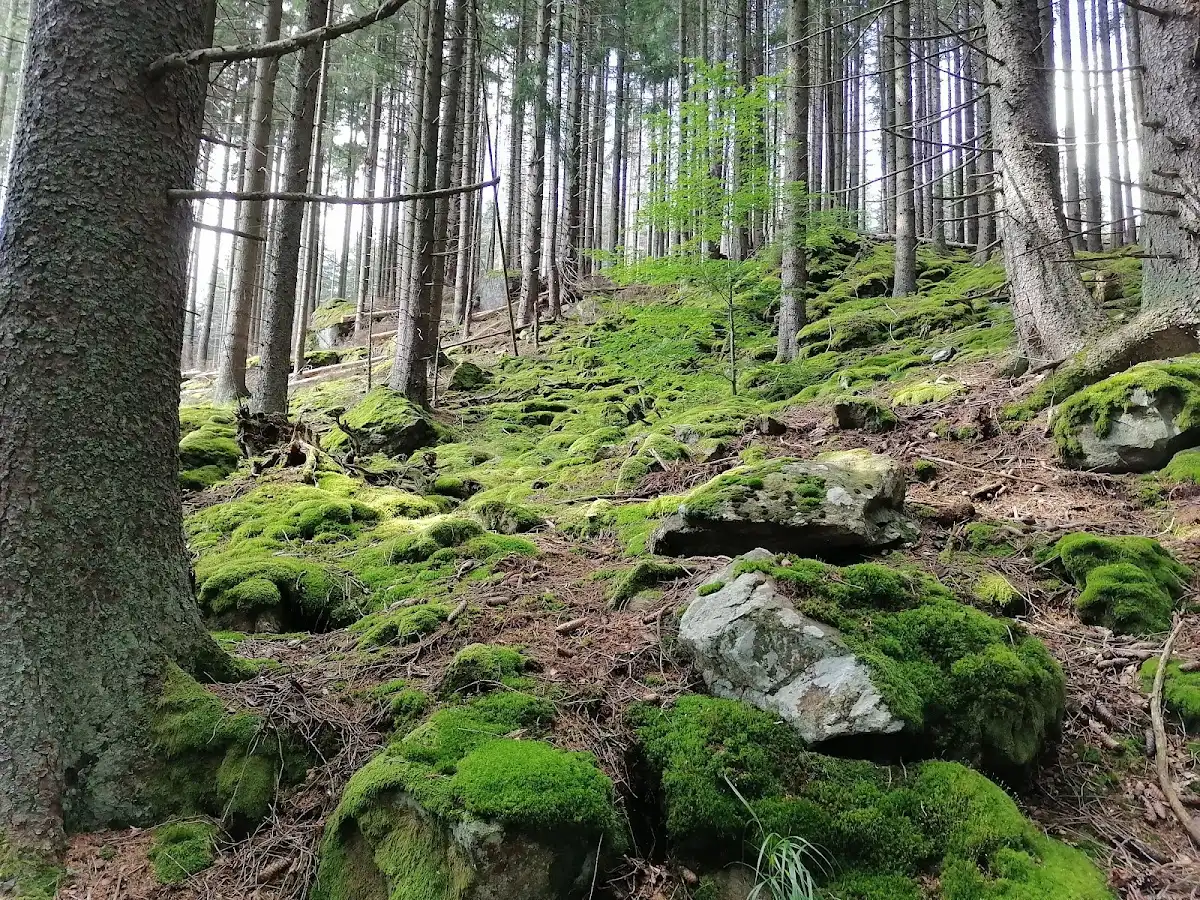
4 Boubín Primeval Forest

primeval woodland, raised bogs, observation tower

Wander through ancient spruce stands and wetland boardwalks, ending at a lookout with views over the forest canopy and distant hills.

czechia-hike-boubin-primeval-forest
© Google |

5 Jizerská magistrála

plateau trails, peat bogs, winter cross-country routes

Travel across open highlands and wetlands, with well-marked paths ideal for both summer hiking and extensive winter skiing.

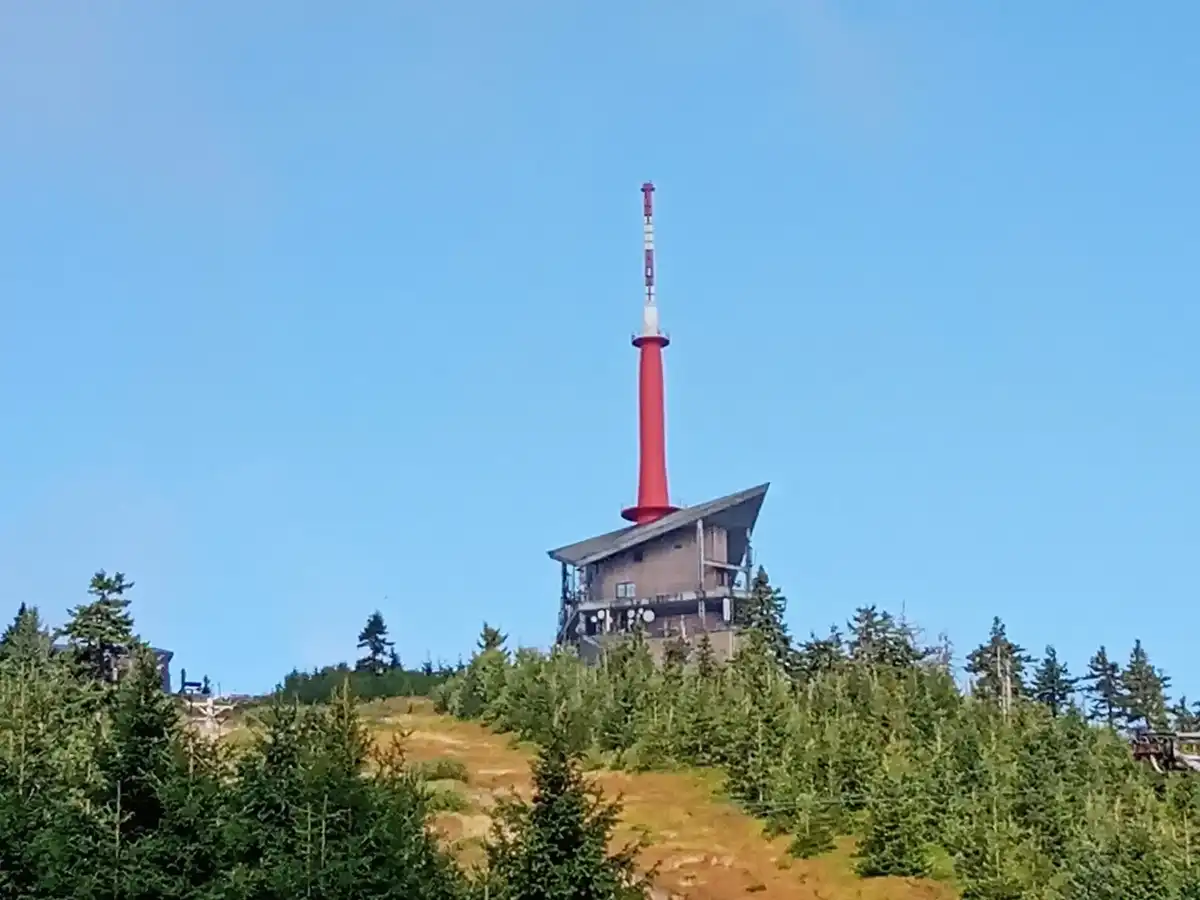
6 Lysá hora

highest Beskydy peak, steep ascents, panoramic shelter

Climb consistently uphill through dense forest to reach a summit hut with broad mountain views and changing weather conditions.

czechia-hike-lysa-hora
© Google | Josef Macháček

7 Pustevny

folk architecture, ridge walks, wooden chapels

Experience a blend of mountain scenery and distinctive wooden buildings, following accessible ridgeline paths with cultural landmarks.

8 Kralický Sněžník

border summit, alpine meadows, source of Morava

Ascend to a remote peak on the Czech-Polish border, crossing open grasslands and passing the spring that feeds a major river.

czechia-hike-kralicky-sneznik
© Google |

9 Hostýnské vrchy

rolling hills, pilgrimage sites, forested ridges

Traverse wooded uplands dotted with chapels and traditional villages, experiencing quiet trails and gentle elevation changes.

czechia-hike-hostynske-vrchy
© Google |

10 Vysoký kámen

granite outcrops, borderland views, short scramble

Scramble up rocky formations for wide vistas over the Czech-German border, with a brief but rewarding ascent through mixed forest.

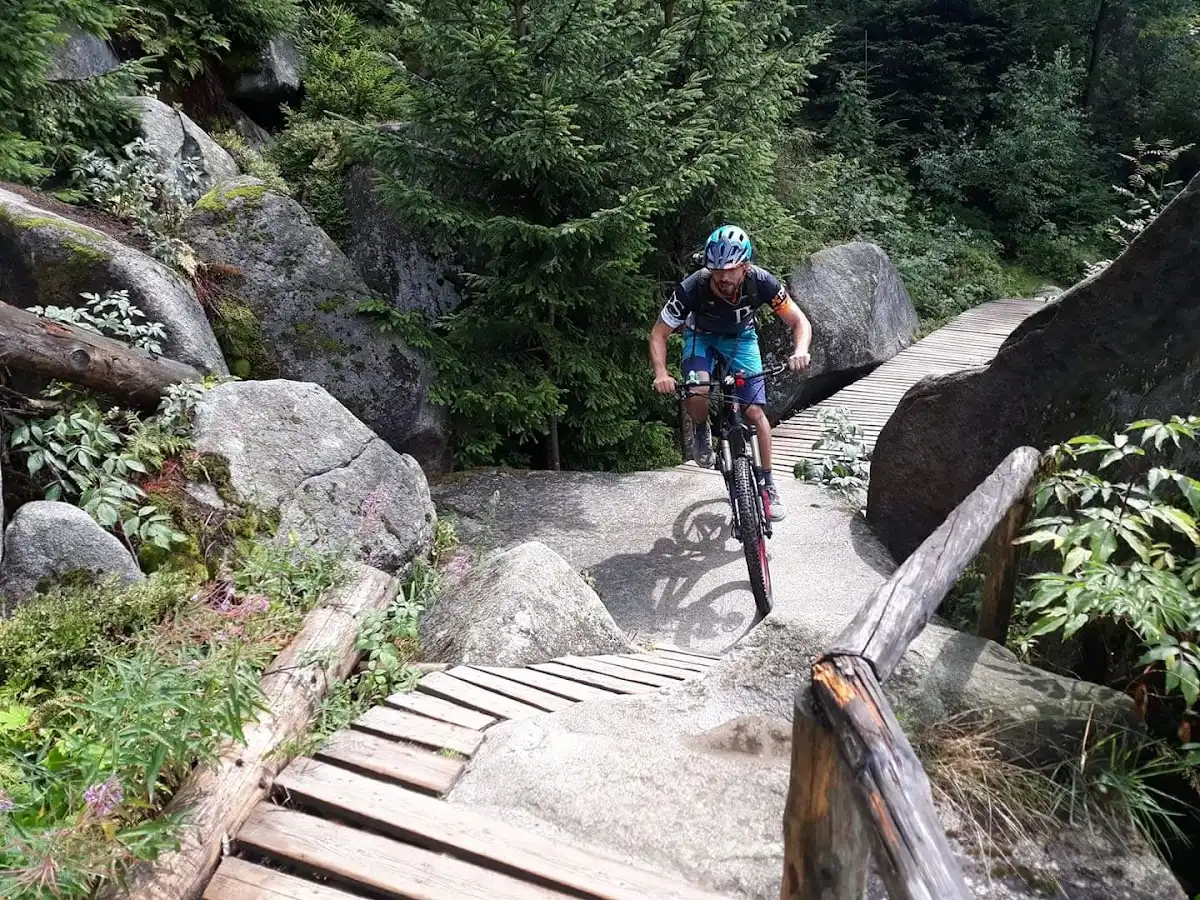
11 Rychlebské stezky

mountain bike trails, technical descents, forest singletrack

Tackle purpose-built routes designed for mountain biking, with varied terrain, natural obstacles, and forested surroundings.

czechia-hike-rychlebske-stezky
© Google |
Loading the map 🌍

Expert viewTips and Advice from Travelers

How many hikes to do: Plan for four to six hikes across two or three regions on a trip of one to two weeks. That number allows a rest day after long walks, spare time for rain, and the buffer that Czech rural transport requires. More than that becomes a collection of trailheads and bus stops, not a trip.

Which kinds to prioritize: For first-timers and photographers, the sandstone rock formations are the best use of time: short, dramatic, and easy on legs. Travelers who want a proper day on their feet should choose a ridge walk in the Krkonoše, Šumava or Beskydy, where distances of 15 to 25 km feel earned. Slow travelers and beer enthusiasts will like hut-to-hut routes through lower hills. City-bound visitors with only a few days should skip the farthest regions and do one nearby area well. … read more 👉
How many hikes to do: Plan for four to six hikes across two or three regions on a trip of one to two weeks. That number allows a rest day after long walks, spare time for rain, and the buffer that Czech rural transport requires. More than that becomes a collection of trailheads and bus stops, not a trip.

Which kinds to prioritize: For first-timers and photographers, the sandstone rock formations are the best use of time: short, dramatic, and easy on legs. Travelers who want a proper day on their feet should choose a ridge walk in the Krkonoše, Šumava or Beskydy, where distances of 15 to 25 km feel earned. Slow travelers and beer enthusiasts will like hut-to-hut routes through lower hills. City-bound visitors with only a few days should skip the farthest regions and do one nearby area well. Anything dominated by a cable car or a parking-lot kiosk is worth skipping, because the crowds arrive before you do.

What it costs: Budget US$35 to 60 a day (roughly 800 to 1,400 CZK) for dorms or simple pensions, hut meals and public transport. Mid-range travelers should plan US$70 to 110. National park entry is usually free, but some attractions, such as boat rides in gorges or lookout towers, charge about 100 to 250 CZK. Local trains and buses cost about 100 to 400 CZK per regional leg, and guides are rarely needed since the marked trails are reliable. A hut meal costs 150 to 300 CZK, and a beer 40 to 70 CZK.

Safety and etiquette: The main risks are weather and navigation, not wildlife. Summer storms hit ridges quickly, and fog in the Krkonoše can erase the path within minutes. Carry a map or offline app and the emergency number 112, and use the Czech mountain rescue app Záchranka. Ticks are common in grass and forest from spring to autumn, so check yourself and wear long trousers. Stay on marked paths in national parks, as fines apply for leaving them, and wild camping and open fires are generally banned. Greet people on trails with a quick “Dobrý den,” which locals do without exception. Huts expect you to remove muddy boots at the door. Carry small cash, since card use in remote places is unreliable.

✈️ The backpacker research shortcutCzechia Travel Guide

An offline-friendly backpacking guide with optimized travel routes, ranked highlights, transport advice, and the best areas to stay.
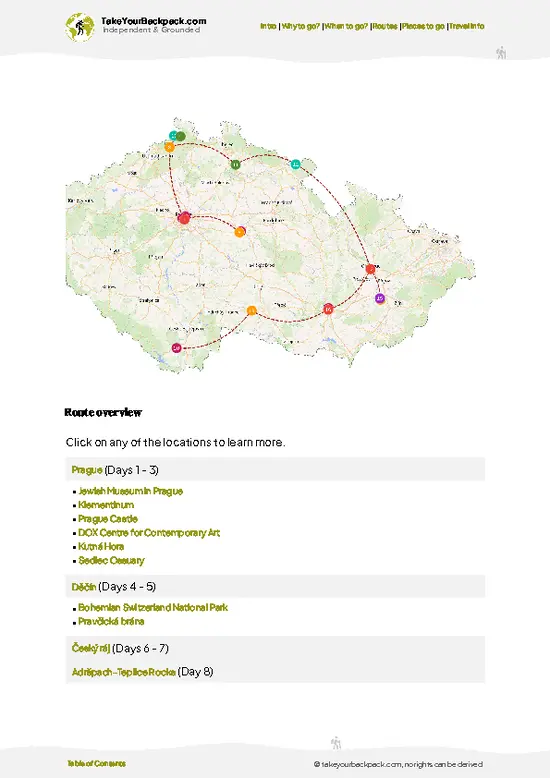
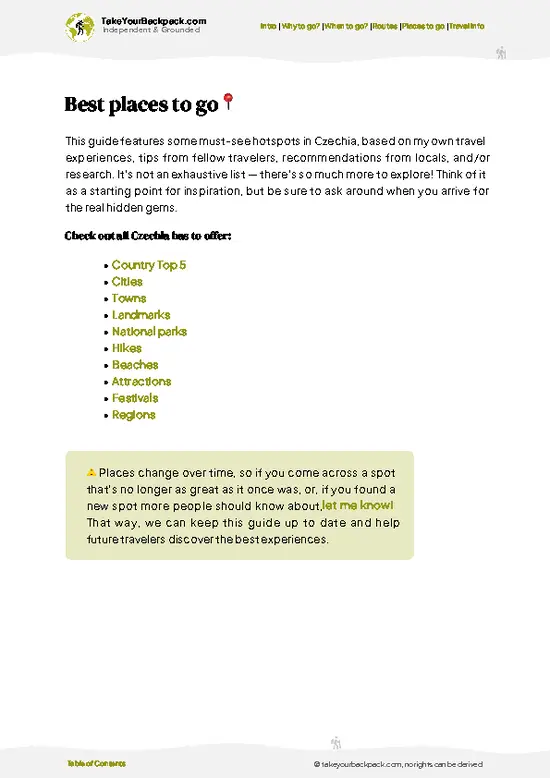
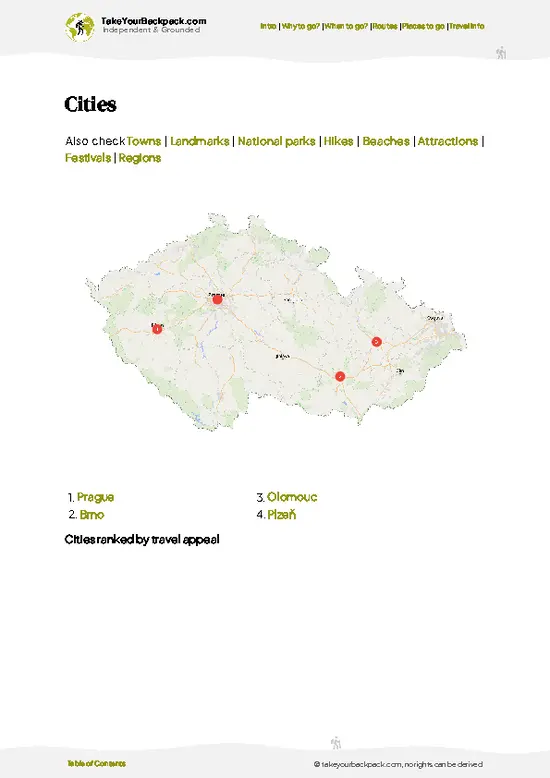
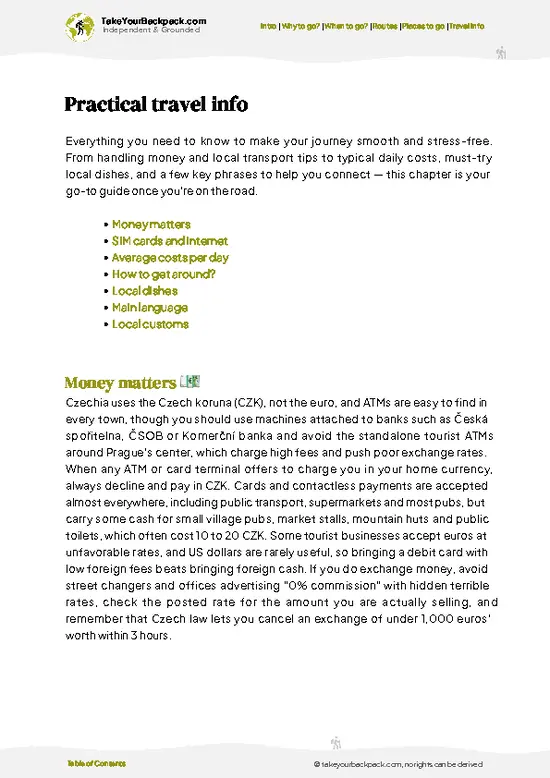
example page 0 from our offline Travel Guide for Czechia
example page 1 from our offline Travel Guide for Czechia
example page 2 from our offline Travel Guide for Czechia
example page 3 from our offline Travel Guide for Czechia
example page 4 from our offline Travel Guide for Czechia
example page 5 from our offline Travel Guide for Czechia
example page 6 from our offline Travel Guide for Czechia
example page 7 from our offline Travel Guide for Czechia
The digital guide (321 pages) contains:
✅ 88 highlights, ranked by travel appeal
✅ Optimized 5, 10 & 15-day travel routes
✅ Cities, national parks, landmarks, beaches
✅ How to get around
✅ Offline-friendly for travel without Wi-Fi
👉 Click to see all 30+ guide features

📅 Plan smarter in minutes, not weeks
✅ Month by month travel advice
✅ Festivals & national holidays
✅ Budget expectations

🗺️ Go to the right places, skip the overrated ones
✅ Honest pros & cons of destinations
✅ Top hikes, parks & viewpoints
✅ Lesser-known places most travelers miss
✅ Clear “worth it vs skip it” guidance

🛏️ Travel smoothly without rookie mistakes
✅ Best areas to stay
✅ Transport systems explained simply
✅ Common scams & safety advice
✅ SIM cards, money & practical tips

🌍 Understand the country, not just visit it
✅ Culture & traditions
✅ 52 Essential phrases & customs
✅ Festivals worth planning around
✅ Traveler-friendly historical context
✅ Insights that make places more meaningful

📱 Built for real travel conditions
✅ Fully downloadable PDF
✅ Works completely offline
✅ Optimized for phone use
✅ Useful in remote areas & buses
✅ Everything in one place
Stop searching, start planning
Get instant access to your full guide. 30‑day money-back guarantee.
+ Add another guide for just

By proceeding you agree to our terms.
Sent to your inbox immediately after payment • 100% Secure Checkout
Best Backpacking Travel Advisor 2025 tourism awardBest Backpacking
Travel Advisor
2025
What others say about Take Your Backpack Guides:
⭐⭐⭐⭐⭐
Fantastic, amazing amount of information!
⭐⭐⭐⭐⭐
My goodness this is amazing, it's what I've been looking for hats off too you!
⭐⭐⭐⭐⭐
I think this is absolutely BRILLIANT
⭐⭐⭐⭐
Very complete and informative. It's still missing places, but I gotta to commend you
⭐⭐⭐⭐⭐
This is truly amazing, thank you, can't wait to explore it with my kids!
⭐⭐⭐⭐⭐
Awesome resource, thank you!
⭐⭐⭐⭐⭐
This is amazing! Can't wait to explore the ones I haven't seen
⭐⭐⭐⭐
I love this! Well done, great idea.
⭐⭐⭐⭐⭐
Thanks for taking the time to make this gem!
⭐⭐⭐⭐⭐
This might be the best website I've ever seen.
⭐⭐⭐⭐⭐
Congratulations, and thank you so much for your work; it's incredibly valuable.
⭐⭐⭐⭐
In all seriousness I think you did a great job pointing out the important spots
⭐⭐⭐⭐⭐
10/10 very good
⭐⭐⭐⭐⭐
As someone who's only just starting to visit regularly this is awesome, thank you.
⭐⭐⭐⭐
Thank you very much! I'm going to visit my dad, it's going to be very useful!
⭐⭐⭐⭐⭐
This is really cool! We'll be travelling for the first time and this definitely come in handy.
⭐⭐⭐⭐⭐
You are now our minister of culture, congratulations 👨‍💼
⭐⭐⭐⭐⭐
Just wanted to tell you that this is a pearl! Going to follow your recommendations.
⭐⭐⭐⭐⭐
This is so cool. I'll definitely be using the resource for my travels soon.
⭐⭐⭐⭐⭐
This is very impressive! Good work.
⭐⭐⭐⭐⭐
This is an amazing and informative site. Very well done!

🛏️ Where to stay?Where to Base Yourself

Czechia has plenty of hostels and budget guesthouses, with Prague dorm beds usually running 400 to 800 CZK (about US$17 to 35) and private rooms in smaller towns often cheaper. In Prague, Staré Město (Old Town) and Nové Město (New Town) put you within walking distance of the main sights and late bars but cost the most and get loud, Žižkov has cheaper beds and dive-bar nightlife a short tram ride out, and leafy Vinohrady or Holešovice trade a 10 to 20 minute commute for quieter streets and local cafés. Outside the capital, Brno has a lively student-driven hostel scene around its compact center, while Český Krumlov fills its small old-town guesthouses fast in summer, so book ahead there.

If you … read more 👉
Czechia has plenty of hostels and budget guesthouses, with Prague dorm beds usually running 400 to 800 CZK (about US$17 to 35) and private rooms in smaller towns often cheaper. In Prague, Staré Město (Old Town) and Nové Město (New Town) put you within walking distance of the main sights and late bars but cost the most and get loud, Žižkov has cheaper beds and dive-bar nightlife a short tram ride out, and leafy Vinohrady or Holešovice trade a 10 to 20 minute commute for quieter streets and local cafés. Outside the capital, Brno has a lively student-driven hostel scene around its compact center, while Český Krumlov fills its small old-town guesthouses fast in summer, so book ahead there.

If you enjoy meeting fellow travelers, consider choosing hostels with high ratings for atmosphere. On the other hand, if you prefer having your own space, a hotel might be a better option.

CzechiaExpand Your Journey

👋 Meet the founderWho’s Behind Take Your Backpack?

Johan, backpacker and founder of TakeYourBackpackHi, I’m Johan (Netherlands 🇳🇱), the creator of TakeYourBackpack. Over the past 3 decades, I’ve backpacked through 90+ countries across six continents, gaining extensive experience with independent travel, long-term trips, and overland routes.

This site is built on a combination of firsthand travel experience and carefully curated insights from other backpackers. Many guides are based on places I’ve personally visited, while others bring together tips, observations, and practical advice shared by trusted travelers I’ve met along the way.

The goal is to provide realistic, experience-driven guidance — not generic itineraries — so you can explore destinations with better context, clearer expectations, and more confidence.