×

DR Congo🇨🇩 | citiesBomaCongo River port, colonial architecture, mangrove forests | things to do and best time to go

Explore KalemieExplore Kikwit

Backpacking in Boma
🌟 Highlightcity ranked #11
By Johan Kruseman 🇳🇱 | Updated July 30, 2026

If you’re chasing polished nightlife, Instagrammable cafés, or a parade of backpacker hostels, Boma is not your town. But if you’re the kind of traveler who finds value in the raw, unvarnished edges of a place—where the Congo River’s muddy breath hangs in the air and colonial relics crumble under the tropical sun—Boma rewards your curiosity. Tucked in the far west of DR Congo, not far from the Atlantic, Boma is a river town with a faded grandeur and a pulse that’s more languid than lively. It’s a practical stopover if you’re moving between Matadi and the coast, or if you want a base for exploring the river’s edge and the slow, humid rhythm of local life. The old center is walkable, with a handful of colonial buildings and a market that’s more functional than photogenic. Transport is mostly by shared taxi or foot; buses connect to Matadi, but schedules are loose. Social life for travelers is quiet—expect more slow evenings than raucous hostel nights, and meeting other backpackers is rare but memorable. Costs are moderate for DR Congo, but safety is a real consideration after dark. Compared to Matadi, Boma is more relaxed, less industrial, and feels like a place where time drifts as slowly as the river itself.

Discover everything you want to know in the 📖 DR Congo Travel Guide.
Safety warning

The current risk level for DR Congo is high. Check the advice before going.


Get your DR Congo guide
95 ranked highlights, routes & tips, works offline (372 pages)
Loading the map 🌍
CLICK TO FILTER
cities
towns
landmarks
national parks
hikes
beaches
attractions
festivals
regions
SHOW COUNTRY’S BESTSHOW ALL

✨ Why go?
Ranked #11 city in DR Congo
Why Boma should be on your travel list

Backpackers flock to Boma in the DR Congo for its strategic location. It’s a gateway to nearby hikes and cultural sites, making it easy to dive into the region’s natural beauty. The walkable streets are lined with small-scale hostels and guesthouses, offering a cozy atmosphere where you can swap stories over local dishes. Travelers often linger a few days, soaking in the friendly social vibe. This town suits slow travelers and solo adventurers looking for a genuine experience rather than a party scene. It’s a perfect stop to recharge before heading deeper into the wild.
Want to include Boma in your DR Congo route?
Create a personalized DR Congo itinerary that includes Boma and the places that fit your trip — based on your travel style, budget, and available time. Get your route in seconds.

Generate my trip

💡 HighlightsKey sights and experiences for travelers

  1. Palais du Gouverneur (Old Governor’s Palace) — The building that anchors Boma’s colonial story: when you stand here you’re literally at the site that once served as the administrative heart of the Congo Free State and Belgian Congo. Great for history buffs and photography of faded colonial detail.
  2. Boma Port and Quai — A working, noisy riverside where ocean-going ships, river pirogues and cargo barges meet. It’s the best place to watch trade in action and to feel the city’s long relationship with the Congo River and the Atlantic.
  3. Marché Central (Boma Central Market) — A true local immersion: mountains of fish, produce, spices and secondhand goods. Busy, colorful and very real—perfect for people-watching, cheap eats and picking up small Kongo crafts.
  4. The Cathedral (seat of the Diocese of
read more 👉
  1. Palais du Gouverneur (Old Governor’s Palace) — The building that anchors Boma’s colonial story: when you stand here you’re literally at the site that once served as the administrative heart of the Congo Free State and Belgian Congo. Great for history buffs and photography of faded colonial detail.
  2. Boma Port and Quai — A working, noisy riverside where ocean-going ships, river pirogues and cargo barges meet. It’s the best place to watch trade in action and to feel the city’s long relationship with the Congo River and the Atlantic.
  3. Marché Central (Boma Central Market) — A true local immersion: mountains of fish, produce, spices and secondhand goods. Busy, colorful and very real—perfect for people-watching, cheap eats and picking up small Kongo crafts.
  4. The Cathedral (seat of the Diocese of Boma) — The city’s main Catholic church and diocesan center. Even if you’re not religious, the cathedral’s role in local life and the steady rhythm of services give a clear sense of community here.
  5. Colonial-era Town Centre — Walkable streets of old administrative buildings, shuttered facades and timber houses that tell the story of Boma as a 19th/20th-century port capital. A guided stroll or a slow wander rewards you with architecture and local anecdotes.
  6. Fishermen’s Landing and Fish Docks — Come early morning to see the day’s catch unloaded, smoked and traded. It’s visceral, noisy and honest—an authentic look at livelihoods along the river.
  7. Artisan Workshops and Woodcarvers’ Quarter — Small local ateliers where woodcarvers, mask-makers and other craftspeople still work in traditional Kongo styles. Great for buying directly from the maker and asking about technique and symbolism.
  8. Old Customs House and Riverside Warehouses — Weathered trade buildings lining the quay that speak to Boma’s role in regional and Atlantic commerce. The buildings themselves are evocative; local guides will fill in the trade history behind them.
  9. Seafront Beaches and Mangrove Edges — Simple, low-key shoreline spots within city limits where locals hang out, fish or watch sunsets over the estuary. Not postcard resorts, but genuine coastal life and good for a relaxed afternoon.
  10. Municipal Cemetery and Historic Graves — A quiet place with colonial-era graves and monuments that offer perspective on the city’s past. It’s one of those spots where the stonework and inscriptions bring history into focus.
A few good day trips from Boma include the coastal town of Banana (the Congo River mouth and nearby beaches), the coastal area around Muanda, and the Atlantic spits and mangrove creeks nearby—each reachable in a few hours and revealing more of the region’s shoreline culture.
Spotted a mistake or missing something? Contact us.

🏘️ NeighborhoodsUnderstanding the local layout

Boma, a vibrant town in DR Congo, offers a unique blend of culture and practicality for backpackers. Here’s how to navigate its neighborhoods:

Centre Ville: The heart of Boma, this area buzzes with local markets and street vendors. It’s walkable and affordable, perfect for short stays. You’ll find lively nightlife, but it quiets down by midnight.

Quartier Kasaï: A bit more residential, this neighborhood offers a laid-back vibe. It’s ideal for longer stays with cozy guesthouses. Public transport is accessible, making it easy to explore further.

Quartier Mbandaka: Known for its lush greenery, this area is quieter and perfect for those seeking peace. While nightlife is limited, it’s a great spot for nature walks. Costs are moderate, and it’s a short ride to the town center.

⌛️ 1 dayA smart one-day plan

Boma, a charming town in DR Congo, offers a unique blend of history and local culture, making it a rewarding stop. Start your morning at the bustling market in the heart of the town. The air is thick with the scent of fresh produce and spices, and the vibrant chatter of vendors creates an electric atmosphere. Grab a local breakfast of fufu and grilled fish from a street stall to fuel your day.

In the afternoon, head to the historic colonial buildings in the Quartier des Français. The faded elegance of these structures tells stories of a bygone era. Don’t miss the nearby Congo River, where you can take a short boat ride. The gentle sway of the water and the distant sounds of laughter from riverside picnics make it a perfect escape.

As evening falls, explore the lesser-known neighborhood of … read more 👉
Boma, a charming town in DR Congo, offers a unique blend of history and local culture, making it a rewarding stop. Start your morning at the bustling market in the heart of the town. The air is thick with the scent of fresh produce and spices, and the vibrant chatter of vendors creates an electric atmosphere. Grab a local breakfast of fufu and grilled fish from a street stall to fuel your day.

In the afternoon, head to the historic colonial buildings in the Quartier des Français. The faded elegance of these structures tells stories of a bygone era. Don’t miss the nearby Congo River, where you can take a short boat ride. The gentle sway of the water and the distant sounds of laughter from riverside picnics make it a perfect escape.

As evening falls, explore the lesser-known neighborhood of Nganga. Here, you’ll find local artisans crafting beautiful woodwork. Engage with them; their stories add depth to your experience. End your day at a local eatery, savoring a dish of cassava while the sun sets, painting the sky in hues of orange and pink. This day in Boma, rich with sensory experiences, will leave you feeling connected to the heart of DR Congo.
Turn your Boma visit into an DR Congo adventure
Build a complete DR Congo route with Boma, hidden gems, must-see destinations, and realistic travel times included.

Generate my trip

🌤️ When to go?Seasonal considerations and timing


  • Weather: Boma’s climate swings between a wet season from October to May and a dry season from June to September. The dry months bring less mud and fewer mosquitoes, making trekking and exploring more comfortable.

  • Temperature: Expect highs around 28-32°C (82-90°F) year-round, but humidity drops during the dry season, which feels like a relief on your skin rather than a sauna.

  • Daylight Hours: Near the equator, daylight stays steady—about 12 hours daily—so you won’t lose precious hiking time to early sunsets, no matter when you visit.

  • Crowds: Tourist traffic is minimal year-round, but the dry season sees a slight uptick as travelers dodge the rain and mud, so expect a bit more local bustle then.

  • Seasonal Activities: Dry months open up river excursions and coastal walks without the
read more 👉

  • Weather: Boma’s climate swings between a wet season from October to May and a dry season from June to September. The dry months bring less mud and fewer mosquitoes, making trekking and exploring more comfortable.

  • Temperature: Expect highs around 28-32°C (82-90°F) year-round, but humidity drops during the dry season, which feels like a relief on your skin rather than a sauna.

  • Daylight Hours: Near the equator, daylight stays steady—about 12 hours daily—so you won’t lose precious hiking time to early sunsets, no matter when you visit.

  • Crowds: Tourist traffic is minimal year-round, but the dry season sees a slight uptick as travelers dodge the rain and mud, so expect a bit more local bustle then.

  • Seasonal Activities: Dry months open up river excursions and coastal walks without the risk of sudden downpours, while the wet season’s lush greenery is a treat for photographers willing to brave the elements.

  • Price Fluctuations: Accommodation and transport costs dip during the wet season due to lower demand, but be ready for occasional service disruptions from heavy rains.


Pro-tip: Aim for the tail end of the dry season—August to September—when the air is crisp, trails are firm, and prices haven’t yet peaked.


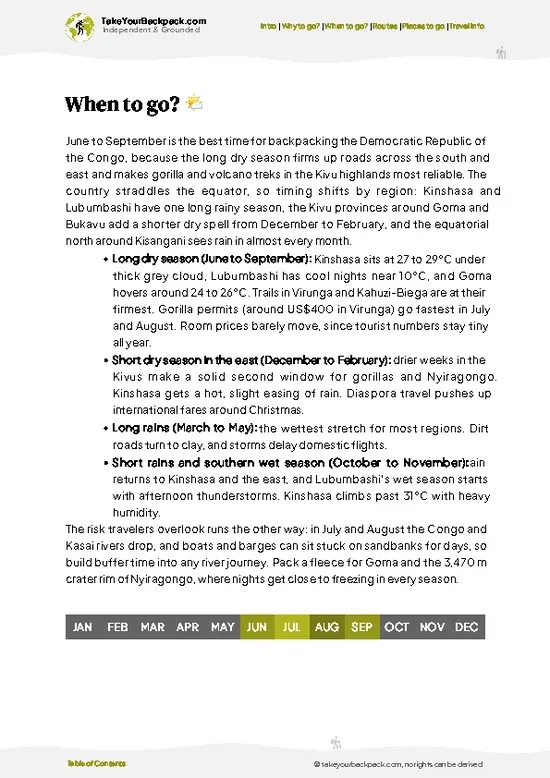
source: climatestotravel.comJANJanuary: fair for travelingFEBFebruary: fair for travelingMARMarch: fair for travelingAPRApril: fair for travelingMAYMay: fair for travelingJUNJune: highly recommended for travelingJULJuly: highly recommended for travelingAUGAugust: excellent for travelingSEPSeptember: excellent for travelingOCTOctober: good for travelingNOVNovember: good for travelingDECDecember: good for traveling
when-to-go

✈️ The backpacker research shortcutDR Congo Travel Guide

An offline-friendly backpacking guide with optimized travel routes, ranked highlights, transport advice, and the best areas to stay.
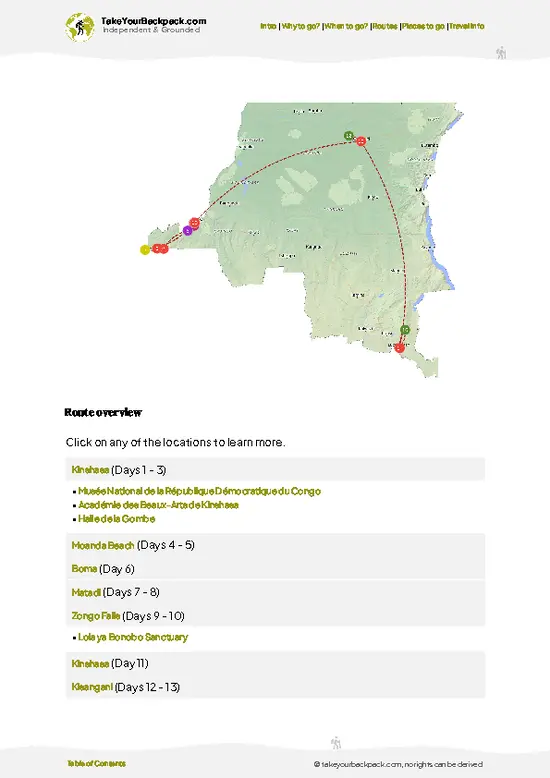
example page 0 from our offline Travel Guide for Democratic Republic of the Congo
example page 1 from our offline Travel Guide for Democratic Republic of the Congo
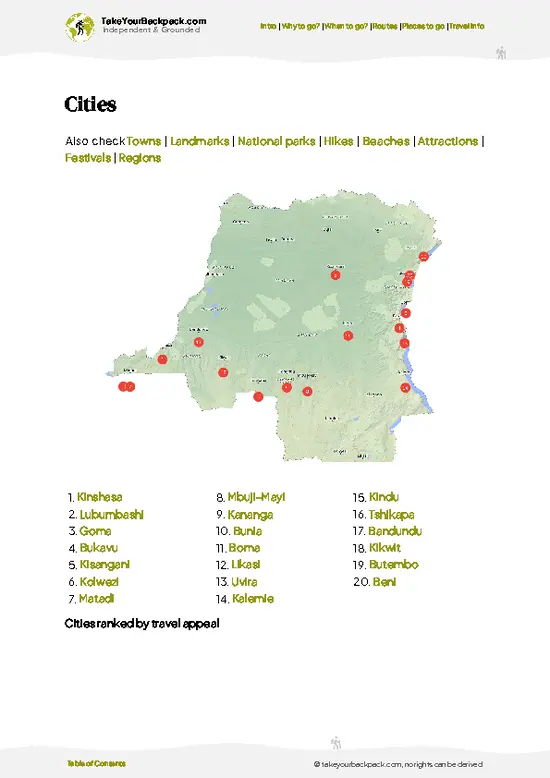
example page 2 from our offline Travel Guide for Democratic Republic of the Congo
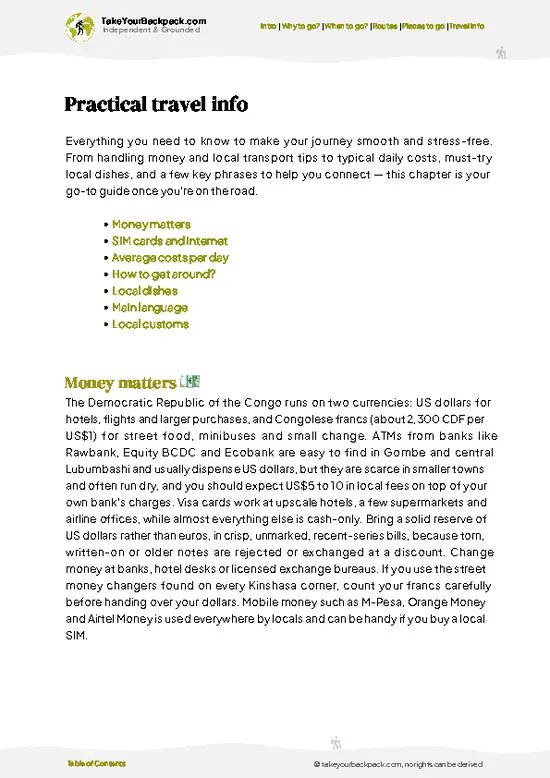
example page 3 from our offline Travel Guide for Democratic Republic of the Congo
example page 4 from our offline Travel Guide for Democratic Republic of the Congo
example page 5 from our offline Travel Guide for Democratic Republic of the Congo
example page 6 from our offline Travel Guide for Democratic Republic of the Congo
example page 7 from our offline Travel Guide for Democratic Republic of the Congo
The digital guide (372 pages) contains:
95 highlights, ranked by travel appeal
Optimized 7, 14 & 21-day travel routes
Cities, national parks, landmarks, beaches
How to get around
Offline-friendly for travel without Wi-Fi
👉 Click to see all 30+ guide features

📅 Plan smarter in minutes, not weeks
Month by month travel advice
Festivals & national holidays
Budget expectations

🗺️ Go to the right places, skip the overrated ones
Honest pros & cons of destinations
Top hikes, parks & viewpoints
Lesser-known places most travelers miss
Clear “worth it vs skip it” guidance

🛏️ Travel smoothly without rookie mistakes
Best areas to stay
Transport systems explained simply
Common scams & safety advice
SIM cards, money & practical tips

🌍 Understand the country, not just visit it
Culture & traditions
52 Essential phrases & customs
Festivals worth planning around
Traveler-friendly historical context
Insights that make places more meaningful

📱 Built for real travel conditions
Fully downloadable PDF
Works completely offline
Optimized for phone use
Useful in remote areas & buses
Everything in one place
Save weeks of stressful planning
Get instant access to your full guide. 30‑day money-back guarantee.


By proceeding you agree to our terms.
Sent to your inbox immediately after payment • 100% Secure Checkout
Best Backpacking Travel Advisor 2025 tourism awardBest Backpacking
Travel Advisor
2025
What others say about Take Your Backpack Guides:
⭐⭐⭐⭐⭐
Fantastic, amazing amount of information!
⭐⭐⭐⭐⭐
My goodness this is amazing, it's what I've been looking for hats off too you!
⭐⭐⭐⭐⭐
I think this is absolutely BRILLIANT
⭐⭐⭐⭐
Very complete and informative. It's still missing places, but I gotta to commend you
⭐⭐⭐⭐⭐
This is truly amazing, thank you, can't wait to explore it with my kids!
⭐⭐⭐⭐⭐
Awesome resource, thank you!
⭐⭐⭐⭐⭐
This is amazing! Can't wait to explore the ones I haven't seen
⭐⭐⭐⭐
I love this! Well done, great idea.
⭐⭐⭐⭐⭐
Thanks for taking the time to make this gem!
⭐⭐⭐⭐⭐
This might be the best website I've ever seen.
⭐⭐⭐⭐⭐
Congratulations, and thank you so much for your work; it's incredibly valuable.
⭐⭐⭐⭐
In all seriousness I think you did a great job pointing out the important spots
⭐⭐⭐⭐⭐
10/10 very good
⭐⭐⭐⭐⭐
As someone who's only just starting to visit regularly this is awesome, thank you.
⭐⭐⭐⭐
Thank you very much! I'm going to visit my dad, it's going to be very useful!
⭐⭐⭐⭐⭐
This is really cool! We'll be travelling for the first time and this definitely come in handy.
⭐⭐⭐⭐⭐
You are now our minister of culture, congratulations 👨‍💼
⭐⭐⭐⭐⭐
Just wanted to tell you that this is a pearl! Going to follow your recommendations.
⭐⭐⭐⭐⭐
This is so cool. I'll definitely be using the resource for my travels soon.
⭐⭐⭐⭐⭐
This is very impressive! Good work.
⭐⭐⭐⭐⭐
This is an amazing and informative site. Very well done!

🛏️ Where to stay?Choosing the right base

In Boma, DR Congo, the best spot for backpackers is the area around the city center, especially near the port and main market streets. This zone pulses with local life—vendors shouting, the scent of fresh cassava frying, and the hum of boats docking. It’s where you’ll find the few budget guesthouses and hostels that cater to travelers, offering a chance to meet others without the isolation that can come from staying in more residential or outlying neighborhoods.

Why this area? Safety here is relative but better than the quieter, less trafficked districts. The constant flow of people means eyes … read more 👉
In Boma, DR Congo, the best spot for backpackers is the area around the city center, especially near the port and main market streets. This zone pulses with local life—vendors shouting, the scent of fresh cassava frying, and the hum of boats docking. It’s where you’ll find the few budget guesthouses and hostels that cater to travelers, offering a chance to meet others without the isolation that can come from staying in more residential or outlying neighborhoods.

Why this area? Safety here is relative but better than the quieter, less trafficked districts. The constant flow of people means eyes on the street, which naturally discourages petty crime. Plus, the social vibe is tangible—you’re steps from street food stalls, informal bars, and the lively chatter of locals and travelers swapping stories. It’s a gritty, real experience, not polished, but that’s the point: you’re in DR Congo, not a sanitized resort.

Avoid neighborhoods farther from the center where infrastructure dips, and the sense of community thins out. Those areas can feel isolating and less secure, especially after dark. Staying central means you’re plugged into the city’s rhythm, with easier access to transport and the chance to soak in Boma’s raw, unfiltered character. It’s not about comfort—it’s about connection, and that’s what makes the stay worthwhile.

🚌 Getting aroundHow to get from A to B

Boma in DR Congo moves with a rhythm that’s part old-world port town, part bustling market hub. The air carries the salt tang from the Congo River, mixing with the earthy scent of fresh produce and diesel fumes from the trucks that never seem to stop. Time here isn’t strict; it’s a flexible pulse. You won’t find rigid timetables or polished transit hubs. Instead, expect a blend of spontaneous departures and informal stops, where the flow depends on the crowd’s mood and the driver’s call. This isn’t a place to expect punctuality, but it’s where you learn to read the local tempo—watch the light shift on the river, listen to the vendors’ calls, and you’ll catch the beat that keeps Boma moving.


  • Walking: The best way to soak in Boma’s character is on foot. The town’s compact center is a maze
read more 👉
Boma in DR Congo moves with a rhythm that’s part old-world port town, part bustling market hub. The air carries the salt tang from the Congo River, mixing with the earthy scent of fresh produce and diesel fumes from the trucks that never seem to stop. Time here isn’t strict; it’s a flexible pulse. You won’t find rigid timetables or polished transit hubs. Instead, expect a blend of spontaneous departures and informal stops, where the flow depends on the crowd’s mood and the driver’s call. This isn’t a place to expect punctuality, but it’s where you learn to read the local tempo—watch the light shift on the river, listen to the vendors’ calls, and you’ll catch the beat that keeps Boma moving.


  • Walking: The best way to soak in Boma’s character is on foot. The town’s compact center is a maze of narrow streets and lively markets. Walking costs nothing, lets you pause at roadside stands, and offers the clearest view of daily life. The uneven sidewalks and occasional potholes mean sturdy shoes are a must, but the reward is a sensory immersion you won’t get any other way.


  • Shared Minibuses (Taxi-Brousse): These are the backbone of local transit, running from early morning around 6:00 AM until dusk, roughly 6:00 PM. Fares are dirt cheap, often just a few hundred Congolese francs, but expect cramped seating and a stop-anywhere attitude. They’re slow, weaving through traffic and picking up passengers on the fly, but they’re perfect for budget travelers who want to experience the town’s pulse and meet locals.


  • Motorcycle Taxis (Boda-Boda): When time is tight or you’re heading to spots minibuses don’t reach, boda-bodas are your go-to. They operate 24/7, though nighttime rides require extra caution. Prices are negotiable but generally affordable, and the ride is fast and nimble through Boma’s traffic snarls. The trade-off is exposure to dust, noise, and the occasional jolt—helmets aren’t always standard, so bring your own if safety matters.


  • River Ferries: For trips across the Congo River or to nearby riverine communities, ferries are essential. They don’t run on a strict schedule; departures depend on passenger volume and weather conditions. Tickets are inexpensive, but the boats can be crowded and basic. The slow, rocking ride offers a unique perspective on Boma’s waterfront life and the vastness of the river, making the wait worthwhile.


  • Private Taxis: More expensive but faster and more comfortable, private taxis are available for hire throughout the day. They don’t follow fixed routes, so you can negotiate your destination and price upfront. This option suits travelers who want to skip the unpredictability of shared transport but still keep costs reasonable by sharing rides or limiting distances.

👛 Costs (as of 30 July 2026)Travel costs and budget guide for Boma

Backpacking in Boma, DR Congo, means navigating a place where costs are low but infrastructure is basic, so every dollar counts and every choice shapes your experience.
  • Dorm Accommodation: Expect simple guesthouses or hostels with basic amenities. Prices hover around $5 to $10 per night. Don’t expect luxury—think a clean bed, a fan or open windows, and shared bathrooms. It’s about function over flair.
  • Meals: Street food and local eateries dominate. A filling meal of grilled fish or chicken with rice or plantains typically costs $2 to $4. Fresh fruit and snacks are even cheaper. Western-style restaurants are rare and pricier, so stick to local joints for budget-friendly, authentic flavors.
  • Local Transport: Boda-bodas (motorcycle taxis) are the go-to for short trips, costing around $0.50
read more 👉
Backpacking in Boma, DR Congo, means navigating a place where costs are low but infrastructure is basic, so every dollar counts and every choice shapes your experience.
  • Dorm Accommodation: Expect simple guesthouses or hostels with basic amenities. Prices hover around $5 to $10 per night. Don’t expect luxury—think a clean bed, a fan or open windows, and shared bathrooms. It’s about function over flair.
  • Meals: Street food and local eateries dominate. A filling meal of grilled fish or chicken with rice or plantains typically costs $2 to $4. Fresh fruit and snacks are even cheaper. Western-style restaurants are rare and pricier, so stick to local joints for budget-friendly, authentic flavors.
  • Local Transport: Boda-bodas (motorcycle taxis) are the go-to for short trips, costing around $0.50 to $1 per ride depending on distance. Shared minibuses or taxis can be slightly cheaper but less reliable. Walking is often the best way to soak in the atmosphere and save cash.
  • Basic Activities/Entry Fees: Most cultural or natural sites have minimal or no entry fees, usually under $2. Guided tours are rare and can be negotiated locally. The real cost here is time and patience rather than money.
  • Miscellaneous Expenses: Bottled water, snacks, and occasional phone credit top this list. Budget around $1 to $2 daily. Keep in mind power outages are common, so charging devices might require a small fee at guesthouses or cafes.

Altogether, you’re looking at roughly $10 to $20 per day to cover the essentials in Boma. It’s a modest sum that unlocks a raw, unfiltered slice of DR Congo life—no frills, just the pulse of a town where every moment feels earned.


source: congotourisme.org
⚠️ Prices can change and everyone travels differently, so take this as a rough guide. Hope it helps you plan your adventure!

🚌 Day tripsShort trips worth adding

Boma, in the DR Congo, is a vibrant launchpad for unforgettable day trips. The town’s charm lies in its rich history and proximity to natural wonders, making it a backpacker’s dream.

Kisantu Botanical Garden
Just an hour’s drive from Boma, this garden is a lush paradise filled with exotic plants and towering trees. The air is thick with the scent of blooming flowers, and the sound of birds fills the canopy. Entry is cheap, around $2, and you can easily spend half a day wandering the trails. A common mistake? Rushing through without taking time to soak in the tranquility.


Loango National Park
A bit further afield, about two hours away, Loango offers a chance to see wildlife in its natural habitat. The park is known for its elephants and diverse bird species. Expect to pay around $10 … read more 👉
Boma, in the DR Congo, is a vibrant launchpad for unforgettable day trips. The town’s charm lies in its rich history and proximity to natural wonders, making it a backpacker’s dream.

Kisantu Botanical Garden
Just an hour’s drive from Boma, this garden is a lush paradise filled with exotic plants and towering trees. The air is thick with the scent of blooming flowers, and the sound of birds fills the canopy. Entry is cheap, around $2, and you can easily spend half a day wandering the trails. A common mistake? Rushing through without taking time to soak in the tranquility.


Loango National Park
A bit further afield, about two hours away, Loango offers a chance to see wildlife in its natural habitat. The park is known for its elephants and diverse bird species. Expect to pay around $10 for entry and transport. The best time to visit is during the dry season when animals are easier to spot. Don’t forget your binoculars; many first-timers miss the best views because they forget to look up!


The Congo River
A short boat ride from Boma takes you onto the Congo River, where you can fish or simply enjoy the stunning views. The river’s vastness is awe-inspiring, and you can often catch a glimpse of local fishermen at work. Costs are minimal, around $5 for a boat rental. Early mornings are best for a peaceful experience, as afternoons can get crowded.
Want to know what more DR Congo offers?
The DR Congo Travel Guide describes 95 highlights, from cities to national parks, from beaches to hikes

Get the Travel Guide -

🍲 FoodWhat to Eat & Drink

In Boma, DR Congo, food is a lively gateway into local life, where every bite tells a story. The city’s signature dishes lean heavily on fresh river fish, often grilled or stewed with palm oil and a punch of spicy chili. Don’t miss out on moambe chicken, a rich, tomato-and-palm-oil stew that’s a regional staple, served with fufu—a dense, doughy side made from cassava or plantains that’s perfect for scooping up sauces. The flavors are bold but balanced, a dance between earthiness and heat.

Backpackers will find their culinary playground in bustling markets and street stalls, where the air is thick with the scent of grilled meats and smoky fires. These spots are not just about food—they’re social hubs where locals gather, laugh, and share stories over plates piled high. Casual eateries offer … read more 👉
In Boma, DR Congo, food is a lively gateway into local life, where every bite tells a story. The city’s signature dishes lean heavily on fresh river fish, often grilled or stewed with palm oil and a punch of spicy chili. Don’t miss out on moambe chicken, a rich, tomato-and-palm-oil stew that’s a regional staple, served with fufu—a dense, doughy side made from cassava or plantains that’s perfect for scooping up sauces. The flavors are bold but balanced, a dance between earthiness and heat.

Backpackers will find their culinary playground in bustling markets and street stalls, where the air is thick with the scent of grilled meats and smoky fires. These spots are not just about food—they’re social hubs where locals gather, laugh, and share stories over plates piled high. Casual eateries offer a break from the street scene, with simple menus focused on hearty, familiar dishes that won’t break your budget but will fill you up with authentic tastes.

Drinking culture here is straightforward but social. Expect to sip on palm wine, a mildly fermented local brew, or grab a cold bottle of Primus, the popular Congolese beer. Sharing drinks is a gesture of friendship, so don’t be surprised if you’re invited to join a group. Eating with your hands is common and accepted—just use your right hand, as the left is considered unclean. This is food as connection, not just sustenance.

🛡️ SafetyStaying Safe: What Travelers Should Know

Boma, in DR Congo, is generally safe, but awareness is key. Stick to well-lit areas at night; the streets can feel empty, and a little caution goes a long way. Solo travelers should blend in—avoid flashy gear and keep your phone tucked away.

Watch for common scams, like overly friendly locals who might want to guide you for a fee. A firm “no” usually suffices. The atmosphere is vibrant, but be prepared for the occasional street vendor who might try to upsell. Stay grounded, trust your instincts, and enjoy the unique pulse of this town.

Other Congolese cities near Boma

Explore more nearby:

  • Matadi—Congo River port, steep hills, colonial-era bridges| 43 km away
  • Zongo—Ubangi River crossing, ferry terminal, border town| 235 km away
  • Kinshasa—Congo Riverfront, music scene, sprawling districts| 301 km away

💡 Not sure where to go next?
Create a personalized itinerary for DR Congo including Boma and the places that fit your trip.

Generate my itinerary

👉 Discover all cities

Or checkout all DR Congo has to offer (think cities, towns, villages, national parks, hikes, beaches, festivals)
Country photo of DR Congo

We 💚 feedbackIs it worth it?

Boma feels like a secret world, where the air is thick with the scent of earth after rain. The best surprise? The warmth of the locals; they’ll share stories that linger long after you leave. Just watch for the muddy paths—embrace the mess, it’s part of the adventure.

✍️ Help improve this page!
The information on this page is based on in-depth research, insights shared by experienced travelers, and feedback from the local travel community in DR Congo. While every effort is made to keep the information accurate and current, conditions can change — so if you spot anything incorrect or outdated, please get in touch.


🙋‍♂️ Give feedback

👋 Meet the founderWho’s Behind Take Your Backpack?

Johan, backpacker and founder of TakeYourBackpackHi, I’m Johan (Netherlands 🇳🇱), the creator of TakeYourBackpack. Over the past decade, I’ve backpacked through 80+ countries across six continents, gaining extensive experience with independent travel, long-term trips, and overland routes.

This site is built on a combination of firsthand travel experience and carefully curated insights from other backpackers. Many guides are based on places I’ve personally visited, while others bring together tips, observations, and practical advice shared by trusted travelers I’ve met along the way.

The goal is to provide realistic, experience-driven guidance — not generic itineraries — so you can explore destinations with better context, clearer expectations, and more confidence.

Get full DR Congo guide •
Instant download • 95 highlights • Full Offline guide