×

DR Congo🇨🇩 | citiesMatadiCongo River port, steep hills, colonial-era bridges | things to do and best time to go

Explore TshikapaExplore Likasi

Backpacking in Matadi
🌟 Highlightcity ranked #6
By Johan Kruseman 🇳🇱 | Updated May 12, 2026

Why do most people come to Matadi? The answer you’ll hear is “the bridge”—that colossal arch over the Congo River, a feat of engineering, yes, but not the reason you’ll remember Matadi. What matters more is the city’s pulse: a gritty, kinetic port town where the river’s power shapes every street and conversation. Matadi sits in the far west of DR Congo, hugging the steep hills above the river, closer to Angola than Kinshasa. For backpackers, it’s a city of trade-offs. The colonial-era railway station and faded Art Deco facades hint at a grander past, but the real draw is the raw, unfiltered energy—markets that never sleep, street food that’s as bold as the music, and a nightlife scene that’s unpredictable but alive. Travel here isn’t easy: infrastructure is patchy, English is rare, and you’ll meet more hustlers than fellow travelers. It’s cheaper than Kinshasa but less cosmopolitan, and safety is a constant calculation, especially after dark. Matadi isn’t for comfort-seekers, but if you want to see the DR Congo’s river frontier in all its chaotic, human detail, this is where the story gets interesting.

Discover everything you want to know in the 📖 DR Congo Travel Guide.
Safety warning

The current risk level for DR Congo is high. Check the advice before going.


Get your DR Congo guide
96 ranked highlights, routes & tips, works offline (378 pages)
Loading the map 🌍
CLICK TO FILTER
cities
towns
landmarks
national parks
hikes
beaches
attractions
festivals
regions
SHOW COUNTRY’S BESTSHOW ALL

✨ Why go?
Ranked #6 city in DR Congo
What makes it a must-see city

Matadi is a strategic stop for backpackers navigating the DR Congo. Its basecamp value is solid, making it easy to launch day trips into the surrounding areas. The walkability of the city allows you to explore local markets and street food stalls without the hassle of transport. You’ll find a range of hostels that cater to budget travelers, offering a chance to meet fellow adventurers.

Nightlife here is low-key but vibrant, with local bars where you can unwind after a day of exploration. While Matadi isn’t overflowing with highlights, it serves as a practical waypoint, connecting you to more remote destinations. If you’re looking for a place to recharge and plan your next move, this city fits the bill. For those on a tight schedule, it’s worth a short stop, but if you crave deeper experiences, … read more 👉
Matadi is a strategic stop for backpackers navigating the DR Congo. Its basecamp value is solid, making it easy to launch day trips into the surrounding areas. The walkability of the city allows you to explore local markets and street food stalls without the hassle of transport. You’ll find a range of hostels that cater to budget travelers, offering a chance to meet fellow adventurers.

Nightlife here is low-key but vibrant, with local bars where you can unwind after a day of exploration. While Matadi isn’t overflowing with highlights, it serves as a practical waypoint, connecting you to more remote destinations. If you’re looking for a place to recharge and plan your next move, this city fits the bill. For those on a tight schedule, it’s worth a short stop, but if you crave deeper experiences, consider staying longer to soak in the local vibe.
Want to include Matadi in your DR Congo route?
Create a personalized DR Congo itinerary that includes Matadi and the places that fit your trip — based on your travel style, budget, and available time. Get your route in seconds.

Generate my trip

💡 HighlightsKey sights and experiences for travelers

  • Pont de Matadi (Matadi Bridge) — The city’s signature landmark: a huge steel span over the Congo with great viewpoints on both banks. Walk or stand near it at sunset to watch barges, feel the vibration of traffic and see why Matadi grew around this bottleneck.
  • Quai / Port of Matadi — Busy riverfront life: loading/unloading, small pirogues and ocean-going ships, and a raw, honest look at Congo River commerce. Good for photography and watching the riverate hustle (bring mosquito spray and stick to obvious public areas).
  • Marché Central (Central Market) — A chaotic, colorful market where you’ll find fresh produce, local spices, cloth, and secondhand gear. It’s the best place to sample street food, meet traders and see everyday Matadi life up close. Go with a local or stay aware of your gear.
read more 👉
  • Pont de Matadi (Matadi Bridge) — The city’s signature landmark: a huge steel span over the Congo with great viewpoints on both banks. Walk or stand near it at sunset to watch barges, feel the vibration of traffic and see why Matadi grew around this bottleneck.
  • Quai / Port of Matadi — Busy riverfront life: loading/unloading, small pirogues and ocean-going ships, and a raw, honest look at Congo River commerce. Good for photography and watching the riverate hustle (bring mosquito spray and stick to obvious public areas).
  • Marché Central (Central Market) — A chaotic, colorful market where you’ll find fresh produce, local spices, cloth, and secondhand gear. It’s the best place to sample street food, meet traders and see everyday Matadi life up close. Go with a local or stay aware of your gear.
  • Gare de Matadi (Railway Terminus and Yards) — The old terminus of the Matadi-Kinshasa line and its surrounding workshops have colonial-era buildings and rusted locomotives. Even if trains are intermittent, the site tells the story of the city’s role in Congo’s transport history.
  • Les escaliers de Matadi (the City Stairs and Hill Neighborhoods) — Matadi is built on steep terrain; climb the winding concrete steps between neighborhoods for incredible panoramas of the river, colorful houses, and real street-level interaction with residents. A simple, cheap way to explore beyond the flat waterfront.
  • Rocher de Matadi (Founding Rock / Big Riverstone) — A natural rock outcrop tied to local origin stories and a handy viewpoint over the river. It’s small and unpretentious but gives context to the city’s name and early settlement patterns.
  • Palais du Gouverneur and Colonial Quarter — The older administrative buildings and leafy avenues around the governor’s palace show Matadi’s colonial past through architecture and public squares. Walk slowly here to appreciate facades, plaques and quiet courtyards.
  • Main Cathedral (Cathédrale de la ville) — The central cathedral is a living religious space and an architectural anchor in the city centre. Visiting during mass lets you hear choirs, see local dress and feel how faith shapes daily life.
  • Marché aux Poissons (Fish Market by the Water) — Fresh-conger and river fish sold right at the quay; noisy, smelly, glorious. Try a plate of grilled fish from a stall nearby—simple, local cooking and a direct taste of Matadi’s river economy.
  • Centre Culturel / Maison de la Culture — When it’s open, this cultural center hosts music, dance and small exhibitions that showcase Kongo music and local artists. Even a casual visit can net a local performance or at least contacts for community events.
A few worthwhile day trips outside Matadi: the old colonial port town of Boma, the mouth of the Congo River around Banana, and the nearby Luki biosphere area for forest walks and wildlife (all visitable from Matadi with some planning).
Spotted a mistake or missing something? Contact us.
🏘️ NeighborhoodsHow different areas shape the experience

Matadi, the bustling port city in DR Congo, offers a unique blend of experiences for backpackers. Here’s a breakdown of key neighborhoods to help you navigate your stay.

Centre Ville: This is the heart of Matadi. Expect a lively atmosphere with street vendors and local shops. It’s walkable, making it easy to explore on foot. Costs are moderate, and you’ll find a mix of budget accommodations. Nightlife is vibrant, with bars and music venues nearby, perfect for short stays.

Nganda: A quieter area, Nganda is ideal for those seeking a more relaxed vibe. It’s less touristy, which means lower prices and a chance to mingle with locals. Walkability is decent, but public transport is your best bet for longer distances. Great for longer stays if you want to immerse yourself in local life.

Matadi read more 👉
Matadi, the bustling port city in DR Congo, offers a unique blend of experiences for backpackers. Here’s a breakdown of key neighborhoods to help you navigate your stay.

Centre Ville: This is the heart of Matadi. Expect a lively atmosphere with street vendors and local shops. It’s walkable, making it easy to explore on foot. Costs are moderate, and you’ll find a mix of budget accommodations. Nightlife is vibrant, with bars and music venues nearby, perfect for short stays.

Nganda: A quieter area, Nganda is ideal for those seeking a more relaxed vibe. It’s less touristy, which means lower prices and a chance to mingle with locals. Walkability is decent, but public transport is your best bet for longer distances. Great for longer stays if you want to immerse yourself in local life.

Matadi Port: This area is all about the hustle and bustle of shipping activity. While it’s not the most picturesque, it’s fascinating to watch the trade. Costs are lower here, but accommodations can be basic. Transport access is excellent, making it easy to hop around the city. Best for short stays focused on the port experience.

La Cité: A residential neighborhood with a more suburban feel. It’s quieter and offers a glimpse into everyday life in Matadi. Costs are reasonable, and while walkability is limited, public transport is available. Ideal for longer stays if you want a home base away from the tourist scene.

⌛️ 1 dayHow to make the most of one day

Matadi, the bustling port city of DR Congo, is a vibrant blend of culture, history, and stunning landscapes. Nestled along the Congo River, it offers a unique glimpse into local life, far from the typical tourist path.

Start your day in the lively neighborhood of La Gare, where the morning market buzzes with energy. Grab a fresh mandarin or a warm, flaky pastry from a street vendor. The aromas of grilled fish and spices fill the air, setting the tone for your adventure. After fueling up, head to the iconic Christ the Redeemer statue. Perched high above the city, it offers panoramic views that are worth the climb. The sight of the river winding through the landscape is breathtaking.

In the afternoon, wander through the historic district, where colonial architecture tells stories of the past. … read more 👉
Matadi, the bustling port city of DR Congo, is a vibrant blend of culture, history, and stunning landscapes. Nestled along the Congo River, it offers a unique glimpse into local life, far from the typical tourist path.

Start your day in the lively neighborhood of La Gare, where the morning market buzzes with energy. Grab a fresh mandarin or a warm, flaky pastry from a street vendor. The aromas of grilled fish and spices fill the air, setting the tone for your adventure. After fueling up, head to the iconic Christ the Redeemer statue. Perched high above the city, it offers panoramic views that are worth the climb. The sight of the river winding through the landscape is breathtaking.

In the afternoon, wander through the historic district, where colonial architecture tells stories of the past. Stop by the local art galleries showcasing Congolese talent. For something off the beaten path, visit the nearby fishing village of Muanda. It’s a short drive, but the experience of watching fishermen haul in their catch and the vibrant local life is a refreshing contrast to the city’s hustle.

As evening approaches, return to Matadi and find a cozy spot along the riverfront. Enjoy a local dish, perhaps grilled tilapia, while the sun sets over the water. The day wraps up with the sounds of laughter and music drifting from nearby homes, a reminder of the warmth and spirit of this remarkable city.
Turn your Matadi visit into an DR Congo adventure
Build a complete DR Congo route with Matadi, hidden gems, must-see destinations, and realistic travel times included.

Generate my trip

🌤️ When to go?Seasonal considerations and timing


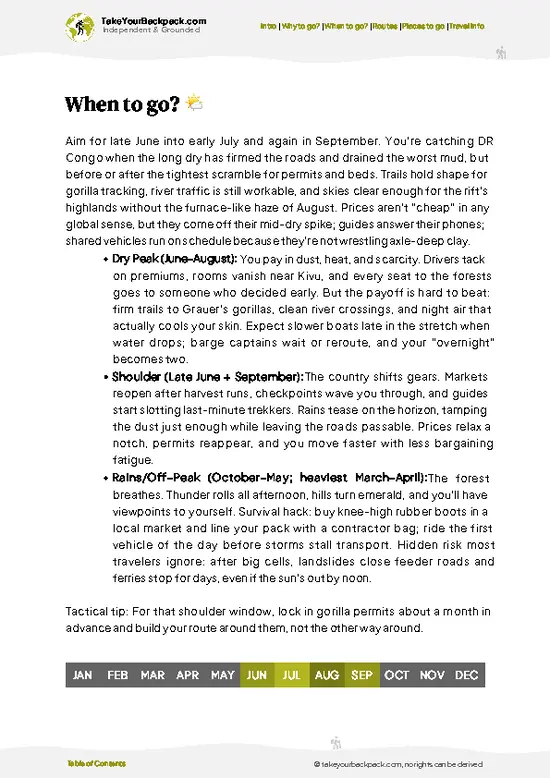
  • Topic: Weather – Matadi’s climate is tropical, with a wet season from October to May and a dry season from June to September. The dry months offer less humidity and fewer downpours, making trekking and exploring far more comfortable.

  • Topic: Temperature – Temperatures hover between 24°C and 31°C (75°F to 88°F) year-round. The dry season tends to feel slightly cooler, especially in the evenings, which can be a relief after hot days.

  • Topic: Daylight Hours – Near the equator, daylight is consistent, roughly 12 hours daily all year. This stability means you don’t have to juggle your schedule around shifting sunrise or sunset times.

  • Topic: Crowds – Matadi isn’t a tourist hotspot, so crowds are generally light. However, local holidays and festivals during the dry season can bring a spike
read more 👉

  • Topic: Weather – Matadi’s climate is tropical, with a wet season from October to May and a dry season from June to September. The dry months offer less humidity and fewer downpours, making trekking and exploring far more comfortable.

  • Topic: Temperature – Temperatures hover between 24°C and 31°C (75°F to 88°F) year-round. The dry season tends to feel slightly cooler, especially in the evenings, which can be a relief after hot days.

  • Topic: Daylight Hours – Near the equator, daylight is consistent, roughly 12 hours daily all year. This stability means you don’t have to juggle your schedule around shifting sunrise or sunset times.

  • Topic: Crowds – Matadi isn’t a tourist hotspot, so crowds are generally light. However, local holidays and festivals during the dry season can bring a spike in visitors, adding cultural buzz but also higher prices.

  • Topic: Seasonal Activities – The dry season is prime for river excursions and hiking nearby hills. Wet months can limit outdoor plans but offer lush landscapes and fewer travelers.

  • Topic: Price Fluctuations – Accommodation and transport costs dip during the wet season due to lower demand but expect to pay a premium in the dry months when conditions are ideal.


Pro-tip: Aim for the early dry season (June to August) to balance pleasant weather, manageable crowds, and better prices—your sweet spot for a high-value Matadi experience.


source: climatestotravel.comJANJanuary: fair for travelingFEBFebruary: fair for travelingMARMarch: fair for travelingAPRApril: fair for travelingMAYMay: fair for travelingJUNJune: excellent for travelingJULJuly: excellent for travelingAUGAugust: excellent for travelingSEPSeptember: highly recommended for travelingOCTOctober: good for travelingNOVNovember: fair for travelingDECDecember: fair for traveling
democratic-republic-of-the-congo-city-matadi
© Google |

✈️ The backpacker research shortcutDR Congo Travel Guide

An offline-friendly backpacking guide with optimized travel routes, ranked highlights, transport advice, and the best areas to stay.
example page 0 from our offline Travel Guide for Democratic Republic of the Congoexample page 1 from our offline Travel Guide for Democratic Republic of the Congoexample page 2 from our offline Travel Guide for Democratic Republic of the Congoexample page 3 from our offline Travel Guide for Democratic Republic of the Congoexample page 4 from our offline Travel Guide for Democratic Republic of the Congoexample page 5 from our offline Travel Guide for Democratic Republic of the Congoexample page 6 from our offline Travel Guide for Democratic Republic of the Congoexample page 7 from our offline Travel Guide for Democratic Republic of the Congo
The digital guide (378 pages) contains:
96 highlights, ranked by travel appeal
Optimized 7, 14 & 21-day travel routes
Cities, national parks, landmarks, beaches
How to get around
Offline-friendly for travel without Wi-Fi
👉 Click to see all 30+ guide features

📅 Plan smarter in minutes, not weeks
Month by month travel advice
Festivals & national holidays
Budget expectations

🗺️ Go to the right places, skip the overrated ones
Honest pros & cons of destinations
Top hikes, parks & viewpoints
Lesser-known places most travelers miss
Clear “worth it vs skip it” guidance

🛏️ Travel smoothly without rookie mistakes
Best areas to stay
Transport systems explained simply
Common scams & safety advice
SIM cards, money & practical tips

🌍 Understand the country, not just visit it
Culture & traditions
52 Essential phrases & customs
Festivals worth planning around
Traveler-friendly historical context
Insights that make places more meaningful

📱 Built for real travel conditions
Fully downloadable PDF
Works completely offline
Optimized for phone use
Useful in remote areas & buses
Everything in one place
Save weeks of stressful planning
Get instant access to your full guide. 30‑day money-back guarantee.


By proceeding you agree to our terms.
Sent to your inbox immediately after payment • 100% Secure Checkout
Best Backpacking Travel Advisor 2025 tourism awardBest Backpacking
Travel Advisor
2025
What others say about Take Your Backpack Guides:
⭐⭐⭐⭐⭐
Fantastic, amazing amount of information!
⭐⭐⭐⭐⭐
My goodness this is amazing, it's what I've been looking for hats off too you!
⭐⭐⭐⭐⭐
I think this is absolutely BRILLIANT
⭐⭐⭐⭐
Very complete and informative. It's still missing places, but I gotta to commend you
⭐⭐⭐⭐⭐
This is truly amazing, thank you, can't wait to explore it with my kids!
⭐⭐⭐⭐⭐
Awesome resource, thank you!
⭐⭐⭐⭐⭐
This is amazing! Can't wait to explore the ones I haven't seen
⭐⭐⭐⭐
I love this! Well done, great idea.
⭐⭐⭐⭐⭐
Thanks for taking the time to make this gem!
⭐⭐⭐⭐⭐
This might be the best website I've ever seen.
⭐⭐⭐⭐⭐
Congratulations, and thank you so much for your work; it's incredibly valuable.
⭐⭐⭐⭐
In all seriousness I think you did a great job pointing out the important spots
⭐⭐⭐⭐⭐
10/10 very good
⭐⭐⭐⭐⭐
As someone who's only just starting to visit regularly this is awesome, thank you.
⭐⭐⭐⭐
Thank you very much! I'm going to visit my dad, it's going to be very useful!
⭐⭐⭐⭐⭐
This is really cool! We'll be travelling for the first time and this definitely come in handy.
⭐⭐⭐⭐⭐
You are now our minister of culture, congratulations 👨‍💼
⭐⭐⭐⭐⭐
Just wanted to tell you that this is a pearl! Going to follow your recommendations.
⭐⭐⭐⭐⭐
This is so cool. I'll definitely be using the resource for my travels soon.
⭐⭐⭐⭐⭐
This is very impressive! Good work.
⭐⭐⭐⭐⭐
This is an amazing and informative site. Very well done!

🛏️ Where to stay?Best areas and accommodation options

Matadi’s backpacker scene is compact but strategic. The best area to base yourself is around the city center near the port and the main market. This zone balances safety and social opportunities better than the sprawling outskirts, which can feel isolated and less secure for solo travelers. Here, you’ll find the few hostels catering to budget travelers, offering a chance to meet others without the tourist bubble of a big city.

Compared to neighborhoods farther from the Congo River, the city center hums with local life—street vendors, lively cafés, and informal gathering spots where you can soak … read more 👉
Matadi’s backpacker scene is compact but strategic. The best area to base yourself is around the city center near the port and the main market. This zone balances safety and social opportunities better than the sprawling outskirts, which can feel isolated and less secure for solo travelers. Here, you’ll find the few hostels catering to budget travelers, offering a chance to meet others without the tourist bubble of a big city.

Compared to neighborhoods farther from the Congo River, the city center hums with local life—street vendors, lively cafés, and informal gathering spots where you can soak up authentic rhythms without sacrificing comfort. It’s not luxury, but it’s a gritty, real experience that rewards those willing to engage. The trade-off here is clear: you sacrifice some quiet and polished amenities for connection and convenience.

Areas beyond the center tend to be quieter but riskier and less social, with fewer affordable lodging options. If your priority is meeting fellow backpackers and navigating Matadi with ease, the city center’s pulse is where you want to plug in. It’s the smartest move for maximizing your time and minimizing hassle in DR Congo’s bustling port city.

🚌 Getting aroundHow to get around Matadi

Matadi moves at its own rhythm—less a clockwork precision and more a pulse you feel in the streets. It’s a city where schedules are suggestions, and the flow depends on the mood of the day, the whims of the driver, and the crowd’s energy. You won’t find neat timetables posted on every corner. Instead, you’ll navigate a blend of informal hustle and bursts of waiting, where patience and street smarts pay off. Understanding this flow is your first win: it means you’re not just a passenger but a player in the game of time, money, and comfort.


  • Walking: The ultimate budget option. Matadi’s compact center makes walking practical and free, but be ready for uneven sidewalks and the tropical heat. It’s slow but gives you unmatched street-level insight and zero cost.

  • Shared Taxis (Taxi Collectif):
read more 👉
Matadi moves at its own rhythm—less a clockwork precision and more a pulse you feel in the streets. It’s a city where schedules are suggestions, and the flow depends on the mood of the day, the whims of the driver, and the crowd’s energy. You won’t find neat timetables posted on every corner. Instead, you’ll navigate a blend of informal hustle and bursts of waiting, where patience and street smarts pay off. Understanding this flow is your first win: it means you’re not just a passenger but a player in the game of time, money, and comfort.


  • Walking: The ultimate budget option. Matadi’s compact center makes walking practical and free, but be ready for uneven sidewalks and the tropical heat. It’s slow but gives you unmatched street-level insight and zero cost.

  • Shared Taxis (Taxi Collectif): These are minibuses or cars packed with locals, leaving only when full. Prices hover around a few hundred Congolese francs, making them cheap but unpredictable in departure times. Comfort is minimal—expect tight spaces and a bumpy ride—but speed can be decent if you catch one ready to roll.

  • Buses: Larger and slightly more comfortable than shared taxis, buses run on main routes but lack fixed schedules. They start early morning and taper off by late afternoon. Fares are low, but expect frequent stops and a slower pace. Good for longer distances within or just outside Matadi.

  • Motorcycle Taxis (Boda-Boda): Fast and flexible, these are your go-to for short hops when time is tight. Prices vary but are higher than shared taxis. Comfort is low and safety can be a concern, but they slice through traffic jams and get you where you need to be quickly.

  • Private Taxis: The priciest option, but you gain control over timing and route. Negotiation is key, and fares can be steep compared to other options. Comfort is better, with less crowding and more direct service, ideal if you value time and ease over budget.


Mastering Matadi’s transit means balancing these trade-offs: walk when you want immersion and savings, jump on a shared taxi for budget speed, or splurge on private rides when time is your currency. Each choice shifts your trip’s equation—know what you’re trading, and you’ll turn logistics into your advantage.

👛 Costs (as of 10 June 2026)Money, prices, and spending tips

Backpacking in Matadi, DR Congo, demands a clear-eyed approach to spending. Here’s how your daily budget breaks down, so you know exactly what you’re trading off.
  • Dorm Accommodation (High Season): Expect to pay around €10-€15 per night. Options are limited but functional, with basic security and clean bedding. High season means slightly higher prices due to demand.
  • Dorm Accommodation (Off-Season): Prices drop to about €7-€10. Fewer travelers mean better bargaining power, but some places might close or reduce services.
  • Meals: Street food and local eateries dominate here. Budget around €3-€6 per day for three meals if you stick to local fare—think grilled fish, cassava, and fresh fruit. Western-style restaurants will cost more, but they’re rare and pricier.
  • Local Transport: Minibuses and
read more 👉
Backpacking in Matadi, DR Congo, demands a clear-eyed approach to spending. Here’s how your daily budget breaks down, so you know exactly what you’re trading off.
  • Dorm Accommodation (High Season): Expect to pay around €10-€15 per night. Options are limited but functional, with basic security and clean bedding. High season means slightly higher prices due to demand.
  • Dorm Accommodation (Off-Season): Prices drop to about €7-€10. Fewer travelers mean better bargaining power, but some places might close or reduce services.
  • Meals: Street food and local eateries dominate here. Budget around €3-€6 per day for three meals if you stick to local fare—think grilled fish, cassava, and fresh fruit. Western-style restaurants will cost more, but they’re rare and pricier.
  • Local Transport: Minibuses and shared taxis are the norm. A typical ride costs about €0.20-€0.50. Budget €1-€2 daily if you move around moderately.
  • City Transport Pass: Matadi doesn’t have a formal city transport pass system. You’ll rely on cash fares for each trip, so no upfront pass savings here.
  • Basic Activities/Entry Fees: Cultural sites and local markets usually charge minimal or no entry fees. Budget around €1-€3 daily if you plan to visit a few spots.
  • Miscellaneous Expenses: This covers bottled water, occasional snacks, and small tips. Set aside about €1-€3 daily to stay comfortable and hydrated.

In total, a realistic daily budget for backpacking in Matadi ranges from roughly €13 to €29. You’re balancing modest comfort with local authenticity, where every euro saved on accommodation or transport can be reinvested in meals or experiences. Knowing these trade-offs lets you play the system smartly, squeezing value without sacrificing the core experience.


source: congotourisme.org
⚠️ Prices can change and everyone travels differently, so take this as a rough guide. Hope it helps you plan your adventure!

🚌 Day tripsShort trips worth adding

Matadi is a fantastic launchpad for day trips that dive deep into the heart of DR Congo’s natural beauty and culture. Here are some worthwhile excursions that will enrich your experience.

Lola ya Bonobo
Just a short drive from Matadi, this sanctuary is dedicated to the rescue and rehabilitation of bonobos. Spend the day learning about these incredible primates and their conservation efforts. The guided tours are engaging, and you might even catch a glimpse of them during feeding time. Expect to spend around $10 for entry and transport. The best time to visit is during the dry season, from May to September, when the paths are easier to navigate. A common mistake? Underestimating the emotional impact of seeing these animals up close.
👉 Explore Lola ya Bonobo

Kinsuka Falls
A hidden treasure, … read more 👉
Matadi is a fantastic launchpad for day trips that dive deep into the heart of DR Congo’s natural beauty and culture. Here are some worthwhile excursions that will enrich your experience.

Lola ya Bonobo
Just a short drive from Matadi, this sanctuary is dedicated to the rescue and rehabilitation of bonobos. Spend the day learning about these incredible primates and their conservation efforts. The guided tours are engaging, and you might even catch a glimpse of them during feeding time. Expect to spend around $10 for entry and transport. The best time to visit is during the dry season, from May to September, when the paths are easier to navigate. A common mistake? Underestimating the emotional impact of seeing these animals up close.
👉 Explore Lola ya Bonobo

Kinsuka Falls
A hidden treasure, Kinsuka Falls is about an hour from Matadi. The cascading waters create a stunning backdrop for a picnic or a refreshing dip. The journey involves a bit of hiking, so wear sturdy shoes. Total costs can be around $15, including transport and snacks. Visit during the dry season for the best views and easier trails. First-timers often overlook the importance of bringing enough water and snacks for the hike.


Boma
This charming riverside town is a mere 30-minute ride from Matadi. Explore local markets, sample street food, and soak in the laid-back atmosphere. The total cost for a day here is around $10, making it a budget-friendly option. The dry season is ideal for wandering the streets without the hassle of mud. A common mistake is not trying the grilled fish from local vendors—it’s a must!
👉 Explore Boma

Mount Mangengenge
For those craving a bit of adventure, a hike up Mount Mangengenge offers breathtaking views of the surrounding landscape. The trek takes about two hours, and you’ll want to budget around $20 for transport and a guide. Best visited in the early morning to avoid the heat, this trip can be physically demanding. Many first-timers underestimate the trail’s difficulty, so come prepared.
Want to know what more DR Congo offers?
The DR Congo Travel Guide describes 96 highlights, from cities to national parks, from beaches to hikes

Get the Travel Guide -

🍲 FoodWhat to Eat & Drink

In Matadi, the local cuisine is a vibrant reflection of DR Congo’s culture. You can’t miss trying moambe chicken, a rich dish simmered in a sauce made from palm oil and ground nuts. Pair it with fufu, a starchy side that’s perfect for scooping up every last bit.

Street food is where the action is. Vendors line the streets, serving up grilled fish and plantains that sizzle with flavor. The aroma wafts through the air, drawing you in. Markets buzz with energy, and you’ll find locals enjoying cassava dishes, often accompanied by a refreshing malta, a non-alcoholic malt beverage that’s a staple here.

When it comes to drinking customs, sharing is key. It’s common to see groups gathered around a table, passing around a bottle of local beer. Don’t be surprised if you’re invited to join in; it’s … read more 👉
In Matadi, the local cuisine is a vibrant reflection of DR Congo’s culture. You can’t miss trying moambe chicken, a rich dish simmered in a sauce made from palm oil and ground nuts. Pair it with fufu, a starchy side that’s perfect for scooping up every last bit.

Street food is where the action is. Vendors line the streets, serving up grilled fish and plantains that sizzle with flavor. The aroma wafts through the air, drawing you in. Markets buzz with energy, and you’ll find locals enjoying cassava dishes, often accompanied by a refreshing malta, a non-alcoholic malt beverage that’s a staple here.

When it comes to drinking customs, sharing is key. It’s common to see groups gathered around a table, passing around a bottle of local beer. Don’t be surprised if you’re invited to join in; it’s all part of the camaraderie. Just remember, when toasting, maintain eye contact—it’s a sign of respect. Embrace the flavors and the warmth of the people; it’s all part of the experience.

🛡️ SafetyScams, Hazards, and Annoyances

Matadi is generally safe, but a few smart choices can enhance your experience. Stay alert in crowded areas, especially markets, where pickpockets might lurk. If you’re solo, avoid wandering too far after dark; stick to well-lit streets and populated areas.

Common scams include overly friendly locals offering unsolicited help, often with the intent to lead you to shops where they earn a commission. Politely decline and trust your instincts.

Annoyances like aggressive taxi drivers can be managed by agreeing on fares upfront. Carry a small amount of cash for small purchases, as card acceptance is limited. By being aware and prepared, you can navigate Matadi confidently and enjoy its unique charm.

Other Congolese cities near Matadi

Explore more nearby:

  • Boma—Congo River port, colonial architecture, mangrove forests| 43 km away
  • Zongo—Ubangi River crossing, ferry terminal, border town| 199 km away
  • Kinshasa—Congo Riverfront, music scene, sprawling districts| 267 km away

💡 Not sure where to go next?
Create a personalized itinerary for DR Congo including Matadi and the places that fit your trip.

Generate my itinerary

👉 Discover all cities

Or checkout all DR Congo has to offer (think cities, towns, villages, national parks, hikes, beaches, festivals)
Country photo of DR Congo

We 💚 feedbackParting advice and final tips

Matadi has a raw energy that’s hard to shake off. The bustling port vibe is a mix of industriousness and local life, where you can sip palm wine while watching the river flow. Don’t miss the unexpected beauty of the nearby hills; they’ll catch you off guard. Just be mindful of the heat—it can be relentless. Embrace the chaos, and you’ll find moments that stick with you long after you leave.

✍️ Help improve this page!
The information on this page is based on in-depth research, insights shared by experienced travelers, and feedback from the local travel community in DR Congo. While every effort is made to keep the information accurate and current, conditions can change — so if you spot anything incorrect or outdated, please get in touch.


🙋‍♂️ Give feedback

👋 Meet the founderWho’s Behind Take Your Backpack?

Johan, backpacker and founder of TakeYourBackpackHi, I’m Johan (Netherlands 🇳🇱), the creator of TakeYourBackpack. Over the past decade, I’ve backpacked through 80+ countries across six continents, gaining extensive experience with independent travel, long-term trips, and overland routes.

This site is built on a combination of firsthand travel experience and carefully curated insights from other backpackers. Many guides are based on places I’ve personally visited, while others bring together tips, observations, and practical advice shared by trusted travelers I’ve met along the way.

The goal is to provide realistic, experience-driven guidance — not generic itineraries — so you can explore destinations with better context, clearer expectations, and more confidence.

Get full DR Congo guide •
Instant download • 96 highlights • Full Offline guide