×

DR Congo🇨🇩 | citiesKalemieport city, railway terminus, lakeside markets | things to do and best time to go

Explore ButemboExplore Boma

Backpacking in Kalemie
🏆 Top pickcity ranked #3
By Johan Kruseman 🇳🇱 | Updated May 6, 2026

Kalemie used to be the kind of place where the train tracks ended and so did the road—dusty, raw, and a little wild, with the air thick from the lake and the scent of woodsmoke curling through the market. Today, it’s still remote, but the edges have softened. Kalemie sits on the eastern shore of Lake Tanganyika, in southeastern DR Congo, where the water glows blue and the horizon feels endless. For backpackers, Kalemie is less a destination and more a crossroads: the last real town before the lake’s expanse or the forests to the west. The old colonial center is walkable, but don’t expect a parade of attractions—life here is slow, with the main market and the lakeside promenade offering the best people-watching. Getting in is half the adventure: the train from the north is an experience in patience, and boats ply the lake, but schedules are loose. You’ll find a handful of guesthouses, but hostels are rare and evenings are quiet—this isn’t a social hub like Kigoma across the water. Costs are moderate by DR Congo standards, but logistics can add up. Safety is better than in some border towns, but you’ll want to keep your wits about you. Kalemie feels more like a pause than a party—a place to catch your breath, watch the light shift over the lake, and plan your next move.

Discover everything you want to know in the 📖 DR Congo Travel Guide.
Safety warning

The current risk level for DR Congo is high. Check the advice before going.


Get your DR Congo guide
96 ranked highlights, routes & tips, works offline (378 pages)
Loading the map 🌍
CLICK TO FILTER
cities
towns
landmarks
national parks
hikes
beaches
attractions
festivals
regions
SHOW COUNTRY’S BESTSHOW ALL

✨ Why go?
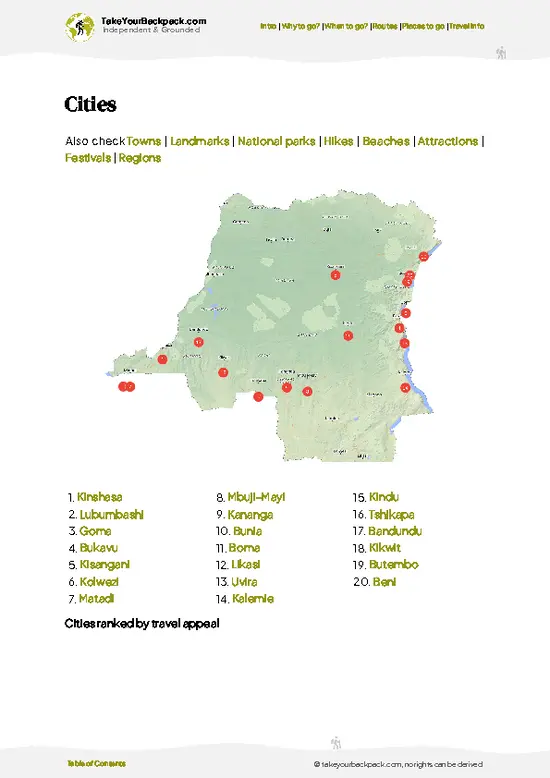
Ranked #3 city in DR Congo
Why visitors keep coming back

Kalemie, in the heart of DR Congo, serves as a vital waypoint for backpackers seeking both adventure and cultural immersion. Nestled along the shores of Lake Tanganyika, it offers stunning views and a laid-back vibe that invites you to linger. The walkable streets are lined with small-scale guesthouses and hostels, perfect for solo travelers or small groups looking to connect.

From here, you can easily access nearby hikes that lead to breathtaking panoramas or explore local beaches where the scent of grilled fish wafts through the air. The town’s friendly atmosphere encourages interaction, making it a great spot for those who thrive on social connections.

Most backpackers tend to stay a few days, soaking in the local culture and savoring street food that bursts with flavor. This isn’t … read more 👉
Kalemie, in the heart of DR Congo, serves as a vital waypoint for backpackers seeking both adventure and cultural immersion. Nestled along the shores of Lake Tanganyika, it offers stunning views and a laid-back vibe that invites you to linger. The walkable streets are lined with small-scale guesthouses and hostels, perfect for solo travelers or small groups looking to connect.

From here, you can easily access nearby hikes that lead to breathtaking panoramas or explore local beaches where the scent of grilled fish wafts through the air. The town’s friendly atmosphere encourages interaction, making it a great spot for those who thrive on social connections.

Most backpackers tend to stay a few days, soaking in the local culture and savoring street food that bursts with flavor. This isn’t a party town; instead, it’s ideal for slow travelers who appreciate the journey as much as the destination. If you’re looking for a place to recharge before heading deeper into the wilds of DR Congo, Kalemie is your launchpad.
Get the complete Travel Guide for DR Congo
Everything organized for offline planning — routes, highlights, costs & tips

See what’s inside 👉

Get the Travel Guide -

💡 HighlightsTop highlights of Kalemie

  • Lake Tanganyika waterfront & port — The real heartbeat of Kalemie: fishing boats, creaking wooden piers, a busy port scene and unbeatable sunsets. Great for people-watching and seeing how the lake shapes daily life.
  • Marché Central (the central market) — A chaotic, colorful market where fresh Tanganyika fish, produce, second-hand clothes and everyday gear are sold. Fantastic for tasting street food and meeting local traders.
  • Fishermen’s landing and smoked-fish beaches — Early mornings here are full of activity: boats hauling in catches, women smoking fish on the sand and bargaining. Very sensory and authentic—bring cash and ask before photographing people.
  • Catholic cathedral / diocesan complex — The seat of the Diocese of Kalemie-Kirungu; more than a church, it’s a community hub and a
read more 👉
  • Lake Tanganyika waterfront & port — The real heartbeat of Kalemie: fishing boats, creaking wooden piers, a busy port scene and unbeatable sunsets. Great for people-watching and seeing how the lake shapes daily life.
  • Marché Central (the central market) — A chaotic, colorful market where fresh Tanganyika fish, produce, second-hand clothes and everyday gear are sold. Fantastic for tasting street food and meeting local traders.
  • Fishermen’s landing and smoked-fish beaches — Early mornings here are full of activity: boats hauling in catches, women smoking fish on the sand and bargaining. Very sensory and authentic—bring cash and ask before photographing people.
  • Catholic cathedral / diocesan complex — The seat of the Diocese of Kalemie-Kirungu; more than a church, it’s a community hub and a visible piece of the city’s history and architecture. Services are lively and open to visitors.
  • Albertville colonial quarter — Remnants of the Belgian colonial era: old government and commercial buildings, faded façades and narrow streets that tell the city’s 20th-century story if you stroll and look closely.
  • Port warehouses and ferry terminal — Not glamorous, but essential: these working spaces show Kalemie’s role as a transport link on the lake. Watching cargo and passenger ferries gives perspective on regional trade and travel.
  • Lukuga river mouth and nearby wetlands — Where the lake meets riverine marshes (within the Kalemie area). Birdlife, small boat traffic and quiet fishing camps make this a calm contrast to the busy market and port.
  • Local artisan workshops and roadside carvers — Small-scale woodcarvers, basket weavers and net menders sell practical goods and souvenirs. Visiting a workshop supports makers directly and gives insight into local crafts.
  • Riverside cafés and informal beer gardens — Low-key places along the water to sip a drink, eat grilled fish and listen to local conversations—perfect for evening atmosphere and meeting Kalemie residents.
  • Stade municipal (local stadium) — Football match days are social events: noisy, spirited and a great way to see local pride in action. Even non-sports fans get an authentic slice of daily life.
A few visitable highlights just outside Kalemie that make good day trips include nearby lakeshore villages and small islands on Lake Tanganyika, the larger lakeside town of Moba to the south (boat trips are possible), and the Lukuga wetland areas and fishing camps around the lake’s outlets.
Spotted a mistake or missing something? Contact us.
🏘️ NeighborhoodsWhere things are and how it's laid out

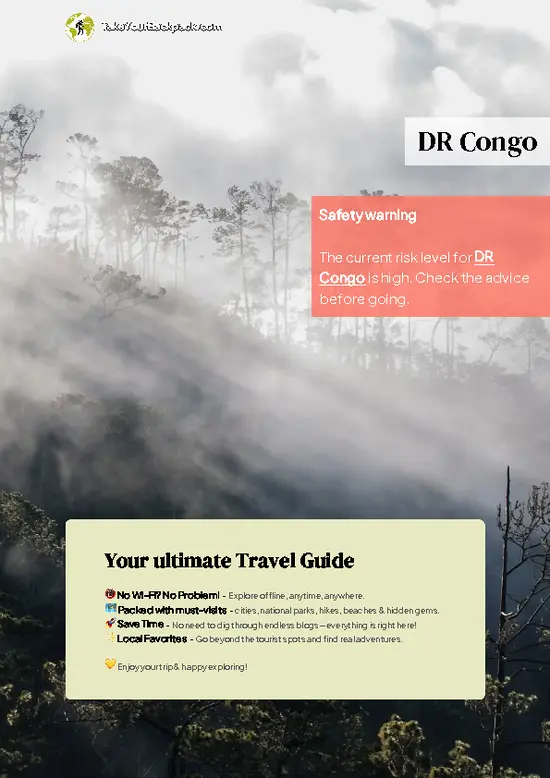
Kalemie, a bustling town on the shores of Lake Tanganyika, offers a unique blend of local culture and natural beauty. Here’s how to navigate its neighborhoods for a smoother experience.

Centre Ville: This is the heart of Kalemie. You’ll find markets, shops, and eateries buzzing with life. The vibe is energetic, perfect for those who thrive on activity. Walkability is high, making it easy to explore on foot. Costs here are moderate, with plenty of budget-friendly options. Nightlife is lively, with local bars and music spilling into the streets. Ideal for short stays, but longer visits can feel repetitive.

Quartier Kimbulu: A quieter area, Kimbulu offers a more laid-back atmosphere. It’s less touristy, giving you a genuine feel of local life. The cost of living is lower, and you can find cozy … read more 👉
Kalemie, a bustling town on the shores of Lake Tanganyika, offers a unique blend of local culture and natural beauty. Here’s how to navigate its neighborhoods for a smoother experience.

Centre Ville: This is the heart of Kalemie. You’ll find markets, shops, and eateries buzzing with life. The vibe is energetic, perfect for those who thrive on activity. Walkability is high, making it easy to explore on foot. Costs here are moderate, with plenty of budget-friendly options. Nightlife is lively, with local bars and music spilling into the streets. Ideal for short stays, but longer visits can feel repetitive.

Quartier Kimbulu: A quieter area, Kimbulu offers a more laid-back atmosphere. It’s less touristy, giving you a genuine feel of local life. The cost of living is lower, and you can find cozy guesthouses. Walkability is decent, but you might need a bike or moto-taxi for longer distances. This neighborhood is great for longer stays, especially if you want to immerse yourself in the community.

Quartier Mwangaza: Known for its scenic views of the lake, Mwangaza is perfect for those seeking tranquility. The vibe is serene, with fewer crowds. Costs are slightly higher due to the views, but it’s worth it for the sunsets. Walkability is moderate; you’ll want to plan your outings. This area suits longer stays, especially for nature lovers.

Each neighborhood in Kalemie has its own flavor. Choose wisely to enhance your adventure.

⌛️ 1 daySeeing the highlights in 24 hours

Kalemie, perched on the shores of Lake Tanganyika, offers a slice of life in the DR Congo that feels both raw and vibrant. The town is a blend of bustling markets, local culture, and stunning lakeside views. It’s not on every tourist’s radar, but that’s what makes it special. You’re stepping into a world where the everyday is extraordinary.

Start your morning at the lively market in the center of town. The air is thick with the scent of fresh produce and spices, and the sounds of haggling fill the space. Grab a local breakfast of akam, a fermented porridge, from a vendor. It’s hearty and gives you the energy to explore. Afterward, stroll along the lakeshore. The early light dances on the water, and you might catch fishermen casting their nets, their silhouettes framed against the rising sun. … read more 👉
Kalemie, perched on the shores of Lake Tanganyika, offers a slice of life in the DR Congo that feels both raw and vibrant. The town is a blend of bustling markets, local culture, and stunning lakeside views. It’s not on every tourist’s radar, but that’s what makes it special. You’re stepping into a world where the everyday is extraordinary.

Start your morning at the lively market in the center of town. The air is thick with the scent of fresh produce and spices, and the sounds of haggling fill the space. Grab a local breakfast of akam, a fermented porridge, from a vendor. It’s hearty and gives you the energy to explore. Afterward, stroll along the lakeshore. The early light dances on the water, and you might catch fishermen casting their nets, their silhouettes framed against the rising sun.

In the afternoon, head to the nearby village of Moba, just a short boat ride away. This isn’t a typical tourist stop, but it’s a chance to see traditional life up close. Walk through the village, where you can chat with locals and perhaps join in a game of soccer with the kids. The laughter and camaraderie here are infectious, and you’ll leave with a deeper understanding of the community.

As evening approaches, return to Kalemie and find a spot along the lake to watch the sunset. The sky transforms into a canvas of oranges and purples, reflecting off the water. For dinner, seek out a local eatery serving grilled fish caught that day. The flavors are fresh and authentic, a perfect end to your day.

Kalemie isn’t just a place to visit; it’s an experience that connects you to the heart of the DR Congo. Embrace the rhythm of life here, and you’ll find that every moment is worth it.
Build the Right Itinerary
Use the DR Congo Travel Guide’s 7, 14 & 21-day routes as a starting point to plan a trip that actually works on the ground.

Get the Travel Guide -

🌤️ When to go?Weather, crowds, and seasonal trade-offs


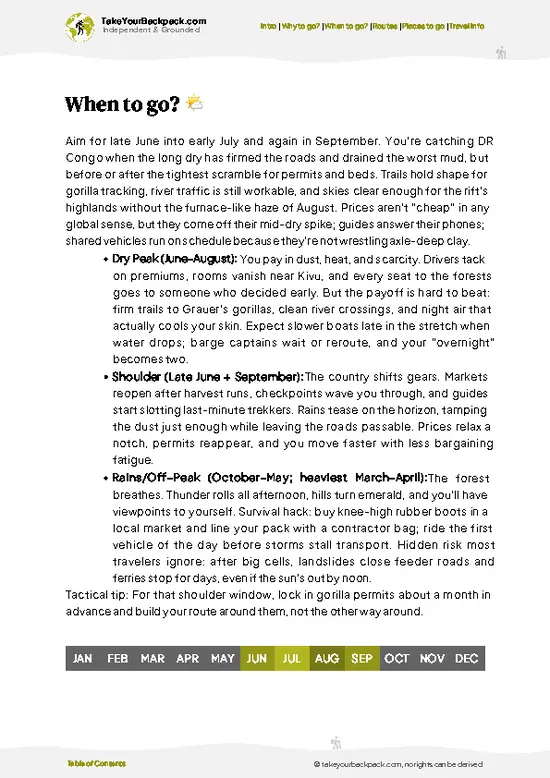
  • Topic: Weather – Kalemie sits on Lake Tanganyika’s edge, so the dry season from June to September is your best bet. Expect clear skies and less humidity, making the air feel crisp and the lake’s surface mirror-like. Rainy months (October to May) bring heavy downpours that can turn roads to mud and dampen outdoor plans.

  • Topic: Temperature – Daytime highs hover around 25-30°C (77-86°F) year-round, but during the dry season, nights dip to a cooler 15-18°C (59-64°F). This contrast sharpens the senses—warm sun on your skin by day, fresh, cool breezes by night.

  • Topic: Daylight Hours – Near the equator, Kalemie enjoys roughly 12 hours of daylight year-round. Sunrise and sunset times shift only slightly, so you can count on consistent light for early starts or late explorations.

  • Topic: Crowds
read more 👉

  • Topic: Weather – Kalemie sits on Lake Tanganyika’s edge, so the dry season from June to September is your best bet. Expect clear skies and less humidity, making the air feel crisp and the lake’s surface mirror-like. Rainy months (October to May) bring heavy downpours that can turn roads to mud and dampen outdoor plans.

  • Topic: Temperature – Daytime highs hover around 25-30°C (77-86°F) year-round, but during the dry season, nights dip to a cooler 15-18°C (59-64°F). This contrast sharpens the senses—warm sun on your skin by day, fresh, cool breezes by night.

  • Topic: Daylight Hours – Near the equator, Kalemie enjoys roughly 12 hours of daylight year-round. Sunrise and sunset times shift only slightly, so you can count on consistent light for early starts or late explorations.

  • Topic: Crowds – Kalemie is off the beaten path, so crowds are minimal anytime. However, the dry season draws local fishermen and traders, adding a lively, authentic buzz without overwhelming the town’s laid-back vibe.

  • Topic: Seasonal Activities – Dry months open up lake activities like fishing trips and boat rides, plus easier trekking in nearby hills. The rainy season limits these options but paints the landscape lush and green, perfect for photographers who don’t mind a little mud.

  • Topic: Price Fluctuations – Prices for lodging and local transport remain fairly stable year-round due to low tourist volume. Still, the dry season’s slight uptick in visitors can nudge prices up, so booking ahead can save you a few bucks.


Pro-tip: Aim for late August to early September—when the dry season’s calm meets the tail end of local fishing festivals—to catch Kalemie at its most vibrant and accessible.


source: climatestotravel.comJANJanuary: fair for travelingFEBFebruary: fair for travelingMARMarch: fair for travelingAPRApril: fair for travelingMAYMay: fair for travelingJUNJune: highly recommended for travelingJULJuly: highly recommended for travelingAUGAugust: excellent for travelingSEPSeptember: excellent for travelingOCTOctober: fair for travelingNOVNovember: fair for travelingDECDecember: fair for traveling
when-to-go

✈️ The backpacker research shortcutDR Congo Travel Guide

An offline-friendly backpacking guide with optimized travel routes, ranked highlights, transport advice, and the best areas to stay.
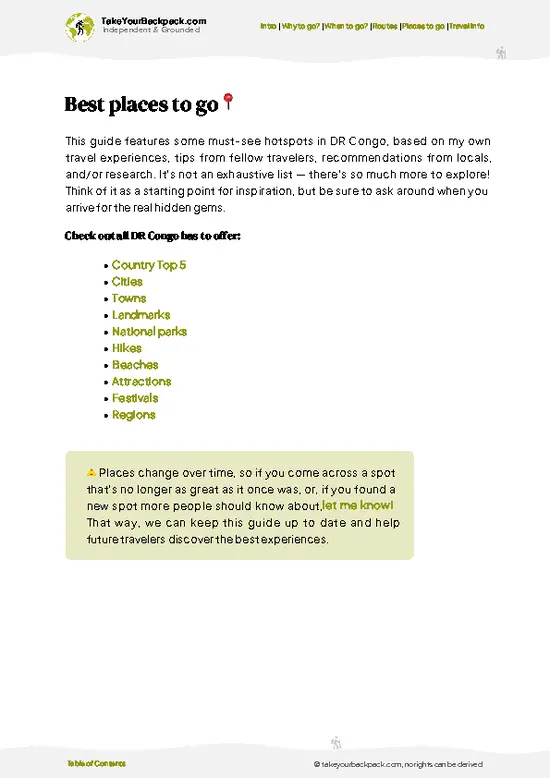
example page 0 from our offline Travel Guide for Democratic Republic of the Congoexample page 1 from our offline Travel Guide for Democratic Republic of the Congoexample page 2 from our offline Travel Guide for Democratic Republic of the Congoexample page 3 from our offline Travel Guide for Democratic Republic of the Congoexample page 4 from our offline Travel Guide for Democratic Republic of the Congoexample page 5 from our offline Travel Guide for Democratic Republic of the Congoexample page 6 from our offline Travel Guide for Democratic Republic of the Congoexample page 7 from our offline Travel Guide for Democratic Republic of the Congo
The digital guide (378 pages) contains:
96 highlights, ranked by travel appeal
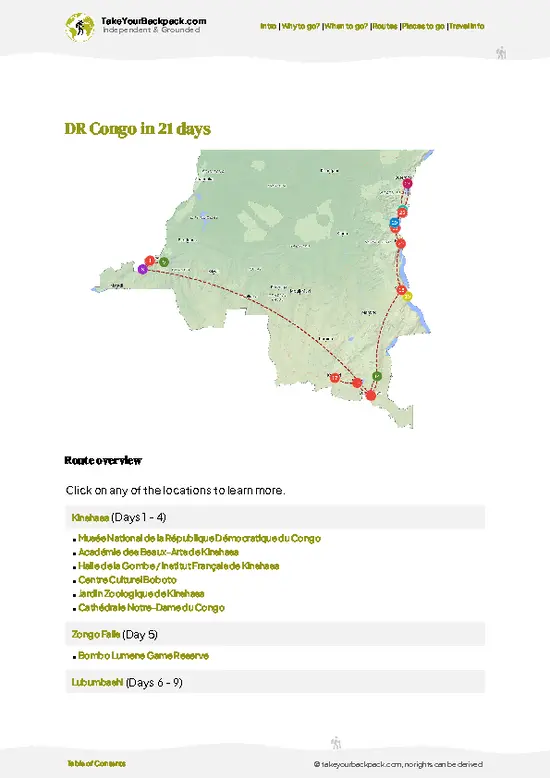
Optimized 7, 14 & 21-day travel routes
Cities, national parks, beaches, historical sites, ...
How to get around
Offline-friendly for travel without Wi-Fi
👉 Click to see all 30+ guide features

📅 Plan smarter in minutes, not weeks
Month by month travel advice
Festivals & national holidays
Budget expectations

🗺️ Go to the right places, skip the overrated ones
Honest pros & cons of destinations
Top hikes, parks & viewpoints
Lesser-known places most travelers miss
Clear “worth it vs skip it” guidance

🛏️ Travel smoothly without rookie mistakes
Best areas to stay
Transport systems explained simply
Common scams & safety advice
SIM cards, money & practical tips

🌍 Understand the country, not just visit it
Culture & traditions
52 Essential phrases & customs
Festivals worth planning around
Traveler-friendly historical context
Insights that make places more meaningful

📱 Built for real travel conditions
Fully downloadable PDF
Works completely offline
Optimized for phone use
Useful in remote areas & buses
Everything in one place
Save weeks of stressful planning
Get instant access to the full guide directly. 30-day money-back guarantee.


Sent to your inbox immediately after payment • 100% Secure Checkout
Best Backpacking Travel Advisor 2025 tourism awardBest Backpacking
Travel Advisor
2025
What others say about Take Your Backpack Guides:
⭐⭐⭐⭐⭐
Fantastic, amazing amount of information!
⭐⭐⭐⭐⭐
My goodness this is amazing, it's what I've been looking for hats off too you!
⭐⭐⭐⭐⭐
I think this is absolutely BRILLIANT
⭐⭐⭐⭐
Very complete and informative. It's still missing places, but I gotta to commend you
⭐⭐⭐⭐⭐
This is truly amazing, thank you, can't wait to explore it with my kids!
⭐⭐⭐⭐⭐
Awesome resource, thank you!
⭐⭐⭐⭐⭐
This is amazing! Can't wait to explore the ones I haven't seen
⭐⭐⭐⭐
I love this! Well done, great idea.
⭐⭐⭐⭐⭐
Thanks for taking the time to make this gem!
⭐⭐⭐⭐⭐
This might be the best website I've ever seen.
⭐⭐⭐⭐⭐
Congratulations, and thank you so much for your work; it's incredibly valuable.
⭐⭐⭐⭐
In all seriousness I think you did a great job pointing out the important spots
⭐⭐⭐⭐⭐
10/10 very good
⭐⭐⭐⭐⭐
As someone who's only just starting to visit regularly this is awesome, thank you.
⭐⭐⭐⭐
Thank you very much! I'm going to visit my dad, it's going to be very useful!
⭐⭐⭐⭐⭐
This is really cool! We'll be travelling for the first time and this definitely come in handy.
⭐⭐⭐⭐⭐
You are now our minister of culture, congratulations 👨‍💼
⭐⭐⭐⭐⭐
Just wanted to tell you that this is a pearl! Going to follow your recommendations.
⭐⭐⭐⭐⭐
This is so cool. I'll definitely be using the resource for my travels soon.
⭐⭐⭐⭐⭐
This is very impressive! Good work.
⭐⭐⭐⭐⭐
This is an amazing and informative site. Very well done!

🛏️ Where to stay?How to pick the right area

In Kalemie, the best spot for backpackers is the area around the town center, near the lakeshore. This neighborhood hums with local life—vendors calling out, the scent of grilled fish mingling with fresh lake air. It’s where you’ll find the few budget guesthouses and hostels that cater to solo travelers and small groups. Staying here means you’re close to the ferry docks and markets, which makes getting around easier and safer, especially as daylight fades. The streets here are busier, which naturally deters petty crime and creates a social vibe that’s rare elsewhere in the city.

Venture outside … read more 👉
In Kalemie, the best spot for backpackers is the area around the town center, near the lakeshore. This neighborhood hums with local life—vendors calling out, the scent of grilled fish mingling with fresh lake air. It’s where you’ll find the few budget guesthouses and hostels that cater to solo travelers and small groups. Staying here means you’re close to the ferry docks and markets, which makes getting around easier and safer, especially as daylight fades. The streets here are busier, which naturally deters petty crime and creates a social vibe that’s rare elsewhere in the city.

Venture outside this zone, and you hit quieter, less developed neighborhoods where accommodation options vanish and the atmosphere shifts to something more isolated and unpredictable. Those areas lack the informal backpacker networks you want—no easy meetups, no shared tips over a cold drink. The town center’s mix of locals and travelers creates a subtle safety net and a chance to swap stories or find a guide without feeling like an outsider.

In short, the lakeshore district isn’t just about convenience; it’s the pulse of Kalemie’s modest but genuine backpacker scene. It’s where you’ll feel the city’s rhythm and breathe in the lake’s cool breeze after a day of exploring.

🚌 Getting aroundGetting around like a local

Kalemie moves at its own rhythm, a blend of purposeful hustle and laid-back stretches of time where the sun hangs heavy over Lake Tanganyika. It’s not a place where you’ll find neat timetables or polished transit hubs. Instead, the flow here is organic—vendors call out their wares, boats bob in the harbor waiting for passengers, and motorbikes dart through dusty streets with a kind of chaotic intuition. The air carries a mix of lake breeze, diesel fumes, and the faint scent of grilled fish from nearby stalls. If you want to move like a local, you’ll need to read the cues, embrace the unpredictability, and lean into the rhythm of the town rather than fight it.


  • Walking: Kalemie’s compact center is best explored on foot. The streets are uneven but manageable, and walking lets you soak in
read more 👉
Kalemie moves at its own rhythm, a blend of purposeful hustle and laid-back stretches of time where the sun hangs heavy over Lake Tanganyika. It’s not a place where you’ll find neat timetables or polished transit hubs. Instead, the flow here is organic—vendors call out their wares, boats bob in the harbor waiting for passengers, and motorbikes dart through dusty streets with a kind of chaotic intuition. The air carries a mix of lake breeze, diesel fumes, and the faint scent of grilled fish from nearby stalls. If you want to move like a local, you’ll need to read the cues, embrace the unpredictability, and lean into the rhythm of the town rather than fight it.


  • Walking: Kalemie’s compact center is best explored on foot. The streets are uneven but manageable, and walking lets you soak in the textures—the cracked paint on colonial buildings, the chatter from market stalls, and the occasional stray dog weaving through the crowd. It’s free, flexible, and the best way to catch the town’s pulse up close.


  • Bicycle Taxi (Pousse-Pousse): These pedal-powered taxis are everywhere and perfect for short hops. They’re cheap—usually under 500 CDF (about 25 cents)—and can navigate narrow alleys where motorbikes can’t. They’re slow but steady, giving you a chance to take in the street scenes without the noise and fumes of motorized transport.


  • Motorcycle Taxi (Moto-Taxi): When you need to cover more ground quickly, moto-taxis are the go-to. They’re fast, weaving through traffic with ease, but hold on tight—the ride can be bumpy on Kalemie’s rough roads. Expect to pay around 1,000 to 2,000 CDF (50 cents to $1), and negotiate the fare upfront. They run from dawn until dusk; after dark, availability drops sharply.


  • Minibus Taxi (Taxi-Bus): For longer trips out of town or to the outskirts, shared minibuses are your budget option. They leave when full, so timing is flexible but unpredictable. Fares vary by distance but are generally affordable, around 2,000 to 3,000 CDF ($1 to $1.50). Expect crowded conditions and a slow pace, but it’s the most authentic way to travel with locals.


  • Lake Ferry: If your route includes crossing or traveling along Lake Tanganyika, the ferry is essential. It’s not a luxury cruise—think wooden boats with basic seating and open sides where the lake breeze cools the heat. Departure times can be irregular, often early morning or late afternoon, and fares depend on distance but remain budget-friendly. The ride offers a refreshing break from the dusty streets and a chance to see Kalemie from a different angle.

👛 Costs (as of 9 June 2026)Typical daily expenses

Backpacking in Kalemie, DR Congo, means embracing a raw, off-the-beaten-path vibe where costs stay low but the experience feels rich and real.
  • Dorm Accommodation: Expect to pay around $5 to $10 per night for a basic dorm bed. Options are limited and often simple, with mosquito nets and shared bathrooms. The lighting is usually dim, and the atmosphere is quiet, giving you a chance to recharge after a day of exploring.
  • Meals: Street food and local eateries dominate here. A typical meal costs between $2 and $4, featuring staples like grilled fish from Lake Tanganyika, cassava, and fresh vegetables. The smells of smoky charcoal and spices fill the air, grounding you in the local rhythm.
  • Local Transport: Getting around is mostly by moto-taxi or shared minibuses. Fares hover around $0.50 to $1 per
read more 👉
Backpacking in Kalemie, DR Congo, means embracing a raw, off-the-beaten-path vibe where costs stay low but the experience feels rich and real.
  • Dorm Accommodation: Expect to pay around $5 to $10 per night for a basic dorm bed. Options are limited and often simple, with mosquito nets and shared bathrooms. The lighting is usually dim, and the atmosphere is quiet, giving you a chance to recharge after a day of exploring.
  • Meals: Street food and local eateries dominate here. A typical meal costs between $2 and $4, featuring staples like grilled fish from Lake Tanganyika, cassava, and fresh vegetables. The smells of smoky charcoal and spices fill the air, grounding you in the local rhythm.
  • Local Transport: Getting around is mostly by moto-taxi or shared minibuses. Fares hover around $0.50 to $1 per ride within town. The rides are bumpy and lively, with the scent of exhaust and dust mixing in the air, but they’re the quickest way to navigate Kalemie’s streets.
  • Basic Activities/Entry Fees: Most local attractions, like markets or lakeside walks, are free or cost less than $1. If you want to visit any small museums or cultural sites, budget around $2 to $3. These spots offer a glimpse into the community’s history and daily life without the polish of tourist traps.
  • Miscellaneous Expenses: Budget $1 to $3 for essentials like bottled water, snacks, or phone credit. Electricity can be spotty, so charging your devices might require a small fee at guesthouses or local shops.

All told, you’re looking at roughly $10 to $20 per day to cover the basics in Kalemie. This keeps your trip lean but lets you soak in the authentic, unfiltered atmosphere of a town where every moment feels earned.


source: congotourisme.org
⚠️ Prices can change and everyone travels differently, so take this as a rough guide. Hope it helps you plan your adventure!

🚌 Day tripsShort trips worth adding

Kalemie is a vibrant launchpad for unforgettable day trips in the heart of the DR Congo. The town’s unique blend of culture and nature makes it an ideal base for exploring the surrounding wonders. Here are some standout day trips that will elevate your experience.

Lake Tanganyika Adventure
Just a short boat ride from Kalemie, Lake Tanganyika offers a refreshing escape. The water is a deep blue, and the air is filled with the scent of fresh fish grilling on the shore. Spend the day swimming, snorkeling, or simply lounging on the sandy beaches. Expect to pay around $5 for the boat ride and a few dollars more for food. The best time to visit is during the dry season, from May to September, when the weather is perfect for outdoor activities. A common mistake? Overpacking; you really only need … read more 👉
Kalemie is a vibrant launchpad for unforgettable day trips in the heart of the DR Congo. The town’s unique blend of culture and nature makes it an ideal base for exploring the surrounding wonders. Here are some standout day trips that will elevate your experience.

Lake Tanganyika Adventure
Just a short boat ride from Kalemie, Lake Tanganyika offers a refreshing escape. The water is a deep blue, and the air is filled with the scent of fresh fish grilling on the shore. Spend the day swimming, snorkeling, or simply lounging on the sandy beaches. Expect to pay around $5 for the boat ride and a few dollars more for food. The best time to visit is during the dry season, from May to September, when the weather is perfect for outdoor activities. A common mistake? Overpacking; you really only need your swimsuit and a towel.
👉 Explore Lake Tanganyika

Katanga Mining Museum
Dive into the rich history of the region with a visit to the Katanga Mining Museum. It’s a fascinating glimpse into the mining culture that shaped the area. The museum is about a 30-minute walk from the center of Kalemie, and entry is usually free or very low-cost. The best time to go is early morning when the light filters through the exhibits, creating a warm glow. Many first-timers overlook this gem, thinking it’s just for miners, but it’s a treasure trove of local history.


Mount Kabobo Hike
For the adventurous, a hike up Mount Kabobo is a must. The trailhead is about an hour’s drive from Kalemie, and the journey costs around $10 for a shared taxi. The hike itself is challenging but rewarding, with breathtaking views of the surrounding landscape. Aim for the early morning to avoid the heat and catch the sunrise. A common pitfall is underestimating the trail; sturdy shoes and plenty of water are essential.


Local Market Experience
Immerse yourself in local culture by visiting Kalemie’s bustling market. It’s a sensory overload of colors, sounds, and smells, with vendors selling everything from fresh produce to handmade crafts. The market is just a short walk from the town center and is free to explore. The best time to visit is early morning when the market is at its liveliest. Many travelers miss this opportunity, opting for touristy spots instead, but this is where you’ll truly feel the pulse of Kalemie.
Want to know what more DR Congo offers?
The DR Congo Travel Guide describes 96 highlights, from cities to national parks, from beaches to hikes

Get the Travel Guide -

🍲 FoodWhat to Eat & Drink

Kalemie’s food scene is a playground for anyone ready to dive into DR Congo’s rich flavors without fuss. The city’s signature dishes revolve around fresh fish from Lake Tanganyika—think grilled or fried tilapia, often served with *fufu*, a dense, doughy staple made from cassava or maize. It’s a texture challenge at first, but mastering the art of dipping *fufu* into spicy peanut or tomato-based sauces is a small victory that connects you to local rhythms.

Backpackers won’t find polished eateries here; instead, the real action is at bustling markets and street stalls where the air is thick with smoky grills and the sharp tang of fermented palm wine. These spots are social hubs, where locals gather to eat, drink, and swap stories. Don’t shy away from the palm wine—it’s earthy, slightly sweet, … read more 👉
Kalemie’s food scene is a playground for anyone ready to dive into DR Congo’s rich flavors without fuss. The city’s signature dishes revolve around fresh fish from Lake Tanganyika—think grilled or fried tilapia, often served with *fufu*, a dense, doughy staple made from cassava or maize. It’s a texture challenge at first, but mastering the art of dipping *fufu* into spicy peanut or tomato-based sauces is a small victory that connects you to local rhythms.

Backpackers won’t find polished eateries here; instead, the real action is at bustling markets and street stalls where the air is thick with smoky grills and the sharp tang of fermented palm wine. These spots are social hubs, where locals gather to eat, drink, and swap stories. Don’t shy away from the palm wine—it’s earthy, slightly sweet, and served fresh in calabashes, offering a taste of tradition that’s as much about the experience as the flavor.

Eating in Kalemie is casual but communal. Sharing plates is common, and meals often stretch into lively conversations. A quick tip: use your right hand for eating and passing food, a simple sign of respect here. Embrace the sensory overload—the sizzling sounds, the spicy aromas, and the warmth of a city that feeds both body and soul without pretense.

🛡️ SafetyScams, Hazards, and Annoyances

Kalemie is generally safe, but a few practical tips can enhance your experience. Stay alert in crowded markets, where pickpockets might lurk. Keep your belongings close and avoid flashy displays of wealth.

If you’re traveling solo, stick to well-lit areas after dark. The streets can be quiet, and it’s best to blend in rather than stand out. A friendly smile goes a long way, but don’t engage too deeply with strangers who seem overly curious about your plans.

Scams are rare, but be cautious with unofficial taxi services. Always negotiate fares upfront. Local transport can be a bit chaotic, so patience is key.

Annoyances like unexpected roadblocks or delays are part of the rhythm here. Embrace the slower pace; it’s all part of the adventure. By staying aware and adaptable, you’ll unlock the true essence of Kalemie.

Other Congolese cities near Kalemie

Explore more nearby:

  • Nyunzu—savanna crossroads, cattle markets, remote setting| 161 km away
  • Uvira—Lake Tanganyika shore, border crossing, palm-lined avenues| 282 km away
  • Pweto—Lake Mweru shore, fishing port, Zambian border| 286 km away

👉 Discover all cities

Or checkout all DR Congo has to offer (think cities, towns, villages, national parks, hikes, beaches, festivals)
Country photo of DR Congo

We 💚 feedbackFinal thoughts on visiting Kalemie

Kalemie has a raw, unfiltered vibe that pulls you in. The scent of grilled fish wafts through the air as locals gather by the lakeshore, sharing stories and laughter. The best surprise? The warmth of the community; they’re genuinely curious about you. Just a heads-up: the roads can be tricky, so don’t rush. Embrace the slower pace. It’s in those moments of waiting that you’ll find the heart of DR Congo. Trust me, it’s worth it.

✍️ Help improve this page!
The information on this page is based on in-depth research, insights shared by experienced travelers, and feedback from the local travel community in DR Congo. While every effort is made to keep the information accurate and current, conditions can change — so if you spot anything incorrect or outdated, please get in touch.


🙋‍♂️ Give feedback

👋 Meet the founderWho’s Behind Take Your Backpack?

Johan, backpacker and founder of TakeYourBackpackHi, I’m Johan (Netherlands 🇳🇱), the creator of TakeYourBackpack. Over the past decade, I’ve backpacked through 80+ countries across six continents, gaining extensive experience with independent travel, long-term trips, and overland routes.

This site is built on a combination of firsthand travel experience and carefully curated insights from other backpackers. Many guides are based on places I’ve personally visited, while others bring together tips, observations, and practical advice shared by trusted travelers I’ve met along the way.

The goal is to provide realistic, experience-driven guidance — not generic itineraries — so you can explore destinations with better context, clearer expectations, and more confidence.

Get full DR Congo guide •
Instant download • 96 highlights • Full Offline guide