×

DR Congo🇨🇩 | citiesIleboRailhead yard, Kasai port, river confluence, dugout canoes | things to do and best time to go

Explore LodjaExplore Kipushi

Backpacking in Ilebo
👀 For curious travelerscity ranked #39
By Johan Kruseman 🇳🇱 | Updated October 22, 2026

Trucks sit idling beside the rail yard while porters haul sacks of cassava and palm oil past a locomotive that may or may not leave today. Ilebo sits on the Kasai River in the southwest of the Democratic Republic of the Congo, in Kasaï Province. Come for river and rail life, not for polish. There are no real sights worth a special trip, and tourist services are nearly absent. Unlike Kananga, a large inland city, Ilebo is a working river port.

Discover everything you want to know in the 📖 DR Congo Travel Guide.
Safety warning

The current risk level for DR Congo is high. Check the advice before going.


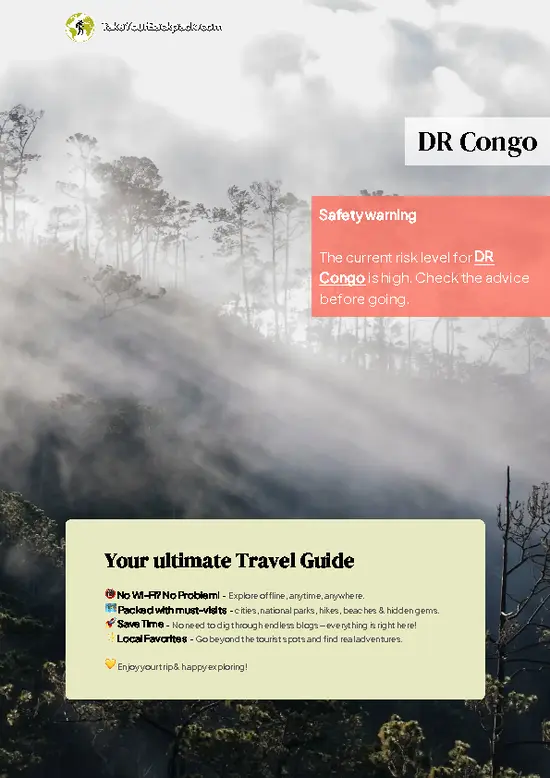
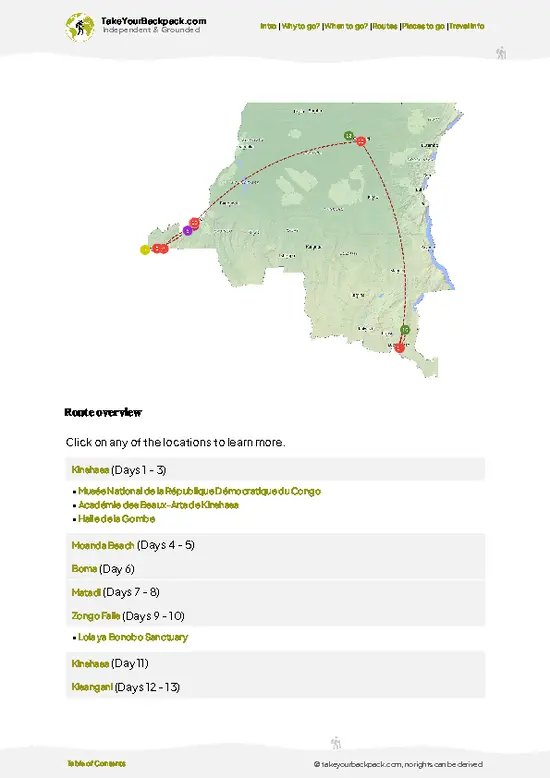
example page 0 from our offline Travel Guide for Democratic Republic of the Congo
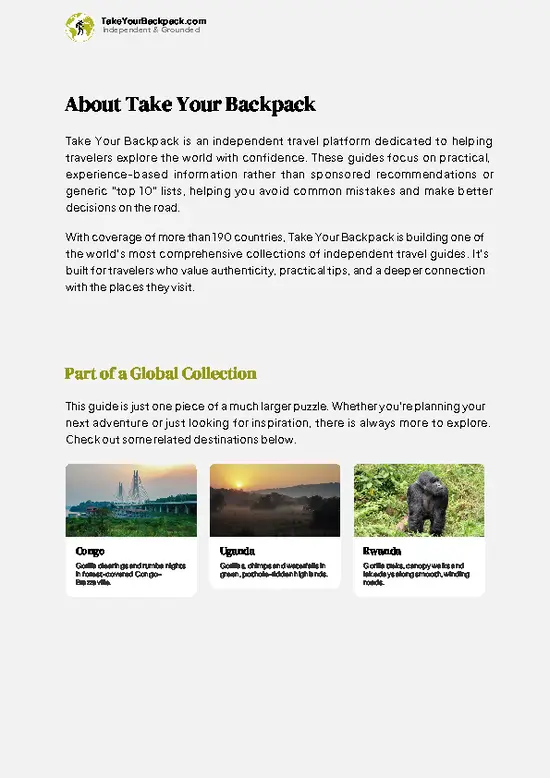
example page 1 from our offline Travel Guide for Democratic Republic of the Congo
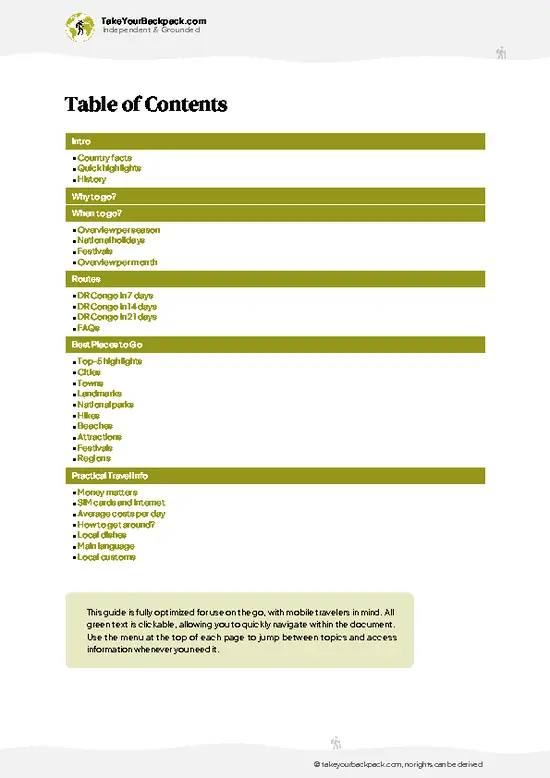
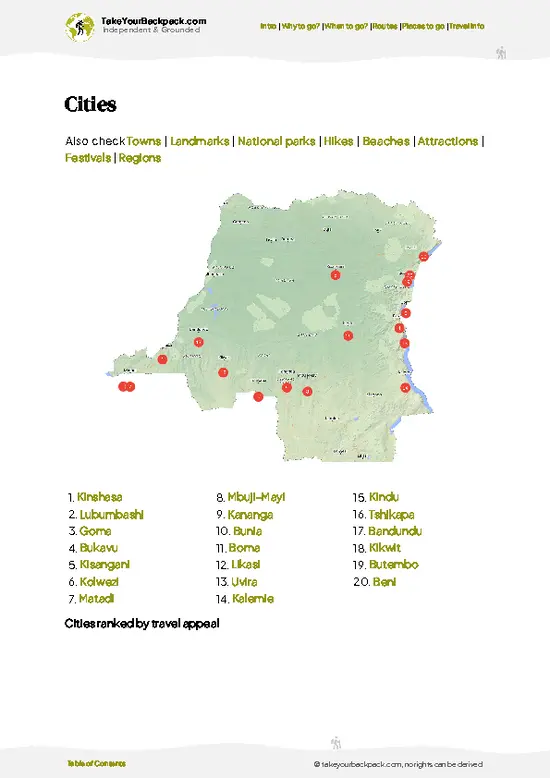
example page 2 from our offline Travel Guide for Democratic Republic of the Congo
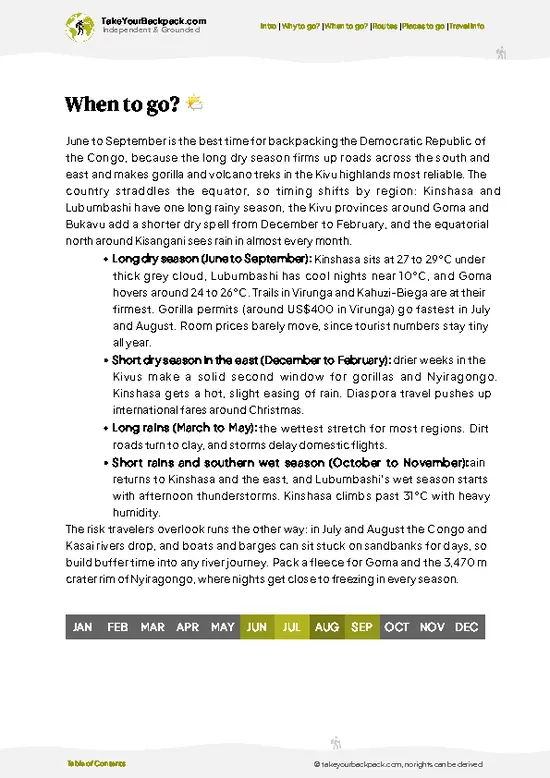
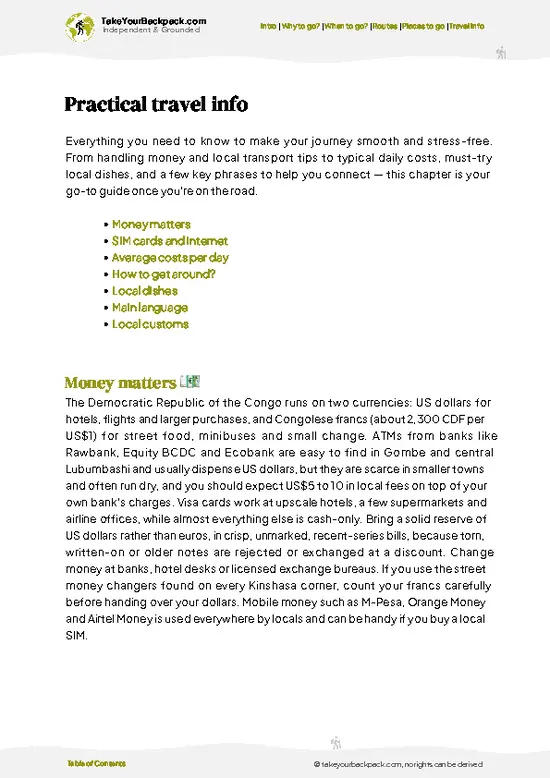
example page 3 from our offline Travel Guide for Democratic Republic of the Congo
example page 4 from our offline Travel Guide for Democratic Republic of the Congo
example page 5 from our offline Travel Guide for Democratic Republic of the Congo
example page 6 from our offline Travel Guide for Democratic Republic of the Congo
example page 7 from our offline Travel Guide for Democratic Republic of the Congo
Loading the map 🌍
CLICK TO FILTER
cities
towns
landmarks
national parks
hikes
beaches
attractions
festivals
regions
SHOW COUNTRY’S BESTSHOW ALL

✨ Why go?
Ranked #39 city in DR Congo
The unique appeal for travelers

Ilebo matters because it is the end of the railway from Lubumbashi and the head of navigation on the Kasai River, so it is a genuine transfer point for overland travelers heading toward Kinshasa by barge or toward the Kasai interior. It is no place for nightlife or a hostel scene. Expect a few basic guesthouses, street food, and a flat town you can cover on foot. Treat it as a gritty logistics stop, and only if your route demands it.

💡 HighlightsThe experiences that define the visit

  1. Ilebo Railway Station and Yard: the town's defining place, where the line from Katanga ends and cargo changes hands. Go in the morning when activity peaks. Free to look around, but ask permission before photographing. 1 hour.
  2. Kasai River Port: barges, pirogues and traders unloading goods. Late afternoon is lively and cooler. Free, 1 to 2 hours.
  3. Kasai River Confluence Viewpoints: stretches of bank where the wide brown river is easy to watch. Early morning is best. Free, 30 to 60 minutes.
  4. Central Market: stalls of cassava, dried fish, palm oil and cloth, with the best people-watching in town. Mornings are busiest. Buying a snack costs US$1 to 3. 1 hour.
  5. Riverside Fishing Canoes: fishermen launch and land dugouts along the shore. Dawn or dusk works best. Free, 30 minutes.
Around Ilebo, the Kasai valley … read more 👉
  1. Ilebo Railway Station and Yard: the town's defining place, where the line from Katanga ends and cargo changes hands. Go in the morning when activity peaks. Free to look around, but ask permission before photographing. 1 hour.
  2. Kasai River Port: barges, pirogues and traders unloading goods. Late afternoon is lively and cooler. Free, 1 to 2 hours.
  3. Kasai River Confluence Viewpoints: stretches of bank where the wide brown river is easy to watch. Early morning is best. Free, 30 to 60 minutes.
  4. Central Market: stalls of cassava, dried fish, palm oil and cloth, with the best people-watching in town. Mornings are busiest. Buying a snack costs US$1 to 3. 1 hour.
  5. Riverside Fishing Canoes: fishermen launch and land dugouts along the shore. Dawn or dusk works best. Free, 30 minutes.
Around Ilebo, the Kasai valley and the river settlements toward Tshikapa and Kananga can be explored as longer journeys, though they are not casual day trips. The river bank viewpoints, railway yard and fishing canoes cost nothing to visit.
Spotted a mistake or missing something? Contact us.

🏘️ NeighborhoodsHow different areas shape the experience

Ilebo is small, and you can cover it on foot or by moto-taxi in a day, so choose where to spend your hours.
  • Port and riverfront: This is the part worth your time. Barges and pirogues load along the Kasai River, traders haggle over cassava, fish and charcoal, and the activity is constant. Go in the morning, and ask before taking photos.
  • Central market area: Loud, crowded and useful for cheap snacks, phone credit and fabric. Thirty minutes is enough.
  • Railway quarter: The station is the town’s reason for existing, as the line from Kasai Province ends here. Look from outside and skip long waits.
  • Residential outskirts: Dusty, spread out and quiet. Nothing to see, so don’t bother.

⌛️ 1 daySeeing the highlights in 24 hours

7:00 AM: Railway Station Start here because freight activity peaks early and the light is soft. Ask permission before walking the yard, then stroll toward the river.
9:00 AM: Kasai River Port Watch barges and canoes load, and talk with traders if you speak French or Lingala. Walk along the bank.
11:30 AM: Central Market Eat a simple meal and browse the stalls for dried fish and cloth.
2:00 PM: Fishing Canoe Landings Away from the port, this quieter stretch shows local fishing life and is rarely visited.
5:00 PM: Riverbank Viewpoint Finish with the river at its calmest before heading back to your lodging.

🌤️ When to go?Weather, crowds, and seasonal trade-offs

Ilebo is easiest from June to August, when rain is scarce and unpaved roads are firm.
  • Dry Season (June to August): Highs of 28 to 32°C (82 to 90°F), little rain, easier river and road travel.
  • Rainy Seasons (September to May): Heavy downpours, 23 to 30°C (73 to 86°F), muddy tracks, delayed barges.
  • Daylight and prices: Days stay near 12 hours all year. Transport prices climb when roads degrade.
Travel mid-dry season for the most predictable schedules.

source: climatestotravel.comJANJanuary: fair for travelingFEBFebruary: fair for travelingMARMarch: fair for travelingAPRApril: fair for travelingMAYMay: fair for travelingJUNJune: highly recommended for travelingJULJuly: highly recommended for travelingAUGAugust: excellent for travelingSEPSeptember: excellent for travelingOCTOctober: fair for travelingNOVNovember: fair for travelingDECDecember: fair for traveling
when-to-go

✈️ The backpacker research shortcutDR Congo Travel Guide

An offline-friendly backpacking guide with optimized travel routes, ranked highlights, transport advice, and the best areas to stay.
example page 0 from our offline Travel Guide for Democratic Republic of the Congo
example page 1 from our offline Travel Guide for Democratic Republic of the Congo
example page 2 from our offline Travel Guide for Democratic Republic of the Congo
example page 3 from our offline Travel Guide for Democratic Republic of the Congo
example page 4 from our offline Travel Guide for Democratic Republic of the Congo
example page 5 from our offline Travel Guide for Democratic Republic of the Congo
example page 6 from our offline Travel Guide for Democratic Republic of the Congo
example page 7 from our offline Travel Guide for Democratic Republic of the Congo
The digital guide (330 pages) contains:
✅ 76 highlights, ranked by travel appeal
✅ Optimized 7, 14 & 21-day travel routes
✅ Cities, national parks, landmarks, beaches
✅ How to get around
✅ Offline-friendly for travel without Wi-Fi
👉 Click to see all 30+ guide features

📅 Plan smarter in minutes, not weeks
✅ Month by month travel advice
✅ Festivals & national holidays
✅ Budget expectations

🗺️ Go to the right places, skip the overrated ones
✅ Honest pros & cons of destinations
✅ Top hikes, parks & viewpoints
✅ Lesser-known places most travelers miss
✅ Clear “worth it vs skip it” guidance

🛏️ Travel smoothly without rookie mistakes
✅ Best areas to stay
✅ Transport systems explained simply
✅ Common scams & safety advice
✅ SIM cards, money & practical tips

🌍 Understand the country, not just visit it
✅ Culture & traditions
✅ 52 Essential phrases & customs
✅ Festivals worth planning around
✅ Traveler-friendly historical context
✅ Insights that make places more meaningful

📱 Built for real travel conditions
✅ Fully downloadable PDF
✅ Works completely offline
✅ Optimized for phone use
✅ Useful in remote areas & buses
✅ Everything in one place
Stop searching, start planning
Get instant access to your full guide. 30‑day money-back guarantee.
+ Add another guide for just

By proceeding you agree to our terms.
Sent to your inbox immediately after payment • 100% Secure Checkout
Best Backpacking Travel Advisor 2025 tourism awardBest Backpacking
Travel Advisor
2025
What others say about Take Your Backpack Guides:
⭐⭐⭐⭐⭐
Fantastic, amazing amount of information!
⭐⭐⭐⭐⭐
My goodness this is amazing, it's what I've been looking for hats off too you!
⭐⭐⭐⭐⭐
I think this is absolutely BRILLIANT
⭐⭐⭐⭐
Very complete and informative. It's still missing places, but I gotta to commend you
⭐⭐⭐⭐⭐
This is truly amazing, thank you, can't wait to explore it with my kids!
⭐⭐⭐⭐⭐
Awesome resource, thank you!
⭐⭐⭐⭐⭐
This is amazing! Can't wait to explore the ones I haven't seen
⭐⭐⭐⭐
I love this! Well done, great idea.
⭐⭐⭐⭐⭐
Thanks for taking the time to make this gem!
⭐⭐⭐⭐⭐
This might be the best website I've ever seen.
⭐⭐⭐⭐⭐
Congratulations, and thank you so much for your work; it's incredibly valuable.
⭐⭐⭐⭐
In all seriousness I think you did a great job pointing out the important spots
⭐⭐⭐⭐⭐
10/10 very good
⭐⭐⭐⭐⭐
As someone who's only just starting to visit regularly this is awesome, thank you.
⭐⭐⭐⭐
Thank you very much! I'm going to visit my dad, it's going to be very useful!
⭐⭐⭐⭐⭐
This is really cool! We'll be travelling for the first time and this definitely come in handy.
⭐⭐⭐⭐⭐
You are now our minister of culture, congratulations 👨‍💼
⭐⭐⭐⭐⭐
Just wanted to tell you that this is a pearl! Going to follow your recommendations.
⭐⭐⭐⭐⭐
This is so cool. I'll definitely be using the resource for my travels soon.
⭐⭐⭐⭐⭐
This is very impressive! Good work.
⭐⭐⭐⭐⭐
This is an amazing and informative site. Very well done!

🛏️ Where to stay?How to pick the right area

The best option is the area close to the railway station and market, where the few guesthouses and basic budget rooms cluster, at around US$10 to 25 a night. Dorm beds are not a thing here, so expect a simple private room. Being near the station makes early departures easy, and streets are lively until evening. After dark, take a moto-taxi rather than walking, and choose a place with a locked gate. Riverfront rooms are quieter but farther from transport. Electricity and water can be intermittent, so bring a headlamp.

🚌 Getting aroundGetting around like a local

From Ilebo’s railway station, the port and market are a 10 to 20 minute walk, or a US$1 to 2 moto-taxi ride along the dirt streets. Public transport barely exists, so expect to rely on your feet and motorbikes. Roads are rough and flood-prone in the rains.
  • Walking: Best for the core, as port, market and station sit close together. Go by day, when the heat is manageable.
  • Moto-taxi: The default option, costing US$0.50 to 2 per ride. Agree the fare first, and wear the helmet if one is offered.
  • Train: The line to Kananga and beyond is the main long-distance link, but timetables are unreliable. Fares are around US$10 to 30 depending on class, and delays of many hours are normal. Bring food and water.
  • River boats and barges: Cheap passage along the Kasai toward Kinshasa or Tshikapa takes days, not hours,
… read more 👉
From Ilebo’s railway station, the port and market are a 10 to 20 minute walk, or a US$1 to 2 moto-taxi ride along the dirt streets. Public transport barely exists, so expect to rely on your feet and motorbikes. Roads are rough and flood-prone in the rains.
  • Walking: Best for the core, as port, market and station sit close together. Go by day, when the heat is manageable.
  • Moto-taxi: The default option, costing US$0.50 to 2 per ride. Agree the fare first, and wear the helmet if one is offered.
  • Train: The line to Kananga and beyond is the main long-distance link, but timetables are unreliable. Fares are around US$10 to 30 depending on class, and delays of many hours are normal. Bring food and water.
  • River boats and barges: Cheap passage along the Kasai toward Kinshasa or Tshikapa takes days, not hours, so only do this if you want the experience. Expect crowding and little comfort.

👛 Costs (as of 22 October 2026)How expensive it really is

Ilebo costs about US$31 to 60 a day for a backpacker, with accommodation the biggest expense.
CategoryBudget RangeLocal Reality
Dorm accommodation (high season)US$15 to 25Basic private room, since dorms are rare
Dorm accommodation (off-season)US$10 to 20Slightly lower in rainy months
MealsUS$6 to 12Market stalls and simple cookhouses
Local transportUS$2 to 5Moto-taxi rides
City transport passNot availablePay per ride in cash
Basic activities/entry feesUS$5 to 10Pirogue hire, small local fees
MiscellaneousUS$3 to 8Water, phone credit, small tips
Total Daily BudgetUS$31 to 60About US$45 for most travelers
Carry small US dollar bills in good condition, as change is scarce and torn notes are often refused.

source: worldbank.org
⚠️ Prices can change and everyone travels differently, so take this as a rough guide. Hope it helps you plan your adventure!

🚌 Day tripsBest day trips from Ilebo

Ilebo has limited infrastructure, so day trips are about local river and rural life, not formal attractions.
Kasai River by Pirogue: Hire a paddler for a few hours to see fishing camps and sandbars. It runs about US$5 to 15, and the dry season gives calmer water. Agree the price and duration first.

Mapangu Area Villages: Rough tracks lead to farming villages within one to two hours by moto-taxi. Expect to spend US$10 to 20 round trip. Bring a local guide, as first-timers often arrive without introductions and get stuck at awkward roadblocks.

Luebo: This historic Kasai mission town lies across the river region, roughly a half day each way on poor roads. Budget US$20 to 40 with transport. Go only in the dry season.
👉 Explore Luebo

🍲 FoodLocal Cuisine & Drinks

Ilebo’s river location means fresh Kasai fish, often grilled over charcoal or stewed with palm oil, sold near the port. Try chikwangue (steamed cassava loaves) and saka-saka (pounded cassava leaves), the latter often cooked with smoked fish here. Meals run about US$2 to 5. Eat at market stalls and simple maman cookhouses near the station, where food is cooked to order. Drink Primus or Skol beer at open-air bars in the evening. Sip bottled water, and choose hot, freshly cooked dishes.

🛡️ SafetyTraveler Safety Guide

Ilebo is calmer than many larger Congolese towns, but it is remote and officials are attentive to strangers. Carry copies of your passport and visa, and expect checkpoints where small “fees” may be requested. Stay polite, and ask for an official receipt. Photograph the port and station only with permission. Avoid walking alone after dark, as streets are unlit, and keep valuables hidden in the market. Solo travelers should arrange a local contact and inform your lodging of your plans.

FAQFrequently asked questions about Ilebo

One to two days is enough for Ilebo, since the port, market and railway station can be seen in a day. Most people stop here as part of a rail or river journey toward Kananga or Kinshasa. A pirogue ride on the Kasai costs about US$5 to 15, and an extra day only makes sense if train or barge schedules force it.
Ilebo is manageable for experienced solo travelers, but it is remote and has little tourist infrastructure. Carry copies of your documents for checkpoints, avoid walking unlit streets after dark, and use moto-taxis at night for about US$1 to 2. Lodging near the station is the most practical base.
Ilebo is known as the railway terminus on the Kasai River, where goods from Kasai Province transfer between train and river barge. The port is the main attraction, busy with traders and fishing boats. The line toward Kananga is the key overland link, and the journey can take many hours or days.
⚠️ Things can change over time, so always validate details locally before you go.

Other Congolese cities near Ilebo

Explore more nearby:

  • Kikwit—Kwilu river banks, Pende carvers, mission district, Grand Marché| 211 km away
  • Tshikapa—Kasai riverfront, diamond dealers' quarter, pirogue crossing, mission grounds| 234 km away
  • Kananga—Lulua banks, Kasai raffia cloth, Saint-Joseph choirs, rumba courtyards| 268 km away

💡 Not sure where to go next?
Create a personalized itinerary for DR Congo including Ilebo and the places that fit your trip.

Generate my itinerary

👉 Discover all cities

Or checkout all DR Congo has to offer (think cities, towns, villages, national parks, hikes, beaches, festivals)
Country photo of DR Congo

We 💚 feedbackWhat to keep in mind

Most first-timers overlook the paperwork. Carry copies of your passport and visa, and greet local officials politely before wandering near the rail yard or port. I would arrive with cash and a plan for onward transport.

✍️ Help improve this page!
The information on this page is based on in-depth research, insights shared by experienced travelers, and feedback from the local travel community in DR Congo. While every effort is made to keep the information accurate and current, conditions can change — so if you spot anything incorrect or outdated, please get in touch.


🙋‍♂️ Give feedback

👋 Meet the founderWho’s Behind Take Your Backpack?

Johan, backpacker and founder of TakeYourBackpackHi, I’m Johan (Netherlands 🇳🇱), the creator of TakeYourBackpack. Over the past 3 decades, I’ve backpacked through 90+ countries across six continents, gaining extensive experience with independent travel, long-term trips, and overland routes.

This site is built on a combination of firsthand travel experience and carefully curated insights from other backpackers. Many guides are based on places I’ve personally visited, while others bring together tips, observations, and practical advice shared by trusted travelers I’ve met along the way.

The goal is to provide realistic, experience-driven guidance — not generic itineraries — so you can explore destinations with better context, clearer expectations, and more confidence.