×

DR Congo🇨🇩 | citiesUviraLake Tanganyika shore, border crossing, palm-lined avenues | things to do and best time to go

Explore BuniaExplore Isiro

Backpacking in Uvira
🏆 Top pickcity ranked #2
By Johan Kruseman 🇳🇱 | Updated May 9, 2026

If you crave polished promenades, seamless Wi-Fi, or a nightlife scene that hums past midnight, Uvira will test your patience. But for backpackers who trade comfort for character, Uvira rewards you with a raw, lakeside pulse that’s hard to fake. Wedged between Lake Tanganyika’s restless blue and the green ridges of eastern DR Congo, Uvira is a crossroads town—more lived-in than lovely, but alive with the scent of charcoal fires and the sound of boda-bodas weaving through sandy streets. This isn’t a destination for urban thrills or curated culture; it’s a practical launchpad for lake swims, market wanderings, and the slow, satisfying work of crossing borders (Burundi is just up the road). You’ll find more shared taxis than hostels, and evenings lean quiet—think grilled fish by the water, not backpacker bar crawls. Costs are low, but so is infrastructure, and you’ll need your wits about you after dark. Compared to busier Bukavu or touristy Kigoma across the lake, Uvira feels unvarnished and transitional—a place to catch your breath, recalibrate, and glimpse the everyday rhythm of DR Congo before pushing on.

Discover everything you want to know in the 📖 DR Congo Travel Guide.
Safety warning

The current risk level for DR Congo is high. Check the advice before going.


Get your DR Congo guide
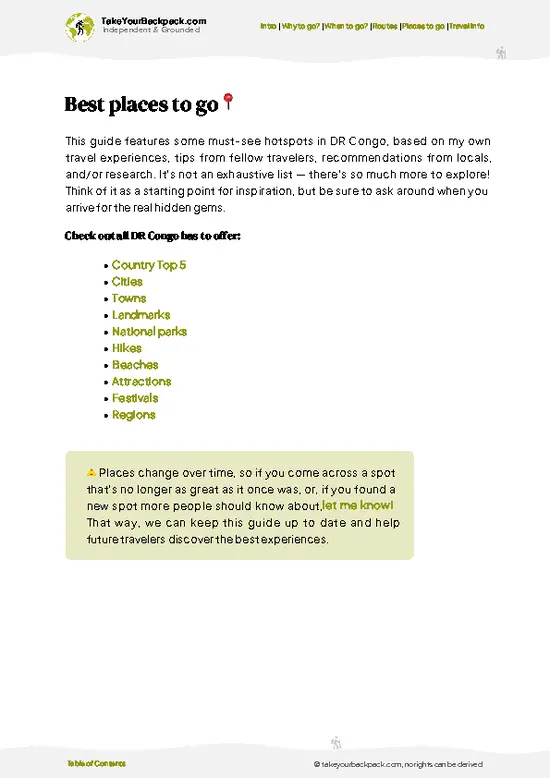
96 ranked highlights, routes & tips, works offline (378 pages)
Loading the map 🌍
CLICK TO FILTER
cities
towns
landmarks
national parks
hikes
beaches
attractions
festivals
regions
SHOW COUNTRY’S BESTSHOW ALL

✨ Why go?
Ranked #2 city in DR Congo
What makes it a must-see city

Backpackers flock to Uvira in the DR Congo for its unique position as a gateway to adventure. It’s not just a stopover; it’s a launchpad for hikes in the nearby Kahuzi-Biega National Park, where the scent of rich earth and lush foliage fills the air. The town’s walkable streets make it easy to explore local markets, where the aroma of grilled fish mingles with the chatter of vendors.

Accommodations here are cozy and affordable, with small-scale hostels and guesthouses that foster a friendly, communal vibe. You’ll find fellow travelers swapping stories over a plate of cassava or sipping local beer. Most backpackers stay a few days, soaking in the relaxed atmosphere and the chance to connect with locals.

This isn’t a party town; it’s for those who appreciate the slow travel experience. Solo … read more 👉
Backpackers flock to Uvira in the DR Congo for its unique position as a gateway to adventure. It’s not just a stopover; it’s a launchpad for hikes in the nearby Kahuzi-Biega National Park, where the scent of rich earth and lush foliage fills the air. The town’s walkable streets make it easy to explore local markets, where the aroma of grilled fish mingles with the chatter of vendors.

Accommodations here are cozy and affordable, with small-scale hostels and guesthouses that foster a friendly, communal vibe. You’ll find fellow travelers swapping stories over a plate of cassava or sipping local beer. Most backpackers stay a few days, soaking in the relaxed atmosphere and the chance to connect with locals.

This isn’t a party town; it’s for those who appreciate the slow travel experience. Solo adventurers and small groups will thrive here, enjoying the balance of quiet reflection and social interaction. Uvira offers a taste of authentic DR Congo life, making it a worthwhile stop for those ready to embrace its charm.
Get the complete Travel Guide for DR Congo
Everything organized for offline planning — routes, highlights, costs & tips

See what’s inside 👉

Get the Travel Guide -

💡 HighlightsPlaces and moments you shouldn't skip

  • Uvira Port & Lake Tanganyika Shoreline — The heart of town: colorful dhows, fishermen hauling in their catch, and a living waterfront where daily life and beautiful sunsets meet. Great for people-watching and hopping on a local boat.
  • Ruzizi River Mouth — Where the Ruzizi pours into Tanganyika. Mudflats, birdlife, small fishing outposts and easy walking along the delta give a clear view of the landscape that shapes Uvira’s economy.
  • Uvira Central Market (Marché Central) — A chaotic, brilliant market selling everything from produce and spices to second-hand clothes. It’s the best place to taste street food, buy local textiles, and see everyday commerce in motion.
  • Fish Landing Sites & Drying Racks — The fish trade is Uvira’s lifeblood. Visiting the landing beaches and drying racks (kapenta
read more 👉
  • Uvira Port & Lake Tanganyika Shoreline — The heart of town: colorful dhows, fishermen hauling in their catch, and a living waterfront where daily life and beautiful sunsets meet. Great for people-watching and hopping on a local boat.
  • Ruzizi River Mouth — Where the Ruzizi pours into Tanganyika. Mudflats, birdlife, small fishing outposts and easy walking along the delta give a clear view of the landscape that shapes Uvira’s economy.
  • Uvira Central Market (Marché Central) — A chaotic, brilliant market selling everything from produce and spices to second-hand clothes. It’s the best place to taste street food, buy local textiles, and see everyday commerce in motion.
  • Fish Landing Sites & Drying Racks — The fish trade is Uvira’s lifeblood. Visiting the landing beaches and drying racks (kapenta and lake fish) is noisy, smelly, and unforgettable—bring a camera and your appetite.
  • Public Beaches and Waterfront Stretches — Simple sandy stretches along the lake where locals swim, play, and picnic. Not a resort scene—authentic, relaxed, and perfect for cooling off after a dusty market stroll.
  • Traditional Boatyards & Canoe Builders — Small shore workshops where craftsmen repair and carve the wooden boats that ply Tanganyika. Watching a boat being built is a hands-on cultural snapshot and easy to find along the shoreline.
  • Old Town Streets & Colonial-era Buildings — Walk the town centre to spot older administrative buildings, narrow streets and marketplaces that tell the layered history of Uvira beyond postcards and panoramas.
  • Local Music & Nightlife Spots — Small bars and open-air stages where rumba, lingala and Swahili tunes dominate. Not glossy clubs—authentic music nights where locals socialize and dancers show up; ask around for the current hotspots.
  • Community Workshops & Women’s Craft Stalls — Small cooperative stalls and workshops around town selling beads, woven goods and everyday crafts. Good for ethical souvenirs and meeting makers directly.
  • City Viewpoints & Short Hill Walks — A few nearby rises inside town give surprisingly good views over the lake, port and Ruzizi delta. Short, easy hikes that pay off at sunrise or sunset.
A few great day trips outside Uvira: the Mpemba islands in Uvira Bay (boat trips to fishing islets), Kahuzi-Biéga National Park near Bukavu for forest wildlife (including eastern lowland gorillas), and cross-border markets/villages along the nearby Burundi border.
Spotted a mistake or missing something? Contact us.
🏘️ NeighborhoodsUnderstanding the local layout

Uvira is a vibrant town on the shores of Lake Tanganyika, where the pulse of local life meets stunning natural beauty. Here’s how to navigate its neighborhoods for an authentic experience.

Centre Ville
This is the heart of Uvira. Expect bustling markets and street vendors selling everything from fresh fish to handmade crafts. The vibe is energetic, making it perfect for short stays. Walkability is high; you can easily explore on foot. Nightlife is lively, with local bars offering music and mingling. Just be mindful of your belongings in crowded areas.

Mikenge
A quieter area, Mikenge is ideal for those seeking a more laid-back experience. It’s less touristy, which means lower costs for accommodations and meals. The atmosphere is relaxed, perfect for longer stays where you can soak in … read more 👉
Uvira is a vibrant town on the shores of Lake Tanganyika, where the pulse of local life meets stunning natural beauty. Here’s how to navigate its neighborhoods for an authentic experience.

Centre Ville
This is the heart of Uvira. Expect bustling markets and street vendors selling everything from fresh fish to handmade crafts. The vibe is energetic, making it perfect for short stays. Walkability is high; you can easily explore on foot. Nightlife is lively, with local bars offering music and mingling. Just be mindful of your belongings in crowded areas.

Mikenge
A quieter area, Mikenge is ideal for those seeking a more laid-back experience. It’s less touristy, which means lower costs for accommodations and meals. The atmosphere is relaxed, perfect for longer stays where you can soak in the local culture. Transport options are limited, so consider renting a bike to explore nearby attractions.

Kibanga
Kibanga offers a mix of local life and scenic views of the lake. It’s a bit more upscale, with guesthouses that cater to backpackers looking for comfort without breaking the bank. The area is walkable, but you’ll want to arrange transport for longer excursions. Nightlife is quieter here, making it suitable for those who prefer a peaceful evening after a day of exploration.

Mugunga
This neighborhood is a bit off the beaten path, offering a unique glimpse into local life. It’s less developed, which means lower prices but fewer amenities. The vibe is authentic and raw, perfect for adventurous souls. Transport can be tricky, so plan ahead if you want to venture into the town center.

⌛️ 1 daySeeing the highlights in 24 hours

Uvira, a lively town on the shores of Lake Tanganyika in DR Congo, pulses with a unique blend of cultures and natural beauty. The lake’s shimmering waters reflect the vibrant life around it, making it a perfect backdrop for a day of exploration.

Start your morning at the bustling local market in the heart of Uvira. The air is thick with the scent of fresh produce and spices, and the sounds of vendors haggling create a lively symphony. Grab a warm, flaky mandazi (a local pastry) from a street vendor as you wander through the stalls. This is where you’ll see the town’s true colors—bright fabrics, handcrafted goods, and the friendly smiles of locals.

After soaking in the market’s energy, head to the nearby hills for a hike. The trail offers stunning views of the lake and the surrounding landscape. … read more 👉
Uvira, a lively town on the shores of Lake Tanganyika in DR Congo, pulses with a unique blend of cultures and natural beauty. The lake’s shimmering waters reflect the vibrant life around it, making it a perfect backdrop for a day of exploration.

Start your morning at the bustling local market in the heart of Uvira. The air is thick with the scent of fresh produce and spices, and the sounds of vendors haggling create a lively symphony. Grab a warm, flaky mandazi (a local pastry) from a street vendor as you wander through the stalls. This is where you’ll see the town’s true colors—bright fabrics, handcrafted goods, and the friendly smiles of locals.

After soaking in the market’s energy, head to the nearby hills for a hike. The trail offers stunning views of the lake and the surrounding landscape. The climb is steep, but the fresh scent of earth and foliage invigorates your spirit. Once you reach the summit, take a moment to breathe in the panoramic vista—it’s a reward that feels hard-earned.

In the afternoon, make your way to the less-traveled neighborhood of Kivumu. Here, you can visit a local artisan workshop where craftsmen create intricate wood carvings. Engaging with the artisans gives you insight into their craft and the stories behind their work. It’s a chance to connect with the community in a way that standard tourist spots often miss.

As evening approaches, return to the lakeshore. Find a cozy spot at a local eatery and indulge in grilled fish caught fresh from the lake, paired with a side of plantains. The sun setting over the water casts a golden hue, creating a perfect end to your day.

Uvira may not be on every travel itinerary, but its charm lies in the authentic experiences waiting to be discovered. Embrace the rhythm of the town, and you’ll leave with memories that resonate long after you’ve departed.
Build the Right Itinerary
Use the DR Congo Travel Guide’s 7, 14 & 21-day routes as a starting point to plan a trip that actually works on the ground.

Get the Travel Guide -

🌤️ When to go?Best time to visit Uvira


  • Weather: Uvira’s climate swings between a wet season from October to May and a dry season from June to September. The dry months offer clearer skies and less mud, making trails and lakeside strolls far more enjoyable.

  • Temperature: Expect daytime highs around 28-30°C (82-86°F) year-round, but humidity drops during the dry season, which feels like a breath of fresh air compared to the sticky wet months.

  • Daylight Hours: Near the equator, Uvira enjoys roughly 12 hours of daylight year-round, but the dry season’s clearer skies mean you get more usable daylight without the interruption of afternoon downpours.

  • Crowds: Tourist traffic is light year-round, but the dry season sees a slight uptick as regional travelers arrive, so you’ll find a livelier atmosphere without feeling overwhelmed.
read more 👉

  • Weather: Uvira’s climate swings between a wet season from October to May and a dry season from June to September. The dry months offer clearer skies and less mud, making trails and lakeside strolls far more enjoyable.

  • Temperature: Expect daytime highs around 28-30°C (82-86°F) year-round, but humidity drops during the dry season, which feels like a breath of fresh air compared to the sticky wet months.

  • Daylight Hours: Near the equator, Uvira enjoys roughly 12 hours of daylight year-round, but the dry season’s clearer skies mean you get more usable daylight without the interruption of afternoon downpours.

  • Crowds: Tourist traffic is light year-round, but the dry season sees a slight uptick as regional travelers arrive, so you’ll find a livelier atmosphere without feeling overwhelmed.

  • Seasonal Activities: The dry season is prime for hiking, fishing, and exploring Lake Tanganyika’s shores. Wet months can limit outdoor plans due to heavy rains and slippery paths.

  • Price Fluctuations: Accommodation and transport costs dip during the wet season, but the trade-off is dealing with unpredictable weather and less reliable services.


Pro-tip: Aim for the shoulder months of June and September—enjoy the dry season’s perks with fewer visitors and better deals before the peak crowd arrives.


source: climatestotravel.comJANJanuary: fair for travelingFEBFebruary: fair for travelingMARMarch: fair for travelingAPRApril: fair for travelingMAYMay: fair for travelingJUNJune: highly recommended for travelingJULJuly: excellent for travelingAUGAugust: excellent for travelingSEPSeptember: highly recommended for travelingOCTOctober: fair for travelingNOVNovember: fair for travelingDECDecember: fair for traveling
when-to-go

✈️ The backpacker research shortcutDR Congo Travel Guide

An offline-friendly backpacking guide with optimized travel routes, ranked highlights, transport advice, and the best areas to stay.
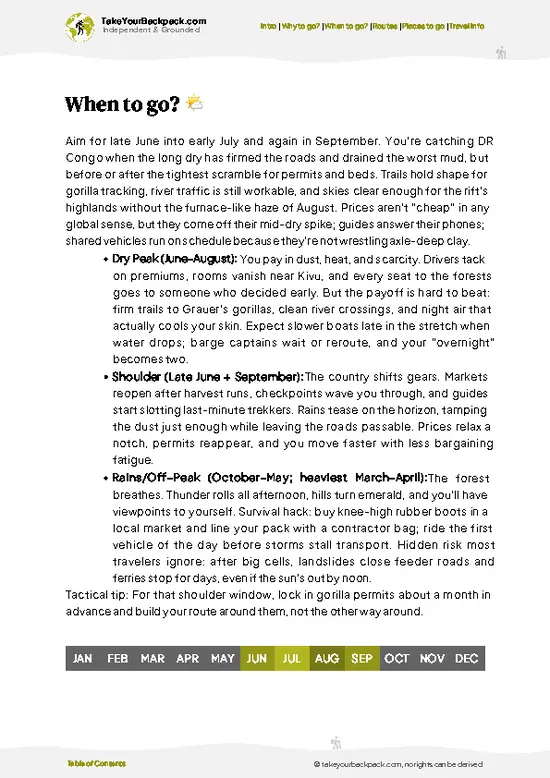
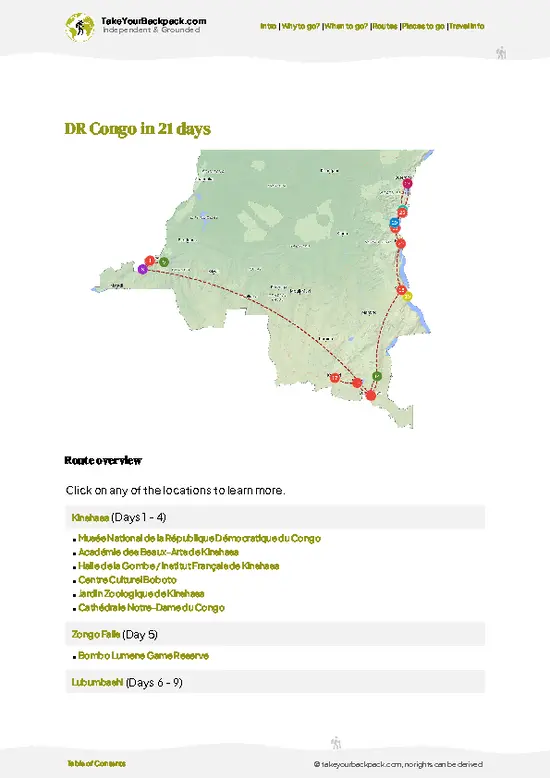
example page 0 from our offline Travel Guide for Democratic Republic of the Congoexample page 1 from our offline Travel Guide for Democratic Republic of the Congoexample page 2 from our offline Travel Guide for Democratic Republic of the Congoexample page 3 from our offline Travel Guide for Democratic Republic of the Congoexample page 4 from our offline Travel Guide for Democratic Republic of the Congoexample page 5 from our offline Travel Guide for Democratic Republic of the Congoexample page 6 from our offline Travel Guide for Democratic Republic of the Congoexample page 7 from our offline Travel Guide for Democratic Republic of the Congo
The digital guide (378 pages) contains:
96 highlights, ranked by travel appeal
Optimized 7, 14 & 21-day travel routes
Cities, national parks, beaches, historical sites, ...
How to get around
Offline-friendly for travel without Wi-Fi
👉 Click to see all 30+ guide features

📅 Plan smarter in minutes, not weeks
Month by month travel advice
Festivals & national holidays
Budget expectations

🗺️ Go to the right places, skip the overrated ones
Honest pros & cons of destinations
Top hikes, parks & viewpoints
Lesser-known places most travelers miss
Clear “worth it vs skip it” guidance

🛏️ Travel smoothly without rookie mistakes
Best areas to stay
Transport systems explained simply
Common scams & safety advice
SIM cards, money & practical tips

🌍 Understand the country, not just visit it
Culture & traditions
52 Essential phrases & customs
Festivals worth planning around
Traveler-friendly historical context
Insights that make places more meaningful

📱 Built for real travel conditions
Fully downloadable PDF
Works completely offline
Optimized for phone use
Useful in remote areas & buses
Everything in one place
Save weeks of stressful planning
Get instant access to the full guide directly. 30-day money-back guarantee.


Sent to your inbox immediately after payment • 100% Secure Checkout
Best Backpacking Travel Advisor 2025 tourism awardBest Backpacking
Travel Advisor
2025
What others say about Take Your Backpack Guides:
⭐⭐⭐⭐⭐
Fantastic, amazing amount of information!
⭐⭐⭐⭐⭐
My goodness this is amazing, it's what I've been looking for hats off too you!
⭐⭐⭐⭐⭐
I think this is absolutely BRILLIANT
⭐⭐⭐⭐
Very complete and informative. It's still missing places, but I gotta to commend you
⭐⭐⭐⭐⭐
This is truly amazing, thank you, can't wait to explore it with my kids!
⭐⭐⭐⭐⭐
Awesome resource, thank you!
⭐⭐⭐⭐⭐
This is amazing! Can't wait to explore the ones I haven't seen
⭐⭐⭐⭐
I love this! Well done, great idea.
⭐⭐⭐⭐⭐
Thanks for taking the time to make this gem!
⭐⭐⭐⭐⭐
This might be the best website I've ever seen.
⭐⭐⭐⭐⭐
Congratulations, and thank you so much for your work; it's incredibly valuable.
⭐⭐⭐⭐
In all seriousness I think you did a great job pointing out the important spots
⭐⭐⭐⭐⭐
10/10 very good
⭐⭐⭐⭐⭐
As someone who's only just starting to visit regularly this is awesome, thank you.
⭐⭐⭐⭐
Thank you very much! I'm going to visit my dad, it's going to be very useful!
⭐⭐⭐⭐⭐
This is really cool! We'll be travelling for the first time and this definitely come in handy.
⭐⭐⭐⭐⭐
You are now our minister of culture, congratulations 👨‍💼
⭐⭐⭐⭐⭐
Just wanted to tell you that this is a pearl! Going to follow your recommendations.
⭐⭐⭐⭐⭐
This is so cool. I'll definitely be using the resource for my travels soon.
⭐⭐⭐⭐⭐
This is very impressive! Good work.
⭐⭐⭐⭐⭐
This is an amazing and informative site. Very well done!

🛏️ Where to stay?How to pick the right area

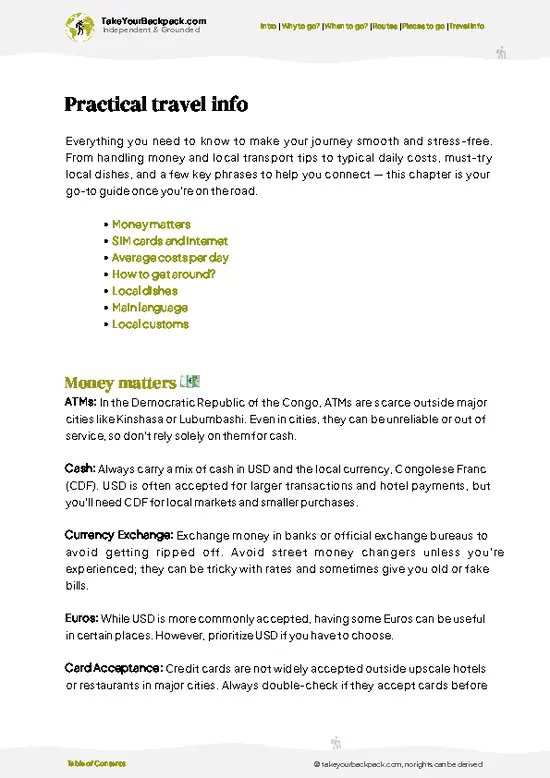
In Uvira, the best spot for backpackers is the area around the town center, close to the waterfront on Lake Tanganyika. This neighborhood hums with life—vendors shouting, fishermen hauling in their catch, and the scent of fresh fish grilling over open flames. It’s where you’ll find the most budget-friendly guesthouses and a handful of hostels that cater to solo travelers and small groups. Staying here means you’re plugged into the local rhythm, with easy access to markets and eateries where you can sample authentic Congolese dishes without breaking the bank.

Compared to the outskirts or more … read more 👉
In Uvira, the best spot for backpackers is the area around the town center, close to the waterfront on Lake Tanganyika. This neighborhood hums with life—vendors shouting, fishermen hauling in their catch, and the scent of fresh fish grilling over open flames. It’s where you’ll find the most budget-friendly guesthouses and a handful of hostels that cater to solo travelers and small groups. Staying here means you’re plugged into the local rhythm, with easy access to markets and eateries where you can sample authentic Congolese dishes without breaking the bank.

Compared to the outskirts or more residential zones, this central area feels safer because it’s busy and well-traveled, especially during daylight hours. The streets are alive with a mix of locals and travelers, creating a social vibe that’s rare in quieter parts of Uvira. You’ll find it easier to strike up conversations, join informal gatherings, or get tips on day trips to nearby natural spots.

Avoid neighborhoods farther from the lake or those with less foot traffic—they tend to be quieter but can feel isolated and less secure, especially after dark. The town center’s energy, combined with its practical amenities, makes it the clear choice for backpackers who want to dive into Uvira’s character without unnecessary hassle.

🚌 Getting aroundTransportation options and practical tips

Uvira moves at its own rhythm—less a clock-driven town and more a place where the sun’s position and the hum of daily life set the pace. The air carries a mix of lake moisture and earth, thick with the scent of fresh fish drying on racks and the occasional waft of charcoal smoke from street vendors. Here, schedules are loose, and the flow depends on the pulse of the market and the chatter of locals. You won’t find rigid timetables or polished transit hubs. Instead, the town’s transport system is a dance of improvisation and local know-how, where knowing when to hop on and how to negotiate fares is part of the game. Mastering this flow means you’re not just getting from A to B—you’re stepping into the town’s heartbeat.


  • Walking: The most straightforward and immersive way to navigate Uvira.
read more 👉
Uvira moves at its own rhythm—less a clock-driven town and more a place where the sun’s position and the hum of daily life set the pace. The air carries a mix of lake moisture and earth, thick with the scent of fresh fish drying on racks and the occasional waft of charcoal smoke from street vendors. Here, schedules are loose, and the flow depends on the pulse of the market and the chatter of locals. You won’t find rigid timetables or polished transit hubs. Instead, the town’s transport system is a dance of improvisation and local know-how, where knowing when to hop on and how to negotiate fares is part of the game. Mastering this flow means you’re not just getting from A to B—you’re stepping into the town’s heartbeat.


  • Walking: The most straightforward and immersive way to navigate Uvira. The town’s compact layout means you can cover key spots in under an hour on foot. Walking lets you soak in the lake breeze, street aromas, and vibrant market scenes at your own pace—plus, it’s free.


  • Bicycle Taxi (Pikipiki): These two-wheeled workhorses dart through narrow lanes and crowded streets with ease. Expect to pay around 200-500 Congolese francs per short trip. They run from dawn until dusk but slow down significantly after dark. Perfect for quick hops when your legs need a break but you want to stay agile.


  • Minibus (Taxi-Brousse): The backbone of local transit for longer distances within and beyond Uvira. These minibuses leave when full, so timing is unpredictable—sometimes you wait 10 minutes, sometimes an hour. Fares are cheap, roughly 500-1000 francs depending on distance. The ride is bumpy and packed, but it’s the authentic way to travel with locals and catch the town’s shifting rhythms.


  • Motorcycle Taxi (Moto-Taxi): Faster and more flexible than minibuses, motos weave through traffic and can get you to your destination in half the time. Prices vary but expect to negotiate around 300-700 francs. They operate from early morning until late evening, but safety can be a concern after dark, so choose wisely.


  • Boat Taxi: For crossing or exploring Lake Tanganyika’s shoreline, boat taxis are essential. They don’t run on a fixed schedule—departures depend on passenger demand and weather conditions. Fares are higher than land transport, around 2000-3000 francs, but the views and breeze make the price worth it. Best to arrange rides through trusted locals to avoid surprises.

👛 Costs (as of 11 June 2026)Travel costs and budget guide for Uvira

Backpacking in Uvira, DR Congo, means balancing rugged charm with practical budgeting. The town’s pace and local economy shape what you’ll spend daily, so here’s a clear breakdown to help you plan.
  • Dorm Accommodation: Expect to pay around $5 to $10 per night for a basic dorm bed. Options are limited and often simple, with shared bathrooms and minimal amenities, but clean enough for a good rest after a day exploring.
  • Meals: Street food and local eateries dominate the scene. A typical meal costs between $1 and $3, featuring staples like grilled fish, cassava, or rice with vegetables. If you opt for something more substantial or from a guesthouse kitchen, budget closer to $4 to $6 per meal.
  • Local Transport: Getting around Uvira usually means moto-taxis or shared minibuses. Rides within town
read more 👉
Backpacking in Uvira, DR Congo, means balancing rugged charm with practical budgeting. The town’s pace and local economy shape what you’ll spend daily, so here’s a clear breakdown to help you plan.
  • Dorm Accommodation: Expect to pay around $5 to $10 per night for a basic dorm bed. Options are limited and often simple, with shared bathrooms and minimal amenities, but clean enough for a good rest after a day exploring.
  • Meals: Street food and local eateries dominate the scene. A typical meal costs between $1 and $3, featuring staples like grilled fish, cassava, or rice with vegetables. If you opt for something more substantial or from a guesthouse kitchen, budget closer to $4 to $6 per meal.
  • Local Transport: Getting around Uvira usually means moto-taxis or shared minibuses. Rides within town typically cost $0.50 to $1.50 depending on distance. Walking is also common and practical for many spots, saving you money and letting you soak in the town’s atmosphere.
  • Basic Activities/Entry Fees: Many local attractions, like markets or lakeside areas, are free or have minimal fees around $1 to $2. Organized tours or boat trips on Lake Tanganyika can run $10 to $20, but these are optional extras rather than daily must-dos.
  • Miscellaneous Expenses: This covers essentials like bottled water, snacks, or phone credit. Plan for about $1 to $3 daily. Keep in mind that reliable Wi-Fi is scarce, so data packages might be a worthwhile splurge if you need connectivity.

Altogether, a realistic daily budget for backpacking in Uvira falls between $10 and $25. This range covers basic needs while leaving room for occasional treats or small adventures, letting you experience the town without constant money stress.
⚠️ Prices can change and everyone travels differently, so take this as a rough guide. Hope it helps you plan your adventure!

🚌 Day tripsWhere to go beyond the main area

Uvira is a vibrant hub for backpackers eager to explore the stunning landscapes and rich culture of the DR Congo. With its strategic location, you can easily venture out for day trips that offer both adventure and insight into local life. Here are some worthwhile excursions:

Lake Tanganyika
Just a short boat ride from Uvira, Lake Tanganyika is a paradise for those who love water activities. Picture yourself swimming in crystal-clear waters, surrounded by lush hills. You can rent a kayak or simply relax on the sandy shores. The journey takes about 30 minutes, and you’ll spend around $10 for the boat ride. The best time to visit is during the dry season from May to September, when the weather is perfect for sunbathing and swimming. A common mistake is underestimating the sun; pack plenty … read more 👉
Uvira is a vibrant hub for backpackers eager to explore the stunning landscapes and rich culture of the DR Congo. With its strategic location, you can easily venture out for day trips that offer both adventure and insight into local life. Here are some worthwhile excursions:

Lake Tanganyika
Just a short boat ride from Uvira, Lake Tanganyika is a paradise for those who love water activities. Picture yourself swimming in crystal-clear waters, surrounded by lush hills. You can rent a kayak or simply relax on the sandy shores. The journey takes about 30 minutes, and you’ll spend around $10 for the boat ride. The best time to visit is during the dry season from May to September, when the weather is perfect for sunbathing and swimming. A common mistake is underestimating the sun; pack plenty of sunscreen and a hat to avoid a painful burn.
👉 Explore Lake Tanganyika

Kahuzi-Biega National Park
This UNESCO World Heritage site is a must-see for wildlife enthusiasts. A day trip to Kahuzi-Biega takes about two hours by car, and you’ll likely spend around $30 for transport and park fees. The park is famous for its mountain gorillas, but it also boasts stunning hikes through dense forests filled with unique flora and fauna. The best months for gorilla tracking are June to September, but be prepared for muddy trails. Many first-timers forget to bring sturdy hiking boots, which can make the trek much more challenging.
👉 Explore Kahuzi-Biega National Park

Ujiji
A historical gem, Ujiji is where Livingstone famously met Stanley. It’s about a 90-minute drive from Uvira, costing around $20 for transport. The town offers a glimpse into the colonial past, with old buildings and a lively market. Spend your day exploring the local culture, sampling street food, and soaking in the atmosphere. The dry season is ideal for this trip, as the roads can become impassable during heavy rains. Don’t miss the chance to chat with locals; they’re often eager to share stories about the area.


Burhale
For a taste of rural life, head to Burhale, just an hour away. The trip will cost you about $15. This village is a great spot to witness traditional farming practices and local crafts. You can join a guided tour to learn about the community’s way of life. The best time to visit is during the harvest season from March to May, when the fields are alive with activity. A common oversight is not bringing small gifts or snacks for the children; they appreciate the gesture and it opens doors for friendly interactions.
Want to know what more DR Congo offers?
The DR Congo Travel Guide describes 96 highlights, from cities to national parks, from beaches to hikes

Get the Travel Guide -

🍲 FoodLocal Cuisine & Drinks

In Uvira, DR Congo, food is a lively expression of the region’s rich lakeside bounty and tropical soil. You’ll want to dive into makayabu, salted and dried fish that’s a staple here, often simmered in spicy tomato sauce with fresh vegetables. It’s a punch of flavor that tells you you’re not just eating; you’re tasting the lake’s history. Another must-try is ugali, a dense, cornmeal porridge that’s the perfect vehicle for soaking up sauces and stews—comfort food with a local twist.

Backpackers won’t find polished eateries but rather the pulse of the city in bustling markets and street stalls where food is cooked fresh over open flames. These spots are where the real social fabric shows—locals chatting, vendors calling out, the scent of grilled fish mingling with smoky charcoal. Casual, no-frills … read more 👉
In Uvira, DR Congo, food is a lively expression of the region’s rich lakeside bounty and tropical soil. You’ll want to dive into makayabu, salted and dried fish that’s a staple here, often simmered in spicy tomato sauce with fresh vegetables. It’s a punch of flavor that tells you you’re not just eating; you’re tasting the lake’s history. Another must-try is ugali, a dense, cornmeal porridge that’s the perfect vehicle for soaking up sauces and stews—comfort food with a local twist.

Backpackers won’t find polished eateries but rather the pulse of the city in bustling markets and street stalls where food is cooked fresh over open flames. These spots are where the real social fabric shows—locals chatting, vendors calling out, the scent of grilled fish mingling with smoky charcoal. Casual, no-frills cafés offer a break with strong, sweetened coffee or palm wine, a mildly fermented drink that locals sip slowly, often in groups, making it a social ritual more than just a beverage.

Eating here is communal and unhurried. Sharing plates is common, and you’ll notice people using their right hand to eat, a sign of respect and tradition. Don’t rush; the rhythm of meals in Uvira is about connection as much as nourishment. Embrace the sensory overload—the textures, the heat, the chatter—and you’ll find food here is a gateway to the city’s soul.

🛡️ SafetySafety Tips and Common Scams in Uvira

Uvira, in the DR Congo, is generally safe, but a few practical tips can enhance your experience. The bustling market areas are vibrant, filled with the scent of spices and the chatter of locals. However, keep your belongings close. Pickpocketing can happen in crowded spots, so wear a crossbody bag and keep your phone tucked away.

Solo travelers should be mindful after dark. The streets can feel different when the sun sets, so stick to well-lit areas and consider traveling with a buddy. If you’re out late, a friendly local can be your best guide.

Scams are rare, but be cautious of overly eager guides who may offer services at inflated prices. Always negotiate upfront. Everyday annoyances might include the occasional power outage or slow internet, but these are part of the local rhythm. Embrace … read more 👉
Uvira, in the DR Congo, is generally safe, but a few practical tips can enhance your experience. The bustling market areas are vibrant, filled with the scent of spices and the chatter of locals. However, keep your belongings close. Pickpocketing can happen in crowded spots, so wear a crossbody bag and keep your phone tucked away.

Solo travelers should be mindful after dark. The streets can feel different when the sun sets, so stick to well-lit areas and consider traveling with a buddy. If you’re out late, a friendly local can be your best guide.

Scams are rare, but be cautious of overly eager guides who may offer services at inflated prices. Always negotiate upfront. Everyday annoyances might include the occasional power outage or slow internet, but these are part of the local rhythm. Embrace the moment; it’s all part of the adventure. Stay aware, stay engaged, and enjoy the rich tapestry of life in Uvira.

Other Congolese cities near Uvira

Explore more nearby:

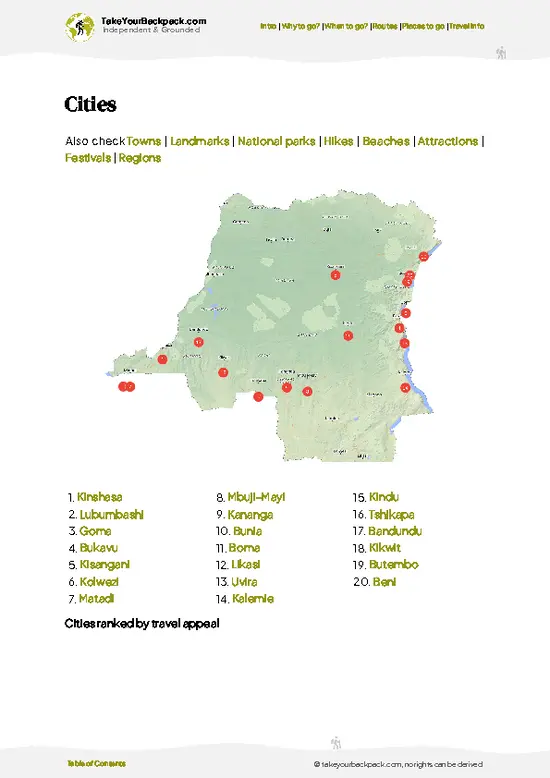
  • Bukavu—Lake Kivu shore, hillside neighborhoods, border crossing| 101 km away
  • Goma—Volcano proximity, lava fields, humanitarian base| 191 km away
  • Rutshuru—volcanic foothills, agricultural villages, park access| 246 km away

👉 Discover all cities

Or checkout all DR Congo has to offer (think cities, towns, villages, national parks, hikes, beaches, festivals)
Country photo of DR Congo

We 💚 feedbackWhat to keep in mind

Uvira is a pulse of life along Lake Tanganyika, where the air is thick with the scent of grilled fish and the laughter of locals fills the streets. The best surprise? The vibrant markets, bursting with colors and flavors that make you feel like you’ve stepped into a living canvas. Just a heads-up: the roads can be rough, so pack your patience. Embrace the chaos; it’s part of the charm. You’ll leave with stories that linger long after the trip ends.

✍️ Help improve this page!
The information on this page is based on in-depth research, insights shared by experienced travelers, and feedback from the local travel community in DR Congo. While every effort is made to keep the information accurate and current, conditions can change — so if you spot anything incorrect or outdated, please get in touch.


🙋‍♂️ Give feedback

👋 Meet the founderWho’s Behind Take Your Backpack?

Johan, backpacker and founder of TakeYourBackpackHi, I’m Johan (Netherlands 🇳🇱), the creator of TakeYourBackpack. Over the past decade, I’ve backpacked through 80+ countries across six continents, gaining extensive experience with independent travel, long-term trips, and overland routes.

This site is built on a combination of firsthand travel experience and carefully curated insights from other backpackers. Many guides are based on places I’ve personally visited, while others bring together tips, observations, and practical advice shared by trusted travelers I’ve met along the way.

The goal is to provide realistic, experience-driven guidance — not generic itineraries — so you can explore destinations with better context, clearer expectations, and more confidence.

Get full DR Congo guide •
Instant download • 96 highlights • Full Offline guide