×

DR Congo🇨🇩 | citiesMbandakaEquator marker, rainforest edge, river transport | things to do and best time to go

Explore LubumbashiExplore Tshikapa

Backpacking in Mbandaka
👌 Worth visitingcity ranked #14
By Johan Kruseman 🇳🇱 | Updated May 7, 2026

If you crave polished infrastructure, seamless Wi-Fi, or a parade of hostels, Mbandaka will test your patience. But that’s exactly why it’s a magnet for backpackers who thrive on raw, unfiltered travel. Sitting on the banks of the Congo River in northwestern DR Congo, Mbandaka is a city where colonial relics and the botanical gardens hint at faded grandeur, and the local markets pulse with real, everyday life. It’s gritty, unpredictable, and far less touristy than Kinshasa or Kisangani. Costs are low, comfort is basic, and meeting fellow travelers is rare—making every genuine connection feel like a small victory. Safety requires vigilance, but the city’s energy is honest and unscripted.

Discover everything you want to know in the 📖 DR Congo Travel Guide.
Safety warning

The current risk level for DR Congo is high. Check the advice before going.


Get your DR Congo guide
96 ranked highlights, routes & tips, works offline (378 pages)
Loading the map 🌍
CLICK TO FILTER
cities
towns
landmarks
national parks
hikes
beaches
attractions
festivals
regions
SHOW COUNTRY’S BESTSHOW ALL

✨ Why go?
Ranked #14 city in DR Congo
Reasons people choose to visit here

Mbandaka is a strategic stop for backpackers exploring the DR Congo. It offers a unique blend of affordability and accessibility. The city serves as a solid basecamp for day trips into the surrounding rainforest, making it a practical choice for those eager to dive into nature without breaking the bank.

You’ll find a handful of hostels that cater to budget travelers, along with local eateries serving up hearty meals that won’t empty your wallet. The city is walkable, allowing you to soak in the local vibe without the hassle of transport. As for nightlife, it’s low-key but lively, perfect for unwinding after a day of exploration. Plus, onward travel options are straightforward, making it easy to continue your journey through this fascinating country.
Get the complete Travel Guide for DR Congo
Everything organized for offline planning — routes, highlights, costs & tips

See what’s inside 👉

Get the Travel Guide -

💡 HighlightsMust-see experiences and standout moments

  • Monument de l’Équateur — The classic photo-stop: a concrete marker and line showing where the Equator crosses the city. It’s touristy but meaningful — you can stand on the latitude line, chat with local vendors, and watch how people treat this quirky geography as part of daily life.
  • Quai / Port of Mbandaka (riverfront) — The city’s social and economic spine. Dawn at the quay is one of the best ways to read the place: pirogues and ferries arriving, traders unloading produce and goods, and a raw slice of Congo-River life you can’t get from a map.
  • Marché Central (Central Market) — A chaotic, colorful hub where food, fabrics, and small household goods move fast. Visiting gives you a real sense of daily rhythms, bargaining culture, and the ingredients that feed the city.
  • Marché aux Poissons
read more 👉
  • Monument de l’Équateur — The classic photo-stop: a concrete marker and line showing where the Equator crosses the city. It’s touristy but meaningful — you can stand on the latitude line, chat with local vendors, and watch how people treat this quirky geography as part of daily life.
  • Quai / Port of Mbandaka (riverfront) — The city’s social and economic spine. Dawn at the quay is one of the best ways to read the place: pirogues and ferries arriving, traders unloading produce and goods, and a raw slice of Congo-River life you can’t get from a map.
  • Marché Central (Central Market) — A chaotic, colorful hub where food, fabrics, and small household goods move fast. Visiting gives you a real sense of daily rhythms, bargaining culture, and the ingredients that feed the city.
  • Marché aux Poissons (the riverside fish market) — Where the catch of the Congo arrives and gets smoked or sold fresh. It’s loud, oily, and honest — great for watching local trade, tasting smoked fish, or snapping vivid street scenes.
  • Colonial-era quarter (old Coquilhatville buildings) — Scattered government and residential buildings from the Belgian era; some are crumbling, some maintained. Walking these streets gives context to Mbandaka’s history and the visible layers of past administrations and architecture.
  • The city cathedral / main Catholic church — The focal point for religious life and community gatherings. Even if you’re not there for a service, the building, weekday activity, and occasional festivals reveal social networks that matter in the city.
  • Maison de la Culture / local cultural spaces — Small venues and community halls where music, dance and theater surface. Check the bulletin or ask at the market — catching a rehearsal or weekend show is the best way to meet local artists.
  • Stade municipal / local football matches — Football is serious business here; a match is a noisy, communal event with singing and local rivalries. It’s cheap, lively, and a genuine way to see Mbandaka people together.
  • Artisan and woodcarving stalls — Small workshops and street stalls making carved figures, baskets, and sewn goods. Not all are polished “tourist crafts” — many show traditional techniques and are good places to buy something that actually reflects local styles.
  • Short pirogue trips on the urban backchannels — Hire a local canoe for a half-hour ride through the smaller channels and river fringes inside the city limits. It’s simple, affordable, and gives you a different vantage point on neighborhoods, fishers and waterfront life.
A few worthwhile day trips near Mbandaka: the Yangambi research station and forest (botanical trails and research plots) and the Lake Tumba wetland complex are both visitable from the city and give a fuller picture of the region’s rivers, forests and wildlife.
Spotted a mistake or missing something? Contact us.
🏘️ NeighborhoodsUnderstanding the local layout

Mbandaka, a lively hub in the DR Congo, offers a unique blend of culture and adventure. Here’s how the neighborhoods stack up for backpackers:

Centre Ville: The heart of Mbandaka, this area buzzes with local markets and street vendors. It’s affordable and walkable, making it perfect for short stays. Nightlife is casual, with local bars offering a taste of the community vibe. Transport options are plentiful, connecting you to other parts of the city.

Ngiri-Ngiri: A quieter neighborhood, ideal for those seeking a more laid-back experience. It’s less touristy, providing a genuine feel of local life. While it’s a bit farther from the nightlife, the tranquility makes it suitable for longer stays. Walkability is decent, but public transport is your best bet for getting around.

Ikengo: This area … read more 👉
Mbandaka, a lively hub in the DR Congo, offers a unique blend of culture and adventure. Here’s how the neighborhoods stack up for backpackers:

Centre Ville: The heart of Mbandaka, this area buzzes with local markets and street vendors. It’s affordable and walkable, making it perfect for short stays. Nightlife is casual, with local bars offering a taste of the community vibe. Transport options are plentiful, connecting you to other parts of the city.

Ngiri-Ngiri: A quieter neighborhood, ideal for those seeking a more laid-back experience. It’s less touristy, providing a genuine feel of local life. While it’s a bit farther from the nightlife, the tranquility makes it suitable for longer stays. Walkability is decent, but public transport is your best bet for getting around.

Ikengo: This area is known for its riverside views and outdoor activities. It’s a bit pricier, but the scenic beauty justifies the cost. Perfect for adventure seekers, it’s less walkable, so plan for transport. Nightlife is minimal, making it a peaceful spot for unwinding after a day of exploration.

⌛️ 1 daySeeing the highlights in 24 hours

Mbandaka, a lively hub in the heart of the DR Congo, pulses with the rhythm of the Congo River and the vibrant culture of its people. This city is a gateway to the lush landscapes of the Congo Basin, making it a unique blend of urban life and natural beauty.

Start your morning at the bustling local market in the center of Mbandaka. Here, the air is thick with the scent of fresh produce and spices. Engage with vendors selling everything from cassava to handmade crafts. Grab a quick breakfast of beignets and a cup of local coffee to fuel your day.

In the afternoon, head to the banks of the Congo River. Take a leisurely stroll along the waterfront, where you can watch fishermen casting their nets and children playing. If you’re feeling adventurous, consider a boat ride to explore the nearby … read more 👉
Mbandaka, a lively hub in the heart of the DR Congo, pulses with the rhythm of the Congo River and the vibrant culture of its people. This city is a gateway to the lush landscapes of the Congo Basin, making it a unique blend of urban life and natural beauty.

Start your morning at the bustling local market in the center of Mbandaka. Here, the air is thick with the scent of fresh produce and spices. Engage with vendors selling everything from cassava to handmade crafts. Grab a quick breakfast of beignets and a cup of local coffee to fuel your day.

In the afternoon, head to the banks of the Congo River. Take a leisurely stroll along the waterfront, where you can watch fishermen casting their nets and children playing. If you’re feeling adventurous, consider a boat ride to explore the nearby islands. This is a chance to see a side of Mbandaka that many tourists miss, immersing yourself in the local way of life.

As evening falls, make your way to the lively neighborhood of Banga, known for its street food scene. Sample grilled fish and plantains while mingling with locals. End your day at a small bar where you can enjoy live music, soaking in the vibrant atmosphere that makes Mbandaka truly special.
Build the Right Itinerary
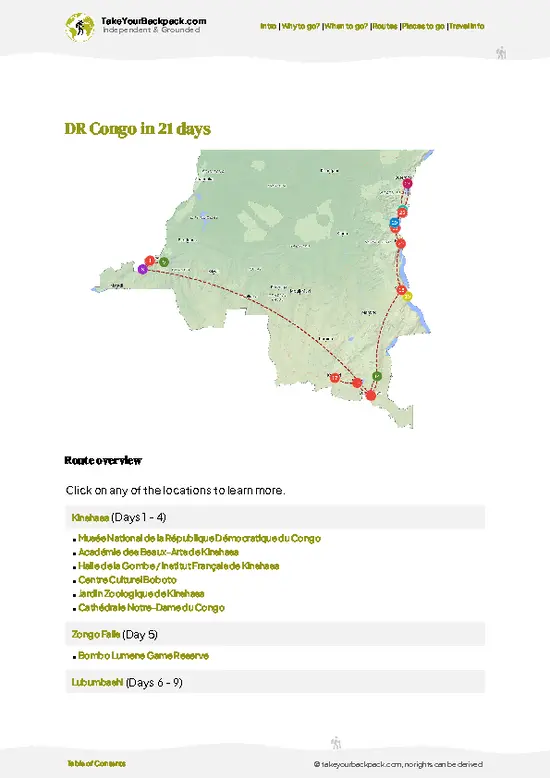
Use the DR Congo Travel Guide’s 7, 14 & 21-day routes as a starting point to plan a trip that actually works on the ground.

Get the Travel Guide -

🌤️ When to go?Best time to visit Mbandaka


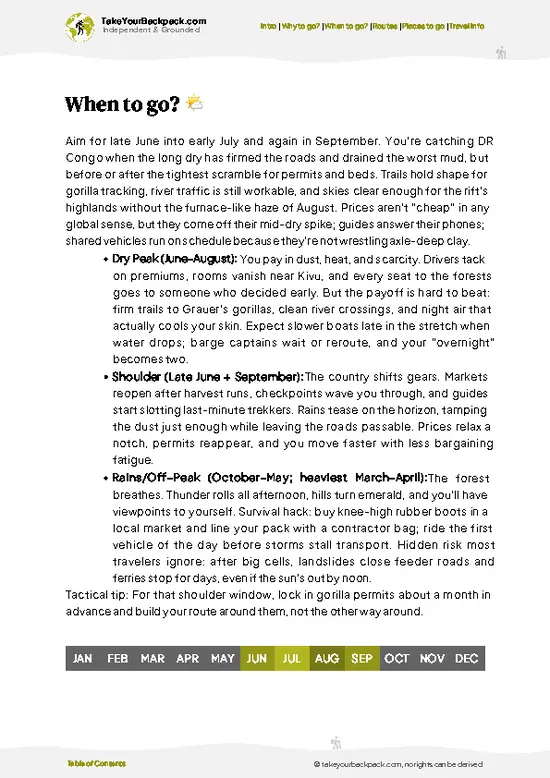
  • Weather: Mbandaka sits near the equator, so expect a hot, humid climate year-round. The rainy season from October to May brings heavy downpours, often daily, which can disrupt travel plans and make trails muddy and rivers swell.

  • Temperature: Temperatures hover between 24°C and 31°C (75°F to 88°F) year-round. The heat is consistent, but humidity spikes during the rainy months, making it feel hotter and stickier.

  • Daylight Hours: Near the equator, daylight is steady—about 12 hours daily all year. No drastic shifts, so your itinerary won’t need adjusting for changing light.

  • Crowds: Tourist traffic is minimal year-round. The dry season (June to September) sees a slight uptick as it’s easier to get around, but expect solitude compared to more popular African destinations.

  • Seasonal Activities:
read more 👉

  • Weather: Mbandaka sits near the equator, so expect a hot, humid climate year-round. The rainy season from October to May brings heavy downpours, often daily, which can disrupt travel plans and make trails muddy and rivers swell.

  • Temperature: Temperatures hover between 24°C and 31°C (75°F to 88°F) year-round. The heat is consistent, but humidity spikes during the rainy months, making it feel hotter and stickier.

  • Daylight Hours: Near the equator, daylight is steady—about 12 hours daily all year. No drastic shifts, so your itinerary won’t need adjusting for changing light.

  • Crowds: Tourist traffic is minimal year-round. The dry season (June to September) sees a slight uptick as it’s easier to get around, but expect solitude compared to more popular African destinations.

  • Seasonal Activities: Dry months favor river excursions and wildlife spotting. The rainy season limits access to remote areas but brings lush greenery and active wildlife, a trade-off between comfort and immersion.

  • Price Fluctuations: Prices for lodging and guides tend to dip during the rainy season due to lower demand, offering budget-conscious travelers a chance to save but at the cost of some comfort and accessibility.


Pro-tip: Visit during the dry season for smoother logistics and better access, but if you’re after vivid landscapes and fewer travelers, embrace the rainy season’s challenges for a richer, if wetter, experience.


source: climatestotravel.comJANJanuary: fair for travelingFEBFebruary: fair for travelingMARMarch: fair for travelingAPRApril: fair for travelingMAYMay: fair for travelingJUNJune: highly recommended for travelingJULJuly: highly recommended for travelingAUGAugust: highly recommended for travelingSEPSeptember: highly recommended for travelingOCTOctober: fair for travelingNOVNovember: fair for travelingDECDecember: fair for traveling
when-to-go

✈️ The backpacker research shortcutDR Congo Travel Guide

An offline-friendly backpacking guide with optimized travel routes, ranked highlights, transport advice, and the best areas to stay.
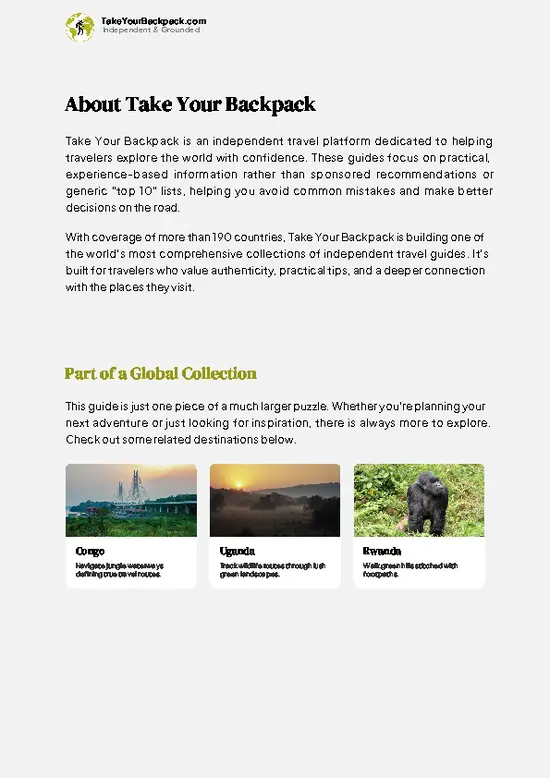
example page 0 from our offline Travel Guide for Democratic Republic of the Congoexample page 1 from our offline Travel Guide for Democratic Republic of the Congoexample page 2 from our offline Travel Guide for Democratic Republic of the Congoexample page 3 from our offline Travel Guide for Democratic Republic of the Congoexample page 4 from our offline Travel Guide for Democratic Republic of the Congoexample page 5 from our offline Travel Guide for Democratic Republic of the Congoexample page 6 from our offline Travel Guide for Democratic Republic of the Congoexample page 7 from our offline Travel Guide for Democratic Republic of the Congo
The digital guide (378 pages) contains:
96 highlights, ranked by travel appeal
Optimized 7, 14 & 21-day travel routes
Cities, national parks, beaches, historical sites, ...
How to get around
Offline-friendly for travel without Wi-Fi
👉 Click to see all 30+ guide features

📅 Plan smarter in minutes, not weeks
Month by month travel advice
Festivals & national holidays
Budget expectations

🗺️ Go to the right places, skip the overrated ones
Honest pros & cons of destinations
Top hikes, parks & viewpoints
Lesser-known places most travelers miss
Clear “worth it vs skip it” guidance

🛏️ Travel smoothly without rookie mistakes
Best areas to stay
Transport systems explained simply
Common scams & safety advice
SIM cards, money & practical tips

🌍 Understand the country, not just visit it
Culture & traditions
52 Essential phrases & customs
Festivals worth planning around
Traveler-friendly historical context
Insights that make places more meaningful

📱 Built for real travel conditions
Fully downloadable PDF
Works completely offline
Optimized for phone use
Useful in remote areas & buses
Everything in one place
Save weeks of stressful planning
Get instant access to the full guide directly. 30-day money-back guarantee.


Sent to your inbox immediately after payment • 100% Secure Checkout
Best Backpacking Travel Advisor 2025 tourism awardBest Backpacking
Travel Advisor
2025
What others say about Take Your Backpack Guides:
⭐⭐⭐⭐⭐
Fantastic, amazing amount of information!
⭐⭐⭐⭐⭐
My goodness this is amazing, it's what I've been looking for hats off too you!
⭐⭐⭐⭐⭐
I think this is absolutely BRILLIANT
⭐⭐⭐⭐
Very complete and informative. It's still missing places, but I gotta to commend you
⭐⭐⭐⭐⭐
This is truly amazing, thank you, can't wait to explore it with my kids!
⭐⭐⭐⭐⭐
Awesome resource, thank you!
⭐⭐⭐⭐⭐
This is amazing! Can't wait to explore the ones I haven't seen
⭐⭐⭐⭐
I love this! Well done, great idea.
⭐⭐⭐⭐⭐
Thanks for taking the time to make this gem!
⭐⭐⭐⭐⭐
This might be the best website I've ever seen.
⭐⭐⭐⭐⭐
Congratulations, and thank you so much for your work; it's incredibly valuable.
⭐⭐⭐⭐
In all seriousness I think you did a great job pointing out the important spots
⭐⭐⭐⭐⭐
10/10 very good
⭐⭐⭐⭐⭐
As someone who's only just starting to visit regularly this is awesome, thank you.
⭐⭐⭐⭐
Thank you very much! I'm going to visit my dad, it's going to be very useful!
⭐⭐⭐⭐⭐
This is really cool! We'll be travelling for the first time and this definitely come in handy.
⭐⭐⭐⭐⭐
You are now our minister of culture, congratulations 👨‍💼
⭐⭐⭐⭐⭐
Just wanted to tell you that this is a pearl! Going to follow your recommendations.
⭐⭐⭐⭐⭐
This is so cool. I'll definitely be using the resource for my travels soon.
⭐⭐⭐⭐⭐
This is very impressive! Good work.
⭐⭐⭐⭐⭐
This is an amazing and informative site. Very well done!

🛏️ Where to stay?Choosing the right base

In Mbandaka, the trade-off map for backpackers points clearly to the city center and the nearby riverside district as your sweet spots. These areas strike a balance between safety and social buzz, crucial for solo travelers who want to connect without constant worry. The city center offers the most budget-friendly options, including a handful of hostels where you can meet other backpackers, share stories, and swap tips. It’s not luxury, but it’s comfortable enough to recharge after navigating DR Congo’s wild side. Riverside neighborhoods add a relaxed vibe with local markets and street food stalls, … read more 👉
In Mbandaka, the trade-off map for backpackers points clearly to the city center and the nearby riverside district as your sweet spots. These areas strike a balance between safety and social buzz, crucial for solo travelers who want to connect without constant worry. The city center offers the most budget-friendly options, including a handful of hostels where you can meet other backpackers, share stories, and swap tips. It’s not luxury, but it’s comfortable enough to recharge after navigating DR Congo’s wild side. Riverside neighborhoods add a relaxed vibe with local markets and street food stalls, giving you a genuine taste of daily life without venturing into sketchier zones. Compared to outlying districts, which can be hit-or-miss on safety and lack social hubs, these areas maximize your time and comfort without blowing your budget. You’re trading a bit of plush for connection and security—exactly what you want when you’re solo in Mbandaka.

🚌 Getting aroundMoving around without the hassle

Mbandaka moves at its own rhythm—somewhere between the pulse of the Congo River and the hum of daily market chatter. It’s not a city where you’ll find strict timetables or polished transit apps. Instead, expect a blend of informal hustle and occasional pauses, where intuition and local knowledge often trump schedules. This flow means your choices in getting around are less about precision and more about reading the vibe, balancing your time, money, and comfort like a chess game where every move counts.


  • Walking: The ultimate budget option. Mbandaka’s central districts are compact enough to explore on foot, giving you full control over your pace and stops. Zero cost, but factor in the tropical heat and uneven sidewalks—comfort dips if you’re hauling gear or walking midday.

  • Bicycle Taxi
read more 👉
Mbandaka moves at its own rhythm—somewhere between the pulse of the Congo River and the hum of daily market chatter. It’s not a city where you’ll find strict timetables or polished transit apps. Instead, expect a blend of informal hustle and occasional pauses, where intuition and local knowledge often trump schedules. This flow means your choices in getting around are less about precision and more about reading the vibe, balancing your time, money, and comfort like a chess game where every move counts.


  • Walking: The ultimate budget option. Mbandaka’s central districts are compact enough to explore on foot, giving you full control over your pace and stops. Zero cost, but factor in the tropical heat and uneven sidewalks—comfort dips if you’re hauling gear or walking midday.

  • Bicycle Taxi (Vélo-taxi): A step up in speed and comfort without breaking the bank. These pedal-powered taxis weave through traffic faster than cars can, costing just a few hundred Congolese francs. They run all day but slow down after sunset, so plan accordingly.

  • Shared Minibus (Taxi-brousse): The backbone of longer-distance travel within and beyond Mbandaka. Departures are flexible but often wait until full, so timing is unpredictable. Prices are low, but expect cramped seating and a bumpy ride on unpaved roads.

  • Motorcycle Taxi (Moto-taxi): Fast and nimble, perfect for short hops when time is tight. Prices vary but remain affordable. Helmets are rare, so weigh your comfort and safety preferences carefully. Available from dawn until late evening.

  • Boat Transport: For trips along the Congo River, boats are essential. Schedules depend on river conditions and demand, often leaving when full. Prices are moderate, and the ride offers a unique blend of comfort and adventure, but expect delays.

👛 Costs (as of 8 June 2026)What things cost and how to budget

Backpacking in Mbandaka, DR Congo, demands a clear-eyed view of what your money buys—and what it doesn’t. Here’s the breakdown to help you play the budget game smartly:
  • Dorm Accommodation (High Season): Expect to pay around $10 to $15 per night. Options are limited and basic, often with shared facilities, but this is the going rate when demand peaks.
  • Dorm Accommodation (Off-Season): Prices drop to about $7 to $10 per night. Fewer travelers mean more negotiating power, but don’t expect luxury—comfort is minimal.
  • Meals: Local eateries serve filling meals for $2 to $5. Street food is cheaper, around $1 to $3, but stick to freshly cooked dishes to avoid health issues. Western-style meals or imported goods can push costs higher.
  • Local Transport: Short rides on shared minibuses or moto-taxis
read more 👉
Backpacking in Mbandaka, DR Congo, demands a clear-eyed view of what your money buys—and what it doesn’t. Here’s the breakdown to help you play the budget game smartly:
  • Dorm Accommodation (High Season): Expect to pay around $10 to $15 per night. Options are limited and basic, often with shared facilities, but this is the going rate when demand peaks.
  • Dorm Accommodation (Off-Season): Prices drop to about $7 to $10 per night. Fewer travelers mean more negotiating power, but don’t expect luxury—comfort is minimal.
  • Meals: Local eateries serve filling meals for $2 to $5. Street food is cheaper, around $1 to $3, but stick to freshly cooked dishes to avoid health issues. Western-style meals or imported goods can push costs higher.
  • Local Transport: Short rides on shared minibuses or moto-taxis cost roughly $0.50 to $1.50. It’s cheap but expect crowded conditions and variable safety standards.
  • City Transport Pass: Mbandaka doesn’t have a formal city transport pass system. Budget daily for individual rides instead.
  • Basic Activities/Entry Fees: Most local attractions or markets have minimal or no entry fees, typically under $2. Guided tours or special excursions can cost $10 to $20, but these are rare and should be booked through trusted sources.
  • Miscellaneous Expenses: Budget $2 to $5 for essentials like bottled water, SIM cards, or small tips. Internet access is patchy and often requires buying data bundles.

In total, a realistic daily budget for backpacking in Mbandaka ranges from about $15 on the leanest days to $35 if you lean toward more comfort or occasional guided activities. This is a place where every dollar counts, and knowing where to save or spend makes all the difference.
⚠️ Prices can change and everyone travels differently, so take this as a rough guide. Hope it helps you plan your adventure!

🚌 Day tripsBest day trips from Mbandaka

Mbandaka is a fantastic launchpad for day trips that dive deep into the heart of the DR Congo. Here’s how you can maximize your time, money, and comfort while exploring the surrounding wonders.

Lola Ya Bonobo
Just a short boat ride from Mbandaka, Lola Ya Bonobo is a sanctuary dedicated to the conservation of bonobos. Spend your day learning about these incredible primates and their habitat. The boat ride takes about an hour, and entrance fees are around $10. Bring a packed lunch to save on costs. The best time to visit is during the dry season, when the trails are more accessible. A common mistake is underestimating the boat schedules, so plan ahead to avoid long waits.


Ngiri-Ngiri Wetlands
For a taste of the local ecosystem, head to the Ngiri-Ngiri Wetlands. This area is teeming … read more 👉
Mbandaka is a fantastic launchpad for day trips that dive deep into the heart of the DR Congo. Here’s how you can maximize your time, money, and comfort while exploring the surrounding wonders.

Lola Ya Bonobo
Just a short boat ride from Mbandaka, Lola Ya Bonobo is a sanctuary dedicated to the conservation of bonobos. Spend your day learning about these incredible primates and their habitat. The boat ride takes about an hour, and entrance fees are around $10. Bring a packed lunch to save on costs. The best time to visit is during the dry season, when the trails are more accessible. A common mistake is underestimating the boat schedules, so plan ahead to avoid long waits.


Ngiri-Ngiri Wetlands
For a taste of the local ecosystem, head to the Ngiri-Ngiri Wetlands. This area is teeming with birdlife and unique flora. It’s about a 45-minute drive from Mbandaka, costing around $5 for transport. Bring binoculars for birdwatching and a guidebook to enhance your experience. The wetlands are best explored in the early morning when wildlife is most active. Many first-timers forget to bring enough water, so pack extra to stay hydrated.


Mbandaka Market
Dive into the local culture with a visit to Mbandaka Market. It’s a vibrant hub where you can sample street food and buy handmade crafts. You can walk there in about 20 minutes, making it an easy and budget-friendly outing. Expect to spend around $5 on snacks and souvenirs. The market is bustling on Saturdays, so that’s the best day to experience its full energy. A common oversight is not bargaining; haggling is part of the fun!
Want to know what more DR Congo offers?
The DR Congo Travel Guide describes 96 highlights, from cities to national parks, from beaches to hikes

Get the Travel Guide -

🍲 FoodEating & Drinking in Mbandaka

In Mbandaka, the local cuisine is a vibrant tapestry of flavors. Dive into fufu, a starchy staple made from cassava or plantains, often served with a rich, spicy sauce. Don’t miss moambe, a chicken dish cooked in a palm nut sauce that bursts with flavor. Street vendors line the bustling markets, offering grilled fish and skewered meats that sizzle with smoky goodness.

For drinks, try malta, a non-alcoholic malt beverage that’s refreshing after a long day of exploring. The drinking culture here is communal; locals often gather to share stories over a round of drinks, so don’t hesitate to join in.

Etiquette is simple: greet everyone with a smile, and if you’re sharing food, it’s customary to eat with your right hand. Embrace the flavors and the warmth of the people; it’s all part of the experience.

🛡️ SafetySafety Tips and Common Scams in Mbandaka

Mbandaka is generally safe, but like any city, it has its quirks. Stay alert in crowded markets and avoid flashing valuables. Solo travelers should be cautious at night; stick to well-lit areas and consider traveling with a local guide if you’re venturing out after dark.

Scams are rare, but be wary of overly friendly strangers offering unsolicited help. They might expect a tip or lead you to a shop where they get a commission. Everyday annoyances include the occasional power outage, so keep a flashlight handy. Carry yourself confidently, and you’ll navigate Mbandaka with ease.

Other Congolese cities near Mbandaka

Explore more nearby:

  • Inongo—Lake Mai-Ndombe, fishing port, forested shoreline| 219 km away
  • Bandundu—River confluence, ferry port, fishing communities| 386 km away
  • Gemena—northern crossroads, administrative center, open-air markets| 395 km away

👉 Discover all cities

Or checkout all DR Congo has to offer (think cities, towns, villages, national parks, hikes, beaches, festivals)
Country photo of DR Congo

We 💚 feedbackFinal thoughts on visiting Mbandaka

Mbandaka has a raw, electric vibe that pulses with life. The best surprise? The local markets, where you can taste fresh fish and vibrant fruits, all while soaking in the community spirit. Just a heads-up: the humidity can be relentless. Stay hydrated and embrace the sweat; it’s part of the adventure in DR Congo.

✍️ Help improve this page!
The information on this page is based on in-depth research, insights shared by experienced travelers, and feedback from the local travel community in DR Congo. While every effort is made to keep the information accurate and current, conditions can change — so if you spot anything incorrect or outdated, please get in touch.


🙋‍♂️ Give feedback

👋 Meet the founderWho’s Behind Take Your Backpack?

Johan, backpacker and founder of TakeYourBackpackHi, I’m Johan (Netherlands 🇳🇱), the creator of TakeYourBackpack. Over the past decade, I’ve backpacked through 80+ countries across six continents, gaining extensive experience with independent travel, long-term trips, and overland routes.

This site is built on a combination of firsthand travel experience and carefully curated insights from other backpackers. Many guides are based on places I’ve personally visited, while others bring together tips, observations, and practical advice shared by trusted travelers I’ve met along the way.

The goal is to provide realistic, experience-driven guidance — not generic itineraries — so you can explore destinations with better context, clearer expectations, and more confidence.

Get full DR Congo guide •
Instant download • 96 highlights • Full Offline guide