×

DR Congo🇨🇩 | citiesLubumbashiMining capital, wide boulevards, cultural institutions | things to do and best time to go

Explore KisanganiExplore Mbandaka

Backpacking in Lubumbashi
🏆 Top pickcity ranked #2
By Johan Kruseman 🇳🇱 | Updated May 9, 2026

Lubumbashi used to be the city where expats in safari hats ran mining empires and the only travelers were oil-stained businessmen or NGO workers with bulletproof itineraries. Today, you’ll find a city that’s still gritty and industrial, but with a pulse that’s hard to ignore—think copper barons replaced by Congolese entrepreneurs and a handful of curious backpackers. Lubumbashi sits in the far south of DR Congo, close to the Zambian border, and it feels more like a crossroads than a destination. The colonial-era post office and the Lubumbashi National Museum are genuinely worth a look if you’re into history, but don’t expect a parade of attractions. The city’s parks and main square offer people-watching, but nightlife is mostly local bars and smoky clubs—fun if you’re game, but not for the faint-hearted. It’s pricier and less traveler-friendly than Goma or Kisangani, and meeting other backpackers is rare. Safety is manageable with street smarts, but comfort is always a trade-off. The vibe? Raw, real, and a little rough around the edges—if you want polished, look elsewhere.

Discover everything you want to know in the 📖 DR Congo Travel Guide.
Safety warning

The current risk level for DR Congo is high. Check the advice before going.


Get your DR Congo guide
96 ranked highlights, routes & tips, works offline (378 pages)
Loading the map 🌍
CLICK TO FILTER
cities
towns
landmarks
national parks
hikes
beaches
attractions
festivals
regions
SHOW COUNTRY’S BESTSHOW ALL

✨ Why go?
Ranked #2 city in DR Congo
The unique appeal for travelers

Lubumbashi is a strategic stop for backpackers traversing the DR Congo. It offers a unique blend of affordability and accessibility that makes it a solid base for exploring the region. The hostels here are budget-friendly, often buzzing with fellow travelers eager to share stories and tips. You’ll find a range of local food options that won’t break the bank, from street vendors to cozy eateries, giving you a taste of authentic Congolese cuisine.

The city is walkable, allowing you to soak in the local vibe without the hassle of transport. While nightlife isn’t wild, there are enough bars and cafes to unwind after a day of exploration. Lubumbashi also serves as a gateway for day trips to nearby attractions, making it easy to balance your time between city life and nature.

In terms of onward read more 👉
Lubumbashi is a strategic stop for backpackers traversing the DR Congo. It offers a unique blend of affordability and accessibility that makes it a solid base for exploring the region. The hostels here are budget-friendly, often buzzing with fellow travelers eager to share stories and tips. You’ll find a range of local food options that won’t break the bank, from street vendors to cozy eateries, giving you a taste of authentic Congolese cuisine.

The city is walkable, allowing you to soak in the local vibe without the hassle of transport. While nightlife isn’t wild, there are enough bars and cafes to unwind after a day of exploration. Lubumbashi also serves as a gateway for day trips to nearby attractions, making it easy to balance your time between city life and nature.

In terms of onward travel, connections to other major cities are straightforward, ensuring you can keep your journey flowing. If you’re looking for a place that combines value with a sense of adventure, Lubumbashi fits the bill—just don’t expect it to be a destination in itself.
Want to include Lubumbashi in your DR Congo route?
Create a personalized DR Congo itinerary that includes Lubumbashi and the places that fit your trip — based on your travel style, budget, and available time. Get your route in seconds.

Generate my trip

💡 HighlightsEssential experiences to have while visiting Lubumbashi

  • Musée national de Lubumbashi (Musée régional) — The best single place to understand the region: ethnographic collections, colonial-era material, and objects connected to the Katanga mining culture. Small but rich and very grounded in local history.
  • Université de Lubumbashi campus & university collections — A leafy campus with colonial architecture and on-site mineral and natural-history collections. Good for a quiet walk, meeting students, and seeing scientific displays tied to the Copperbelt.
  • Cathédrale Saints-Pierre-et-Paul — The main Catholic cathedral and a focal point of city life; offers impressive architecture, weekday services, and a window into Lubumbashi’s religious and social rhythms.
  • Parc de la Kenya — Popular green space for locals: lakeside paths, picnics, and birdlife.
read more 👉
  • Musée national de Lubumbashi (Musée régional) — The best single place to understand the region: ethnographic collections, colonial-era material, and objects connected to the Katanga mining culture. Small but rich and very grounded in local history.
  • Université de Lubumbashi campus & university collections — A leafy campus with colonial architecture and on-site mineral and natural-history collections. Good for a quiet walk, meeting students, and seeing scientific displays tied to the Copperbelt.
  • Cathédrale Saints-Pierre-et-Paul — The main Catholic cathedral and a focal point of city life; offers impressive architecture, weekday services, and a window into Lubumbashi’s religious and social rhythms.
  • Parc de la Kenya — Popular green space for locals: lakeside paths, picnics, and birdlife. Great for people-watching on weekends and to catch informal performances or sports games.
  • Stade Frédéric Kibassa Maliba (TP Mazembe stadium) — Football here is a serious affair. If you can time a match, the crowd, drumming and atmosphere are the fastest way to feel local pride and energy.
  • Marché Central (Grand Marché) — No-frills, bustling market where people from across the city buy food, fabrics and everyday goods. It’s loud, colorful and invaluable for seeing daily Lubumbashi life—and for buying practical souvenirs.
  • Alliance Française / local cultural centres — Small exhibition spaces, film nights and concerts happen regularly. These places are great for contemporary Congolese art, francophone film screenings and meeting local creatives.
  • Old railway quarter and Gare de Lubumbashi — The rail station and surrounding buildings recall the city’s colonial-era role in the Copperbelt. Walk the streets to see industrial heritage and old architecture up close.
  • Jardin Botanique de Lubumbashi — A modest but pleasant botanical garden used for education and research. Good for a calmer hour away from the traffic and to see regional plant species.
  • Kampemba neighbourhood (artisans, music and street life) — One of the city’s livelier districts: small workshops, street vendors, bars with live music and informal art sellers. Best visited with a local guide or a friend who knows the spots.
Nearby day-trip options include Upemba National Park for lakes and wildlife, the nearby mining towns like Likasi and Kambove for waterfalls, markets and mining heritage.
Spotted a mistake or missing something? Contact us.

🏘️ NeighborhoodsHow different areas shape the experience

Lubumbashi, the bustling heart of DR Congo’s mining region, offers a mix of vibrant neighborhoods that cater to different backpacking needs. Here’s a breakdown to help you navigate the city like a pro.

Centre Ville: This is the city’s core, where you’ll find a blend of local markets and shops. It’s walkable, with plenty of street food options. Costs are moderate, making it suitable for short stays. The nightlife is lively, with bars and music venues that keep the energy high.

Katanga: A quieter area, perfect for those seeking a more relaxed vibe. It’s less touristy, which means lower prices and a chance to connect with locals. While it’s not as walkable, public transport is accessible. Ideal for longer stays if you want to immerse yourself in daily life.

Kamalondo: Known for its vibrant … read more 👉
Lubumbashi, the bustling heart of DR Congo’s mining region, offers a mix of vibrant neighborhoods that cater to different backpacking needs. Here’s a breakdown to help you navigate the city like a pro.

Centre Ville: This is the city’s core, where you’ll find a blend of local markets and shops. It’s walkable, with plenty of street food options. Costs are moderate, making it suitable for short stays. The nightlife is lively, with bars and music venues that keep the energy high.

Katanga: A quieter area, perfect for those seeking a more relaxed vibe. It’s less touristy, which means lower prices and a chance to connect with locals. While it’s not as walkable, public transport is accessible. Ideal for longer stays if you want to immerse yourself in daily life.

Kamalondo: Known for its vibrant community, this neighborhood has a mix of residential and commercial spaces. It’s a bit pricier but offers a unique cultural experience. The nightlife is more subdued, making it great for unwinding after a day of exploration. Transport options are decent, but you might want to rely on taxis for convenience.

Lubumbashi Airport Area: If you’re in transit, this area is practical. It’s not the most exciting, but it’s convenient for short stays. Costs are higher due to proximity to the airport, and nightlife is virtually non-existent. Use this area for quick access to flights rather than a cultural experience.

⌛️ 1 daySeeing the highlights in 24 hours

Lubumbashi, the bustling heart of the DR Congo’s mining industry, offers a unique blend of culture and history. It’s not just a stopover; it’s a city that pulses with life, where colonial architecture meets vibrant local markets. You’ll find a mix of French influence and Congolese spirit, making it a fascinating place to explore.

Start your day in the city’s lively downtown, where the early morning sun casts a warm glow on the streets. Grab a coffee at a local café, like Café de la Gare, where you can soak in the atmosphere and watch the city wake up. After your caffeine fix, head over to the Musée de Lubumbashi. This museum, often overlooked by tourists, showcases the region’s rich mining history and local art. It’s a small but insightful stop that gives you a deeper understanding of the … read more 👉
Lubumbashi, the bustling heart of the DR Congo’s mining industry, offers a unique blend of culture and history. It’s not just a stopover; it’s a city that pulses with life, where colonial architecture meets vibrant local markets. You’ll find a mix of French influence and Congolese spirit, making it a fascinating place to explore.

Start your day in the city’s lively downtown, where the early morning sun casts a warm glow on the streets. Grab a coffee at a local café, like Café de la Gare, where you can soak in the atmosphere and watch the city wake up. After your caffeine fix, head over to the Musée de Lubumbashi. This museum, often overlooked by tourists, showcases the region’s rich mining history and local art. It’s a small but insightful stop that gives you a deeper understanding of the city’s roots.

As the afternoon rolls in, make your way to the bustling market in the Kamalondo neighborhood. Here, you can wander through stalls brimming with fresh produce, handmade crafts, and local delicacies. Don’t miss the chance to try some street food—perhaps a grilled fish or a spicy meat skewer. Engaging with the vendors is a highlight; their stories add layers to your experience.

As evening approaches, head to the Parc National de la Lubumbashi. This green space is a breath of fresh air, perfect for a leisurely stroll. The park often hosts local musicians, so you might catch a live performance. For dinner, seek out a local eatery like Le Relais, where you can enjoy traditional Congolese dishes in a cozy setting.

By the end of the day, you’ll have tasted the essence of Lubumbashi, balancing time, money, and comfort in a way that makes your visit truly rewarding.
Turn your Lubumbashi visit into an DR Congo adventure
Build a complete DR Congo route with Lubumbashi, hidden gems, must-see destinations, and realistic travel times included.

Generate my trip

🌤️ When to go?Seasonal considerations and timing


  • Topic: Weather – Lubumbashi’s climate is tropical savanna, with a distinct wet season from October to April. Heavy rains can turn trails into mud traps, slowing you down and soaking your gear. The dry season, May to September, offers clearer skies and easier trekking conditions.

  • Topic: Temperature – Expect daytime highs around 24-28°C (75-82°F) in the dry season, which is comfortable for hiking and city exploration. The wet season can feel warmer and more humid, pushing temps closer to 30°C (86°F), making physical activity more draining.

  • Topic: Daylight Hours – Near the equator, Lubumbashi enjoys roughly 12 hours of daylight year-round. This consistency means you don’t have to juggle short days or long nights, giving you reliable windows for adventure.

  • Topic: Crowds – Tourism in DR
read more 👉

  • Topic: Weather – Lubumbashi’s climate is tropical savanna, with a distinct wet season from October to April. Heavy rains can turn trails into mud traps, slowing you down and soaking your gear. The dry season, May to September, offers clearer skies and easier trekking conditions.

  • Topic: Temperature – Expect daytime highs around 24-28°C (75-82°F) in the dry season, which is comfortable for hiking and city exploration. The wet season can feel warmer and more humid, pushing temps closer to 30°C (86°F), making physical activity more draining.

  • Topic: Daylight Hours – Near the equator, Lubumbashi enjoys roughly 12 hours of daylight year-round. This consistency means you don’t have to juggle short days or long nights, giving you reliable windows for adventure.

  • Topic: Crowds – Tourism in DR Congo is generally low, so crowds aren’t a major factor. However, local holidays and festivals can bring a spike in visitors, especially in Lubumbashi’s cultural hubs.

  • Topic: Seasonal Activities – The dry season is prime for wildlife spotting and visiting nearby national parks without the hassle of flooded roads. Wet months might limit access but bring lush landscapes and fewer tourists.

  • Topic: Price Fluctuations – Accommodation and transport tend to be pricier during the dry season when conditions are ideal. The wet season offers better deals but at the cost of comfort and accessibility.


Pro-tip: Aim for the shoulder months of May and September to balance decent weather, fewer crowds, and moderate prices—your sweet spot for a savvy Lubumbashi trip.


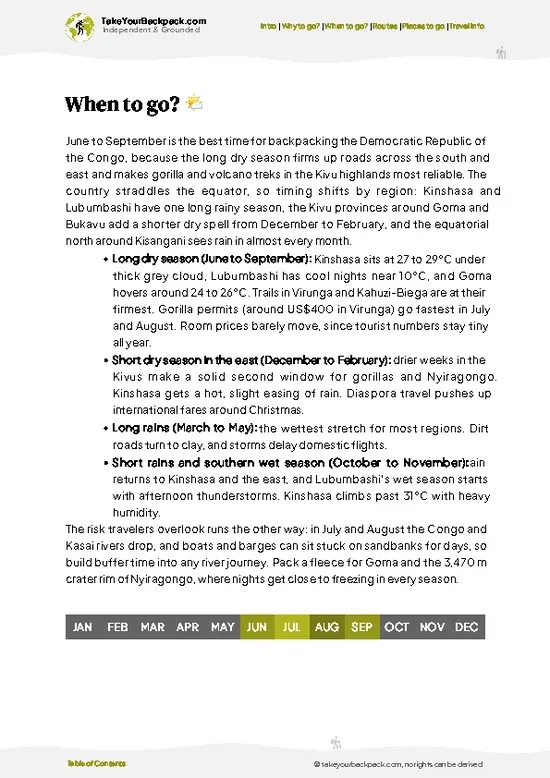
source: climatestotravel.comJANJanuary: fair for travelingFEBFebruary: fair for travelingMARMarch: fair for travelingAPRApril: fair for travelingMAYMay: highly recommended for travelingJUNJune: excellent for travelingJULJuly: excellent for travelingAUGAugust: excellent for travelingSEPSeptember: highly recommended for travelingOCTOctober: fair for travelingNOVNovember: fair for travelingDECDecember: fair for traveling
when-to-go

✈️ The backpacker research shortcutDR Congo Travel Guide

An offline-friendly backpacking guide with optimized travel routes, ranked highlights, transport advice, and the best areas to stay.
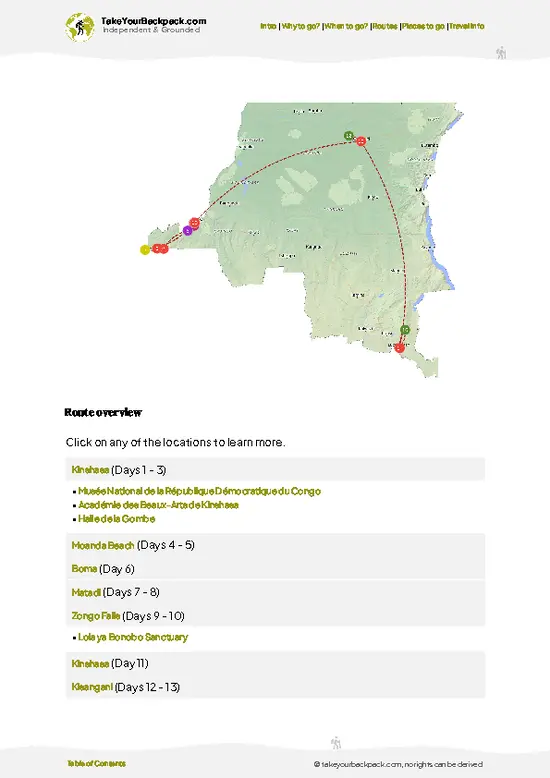
example page 0 from our offline Travel Guide for Democratic Republic of the Congo
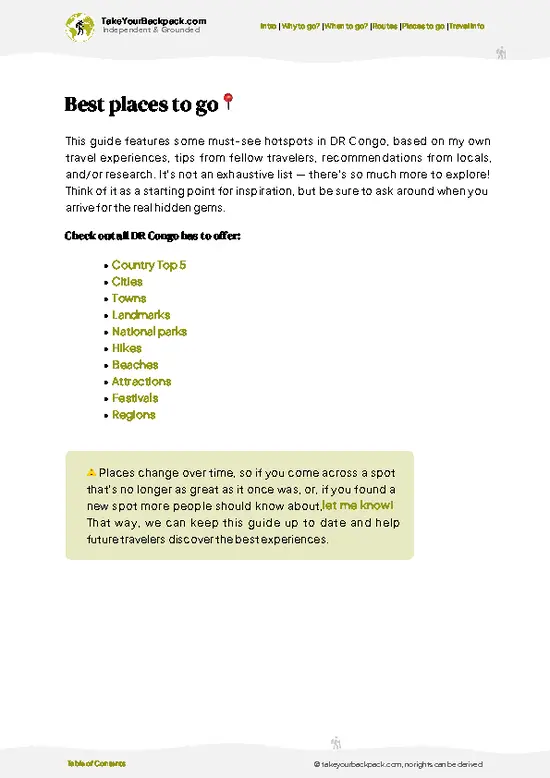
example page 1 from our offline Travel Guide for Democratic Republic of the Congo
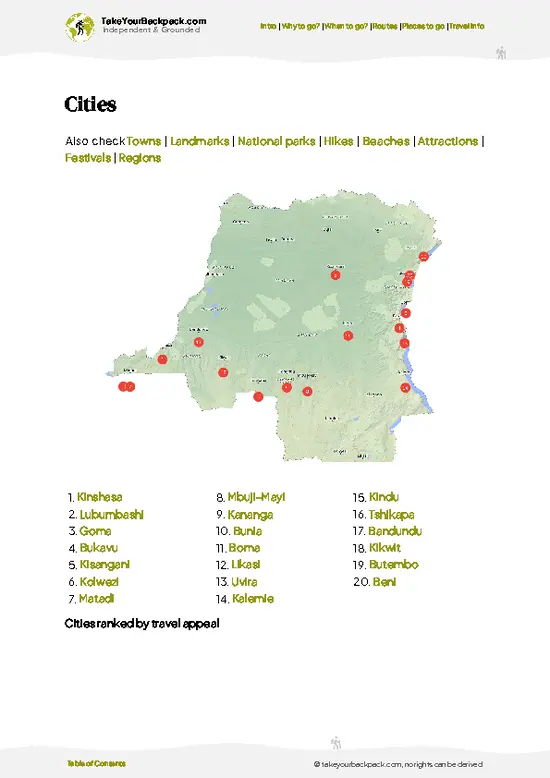
example page 2 from our offline Travel Guide for Democratic Republic of the Congo
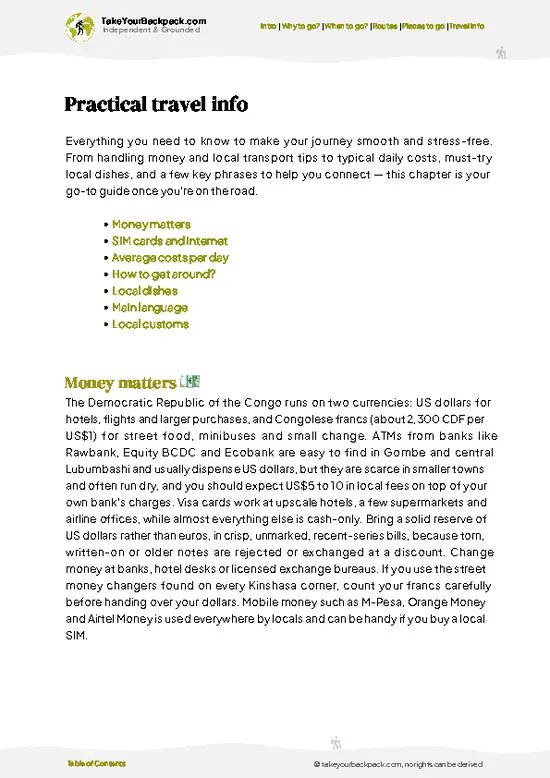
example page 3 from our offline Travel Guide for Democratic Republic of the Congo
example page 4 from our offline Travel Guide for Democratic Republic of the Congo
example page 5 from our offline Travel Guide for Democratic Republic of the Congo
example page 6 from our offline Travel Guide for Democratic Republic of the Congo
example page 7 from our offline Travel Guide for Democratic Republic of the Congo
The digital guide (378 pages) contains:
96 highlights, ranked by travel appeal
Optimized 7, 14 & 21-day travel routes
Cities, national parks, landmarks, beaches
How to get around
Offline-friendly for travel without Wi-Fi
👉 Click to see all 30+ guide features

📅 Plan smarter in minutes, not weeks
Month by month travel advice
Festivals & national holidays
Budget expectations

🗺️ Go to the right places, skip the overrated ones
Honest pros & cons of destinations
Top hikes, parks & viewpoints
Lesser-known places most travelers miss
Clear “worth it vs skip it” guidance

🛏️ Travel smoothly without rookie mistakes
Best areas to stay
Transport systems explained simply
Common scams & safety advice
SIM cards, money & practical tips

🌍 Understand the country, not just visit it
Culture & traditions
52 Essential phrases & customs
Festivals worth planning around
Traveler-friendly historical context
Insights that make places more meaningful

📱 Built for real travel conditions
Fully downloadable PDF
Works completely offline
Optimized for phone use
Useful in remote areas & buses
Everything in one place
Save weeks of stressful planning
Get instant access to your full guide. 30‑day money-back guarantee.


By proceeding you agree to our terms.
Sent to your inbox immediately after payment • 100% Secure Checkout
Best Backpacking Travel Advisor 2025 tourism awardBest Backpacking
Travel Advisor
2025
What others say about Take Your Backpack Guides:
⭐⭐⭐⭐⭐
Fantastic, amazing amount of information!
⭐⭐⭐⭐⭐
My goodness this is amazing, it's what I've been looking for hats off too you!
⭐⭐⭐⭐⭐
I think this is absolutely BRILLIANT
⭐⭐⭐⭐
Very complete and informative. It's still missing places, but I gotta to commend you
⭐⭐⭐⭐⭐
This is truly amazing, thank you, can't wait to explore it with my kids!
⭐⭐⭐⭐⭐
Awesome resource, thank you!
⭐⭐⭐⭐⭐
This is amazing! Can't wait to explore the ones I haven't seen
⭐⭐⭐⭐
I love this! Well done, great idea.
⭐⭐⭐⭐⭐
Thanks for taking the time to make this gem!
⭐⭐⭐⭐⭐
This might be the best website I've ever seen.
⭐⭐⭐⭐⭐
Congratulations, and thank you so much for your work; it's incredibly valuable.
⭐⭐⭐⭐
In all seriousness I think you did a great job pointing out the important spots
⭐⭐⭐⭐⭐
10/10 very good
⭐⭐⭐⭐⭐
As someone who's only just starting to visit regularly this is awesome, thank you.
⭐⭐⭐⭐
Thank you very much! I'm going to visit my dad, it's going to be very useful!
⭐⭐⭐⭐⭐
This is really cool! We'll be travelling for the first time and this definitely come in handy.
⭐⭐⭐⭐⭐
You are now our minister of culture, congratulations 👨‍💼
⭐⭐⭐⭐⭐
Just wanted to tell you that this is a pearl! Going to follow your recommendations.
⭐⭐⭐⭐⭐
This is so cool. I'll definitely be using the resource for my travels soon.
⭐⭐⭐⭐⭐
This is very impressive! Good work.
⭐⭐⭐⭐⭐
This is an amazing and informative site. Very well done!

🛏️ Where to stay?Where staying makes the most sense

In Lubumbashi, the trade-off between safety, social buzz, and budget options funnels most backpackers toward the city center and the adjacent Katuba district. The city center is where you’ll find the pulse of Lubumbashi’s urban life—streets lined with markets, cafes, and a handful of hostels that cater to budget travelers and solo adventurers. It’s a practical choice if you want to be in the thick of things without sacrificing safety. The vibe here is straightforward: functional, with enough local interaction to keep you engaged but not overwhelmed.

Katuba, just a short ride from downtown, offers … read more 👉
In Lubumbashi, the trade-off between safety, social buzz, and budget options funnels most backpackers toward the city center and the adjacent Katuba district. The city center is where you’ll find the pulse of Lubumbashi’s urban life—streets lined with markets, cafes, and a handful of hostels that cater to budget travelers and solo adventurers. It’s a practical choice if you want to be in the thick of things without sacrificing safety. The vibe here is straightforward: functional, with enough local interaction to keep you engaged but not overwhelmed.

Katuba, just a short ride from downtown, offers a slightly quieter scene with a more residential feel. It’s popular among backpackers who want a bit more comfort without blowing the budget. Hostels here tend to be smaller, often run by locals, which means you get a more authentic connection and a social atmosphere that’s easy to tap into. It’s a trade-off: you lose some of the immediate hustle of the city center but gain a more relaxed, community-oriented experience.

Other neighborhoods in Lubumbashi tend to lean either toward upscale residential or industrial zones, which don’t offer the same balance of safety, social life, and affordability. So, if you’re playing the game smart, the city center and Katuba are your best bets—each with its own flavor of comfort and connection, letting you pick your vibe without sacrificing the essentials.

🚌 Getting aroundMoving around without the hassle

Lubumbashi moves at its own rhythm—less about strict timetables and more about reading the pulse of the streets. It’s a city where schedules are suggestions, and intuition is your best compass. The flow here is a mix of spontaneous energy and practical necessity, especially when it comes to getting around. You won’t find a polished metro map or clockwork buses, but you will find a network of options that reward the savvy traveler who understands the trade-offs between time, money, and comfort. Mastering Lubumbashi’s transit is like cracking a code: the faster you adapt, the more you win.


  • Walking: The ultimate budget option and the best way to soak in Lubumbashi’s street life. It’s free, flexible, and often faster than waiting for a ride in congested areas. But be ready for uneven sidewalks
read more 👉
Lubumbashi moves at its own rhythm—less about strict timetables and more about reading the pulse of the streets. It’s a city where schedules are suggestions, and intuition is your best compass. The flow here is a mix of spontaneous energy and practical necessity, especially when it comes to getting around. You won’t find a polished metro map or clockwork buses, but you will find a network of options that reward the savvy traveler who understands the trade-offs between time, money, and comfort. Mastering Lubumbashi’s transit is like cracking a code: the faster you adapt, the more you win.


  • Walking: The ultimate budget option and the best way to soak in Lubumbashi’s street life. It’s free, flexible, and often faster than waiting for a ride in congested areas. But be ready for uneven sidewalks and the tropical heat—comfort dips here, so plan your walks for early morning or late afternoon.


  • Shared Taxis (Taxi Collectifs): These minibuses or cars run fixed routes but leave only when full, so timing is unpredictable. Fares hover around a few hundred Congolese francs, making them cheap but often cramped and noisy. They’re faster than walking and cover longer distances, but comfort is minimal and schedules are loose—think of it as a social experiment on wheels.


  • Motorcycle Taxis (Boda-Bodas): Speedy and nimble, these are your go-to for weaving through traffic jams. They operate 24/7, with prices negotiable but generally affordable. Comfort is low—no helmet, no suspension—but if you’re in a hurry and traveling solo, they’re unbeatable for quick hops. Safety varies, so keep your wits about you.


  • Private Taxis: More expensive but reliable, private taxis offer door-to-door service with some level of comfort and air conditioning if you’re lucky. They run on your schedule, which means no waiting around, but expect to pay a premium—think of this as your comfort splurge when time is tight or the heat is unbearable.


  • City Buses: Limited in number and often unpredictable in schedule, city buses are the cheapest motorized option for longer distances. They’re slow, frequently overcrowded, and can be hot and noisy. Use them if you’re on a strict budget and have time to spare, but don’t count on punctuality or comfort.


Understanding these options means you’re not just a passenger—you’re a strategist. You decide when to sacrifice comfort for speed or when to save money by embracing the city’s chaotic charm on foot. Lubumbashi’s transit system isn’t about convenience; it’s about choice. And that’s where the real adventure begins.

👛 Costs (as of 6 June 2026)What things cost and how to budget

Backpacking in Lubumbashi, DR Congo, demands a clear-eyed view of what your money buys—and what it doesn’t. Here’s the breakdown to help you play the budget game smartly:
  • Dorm Accommodation (High Season): Expect to pay around $10 to $15 per night. High season sees a slight bump due to demand, but options remain basic, often with shared bathrooms and limited amenities.
  • Dorm Accommodation (Off-Season): Prices drop to about $7 to $10 per night. Fewer travelers mean better bargaining power, but don’t expect luxury—comfort is functional, not fancy.
  • Meals: Street food and local eateries will cost you roughly $3 to $6 per meal. Think hearty, filling dishes like grilled fish or goat stew with cassava or rice. Western-style meals or restaurants catering to expats push prices higher, around $8 to
read more 👉
Backpacking in Lubumbashi, DR Congo, demands a clear-eyed view of what your money buys—and what it doesn’t. Here’s the breakdown to help you play the budget game smartly:
  • Dorm Accommodation (High Season): Expect to pay around $10 to $15 per night. High season sees a slight bump due to demand, but options remain basic, often with shared bathrooms and limited amenities.
  • Dorm Accommodation (Off-Season): Prices drop to about $7 to $10 per night. Fewer travelers mean better bargaining power, but don’t expect luxury—comfort is functional, not fancy.
  • Meals: Street food and local eateries will cost you roughly $3 to $6 per meal. Think hearty, filling dishes like grilled fish or goat stew with cassava or rice. Western-style meals or restaurants catering to expats push prices higher, around $8 to $12.
  • Local Transport: Minibus taxis and shared rides are the norm, with fares typically between $0.30 and $0.70 per trip. They’re crowded and unpredictable but unbeatable for budget travelers.
  • City Transport Pass: Lubumbashi doesn’t have a formal city transport pass system. Budget travelers rely on individual fares, so factor in daily transport costs rather than a pass.
  • Basic Activities/Entry Fees: Museums, local markets, and cultural sites usually charge between $2 and $5. Guided tours or special excursions can push this higher, but independent exploration keeps costs low.
  • Miscellaneous Expenses: This covers bottled water, occasional snacks, phone credit, and small tips. Budget around $2 to $4 daily to stay comfortably covered.

Add it all up, and you’re looking at a daily spend between roughly $20 and $35. The trade-off here is clear: you save by embracing local transport and street food, but comfort and convenience come at a premium. Knowing where to invest your cash—and where to tighten the belt—turns your Lubumbashi trip into a savvy, high-value experience.


source: congotourisme.org
⚠️ Prices can change and everyone travels differently, so take this as a rough guide. Hope it helps you plan your adventure!

🚌 Day tripsWhere to go beyond the main area

Lubumbashi serves as a fantastic launchpad for day trips that reveal the rich tapestry of DR Congo’s landscapes and cultures. Here are some standout options that are worth your time and energy.

Kipushi Mine
Just a short 30-minute drive from Lubumbashi, the Kipushi Mine offers a glimpse into the region’s mining history. This former copper and zinc mine is not just about minerals; it’s a fascinating look at the industrial past of the area. You can wander through the remnants of mining operations and even dip into the local lore surrounding the site. Expect to spend around $10 for transport and a small fee for entry. The dry season, from May to September, is the best time to visit, as the roads are more navigable. A common mistake is underestimating the heat; bring plenty of water and a hat. … read more 👉
Lubumbashi serves as a fantastic launchpad for day trips that reveal the rich tapestry of DR Congo’s landscapes and cultures. Here are some standout options that are worth your time and energy.

Kipushi Mine
Just a short 30-minute drive from Lubumbashi, the Kipushi Mine offers a glimpse into the region’s mining history. This former copper and zinc mine is not just about minerals; it’s a fascinating look at the industrial past of the area. You can wander through the remnants of mining operations and even dip into the local lore surrounding the site. Expect to spend around $10 for transport and a small fee for entry. The dry season, from May to September, is the best time to visit, as the roads are more navigable. A common mistake is underestimating the heat; bring plenty of water and a hat.


Lake Tshangalele
About an hour’s drive from the city, Lake Tshangalele is a serene escape. The lake is surrounded by lush greenery and is perfect for a picnic or a leisurely stroll. You might even spot some local fishermen at work. The total cost for the day, including transport and snacks, can be around $15. The best time to go is during the dry season when the weather is pleasant. Many first-timers overlook the need for a local guide; having one can enrich your experience with stories and insights about the area.


Lufira River
A little over an hour from Lubumbashi, the Lufira River is a hidden treasure for those who love nature. You can hike along its banks or even take a canoe out for a few hours. The river is teeming with wildlife, making it a great spot for birdwatching. Budget around $20 for transport and canoe rental. The dry season is ideal for this trip, as the river is calmer. A common oversight is not checking the weather; sudden rains can change the river’s conditions quickly.


Kafubu River
Just 45 minutes away, the Kafubu River is another excellent spot for a day trip. Known for its beautiful scenery, it’s a great place to relax or fish. The total cost is about $15, including transport. The best time to visit is during the dry season when the river is at its most picturesque. First-timers often forget to bring insect repellent; the mosquitoes can be relentless, especially near the water.


These trips not only offer a break from the city but also a chance to engage with the local environment and culture. Each destination provides a unique experience that enriches your understanding of DR Congo.
Want to know what more DR Congo offers?
The DR Congo Travel Guide describes 96 highlights, from cities to national parks, from beaches to hikes

Get the Travel Guide -

🍲 FoodLocal Flavors for Backpackers

In Lubumbashi, the culinary scene is a vibrant tapestry of local flavors and communal experiences. Start with moambe, a rich chicken stew made with palm oil and served with fufu, a starchy side that’s perfect for scooping up the sauce. The smoky aroma wafting from street vendors grilling samosas or brochettes is irresistible. These quick bites are not just food; they’re a way to mingle with locals, sharing stories over a casual meal.

Markets are the heartbeat of Lubumbashi’s food culture. Strolling through, you’ll encounter stalls brimming with fresh produce, spices, and homemade snacks. Don’t miss out on kwanga, a fermented cassava bread that pairs beautifully with almost anything. It’s a staple that embodies the region’s culinary identity.

When it comes to drinks, malwa, a local beer, … read more 👉
In Lubumbashi, the culinary scene is a vibrant tapestry of local flavors and communal experiences. Start with moambe, a rich chicken stew made with palm oil and served with fufu, a starchy side that’s perfect for scooping up the sauce. The smoky aroma wafting from street vendors grilling samosas or brochettes is irresistible. These quick bites are not just food; they’re a way to mingle with locals, sharing stories over a casual meal.

Markets are the heartbeat of Lubumbashi’s food culture. Strolling through, you’ll encounter stalls brimming with fresh produce, spices, and homemade snacks. Don’t miss out on kwanga, a fermented cassava bread that pairs beautifully with almost anything. It’s a staple that embodies the region’s culinary identity.

When it comes to drinks, malwa, a local beer, is a must-try. Sipping it in a bustling bar, you’ll feel the camaraderie of fellow patrons, often sharing laughter and toasts. Etiquette here leans towards sharing; it’s common to offer a drink to a new friend. Embrace the social vibe—food and drink in Lubumbashi are about connection, flavor, and the joy of being together.

🛡️ SafetyScams, Hazards, and Annoyances

Lubumbashi is generally safe for travelers, but a few smart habits can enhance your experience. Stay aware in crowded markets like the central market, where pickpockets might lurk. Keep your valuables close and use a money belt under your clothes.

If you’re solo, avoid wandering too far after dark. Street lighting can be sparse, and it’s best to stick to well-trafficked areas. Taxis are a reliable option at night; just ensure you agree on a fare beforehand to avoid surprises.

Scams are rare, but be cautious of overly friendly locals who might offer unsolicited help, especially with directions. Politely decline and trust your instincts. Everyday annoyances include occasional power outages, so be prepared for that in your accommodations. Carry a portable charger for your devices.

By staying … read more 👉
Lubumbashi is generally safe for travelers, but a few smart habits can enhance your experience. Stay aware in crowded markets like the central market, where pickpockets might lurk. Keep your valuables close and use a money belt under your clothes.

If you’re solo, avoid wandering too far after dark. Street lighting can be sparse, and it’s best to stick to well-trafficked areas. Taxis are a reliable option at night; just ensure you agree on a fare beforehand to avoid surprises.

Scams are rare, but be cautious of overly friendly locals who might offer unsolicited help, especially with directions. Politely decline and trust your instincts. Everyday annoyances include occasional power outages, so be prepared for that in your accommodations. Carry a portable charger for your devices.

By staying alert and respecting local customs, you’ll navigate Lubumbashi with confidence and ease.

Other Congolese cities near Lubumbashi

Explore more nearby:

  • Kipushi—border post, copper mining, industrial outskirts| 29 km away
  • Likasi—Copper mining, plateau landscapes, industrial outskirts| 114 km away
  • Fungurume—cobalt mines, company town, arid hills| 175 km away

💡 Not sure where to go next?
Create a personalized itinerary for DR Congo including Lubumbashi and the places that fit your trip.

Generate my itinerary

👉 Discover all cities

Or checkout all DR Congo has to offer (think cities, towns, villages, national parks, hikes, beaches, festivals)
Country photo of DR Congo

We 💚 feedbackParting advice and final tips

Lubumbashi has a raw energy that’s hard to shake off. The bustling markets are a sensory overload, but that’s where you’ll find the heart of the city. Don’t miss the local street food; the grilled fish is a revelation. Just be cautious with tap water—stick to bottled. The best surprise? The warmth of the people; they’ll make you feel like family. Embrace the chaos, and you’ll leave with stories that linger long after you’ve returned home.

✍️ Help improve this page!
The information on this page is based on in-depth research, insights shared by experienced travelers, and feedback from the local travel community in DR Congo. While every effort is made to keep the information accurate and current, conditions can change — so if you spot anything incorrect or outdated, please get in touch.


🙋‍♂️ Give feedback

👋 Meet the founderWho’s Behind Take Your Backpack?

Johan, backpacker and founder of TakeYourBackpackHi, I’m Johan (Netherlands 🇳🇱), the creator of TakeYourBackpack. Over the past decade, I’ve backpacked through 80+ countries across six continents, gaining extensive experience with independent travel, long-term trips, and overland routes.

This site is built on a combination of firsthand travel experience and carefully curated insights from other backpackers. Many guides are based on places I’ve personally visited, while others bring together tips, observations, and practical advice shared by trusted travelers I’ve met along the way.

The goal is to provide realistic, experience-driven guidance — not generic itineraries — so you can explore destinations with better context, clearer expectations, and more confidence.

Get full DR Congo guide •
Instant download • 96 highlights • Full Offline guide