×

Djibouti🇩🇯 | townsHolholRailway halt, roadside stands, volcanic plain | things to do and best time to go

Explore YobokiExplore Goubetto

Backpacking in Holhol
👌 Worth visitingtown ranked #6
By Johan Kruseman 🇳🇱 | Updated October 22, 2026

Holhol is a refugee hosting area as much as a town, with a UNHCR-run settlement just outside it that shapes daily life here. It sits in the Ali Sabieh region in the southeast of Djibouti, southwest of Djibouti City, on the road and railway line that run toward Ethiopia. Don’t expect an old center, a hostel row or a café scene. What it offers is a look at a working crossroads settlement: low houses, roadside shops, trucks, and the dry volcanic plain around them. The plain and the railway halt deserve a short stop. Anything resembling nightlife does not exist, and meeting other backpackers is unlikely. Reaching it is easy enough by road, but nobody stays long. Overlanders and slow travelers who like quiet transit places will appreciate it. Anyone wanting sights, beds or company should keep going.

Discover everything you want to know in the 📖 Djibouti Travel Guide.


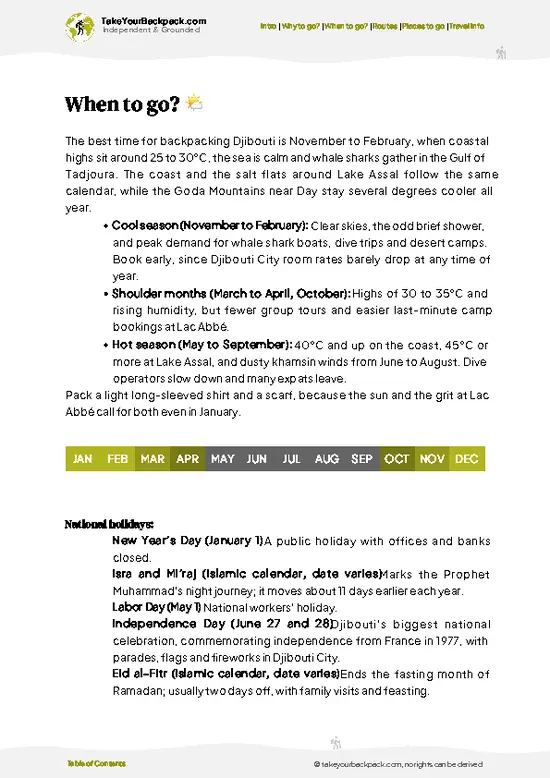
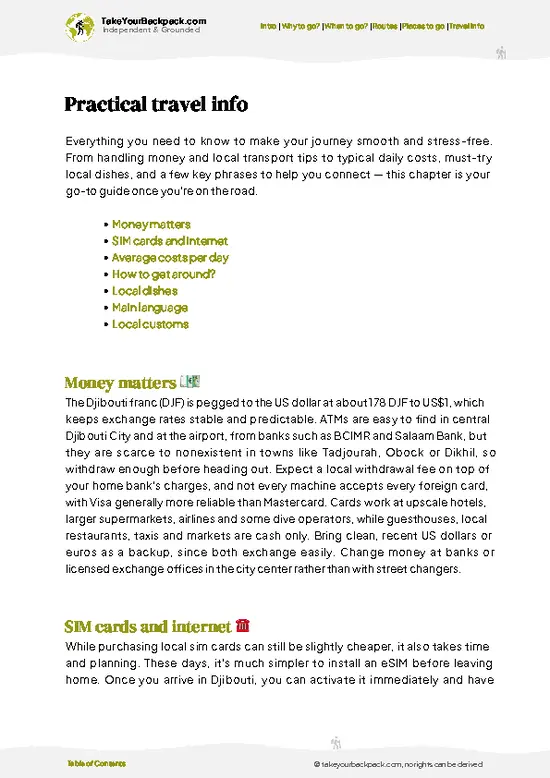
example page 0 from our offline Travel Guide for Djibouti
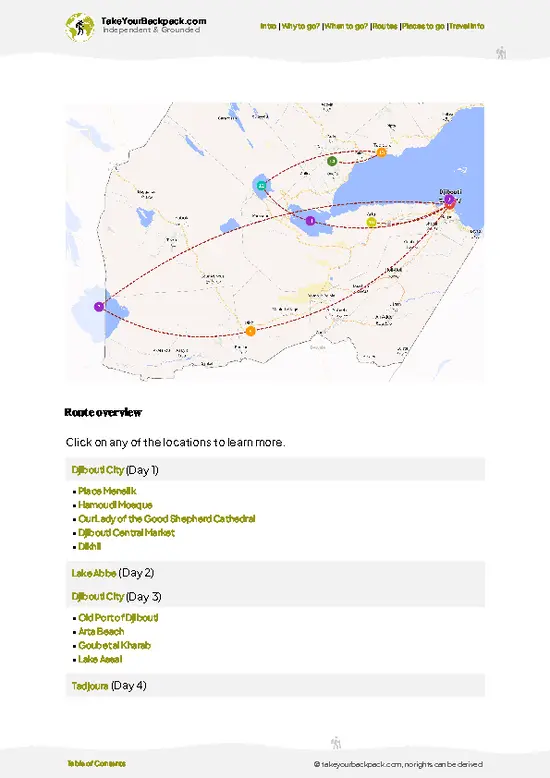
example page 1 from our offline Travel Guide for Djibouti
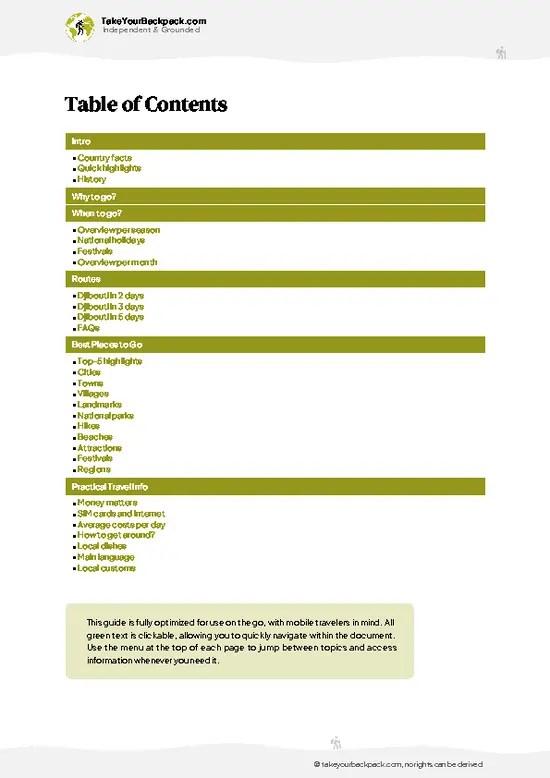
example page 2 from our offline Travel Guide for Djibouti
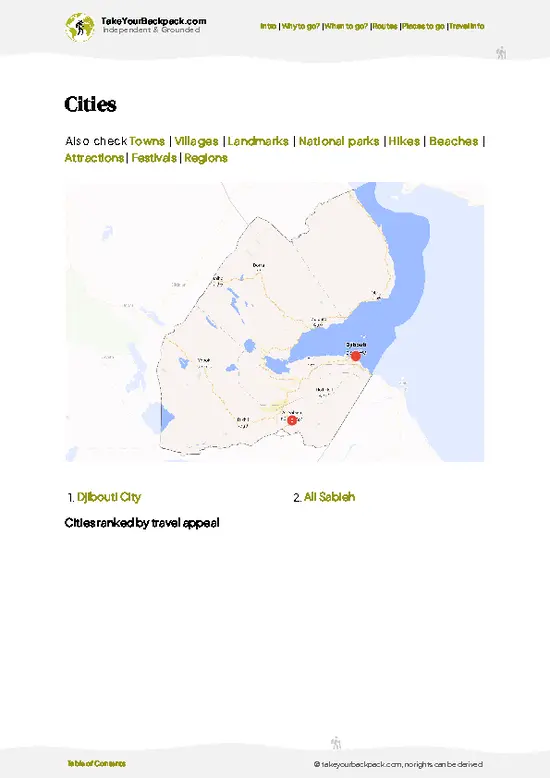
example page 3 from our offline Travel Guide for Djibouti
example page 4 from our offline Travel Guide for Djibouti
example page 5 from our offline Travel Guide for Djibouti
example page 6 from our offline Travel Guide for Djibouti
example page 7 from our offline Travel Guide for Djibouti
Loading the map 🌍
CLICK TO FILTER
cities
towns
villages
landmarks
national parks
hikes
beaches
attractions
festivals
regions
SHOW COUNTRY’S BESTSHOW ALL

✨ Why go?
Ranked #6 town in Djibouti
Why Holhol should be on your travel list

Holhol earns its place on a route as a pause, not a destination. It sits on the corridor between the capital and the Ali Sabieh highlands, so it works as a place to stretch your legs, buy water and a snack from roadside stalls, and see the railway line to Ethiopia up close. The surrounding terrain is open, stony and sparse, which gives a clear sense of how dry the interior of Djibouti is before you reach the mountains further on. Most travelers stay an hour or two, a few might overnight if a ride falls through. It is quiet and low-key, and people tend to be curious rather than pushy. Slow travelers, overlanders and anyone building their own loop through the south will find it useful. Those on a tight schedule should treat it as a window seat on the journey and spend their nights in Ali Sabieh or the capital.

💡 HighlightsEssential experiences to have while visiting Holhol

  1. Holhol railway halt: The line connecting Djibouti with Addis Ababa passes here, and watching the tracks cross the plain gives you the best sense of the town’s purpose. Visit when a train is expected, since services are infrequent. Free to look from outside, 20 to 30 minutes.
  2. Main road market stalls: A string of small shops and stands along the highway sells drinks, bread, fruit and basics to drivers and residents. It is the town’s real social space, and a good spot to try tea or a cold soda. Go in the morning when stocks are fresh. Expect to pay US$1 to 3 for a snack and a drink, with 30 to 45 minutes enough.
  3. Volcanic plain around Holhol: A short walk beyond the last houses brings you onto black stony ground, thorny acacia and wide views toward the hills. It is raw, silent and photogenic, with
… read more 👉
  1. Holhol railway halt: The line connecting Djibouti with Addis Ababa passes here, and watching the tracks cross the plain gives you the best sense of the town’s purpose. Visit when a train is expected, since services are infrequent. Free to look from outside, 20 to 30 minutes.
  2. Main road market stalls: A string of small shops and stands along the highway sells drinks, bread, fruit and basics to drivers and residents. It is the town’s real social space, and a good spot to try tea or a cold soda. Go in the morning when stocks are fresh. Expect to pay US$1 to 3 for a snack and a drink, with 30 to 45 minutes enough.
  3. Volcanic plain around Holhol: A short walk beyond the last houses brings you onto black stony ground, thorny acacia and wide views toward the hills. It is raw, silent and photogenic, with almost no shade. Go in the cooler hours, stay near the road, and give yourself 45 minutes to an hour. No cost.
Holhol itself has few formal sights, which is why the surrounding region is the better use of your time: Ali Sabieh with its rocky hills and the caves nearby, and Lake Abbe with its limestone chimneys further along, all make better day or overnight trips. None of the items above needs a ticket or advance booking.
Spotted a mistake or missing something? Contact us.

Things to do near Holhol

Ratings based on Tripadvisor reviews. When you book through this link, you support our work at no extra cost to you.

🏘️ NeighborhoodsWhere things are and how it's laid out

Holhol is a small border-region town in southern Djibouti on the road between Djibouti City and Ali Sabieh, so the areas are few and you can cover all of them on foot in an afternoon.
  • Main road frontage: The strip along the national highway is where life happens. Small restaurants serve grilled meat, rice and flatbread with sweet tea, and shops sell water, phone credit and basics. Worth your time, mostly for a meal and a look at truck and bus traffic.
  • Market and old center: A few streets of low concrete buildings behind the road hold stalls with fruit, khat, cloth and household goods. Mornings are busiest. It is compact, flat and easy to walk, though shade is thin, so go early.
  • Residential edges: Quiet lanes of family compounds and some stone-walled yards fade into dry plain. There is little
… read more 👉
Holhol is a small border-region town in southern Djibouti on the road between Djibouti City and Ali Sabieh, so the areas are few and you can cover all of them on foot in an afternoon.
  • Main road frontage: The strip along the national highway is where life happens. Small restaurants serve grilled meat, rice and flatbread with sweet tea, and shops sell water, phone credit and basics. Worth your time, mostly for a meal and a look at truck and bus traffic.
  • Market and old center: A few streets of low concrete buildings behind the road hold stalls with fruit, khat, cloth and household goods. Mornings are busiest. It is compact, flat and easy to walk, though shade is thin, so go early.
  • Residential edges: Quiet lanes of family compounds and some stone-walled yards fade into dry plain. There is little to see and no reason to wander far, but a short stroll shows how people live here. Greet people, and ask before photographing anyone.
  • Surrounding hills and wadis: Rocky country outside town offers open views and goat herders. It is the best place for quiet, but distances are long in the heat and you should not go far without a local guide.
Nightlife is essentially absent. Evenings mean tea and conversation.

⌛️ 1 dayA smart one-day plan

8:00 AM, Main road stalls: Start where the town wakes up, because the stalls are stocked and the air is still tolerable. Have sweet tea and fresh bread, and talk to the stallholders about the road ahead. Take your time, nobody is hurrying.
9:30 AM, Holhol railway halt: Walk to the station area. Look at the line stretching across the plain toward Ethiopia and ask locals when a train is expected. It is a plain place, but it explains why the town exists.
11:00 AM, Volcanic plain: Head out along a track beyond the last houses and walk on the black stony ground for about an hour, staying within sight of the road. Wear a hat and closed shoes. The silence and the open horizon are the point.
12:30 PM, Lunch in town: Return and eat at a simple local restaurant, usually rice or pasta with meat and a sauce. … read more 👉
8:00 AM, Main road stalls: Start where the town wakes up, because the stalls are stocked and the air is still tolerable. Have sweet tea and fresh bread, and talk to the stallholders about the road ahead. Take your time, nobody is hurrying.
9:30 AM, Holhol railway halt: Walk to the station area. Look at the line stretching across the plain toward Ethiopia and ask locals when a train is expected. It is a plain place, but it explains why the town exists.
11:00 AM, Volcanic plain: Head out along a track beyond the last houses and walk on the black stony ground for about an hour, staying within sight of the road. Wear a hat and closed shoes. The silence and the open horizon are the point.
12:30 PM, Lunch in town: Return and eat at a simple local restaurant, usually rice or pasta with meat and a sauce. This is also the time to rest in whatever shade you find, since the afternoon heat is strong.
3:00 PM, Quiet residential lanes: Few visitors walk behind the main road. Wander the side streets, greet people, and notice the stone and sheet-metal houses, goat pens and water points. Ask before taking photos.
5:00 PM, Onward transport: Flag a minibus or shared taxi toward Ali Sabieh or Djibouti City before dusk, since road traffic thins after dark.

🌤️ When to go?Weather, crowds, and seasonal trade-offs

Holhol is hot most of the year, so the cooler season from roughly November to March is the sensible window.
  • Cool Season (Nov to Mar): Days run about 26 to 32°C (79 to 90°F), nights 20 to 24°C (68 to 75°F). Walking is comfortable and this is when visitors come, so Djibouti City flights and rooms cost more.
  • Shoulder (Apr and Oct): Highs reach 34 to 37°C (93 to 99°F). Manageable if you move at dawn and rest at midday.
  • Hot Season (May to Sep): Highs commonly pass 38°C (100°F) and can reach 42°C (108°F), with hot dry winds. Prices drop, but outdoor time is short.
  • Rain: Rainfall is scarce and erratic, with brief downpours that can flood wadis and cut tracks.
  • Daylight: Days stay close to 12 hours all year.
Plan any hiking for December or January and book rides a day ahead.

source: climatestotravel.comJANJanuary: excellent for travelingFEBFebruary: excellent for travelingMARMarch: highly recommended for travelingAPRApril: highly recommended for travelingMAYMay: fair for travelingJUNJune: below average for travelingJULJuly: below average for travelingAUGAugust: below average for travelingSEPSeptember: highly recommended for travelingOCTOctober: highly recommended for travelingNOVNovember: excellent for travelingDECDecember: excellent for traveling
when-to-go

✈️ The backpacker research shortcutDjibouti Travel Guide

An offline-friendly backpacking guide with optimized travel routes, ranked highlights, transport advice, and the best areas to stay.
example page 0 from our offline Travel Guide for Djibouti
example page 1 from our offline Travel Guide for Djibouti
example page 2 from our offline Travel Guide for Djibouti
example page 3 from our offline Travel Guide for Djibouti
example page 4 from our offline Travel Guide for Djibouti
example page 5 from our offline Travel Guide for Djibouti
example page 6 from our offline Travel Guide for Djibouti
example page 7 from our offline Travel Guide for Djibouti
The digital guide (186 pages) contains:
✅ 44 highlights, ranked by travel appeal
✅ Optimized 2, 3 & 5-day travel routes
✅ Cities, national parks, landmarks, beaches
✅ How to get around
✅ Offline-friendly for travel without Wi-Fi
👉 Click to see all 30+ guide features

📅 Plan smarter in minutes, not weeks
✅ Month by month travel advice
✅ Festivals & national holidays
✅ Budget expectations

🗺️ Go to the right places, skip the overrated ones
✅ Honest pros & cons of destinations
✅ Top hikes, parks & viewpoints
✅ Lesser-known places most travelers miss
✅ Clear “worth it vs skip it” guidance

🛏️ Travel smoothly without rookie mistakes
✅ Best areas to stay
✅ Transport systems explained simply
✅ Common scams & safety advice
✅ SIM cards, money & practical tips

🌍 Understand the country, not just visit it
✅ Culture & traditions
✅ 52 Essential phrases & customs
✅ Festivals worth planning around
✅ Traveler-friendly historical context
✅ Insights that make places more meaningful

📱 Built for real travel conditions
✅ Fully downloadable PDF
✅ Works completely offline
✅ Optimized for phone use
✅ Useful in remote areas & buses
✅ Everything in one place
Stop searching, start planning
Get instant access to your full guide. 30‑day money-back guarantee.
+ Add another guide for just

By proceeding you agree to our terms.
Sent to your inbox immediately after payment • 100% Secure Checkout
Best Backpacking Travel Advisor 2025 tourism awardBest Backpacking
Travel Advisor
2025
What others say about Take Your Backpack Guides:
⭐⭐⭐⭐⭐
Fantastic, amazing amount of information!
⭐⭐⭐⭐⭐
My goodness this is amazing, it's what I've been looking for hats off too you!
⭐⭐⭐⭐⭐
I think this is absolutely BRILLIANT
⭐⭐⭐⭐
Very complete and informative. It's still missing places, but I gotta to commend you
⭐⭐⭐⭐⭐
This is truly amazing, thank you, can't wait to explore it with my kids!
⭐⭐⭐⭐⭐
Awesome resource, thank you!
⭐⭐⭐⭐⭐
This is amazing! Can't wait to explore the ones I haven't seen
⭐⭐⭐⭐
I love this! Well done, great idea.
⭐⭐⭐⭐⭐
Thanks for taking the time to make this gem!
⭐⭐⭐⭐⭐
This might be the best website I've ever seen.
⭐⭐⭐⭐⭐
Congratulations, and thank you so much for your work; it's incredibly valuable.
⭐⭐⭐⭐
In all seriousness I think you did a great job pointing out the important spots
⭐⭐⭐⭐⭐
10/10 very good
⭐⭐⭐⭐⭐
As someone who's only just starting to visit regularly this is awesome, thank you.
⭐⭐⭐⭐
Thank you very much! I'm going to visit my dad, it's going to be very useful!
⭐⭐⭐⭐⭐
This is really cool! We'll be travelling for the first time and this definitely come in handy.
⭐⭐⭐⭐⭐
You are now our minister of culture, congratulations 👨‍💼
⭐⭐⭐⭐⭐
Just wanted to tell you that this is a pearl! Going to follow your recommendations.
⭐⭐⭐⭐⭐
This is so cool. I'll definitely be using the resource for my travels soon.
⭐⭐⭐⭐⭐
This is very impressive! Good work.
⭐⭐⭐⭐⭐
This is an amazing and informative site. Very well done!

🛏️ Where to stay?Best areas to stay in Djibouti

The best budget move is to sleep in Djibouti City or Ali Sabieh and treat Holhol as a stop, because the town itself has very little formal lodging. Hostel dorms do not exist here, and rooms are basic guesthouse style if you find one, so confirm availability on arrival or through a local contact.
Djibouti City is the stronger base. Budget rooms and a few backpacker-friendly places cluster in the central districts near Place Mahmoud Harbi, where restaurants, money changers and onward transport are within walking distance. Expect noise from traffic and late cafes, but evenings are relatively safe … read more 👉
The best budget move is to sleep in Djibouti City or Ali Sabieh and treat Holhol as a stop, because the town itself has very little formal lodging. Hostel dorms do not exist here, and rooms are basic guesthouse style if you find one, so confirm availability on arrival or through a local contact.
Djibouti City is the stronger base. Budget rooms and a few backpacker-friendly places cluster in the central districts near Place Mahmoud Harbi, where restaurants, money changers and onward transport are within walking distance. Expect noise from traffic and late cafes, but evenings are relatively safe in the busy central streets. Taxis are easy to find, and minibuses to the south leave from the capital’s bus stations.
Ali Sabieh is the quieter alternative, closer to Holhol along the highway. Options are limited and simple, and electricity and water can be unreliable. It suits travelers who want a calm night and an early start toward the hills and border country. Fans or air conditioning matter more than location in the hot months, so check before paying.

🚌 Getting aroundTransportation options and practical tips

From the roadside stop where buses and minibuses drop you, the center of Holhol is a walk of a few minutes, since the main street and market sit right beside the highway. Nothing in town needs more than that. Traffic is light apart from trucks on the national road, and formal public transport does not exist inside the town, so you rely on shared vehicles for anything beyond it. Plan on heat shaping your day.
  • Walking: Free, flat and enough for everything in town. Carry water and cover your head, because shade is scarce from late morning.
  • Minibuses and shared vans on the highway: These link Holhol with Djibouti City and Ali Sabieh, typically US$2 to 5 per seat depending on the stretch. Journeys run roughly 1.5 to 2.5 hours to the capital. They leave when full, mostly from early morning to mid
… read more 👉
From the roadside stop where buses and minibuses drop you, the center of Holhol is a walk of a few minutes, since the main street and market sit right beside the highway. Nothing in town needs more than that. Traffic is light apart from trucks on the national road, and formal public transport does not exist inside the town, so you rely on shared vehicles for anything beyond it. Plan on heat shaping your day.
  • Walking: Free, flat and enough for everything in town. Carry water and cover your head, because shade is scarce from late morning.
  • Minibuses and shared vans on the highway: These link Holhol with Djibouti City and Ali Sabieh, typically US$2 to 5 per seat depending on the stretch. Journeys run roughly 1.5 to 2.5 hours to the capital. They leave when full, mostly from early morning to mid afternoon, and services thin out by evening.
  • Shared taxis: Faster than vans for short hops along the road, usually US$1 to 4 per person for nearby villages. Agree the price before getting in, and expect other passengers to be picked up.
  • Private car with driver: The practical way to reach hills, wadis and remote sites, since tracks are rough. Budget about US$60 to 120 for a day, split between several people if you can. A 4x4 is the sensible choice off the highway.
Skip hitchhiking and long walks outside town in the heat. Vans are fine for point-to-point travel, but carry small bills and leave early, because the last departures to the capital are in the afternoon.

👛 Costs (as of 22 October 2026)Money, prices, and spending tips

Holhol costs roughly US$55 to 75 a day for a backpacker, with a total of US$68 once everything is added up, and Djibouti is among the pricier places in Africa to travel.
CategoryBudget RangeLocal Reality
Dorm accommodationUS$20 to 35No hostels in town. A basic guesthouse bed or a room in a nearby town is the realistic option, and prices rise in the cooler season.
MealsUS$10 to 18Rice, grilled meat, fish, flatbread and sweet tea in roadside restaurants, with fresh fruit from the market.
Local transportUS$3 to 8Shared vans and taxis along the highway, paid in cash.
Basic activities/entry feesUS$0 to 10Walking and the market are free. Guided trips to hills or sites cost extra.
Miscellaneous expensesUS$5 to 10Bottled water, phone credit, tips and small snacks.
Total Daily BudgetUS$68Based on high-season
… read more 👉
Holhol costs roughly US$55 to 75 a day for a backpacker, with a total of US$68 once everything is added up, and Djibouti is among the pricier places in Africa to travel.
CategoryBudget RangeLocal Reality
Dorm accommodationUS$20 to 35No hostels in town. A basic guesthouse bed or a room in a nearby town is the realistic option, and prices rise in the cooler season.
MealsUS$10 to 18Rice, grilled meat, fish, flatbread and sweet tea in roadside restaurants, with fresh fruit from the market.
Local transportUS$3 to 8Shared vans and taxis along the highway, paid in cash.
Basic activities/entry feesUS$0 to 10Walking and the market are free. Guided trips to hills or sites cost extra.
Miscellaneous expensesUS$5 to 10Bottled water, phone credit, tips and small snacks.
Total Daily BudgetUS$68Based on high-season accommodation.
Buy water in larger bottles at the market and travel by shared van instead of private taxi to save the most. Carry cash, since cards are rarely accepted outside the capital.
⚠️ Prices can change and everyone travels differently, so take this as a rough guide. Hope it helps you plan your adventure!

🚌 Day tripsExploring the surroundings

Holhol works as a stop on a southern road loop rather than a full base, so day trips are best done with a shared van or a hired driver.Ali Sabieh and the Red Hills: Ali Sabieh is a short ride along the highway, about 30 to 60 minutes by shared vehicle for US$2 to 5. The town is the regional hub, with markets, cafes and rocky hills behind it. Go in the cooler months, and do not expect much tourism infrastructure.
👉 Explore Ali SabiehLake Abbe viewpoints: Lake Abbe, with its limestone chimneys and flamingos, is a long haul, so most travelers go on a hired 4x4 organized from Djibouti City. Expect 4 to 5 hours each way and roughly US$80 to 150 per person in a group tour. Sunrise visits are strongest, and the common mistake is trying it without a driver who knows the tracks.
👉 Explore Lake AbbeLac … read more 👉
Holhol works as a stop on a southern road loop rather than a full base, so day trips are best done with a shared van or a hired driver.Ali Sabieh and the Red Hills: Ali Sabieh is a short ride along the highway, about 30 to 60 minutes by shared vehicle for US$2 to 5. The town is the regional hub, with markets, cafes and rocky hills behind it. Go in the cooler months, and do not expect much tourism infrastructure.
👉 Explore Ali SabiehLake Abbe viewpoints: Lake Abbe, with its limestone chimneys and flamingos, is a long haul, so most travelers go on a hired 4x4 organized from Djibouti City. Expect 4 to 5 hours each way and roughly US$80 to 150 per person in a group tour. Sunrise visits are strongest, and the common mistake is trying it without a driver who knows the tracks.
👉 Explore Lake AbbeLac Assal: Lac Assal sits far below sea level and its salt flats are among the most striking in Africa. Reaching it from this side means a long drive of about 3 hours each way, so a hired car at US$70 to 120 shared is the practical option. Go early to avoid brutal midday heat, and wear closed shoes for the salt crust.
Djibouti City: The capital offers markets, seafood and ferry links, and reaching it by van takes 1.5 to 2.5 hours for US$2 to 5. It makes an easy day if you leave early and return before afternoon vans thin out.
👉 Explore Djibouti City

🛡️ SafetyScams, Hazards, and Annoyances

Holhol is quiet and generally calm, and most problems come from heat and distance rather than crime. Petty theft is uncommon, but keep phones and cash out of sight in the market and when vans are crowded. Haggle politely and agree taxi prices before you get in, since fares for foreigners can start high. Solo travelers, including women, usually get curious attention and offers of tea rather than hostility, though modest clothing covering shoulders and knees avoids unwanted stares. After dark the streets are mostly empty and poorly lit, so stay in town and avoid walking the highway. The border region has military and police posts, so carry your passport and be ready for routine checks. Always ask before photographing people, soldiers or official buildings. Do not leave the road without a local … read more 👉
Holhol is quiet and generally calm, and most problems come from heat and distance rather than crime. Petty theft is uncommon, but keep phones and cash out of sight in the market and when vans are crowded. Haggle politely and agree taxi prices before you get in, since fares for foreigners can start high. Solo travelers, including women, usually get curious attention and offers of tea rather than hostility, though modest clothing covering shoulders and knees avoids unwanted stares. After dark the streets are mostly empty and poorly lit, so stay in town and avoid walking the highway. The border region has military and police posts, so carry your passport and be ready for routine checks. Always ask before photographing people, soldiers or official buildings. Do not leave the road without a local guide, and carry water because heat illness is the likeliest real trouble.

FAQCommon questions from travelers

Holhol is more of a stopover than a destination, since the town itself offers a market, roadside meals and little else. Its value is as a break on the southern road between Djibouti City and Ali Sabieh, with hills nearby and Lac Assal and Lake Abbe reachable on longer trips. If you want sights, plan them around hired transport.
One day is enough for Holhol, and a few hours covers the market and main street. Add one or two days if you want to explore nearby hills or Ali Sabieh with a driver. Most travelers fold it into a 4 to 6 day southern Djibouti loop.
Holhol can be reached from Djibouti City in about 1.5 to 2.5 hours by shared van for roughly US$2 to 5 each way, so a day return is possible. It leaves little time for more than a meal and a walk, and afternoon vans thin out. A hired car at about US$60 to 120 makes a day trip easier and lets you add nearby stops.
⚠️ Things can change over time, so always validate details locally before you go.

Other Djiboutian towns near Holhol

Explore more nearby:

  • Goubetto—Black basalt bay, Ardoukoba cone, rift fissures| 15 km away
  • Damerjog—Gulf of Aden shore, fishing landing, sweet-tea streets| 34 km away
  • Tadjoura—Whitewashed lanes, dhow quay, boatbuilders, ferry arrival| 54 km away

💡 Not sure where to go next?
Create a personalized itinerary for Djibouti including Holhol and the places that fit your trip.

Generate my itinerary

👉 Discover all towns

Or checkout all Djibouti has to offer (think cities, towns, villages, national parks, hikes, beaches, festivals)
Country photo of Djibouti

We 💚 feedbackFinal thoughts on visiting Holhol

Holhol makes sense as a pause on a southern loop, paired with Ali Sabieh and its rocky hills, then Lake Abbe if you have a few more days. I would arrive with water, snacks and a flexible plan, and leave before dark rather than hunt for a room.

✍️ Help improve this page!
The information on this page is based on in-depth research, insights shared by experienced travelers, and feedback from the local travel community in Djibouti. While every effort is made to keep the information accurate and current, conditions can change — so if you spot anything incorrect or outdated, please get in touch.


🙋‍♂️ Give feedback

👋 Meet the founderWho’s Behind Take Your Backpack?

Johan, backpacker and founder of TakeYourBackpackHi, I’m Johan (Netherlands 🇳🇱), the creator of TakeYourBackpack. Over the past 3 decades, I’ve backpacked through 90+ countries across six continents, gaining extensive experience with independent travel, long-term trips, and overland routes.

This site is built on a combination of firsthand travel experience and carefully curated insights from other backpackers. Many guides are based on places I’ve personally visited, while others bring together tips, observations, and practical advice shared by trusted travelers I’ve met along the way.

The goal is to provide realistic, experience-driven guidance — not generic itineraries — so you can explore destinations with better context, clearer expectations, and more confidence.