×

Dominican Republic🇩🇴 | citiesSanto Domingocolonial zone, riverside boulevard, urban nightlife | things to do and best time to go

Explore SantiagoExplore Barahona

Backpacking in Santo Domingo
UNESCO World Heritage site
🏆 Top pickcity ranked #2
By Johan Kruseman 🇳🇱 | Updated May 25, 2026

You land in Santo Domingo and your first real decision hits fast: do you base yourself in the Zona Colonial, paying more for a central bed and walking everywhere, or stay cheaper in outer neighborhoods and trade money for long, sweaty commutes and pricier taxis at night. That single choice shapes how much of the city you actually feel. Santo Domingo sits on the south coast of the Dominican Republic, roughly in the middle, facing the Caribbean. For backpackers, it’s a dense, loud, history-heavy capital where 500-year-old stone churches, the Alcázar de Colón, and the Malecón share space with reggaeton-blasting colmados and late-night bars. It’s cheaper than Punta Cana, usually pricier than interior cities like Santiago. Meeting other travelers is easiest in Zona Colonial hostels and bar strips; outside that bubble, it’s mostly locals. Safety is very “big Latin American city”: fine with street sense, sketchy if you wander drunk and flashy at 3 a.m.

Discover everything you want to know in the 📖 Dominican Republic Travel Guide.
Loading the map 🌍
CLICK TO FILTER
cities
towns
landmarks
national parks
hikes
beaches
attractions
festivals
regions
SHOW COUNTRY’S BESTSHOW ALL

✨ Why go?
Ranked #2 city in Dominican Republic
What makes it a must-see city

Santo Domingo is a backpacker’s hub that offers a unique blend of culture, convenience, and character. First off, the amount of highlights is impressive for a city of its size. You can dive into history, art, and local life without feeling rushed. This makes it a perfect basecamp for day trips to nearby beaches or mountains, allowing you to explore the Dominican Republic beyond the capital.

The hostel scene is vibrant and affordable, catering to all types of travelers. You’ll find places that foster community, making it easy to meet fellow adventurers. When it comes to food, the local cuisine is both delicious and budget-friendly, with street vendors and cozy eateries offering everything from traditional dishes to international fare.

Santo Domingo is also walkable, which means you can soak … read more 👉
Santo Domingo is a backpacker’s hub that offers a unique blend of culture, convenience, and character. First off, the amount of highlights is impressive for a city of its size. You can dive into history, art, and local life without feeling rushed. This makes it a perfect basecamp for day trips to nearby beaches or mountains, allowing you to explore the Dominican Republic beyond the capital.

The hostel scene is vibrant and affordable, catering to all types of travelers. You’ll find places that foster community, making it easy to meet fellow adventurers. When it comes to food, the local cuisine is both delicious and budget-friendly, with street vendors and cozy eateries offering everything from traditional dishes to international fare.

Santo Domingo is also walkable, which means you can soak in the atmosphere without relying on public transport. As the sun sets, the nightlife kicks in, with bars and clubs that cater to a diverse crowd, ensuring your evenings are as lively as your days.

Lastly, the easy onward travel options make it a strategic stop on your backpacking route, whether you’re heading to the beach or the mountains. If you’re looking for a city that balances exploration with relaxation, Santo Domingo is worth your time.
Want to include Santo Domingo in your Dominican Republic route?
Create a personalized Dominican Republic itinerary that includes Santo Domingo and the places that fit your trip — based on your travel style, budget, and available time. Get your route in seconds.

Generate my trip

💡 HighlightsDon't-miss highlights and experiences

  1. Zona Colonial — The historic heart of the city: cobblestone streets, Spanish-colonial architecture, and a concentrated dose of museums, cafés, and plazas that give you the real old-world Santo Domingo vibe.
  2. Catedral Primada de América — One of the oldest cathedrals in the Americas; the stone façade and carved interiors are tangible history, and standing inside you get how early Spanish power and faith shaped the place.
  3. Alcázar de Colón — Diego Colón’s palace turned museum. Period rooms and stone courtyards make this one of the best spots to picture colonial elite life in the 1500s.
  4. Fortaleza Ozama — A legitimately ancient fortress that you can climb and walk around; the views over the Ozama River and the old walls tell plenty of pirate-and-conquest stories.
  5. Museo de las Casas Reales
read more 👉
  1. Zona Colonial — The historic heart of the city: cobblestone streets, Spanish-colonial architecture, and a concentrated dose of museums, cafés, and plazas that give you the real old-world Santo Domingo vibe.
  2. Catedral Primada de América — One of the oldest cathedrals in the Americas; the stone façade and carved interiors are tangible history, and standing inside you get how early Spanish power and faith shaped the place.
  3. Alcázar de Colón — Diego Colón’s palace turned museum. Period rooms and stone courtyards make this one of the best spots to picture colonial elite life in the 1500s.
  4. Fortaleza Ozama — A legitimately ancient fortress that you can climb and walk around; the views over the Ozama River and the old walls tell plenty of pirate-and-conquest stories.
  5. Museo de las Casas Reales — Housed in old administrative buildings, this museum lays out how the Spanish ran the Caribbean—useful context for everything else you’ll see in the Zona Colonial.
  6. Panteón Nacional / Puerta del Conde (Parque Independencia) — Where Dominican heroes are honored. The park, gate and mausoleum are emotionally resonant and central to the nation’s founding story.
  7. Malecon (Avenida George Washington) — The oceanfront ribbon where locals walk, fish, and hang out; best at sunset. It’s casual, noisy, and gives you the city’s seaside pulse.
  8. Museo del Hombre Dominicano — A solid anthropology museum with Taino and Afro-Dominican collections; well curated and great if you want to understand pre- and post-contact culture beyond the plazas.
  9. Mercado Modelo — A bustling market for crafts, rum, and everyday bargains. Not a polished souvenir mall—this is where you’ll see locals shop and can haggle for real Dominican handiwork.
  10. Teatro Nacional Eduardo Brito / Plaza de la Cultura — The national theater and surrounding cultural complex: catch a concert, walk the plazas, or peek into the adjoining museums for modern Dominican arts and performances.
A few top day-trip choices nearby: Los Tres Ojos (the limestone cave lagoons), the beach at Boca Chica, and the Faro a Colón (Columbus Lighthouse) — all visitable within a short drive from Santo Domingo.
Spotted a mistake or missing something? Contact us.

Things to do in Santo Domingo

Ratings based on Tripadvisor reviews. When you book through this link, you support our work at no extra cost to you.

🏘️ NeighborhoodsUnderstanding the local layout

Santo Domingo is a vibrant city where history meets modernity, making it a playground for backpackers. Here’s a breakdown of key neighborhoods to help you navigate your stay.

Zona Colonial: This is the heart of Santo Domingo, where cobblestone streets and colonial architecture create a unique atmosphere. It’s walkable, packed with history, and offers a range of budget accommodations. Nightlife thrives here, with bars and restaurants buzzing until late. Perfect for short stays, but the charm can keep you longer.

Gazcue: A quieter, residential area that’s still close to the action. It’s less touristy, offering a more authentic Dominican experience. Costs are moderate, and it’s easy to walk to Zona Colonial. Ideal for longer stays if you prefer a peaceful vibe while still being near nightlife. … read more 👉
Santo Domingo is a vibrant city where history meets modernity, making it a playground for backpackers. Here’s a breakdown of key neighborhoods to help you navigate your stay.

Zona Colonial: This is the heart of Santo Domingo, where cobblestone streets and colonial architecture create a unique atmosphere. It’s walkable, packed with history, and offers a range of budget accommodations. Nightlife thrives here, with bars and restaurants buzzing until late. Perfect for short stays, but the charm can keep you longer.

Gazcue: A quieter, residential area that’s still close to the action. It’s less touristy, offering a more authentic Dominican experience. Costs are moderate, and it’s easy to walk to Zona Colonial. Ideal for longer stays if you prefer a peaceful vibe while still being near nightlife.

Piantini: This upscale neighborhood is where you’ll find high-end dining and shopping. It’s pricier, but if you’re looking for comfort and amenities, this is your spot. Public transport is accessible, but you might want to rely on taxis or rideshares. Best for those who want a taste of luxury, even if just for a night or two.

Los Tres Ojos: Known for its stunning natural caves and lagoons, this area offers a unique escape from the urban hustle. It’s a bit further out, so plan for transport costs. Great for a day trip, but not ideal for longer stays unless you’re seeking tranquility away from the city buzz.

El Malecon: This waterfront promenade is perfect for evening strolls and people-watching. It’s lively, with plenty of bars and restaurants. While accommodations can be pricier, the views and atmosphere make it worthwhile. Suitable for both short and longer stays if you enjoy a vibrant coastal vibe.

⌛️ 1 dayWhat you can realistically do in a day

Santo Domingo, the capital of the Dominican Republic, is a vibrant blend of history and modernity. It’s the oldest continuously inhabited European settlement in the Americas, with colonial architecture that whispers stories of the past. Yet, it pulses with life, from bustling markets to lively street music. You can easily spend a day here, soaking in its unique character.

Start your morning in the Colonial Zone, a UNESCO World Heritage site. Grab a strong café con leche at a local café, then wander the cobblestone streets. Don’t miss the Alcázar de Colón, the former home of Christopher Columbus’s son. The intricate architecture and museum inside offer a glimpse into the city’s storied past. Afterward, stroll over to the Catedral Primada de América, the oldest cathedral in the New World. Its … read more 👉
Santo Domingo, the capital of the Dominican Republic, is a vibrant blend of history and modernity. It’s the oldest continuously inhabited European settlement in the Americas, with colonial architecture that whispers stories of the past. Yet, it pulses with life, from bustling markets to lively street music. You can easily spend a day here, soaking in its unique character.

Start your morning in the Colonial Zone, a UNESCO World Heritage site. Grab a strong café con leche at a local café, then wander the cobblestone streets. Don’t miss the Alcázar de Colón, the former home of Christopher Columbus’s son. The intricate architecture and museum inside offer a glimpse into the city’s storied past. Afterward, stroll over to the Catedral Primada de América, the oldest cathedral in the New World. Its grandeur is a perfect backdrop for some early-morning reflection.

As the sun climbs higher, head to the Mercado Modelo. This bustling market is often overlooked by tourists, but it’s a treasure trove of local crafts and flavors. Dive into the vibrant atmosphere, sample some fresh tropical fruits, and maybe pick up a hand-rolled cigar or two. It’s a great way to connect with locals and experience the culture firsthand.

In the afternoon, make your way to the Malecón, the city’s waterfront promenade. Here, you can enjoy a leisurely walk while taking in the Caribbean breeze. Stop for lunch at a seaside restaurant; try the sancocho, a hearty stew that’s a local favorite.

As evening approaches, explore the vibrant neighborhood of Gazcue. This area is known for its art scene and nightlife. Check out a local gallery or catch some live music at a nearby bar. The energy here is infectious, and it’s a perfect way to wrap up your day.

Santo Domingo is a city that rewards those who take the time to explore its layers. Each choice you make—whether to linger in a café or dive into a market—adds to the richness of your experience. Embrace the trade-offs of time, money, and comfort, and you’ll find that every moment spent here is worth it.
Turn your Santo Domingo visit into an Dominican Republic adventure
Build a complete Dominican Republic route with Santo Domingo, hidden gems, must-see destinations, and realistic travel times included.

Generate my trip

🌤️ When to go?Best time to visit Santo Domingo


  • Topic: Weather and Temperature — Santo Domingo’s tropical climate means warmth year-round, averaging 25-30°C (77-86°F). The dry season from December to April offers less humidity and rain, making it easier to explore without soggy gear or sticky discomfort.

  • Topic: Daylight Hours — Near the equator, daylight stays steady around 11-12 hours daily. This consistency means you won’t lose precious hiking or sightseeing time to early sunsets, regardless of when you visit.

  • Topic: Crowds — Peak tourist season aligns with the dry months and winter holidays, so expect more visitors from December through March. If you prefer fewer people, shoulder seasons like late April or November offer a quieter vibe without sacrificing weather too much.

  • Topic: Seasonal Activities — Carnival in February is
read more 👉

  • Topic: Weather and Temperature — Santo Domingo’s tropical climate means warmth year-round, averaging 25-30°C (77-86°F). The dry season from December to April offers less humidity and rain, making it easier to explore without soggy gear or sticky discomfort.

  • Topic: Daylight Hours — Near the equator, daylight stays steady around 11-12 hours daily. This consistency means you won’t lose precious hiking or sightseeing time to early sunsets, regardless of when you visit.

  • Topic: Crowds — Peak tourist season aligns with the dry months and winter holidays, so expect more visitors from December through March. If you prefer fewer people, shoulder seasons like late April or November offer a quieter vibe without sacrificing weather too much.

  • Topic: Seasonal Activities — Carnival in February is a cultural high point, bursting with parades and music. If you want to dive into local life, plan around this. Otherwise, the off-peak months provide a more laid-back, authentic experience.

  • Topic: Price Fluctuations — Prices spike during the dry season and holidays, especially December to March. Booking outside these months can save you money on lodging and flights, but be ready for occasional rain showers.


Pro-tip: Aim for late November or early December to balance good weather, manageable crowds, and better prices—your sweet spot for smart backpacking in Santo Domingo.


source: climatestotravel.comJANJanuary: highly recommended for travelingFEBFebruary: highly recommended for travelingMARMarch: highly recommended for travelingAPRApril: good for travelingMAYMay: fair for travelingJUNJune: fair for travelingJULJuly: fair for travelingAUGAugust: fair for travelingSEPSeptember: below average for travelingOCTOctober: fair for travelingNOVNovember: highly recommended for travelingDECDecember: highly recommended for traveling

✈️ The backpacker research shortcutDominican Republic Travel Guide

An offline-friendly backpacking guide with optimized travel routes, ranked highlights, transport advice, and the best areas to stay.
example page 0 from our offline Travel Guide for Dominican Republic
example page 1 from our offline Travel Guide for Dominican Republic
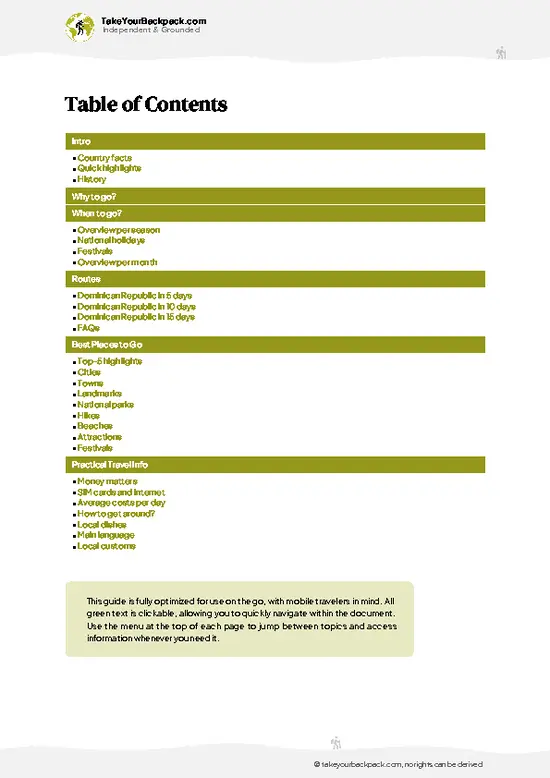
example page 2 from our offline Travel Guide for Dominican Republic
example page 3 from our offline Travel Guide for Dominican Republic
example page 4 from our offline Travel Guide for Dominican Republic
example page 5 from our offline Travel Guide for Dominican Republic
example page 6 from our offline Travel Guide for Dominican Republic
example page 7 from our offline Travel Guide for Dominican Republic
The digital guide (431 pages) contains:
119 highlights, ranked by travel appeal
Optimized 5, 10 & 15-day travel routes
Cities, national parks, landmarks, beaches
How to get around
Offline-friendly for travel without Wi-Fi
👉 Click to see all 30+ guide features

📅 Plan smarter in minutes, not weeks
Month by month travel advice
Festivals & national holidays
Budget expectations

🗺️ Go to the right places, skip the overrated ones
Honest pros & cons of destinations
Top hikes, parks & viewpoints
Lesser-known places most travelers miss
Clear “worth it vs skip it” guidance

🛏️ Travel smoothly without rookie mistakes
Best areas to stay
Transport systems explained simply
Common scams & safety advice
SIM cards, money & practical tips

🌍 Understand the country, not just visit it
Culture & traditions
52 Essential phrases & customs
Festivals worth planning around
Traveler-friendly historical context
Insights that make places more meaningful

📱 Built for real travel conditions
Fully downloadable PDF
Works completely offline
Optimized for phone use
Useful in remote areas & buses
Everything in one place
Save weeks of stressful planning
Get instant access to your full guide. 30‑day money-back guarantee.


By proceeding you agree to our terms.
Sent to your inbox immediately after payment • 100% Secure Checkout
Best Backpacking Travel Advisor 2025 tourism awardBest Backpacking
Travel Advisor
2025
What others say about Take Your Backpack Guides:
⭐⭐⭐⭐⭐
Fantastic, amazing amount of information!
⭐⭐⭐⭐⭐
My goodness this is amazing, it's what I've been looking for hats off too you!
⭐⭐⭐⭐⭐
I think this is absolutely BRILLIANT
⭐⭐⭐⭐
Very complete and informative. It's still missing places, but I gotta to commend you
⭐⭐⭐⭐⭐
This is truly amazing, thank you, can't wait to explore it with my kids!
⭐⭐⭐⭐⭐
Awesome resource, thank you!
⭐⭐⭐⭐⭐
This is amazing! Can't wait to explore the ones I haven't seen
⭐⭐⭐⭐
I love this! Well done, great idea.
⭐⭐⭐⭐⭐
Thanks for taking the time to make this gem!
⭐⭐⭐⭐⭐
This might be the best website I've ever seen.
⭐⭐⭐⭐⭐
Congratulations, and thank you so much for your work; it's incredibly valuable.
⭐⭐⭐⭐
In all seriousness I think you did a great job pointing out the important spots
⭐⭐⭐⭐⭐
10/10 very good
⭐⭐⭐⭐⭐
As someone who's only just starting to visit regularly this is awesome, thank you.
⭐⭐⭐⭐
Thank you very much! I'm going to visit my dad, it's going to be very useful!
⭐⭐⭐⭐⭐
This is really cool! We'll be travelling for the first time and this definitely come in handy.
⭐⭐⭐⭐⭐
You are now our minister of culture, congratulations 👨‍💼
⭐⭐⭐⭐⭐
Just wanted to tell you that this is a pearl! Going to follow your recommendations.
⭐⭐⭐⭐⭐
This is so cool. I'll definitely be using the resource for my travels soon.
⭐⭐⭐⭐⭐
This is very impressive! Good work.
⭐⭐⭐⭐⭐
This is an amazing and informative site. Very well done!

🛏️ Where to stay?Where staying makes the most sense

Ciudad Colonial is the backpacker’s sweet spot in Santo Domingo. It’s where history meets a lively social scene without the touristy overload of other capitals. The cobblestone streets and colonial architecture create a vibe that’s both atmospheric and easy to navigate on foot. Safety here is noticeably better than in many other parts of the city, which is a big win for solo travelers. Hostels cluster around this area, offering communal spaces that naturally draw in the social crowd—perfect for swapping stories or finding a walking buddy for the day.

Compared to the more residential or commercial … read more 👉
Ciudad Colonial is the backpacker’s sweet spot in Santo Domingo. It’s where history meets a lively social scene without the touristy overload of other capitals. The cobblestone streets and colonial architecture create a vibe that’s both atmospheric and easy to navigate on foot. Safety here is noticeably better than in many other parts of the city, which is a big win for solo travelers. Hostels cluster around this area, offering communal spaces that naturally draw in the social crowd—perfect for swapping stories or finding a walking buddy for the day.

Compared to the more residential or commercial zones like Gazcue or Naco, Ciudad Colonial feels more intimate and less isolated. Those neighborhoods might offer comfort and quiet, but they lack the pulse that makes meeting other backpackers effortless. Plus, public transport and taxis are more straightforward here, reducing the stress of getting lost or overpaying.

If you want to trade a bit of modern convenience for character and connection, Ciudad Colonial nails it. You’re not just booking a bed; you’re stepping into a neighborhood where every corner invites exploration and every evening promises a new conversation. It’s the kind of place where time slows just enough to savor the city’s soul without sacrificing your safety or social life.

🚌 Getting aroundMoving around without the hassle

Santo Domingo moves with a pulse that’s part old-school rhythm, part modern hustle. The city’s flow isn’t about strict timetables or shiny efficiency; it’s a dance of improvisation, honking horns, and street vendors calling out deals. You’ll find that schedules are more like guidelines, and the real game is reading the vibe—when a bus fills up, when a moto-taxi driver spots a fare, or when the metro train slides in just as you arrive. This is a city where time, money, and comfort are constantly in negotiation, and knowing the trade-offs means you can play it smart and get the most out of every peso and minute.


  • Metro de Santo Domingo: The city’s metro is the closest thing to a rigid schedule here, running roughly from 6:00 AM to 9:00 PM. It’s fast, reliable, and dirt cheap at about 30 DOP
read more 👉
Santo Domingo moves with a pulse that’s part old-school rhythm, part modern hustle. The city’s flow isn’t about strict timetables or shiny efficiency; it’s a dance of improvisation, honking horns, and street vendors calling out deals. You’ll find that schedules are more like guidelines, and the real game is reading the vibe—when a bus fills up, when a moto-taxi driver spots a fare, or when the metro train slides in just as you arrive. This is a city where time, money, and comfort are constantly in negotiation, and knowing the trade-offs means you can play it smart and get the most out of every peso and minute.


  • Metro de Santo Domingo: The city’s metro is the closest thing to a rigid schedule here, running roughly from 6:00 AM to 9:00 PM. It’s fast, reliable, and dirt cheap at about 30 DOP per ride. Comfort is basic but consistent—air-conditioned cars and clean stations make it a solid choice if you want to avoid traffic snarls. The trade-off? It only covers two lines, so you’ll still need other options to reach many neighborhoods.


  • Carros Públicos (Public Shared Vans): These are the backbone of local transit—cheap (around 20-40 DOP), frequent, and flexible. They don’t run on strict schedules; instead, they leave when full, which means waiting times can be unpredictable. Comfort is minimal—expect crowded, noisy rides with stops on demand. But if you’re on a budget and want to experience the city’s pulse, these vans are unbeatable.


  • Moto-Taxis: When time is tight and you’re willing to spend a bit more, moto-taxis zip through traffic like ninjas. Prices vary but generally start around 50 DOP for short trips. They’re fast and can reach places cars can’t, but comfort is basically the wind in your face and a helmet. Use them strategically for last-mile connections or when public transit doesn’t go where you need.


  • Walking: Santo Domingo’s Colonial Zone is compact and best explored on foot. Walking costs nothing and lets you soak in the city’s textures—crumbling facades, street art, and the scent of street food. It’s slower but offers a level of comfort and immersion no vehicle can match. Outside the historic center, distances grow, and walking becomes less practical, but within the core, it’s the smartest, most rewarding choice.


  • Taxi Services (App-Based and Traditional): For those who prioritize comfort and convenience, taxis offer door-to-door service with air conditioning and less hassle. Prices start higher—expect 150-300 DOP for typical city rides—and surge during peak hours. They save time and energy but at a cost that adds up quickly. Best reserved for late nights or when carrying heavy gear.


Understanding these options is like cracking the city’s code. You’re balancing speed against cost, comfort against spontaneity. The savvy traveler mixes and matches—riding the metro for the main haul, hopping on a moto-taxi when the clock’s ticking, and walking to savor the city’s soul. That’s how you turn transit from a chore into a strategic advantage.

👛 Costs (as of 4 August 2025)What things cost and how to budget

Backpacking in Santo Domingo offers a clear trade-off between cost and comfort, with prices that reflect its status as a popular yet affordable Caribbean city.
  • Dorm Accommodation (High Season): Expect to pay around $12 to $18 per night for a bed in a shared dorm. High season, typically December to April, pushes prices up due to demand from tourists escaping colder climates.
  • Dorm Accommodation (Off-Season): From May to November, prices drop to about $8 to $12 per night. This is when you can snag a bargain, but be prepared for occasional rain and fewer tourists.
  • Meals: Street food and local eateries serve up hearty Dominican dishes for $3 to $6 per meal. If you opt for mid-range restaurants, expect to spend $8 to $15. Cooking your own food can cut costs significantly, especially if your accommodation
read more 👉
Backpacking in Santo Domingo offers a clear trade-off between cost and comfort, with prices that reflect its status as a popular yet affordable Caribbean city.
  • Dorm Accommodation (High Season): Expect to pay around $12 to $18 per night for a bed in a shared dorm. High season, typically December to April, pushes prices up due to demand from tourists escaping colder climates.
  • Dorm Accommodation (Off-Season): From May to November, prices drop to about $8 to $12 per night. This is when you can snag a bargain, but be prepared for occasional rain and fewer tourists.
  • Meals: Street food and local eateries serve up hearty Dominican dishes for $3 to $6 per meal. If you opt for mid-range restaurants, expect to spend $8 to $15. Cooking your own food can cut costs significantly, especially if your accommodation has kitchen facilities.
  • Local Transport: Public buses and shared motoconchos (motorcycle taxis) are dirt cheap, usually under $1 per ride. They’re a bit chaotic but unbeatable for budget travelers who want to blend in.
  • City Transport Pass: Santo Domingo offers a Metro card system with rides costing about $0.50 each. A daily pass isn’t common, but budgeting $2 to $3 for multiple rides is realistic if you plan to move around a lot.
  • Basic Activities/Entry Fees: Museums and historical sites charge between $2 and $7. Some guided tours or special exhibitions can push this up to $15, but many cultural experiences are free or low-cost if you explore on your own.
  • Miscellaneous Expenses: This includes bottled water, occasional snacks, toiletries, and small tips. Budget around $3 to $5 daily to cover these essentials without surprises.

Altogether, a sensible daily budget for backpacking in Santo Domingo ranges from roughly $20 on the leanest days to about $45 if you lean towards more comfort or activities. Knowing these trade-offs lets you decide where to save and where to splurge, turning your trip into a strategic win rather than a guessing game.


source: godominicanrepublic.com
⚠️ Prices can change and everyone travels differently, so take this as a rough guide. Hope it helps you plan your adventure!

🚌 Day tripsBest day trips from Santo Domingo

Santo Domingo is a fantastic launchpad for day trips that blend culture, adventure, and natural beauty. Here’s how to make the most of your time without breaking the bank.

Los Tres Ojos
Just a short ride from the city, Los Tres Ojos is a stunning series of limestone caves with crystal-clear lagoons. The entrance fee is minimal, and you can easily spend a few hours exploring the caves and taking in the vibrant blue waters. The best time to visit is early morning to avoid the crowds and the heat. A common mistake is underestimating the time needed for the hike back up; it’s steeper than it looks!
👉 Explore Los Tres Ojos

La Romana & Altos de Chavón
About an hour and a half from Santo Domingo, La Romana offers a taste of colonial charm at Altos de Chavón, a replica of a 16th-century Mediterranean … read more 👉
Santo Domingo is a fantastic launchpad for day trips that blend culture, adventure, and natural beauty. Here’s how to make the most of your time without breaking the bank.

Los Tres Ojos
Just a short ride from the city, Los Tres Ojos is a stunning series of limestone caves with crystal-clear lagoons. The entrance fee is minimal, and you can easily spend a few hours exploring the caves and taking in the vibrant blue waters. The best time to visit is early morning to avoid the crowds and the heat. A common mistake is underestimating the time needed for the hike back up; it’s steeper than it looks!
👉 Explore Los Tres Ojos

La Romana & Altos de Chavón
About an hour and a half from Santo Domingo, La Romana offers a taste of colonial charm at Altos de Chavón, a replica of a 16th-century Mediterranean village. The entrance is free, and you can wander the cobblestone streets, check out artisan shops, and enjoy views of the Chavón River. Grab a local lunch in La Romana to keep costs down. Many first-timers miss the scenic overlook, so don’t skip that!


Saona Island
For a splash of paradise, head to Saona Island. While it’s a bit pricier than other trips, the experience is worth it. You can catch a boat from Bayahibe, about two hours from Santo Domingo. The island boasts pristine beaches and turquoise waters. Look for group tours that include lunch to save money. The best time to go is during the dry season, but be cautious of overly touristy packages that skip the quieter spots.


Jarabacoa
If you’re craving some mountain air, Jarabacoa is your go-to. Roughly two hours from the capital, this area is known for its waterfalls and lush landscapes. You can hike to Salto de Jimenoa or go river rafting. Costs are low if you stick to local eateries. Many backpackers overlook the weather; it can be cooler in the mountains, so pack accordingly.
👉 Explore Jarabacoa

Bayahibe
Just under two hours away, Bayahibe is a charming fishing village with beautiful beaches and access to snorkeling spots. The vibe is laid-back, and you can find budget-friendly accommodations if you decide to linger. The best time to visit is during the week to avoid weekend crowds. A common mistake is not checking the tide schedules for the best snorkeling conditions.
Want to know what more Dominican Republic offers?
The Dominican Republic Travel Guide describes 119 highlights, from cities to national parks, from beaches to hikes

Get the Travel Guide -

🍲 FoodEating & Drinking in Santo Domingo

In Santo Domingo, food is a vibrant tapestry of flavors that tells the story of its rich culture. You can’t miss trying mangú, a creamy mashed plantain dish often served with fried eggs and salami. It’s a breakfast staple that packs a punch of comfort. Pair it with a refreshing morir soñando, a drink that blends orange juice and milk, and you’ll feel like a local in no time.

Street food is where the magic happens. Vendors line the bustling streets, serving up empanadas and yaroas—a delicious mix of fries, cheese, and your choice of meat, all piled high. The aroma of sizzling meats and spices fills the air, inviting you to dive in. Markets are a treasure trove, too; grab a seat at a casual eatery and soak in the lively chatter while you savor a plate of sancocho, a hearty stew that warms the … read more 👉
In Santo Domingo, food is a vibrant tapestry of flavors that tells the story of its rich culture. You can’t miss trying mangú, a creamy mashed plantain dish often served with fried eggs and salami. It’s a breakfast staple that packs a punch of comfort. Pair it with a refreshing morir soñando, a drink that blends orange juice and milk, and you’ll feel like a local in no time.

Street food is where the magic happens. Vendors line the bustling streets, serving up empanadas and yaroas—a delicious mix of fries, cheese, and your choice of meat, all piled high. The aroma of sizzling meats and spices fills the air, inviting you to dive in. Markets are a treasure trove, too; grab a seat at a casual eatery and soak in the lively chatter while you savor a plate of sancocho, a hearty stew that warms the soul.

Dining here is often communal. Expect to share stories and laughter over meals, as locals value connection. Don’t be surprised if you’re offered a taste of someone’s dish—it’s a sign of hospitality. Embrace the quirks, like the late-night eating culture; dinner often starts after 8 PM, so adjust your schedule and enjoy the rhythm of the city.

🛡️ SafetyTraveler Safety Guide

Santo Domingo is generally safe for backpackers, but like any bustling city, it has its quirks. Stay alert in crowded areas like the Colonial Zone, where pickpockets might be lurking. Keep your belongings close, especially in markets or during events.

If you’re solo, consider your surroundings at night. While many areas are lively and safe, it’s wise to stick to well-lit streets and avoid wandering too far off the beaten path after dark.

Scams are rare but can happen. Be cautious of overly friendly locals who might offer unsolicited help or guide services; they may expect a tip that’s more than you bargained for. Also, be wary of taxi drivers who don’t use meters. Opt for rideshare apps when possible for a more transparent fare.

Overall, trust your instincts. Carry yourself confidently, … read more 👉
Santo Domingo is generally safe for backpackers, but like any bustling city, it has its quirks. Stay alert in crowded areas like the Colonial Zone, where pickpockets might be lurking. Keep your belongings close, especially in markets or during events.

If you’re solo, consider your surroundings at night. While many areas are lively and safe, it’s wise to stick to well-lit streets and avoid wandering too far off the beaten path after dark.

Scams are rare but can happen. Be cautious of overly friendly locals who might offer unsolicited help or guide services; they may expect a tip that’s more than you bargained for. Also, be wary of taxi drivers who don’t use meters. Opt for rideshare apps when possible for a more transparent fare.

Overall, trust your instincts. Carry yourself confidently, and don’t hesitate to say no if something feels off. With a bit of awareness, you can enjoy the vibrant pulse of this city without a hitch.

Other Dominican cities near Santo Domingo

Explore more nearby:

  • Villa Altagracia—pine forests, roadside fruit stands, commuter town| 35 km away
  • Monte Plata—waterfalls, cattle pastures, rural villages| 41 km away
  • Baní—sand dunes, mango groves, artisan workshops| 47 km away

💡 Not sure where to go next?
Create a personalized itinerary for Dominican Republic including Santo Domingo and the places that fit your trip.

Generate my itinerary

👉 Discover all cities

Or checkout all Dominican Republic has to offer (think cities, towns, villages, national parks, hikes, beaches, festivals)
Country photo of Dominican Republic

We 💚 feedbackFinal thoughts on visiting Santo Domingo

Santo Domingo has a pulse that’s hard to ignore. The colonial architecture whispers stories, and the street food? A delicious surprise that’ll have you craving more. Don’t miss the Malecón at sunset; it’s a local hangout that feels electric. Just a heads-up: traffic can be chaotic, so plan your outings wisely. Embrace the rhythm, savor the moment, and let the city’s energy sweep you off your feet. You’ll leave with a piece of its heart—trust me on that.

✍️ Help improve this page!
The information on this page is based on in-depth research, insights shared by experienced travelers, and feedback from the local travel community in Dominican Republic. While every effort is made to keep the information accurate and current, conditions can change — so if you spot anything incorrect or outdated, please get in touch.


🙋‍♂️ Give feedback

👋 Meet the founderWho’s Behind Take Your Backpack?

Johan, backpacker and founder of TakeYourBackpackHi, I’m Johan (Netherlands 🇳🇱), the creator of TakeYourBackpack. Over the past decade, I’ve backpacked through 80+ countries across six continents, gaining extensive experience with independent travel, long-term trips, and overland routes.

This site is built on a combination of firsthand travel experience and carefully curated insights from other backpackers. Many guides are based on places I’ve personally visited, while others bring together tips, observations, and practical advice shared by trusted travelers I’ve met along the way.

The goal is to provide realistic, experience-driven guidance — not generic itineraries — so you can explore destinations with better context, clearer expectations, and more confidence.

Get full country guide •
Instant download • 119 highlights • Full Offline guide