

×

Ecuador🇪🇨 | national parksPodocarpus National ParkTwo sectors, Cajanuma loops, Bombuscaro falls, páramo lakes | things to do and best time to go

Explore Bellavista Cloud Forest ReserveExplore Andean Highlands

Backpacking in Podocarpus
🌟 Highlightnational park ranked #5
By Johan Kruseman 🇳🇱 | Updated October 19, 2026

Mud sucked my boot off on the Cajanuma trail, and I stood on one sock in cold cloud forest, laughing, while a tanager flashed past. That was my mistake: I wore light trail shoes. Bring waterproof boots and gaiters, or plan on wet feet. Podocarpus National Park sits in southern Ecuador, in Loja and Zamora Chinchipe provinces, with Loja city on its western edge and Zamora on the east. Expect orchids, spectacled bears you will almost certainly not see, and ridgelines dotted with páramo lakes. Crowds are tiny. Access is the snag: sectors are far apart, so pick one (Cajanuma or Bombuscaro) instead of trying both and burning a day in transit. Rain arrives uninvited, so start early. A good first day: reach Cajanuma by morning, walk the Mirador loop, then return to Loja before dark.

Discover everything you want to know in the 📖 Ecuador Travel Guide.
Best time to go: May - October
Daily cost: US$38
Duration: 3 days
Distance: 30 kilometers
Total ascent: 1,200 meters


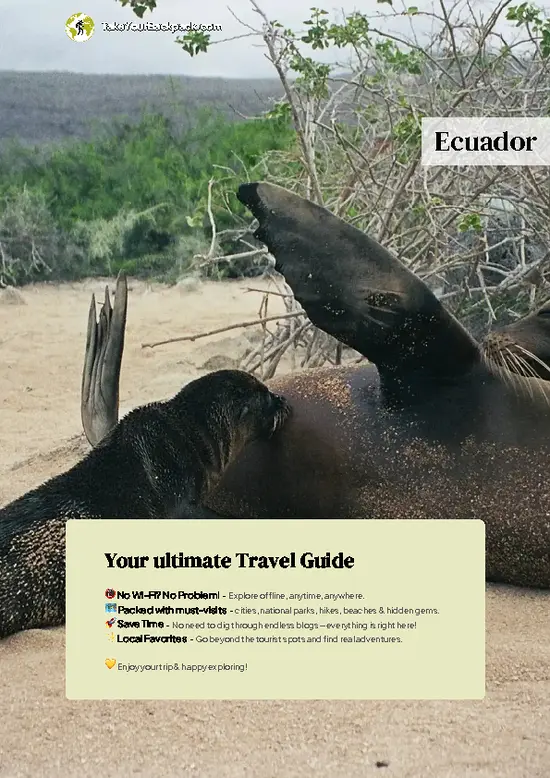
example page 0 from our offline Travel Guide for Ecuador
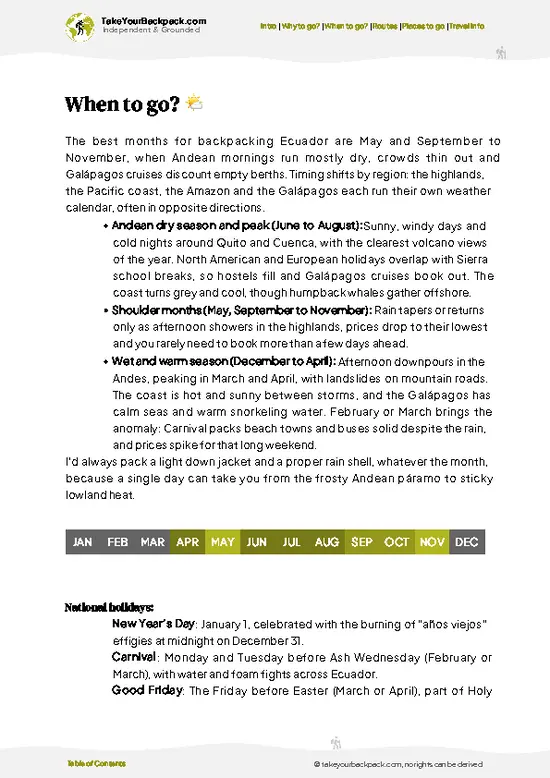
example page 1 from our offline Travel Guide for Ecuador
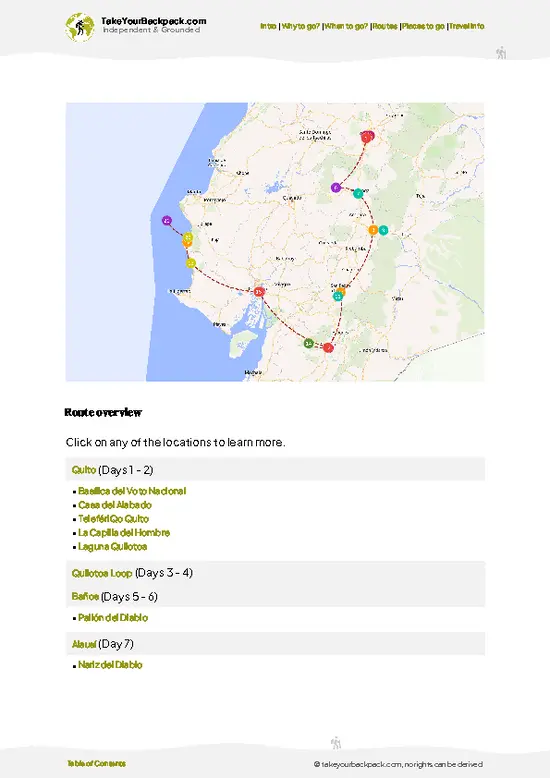
example page 2 from our offline Travel Guide for Ecuador
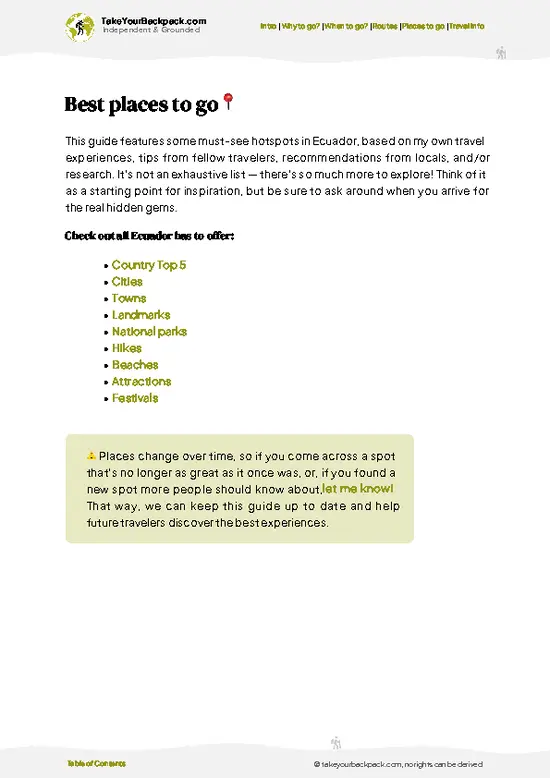
example page 3 from our offline Travel Guide for Ecuador
example page 4 from our offline Travel Guide for Ecuador
example page 5 from our offline Travel Guide for Ecuador
example page 6 from our offline Travel Guide for Ecuador
example page 7 from our offline Travel Guide for Ecuador
Loading the map 🌍
CLICK TO FILTER
cities
towns
landmarks
national parks
hikes
beaches
attractions
festivals
SHOW COUNTRY’S BESTSHOW ALL

✨ Why go?
Ranked #5 national park in Ecuador
The unique appeal for travelers

Podocarpus National Park rewards backpackers who like to plan their own days, because the sectors run without tour operators and the trails are marked well enough to follow alone. The big draw is the elevation spread, from warm Amazonian foothills near Bombuscaro to the high Lagunas del Compadre region, where dozens of cold lakes sit among páramo. That range packs several ecosystems into one park, and birders come for tanagers, toucans and Andean specialists. Rangers at the entrances log your name and give trail updates, which helps on remote routes. Lodging stays simple and cheap near Vilcabamba, Loja and Zamora, so you can use them as bases. Add the Bombuscaro river trail with its waterfalls and you get easy jungle walking without a guide. Serious trekkers can tackle multi-day routes with proper gear and a local contact.

💡 HighlightsPlaces and moments you shouldn't skip

  1. Cajanuma Sector: The most visited entrance, near Loja, with cloud forest trails full of moss, bromeliads and hummingbirds. Short loops suit first-timers.
  2. Lagunas del Compadre: A remote cluster of glacial-origin lakes in páramo, reached on a demanding two-day trek of about 14 km from Cajanuma. Cold, windswept and quiet.
  3. Bombuscaro Sector: The Amazonian side near Zamora, with warm, humid forest, river crossings and tall trees. Good for birds and butterflies.
  4. Waterfalls of Bombuscaro: Several cascades, including La Poderosa, reached on a flat jungle path from the ranger station. Swimming spots appear along the river.
  5. Mirador Trail: A cloud forest path from Cajanuma up to viewpoints over the Andean ridgelines. Steep stretches, but the views open when the mist lifts.
  6. Birdwatching Zones: The park holds
… read more 👉
  1. Cajanuma Sector: The most visited entrance, near Loja, with cloud forest trails full of moss, bromeliads and hummingbirds. Short loops suit first-timers.
  2. Lagunas del Compadre: A remote cluster of glacial-origin lakes in páramo, reached on a demanding two-day trek of about 14 km from Cajanuma. Cold, windswept and quiet.
  3. Bombuscaro Sector: The Amazonian side near Zamora, with warm, humid forest, river crossings and tall trees. Good for birds and butterflies.
  4. Waterfalls of Bombuscaro: Several cascades, including La Poderosa, reached on a flat jungle path from the ranger station. Swimming spots appear along the river.
  5. Mirador Trail: A cloud forest path from Cajanuma up to viewpoints over the Andean ridgelines. Steep stretches, but the views open when the mist lifts.
  6. Birdwatching Zones: The park holds mountain tanagers, toucanets, and the rare Neblina metaltail of the páramo above Cajanuma. Early mornings at either entrance work best.
  7. Páramo Plateau Views: Open high-altitude grassland with frailejón-like plants and long, empty horizons, a sharp contrast to the forest below.
Cajanuma and the Lagunas del Compadre treks pair poorly, but a morning at Cajanuma followed by an afternoon return to Loja pairs well with a night in Vilcabamba.
Spotted a mistake or missing something? Contact us.

🌤️ When to go?Choosing the right time of year

  • October to February (drier months): The southern Andes around Loja and Zamora see the least rain, with trails firmest and cloud lifting by mid-morning. Highs run 16 to 22°C (61 to 72°F) at the Cajanuma sector, nights drop to 4 to 8°C (39 to 46°F) near the lagoons.
  • March to June (wettest): Drizzle and fog settle in, trails to Lagunas del Compadre turn to knee-deep mud, and the Zamora lowlands run warm at 22 to 28°C (72 to 82°F). Crowds vanish and lodging is easy to book.
  • July and August: Windy, cool and often misty on the páramo, with a few clear spells. Ecuadorian school holidays in the Andes fill Loja hostels a little, but prices barely move.
  • Daylight: Daylight stays close to 12 hours all year, so start hikes early to beat afternoon cloud.
Arrange the Lagunas del Compadre trek with the rangers and a guide well in advance.

source: climatestotravel.comJANJanuary: fair for travelingFEBFebruary: fair for travelingMARMarch: fair for travelingAPRApril: fair for travelingMAYMay: good for travelingJUNJune: excellent for travelingJULJuly: excellent for travelingAUGAugust: excellent for travelingSEPSeptember: excellent for travelingOCTOctober: good for travelingNOVNovember: fair for travelingDECDecember: fair for traveling
when-to-go

✈️ The backpacker research shortcutEcuador Travel Guide

An offline-friendly backpacking guide with optimized travel routes, ranked highlights, transport advice, and the best areas to stay.
example page 0 from our offline Travel Guide for Ecuador
example page 1 from our offline Travel Guide for Ecuador
example page 2 from our offline Travel Guide for Ecuador
example page 3 from our offline Travel Guide for Ecuador
example page 4 from our offline Travel Guide for Ecuador
example page 5 from our offline Travel Guide for Ecuador
example page 6 from our offline Travel Guide for Ecuador
example page 7 from our offline Travel Guide for Ecuador
The digital guide (274 pages) contains:
✅ 87 highlights, ranked by travel appeal
✅ Optimized 5, 10 & 15-day travel routes
✅ Cities, national parks, landmarks, beaches
✅ How to get around
✅ Offline-friendly for travel without Wi-Fi
👉 Click to see all 30+ guide features

📅 Plan smarter in minutes, not weeks
✅ Month by month travel advice
✅ Festivals & national holidays
✅ Budget expectations

🗺️ Go to the right places, skip the overrated ones
✅ Honest pros & cons of destinations
✅ Top hikes, parks & viewpoints
✅ Lesser-known places most travelers miss
✅ Clear “worth it vs skip it” guidance

🛏️ Travel smoothly without rookie mistakes
✅ Best areas to stay
✅ Transport systems explained simply
✅ Common scams & safety advice
✅ SIM cards, money & practical tips

🌍 Understand the country, not just visit it
✅ Culture & traditions
✅ 52 Essential phrases & customs
✅ Festivals worth planning around
✅ Traveler-friendly historical context
✅ Insights that make places more meaningful

📱 Built for real travel conditions
✅ Fully downloadable PDF
✅ Works completely offline
✅ Optimized for phone use
✅ Useful in remote areas & buses
✅ Everything in one place
Stop searching, start planning
Get instant access to your full guide. 30‑day money-back guarantee.
+ Add another guide for just

By proceeding you agree to our terms.
Sent to your inbox immediately after payment • 100% Secure Checkout
Best Backpacking Travel Advisor 2025 tourism awardBest Backpacking
Travel Advisor
2025
What others say about Take Your Backpack Guides:
⭐⭐⭐⭐⭐
Fantastic, amazing amount of information!
⭐⭐⭐⭐⭐
My goodness this is amazing, it's what I've been looking for hats off too you!
⭐⭐⭐⭐⭐
I think this is absolutely BRILLIANT
⭐⭐⭐⭐
Very complete and informative. It's still missing places, but I gotta to commend you
⭐⭐⭐⭐⭐
This is truly amazing, thank you, can't wait to explore it with my kids!
⭐⭐⭐⭐⭐
Awesome resource, thank you!
⭐⭐⭐⭐⭐
This is amazing! Can't wait to explore the ones I haven't seen
⭐⭐⭐⭐
I love this! Well done, great idea.
⭐⭐⭐⭐⭐
Thanks for taking the time to make this gem!
⭐⭐⭐⭐⭐
This might be the best website I've ever seen.
⭐⭐⭐⭐⭐
Congratulations, and thank you so much for your work; it's incredibly valuable.
⭐⭐⭐⭐
In all seriousness I think you did a great job pointing out the important spots
⭐⭐⭐⭐⭐
10/10 very good
⭐⭐⭐⭐⭐
As someone who's only just starting to visit regularly this is awesome, thank you.
⭐⭐⭐⭐
Thank you very much! I'm going to visit my dad, it's going to be very useful!
⭐⭐⭐⭐⭐
This is really cool! We'll be travelling for the first time and this definitely come in handy.
⭐⭐⭐⭐⭐
You are now our minister of culture, congratulations 👨‍💼
⭐⭐⭐⭐⭐
Just wanted to tell you that this is a pearl! Going to follow your recommendations.
⭐⭐⭐⭐⭐
This is so cool. I'll definitely be using the resource for my travels soon.
⭐⭐⭐⭐⭐
This is very impressive! Good work.
⭐⭐⭐⭐⭐
This is an amazing and informative site. Very well done!

🛏️ Where to stay?How to pick the right area

Loja is the best base for Podocarpus National Park, with dorm beds at US$8 to 12 and private rooms at US$18 to 35 in the compact center. From there, buses and taxis reach the Cajanuma entrance in about 20 to 30 minutes, and a taxi costs roughly US$5 to 8 one way.

Inside the park, the Cajanuma sector has a basic hut by the ranger station, and the Lagunas del Compadre, about 14 to 15 km of demanding páramo walking away, have camping only, so bring your own tent, sleeping bag and food. Camping is allowed in designated spots, so check with rangers at the entrance.

On the eastern side, Zamora, about … read more 👉
Loja is the best base for Podocarpus National Park, with dorm beds at US$8 to 12 and private rooms at US$18 to 35 in the compact center. From there, buses and taxis reach the Cajanuma entrance in about 20 to 30 minutes, and a taxi costs roughly US$5 to 8 one way.

Inside the park, the Cajanuma sector has a basic hut by the ranger station, and the Lagunas del Compadre, about 14 to 15 km of demanding páramo walking away, have camping only, so bring your own tent, sleeping bag and food. Camping is allowed in designated spots, so check with rangers at the entrance.

On the eastern side, Zamora, about 1.5 hours by bus from Loja, suits the warm, forested Bombuscaro sector. Guesthouses there charge US$10 to 25 a room, and a short taxi or walk of 6 km (4 mi) takes you to the park gate. Vilcabamba, around 1.5 hours south of Loja, works for a slower stay with hostels from US$10 and easy access to the southern edge of the park.

👛 Costs (as of 19 October 2026)Money, prices, and spending tips

Expect to spend about US$38 a day backpacking Podocarpus National Park, including a bed in a hostel or refuge, local transport and simple meals.
CategoryBudget RangeLocal Reality
Entrance feeUS$0 to 2Entry to the national park is free or a nominal charge, so confirm at the ranger station.
Accommodation (high season)US$10 to 15Dorms in Loja run US$8 to 12, and camping at the Lagunas del Compadre costs less.
Local transportUS$5 to 10Taxis from Loja to Cajanuma cost US$5 to 8 one way. Buses to Zamora run about US$2 to 3.
Food and suppliesUS$10 to 15Set lunches in Loja cost US$3 to 4, and you must carry your own food for overnight treks.
Guide (optional)US$0 to 10Most hikers go without, though local guides charge about US$30 to 50 a day, split among a group.
Total Daily BudgetUS$38A mid-range day with
… read more 👉
Expect to spend about US$38 a day backpacking Podocarpus National Park, including a bed in a hostel or refuge, local transport and simple meals.
CategoryBudget RangeLocal Reality
Entrance feeUS$0 to 2Entry to the national park is free or a nominal charge, so confirm at the ranger station.
Accommodation (high season)US$10 to 15Dorms in Loja run US$8 to 12, and camping at the Lagunas del Compadre costs less.
Local transportUS$5 to 10Taxis from Loja to Cajanuma cost US$5 to 8 one way. Buses to Zamora run about US$2 to 3.
Food and suppliesUS$10 to 15Set lunches in Loja cost US$3 to 4, and you must carry your own food for overnight treks.
Guide (optional)US$0 to 10Most hikers go without, though local guides charge about US$30 to 50 a day, split among a group.
Total Daily BudgetUS$38A mid-range day with a private room in Loja pushes this to about US$55 to 70.
⚠️ Prices can change and everyone travels differently, so take this as a rough guide. Hope it helps you plan your adventure!

🥾 TrailsHiking Podocarpus national park: highlights and difficulty

Podocarpus National Park offers hiking from easy forest strolls to remote multi-day treks, with terrain shifting between cloud forest, páramo and lowland jungle. Trails are muddy and slippery, and weather changes fast.
  • Sendero Los Miradores: Starts at Cajanuma, a roughly 8 km loop, 4 to 5 hours, moderate. Steep climbs through mossy forest to viewpoints.
  • Sendero Lagunas del Compadre: A trek of about 14 km from Cajanuma, challenging, with cold nights and open páramo, allowed only with advance permission and a guide. Allow 2 days.
  • Sendero Higuerones: Starts at Bombuscaro, a short, easy jungle walk of
… read more 👉
Podocarpus National Park offers hiking from easy forest strolls to remote multi-day treks, with terrain shifting between cloud forest, páramo and lowland jungle. Trails are muddy and slippery, and weather changes fast.
  • Sendero Los Miradores: Starts at Cajanuma, a roughly 8 km loop, 4 to 5 hours, moderate. Steep climbs through mossy forest to viewpoints.
  • Sendero Lagunas del Compadre: A trek of about 14 km from Cajanuma, challenging, with cold nights and open páramo, allowed only with advance permission and a guide. Allow 2 days.
  • Sendero Higuerones: Starts at Bombuscaro, a short, easy jungle walk of about 1 to 2 hours past large trees.
  • Sendero La Poderosa: From Bombuscaro, about 5 km round trip, 2 to 3 hours, easy to moderate, passing waterfalls and bridges.
Wildlife includes spectacled bears, mountain tapirs and over 600 bird species, though sightings of mammals are rare. Public transport reaches the edges of the park only: buses run to Loja or Zamora, and from there taxis or pickup trucks continue to the ranger stations. The park is quiet most of the year, and busier on weekends near Loja. Entry is usually free, but check at the ranger station and sign in on arrival. Carry rain gear, food and water, as there are no services inside.
⚠️ Hiking info can sometimes be outdated or inaccurate. Before you hit the trail, check the latest conditions with locals. If you do spot anything that's off, I'd love to hear from you, so I can update it for fellow travelers.

🛡️ SafetyStaying Safe: What Travelers Should Know

Podocarpus National Park is generally safe and well managed, and the real hazards are weather and mud. Cloud forest and páramo above 3,000 m (9,800 ft) can shift from sun to cold rain within an hour, so carry a waterproof shell, warm layer and gloves even for day hikes. Trails to the lagoons are steep, rooty and slick, and fog makes route-finding harder, so stay on marked paths and download an offline map. Rubber boots or sturdy waterproof shoes help enormously. Altitude is mild for most people, but pace yourself on the climb from Cajanuma. Wildlife is shy. Spectacled bears and tapirs live here but rarely appear, and you are more likely to meet insects at lower Bombuscaro, so pack repellent. Register at the ranger station, tell someone your plan, and start early to finish before afternoon cloud rolls in.

FAQFrequently asked questions about Podocarpus

Two to three days is enough for Podocarpus National Park if you want one day at the Cajanuma sector and one at the Bombuscaro sector near Zamora. The overnight trek to Lagunas del Compadre takes 2 days, with 4 to 6 hours of climbing each way. Add a day in Loja or Vilcabamba to rest and sort supplies.
Yes, you can visit Podocarpus National Park without a car. From Loja, a taxi to the Cajanuma entrance takes 20 to 30 minutes and costs roughly US$5 to 8. For Bombuscaro, buses run Loja to Zamora in about 1.5 hours for US$2 to 3, then a short taxi or a walk of about 6 km (4 mi) reaches the gate.
Entry to Podocarpus National Park is free or carries only a small fee of a few dollars, depending on the sector, and you register at the ranger station on arrival. No special permit is needed for day hikes. Overnight trips to the Lagunas del Compadre need advance permission and a guide, and you camp by the lakes.
⚠️ Things can change over time, so always validate details locally before you go.

Other Ecuadorian national parks near Podocarpus

Explore more nearby:


💡 Not sure where to go next?
Create a personalized itinerary for Ecuador including Podocarpus and the places that fit your trip.

Generate my itinerary

👉 Discover all national parks

Or checkout all Ecuador has to offer (think cities, towns, villages, national parks, hikes, beaches, festivals)
Country photo of Ecuador

We 💚 feedbackParting advice and final tips

Travelers often cram Cajanuma and Bombuscaro into one rushed trip, then spend most of it in taxis. Pick one sector, start at the gate early, and give the trail the whole day. I would choose Bombuscaro for a warm, birdy first visit, and bring waterproof boots wherever you go.

✈️ When did I visit Ecuador?
Ecuador I visited during my half year trip through South and Central America back in 2003

✍️ Help improve this page!
The information on this page is based on my own backpacking experience in Ecuador, supplemented with up-to-date research and feedback from other travelers. Travel details can change, so if you notice anything outdated or incomplete, feel free to let me know.


🙋‍♂️ Give feedback

👋 Meet the founderWho’s Behind Take Your Backpack?

Johan, backpacker and founder of TakeYourBackpackHi, I’m Johan (Netherlands 🇳🇱), the creator of TakeYourBackpack. Over the past 3 decades, I’ve backpacked through 90+ countries across six continents, gaining extensive experience with independent travel, long-term trips, and overland routes.

This site is built on a combination of firsthand travel experience and carefully curated insights from other backpackers. Many guides are based on places I’ve personally visited, while others bring together tips, observations, and practical advice shared by trusted travelers I’ve met along the way.

The goal is to provide realistic, experience-driven guidance — not generic itineraries — so you can explore destinations with better context, clearer expectations, and more confidence.