×

El Salvador🇸🇻 | attractionsParque Arqueológico Casa BlancaMaya ruins, indigo workshop, excavated structures | things to do and best time to go

Explore Museo de la Palabra y la ImagenExplore Sitio Arqueológico Cihuatán

Backpacking in Parque Arqueológico Casa Blanca
👌 Worth visitingattraction ranked #11
By Johan Kruseman 🇳🇱 | Updated September 30, 2026

Here’s the curveball: most travelers expect Parque Arqueológico Casa Blanca to be a grand Mayan showpiece, but the real surprise is that you’ll find indigo workshops and hands-on dyeing sessions right alongside the ruins—yes, you can stain your fingers blue in the shadow of ancient pyramids. Casa Blanca sits on the edge of Chalchuapa, in western El Salvador, a town that feels more like a lived-in crossroads than a tourist circus. If you’re picturing crowds and selfie sticks, relax; this isn’t Tikal or Copán. The ruins themselves are modest—don’t come hunting for towering temples—but the site’s quiet, open lawns and the chance to chat with local artisans give it a pulse you won’t get at the country’s bigger, busier sites. Entry is cheap, the vibe is mellow, and you’ll spend more time with schoolkids on field trips than with tour groups. It’s not the most jaw-dropping spot in El Salvador, but it’s one of the most human.

Discover everything you want to know in the 📖 El Salvador Travel Guide.


Loading the map 🌍
CLICK TO FILTER
cities
towns
landmarks
national parks
hikes
beaches
attractions
festivals
regions
SHOW COUNTRY’S BESTSHOW ALL

✨ Why go?
Ranked #11 attraction in El Salvador
What makes it a must-see attraction

Backpackers flock to Parque Arqueológico Casa Blanca not because it’s a polished tourist trap, but because it’s a raw, unfiltered dive into El Salvador’s ancient roots. Sure, it’s not Instagram-perfect with crowds of selfie sticks, but that’s exactly the point. This site is a living testament to the Maya civilization’s reach into El Salvador, offering a rare glimpse into a culture that shaped the region long before modern borders existed. The historical depth here is palpable—stepping among the ruins, you’re walking through centuries of human ingenuity, from towering pyramids to intricate stone carvings.

The effort to get here pays off big time. It’s not just about ticking off a famous spot; it’s about feeling the weight of history under your boots and understanding El Salvador beyond the … read more 👉
Backpackers flock to Parque Arqueológico Casa Blanca not because it’s a polished tourist trap, but because it’s a raw, unfiltered dive into El Salvador’s ancient roots. Sure, it’s not Instagram-perfect with crowds of selfie sticks, but that’s exactly the point. This site is a living testament to the Maya civilization’s reach into El Salvador, offering a rare glimpse into a culture that shaped the region long before modern borders existed. The historical depth here is palpable—stepping among the ruins, you’re walking through centuries of human ingenuity, from towering pyramids to intricate stone carvings.

The effort to get here pays off big time. It’s not just about ticking off a famous spot; it’s about feeling the weight of history under your boots and understanding El Salvador beyond the headlines. For backpackers threading through the country, Casa Blanca is a major milestone—a cultural anchor that connects you to the land’s past and the people who lived it. The adrenaline rush comes from peeling back layers of time in a place that hasn’t been overrun by commercialization. It’s gritty, it’s real, and it’s exactly why you make time for it.

💡 HighlightsDon't-miss highlights and experiences

The Main Pyramid (Structure 1)
Let’s cut through the Instagram haze: this isn’t Chichén Itzá, and that’s exactly the point. The main pyramid at Casa Blanca is a battered, mossy survivor—partially restored, partially left raw. You’re not roped off from the action. You can walk right up to the base, see the layers of volcanic ash and stone, and actually feel the centuries. No crowds, no selfie-stick gridlock. Just you, the birds, and the quiet weight of a civilization that thrived before the Spanish ever dreamed of crossing the Atlantic. If you want a pyramid that feels lived-in, not staged, this is it.


The On-Site Museum
Most people skip the museum. That’s a rookie mistake. The museum here is small but dense with real artifacts—obsidian blades, ceramics, and jewelry that were actually dug … read more 👉
The Main Pyramid (Structure 1)
Let’s cut through the Instagram haze: this isn’t Chichén Itzá, and that’s exactly the point. The main pyramid at Casa Blanca is a battered, mossy survivor—partially restored, partially left raw. You’re not roped off from the action. You can walk right up to the base, see the layers of volcanic ash and stone, and actually feel the centuries. No crowds, no selfie-stick gridlock. Just you, the birds, and the quiet weight of a civilization that thrived before the Spanish ever dreamed of crossing the Atlantic. If you want a pyramid that feels lived-in, not staged, this is it.


The On-Site Museum
Most people skip the museum. That’s a rookie mistake. The museum here is small but dense with real artifacts—obsidian blades, ceramics, and jewelry that were actually dug up on these grounds. The displays are refreshingly direct: no over-produced soundtracks, no forced drama. Just the raw goods, labeled with enough detail to spark your imagination. You’ll see the famous polychrome ceramics that put Casa Blanca on the archaeological map. If you’re the type who wants to know what daily life actually looked like (hint: it wasn’t all priests and sacrifices), this is where the real stories live.


Indigo Dye Workshop
Here’s where Casa Blanca throws a curveball: the site isn’t just about ancient ruins. It’s also a living center for indigo dye production, a tradition that outlasted the pyramids. You can watch locals demonstrate how indigo leaves become that electric blue dye—yes, the same color that made El Salvador famous in colonial trade. If you’re lucky, you’ll get to dip your own scarf or shirt. It’s hands-on, it’s messy, and it connects you to a thread of history that’s still alive. No filter needed—the blue on your hands is real.


Peace and Solitude
This is the anti-theme park. Most days, you’ll share the grounds with a handful of schoolkids or a lone archaeologist, not busloads of tourists. The silence is thick enough to hear your own footsteps crunching the gravel. You can sit under a ceiba tree and actually think. If you’ve ever wanted to experience a Maya site without the circus, this is your shot. The magic here isn’t in the spectacle—it’s in the space to breathe and imagine.


Volcanic Layers and Earthquake Scars
Casa Blanca isn’t just a relic—it’s a geological diary. The ruins are layered with volcanic ash from Ilopango’s ancient eruptions, and you can see the scars from earthquakes that have battered the site for centuries. The archaeologists left some walls exposed on purpose, so you can read the earth’s history like a cross-section. It’s a reminder that this place has survived more than just time—it’s survived the planet’s tantrums. That’s a story you won’t get from a drone shot.
Spotted a mistake or missing something? Contact us.

Things to do near Parque Arqueológico Casa Blanca

Ratings based on Tripadvisor reviews. When you book through this link, you support our work at no extra cost to you.

🌤️ When to go?When to go for the best experience

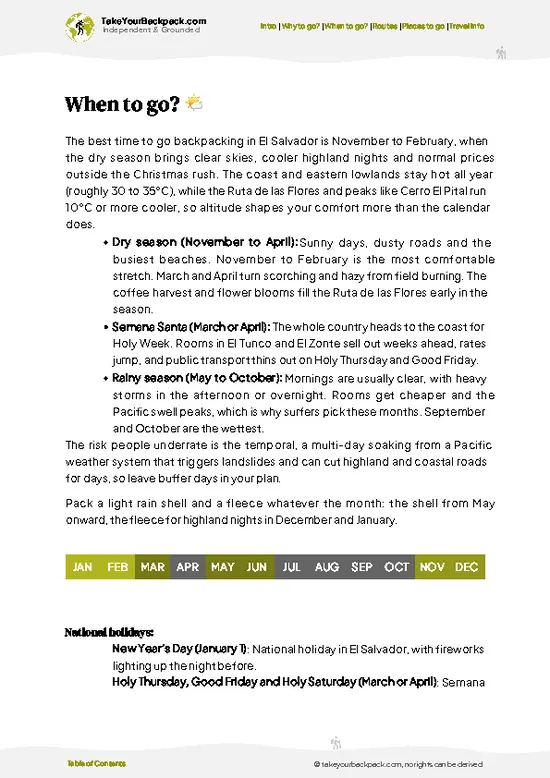
  • Weather: The dry season from November to April is your best bet. Expect mostly sunny days with minimal rain, perfect for exploring ruins without mud or slippery trails. The wet season, May through October, brings heavy showers that can wash out your plans and turn paths into mud pits.
  • Temperature: Daytime highs hover around 28-32°C (82-90°F) year-round, but mornings and evenings cool down to a comfortable 18-22°C (64-72°F). The dry season feels less sticky, making the heat more bearable when you’re trekking around.
  • Daylight Hours: Daylight is fairly consistent, roughly 11 to 12 hours daily. Sunrise is around 5:30-6:00 AM, sunset between 5:30-6:30 PM, giving you ample time to explore without rushing.
  • Crowds: Peak tourist season aligns with the dry months, especially December and January,
… read more 👉
  • Weather: The dry season from November to April is your best bet. Expect mostly sunny days with minimal rain, perfect for exploring ruins without mud or slippery trails. The wet season, May through October, brings heavy showers that can wash out your plans and turn paths into mud pits.
  • Temperature: Daytime highs hover around 28-32°C (82-90°F) year-round, but mornings and evenings cool down to a comfortable 18-22°C (64-72°F). The dry season feels less sticky, making the heat more bearable when you’re trekking around.
  • Daylight Hours: Daylight is fairly consistent, roughly 11 to 12 hours daily. Sunrise is around 5:30-6:00 AM, sunset between 5:30-6:30 PM, giving you ample time to explore without rushing.
  • Crowds: Peak tourist season aligns with the dry months, especially December and January, when local holidays and international visitors converge. If you want fewer people, aim for November or late April—still dry but less packed.
  • Seasonal Activities: The dry season hosts local festivals and cultural events nearby, adding layers to your visit beyond the ruins. The wet season is quieter but expect limited access to some trails and fewer guided tours.
  • Price Fluctuations: Entrance fees stay stable, but accommodation and transport costs spike during the dry season, especially around Christmas and Easter. Booking ahead can save you a headache and some cash.
Pro-tip: Visit in late November or early April to dodge both crowds and rain, scoring the best balance of weather, space, and local vibe.


source: climatestotravel.comJANJanuary: highly recommended for travelingFEBFebruary: highly recommended for travelingMARMarch: highly recommended for travelingAPRApril: highly recommended for travelingMAYMay: fair for travelingJUNJune: fair for travelingJULJuly: fair for travelingAUGAugust: fair for travelingSEPSeptember: fair for travelingOCTOctober: fair for travelingNOVNovember: highly recommended for travelingDECDecember: good for traveling
when-to-go

✈️ The backpacker research shortcutEl Salvador Travel Guide

An offline-friendly backpacking guide with optimized travel routes, ranked highlights, transport advice, and the best areas to stay.
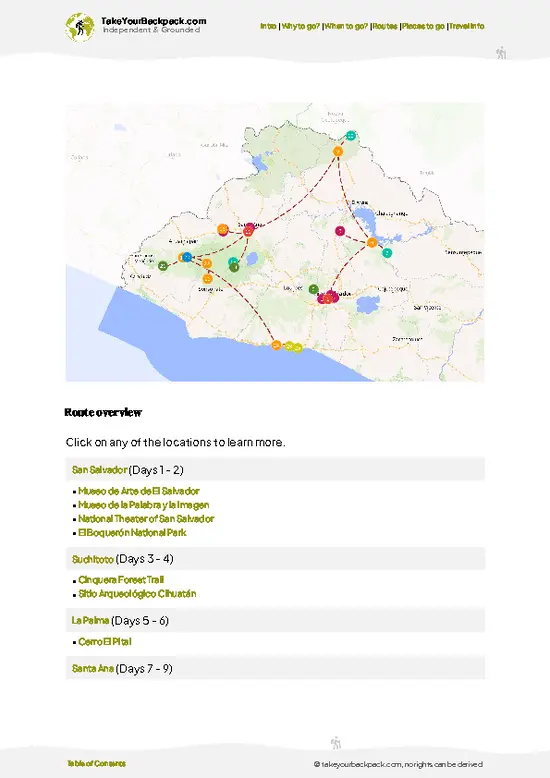
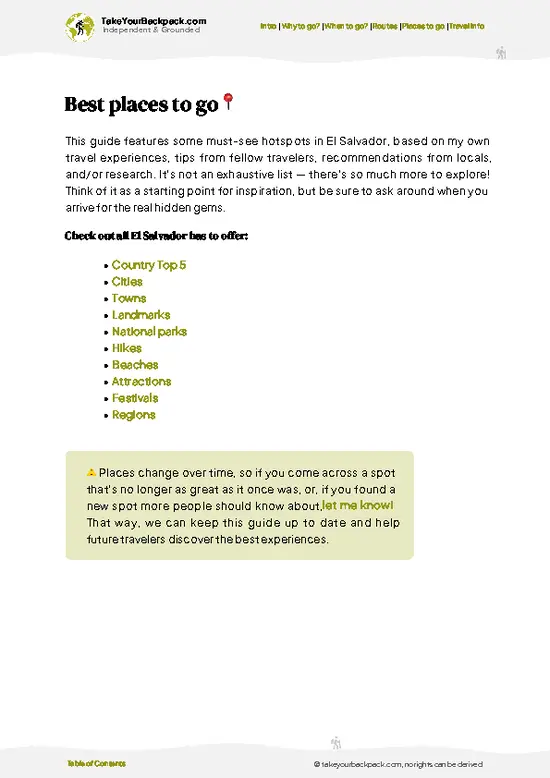
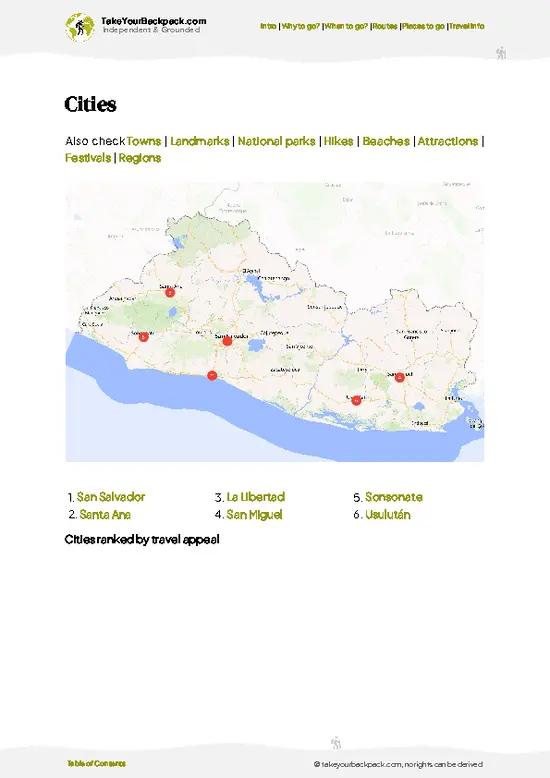
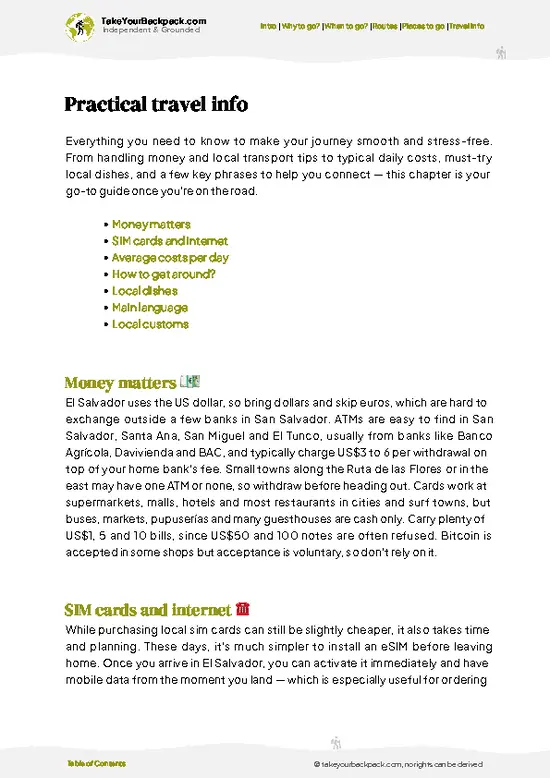
example page 0 from our offline Travel Guide for El Salvador
example page 1 from our offline Travel Guide for El Salvador
example page 2 from our offline Travel Guide for El Salvador
example page 3 from our offline Travel Guide for El Salvador
example page 4 from our offline Travel Guide for El Salvador
example page 5 from our offline Travel Guide for El Salvador
example page 6 from our offline Travel Guide for El Salvador
example page 7 from our offline Travel Guide for El Salvador
The digital guide (294 pages) contains:
✅ 76 highlights, ranked by travel appeal
✅ Optimized 5, 10 & 15-day travel routes
✅ Cities, national parks, landmarks, beaches
✅ How to get around
✅ Offline-friendly for travel without Wi-Fi
👉 Click to see all 30+ guide features

📅 Plan smarter in minutes, not weeks
✅ Month by month travel advice
✅ Festivals & national holidays
✅ Budget expectations

🗺️ Go to the right places, skip the overrated ones
✅ Honest pros & cons of destinations
✅ Top hikes, parks & viewpoints
✅ Lesser-known places most travelers miss
✅ Clear “worth it vs skip it” guidance

🛏️ Travel smoothly without rookie mistakes
✅ Best areas to stay
✅ Transport systems explained simply
✅ Common scams & safety advice
✅ SIM cards, money & practical tips

🌍 Understand the country, not just visit it
✅ Culture & traditions
✅ 52 Essential phrases & customs
✅ Festivals worth planning around
✅ Traveler-friendly historical context
✅ Insights that make places more meaningful

📱 Built for real travel conditions
✅ Fully downloadable PDF
✅ Works completely offline
✅ Optimized for phone use
✅ Useful in remote areas & buses
✅ Everything in one place
Stop searching, start planning
Get instant access to your full guide. 30‑day money-back guarantee.
+ Add another guide for just

By proceeding you agree to our terms.
Sent to your inbox immediately after payment • 100% Secure Checkout
Best Backpacking Travel Advisor 2025 tourism awardBest Backpacking
Travel Advisor
2025
What others say about Take Your Backpack Guides:
⭐⭐⭐⭐⭐
Fantastic, amazing amount of information!
⭐⭐⭐⭐⭐
My goodness this is amazing, it's what I've been looking for hats off too you!
⭐⭐⭐⭐⭐
I think this is absolutely BRILLIANT
⭐⭐⭐⭐
Very complete and informative. It's still missing places, but I gotta to commend you
⭐⭐⭐⭐⭐
This is truly amazing, thank you, can't wait to explore it with my kids!
⭐⭐⭐⭐⭐
Awesome resource, thank you!
⭐⭐⭐⭐⭐
This is amazing! Can't wait to explore the ones I haven't seen
⭐⭐⭐⭐
I love this! Well done, great idea.
⭐⭐⭐⭐⭐
Thanks for taking the time to make this gem!
⭐⭐⭐⭐⭐
This might be the best website I've ever seen.
⭐⭐⭐⭐⭐
Congratulations, and thank you so much for your work; it's incredibly valuable.
⭐⭐⭐⭐
In all seriousness I think you did a great job pointing out the important spots
⭐⭐⭐⭐⭐
10/10 very good
⭐⭐⭐⭐⭐
As someone who's only just starting to visit regularly this is awesome, thank you.
⭐⭐⭐⭐
Thank you very much! I'm going to visit my dad, it's going to be very useful!
⭐⭐⭐⭐⭐
This is really cool! We'll be travelling for the first time and this definitely come in handy.
⭐⭐⭐⭐⭐
You are now our minister of culture, congratulations 👨‍💼
⭐⭐⭐⭐⭐
Just wanted to tell you that this is a pearl! Going to follow your recommendations.
⭐⭐⭐⭐⭐
This is so cool. I'll definitely be using the resource for my travels soon.
⭐⭐⭐⭐⭐
This is very impressive! Good work.
⭐⭐⭐⭐⭐
This is an amazing and informative site. Very well done!

🛏️ Where to stay?Best areas to stay in El Salvador

If you’re heading to Parque Arqueológico Casa Blanca, brace yourself: this isn’t a polished tourist trap with endless amenities. The crowds are manageable, but don’t expect a party scene or luxury lounges. The real magic here is raw history and the chance to walk where ancient civilizations thrived. That said, where you crash matters—because the site itself is remote, and safety can be a concern if you wander off without a plan.

Your best bet is to stay in the nearby town of Chalchuapa. It’s the practical hub for backpackers—safe enough if you stick to well-trodden streets, and social enough … read more 👉
If you’re heading to Parque Arqueológico Casa Blanca, brace yourself: this isn’t a polished tourist trap with endless amenities. The crowds are manageable, but don’t expect a party scene or luxury lounges. The real magic here is raw history and the chance to walk where ancient civilizations thrived. That said, where you crash matters—because the site itself is remote, and safety can be a concern if you wander off without a plan.

Your best bet is to stay in the nearby town of Chalchuapa. It’s the practical hub for backpackers—safe enough if you stick to well-trodden streets, and social enough to meet other travelers without the chaos of a big city. Chalchuapa offers a handful of budget guesthouses and small hostels where you can swap stories over a cheap meal or a cold drink. It’s not flashy, but it’s real. Plus, you’ll find locals who are genuinely curious and welcoming, which adds a layer of authenticity you won’t get in tourist-heavy zones.

Avoid trying to stay right next to the ruins; the infrastructure just isn’t there, and you’ll end up isolated or paying a premium for sketchy digs. Chalchuapa strikes the balance—close enough for an early start at the park, far enough to recharge in a community that’s grounded and accessible. This is where the backpacker vibe meets real Salvadoran life, and that’s worth more than any Instagram shot.

👛 Costs (as of 30 September 2026)How expensive it really is

La entrada al Parque Arqueológico Casa Blanca tiene un costo de $1 para salvadoreños, $3 para residentes y otros centroamericanos, y $5 para extranjeros no residentes. Los estudiantes con carné vigente, personas con discapacidad, adultos mayores y niños menores de 12 años entran gratis. Para vehículos, el estacionamiento cuesta $1 para vehículos livianos y $3 para vehículos pesados.
⚠️ Prices can change and everyone travels differently, so take this as a rough guide. Hope it helps you plan your adventure!

FAQCommon questions from travelers

2 to 3 hours is sufficient to visit Parque Arqueológico Casa Blanca. This allows time to explore the main structures and the museum on site without rushing. Guided tours can extend the visit slightly if you want detailed historical context.
Yes, Parque Arqueológico Casa Blanca is worth the entrance fee, which is around $3 USD for foreigners. The site offers well-preserved Mayan ruins and informative displays that provide insight into the region's pre-Columbian history. It is a valuable cultural experience for history enthusiasts and backpackers alike.
To get to Parque Arqueológico Casa Blanca, take a bus or shuttle from San Salvador heading towards Chalchuapa, then a local taxi or walk about 1 km from the town center to the site. The park is approximately 70 km west of San Salvador, making it accessible as a day trip from the capital.
⚠️ Things can change over time, so always validate details locally before you go.

Other Salvadoran attractions near Parque Arqueológico Casa Blanca

Explore more nearby:


💡 Not sure where to go next?
Create a personalized itinerary for El Salvador including Parque Arqueológico Casa Blanca and the places that fit your trip.

Generate my itinerary

👉 Discover all attractions

Or checkout all El Salvador has to offer (think cities, towns, villages, national parks, hikes, beaches, festivals)
Country photo of El Salvador

We 💚 feedbackSumming up the experience

Casa Blanca isn’t some polished tourist magnet, and that’s exactly why it hits differently. Expect a handful of visitors, not crowds, which means you get to soak in the raw energy of ancient stones without shouting over selfie sticks. The real magic? Climbing those steep steps and feeling the weight of history under your hands—no filters needed. Just watch your step; some paths are uneven and demand respect. If you’re after a genuine connection to El Salvador’s past, this place quietly delivers, far from the usual tourist noise.

✍️ Help improve this page!
The information on this page is based on in-depth research, insights shared by experienced travelers, and feedback from the local travel community in El Salvador. While every effort is made to keep the information accurate and current, conditions can change — so if you spot anything incorrect or outdated, please get in touch.


🙋‍♂️ Give feedback

👋 Meet the founderWho’s Behind Take Your Backpack?

Johan, backpacker and founder of TakeYourBackpackHi, I’m Johan (Netherlands 🇳🇱), the creator of TakeYourBackpack. Over the past 3 decades, I’ve backpacked through 90+ countries across six continents, gaining extensive experience with independent travel, long-term trips, and overland routes.

This site is built on a combination of firsthand travel experience and carefully curated insights from other backpackers. Many guides are based on places I’ve personally visited, while others bring together tips, observations, and practical advice shared by trusted travelers I’ve met along the way.

The goal is to provide realistic, experience-driven guidance — not generic itineraries — so you can explore destinations with better context, clearer expectations, and more confidence.