×

Equatorial Guinea🇬🇶 | attractionsMoka Wildlife CenterRescued primates, highland mist, drills and colobus, crater lake | things to do and best time to go

Explore NsorkExplore Centro Cultural de España en Malabo

Backpacking in Moka Wildlife Center
👍 Recommendedattraction ranked #3
By Johan Kruseman 🇳🇱 | Updated October 22, 2026

The first thing you notice is the temperature. After the sticky coast, the air at Moka Wildlife Center is cool enough for a thin jacket, and the call of a primate carries through damp forest mist. The center sits in the southern highlands of Bioko Island, in the south of Equatorial Guinea’s island territory, above the capital Malabo. It is a small rescue and conservation site for primates, not a safari park, and nobody should expect a long list of attractions. The animals are the point, and seeing monkeys that were once bushmeat trade victims gives the visit weight. Getting here takes a private car or driver, and independent arrangements are slow. The drive and the highland setting are worth the effort, though the center itself needs only a short stay. Travelers who like wildlife, cool forest air and low crowds will enjoy it most. Anyone wanting guaranteed sightings, infrastructure or a full-day program will find it thin.

Discover everything you want to know in the 📖 Equatorial Guinea Travel Guide.
Best time to go: June - September
Daily cost: €60 to €115
Duration: 2 to 3 days
Distance: 10 kilometers
Total ascent: 1,000 meters


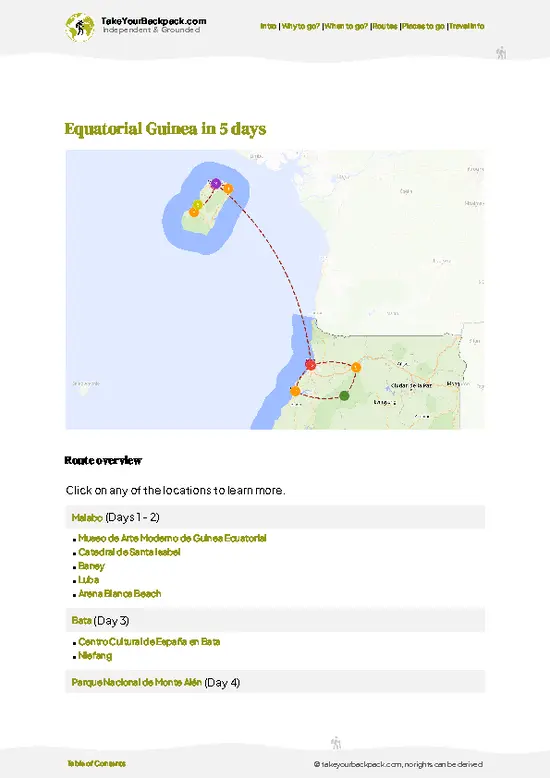
example page 0 from our offline Travel Guide for Equatorial Guinea
example page 1 from our offline Travel Guide for Equatorial Guinea
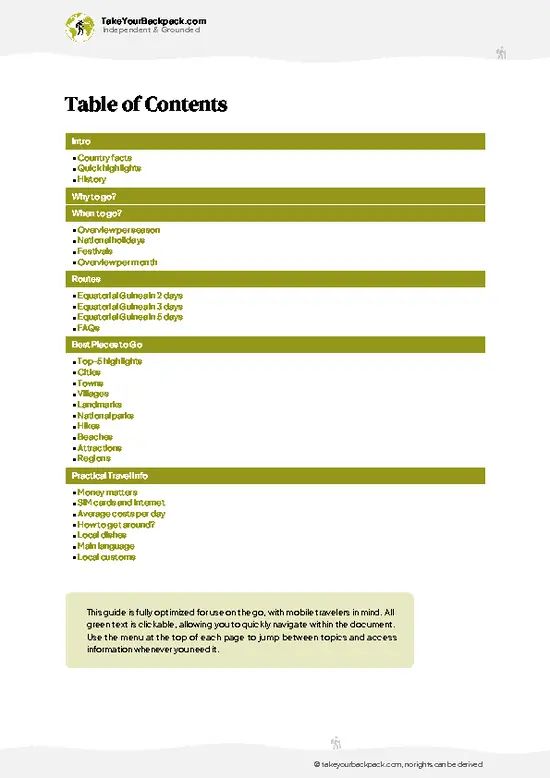
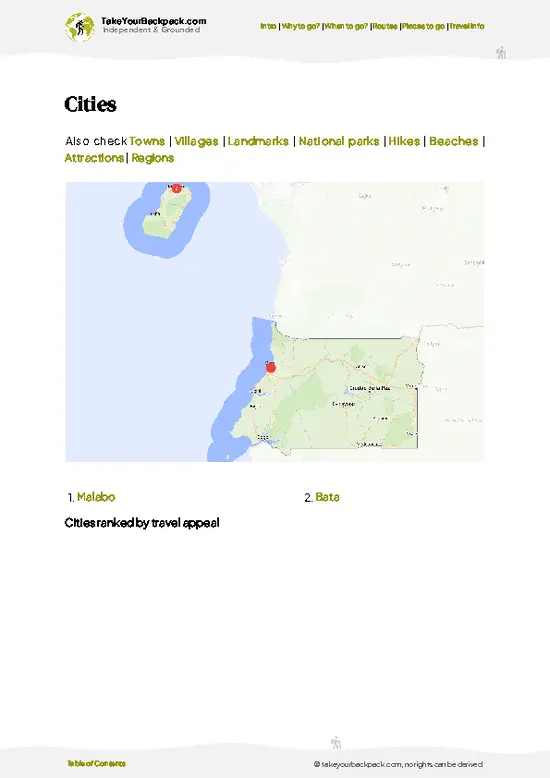
example page 2 from our offline Travel Guide for Equatorial Guinea
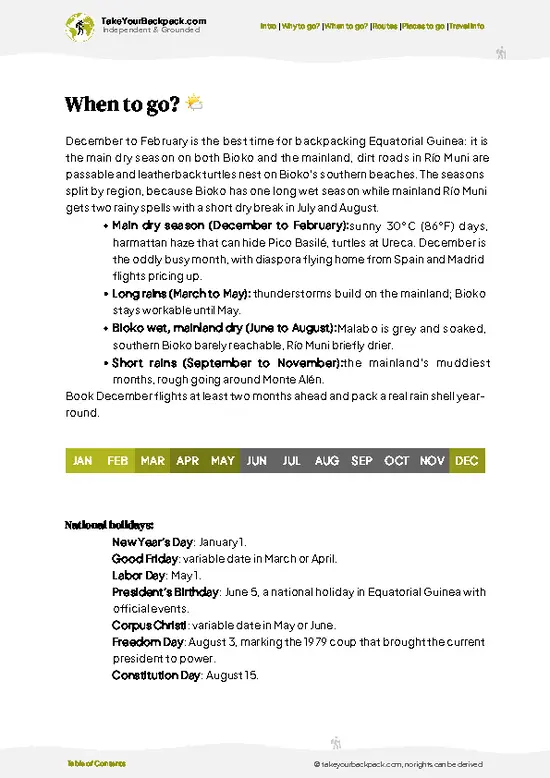
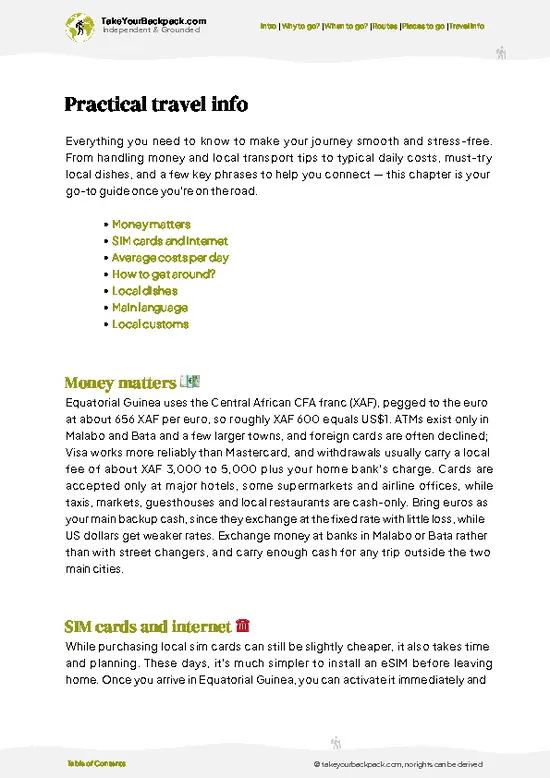
example page 3 from our offline Travel Guide for Equatorial Guinea
example page 4 from our offline Travel Guide for Equatorial Guinea
example page 5 from our offline Travel Guide for Equatorial Guinea
example page 6 from our offline Travel Guide for Equatorial Guinea
example page 7 from our offline Travel Guide for Equatorial Guinea
Loading the map 🌍
CLICK TO FILTER
cities
towns
villages
landmarks
national parks
hikes
beaches
attractions
regions
SHOW COUNTRY’S BESTSHOW ALL

✨ Why go?
Ranked #3 attraction in Equatorial Guinea
What sets this place apart

Moka Wildlife Center gives you something rare in Equatorial Guinea: a place where you can see Bioko’s primates up close without hiring a trekking team and sleeping in the forest. The island holds species found nowhere else on the mainland, and the center’s purpose is to care for animals taken from the bushmeat trade, which tells you something real about the pressures on the island’s forests. That context turns a short visit into something with substance.

The second reason is the setting. The Moka highlands sit well above the coast, so the cooler air and cloud forest make a sharp contrast with Malabo’s heat. Even the road up changes the landscape, from coastal plantations to steeper, greener hillsides.

It also fits neatly into a Bioko loop. If you are already traveling the south of the island, … read more 👉
Moka Wildlife Center gives you something rare in Equatorial Guinea: a place where you can see Bioko’s primates up close without hiring a trekking team and sleeping in the forest. The island holds species found nowhere else on the mainland, and the center’s purpose is to care for animals taken from the bushmeat trade, which tells you something real about the pressures on the island’s forests. That context turns a short visit into something with substance.

The second reason is the setting. The Moka highlands sit well above the coast, so the cooler air and cloud forest make a sharp contrast with Malabo’s heat. Even the road up changes the landscape, from coastal plantations to steeper, greener hillsides.

It also fits neatly into a Bioko loop. If you are already traveling the south of the island, Moka makes a natural stop alongside the crater lake of Lago Loreto, which is close by. Those who skip it lose very little in sightseeing terms, but those who go gain a rare close look at the island’s wildlife and its conservation story.

💡 HighlightsMust-see experiences and standout moments

  1. The primate enclosures: The core of the visit. Rescued monkeys live in forest-edge enclosures, and you see how different species behave, from restless climbers to animals that simply sit and watch you back.
  2. Drills: These large, heavily built monkeys with dark faces are among the most recognized primates of the Bioko and Gulf of Guinea region. They are endangered, and seeing one close up explains why conservationists care so much about them.
  3. Colobus monkeys: Bioko’s forests hold colobus species, and these slender, long-tailed animals are easy to pick out by their coats and the way they leap through branches.
  4. The forest edge around the center: The surrounding trees hold wild birdsong and insect noise, and the mist often hangs low enough to change the light between one hour and the next. Walk slowly
… read more 👉
  1. The primate enclosures: The core of the visit. Rescued monkeys live in forest-edge enclosures, and you see how different species behave, from restless climbers to animals that simply sit and watch you back.
  2. Drills: These large, heavily built monkeys with dark faces are among the most recognized primates of the Bioko and Gulf of Guinea region. They are endangered, and seeing one close up explains why conservationists care so much about them.
  3. Colobus monkeys: Bioko’s forests hold colobus species, and these slender, long-tailed animals are easy to pick out by their coats and the way they leap through branches.
  4. The forest edge around the center: The surrounding trees hold wild birdsong and insect noise, and the mist often hangs low enough to change the light between one hour and the next. Walk slowly and listen.
  5. The highland air of Moka: The temperature drop is part of the experience. The village area is cooler and wetter than the coast, so it is a good place to be outdoors without constant sweating.
  6. Lago Loreto: A crater lake in the same highland area, with still water, forest on its banks and almost no development. It makes a quiet add-on to the wildlife visit.
Start with the primate enclosures, because the animals are most active early in the day and the cooler morning air makes the rest of the visit easier.
Spotted a mistake or missing something? Contact us.

🌤️ When to go?Seasonal considerations and timing

The dry months of December to February are the easiest window for Moka Wildlife Center, when the road up to Moka is least muddy and forest trails stay walkable.
  • Dry Season (December to February): Days run roughly 24 to 28°C (75 to 82°F) at this highland spot, and the cooler air up on Bioko’s southern slopes makes hiking pleasant. Trails are firmest, and mist often lifts by late morning.
  • Short Dry Spell (June to August): Rain eases a little but cloud sits low, so viewpoints can be blank. Temperatures hover near 20 to 25°C (68 to 77°F).
  • Wet Season (March to May, September to November): Heavy downpours, slick clay paths and leeches are common. Expect 20 to 26°C (68 to 79°F), and nights that feel chilly at altitude.
  • Crowds and Prices: Visitor numbers stay very low all year. Taxi and guide prices barely
… read more 👉
The dry months of December to February are the easiest window for Moka Wildlife Center, when the road up to Moka is least muddy and forest trails stay walkable.
  • Dry Season (December to February): Days run roughly 24 to 28°C (75 to 82°F) at this highland spot, and the cooler air up on Bioko’s southern slopes makes hiking pleasant. Trails are firmest, and mist often lifts by late morning.
  • Short Dry Spell (June to August): Rain eases a little but cloud sits low, so viewpoints can be blank. Temperatures hover near 20 to 25°C (68 to 77°F).
  • Wet Season (March to May, September to November): Heavy downpours, slick clay paths and leeches are common. Expect 20 to 26°C (68 to 79°F), and nights that feel chilly at altitude.
  • Crowds and Prices: Visitor numbers stay very low all year. Taxi and guide prices barely move, though weekends bring more local day-trippers from Malabo.
  • Daylight: Days stay close to 12 hours in every month.
Arrive early on a weekday morning, when the animals are most active and the cloud has not yet closed in.


source: climatestotravel.comJANJanuary: fair for travelingFEBFebruary: fair for travelingMARMarch: fair for travelingAPRApril: fair for travelingMAYMay: fair for travelingJUNJune: excellent for travelingJULJuly: excellent for travelingAUGAugust: highly recommended for travelingSEPSeptember: highly recommended for travelingOCTOctober: fair for travelingNOVNovember: fair for travelingDECDecember: fair for traveling
when-to-go

✈️ The backpacker research shortcutEquatorial Guinea Travel Guide

An offline-friendly backpacking guide with optimized travel routes, ranked highlights, transport advice, and the best areas to stay.
example page 0 from our offline Travel Guide for Equatorial Guinea
example page 1 from our offline Travel Guide for Equatorial Guinea
example page 2 from our offline Travel Guide for Equatorial Guinea
example page 3 from our offline Travel Guide for Equatorial Guinea
example page 4 from our offline Travel Guide for Equatorial Guinea
example page 5 from our offline Travel Guide for Equatorial Guinea
example page 6 from our offline Travel Guide for Equatorial Guinea
example page 7 from our offline Travel Guide for Equatorial Guinea
The digital guide (174 pages) contains:
✅ 36 highlights, ranked by travel appeal
✅ Optimized 2, 3 & 5-day travel routes
✅ Cities, national parks, landmarks, beaches
✅ How to get around
✅ Offline-friendly for travel without Wi-Fi
👉 Click to see all 30+ guide features

📅 Plan smarter in minutes, not weeks
✅ Month by month travel advice
✅ Festivals & national holidays
✅ Budget expectations

🗺️ Go to the right places, skip the overrated ones
✅ Honest pros & cons of destinations
✅ Top hikes, parks & viewpoints
✅ Lesser-known places most travelers miss
✅ Clear “worth it vs skip it” guidance

🛏️ Travel smoothly without rookie mistakes
✅ Best areas to stay
✅ Transport systems explained simply
✅ Common scams & safety advice
✅ SIM cards, money & practical tips

🌍 Understand the country, not just visit it
✅ Culture & traditions
✅ 52 Essential phrases & customs
✅ Festivals worth planning around
✅ Traveler-friendly historical context
✅ Insights that make places more meaningful

📱 Built for real travel conditions
✅ Fully downloadable PDF
✅ Works completely offline
✅ Optimized for phone use
✅ Useful in remote areas & buses
✅ Everything in one place
Stop searching, start planning
Get instant access to your full guide. 30‑day money-back guarantee.
+ Add another guide for just

By proceeding you agree to our terms.
Sent to your inbox immediately after payment • 100% Secure Checkout
Best Backpacking Travel Advisor 2025 tourism awardBest Backpacking
Travel Advisor
2025
What others say about Take Your Backpack Guides:
⭐⭐⭐⭐⭐
Fantastic, amazing amount of information!
⭐⭐⭐⭐⭐
My goodness this is amazing, it's what I've been looking for hats off too you!
⭐⭐⭐⭐⭐
I think this is absolutely BRILLIANT
⭐⭐⭐⭐
Very complete and informative. It's still missing places, but I gotta to commend you
⭐⭐⭐⭐⭐
This is truly amazing, thank you, can't wait to explore it with my kids!
⭐⭐⭐⭐⭐
Awesome resource, thank you!
⭐⭐⭐⭐⭐
This is amazing! Can't wait to explore the ones I haven't seen
⭐⭐⭐⭐
I love this! Well done, great idea.
⭐⭐⭐⭐⭐
Thanks for taking the time to make this gem!
⭐⭐⭐⭐⭐
This might be the best website I've ever seen.
⭐⭐⭐⭐⭐
Congratulations, and thank you so much for your work; it's incredibly valuable.
⭐⭐⭐⭐
In all seriousness I think you did a great job pointing out the important spots
⭐⭐⭐⭐⭐
10/10 very good
⭐⭐⭐⭐⭐
As someone who's only just starting to visit regularly this is awesome, thank you.
⭐⭐⭐⭐
Thank you very much! I'm going to visit my dad, it's going to be very useful!
⭐⭐⭐⭐⭐
This is really cool! We'll be travelling for the first time and this definitely come in handy.
⭐⭐⭐⭐⭐
You are now our minister of culture, congratulations 👨‍💼
⭐⭐⭐⭐⭐
Just wanted to tell you that this is a pearl! Going to follow your recommendations.
⭐⭐⭐⭐⭐
This is so cool. I'll definitely be using the resource for my travels soon.
⭐⭐⭐⭐⭐
This is very impressive! Good work.
⭐⭐⭐⭐⭐
This is an amazing and informative site. Very well done!

🛏️ Where to stay?Choosing the right base

Malabo is the practical base for Moka Wildlife Center, since the center sits in the highlands of Bioko island and has no real backpacker accommodation of its own nearby.
Within Malabo, the central streets around the cathedral and the old Spanish colonial core are the best bet. You are within walking distance of cafes, small restaurants, money changers and the places where shared taxis gather, which matters when you need to arrange an early ride out. Evenings here feel safer than in the outer districts, with people on the street and some lighting.
The waterfront and Paseo Marítimo area is another … read more 👉
Malabo is the practical base for Moka Wildlife Center, since the center sits in the highlands of Bioko island and has no real backpacker accommodation of its own nearby.
Within Malabo, the central streets around the cathedral and the old Spanish colonial core are the best bet. You are within walking distance of cafes, small restaurants, money changers and the places where shared taxis gather, which matters when you need to arrange an early ride out. Evenings here feel safer than in the outer districts, with people on the street and some lighting.
The waterfront and Paseo Marítimo area is another sensible choice. It is a little calmer and easier to find a taxi from, and you will meet the small crowd of oil workers, aid staff and the occasional independent traveler who pass through. Equatorial Guinea has few true hostels, so expect guesthouses and mid-range hotels, and a social scene that forms mostly at restaurants and bars rather than dorm common rooms.
Avoid arranging a bed in the hills unless you have your own transport and a confirmed booking. Getting back down after dark is difficult, and options are scarce. Book ahead, carry your passport copies, and ask your host to call a trusted driver.

👛 Costs (as of 22 October 2026)Money, prices, and spending tips

A day at Moka Wildlife Center costs roughly €60 to 115 for a backpacker, with most of that going on accommodation in Malabo and a private taxi up the mountain.
CategoryBudget RangeLocal Reality
Entrance€0 to 8Fees are small and sometimes handled informally on arrival. Pay in cash.
Guide or ranger help€0 to 10A tip is customary if staff walk you around the enclosures.
Accommodation (high season)€35 to 70Cheap beds are scarce in Malabo, so most travelers take a simple guesthouse or a mid-range hotel.
Transport€15 to 35A hired taxi from Malabo with waiting time is the usual choice. Fares are negotiated up front.
Food and drink€8 to 20Local restaurants and street grills cost less. Bring water and snacks, as little is sold at the site.
Total Daily Budget€60 to 115Cash is the safest way to pay for almost
… read more 👉
A day at Moka Wildlife Center costs roughly €60 to 115 for a backpacker, with most of that going on accommodation in Malabo and a private taxi up the mountain.
CategoryBudget RangeLocal Reality
Entrance€0 to 8Fees are small and sometimes handled informally on arrival. Pay in cash.
Guide or ranger help€0 to 10A tip is customary if staff walk you around the enclosures.
Accommodation (high season)€35 to 70Cheap beds are scarce in Malabo, so most travelers take a simple guesthouse or a mid-range hotel.
Transport€15 to 35A hired taxi from Malabo with waiting time is the usual choice. Fares are negotiated up front.
Food and drink€8 to 20Local restaurants and street grills cost less. Bring water and snacks, as little is sold at the site.
Total Daily Budget€60 to 115Cash is the safest way to pay for almost everything, and prices are higher than in neighboring countries.
⚠️ Prices can change and everyone travels differently, so take this as a rough guide. Hope it helps you plan your adventure!

🛡️ SafetyScams, Hazards, and Annoyances

Moka Wildlife Center offers a thrilling yet manageable hike through Equatorial Guinea’s lush terrain. Expect humidity and sudden rain; the weather can shift quickly, so pack a lightweight poncho. The trails are well-marked but can be steep and muddy, especially after a downpour. Good grip on your boots is essential; leave the flip-flops behind.

Wildlife encounters are part of the experience. Monkeys swing overhead, and colorful birds flit by. Keep your distance and don’t feed them; respect their space.

Timing is key. Early mornings are cooler and more active for wildlife. Aim to start your hike before the sun hits its peak.

Stay hydrated and pace yourself. The trail can be demanding, but the payoff—a breathtaking view from the lookout point—is worth every step. Afterward, reward yourself … read more 👉
Moka Wildlife Center offers a thrilling yet manageable hike through Equatorial Guinea’s lush terrain. Expect humidity and sudden rain; the weather can shift quickly, so pack a lightweight poncho. The trails are well-marked but can be steep and muddy, especially after a downpour. Good grip on your boots is essential; leave the flip-flops behind.

Wildlife encounters are part of the experience. Monkeys swing overhead, and colorful birds flit by. Keep your distance and don’t feed them; respect their space.

Timing is key. Early mornings are cooler and more active for wildlife. Aim to start your hike before the sun hits its peak.

Stay hydrated and pace yourself. The trail can be demanding, but the payoff—a breathtaking view from the lookout point—is worth every step. Afterward, reward yourself with a cold drink at the center. It’s a satisfying end to a day well spent in nature.

FAQCommon questions from travelers

Half a day is enough for Moka Wildlife Center, usually 2 to 4 hours on site. The drive up from Malabo takes roughly 1.5 to 2 hours each way depending on road conditions, so a full day with the return trip is realistic. Starting by 8 a.m. gives you the best chance of seeing active animals before cloud rolls in.
Moka Wildlife Center is worth a small fee if you want to see Bioko’s primates and other native wildlife up close, since wild sightings in the forest are rare. Costs are low, roughly €0 to 8 for entry, plus a tip for any guide. The cooler highland air and the nearby Moka village and crater lake area make the trip more rewarding than a short city stay.
From Malabo, hire a taxi or private driver for the roughly 1.5 to 2 hour journey south to Moka Wildlife Center, as there is no regular public transport to the site. A round trip with waiting time typically costs €15 to 35, negotiated before you leave. Travel in the dry months of December to February, when the mountain road is in its best shape.
⚠️ Things can change over time, so always validate details locally before you go.

Other Equatoguinean attractions near Moka Wildlife Center

Explore more nearby:


💡 Not sure where to go next?
Create a personalized itinerary for Equatorial Guinea including Moka Wildlife Center and the places that fit your trip.

Generate my itinerary

👉 Discover all attractions

Or checkout all Equatorial Guinea has to offer (think cities, towns, villages, national parks, hikes, beaches, festivals)
Country photo of Equatorial Guinea

We 💚 feedbackFinal thoughts on visiting Moka Wildlife Center

Moka Wildlife Center needs about half a day, and a full day only if you add the crater lake and a slow drive through the highlands. I would arrive in the morning, bring a light rain jacket because the mist closes in fast, and arrange your driver ahead of time so you are not stuck waiting on the road.

✍️ Help improve this page!
The information on this page is based on in-depth research, insights shared by experienced travelers, and feedback from the local travel community in Equatorial Guinea. While every effort is made to keep the information accurate and current, conditions can change — so if you spot anything incorrect or outdated, please get in touch.


🙋‍♂️ Give feedback

👋 Meet the founderWho’s Behind Take Your Backpack?

Johan, backpacker and founder of TakeYourBackpackHi, I’m Johan (Netherlands 🇳🇱), the creator of TakeYourBackpack. Over the past 3 decades, I’ve backpacked through 90+ countries across six continents, gaining extensive experience with independent travel, long-term trips, and overland routes.

This site is built on a combination of firsthand travel experience and carefully curated insights from other backpackers. Many guides are based on places I’ve personally visited, while others bring together tips, observations, and practical advice shared by trusted travelers I’ve met along the way.

The goal is to provide realistic, experience-driven guidance — not generic itineraries — so you can explore destinations with better context, clearer expectations, and more confidence.