
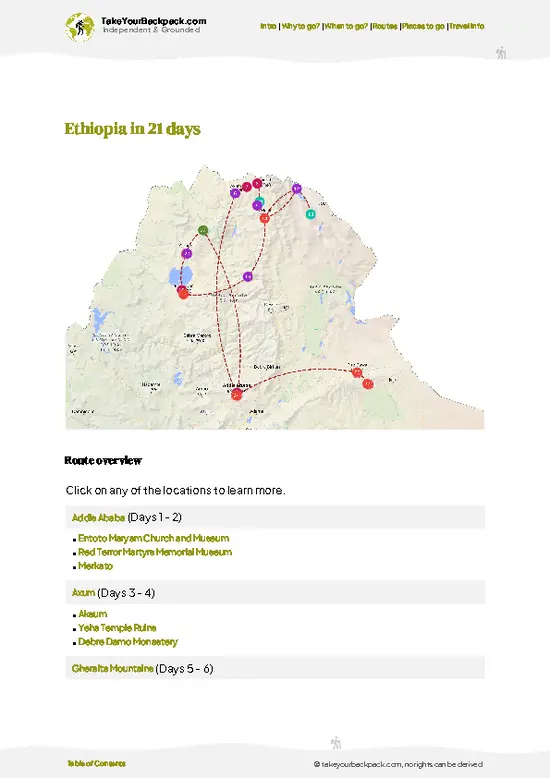
- Fasilides’ Castle: The compound’s founding building, finished in the 1630s. Its four round corner towers, crenellated roofline and tall arched windows are the image everyone searches for. Climb the outside stairs to the roof terrace for a view over the whole enclosure.
- Iyasu’s Palace: Built by Fasilides’ grandson Iyasu the Great, it was once decorated with ivory, gold leaf and mirrors, and the carved doorways still hint at it. Even in ruin it is one of the most imposing structures in the compound.
- Dawit’s Hall: The large banquet and music hall, with a raised stone platform. Guides say it was used for feasts and entertainments, and its scale gives a sense of how court life worked.
- Empress Mentewab’s Castle: A later, more intimate building from the mid 1700s with two floors and a cluster of small
- Fasilides’ Castle: The compound’s founding building, finished in the 1630s. Its four round corner towers, crenellated roofline and tall arched windows are the image everyone searches for. Climb the outside stairs to the roof terrace for a view over the whole enclosure.
- Iyasu’s Palace: Built by Fasilides’ grandson Iyasu the Great, it was once decorated with ivory, gold leaf and mirrors, and the carved doorways still hint at it. Even in ruin it is one of the most imposing structures in the compound.
- Dawit’s Hall: The large banquet and music hall, with a raised stone platform. Guides say it was used for feasts and entertainments, and its scale gives a sense of how court life worked.
- Empress Mentewab’s Castle: A later, more intimate building from the mid 1700s with two floors and a cluster of small towers. Mentewab was a powerful regent, and her castle shows the shift from the early emperors’ style toward something more domestic.
- Bakaffa’s Palace and Chancellery: Remains of the buildings where Emperor Bakaffa and his officials ran the state. The thick walls and sunken rooms show how administration was housed inside the same walls as the throne.
- The Lions’ House: A low enclosure where the emperors kept live lions, a nod to the Lion of Judah emblem. It is small, but the idea behind it makes it memorable.
- The Enclosure Walls and Gates: The wall stretches for roughly 900 meters and encloses about seven hectares. Walk the perimeter path to see the original towers and gateways up close, and to appreciate how the whole compound was built as a defensive city within a city.
Spotted a mistake or missing something? Contact us.

6 Days tour Package (Simien Mountains, Lalibela, and Danakil Depression)

4 Days Trekking to Simien Mountain National Park

Gondar city Tour With Airport & Hotel Pick Up

2 Days Simien Mountains Trekking

Day trek to Simien Mountain

2 Nights 3 Days Trek to Semien Mountain

Simien Mountains National Park – 7 Day Trek

Simien Mountains Ultimate 3 Day Tour

Day Trip Simien Mountains National Park


 Best Backpacking
 Hi, I’m Johan (Netherlands 🇳🇱), the creator of TakeYourBackpack. Over the past 3 decades, I’ve backpacked through 90+ countries across six continents, gaining extensive experience with independent travel, long-term trips, and overland routes.