×

Ethiopia🇪🇹 | townsGobaBale Mountains base, alpine climate, trekking access | things to do and best time to go

Explore BongaExplore Yabelo

Backpacking in Goba
🌟 Highlighttown ranked #4
By Johan Kruseman 🇳🇱 | Updated September 23, 2026

The first real fork in the road for anyone eyeing Goba is this: do you treat it as a destination or a launchpad? That choice shapes your whole trip. Goba sits high in Ethiopia’s Bale Zone, a day’s journey southeast from Addis Ababa, where the air thins and the eucalyptus tang lingers after rain. The town itself is no postcard—think utilitarian blocks, a handful of lively markets, and the slow churn of daily life. But here’s the logic: Goba isn’t about urban thrills; it’s the practical, slightly scruffy gateway to Bale Mountains National Park, where wolves prowl and giant lobelias spike the moorlands. You’ll find a few basic guesthouses and the odd café with strong buna, but don’t expect a backpacker circus—nights are quiet, and meeting fellow travelers is more luck than certainty. Buses from Shashamene or Robe get you here, but local minivans rule the roads. Compared to Robe, Goba feels more lived-in, less polished, and closer to the park’s wild heart. Costs are low, safety is solid, but the real reward is earned: the sense of arrival, the cold mountain air, and the promise of adventure just beyond the edge of town.

Discover everything you want to know in the 📖 Ethiopia Travel Guide.
Safety warning

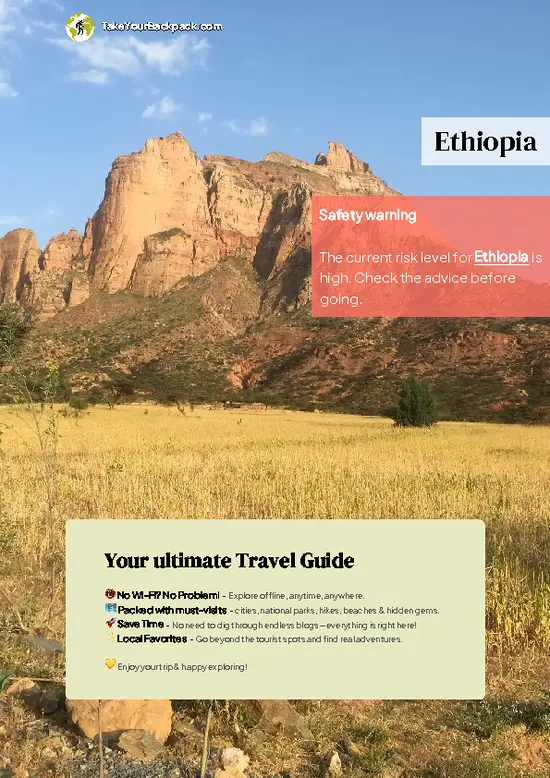
The current risk level for Ethiopia is high. Check the advice before going.


Get your Ethiopia guide
100 ranked highlights, routes & tips, works offline (387 pages)
Loading the map 🌍
CLICK TO FILTER
cities
towns
landmarks
national parks
hikes
attractions
festivals
regions
SHOW COUNTRY’S BESTSHOW ALL

✨ Why go?
Ranked #4 town in Ethiopia
The unique appeal for travelers

Goba serves as a gateway for backpackers eager to explore Ethiopia’s stunning landscapes and rich culture. Nestled between the Simiens and Bale Mountains, it’s a convenient base for those looking to tackle nearby hikes or delve into the unique flora and fauna of the region. The town’s walkable streets are lined with small-scale guesthouses and hostels, offering a cozy atmosphere where you can swap stories with fellow travelers over a plate of injera or a steaming cup of coffee.

While many pass through, a few linger for a couple of days, soaking in the local vibe. Goba is perfect for slow travelers and solo adventurers who appreciate a friendly, low-key environment. You won’t find a bustling nightlife here, but the social atmosphere is warm, making it easy to connect with others. If you’re … read more 👉
Goba serves as a gateway for backpackers eager to explore Ethiopia’s stunning landscapes and rich culture. Nestled between the Simiens and Bale Mountains, it’s a convenient base for those looking to tackle nearby hikes or delve into the unique flora and fauna of the region. The town’s walkable streets are lined with small-scale guesthouses and hostels, offering a cozy atmosphere where you can swap stories with fellow travelers over a plate of injera or a steaming cup of coffee.

While many pass through, a few linger for a couple of days, soaking in the local vibe. Goba is perfect for slow travelers and solo adventurers who appreciate a friendly, low-key environment. You won’t find a bustling nightlife here, but the social atmosphere is warm, making it easy to connect with others. If you’re looking for a place to recharge before your next adventure, Goba is a solid choice—just don’t rush through it.
Want to include Goba in your Ethiopia route?
Create a personalized Ethiopia itinerary that includes Goba and the places that fit your trip — based on your travel style, budget, and available time. Get your route in seconds.

Generate my trip

💡 HighlightsDon't-miss highlights and experiences

  1. Goba Central Market — The real heartbeat of town: a bustling open-air market where you can watch and join in local trade for coffee, vegetables, butter, hides and livestock, and catch authentic Oromo street life and bargaining in action.
  2. Goba Transport Hub / Bus Station — The practical hub where long-distance buses and shared minibuses arrive and depart; watching arrivals and departures gives a direct sense of regional connections and local rhythms, and it’s where you book affordable onward travel and meet traders and guides.
  3. Goba Regional Airstrip — The small regional airport that serves the town and the Bale Zone; it’s worth visiting as the entry point for airborne arrivals, with views of the surrounding highlands and a reminder of how remote highland travel links into national routes.
… read more 👉
  1. Goba Central Market — The real heartbeat of town: a bustling open-air market where you can watch and join in local trade for coffee, vegetables, butter, hides and livestock, and catch authentic Oromo street life and bargaining in action.
  2. Goba Transport Hub / Bus Station — The practical hub where long-distance buses and shared minibuses arrive and depart; watching arrivals and departures gives a direct sense of regional connections and local rhythms, and it’s where you book affordable onward travel and meet traders and guides.
  3. Goba Regional Airstrip — The small regional airport that serves the town and the Bale Zone; it’s worth visiting as the entry point for airborne arrivals, with views of the surrounding highlands and a reminder of how remote highland travel links into national routes.
  4. Cafés and Local Coffee-Ceremony Spots — Simple cafés and family homes in Goba offer full Ethiopian coffee ceremonies; the ritual, the roasting aroma, and the conversation are a culturally rich, visitable experience that tells you more about daily life than any museum.
A few real, visitable highlights just outside Goba for easy day trips: Bale Mountains National Park (Dinsho and the giant lobelia plains), Tullu Dimtu summit, and the Sof Omar Caves — my personal favorite for a day trip is Dinsho in Bale Mountains National Park.
Spotted a mistake or missing something? Contact us.
🏘️ NeighborhoodsNeighborhood guide to Goba

Goba, a vibrant town in Ethiopia, offers a unique blend of culture and accessibility for backpackers. Here’s how to navigate its neighborhoods for the best experience.

Downtown Goba
This is the heartbeat of the town. Bustling markets and local eateries fill the streets with the aroma of spices and freshly baked injera. It’s walkable, making it easy to explore on foot. Costs here are low, perfect for budget travelers. Nightlife is modest but lively, with a few bars where you can sip local tej. Ideal for short stays, you’ll find everything you need within a few blocks.

Goba Hills
For those seeking tranquility, Goba Hills offers a peaceful retreat. The air is fresher, and the views are stunning. Accommodations here are slightly pricier but worth it for the serene atmosphere. It’s less walkable, … read more 👉
Goba, a vibrant town in Ethiopia, offers a unique blend of culture and accessibility for backpackers. Here’s how to navigate its neighborhoods for the best experience.

Downtown Goba
This is the heartbeat of the town. Bustling markets and local eateries fill the streets with the aroma of spices and freshly baked injera. It’s walkable, making it easy to explore on foot. Costs here are low, perfect for budget travelers. Nightlife is modest but lively, with a few bars where you can sip local tej. Ideal for short stays, you’ll find everything you need within a few blocks.

Goba Hills
For those seeking tranquility, Goba Hills offers a peaceful retreat. The air is fresher, and the views are stunning. Accommodations here are slightly pricier but worth it for the serene atmosphere. It’s less walkable, so be prepared to use local transport. This area is great for longer stays, especially if you want to hike and immerse yourself in nature.

Old Goba
Rich in history, Old Goba is where you’ll find traditional architecture and local artisans. The vibe is quieter, perfect for reflection. Costs are moderate, and it’s a bit more spread out, so walking can be a challenge. However, it’s a treasure trove for those interested in culture and history, making it suitable for both short and extended visits.

⌛️ 1 dayWhat you can realistically do in a day

Goba, Ethiopia, is a town that dances on the edge of the Bale Mountains, where the air is crisp and the scent of fresh injera wafts through the streets. It’s a place where the vibrant local culture meets stunning landscapes, making it a perfect stop for those seeking authenticity away from the usual tourist trails.

Start your morning at the bustling Goba Market. The sun filters through the awnings, casting playful shadows as vendors call out their wares. Grab a cup of traditional Ethiopian coffee, rich and aromatic, and pair it with some freshly baked bread. The energy here is contagious; locals barter and chat, giving you a real taste of daily life.

After fueling up, take a stroll through the nearby neighborhoods. Head towards the outskirts to visit the lesser-known Goba Forest. This serene … read more 👉
Goba, Ethiopia, is a town that dances on the edge of the Bale Mountains, where the air is crisp and the scent of fresh injera wafts through the streets. It’s a place where the vibrant local culture meets stunning landscapes, making it a perfect stop for those seeking authenticity away from the usual tourist trails.

Start your morning at the bustling Goba Market. The sun filters through the awnings, casting playful shadows as vendors call out their wares. Grab a cup of traditional Ethiopian coffee, rich and aromatic, and pair it with some freshly baked bread. The energy here is contagious; locals barter and chat, giving you a real taste of daily life.

After fueling up, take a stroll through the nearby neighborhoods. Head towards the outskirts to visit the lesser-known Goba Forest. This serene spot is often overlooked by tourists but offers a peaceful escape. The towering trees and chirping birds create a natural symphony, perfect for a reflective walk.

As the afternoon rolls in, make your way to the Bale Mountains National Park entrance. Even if you’re not hiking, the views are breathtaking. The light dances on the peaks, and the air is filled with the earthy scent of pine. If you’re feeling adventurous, consider a short trek to see the endemic wildlife, like the Ethiopian wolf.

As evening approaches, return to town and settle into a local eatery. Try the doro wat, a spicy chicken stew that warms you from the inside out. The atmosphere is lively, with laughter and music filling the air.

Goba may not be on every tourist’s radar, but it’s a place that rewards those who take the time to explore its heart. Each moment spent here feels like a step into a vibrant tapestry of life, making the journey all the more worthwhile.
Turn your Goba visit into an Ethiopia adventure
Build a complete Ethiopia route with Goba, hidden gems, must-see destinations, and realistic travel times included.

Generate my trip

🌤️ When to go?Best time to visit Goba

  • Topic: Weather - Goba sits at a high elevation, so expect cool, crisp air most of the year. The dry season from October to February offers clear skies and minimal rain, making trails less slippery and views sharper. The wet season, June to September, drapes the landscape in lush green but brings persistent drizzle and muddy paths.
  • Topic: Temperature - Daytime highs hover around 20-22°C (68-72°F) in the dry months, perfect for hiking without overheating. Nights can dip to 5-8°C (41-46°F), so pack layers. The rainy season cools things down further, sometimes dropping below 10°C (50°F) even during the day.
  • Topic: Daylight Hours - Near the equator, daylight stays steady year-round, roughly 12 hours. This consistency means you can plan hikes without worrying about early sunsets, but always
… read more 👉
  • Topic: Weather - Goba sits at a high elevation, so expect cool, crisp air most of the year. The dry season from October to February offers clear skies and minimal rain, making trails less slippery and views sharper. The wet season, June to September, drapes the landscape in lush green but brings persistent drizzle and muddy paths.
  • Topic: Temperature - Daytime highs hover around 20-22°C (68-72°F) in the dry months, perfect for hiking without overheating. Nights can dip to 5-8°C (41-46°F), so pack layers. The rainy season cools things down further, sometimes dropping below 10°C (50°F) even during the day.
  • Topic: Daylight Hours - Near the equator, daylight stays steady year-round, roughly 12 hours. This consistency means you can plan hikes without worrying about early sunsets, but always start early to maximize daylight on the trails.
  • Topic: Crowds - Goba is off the beaten path, so crowds are light year-round. However, the dry season draws a few more local trekkers and weekend visitors, especially around holidays, so expect a livelier atmosphere then.
  • Topic: Seasonal Activities - The dry months are prime for trekking the Bale Mountains and spotting endemic wildlife like the Ethiopian wolf. The wet season transforms the area into a wildflower spectacle but limits access to some trails due to mud and slippery rocks.
  • Topic: Price Fluctuations - Accommodation and guides tend to be pricier during the dry season when demand peaks. The wet season offers better deals but at the cost of more challenging conditions and fewer service options.
Pro-tip: Aim for late October or early November—after the rains but before the dry season crowds and price hikes hit. You’ll catch the landscape still fresh and green, with manageable trails and a quiet vibe that feels like you’ve discovered a secret.


source: climatestotravel.comJANJanuary: excellent for travelingFEBFebruary: excellent for travelingMARMarch: good for travelingAPRApril: good for travelingMAYMay: good for travelingJUNJune: fair for travelingJULJuly: fair for travelingAUGAugust: fair for travelingSEPSeptember: fair for travelingOCTOctober: highly recommended for travelingNOVNovember: highly recommended for travelingDECDecember: excellent for traveling
ethiopia-city-goba
© Google |

✈️ The backpacker research shortcutEthiopia Travel Guide

An offline-friendly backpacking guide with optimized travel routes, ranked highlights, transport advice, and the best areas to stay.
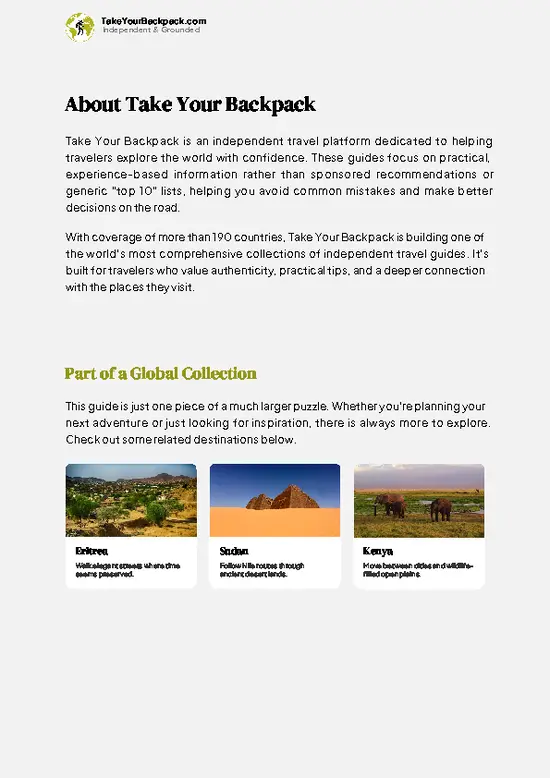
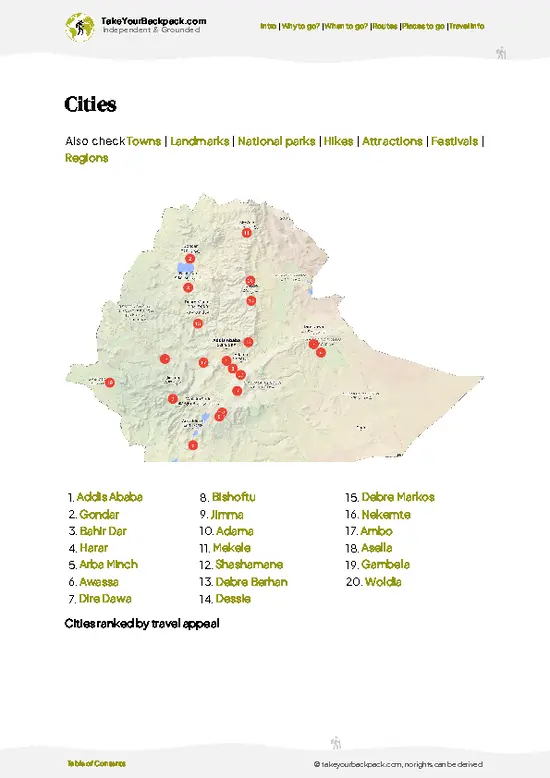
example page 0 from our offline Travel Guide for Ethiopia
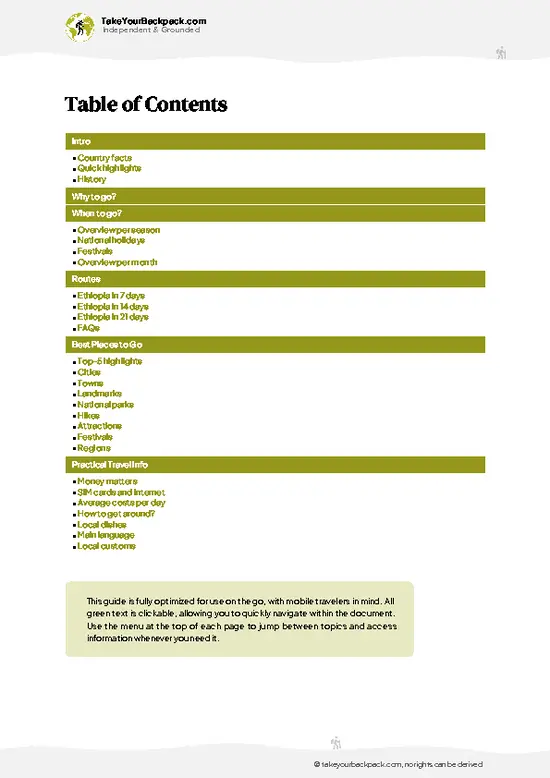
example page 1 from our offline Travel Guide for Ethiopia
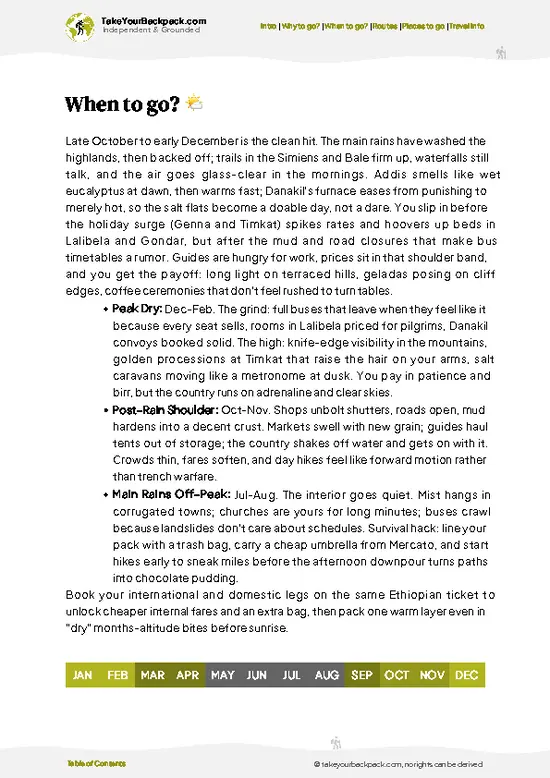
example page 2 from our offline Travel Guide for Ethiopia
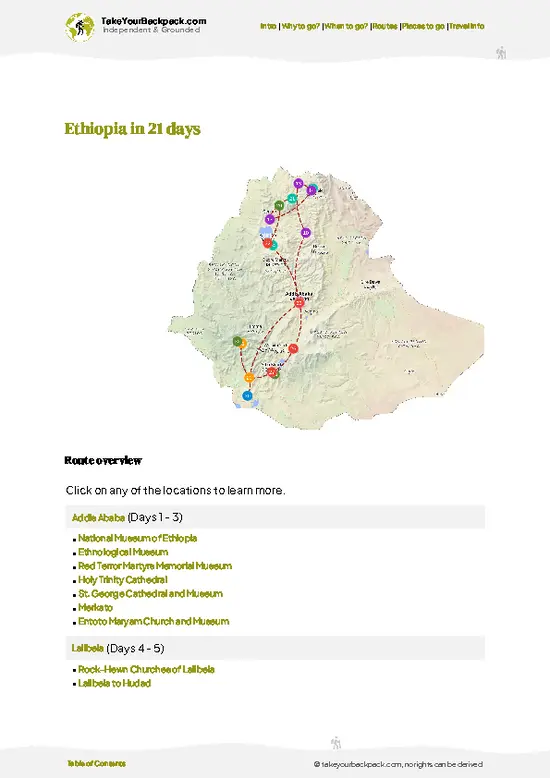
example page 3 from our offline Travel Guide for Ethiopia
example page 4 from our offline Travel Guide for Ethiopia
example page 5 from our offline Travel Guide for Ethiopia
example page 6 from our offline Travel Guide for Ethiopia
example page 7 from our offline Travel Guide for Ethiopia
The digital guide (387 pages) contains:
✅ 100 highlights, ranked by travel appeal
✅ Optimized 7, 14 & 21-day travel routes
✅ Cities, national parks, landmarks, beaches
✅ How to get around
✅ Offline-friendly for travel without Wi-Fi
👉 Click to see all 30+ guide features

📅 Plan smarter in minutes, not weeks
✅ Month by month travel advice
✅ Festivals & national holidays
✅ Budget expectations

🗺️ Go to the right places, skip the overrated ones
✅ Honest pros & cons of destinations
✅ Top hikes, parks & viewpoints
✅ Lesser-known places most travelers miss
✅ Clear “worth it vs skip it” guidance

🛏️ Travel smoothly without rookie mistakes
✅ Best areas to stay
✅ Transport systems explained simply
✅ Common scams & safety advice
✅ SIM cards, money & practical tips

🌍 Understand the country, not just visit it
✅ Culture & traditions
✅ 52 Essential phrases & customs
✅ Festivals worth planning around
✅ Traveler-friendly historical context
✅ Insights that make places more meaningful

📱 Built for real travel conditions
✅ Fully downloadable PDF
✅ Works completely offline
✅ Optimized for phone use
✅ Useful in remote areas & buses
✅ Everything in one place
Save weeks of stressful planning
Get instant access to your full guide. 30‑day money-back guarantee.
+ Add another guide for just

By proceeding you agree to our terms.
Sent to your inbox immediately after payment • 100% Secure Checkout
Best Backpacking Travel Advisor 2025 tourism awardBest Backpacking
Travel Advisor
2025
What others say about Take Your Backpack Guides:
⭐⭐⭐⭐⭐
Fantastic, amazing amount of information!
⭐⭐⭐⭐⭐
My goodness this is amazing, it's what I've been looking for hats off too you!
⭐⭐⭐⭐⭐
I think this is absolutely BRILLIANT
⭐⭐⭐⭐
Very complete and informative. It's still missing places, but I gotta to commend you
⭐⭐⭐⭐⭐
This is truly amazing, thank you, can't wait to explore it with my kids!
⭐⭐⭐⭐⭐
Awesome resource, thank you!
⭐⭐⭐⭐⭐
This is amazing! Can't wait to explore the ones I haven't seen
⭐⭐⭐⭐
I love this! Well done, great idea.
⭐⭐⭐⭐⭐
Thanks for taking the time to make this gem!
⭐⭐⭐⭐⭐
This might be the best website I've ever seen.
⭐⭐⭐⭐⭐
Congratulations, and thank you so much for your work; it's incredibly valuable.
⭐⭐⭐⭐
In all seriousness I think you did a great job pointing out the important spots
⭐⭐⭐⭐⭐
10/10 very good
⭐⭐⭐⭐⭐
As someone who's only just starting to visit regularly this is awesome, thank you.
⭐⭐⭐⭐
Thank you very much! I'm going to visit my dad, it's going to be very useful!
⭐⭐⭐⭐⭐
This is really cool! We'll be travelling for the first time and this definitely come in handy.
⭐⭐⭐⭐⭐
You are now our minister of culture, congratulations 👨‍💼
⭐⭐⭐⭐⭐
Just wanted to tell you that this is a pearl! Going to follow your recommendations.
⭐⭐⭐⭐⭐
This is so cool. I'll definitely be using the resource for my travels soon.
⭐⭐⭐⭐⭐
This is very impressive! Good work.
⭐⭐⭐⭐⭐
This is an amazing and informative site. Very well done!

🛏️ Where to stay?Where staying makes the most sense

In Goba, the heart of backpacker life pulses strongest around the town center, where the streets hum with a steady flow of locals and travelers alike. This area is your best bet for safety and social energy. The light here shifts gently in the late afternoon, casting long shadows from the eucalyptus trees lining the roads, and the air carries a faint mix of fresh earth and brewing coffee from nearby cafés. Staying here means you’re never far from the pulse of daily life—markets, small eateries, and the occasional street musician weaving rhythms into the breeze.

Compared to the quieter, more residential … read more 👉
In Goba, the heart of backpacker life pulses strongest around the town center, where the streets hum with a steady flow of locals and travelers alike. This area is your best bet for safety and social energy. The light here shifts gently in the late afternoon, casting long shadows from the eucalyptus trees lining the roads, and the air carries a faint mix of fresh earth and brewing coffee from nearby cafés. Staying here means you’re never far from the pulse of daily life—markets, small eateries, and the occasional street musician weaving rhythms into the breeze.

Compared to the quieter, more residential outskirts, the center offers a practical advantage: hostels and guesthouses cluster within easy walking distance, creating a natural hub for meeting fellow backpackers. This concentration fosters a low-key, communal vibe where sharing travel stories over a cup of spiced tea feels effortless. Venturing beyond this zone often means sacrificing that social buzz and the convenience of local transport links, which can be sparse and unpredictable.

Choosing the town center isn’t just about convenience; it’s about stepping into a rhythm that makes navigating Goba’s rugged charm feel less like a challenge and more like an invitation. The safety, the social scene, and the sensory backdrop all align here, turning your stay into a genuine, grounded experience.

🚌 Getting aroundHow to get around Goba

Goba moves at its own rhythm—neither frantic nor sluggish, but a steady pulse that matches the dusty roads and the scent of eucalyptus hanging in the air. It’s not a place where you’ll find strict timetables pinned to walls or digital boards flashing departure times. Instead, the town’s flow leans on a blend of local intuition and a loose sense of schedule. Vendors set up stalls when the sun is high, minibuses fill up whenever they’re packed enough, and the occasional motorcycle zips by with a sense of urgency that feels both spontaneous and necessary. You’ll want to tune your senses to this organic tempo: watch the light shift, listen for the calls of drivers, and be ready to move when the moment feels right. This isn’t a place for rigid plans, but for reading the room—and the road.
  • Walking:
… read more 👉
Goba moves at its own rhythm—neither frantic nor sluggish, but a steady pulse that matches the dusty roads and the scent of eucalyptus hanging in the air. It’s not a place where you’ll find strict timetables pinned to walls or digital boards flashing departure times. Instead, the town’s flow leans on a blend of local intuition and a loose sense of schedule. Vendors set up stalls when the sun is high, minibuses fill up whenever they’re packed enough, and the occasional motorcycle zips by with a sense of urgency that feels both spontaneous and necessary. You’ll want to tune your senses to this organic tempo: watch the light shift, listen for the calls of drivers, and be ready to move when the moment feels right. This isn’t a place for rigid plans, but for reading the room—and the road.
  • Walking: The heart of Goba is compact enough to explore on foot, with dirt paths and shaded lanes offering a sensory immersion into daily life. Walking costs nothing, lets you absorb the scent of fresh coffee roasting nearby, and gives you the freedom to pause at roadside markets or chat with locals. It’s slow but richly rewarding.
  • Local Minibuses (Matatus): These are the workhorses of Goba’s transit, running from early morning around 6:30 AM until dusk, roughly 6 PM. They don’t follow strict schedules but leave when full, so expect some waiting. Fares are low—usually under 50 Ethiopian Birr—and the ride is bumpy but fast enough to cover the 10-15 km stretches between neighborhoods. Prepare for a lively atmosphere, with music blaring and passengers chatting loudly.
  • Motorcycle Taxis (Bajaj): If you’re short on time or carrying gear, these three-wheeled motorcycles offer quick, nimble rides through narrow alleys and uneven roads. They operate from dawn to late evening and cost about 100-150 Birr for short trips. The ride can be rough, but it’s the fastest way to dart through traffic or reach spots minibuses don’t serve.
  • Shared Taxis: For longer distances or trips outside Goba, shared taxis offer a middle ground between minibuses and private cars. They leave once full, usually with 3-4 passengers, and cost more—around 200-300 Birr depending on distance. These vehicles are more comfortable and faster on paved roads, but less frequent, so timing your departure requires some patience and local insight.

👛 Costs (as of 23 September 2026)Travel costs and budget guide for Goba

Backpacking in Goba, Ethiopia, offers a raw, authentic experience where every birr spent feels tied to the rhythm of local life. Here’s what you can expect to budget for a day on the trail or wandering the town.
  • Dorm Accommodation: Dorm beds in Goba are basic but clean, often in guesthouses or small hostels. Expect to pay around $5 to $8 per night. The rooms usually have simple bedding and shared bathrooms, which keeps costs low but requires a bit of patience with local water heating and occasional power flickers.
  • Meals: Food here is hearty and straightforward. A typical meal of injera with wot (stew) or tibs (sautéed meat) runs about $1.50 to $3. Street food and small local eateries dominate, so fresh, filling meals won’t break the bank. Breakfasts are often simple—tea and bread or porridge
… read more 👉
Backpacking in Goba, Ethiopia, offers a raw, authentic experience where every birr spent feels tied to the rhythm of local life. Here’s what you can expect to budget for a day on the trail or wandering the town.
  • Dorm Accommodation: Dorm beds in Goba are basic but clean, often in guesthouses or small hostels. Expect to pay around $5 to $8 per night. The rooms usually have simple bedding and shared bathrooms, which keeps costs low but requires a bit of patience with local water heating and occasional power flickers.
  • Meals: Food here is hearty and straightforward. A typical meal of injera with wot (stew) or tibs (sautéed meat) runs about $1.50 to $3. Street food and small local eateries dominate, so fresh, filling meals won’t break the bank. Breakfasts are often simple—tea and bread or porridge for under $1.50.
  • Local Transport: Getting around Goba is mostly on foot or by local minibuses (called “blue donkeys”). A short minibus ride costs around $0.20 to $0.50. For longer trips, like heading to nearby Bale Mountains National Park, expect to pay $5 to $10 for shared transport. The roads can be rough, so travel time is part of the experience.
  • Basic Activities/Entry Fees: The main draw is Bale Mountains National Park. Entry fees hover around $10 to $15. Hiring a local guide, which is highly recommended for safety and insight, adds about $15 to $25 per day. Other local sights, like markets or cultural spots, are often free or cost a small donation ($1 to $3).
  • Miscellaneous Expenses: This covers bottled water, snacks, phone credit, or occasional treats like coffee at a café. Budget around $1 to $3 daily. Keep in mind that bottled water is essential due to limited tap water safety, and it’s best to buy in bulk to save.

All told, a realistic daily budget for backpacking in Goba lands between $20 and $35. This range covers basic comfort without skimping on the essentials that make your stay smooth and immersive. The modest costs reflect the town’s unpolished charm—where the scent of fresh coffee mingles with mountain air and every step feels earned.


source: ethiopia.travel
⚠️ Prices can change and everyone travels differently, so take this as a rough guide. Hope it helps you plan your adventure!

🚌 Day tripsShort trips worth adding

Goba, Ethiopia, is a backpacker’s dream base for exploring the stunning landscapes and rich culture of the region. Here are some day trips that make the effort worthwhile.

1. Bale Mountains National Park
Just a couple of hours from Goba, this park is a treasure trove of biodiversity. Imagine trekking through lush forests, where the air is crisp and filled with the earthy scent of pine. You might spot the elusive Ethiopian wolf or the majestic mountain nyala. The trails vary in difficulty, so whether you’re a seasoned hiker or a casual walker, there’s something for you. Expect to spend around $10 for park entry and transport. The best time to visit is during the dry season, from October to May. A common mistake? Underestimating the weather; pack layers, as temperatures can swing dramatically. … read more 👉
Goba, Ethiopia, is a backpacker’s dream base for exploring the stunning landscapes and rich culture of the region. Here are some day trips that make the effort worthwhile.

1. Bale Mountains National Park
Just a couple of hours from Goba, this park is a treasure trove of biodiversity. Imagine trekking through lush forests, where the air is crisp and filled with the earthy scent of pine. You might spot the elusive Ethiopian wolf or the majestic mountain nyala. The trails vary in difficulty, so whether you’re a seasoned hiker or a casual walker, there’s something for you. Expect to spend around $10 for park entry and transport. The best time to visit is during the dry season, from October to May. A common mistake? Underestimating the weather; pack layers, as temperatures can swing dramatically.


2. Sof Omar Caves
About an hour’s drive from Goba, the Sof Omar Caves offer a surreal experience. As you step into the caves, the cool air envelops you, and the sound of dripping water echoes through the chambers. The intricate rock formations and the river that runs through them create a mystical atmosphere. Entry is around $5, and you can easily spend a few hours exploring. The best time to visit is in the morning when the light filters through the openings, illuminating the caves beautifully. Many first-timers miss the guided tours, which provide fascinating insights into the caves’ history and geology.
👉 Explore Sof Omar Caves

3. Dinsho
Just a short drive from Goba, Dinsho is a charming village that serves as a gateway to the Bale Mountains. The lush green fields and the sound of livestock create a pastoral scene that feels worlds away from the hustle of city life. You can hike the surrounding trails or simply enjoy a local meal at one of the small eateries. Expect to spend around $10 for transport and food. The best time to visit is during the dry season, but avoid weekends when it can get crowded with locals. A common mistake is not engaging with the locals; their stories add depth to your experience.


4. Goba Market
Staying local can be just as rewarding. The Goba Market, bustling with vendors selling spices, textiles, and fresh produce, is a sensory overload in the best way. The vibrant colors and rich aromas create an atmosphere that’s electric. It’s an excellent opportunity to practice your Amharic and connect with the community. The market is open daily, but Fridays are particularly lively. You can explore for free, but bring a few birr for snacks or small purchases. Many first-timers overlook the cultural significance of the market; take your time to soak it all in.
Want to know what more Ethiopia offers?
The Ethiopia Travel Guide describes 100 highlights, from cities to national parks, from beaches to hikes

Get the Travel Guide -

🛡️ SafetyStaying Safe: What Travelers Should Know

Goba, Ethiopia, is generally safe, but a few practical tips can enhance your experience. Stay aware in crowded markets, where pickpockets might lurk. Keep your valuables close, ideally in a money belt under your clothes.

If you’re traveling solo, especially at night, stick to well-lit areas and avoid wandering too far from your accommodation. The streets can feel quiet, so trust your instincts.

Scams are rare, but be cautious of overly friendly locals offering unsolicited help; they might expect a tip. When negotiating prices, whether for a taxi or souvenirs, do so with a smile but be firm.

Overall, Goba invites you to explore its vibrant culture, but a little awareness goes a long way in ensuring a smooth journey. Enjoy the scents of local spices and the warmth of the people, knowing you’re prepared.

FAQCommon questions from travelers

Yes, Goba is worth visiting for its proximity to the Bale Mountains National Park, offering unique trekking and wildlife experiences not found elsewhere in Ethiopia. It serves as a gateway to exploring the park's moorlands, endemic species, and stunning landscapes.
You need at least 2 to 3 days in Goba to fully explore the town and take day trips into Bale Mountains National Park. This allows time for acclimatization, hiking, and wildlife spotting without rushing.
Yes, Goba can be visited as a day trip from Robe, which is about 40 kilometers away. However, a day trip limits time for trekking and wildlife viewing, so overnight stays are recommended for a fuller experience.
⚠️ Things can change over time, so always validate details locally before you go.

Other Ethiopian towns near Goba

Explore more nearby:

  • Ziway—Lake Ziway, island monasteries, fish restaurants| 172 km away
  • Dilla—coffee farms, stelae fields, southern crossroads| 196 km away
  • Hosaena—Apostolic church, Hadiya culture, agricultural center| 242 km away

💡 Not sure where to go next?
Create a personalized itinerary for Ethiopia including Goba and the places that fit your trip.

Generate my itinerary

👉 Discover all towns

Or checkout all Ethiopia has to offer (think cities, towns, villages, national parks, hikes, beaches, festivals)
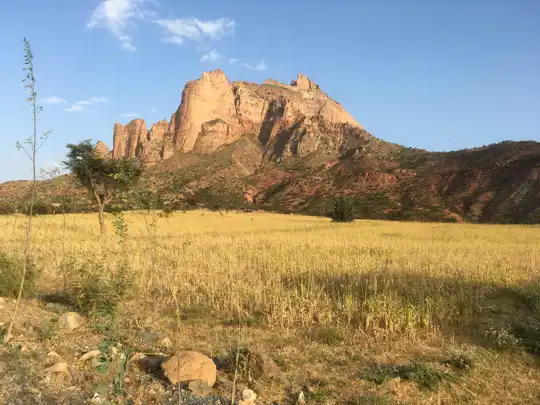
Country photo of Ethiopia

We 💚 feedbackParting advice and final tips

Goba’s charm lies in its vibrant market, where the air is thick with the scent of spices and fresh injera. You’ll find locals eager to share stories, making it a true cultural immersion. But be prepared: the roads can be rough, and getting around isn’t always straightforward. Embrace the bumps; they lead to connections and experiences that make the journey worthwhile. It’s all part of the adventure.

✈️ When did I visit Ethiopia?
Ethiopia I visited back in October 2017. I combined the trip with a visit to Sudan. Ethiopia was a pure surprise with the magical scenery like the Danakil Depression and the Simien Mountains.

✍️ Help improve this page!
The information on this page is based on my own backpacking experience in Ethiopia, supplemented with up-to-date research and feedback from other travelers. Travel details can change, so if you notice anything outdated or incomplete, feel free to let me know.


🙋‍♂️ Give feedback

👋 Meet the founderWho’s Behind Take Your Backpack?

Johan, backpacker and founder of TakeYourBackpackHi, I’m Johan (Netherlands 🇳🇱), the creator of TakeYourBackpack. Over the past 3 decades, I’ve backpacked through 90+ countries across six continents, gaining extensive experience with independent travel, long-term trips, and overland routes.

This site is built on a combination of firsthand travel experience and carefully curated insights from other backpackers. Many guides are based on places I’ve personally visited, while others bring together tips, observations, and practical advice shared by trusted travelers I’ve met along the way.

The goal is to provide realistic, experience-driven guidance — not generic itineraries — so you can explore destinations with better context, clearer expectations, and more confidence.

Get full Ethiopia guide •
Instant download • 100 highlights • Full Offline guide