×

Ethiopia🇪🇹 | townsYabeloStresemann’s bush-crow, Borana lowlands, termite mounds, cattle market | things to do and best time to go

Explore GobaExplore Ziway

Backpacking in Yabelo
🌟 Highlighttown ranked #5
By Johan Kruseman 🇳🇱 | Updated November 2, 2026

Yabelo suits travelers heading for the Borana lowlands who like dusty roadside towns with real working life. If you need sights, nightlife or polished hostels, you will find it thin. The town sits in southern Ethiopia, in the Oromia region, on the main highway between Hawassa and the Kenyan border. Mornings smell of woodsmoke, roasting coffee and cattle dust, and the tin-roofed market hums with Borana traders. When I asked a guesthouse host why my room had no hot water, he laughed and said the boiler waits for the electricity, so bring a bucket and ask for a kettle. That is how things work here: power cuts, so carry a headlamp and charge early. Cash rules, since cards fail, so withdraw in bigger towns. Social life is quiet, with tea houses and a few birders and drivers passing through. Birders and Borana-culture seekers will like it most. Those chasing fast, easy comfort won't.

Part of Backpacking in Ethiopia: all 98 places on one map, with routes and the best time to go.
Discover everything you want to know in the 📖 Ethiopia Travel Guide.
Safety warning

The current risk level for Ethiopia is high. Check the advice before going.


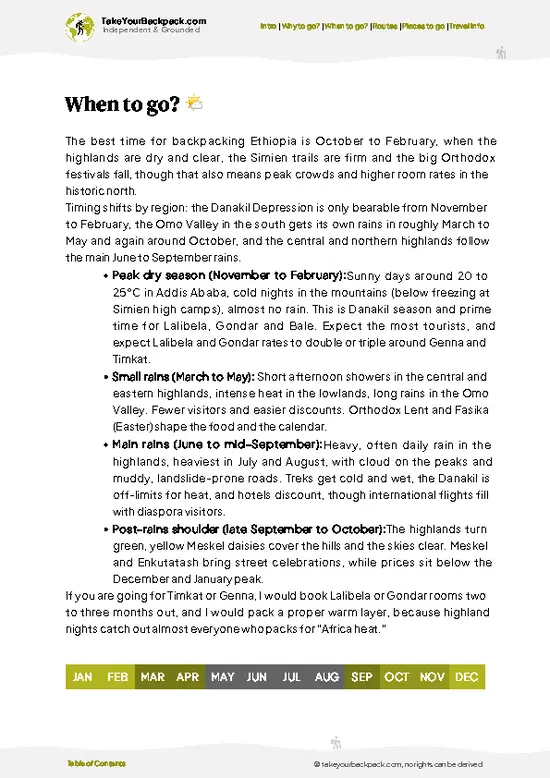
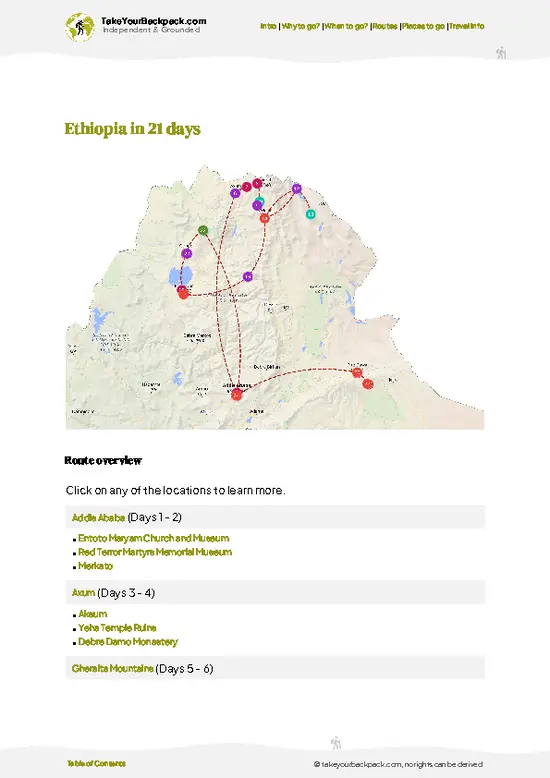
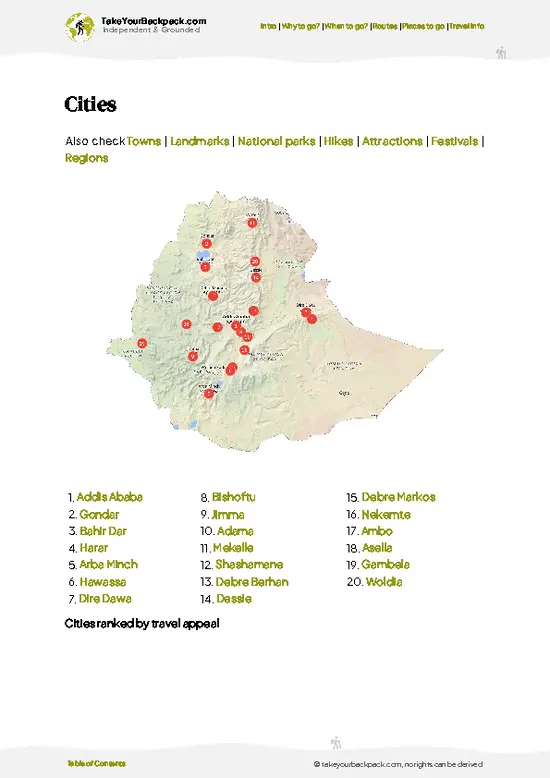
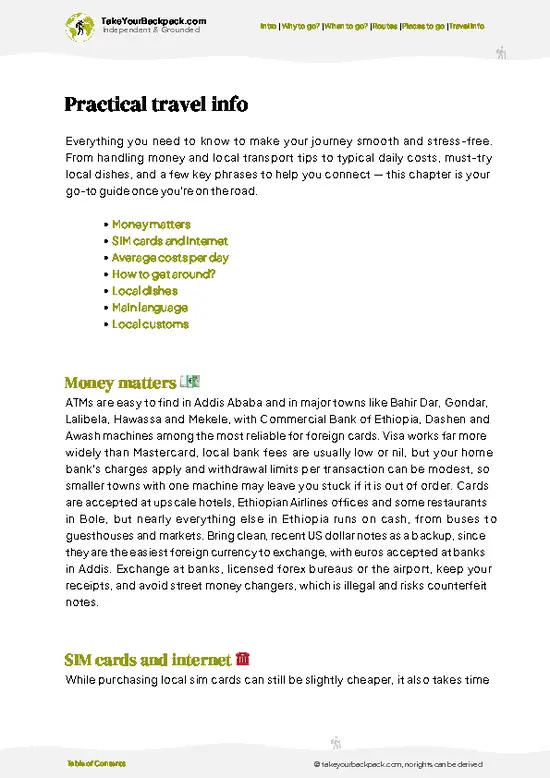
example page 0 from our offline Travel Guide for Ethiopia
example page 1 from our offline Travel Guide for Ethiopia
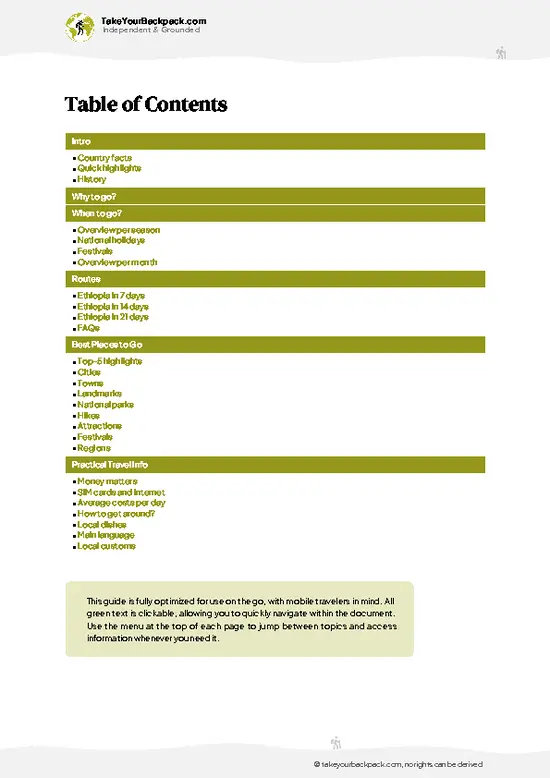
example page 2 from our offline Travel Guide for Ethiopia
example page 3 from our offline Travel Guide for Ethiopia
example page 4 from our offline Travel Guide for Ethiopia
example page 5 from our offline Travel Guide for Ethiopia
example page 6 from our offline Travel Guide for Ethiopia
example page 7 from our offline Travel Guide for Ethiopia
Loading the map 🌍
CLICK TO FILTER
cities
towns
landmarks
national parks
hikes
attractions
festivals
regions
SHOW COUNTRY’S BESTSHOW ALL

✨ Why go?
Ranked #5 town in Ethiopia
Why Yabelo should be on your travel list

Yabelo earns a stop because it puts you beside the Yabelo Wildlife Sanctuary, home to the endemic Stresemann’s bushcrow and white-tailed swallow, two birds that draw specialists from around the world. The town itself is small, walkable and unhurried, so most people stay one or two nights, arranging a morning of birding with a local guide before moving on. Evenings are quiet: a plate of food, a macchiato in a plastic-chaired café, and early sleep. Add the nearby Borana singing wells culture and the red-earth landscape of the lowlands, and Yabelo becomes a logical hinge on the road between the highlands and the Kenyan border. Birders, slow travelers and anyone curious about pastoral life will get the most from it. Solo travelers will find helpful locals, though not a hostel crowd. If you want beaches, bars or ruins, look elsewhere.

💡 HighlightsEssential experiences to have while visiting Yabelo

  1. Yabelo Wildlife Sanctuary (Yabello Sanctuary): This is the reason birders stop here. The acacia-commiphora bushland protects the Stresemann’s bush-crow and the white-tailed swallow, two species found almost nowhere else on earth. Go at dawn, when the birds are active and the bush is cool. Entry runs about US$5 to 10 plus a vehicle fee, and a local scout is often added for roughly US$10 to 20. Plan 3 to 4 hours.
  2. Yabelo Main Market: Borana pastoralists come in to trade cattle, goats, butter, honey and cloth, and you will spot women in beaded jewelry and leather. Market days are busiest in the morning, so arrive before 10 am. Wandering is free, snacks and tea cost under US$1, and an hour or two is plenty.
  3. Borana Cultural Center area and Gadaa heritage stops: Yabelo sits in Borana country, and local
… read more 👉
  1. Yabelo Wildlife Sanctuary (Yabello Sanctuary): This is the reason birders stop here. The acacia-commiphora bushland protects the Stresemann’s bush-crow and the white-tailed swallow, two species found almost nowhere else on earth. Go at dawn, when the birds are active and the bush is cool. Entry runs about US$5 to 10 plus a vehicle fee, and a local scout is often added for roughly US$10 to 20. Plan 3 to 4 hours.
  2. Yabelo Main Market: Borana pastoralists come in to trade cattle, goats, butter, honey and cloth, and you will spot women in beaded jewelry and leather. Market days are busiest in the morning, so arrive before 10 am. Wandering is free, snacks and tea cost under US$1, and an hour or two is plenty.
  3. Borana Cultural Center area and Gadaa heritage stops: Yabelo sits in Borana country, and local guides can explain the Gadaa age-grade system that still organizes Borana social and political life. Ask your guesthouse to arrange a short visit with a community elder. Expect around US$5 to 15 for a guide and tea, and 1 to 2 hours. Mornings suit best.
  4. Yabelo Termite Mound Walk: The sanctuary road and the bushland edges are dotted with tall red termite mounds, some taller than a person, and walking among them in the late afternoon is a fine way to see the landscape up close. It costs nothing on public tracks, and 45 minutes to an hour covers it. Stay on the track and bring water.
  5. Roadside Coffee and Tea Stalls on the Main Street: Local women brew buna and spiced tea over charcoal in small kiosks, and the stools fill with truckers, herders and teachers by early evening. A cup runs about US$0.20 to 0.50. Stay for 30 to 45 minutes and you will hear more Oromo than English, which is the point.
Yabelo itself is a launch point for the Borana singing wells at Dubuluk, the lunar craters near Arero, and the lakes and savanna around Mega, all doable as day trips. The roadside tea stalls cost the least, and walking the termite mounds is free.
Spotted a mistake or missing something? Contact us.

🏘️ NeighborhoodsNeighborhood guide to Yabelo

Yabelo is small enough to cover on foot in a morning, and the areas differ mostly by what they sell and how loud they get. Experienced travelers split their time by the hour, because the town changes character between dawn and dusk.
  • Main Road Strip: The asphalt highway toward Moyale and Addis Ababa is the spine. Diesel fumes, minibus horns and the clatter of tea glasses mix here. Cafes serve strong macchiato and fresh bread for breakfast, and banks and ATMs sit along this stretch. Walk it early, before the dust and the heat build up around 10 a.m.
  • Market Area: The daily market spreads behind the main road, with sacks of teff, coffee and spices, and piles of onions and tomatoes. Borana herders come in with livestock, and the smell of animals and woodsmoke is strong. Stay alert in the crush, go
… read more 👉
Yabelo is small enough to cover on foot in a morning, and the areas differ mostly by what they sell and how loud they get. Experienced travelers split their time by the hour, because the town changes character between dawn and dusk.
  • Main Road Strip: The asphalt highway toward Moyale and Addis Ababa is the spine. Diesel fumes, minibus horns and the clatter of tea glasses mix here. Cafes serve strong macchiato and fresh bread for breakfast, and banks and ATMs sit along this stretch. Walk it early, before the dust and the heat build up around 10 a.m.
  • Market Area: The daily market spreads behind the main road, with sacks of teff, coffee and spices, and piles of onions and tomatoes. Borana herders come in with livestock, and the smell of animals and woodsmoke is strong. Stay alert in the crush, go in the morning when produce is freshest, and keep small bills ready since vendors rarely have change.
  • Bus Station Zone: Noisy, dusty and busy from before first light, as drivers shout destinations. Cheap injera and tibs spots cluster nearby, good for a fast, filling meal. Arrive early because minibuses leave once full.
  • Residential Edges: Quiet lanes of tin-roofed houses and goats at dusk. Streetlights are patchy, so carry a headlamp after dark and keep evening walks short.

⌛️ 1 day1-day itinerary for Yabelo

6:00 AM, Yabelo Wildlife Sanctuary: Start in the sanctuary at first light, because birds are most active before the heat, and hire a local guide at the entrance. Walk the acacia tracks slowly, scanning for the bushcrow and white-tailed swallow, and plan about three hours.
9:30 AM, Main Street Coffee House: Return to town for breakfast and strong buna from a jebena pot. Sit for a while, since this is where drivers, teachers and herders trade news.
11:00 AM, Yabelo Market: Walk to the market and browse spices, cloth, grain and leather goods. Buy a few snacks for later and chat with vendors, who are usually happy to explain what the Borana sell.
1:00 PM, Lunch: Eat at a local restaurant on the main road, where fasting dishes and grilled meat are standard. Rest through the hottest hours.
3:30 PM, … read more 👉
6:00 AM, Yabelo Wildlife Sanctuary: Start in the sanctuary at first light, because birds are most active before the heat, and hire a local guide at the entrance. Walk the acacia tracks slowly, scanning for the bushcrow and white-tailed swallow, and plan about three hours.
9:30 AM, Main Street Coffee House: Return to town for breakfast and strong buna from a jebena pot. Sit for a while, since this is where drivers, teachers and herders trade news.
11:00 AM, Yabelo Market: Walk to the market and browse spices, cloth, grain and leather goods. Buy a few snacks for later and chat with vendors, who are usually happy to explain what the Borana sell.
1:00 PM, Lunch: Eat at a local restaurant on the main road, where fasting dishes and grilled meat are standard. Rest through the hottest hours.
3:30 PM, Borana Homestead: Ask your guide to arrange a short visit to a Borana homestead on the edge of town, a stop most itineraries skip. See the round huts and milk gourds, and learn how herders handle drought.
5:30 PM, Evening Walk: Stroll the roadside as cattle return and woodsmoke rises, then finish with tea at a café. Turn in early, since power can drop and the next birding morning begins before dawn.

🌤️ When to go?Weather, crowds, and seasonal trade-offs

  • Long Dry Season (December to February): Days run roughly 26 to 32°C (79 to 90°F) with cooler nights near 14 to 16°C (57 to 61°F). Roads are firm and wildlife viewing around the Borana plateau is easiest. Prices stay steady, though transport fills around holidays.
  • Short Rains (March to May): The heaviest rain of the year. Dirt tracks turn to mud and some routes become slow. Lodging is quiet and the landscape turns green.
  • Cool Dry Spell (June to September): Mild at 24 to 29°C (75 to 84°F), mostly dry, with fewer travelers and good road conditions.
  • Second Rains (October to November): Afternoon downpours and the lushest grass. Bird activity peaks, and daylight stays close to twelve hours all year.
Plan birding and road trips for the dry months, and leave a buffer day around rain.

source: climatestotravel.comJANJanuary: excellent for travelingFEBFebruary: excellent for travelingMARMarch: fair for travelingAPRApril: fair for travelingMAYMay: fair for travelingJUNJune: excellent for travelingJULJuly: excellent for travelingAUGAugust: excellent for travelingSEPSeptember: excellent for travelingOCTOctober: highly recommended for travelingNOVNovember: excellent for travelingDECDecember: highly recommended for traveling
when-to-go

✈️ The backpacker research shortcutEthiopia Travel Guide

What the free pages can't give you: ready-made routes, every place ranked, and it works offline. All in 1 guide.
example page 0 from our offline Travel Guide for Ethiopia
example page 1 from our offline Travel Guide for Ethiopia
example page 2 from our offline Travel Guide for Ethiopia
example page 3 from our offline Travel Guide for Ethiopia
example page 4 from our offline Travel Guide for Ethiopia
example page 5 from our offline Travel Guide for Ethiopia
example page 6 from our offline Travel Guide for Ethiopia
example page 7 from our offline Travel Guide for Ethiopia
The digital guide (304 pages) contains:-page digital guide:
✅ Ready-made 7, 14 & 21-day routes
✅ All 98 places ranked, so you skip the overrated ones
✅ Works offline, all in 1 guide
✅ Cities, national parks, landmarks, beaches
✅ How to get around
👉 Click to see all 30+ guide features

📅 Plan smarter in minutes, not weeks
✅ Month by month travel advice
✅ Festivals & national holidays
✅ Budget expectations

🗺️ Go to the right places, skip the overrated ones
✅ Honest pros & cons of destinations
✅ Top hikes, parks & viewpoints
✅ Lesser-known places most travelers miss
✅ Clear “worth it vs skip it” guidance

🛏️ Travel smoothly without rookie mistakes
✅ Best areas to stay
✅ Transport systems explained simply
✅ Common scams & safety advice
✅ SIM cards, money & practical tips

🌍 Understand the country, not just visit it
✅ Culture & traditions
✅ 52 Essential phrases & customs
✅ Festivals worth planning around
✅ Traveler-friendly historical context
✅ Insights that make places more meaningful

📱 Built for real travel conditions
✅ Fully downloadable PDF
✅ Works completely offline
✅ Optimized for phone use
✅ Useful in remote areas & buses
✅ All in 1 guide
Stop searching, start planning
Get instant access to your full guide. 30‑day money-back guarantee.


By proceeding you agree to our terms.
Sent to your inbox immediately after payment • 100% Secure Checkout
Best Backpacking Travel Advisor 2025 tourism awardBest Backpacking
Travel Advisor
2025
What others say about Take Your Backpack Guides:
⭐⭐⭐⭐⭐
Fantastic, amazing amount of information!
⭐⭐⭐⭐⭐
My goodness this is amazing, it's what I've been looking for hats off too you!
⭐⭐⭐⭐⭐
I think this is absolutely BRILLIANT
⭐⭐⭐⭐
Very complete and informative. It's still missing places, but I gotta to commend you
⭐⭐⭐⭐⭐
This is truly amazing, thank you, can't wait to explore it with my kids!
⭐⭐⭐⭐⭐
Awesome resource, thank you!
⭐⭐⭐⭐⭐
This is amazing! Can't wait to explore the ones I haven't seen
⭐⭐⭐⭐
I love this! Well done, great idea.
⭐⭐⭐⭐⭐
Thanks for taking the time to make this gem!
⭐⭐⭐⭐⭐
This might be the best website I've ever seen.
⭐⭐⭐⭐⭐
Congratulations, and thank you so much for your work; it's incredibly valuable.
⭐⭐⭐⭐
In all seriousness I think you did a great job pointing out the important spots
⭐⭐⭐⭐⭐
10/10 very good
⭐⭐⭐⭐⭐
As someone who's only just starting to visit regularly this is awesome, thank you.
⭐⭐⭐⭐
Thank you very much! I'm going to visit my dad, it's going to be very useful!
⭐⭐⭐⭐⭐
This is really cool! We'll be travelling for the first time and this definitely come in handy.
⭐⭐⭐⭐⭐
You are now our minister of culture, congratulations 👨‍💼
⭐⭐⭐⭐⭐
Just wanted to tell you that this is a pearl! Going to follow your recommendations.
⭐⭐⭐⭐⭐
This is so cool. I'll definitely be using the resource for my travels soon.
⭐⭐⭐⭐⭐
This is very impressive! Good work.
⭐⭐⭐⭐⭐
This is an amazing and informative site. Very well done!

🛏️ Where to stay?How to pick the right area

The best area for a budget bed in Yabelo is along or just off the main highway near the center, where basic guesthouses and small hotels cluster within walking distance of the bus station and market. Dorm-style hostels do not really exist here, so expect simple private rooms with a shared or basic bathroom, usually about US$6 to 12 a night. Being central means you can catch an early minibus without arranging a ride in the dark.
The tradeoff is noise. Trucks, minibus horns and early prayer calls start before dawn, so bring earplugs. Choose a room set back from the road if you can.
A second option … read more 👉
The best area for a budget bed in Yabelo is along or just off the main highway near the center, where basic guesthouses and small hotels cluster within walking distance of the bus station and market. Dorm-style hostels do not really exist here, so expect simple private rooms with a shared or basic bathroom, usually about US$6 to 12 a night. Being central means you can catch an early minibus without arranging a ride in the dark.
The tradeoff is noise. Trucks, minibus horns and early prayer calls start before dawn, so bring earplugs. Choose a room set back from the road if you can.
A second option is the quieter streets on the town’s edges, away from the highway. They are calmer and still reachable in 10 to 15 minutes on foot, but have fewer eateries, patchy street lighting and fewer options when power cuts hit. Walk back before full dark or take a bajaj.
Ask to see the room first, check that water is running, and confirm whether hot water costs extra.

🚌 Getting aroundHow to get from A to B

Yabelo punishes travelers who show up at the bus station late in the day, since the long-distance minibuses and buses leave in the early morning and little moves after midday. Wait until afternoon and you may be stuck for the night. Town itself is compact and flat, the air smells of dust and woodsmoke, and you rarely need more than your feet.
  • Walking: Everything central, including the market, banks and cafes, sits within about 1.5 kilometers. Go early or late, because midday sun on the asphalt is harsh.
  • Bajaj (three-wheeler): Small tuk-tuks buzz around town. A ride costs about US$0.30 to 0.80, and you should agree the fare before climbing in, as drivers quote higher to foreigners.
  • Minibuses and buses: Routes run to Addis Ababa, Hawassa, Moyale, Arero and Mega. Fares run roughly US$3 to 5 for
… read more 👉
Yabelo punishes travelers who show up at the bus station late in the day, since the long-distance minibuses and buses leave in the early morning and little moves after midday. Wait until afternoon and you may be stuck for the night. Town itself is compact and flat, the air smells of dust and woodsmoke, and you rarely need more than your feet.
  • Walking: Everything central, including the market, banks and cafes, sits within about 1.5 kilometers. Go early or late, because midday sun on the asphalt is harsh.
  • Bajaj (three-wheeler): Small tuk-tuks buzz around town. A ride costs about US$0.30 to 0.80, and you should agree the fare before climbing in, as drivers quote higher to foreigners.
  • Minibuses and buses: Routes run to Addis Ababa, Hawassa, Moyale, Arero and Mega. Fares run roughly US$3 to 5 for Mega or Arero, and US$12 to 18 for Hawassa or Addis. Vehicles leave when full, usually between 5 and 7 a.m. Buy your seat the day before if you can, and expect bags on the roof, a rattling ride and a stop for tea.
  • Hired 4x4 with driver: Needed for the Yabelo Wildlife Sanctuary, the singing wells and rural Borana tracks. Expect roughly US$100 to 150 per day with fuel, so split with other travelers at your lodging or the cafes near the main road.
Paved sections are decent, but dirt tracks turn to slick mud in the rains, and a rented vehicle there can take twice as long. Bring cash, since cards are useless for transport.

👛 Costs (as of 2 November 2026)How expensive it really is

Yabelo costs a backpacker roughly US$24 to 40 a day, with a bed and plain local meals taking most of it. The town sits on the main road between Addis Ababa and Moyale, so prices are low and fixed, and almost everything is paid in cash in birr.
CategoryBudget RangeLocal Reality
Dorm accommodationUS$6 to 12 (high season); US$5 to 9 (low season)Yabelo has almost no true dorms. Travelers take a basic private room with a shared bathroom, often with bucket showers and unreliable hot water.
MealsUS$4 to 8Injera with shiro or tibs at local restaurants runs US$1.5 to 3. Fresh juice and macchiato cost under US$1.
Local transportUS$1 to 5Bajaj (three-wheeler) rides inside town cost about US$0.5 to 1. Minibuses to nearby villages cost a little more.
Basic activities/entry feesUS$5 to 15Yabelo Wildlife Sanctuary
… read more 👉
Yabelo costs a backpacker roughly US$24 to 40 a day, with a bed and plain local meals taking most of it. The town sits on the main road between Addis Ababa and Moyale, so prices are low and fixed, and almost everything is paid in cash in birr.
CategoryBudget RangeLocal Reality
Dorm accommodationUS$6 to 12 (high season); US$5 to 9 (low season)Yabelo has almost no true dorms. Travelers take a basic private room with a shared bathroom, often with bucket showers and unreliable hot water.
MealsUS$4 to 8Injera with shiro or tibs at local restaurants runs US$1.5 to 3. Fresh juice and macchiato cost under US$1.
Local transportUS$1 to 5Bajaj (three-wheeler) rides inside town cost about US$0.5 to 1. Minibuses to nearby villages cost a little more.
Basic activities/entry feesUS$5 to 15Yabelo Wildlife Sanctuary charges a small entry fee, and a scout is usually required. Birdwatching near town costs little if you walk.
Miscellaneous expensesUS$3 to 6Water, snacks, a local SIM card and top-ups, and small tips for guides.
Total Daily BudgetUS$24 to 40Lower if you eat where the truck drivers eat and skip paid guides.
Carry plenty of small bills before arriving, since ATMs in Yabelo are often empty or offline and changing large notes can be slow. Buying produce at the market rather than snacks in shops saves a few dollars a day.
⚠️ Prices can change and everyone travels differently, so take this as a rough guide. Hope it helps you plan your adventure!

🚌 Day tripsWhere to go beyond the main area

Yabelo works well as a base for short outings, though most need a hired vehicle because public transport thins out quickly beyond the highway.
Yabelo Wildlife Sanctuary:
This acacia and bushland reserve on the town’s edge protects the endemic Stresemann’s bushcrow and white-tailed swallow. Go at dawn for the best birding, ideally from December to February. A guide and entry run about US$15 to 30 total, and a vehicle for the morning adds more. First-timers often arrive at midday, when birds have gone quiet.
👉 Explore Yabelo Wildlife Sanctuary
Singing Wells of Dubuluk:
Borana herders pass buckets hand to hand down deep wells while chanting to their cattle. It is a roughly one-hour drive each way and costs around US$100 to 150 for a shared vehicle, plus a small fee. Visit in the dry season, when … read more 👉
Yabelo works well as a base for short outings, though most need a hired vehicle because public transport thins out quickly beyond the highway.
Yabelo Wildlife Sanctuary:
This acacia and bushland reserve on the town’s edge protects the endemic Stresemann’s bushcrow and white-tailed swallow. Go at dawn for the best birding, ideally from December to February. A guide and entry run about US$15 to 30 total, and a vehicle for the morning adds more. First-timers often arrive at midday, when birds have gone quiet.
👉 Explore Yabelo Wildlife Sanctuary
Singing Wells of Dubuluk:
Borana herders pass buckets hand to hand down deep wells while chanting to their cattle. It is a roughly one-hour drive each way and costs around US$100 to 150 for a shared vehicle, plus a small fee. Visit in the dry season, when herds gather. Ask permission before photographing.

Mega:
This highland town sits about 100 kilometers south, a ride of around two hours on a minibus costing US$3 to 5. It has a cooler climate, views over the plateau and the edge of Mega Mountain forest. Leave early, since the last minibus back departs in the afternoon.

Arero:
A forested hill area to the east of Yabelo with cooler air, coffee gardens and traditional villages. The trip takes a few hours each way, so start early and hire local transport.

🛡️ SafetyStaying Safe: What Travelers Should Know

Yabelo is a calm, low-crime town where most problems are minor. Petty theft in the market crush is the main concern, so keep your phone and cash in a front pocket and carry only what you need. Foreigners may hear inflated prices for bajaj rides and souvenirs, and kids or touts sometimes ask for money or offer to guide you. A polite refusal and a fixed price agreed in advance solve nearly all of it. After dark, streets are poorly lit and the town goes quiet early, so solo travelers, especially women, should walk short distances only and use a bajaj for anything farther. Dress modestly and ask before photographing people. Regional tensions near the border have affected some areas, so check current conditions locally before heading to remote tracks, and travel on main roads in daylight.

FAQFrequently asked questions about Yabelo

Yabelo is worth a visit if you like birding, Borana culture and off-the-beaten-track travel, though it is also a natural stop on the road between Addis Ababa and Moyale. The Yabelo Wildlife Sanctuary protects two endemic birds, and the Dubuluk singing wells are about an hour away. If you only want classic sights, it works as a one-night stop.
Two days is enough for Yabelo, giving one morning for the sanctuary and a second for the singing wells or a trip to Mega. Add a third day if you want to visit Arero or move slowly in the rainy months. Most visitors arrive by minibus early in the morning, so plan a full day on either side.
Yabelo is hard to visit as a day trip from a big city, since Hawassa is roughly a 6 to 8 hour road trip and Addis Ababa about 12 hours or more. Staying at least one night makes far more sense. Morning minibuses from Hawassa or Moyale cost about US$10 to 18 and arrive by afternoon.
⚠️ Things can change over time, so always validate details locally before you go.

Other Ethiopian towns near Yabelo

Explore more nearby:

  • Dilla—Gedeo coffee country, washing stations, enset gardens, village footpaths| 170 km away
  • Jinka—South Omo gateway, Saturday market, regional museum, terrace views| 197 km away
  • Mursi Village—lip plate tradition, Mago National Park, remote settlement| 205 km away

💡 Not sure where to go next?
Create a personalized itinerary for Ethiopia including Yabelo and the places that fit your trip.

Generate my itinerary

👉 Discover all towns

Or checkout all Ethiopia has to offer (think cities, towns, villages, national parks, hikes, beaches, festivals)
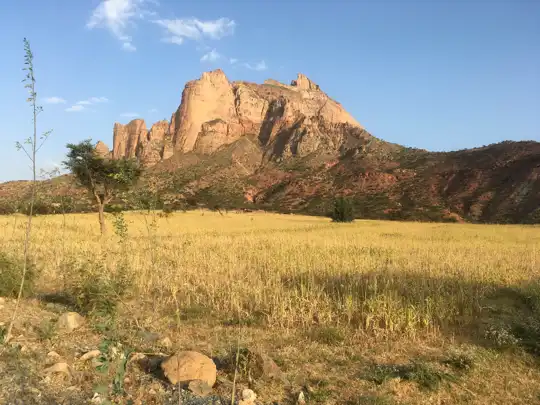
Country photo of Ethiopia

We 💚 feedbackParting advice and final tips

Many travelers rush through Yabelo on a bus, then regret missing the birds. Get it right by sleeping here and starting at the sanctuary at dawn with a local guide. I would carry small bills, since change is scarce, and keep a headlamp handy for the evening power cuts.

✈️ When did I visit Ethiopia?
Ethiopia I visited back in October 2017. I combined the trip with a visit to Sudan. Ethiopia was a pure surprise with the magical scenery like the Danakil Depression and the Simien Mountains.

✍️ Help improve this page!
The information on this page is based on my own backpacking experience in Ethiopia, supplemented with up-to-date research and feedback from other travelers. Travel details can change, so if you notice anything outdated or incomplete, feel free to let me know.


🙋‍♂️ Give feedback

👋 Meet the founderWho’s Behind Take Your Backpack?

Johan, backpacker and founder of TakeYourBackpackHi, I’m Johan (Netherlands 🇳🇱), the creator of TakeYourBackpack. Over the past 30 years, I’ve backpacked through 88 countries across six continents, gaining extensive experience with independent travel, long-term trips, and overland routes.

This site is built on a combination of firsthand travel experience and carefully curated insights from other backpackers. Many guides are based on places I’ve personally visited, while others bring together tips, observations, and practical advice shared by trusted travelers I’ve met along the way.

The goal is to provide realistic, experience-driven guidance — not generic itineraries — so you can explore destinations with better context, clearer expectations, and more confidence.