×

Ethiopia🇪🇹 | attractionsGondar Fasilides Bathceremonial pool, castle grounds, Timkat celebrations | things to do and best time to go

Explore Entoto Maryam Church and MuseumExplore Addis Ababa

Backpacking in Gondar Fasilides Bath
🏆 Top pickattraction ranked #5
By Johan Kruseman 🇳🇱 | Updated June 3, 2026

Forget the Instagram fantasy of Gondar Fasilides Bath as a tranquil, mossy pool where you’ll meditate in solitude—unless you’re visiting at sunrise on a random Tuesday, expect a steady stream of selfie sticks and local families. The Bath sits in the heart of Gondar, northern Ethiopia, tucked behind the city’s famous castles and just far enough from the main road to feel like you’ve earned your entry. Here’s the truth: the site isn’t about swimming or spa vibes. It’s a centuries-old ceremonial pool, most alive during Timkat, when thousands of pilgrims crowd the grounds and the energy is electric—think less “quiet reflection,” more “spiritual block party.” The architecture is hauntingly beautiful, with ancient fig trees and crumbling stone walls that look like they’ve seen a thousand secrets. Entry is cheap, but guides will hustle you for tips. Compared to Lalibela’s rock-hewn churches or the Simien Mountains, Gondar’s Bath is less jaw-dropping, but it’s got a pulse and a sense of living history you can actually feel.

Discover everything you want to know in the 📖 Ethiopia Travel Guide.
Safety warning

The current risk level for Ethiopia is high. Check the advice before going.


Get your Ethiopia guide
101 ranked highlights, routes & tips, works offline (395 pages)
Loading the map 🌍
CLICK TO FILTER
cities
towns
landmarks
national parks
hikes
attractions
festivals
regions
SHOW COUNTRY’S BESTSHOW ALL

✨ Why go?
Ranked #5 attraction in Ethiopia
The unique appeal for travelers

Gondar Fasilides Bath is not your typical postcard-perfect spot. Yes, it’s crowded, especially during Timkat (Epiphany), when thousands descend for the water blessing. The scene can feel chaotic, noisy, and far from serene. And yes, the entrance fee isn’t pocket change for a backpacker. But here’s the real deal: this isn’t just a tourist trap—it’s a living slice of Ethiopian history and culture that punches way above its weight.

This bathhouse, built in the 17th century by Emperor Fasilides, is a rare window into Ethiopia’s imperial past. The massive stone pool, surrounded by fortress-like walls, isn’t just architecture; it’s a stage for centuries of royal rituals and religious ceremonies that still pulse with life today. The energy during Timkat is electric—raw, unfiltered, and deeply spiritual. … read more 👉
Gondar Fasilides Bath is not your typical postcard-perfect spot. Yes, it’s crowded, especially during Timkat (Epiphany), when thousands descend for the water blessing. The scene can feel chaotic, noisy, and far from serene. And yes, the entrance fee isn’t pocket change for a backpacker. But here’s the real deal: this isn’t just a tourist trap—it’s a living slice of Ethiopian history and culture that punches way above its weight.

This bathhouse, built in the 17th century by Emperor Fasilides, is a rare window into Ethiopia’s imperial past. The massive stone pool, surrounded by fortress-like walls, isn’t just architecture; it’s a stage for centuries of royal rituals and religious ceremonies that still pulse with life today. The energy during Timkat is electric—raw, unfiltered, and deeply spiritual. You’re not just watching history; you’re stepping into it.

For backpackers trekking the northern circuit, Gondar Fasilides Bath is a milestone that breaks up the journey between Lalibela and Bahir Dar. It’s a moment to catch your breath, soak in centuries of tradition, and witness a culture that refuses to be diluted by modern tourism. The effort to get here pays off in a way no Instagram snapshot can capture.
Want to include Gondar Fasilides Bath in your Ethiopia route?
Create a personalized Ethiopia itinerary that includes Gondar Fasilides Bath and the places that fit your trip — based on your travel style, budget, and available time. Get your route in seconds.

Generate my trip

💡 HighlightsWhat this place is best known for

The Bath Itself: The Stone Pool and Castle Walls
Let’s cut through the travel brochure fog: the Fasilides Bath is not some dainty spa. It’s a hulking, centuries-old stone pool, hemmed in by fortress-thick walls and crowned with a squat, turreted pavilion that looks like it was built for a king who wanted to swim in privacy—and, in fact, it was. The place oozes medieval drama. Even when the pool is empty (which is most of the year), you can feel the weight of history in the mossy stones and the way the banyan roots claw at the walls. It’s not pretty in the Instagram sense; it’s atmospheric, a little eerie, and absolutely unforgettable if you let your imagination run wild.


Timkat Festival: The Once-a-Year Flood
Here’s the real showstopper. Once a year, during Timkat (Ethiopian Epiphany, usually … read more 👉
The Bath Itself: The Stone Pool and Castle Walls
Let’s cut through the travel brochure fog: the Fasilides Bath is not some dainty spa. It’s a hulking, centuries-old stone pool, hemmed in by fortress-thick walls and crowned with a squat, turreted pavilion that looks like it was built for a king who wanted to swim in privacy—and, in fact, it was. The place oozes medieval drama. Even when the pool is empty (which is most of the year), you can feel the weight of history in the mossy stones and the way the banyan roots claw at the walls. It’s not pretty in the Instagram sense; it’s atmospheric, a little eerie, and absolutely unforgettable if you let your imagination run wild.


Timkat Festival: The Once-a-Year Flood
Here’s the real showstopper. Once a year, during Timkat (Ethiopian Epiphany, usually in January), the pool is filled with water and the entire city seems to squeeze into the compound. Priests in embroidered robes, chanting, incense, and a crowd that’s electric with anticipation. The re-enactment of Christ’s baptism is not a tourist performance—it’s a living, breathing ritual, and if you’re lucky enough to be there, you’ll see the bath transformed into a cauldron of faith and celebration. This is the only time you’ll see the pool in action, and it’s a sensory overload in the best way. (Personal favorite—nothing else in Ethiopia, or honestly anywhere, feels quite like it.)


The Banyan Trees: Nature’s Gothic Touch
If you’re the type who notices the details, the ancient banyan trees are the unsung heroes here. Their roots snake through the stonework, swallowing steps and walls, giving the whole place a haunted, almost post-apocalyptic beauty. It’s the kind of setting that makes you want to write a novel or at least sit and sketch for an hour. The trees are not just background—they’re part of the architecture, and they give the bath its otherworldly edge.


The Solitude (If You Time It Right)
Here’s the honest truth: outside of Timkat, the bath is often empty. Not just of water, but of people. Most tour groups breeze through in ten minutes, snap a photo, and leave. If you come early or late in the day, you can have the place to yourself. That’s when the real magic happens. The silence, the echo of your footsteps, the sense that you’ve stumbled into a forgotten chapter of history—this is the anti-Instagram moment, and it’s worth more than any filter.


The Architecture: Fortress Meets Fantasy
Forget the word “bath”—this is a fortress masquerading as a swimming pool. The central pavilion, with its arches and battlements, looks like something out of a storybook, but it’s all real. The blend of Ethiopian, Portuguese, and Indian influences is a crash course in the region’s tangled history. You don’t need to be an architecture nerd to appreciate how out-of-place and yet perfectly at home this structure feels in the Ethiopian highlands. It’s weird, it’s bold, and it’s unlike anything else you’ll see in Africa.
Spotted a mistake or missing something? Contact us.

Things to do near Gondar Fasilides Bath

Ratings based on Tripadvisor reviews. When you book through this link, you support our work at no extra cost to you.

🌤️ When to go?Choosing the right time of year


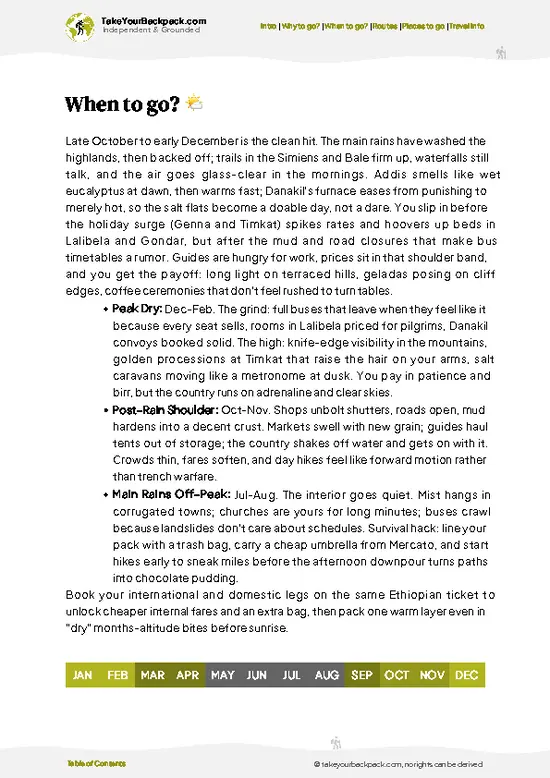
  • Weather: The dry season from October to March is your best bet. Rain is rare, so the baths stay accessible and the grounds aren’t a muddy mess. April to September brings heavy rains, making travel tricky and the site less enjoyable.

  • Temperature: Expect mild to warm days during the dry season, averaging 20-25°C (68-77°F). Nights can dip to 10°C (50°F), so pack layers. The wet season cools things down a bit but adds humidity and dampness.

  • Daylight Hours: Daylight is fairly consistent year-round, roughly 12 hours daily. Sunrise around 6:30 AM and sunset near 6:30 PM, giving you plenty of time to explore without rushing.

  • Crowds: Peak tourist season aligns with the dry months, especially December and January, when international visitors flock in. If you want fewer people, aim for October
read more 👉

  • Weather: The dry season from October to March is your best bet. Rain is rare, so the baths stay accessible and the grounds aren’t a muddy mess. April to September brings heavy rains, making travel tricky and the site less enjoyable.

  • Temperature: Expect mild to warm days during the dry season, averaging 20-25°C (68-77°F). Nights can dip to 10°C (50°F), so pack layers. The wet season cools things down a bit but adds humidity and dampness.

  • Daylight Hours: Daylight is fairly consistent year-round, roughly 12 hours daily. Sunrise around 6:30 AM and sunset near 6:30 PM, giving you plenty of time to explore without rushing.

  • Crowds: Peak tourist season aligns with the dry months, especially December and January, when international visitors flock in. If you want fewer people, aim for October or February, just outside the busiest windows.

  • Seasonal Activities: The Timkat Festival in January is a spectacle worth timing your visit for, but expect crowds and higher prices. Outside of that, the baths are quieter and more contemplative.

  • Price Fluctuations: Accommodation and tour prices spike during the dry season and festival times. The wet season offers better deals but comes with travel hassles and limited access.


Pro-tip: Visit just before or after the Timkat Festival to catch the magic without the madness—dry weather, manageable crowds, and better prices.


source: climatestotravel.comJANJanuary: highly recommended for travelingFEBFebruary: excellent for travelingMARMarch: excellent for travelingAPRApril: fair for travelingMAYMay: fair for travelingJUNJune: below average for travelingJULJuly: below average for travelingAUGAugust: below average for travelingSEPSeptember: fair for travelingOCTOctober: excellent for travelingNOVNovember: highly recommended for travelingDECDecember: highly recommended for traveling
ethiopia-attraction-gondar-fasilides-bath
© Google |

✈️ The backpacker research shortcutEthiopia Travel Guide

An offline-friendly backpacking guide with optimized travel routes, ranked highlights, transport advice, and the best areas to stay.
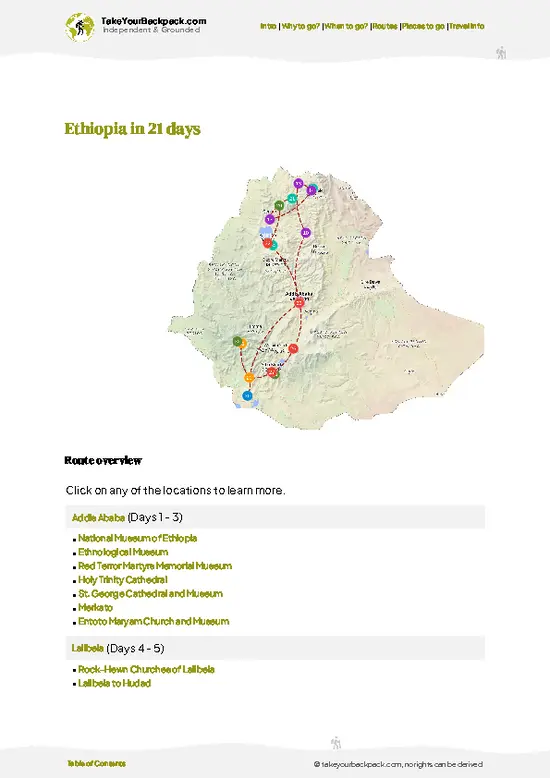
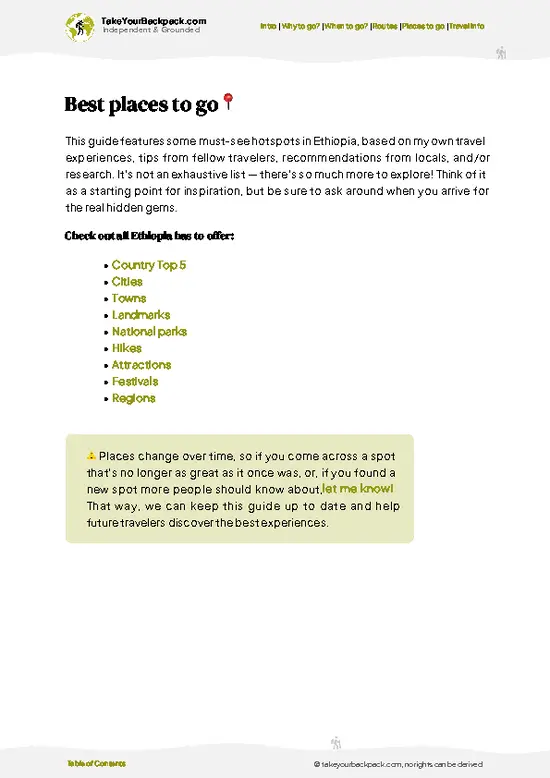
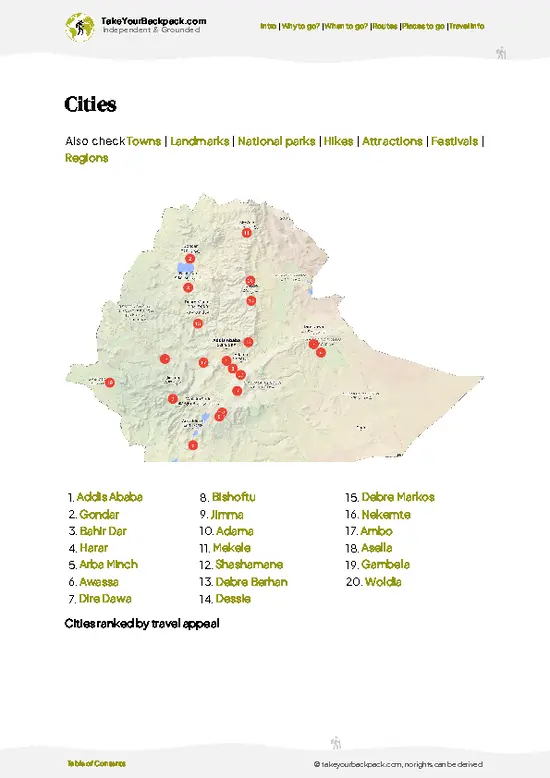
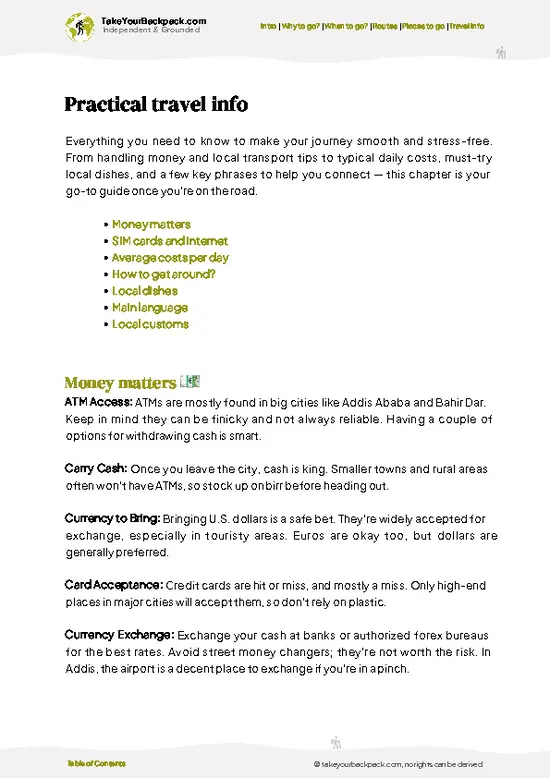
example page 0 from our offline Travel Guide for Ethiopia
example page 1 from our offline Travel Guide for Ethiopia
example page 2 from our offline Travel Guide for Ethiopia
example page 3 from our offline Travel Guide for Ethiopia
example page 4 from our offline Travel Guide for Ethiopia
example page 5 from our offline Travel Guide for Ethiopia
example page 6 from our offline Travel Guide for Ethiopia
example page 7 from our offline Travel Guide for Ethiopia
The digital guide (395 pages) contains:
101 highlights, ranked by travel appeal
Optimized 7, 14 & 21-day travel routes
Cities, national parks, landmarks, beaches
How to get around
Offline-friendly for travel without Wi-Fi
👉 Click to see all 30+ guide features

📅 Plan smarter in minutes, not weeks
Month by month travel advice
Festivals & national holidays
Budget expectations

🗺️ Go to the right places, skip the overrated ones
Honest pros & cons of destinations
Top hikes, parks & viewpoints
Lesser-known places most travelers miss
Clear “worth it vs skip it” guidance

🛏️ Travel smoothly without rookie mistakes
Best areas to stay
Transport systems explained simply
Common scams & safety advice
SIM cards, money & practical tips

🌍 Understand the country, not just visit it
Culture & traditions
52 Essential phrases & customs
Festivals worth planning around
Traveler-friendly historical context
Insights that make places more meaningful

📱 Built for real travel conditions
Fully downloadable PDF
Works completely offline
Optimized for phone use
Useful in remote areas & buses
Everything in one place
Save weeks of stressful planning
Get instant access to your full guide. 30‑day money-back guarantee.


By proceeding you agree to our terms.
Sent to your inbox immediately after payment • 100% Secure Checkout
Best Backpacking Travel Advisor 2025 tourism awardBest Backpacking
Travel Advisor
2025
What others say about Take Your Backpack Guides:
⭐⭐⭐⭐⭐
Fantastic, amazing amount of information!
⭐⭐⭐⭐⭐
My goodness this is amazing, it's what I've been looking for hats off too you!
⭐⭐⭐⭐⭐
I think this is absolutely BRILLIANT
⭐⭐⭐⭐
Very complete and informative. It's still missing places, but I gotta to commend you
⭐⭐⭐⭐⭐
This is truly amazing, thank you, can't wait to explore it with my kids!
⭐⭐⭐⭐⭐
Awesome resource, thank you!
⭐⭐⭐⭐⭐
This is amazing! Can't wait to explore the ones I haven't seen
⭐⭐⭐⭐
I love this! Well done, great idea.
⭐⭐⭐⭐⭐
Thanks for taking the time to make this gem!
⭐⭐⭐⭐⭐
This might be the best website I've ever seen.
⭐⭐⭐⭐⭐
Congratulations, and thank you so much for your work; it's incredibly valuable.
⭐⭐⭐⭐
In all seriousness I think you did a great job pointing out the important spots
⭐⭐⭐⭐⭐
10/10 very good
⭐⭐⭐⭐⭐
As someone who's only just starting to visit regularly this is awesome, thank you.
⭐⭐⭐⭐
Thank you very much! I'm going to visit my dad, it's going to be very useful!
⭐⭐⭐⭐⭐
This is really cool! We'll be travelling for the first time and this definitely come in handy.
⭐⭐⭐⭐⭐
You are now our minister of culture, congratulations 👨‍💼
⭐⭐⭐⭐⭐
Just wanted to tell you that this is a pearl! Going to follow your recommendations.
⭐⭐⭐⭐⭐
This is so cool. I'll definitely be using the resource for my travels soon.
⭐⭐⭐⭐⭐
This is very impressive! Good work.
⭐⭐⭐⭐⭐
This is an amazing and informative site. Very well done!

🛏️ Where to stay?Where staying makes the most sense

Gondar’s Fasilides Bath is a magnet for travelers chasing history and culture, but let’s cut through the tourist brochure gloss: it’s not a polished resort town. The area around the bath is lively but raw, with a mix of local life and visitors that can feel overwhelming if you’re expecting quiet luxury. Crowds gather especially during Timkat (Epiphany), turning the site into a packed, chaotic celebration. If you want to soak in the atmosphere without feeling like a sardine, timing and location matter.

For backpackers, the best places to stay are within walking distance of the Royal Enclosure … read more 👉
Gondar’s Fasilides Bath is a magnet for travelers chasing history and culture, but let’s cut through the tourist brochure gloss: it’s not a polished resort town. The area around the bath is lively but raw, with a mix of local life and visitors that can feel overwhelming if you’re expecting quiet luxury. Crowds gather especially during Timkat (Epiphany), turning the site into a packed, chaotic celebration. If you want to soak in the atmosphere without feeling like a sardine, timing and location matter.

For backpackers, the best places to stay are within walking distance of the Royal Enclosure and the bath itself—think neighborhoods that balance safety with social buzz. These areas are where you’ll find guesthouses and small inns that cater to budget travelers and solo adventurers. The streets here pulse with local markets, street food vendors, and cafés where you can swap stories with other travelers or locals. It’s not about plush comfort; it’s about immersion and connection.

Safety is decent if you stick to the main roads and well-trodden paths, but don’t expect a polished tourist bubble. The real magic is in the gritty, authentic vibe—where you can watch kids playing soccer in dusty alleys, hear the call to prayer echoing over ancient stone, and feel the weight of centuries in the air. That’s the experience worth chasing, not just the postcard shot of the bath itself.

👛 Costs (as of 9 June 2026)How expensive it really is

As of 2025, the entrance fee for Fasilides' Bath in Gondar is approximately 100 Ethiopian Birr (ETB), which is about €2 to €4. This fee is often included in the ticket for the Royal Enclosure (Fasil Ghebbi), which costs around 200 ETB (€4 to €8). Additional costs may include transportation to the site, such as a Bajaj (auto-rickshaw) ride from the city center, which can range from 10 to 30 ETB (€0.20 to €0.60). Please note that these prices are subject to change, and it's advisable to check the latest information before your visit.

source: ethiopiantourassociation.com
⚠️ Prices can change and everyone travels differently, so take this as a rough guide. Hope it helps you plan your adventure!

Other Ethiopian attractions near Gondar Fasilides Bath

Explore more nearby:


💡 Not sure where to go next?
Create a personalized itinerary for Ethiopia including Gondar Fasilides Bath and the places that fit your trip.

Generate my itinerary

👉 Discover all attractions

Or checkout all Ethiopia has to offer (think cities, towns, villages, national parks, hikes, beaches, festivals)
Country photo of Ethiopia

We 💚 feedbackFinal thoughts on visiting Gondar Fasilides Bath

Gondar Fasilides Bath isn’t some polished tourist trap—it’s raw history you can almost touch, especially if you time your visit during the Timkat festival when the place pulses with real, unfiltered Ethiopian spirit. But heads up: outside those few days, it’s quieter, and the site can feel a bit neglected, with crowds that ebb unpredictably. If you want a glimpse of living tradition mixed with ancient stone, this is your spot—just don’t expect a perfectly curated museum experience.

✈️ When did I visit Ethiopia?
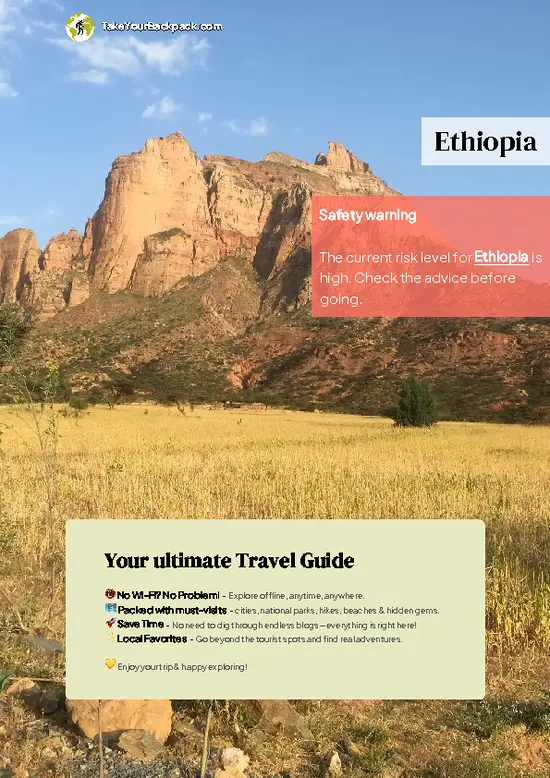
Ethiopia I visited back in October 2017. I combined the trip with a visit to Sudan. Ethiopia was a pure suprise with the magical scenery like the Danikal Depression and the Simien Mountains.

✍️ Help improve this page!
The information on this page is based on my own backpacking experience in Ethiopia, supplemented with up-to-date research and feedback from other travelers. Travel details can change, so if you notice anything outdated or incomplete, feel free to let me know.


🙋‍♂️ Give feedback

👋 Meet the founderWho’s Behind Take Your Backpack?

Johan, backpacker and founder of TakeYourBackpackHi, I’m Johan (Netherlands 🇳🇱), the creator of TakeYourBackpack. Over the past decade, I’ve backpacked through 80+ countries across six continents, gaining extensive experience with independent travel, long-term trips, and overland routes.

This site is built on a combination of firsthand travel experience and carefully curated insights from other backpackers. Many guides are based on places I’ve personally visited, while others bring together tips, observations, and practical advice shared by trusted travelers I’ve met along the way.

The goal is to provide realistic, experience-driven guidance — not generic itineraries — so you can explore destinations with better context, clearer expectations, and more confidence.

Get full Ethiopia guide •
Instant download • 101 highlights • Full Offline guide