×

Faroe Islands🇫🇴 | best townsEssential 3 towns to Explore in Faroe Islands

Towns in the Faroe Islands are small harbor villages and one tiny capital, strung across 18 volcanic islands. Expect wet basalt, turf roofs, the smell of salt and drying fish, and wind that rattles guesthouse windows. Tórshavn has the cafés and buses, while the northern and western islands are quieter and pricier to reach. Independent travelers can link most places by bus, ferry and tunnel, but schedules thin out fast.

By Johan Kruseman 🇳🇱 | Updated October 18, 2026
Explore the best villages in Faroe Islands

Why go?Understanding Their Importance

The Faroes suit towns because settlement hugs the coast. Steep slopes leave only narrow shelves beside sheltered harbors, so each village is compact, walkable and ringed by cliffs, with sheep grazing between the houses. Undersea tunnels and causeways, some tolled, now link most of the larger islands, which makes road and bus travel easier than the map suggests.

Travelers should know that towns here are tiny. Populations run from a few dozen to roughly 14,000 in the capital area, and many places have one shop, if any. Weather changes within minutes: fog, drizzle and sun can pass in an hour, and the light stays soft and silver. Prices are Scandinavian-level, and a rental car or careful bus planning matters. Choose the Faroes for quiet harbors, church bells and grass-roofed lanes, not for nightlife or big sights.
Why These Made the Cut
The list of best towns in Faroe Islands is created based on charm, local culture, atmosphere, hidden gems, and visitor appeal. If you feel a town is missing in this list, please let us know.

When to go?Best Time to Visit Faroe Islands for towns

Best months: The best months for Faroese towns are June to August, when daylight stretches past 18 hours, daytime highs sit around 10 to 14°C, and ferries, cafés and guesthouses run full schedules. Rain still falls on roughly half of all days, so the air smells of wet grass and peat even in July.
Shoulder and winter: May and September bring highs near 7 to 11°C, fewer visitors and easier bookings, though some seasonal guesthouses close by mid-September. From November to March temperatures hover at 3 to 6°C, storms batter the harbors, daylight shrinks to about 4 to 6 hours and some rural ferries and restaurants reduce service. Summer room prices can run 20 to 40 percent above winter rates, and the island of Tórshavn stays livelier year-round than the northern villages.

town hoppingPlanning Your Route Efficiently

How many days: A trip linking several Faroese towns needs 5 to 8 days, with 1 to 2 nights per stop. The islands are small, but winding roads, fog and ferry timetables slow everything.
Direction and transfers: Start in Tórshavn on Streymoy, the transport hub, then work outward: the western islands via the airport on Vágar, then north through Eysturoy, then the northern isles by bus or ferry. Drives between regions usually take 45 minutes to 1.5 hours, longer by bus; the undersea tunnels are quick but some carry tolls. Ferries to islands such as Suðuroy take about 2 hours.
Common mistakes: Travelers cram in too many islands and lose hours to fog, gravel and waiting at the dock. Pack fewer stops, check ferry and bus times the day before, and leave a buffer day, since a gale can cancel a sailing.

The ListHighly Recommended towns of Faroe Islands

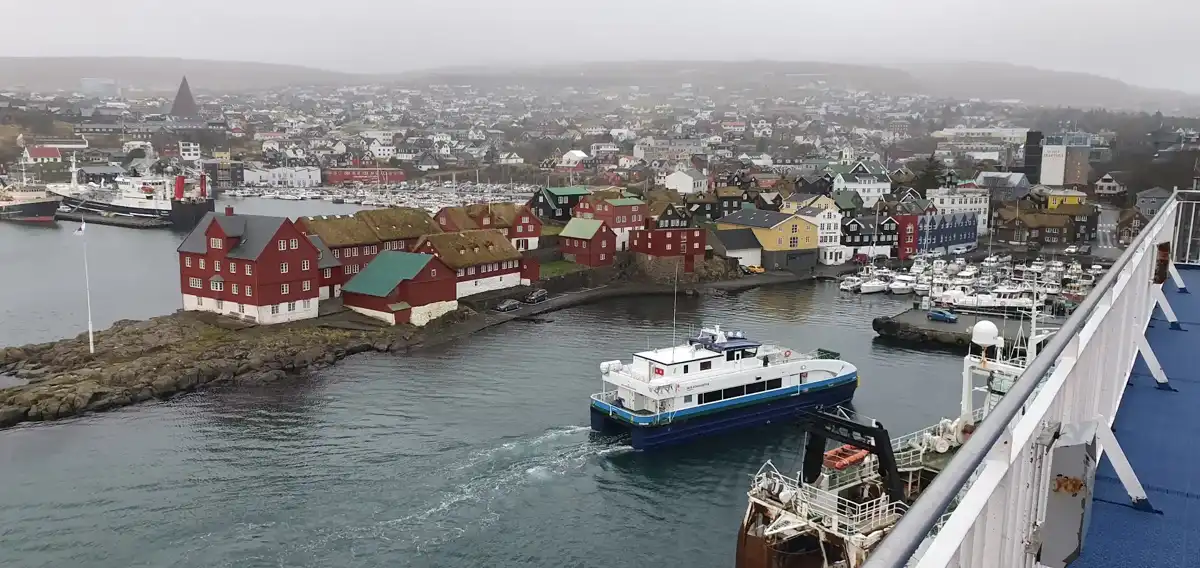
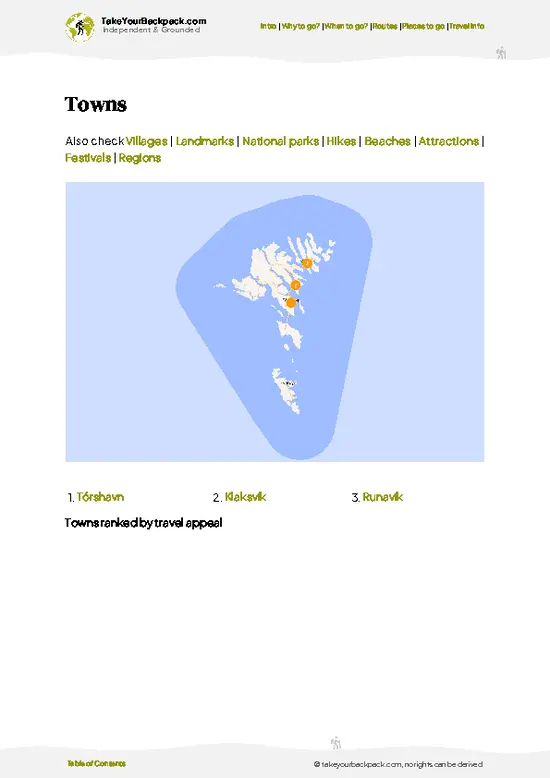
1 Tórshavn

government quarter, grass-roofed houses, harborfront

Navigate narrow lanes and find a mix of modern amenities, cultural venues, and traditional turf-roofed buildings at the islands’ administrative heart.

faroe-islands-city-torshavn
© Google | Pawel Fukowski

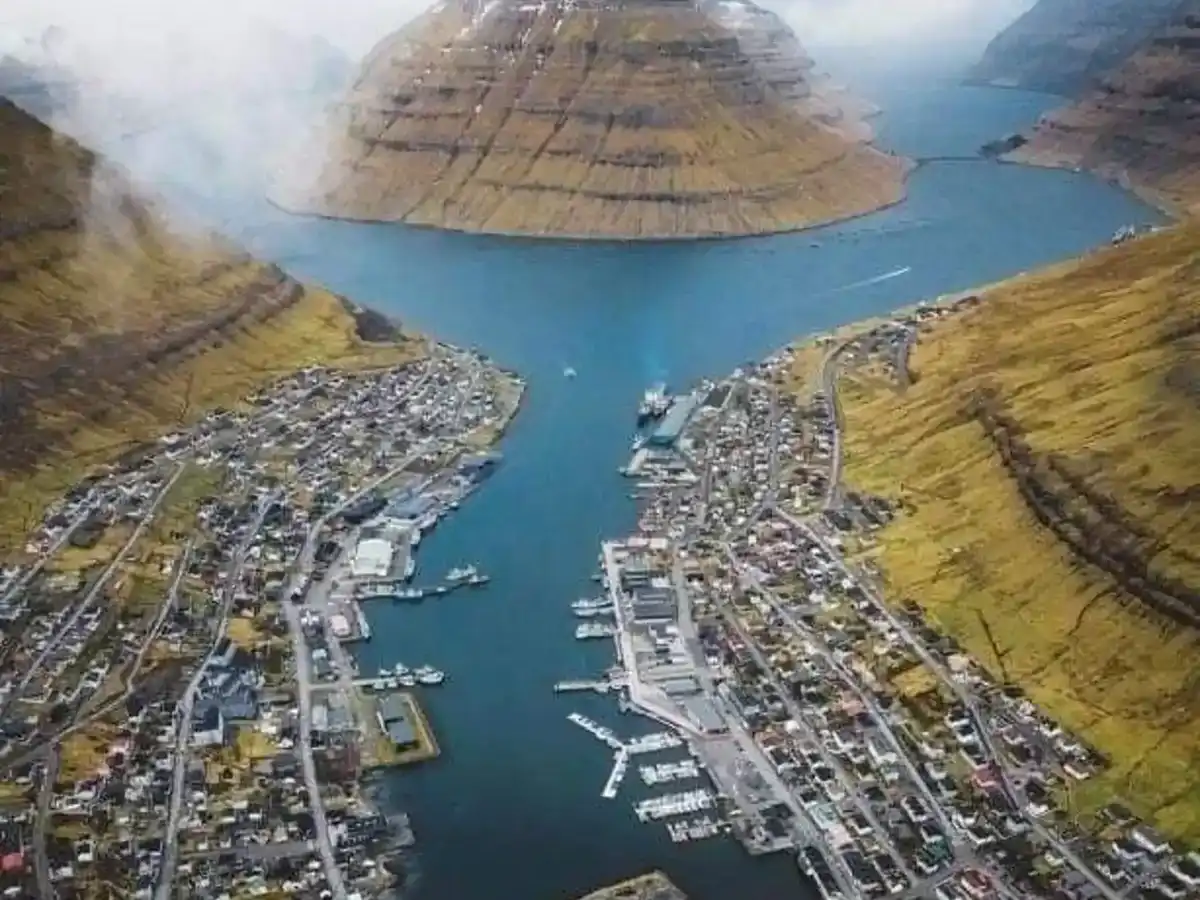
2 Klaksvík

harbor views, fishing fleet, mountain backdrop

Experience daily life in the islands’ northern hub, where working boats, steep slopes, and local shops shape the town’s rhythm.

faroe-islands-city-klaksvik
© Google | Lukmic Reloaded

3 Runavík

industrial port, business center, lakeside walks

Stroll along the waterfront and discover a practical base for exploring Eysturoy, with easy access to trails and essential services.

Loading the map 🌍

Expert viewInsights from Locals and Experts

How many towns: I advise three to five towns over a week. Each village is quick to see, but the real pleasure is lingering, hearing waves slap the harbor wall and watching light shift on the cliffs. More than that turns the trip into a drive between parking spots, and fog can erase a view you spent two hours reaching.
Which kind to prioritize: Choose by travel style. Those who want cafés, hostels and buses should anchor in the capital area, which also gives the easiest transport. Hikers and photographers are better in remote village settings on the outer islands, where trailheads begin at the last house and the evening is silent but for sheep. Culture-minded travelers should pick places with turf-roofed old quarters and historic churches, where tarred timber and moss show how people lived.
What … read more 👉
How many towns: I advise three to five towns over a week. Each village is quick to see, but the real pleasure is lingering, hearing waves slap the harbor wall and watching light shift on the cliffs. More than that turns the trip into a drive between parking spots, and fog can erase a view you spent two hours reaching.
Which kind to prioritize: Choose by travel style. Those who want cafés, hostels and buses should anchor in the capital area, which also gives the easiest transport. Hikers and photographers are better in remote village settings on the outer islands, where trailheads begin at the last house and the evening is silent but for sheep. Culture-minded travelers should pick places with turf-roofed old quarters and historic churches, where tarred timber and moss show how people lived.
What it costs: Budget US$100 to 150 a day if you use hostels or camping, a shared kitchen and a few bus rides. Guesthouses and cars push that to US$200 to 300. Bus fares across the islands run roughly US$3 to 15 per trip, undersea tunnel tolls US$10 to 20 each way on certain routes, ferries US$5 to 30, and a restaurant dinner US$35 to 60. Self-catering in supermarkets saves the most, and the payoff is a picnic on a harbor wall.
Safety and culture: Crime is very low, but weather and cliffs are the real hazards: stay off wet edges, dress in waterproof layers, and check forecasts. Land beside villages is often private grazing, so ask before crossing fields, close gates and keep dogs leashed. Respect the quiet, especially on Sundays, when shops and many cafés close. Do not park across driveways or narrow village lanes.

✈️ The backpacker research shortcutFaroe Islands Travel Guide

An offline-friendly backpacking guide with optimized travel routes, ranked highlights, transport advice, and the best areas to stay.
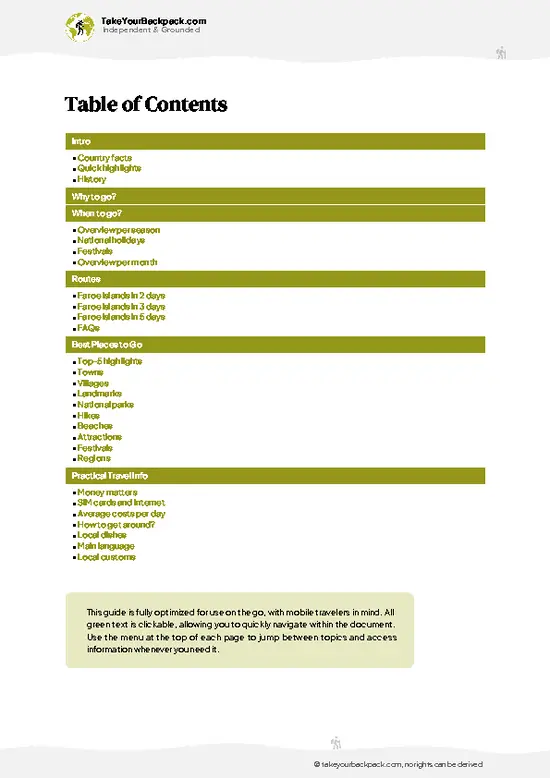
example page 0 from our offline Travel Guide for Faroe Islands
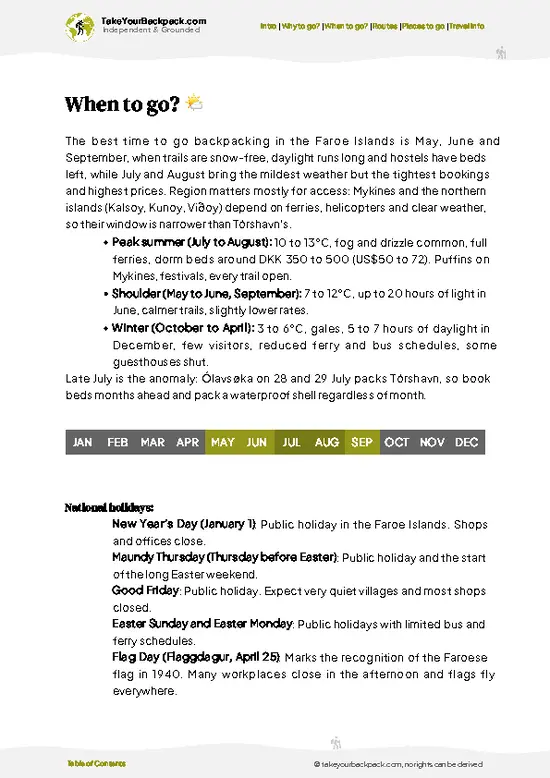
example page 1 from our offline Travel Guide for Faroe Islands
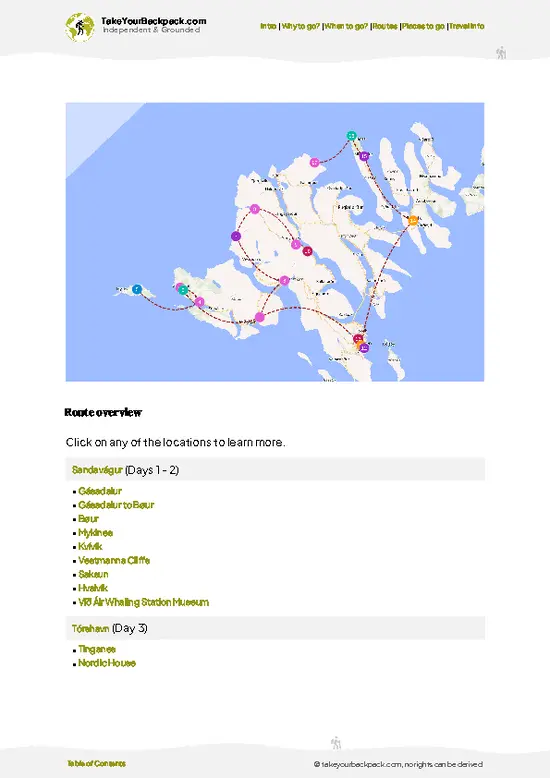
example page 2 from our offline Travel Guide for Faroe Islands
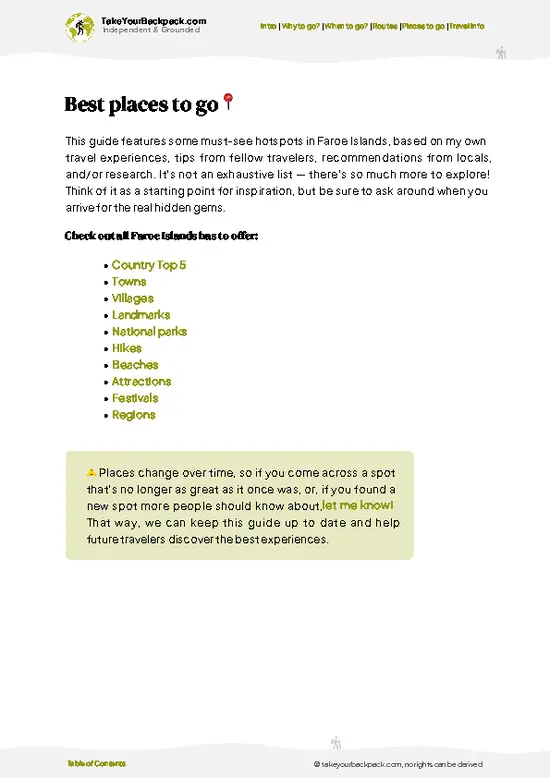
example page 3 from our offline Travel Guide for Faroe Islands
example page 4 from our offline Travel Guide for Faroe Islands
example page 5 from our offline Travel Guide for Faroe Islands
example page 6 from our offline Travel Guide for Faroe Islands
example page 7 from our offline Travel Guide for Faroe Islands
The digital guide (161 pages) contains:
✅ 39 highlights, ranked by travel appeal
✅ Optimized 2, 3 & 5-day travel routes
✅ Cities, national parks, landmarks, beaches
✅ How to get around
✅ Offline-friendly for travel without Wi-Fi
👉 Click to see all 30+ guide features

📅 Plan smarter in minutes, not weeks
✅ Month by month travel advice
✅ Festivals & national holidays
✅ Budget expectations

🗺️ Go to the right places, skip the overrated ones
✅ Honest pros & cons of destinations
✅ Top hikes, parks & viewpoints
✅ Lesser-known places most travelers miss
✅ Clear “worth it vs skip it” guidance

🛏️ Travel smoothly without rookie mistakes
✅ Best areas to stay
✅ Transport systems explained simply
✅ Common scams & safety advice
✅ SIM cards, money & practical tips

🌍 Understand the country, not just visit it
✅ Culture & traditions
✅ 52 Essential phrases & customs
✅ Festivals worth planning around
✅ Traveler-friendly historical context
✅ Insights that make places more meaningful

📱 Built for real travel conditions
✅ Fully downloadable PDF
✅ Works completely offline
✅ Optimized for phone use
✅ Useful in remote areas & buses
✅ Everything in one place
Stop searching, start planning
Get instant access to your full guide. 30‑day money-back guarantee.
+ Add another guide for just

By proceeding you agree to our terms.
Sent to your inbox immediately after payment • 100% Secure Checkout
Best Backpacking Travel Advisor 2025 tourism awardBest Backpacking
Travel Advisor
2025
What others say about Take Your Backpack Guides:
⭐⭐⭐⭐⭐
Fantastic, amazing amount of information!
⭐⭐⭐⭐⭐
My goodness this is amazing, it's what I've been looking for hats off too you!
⭐⭐⭐⭐⭐
I think this is absolutely BRILLIANT
⭐⭐⭐⭐
Very complete and informative. It's still missing places, but I gotta to commend you
⭐⭐⭐⭐⭐
This is truly amazing, thank you, can't wait to explore it with my kids!
⭐⭐⭐⭐⭐
Awesome resource, thank you!
⭐⭐⭐⭐⭐
This is amazing! Can't wait to explore the ones I haven't seen
⭐⭐⭐⭐
I love this! Well done, great idea.
⭐⭐⭐⭐⭐
Thanks for taking the time to make this gem!
⭐⭐⭐⭐⭐
This might be the best website I've ever seen.
⭐⭐⭐⭐⭐
Congratulations, and thank you so much for your work; it's incredibly valuable.
⭐⭐⭐⭐
In all seriousness I think you did a great job pointing out the important spots
⭐⭐⭐⭐⭐
10/10 very good
⭐⭐⭐⭐⭐
As someone who's only just starting to visit regularly this is awesome, thank you.
⭐⭐⭐⭐
Thank you very much! I'm going to visit my dad, it's going to be very useful!
⭐⭐⭐⭐⭐
This is really cool! We'll be travelling for the first time and this definitely come in handy.
⭐⭐⭐⭐⭐
You are now our minister of culture, congratulations 👨‍💼
⭐⭐⭐⭐⭐
Just wanted to tell you that this is a pearl! Going to follow your recommendations.
⭐⭐⭐⭐⭐
This is so cool. I'll definitely be using the resource for my travels soon.
⭐⭐⭐⭐⭐
This is very impressive! Good work.
⭐⭐⭐⭐⭐
This is an amazing and informative site. Very well done!

🛏️ Where to stay?Where to Stay: Faroe Islands Edition

Budget beds in the Faroe Islands exist but are scarce, so expect a few hostels and guesthouses with dorm beds around DKK 300 to 450 (US$45 to 65), plus summer campsites, and book weeks ahead for June to August. Tórshavn has the widest choice: the harbor area around Tinganes puts you near the bars, cafés and every bus route, though weekend nights get loud, while suburbs like Hoyvík and Argir are quieter and cheaper but a 20 to 30 minute walk or bus ride from the center. Klaksvík suits hikers heading to the northern islands but has little nightlife, and villages on Vágar such as Sørvágur and Miðvágur are peaceful, close to the airport and Múlafossur, and a long way from Tórshavn’s restaurants. … read more 👉
Budget beds in the Faroe Islands exist but are scarce, so expect a few hostels and guesthouses with dorm beds around DKK 300 to 450 (US$45 to 65), plus summer campsites, and book weeks ahead for June to August. Tórshavn has the widest choice: the harbor area around Tinganes puts you near the bars, cafés and every bus route, though weekend nights get loud, while suburbs like Hoyvík and Argir are quieter and cheaper but a 20 to 30 minute walk or bus ride from the center. Klaksvík suits hikers heading to the northern islands but has little nightlife, and villages on Vágar such as Sørvágur and Miðvágur are peaceful, close to the airport and Múlafossur, and a long way from Tórshavn’s restaurants.

If you enjoy meeting fellow travelers, consider choosing hostels with high ratings for atmosphere. On the other hand, if you prefer having your own space, a hotel might be a better option.

Faroe IslandsExplore Beyond This Category

👋 Meet the founderWho’s Behind Take Your Backpack?

Johan, backpacker and founder of TakeYourBackpackHi, I’m Johan (Netherlands 🇳🇱), the creator of TakeYourBackpack. Over the past 3 decades, I’ve backpacked through 90+ countries across six continents, gaining extensive experience with independent travel, long-term trips, and overland routes.

This site is built on a combination of firsthand travel experience and carefully curated insights from other backpackers. Many guides are based on places I’ve personally visited, while others bring together tips, observations, and practical advice shared by trusted travelers I’ve met along the way.

The goal is to provide realistic, experience-driven guidance — not generic itineraries — so you can explore destinations with better context, clearer expectations, and more confidence.