
×

Fiji🇫🇯 | villagesNavala VillageThatched bure, Ba River, sevusevu welcome, highland homestays | things to do and best time to go

Explore Kioa IslandExplore Sri Siva Subramaniya Temple

Backpacking in Navala Village
🏆 Top pickvillage ranked #1
By Johan Kruseman 🇳🇱 | Updated October 16, 2026

Navala is a working village where around 800 people live in thatched bure, not a staged cultural show, and every visitor is received as a guest of the chief. That changes how you arrive. You are expected to bring a bundle of kava roots (sevusevu) and sit through a welcome before wandering, so pack a modest sarong or knee-length shorts and keep your hat in your bag. Navala sits inland in the Ba Highlands of Fiji’s main island, Viti Levu, northeast of Nadi, at the end of a rough gravel road. Go in the morning, when cooking smoke rises from the roofs and the light on the Ba River is soft. The good: nearly every house is traditional, the setting is steep green hills, and the welcome is unhurried. The bad: no nightlife, little choice of food, and mud when it rains. Evenings are quiet and early, and you will meet other travelers mostly at the overnight homestays. Walkers and culture-minded slow travelers will love it. Anyone chasing beaches or bars will be bored.

Discover everything you want to know in the 📖 Fiji Travel Guide.


example page 0 from our offline Travel Guide for Fiji
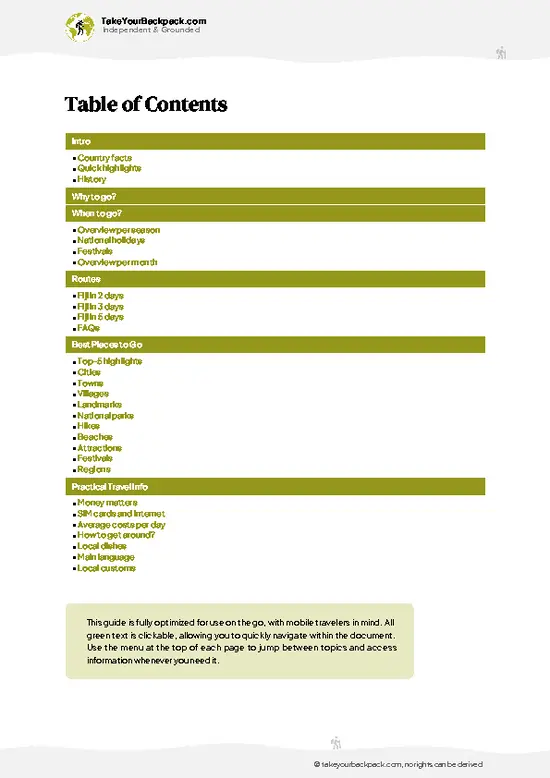
example page 1 from our offline Travel Guide for Fiji
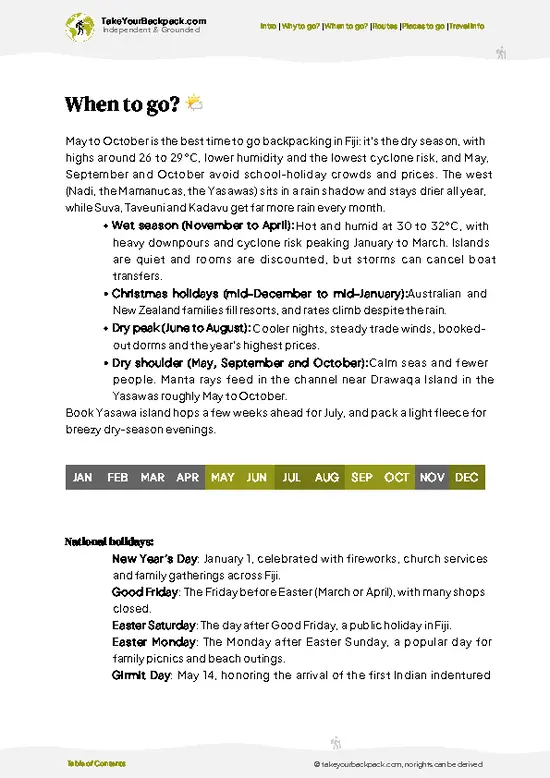
example page 2 from our offline Travel Guide for Fiji
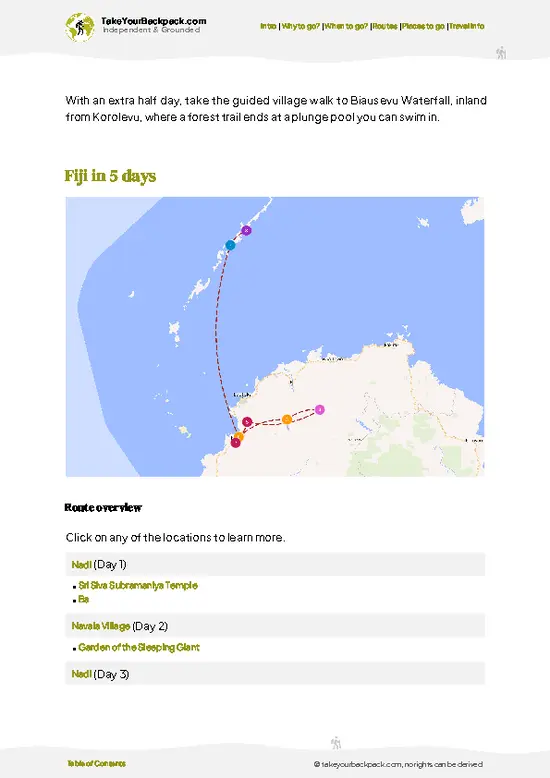
example page 3 from our offline Travel Guide for Fiji
example page 4 from our offline Travel Guide for Fiji
example page 5 from our offline Travel Guide for Fiji
example page 6 from our offline Travel Guide for Fiji
example page 7 from our offline Travel Guide for Fiji
Loading the map 🌍
CLICK TO FILTER
cities
towns
villages
landmarks
national parks
hikes
beaches
attractions
festivals
regions
SHOW COUNTRY’S BESTSHOW ALL

✨ Why go?
Ranked #1 village in Fiji
Why Navala Village should be on your travel list

Backpackers stop here for one reason that few places in Fiji can match: nearly every home is a handbuilt bure, framed in timber, walled with reeds and lashed together with coconut-fiber cord. The chief’s rule against concrete houses keeps the skyline unchanged, and the effect is of a settlement that has kept its own pace. You can cover the whole village on foot in an hour or two, but most people who stay overnight say the evening is the better part. A kava welcome and shared meal with a host family gives you the kind of conversation a resort can’t offer. The Ba River running past the village is good for a cool swim after a dusty ride in. It suits a pause between the beaches of the Coral Coast or Mamanucas and the more rugged interior. Most travelers come for a day, and a night is worth the … read more 👉
Backpackers stop here for one reason that few places in Fiji can match: nearly every home is a handbuilt bure, framed in timber, walled with reeds and lashed together with coconut-fiber cord. The chief’s rule against concrete houses keeps the skyline unchanged, and the effect is of a settlement that has kept its own pace. You can cover the whole village on foot in an hour or two, but most people who stay overnight say the evening is the better part. A kava welcome and shared meal with a host family gives you the kind of conversation a resort can’t offer. The Ba River running past the village is good for a cool swim after a dusty ride in. It suits a pause between the beaches of the Coral Coast or Mamanucas and the more rugged interior. Most travelers come for a day, and a night is worth the extra effort. It fits solo travelers, couples and anyone curious about Fijian village life. It is not a place for those who need Wi-Fi, a menu or a fixed timetable.

💡 HighlightsThe experiences that define the visit

  1. The bure village walk. Wandering the single main green lined with more than a hundred thatched houses is the reason to come. Go before 10 am, when families are cooking, children are heading to school and the light is soft for photos. Allow 1 to 2 hours. Visitors pay a village entry fee of roughly FJ$20 to 30 (about US$9 to 13), which usually covers a guide and the kava welcome. Ask before photographing people or the inside of a house.
  2. The Catholic church. Standing in the middle of the village, this church is one of the few buildings in Navala that is not a thatched bure, and it stands at the head of the main avenue. Visit during the day, when the doors are generally open, and spend 15 to 30 minutes. Entry is free, though a small donation is welcome. Sunday is the day for services, so dress
… read more 👉
  1. The bure village walk. Wandering the single main green lined with more than a hundred thatched houses is the reason to come. Go before 10 am, when families are cooking, children are heading to school and the light is soft for photos. Allow 1 to 2 hours. Visitors pay a village entry fee of roughly FJ$20 to 30 (about US$9 to 13), which usually covers a guide and the kava welcome. Ask before photographing people or the inside of a house.
  2. The Catholic church. Standing in the middle of the village, this church is one of the few buildings in Navala that is not a thatched bure, and it stands at the head of the main avenue. Visit during the day, when the doors are generally open, and spend 15 to 30 minutes. Entry is free, though a small donation is welcome. Sunday is the day for services, so dress modestly and keep quiet if one is under way.
  3. The Ba River bank. The river that runs past Navala is where locals wash, fish and cool off. The water is clearest and calmest in the drier months, and the swim takes about 30 to 60 minutes. It is usually free, and some hosts will arrange a bamboo raft ride for a few Fijian dollars. Avoid it after heavy rain, when the current rises and the water turns brown.
Start with the village walk at first light, because the quiet hours before tour groups arrive are when the place feels most lived in. For day trips, the Koroyanitu National Heritage Park with its waterfall and hike, Abaca village, the Sabeto hot springs and mud pools and the market town of Ba all make good additions from here.
Spotted a mistake or missing something? Contact us.

Things to do near Navala Village

Ratings based on Tripadvisor reviews. When you book through this link, you support our work at no extra cost to you.

🌤️ When to go?When to go for the best experience

May to October is the window for Navala, with dry, sunny days that keep the unsealed highland road passable and the Ba River crossing low.
  • Dry Season (May to October): Days reach 25 to 29°C (77 to 84°F) and nights in the hills dip to 15 to 19°C (59 to 66°F), so pack a fleece. Daylight runs roughly 11 to 12 hours, with sunset near 6 pm. Village stays are easiest to book in July and August, when Australian and New Zealand school holidays fill the few homestays.
  • Wet Season (November to April): Expect 27 to 32°C (81 to 90°F), thick humidity and heavy downpours that can turn the track to mud and flood the river crossings. Daylight stretches to about 13 hours. Cyclones are possible, mostly January to March. Prices drop and you will have the bures to yourself, but plans can collapse at short notice.
… read more 👉
May to October is the window for Navala, with dry, sunny days that keep the unsealed highland road passable and the Ba River crossing low.
  • Dry Season (May to October): Days reach 25 to 29°C (77 to 84°F) and nights in the hills dip to 15 to 19°C (59 to 66°F), so pack a fleece. Daylight runs roughly 11 to 12 hours, with sunset near 6 pm. Village stays are easiest to book in July and August, when Australian and New Zealand school holidays fill the few homestays.
  • Wet Season (November to April): Expect 27 to 32°C (81 to 90°F), thick humidity and heavy downpours that can turn the track to mud and flood the river crossings. Daylight stretches to about 13 hours. Cyclones are possible, mostly January to March. Prices drop and you will have the bures to yourself, but plans can collapse at short notice.
  • Festival Timing: Visits around Christmas and Easter bring returning families and communal feasts, which make the village livelier but busier.
Go in September or early October for dry roads, warm days and thinner crowds.


source: climatestotravel.comJANJanuary: fair for travelingFEBFebruary: fair for travelingMARMarch: fair for travelingAPRApril: fair for travelingMAYMay: highly recommended for travelingJUNJune: highly recommended for travelingJULJuly: good for travelingAUGAugust: good for travelingSEPSeptember: highly recommended for travelingOCTOctober: highly recommended for travelingNOVNovember: fair for travelingDECDecember: fair for traveling
fiji-city-navala-village
© Google |

✈️ The backpacker research shortcutFiji Travel Guide

An offline-friendly backpacking guide with optimized travel routes, ranked highlights, transport advice, and the best areas to stay.
example page 0 from our offline Travel Guide for Fiji
example page 1 from our offline Travel Guide for Fiji
example page 2 from our offline Travel Guide for Fiji
example page 3 from our offline Travel Guide for Fiji
example page 4 from our offline Travel Guide for Fiji
example page 5 from our offline Travel Guide for Fiji
example page 6 from our offline Travel Guide for Fiji
example page 7 from our offline Travel Guide for Fiji
The digital guide (159 pages) contains:
✅ 41 highlights, ranked by travel appeal
✅ Optimized 2, 3 & 5-day travel routes
✅ Cities, national parks, landmarks, beaches
✅ How to get around
✅ Offline-friendly for travel without Wi-Fi
👉 Click to see all 30+ guide features

📅 Plan smarter in minutes, not weeks
✅ Month by month travel advice
✅ Festivals & national holidays
✅ Budget expectations

🗺️ Go to the right places, skip the overrated ones
✅ Honest pros & cons of destinations
✅ Top hikes, parks & viewpoints
✅ Lesser-known places most travelers miss
✅ Clear “worth it vs skip it” guidance

🛏️ Travel smoothly without rookie mistakes
✅ Best areas to stay
✅ Transport systems explained simply
✅ Common scams & safety advice
✅ SIM cards, money & practical tips

🌍 Understand the country, not just visit it
✅ Culture & traditions
✅ 52 Essential phrases & customs
✅ Festivals worth planning around
✅ Traveler-friendly historical context
✅ Insights that make places more meaningful

📱 Built for real travel conditions
✅ Fully downloadable PDF
✅ Works completely offline
✅ Optimized for phone use
✅ Useful in remote areas & buses
✅ Everything in one place
Stop searching, start planning
Get instant access to your full guide. 30‑day money-back guarantee.
+ Add another guide for just

By proceeding you agree to our terms.
Sent to your inbox immediately after payment • 100% Secure Checkout
Best Backpacking Travel Advisor 2025 tourism awardBest Backpacking
Travel Advisor
2025
What others say about Take Your Backpack Guides:
⭐⭐⭐⭐⭐
Fantastic, amazing amount of information!
⭐⭐⭐⭐⭐
My goodness this is amazing, it's what I've been looking for hats off too you!
⭐⭐⭐⭐⭐
I think this is absolutely BRILLIANT
⭐⭐⭐⭐
Very complete and informative. It's still missing places, but I gotta to commend you
⭐⭐⭐⭐⭐
This is truly amazing, thank you, can't wait to explore it with my kids!
⭐⭐⭐⭐⭐
Awesome resource, thank you!
⭐⭐⭐⭐⭐
This is amazing! Can't wait to explore the ones I haven't seen
⭐⭐⭐⭐
I love this! Well done, great idea.
⭐⭐⭐⭐⭐
Thanks for taking the time to make this gem!
⭐⭐⭐⭐⭐
This might be the best website I've ever seen.
⭐⭐⭐⭐⭐
Congratulations, and thank you so much for your work; it's incredibly valuable.
⭐⭐⭐⭐
In all seriousness I think you did a great job pointing out the important spots
⭐⭐⭐⭐⭐
10/10 very good
⭐⭐⭐⭐⭐
As someone who's only just starting to visit regularly this is awesome, thank you.
⭐⭐⭐⭐
Thank you very much! I'm going to visit my dad, it's going to be very useful!
⭐⭐⭐⭐⭐
This is really cool! We'll be travelling for the first time and this definitely come in handy.
⭐⭐⭐⭐⭐
You are now our minister of culture, congratulations 👨‍💼
⭐⭐⭐⭐⭐
Just wanted to tell you that this is a pearl! Going to follow your recommendations.
⭐⭐⭐⭐⭐
This is so cool. I'll definitely be using the resource for my travels soon.
⭐⭐⭐⭐⭐
This is very impressive! Good work.
⭐⭐⭐⭐⭐
This is an amazing and informative site. Very well done!

🛏️ Where to stay?Best areas and accommodation options

The best bed in Navala is a family homestay in a traditional thatched bure, and you should book it ahead through a village contact or a Ba or Nadi tour operator.
There are no hostels or hotels here. Guests sleep on woven pandanus mats with mattresses and mosquito nets, in simple bures built of reed walls and grass thatch. Expect shared bathrooms with cold-water showers and limited power, so bring a headlamp and a power bank. Rates run about FJ$80 to 130 (US$35 to 58) per person per night, usually including three home-cooked meals of cassava, taro, fish or chicken, and fresh fruit. Some hosts charge … read more 👉
The best bed in Navala is a family homestay in a traditional thatched bure, and you should book it ahead through a village contact or a Ba or Nadi tour operator.
There are no hostels or hotels here. Guests sleep on woven pandanus mats with mattresses and mosquito nets, in simple bures built of reed walls and grass thatch. Expect shared bathrooms with cold-water showers and limited power, so bring a headlamp and a power bank. Rates run about FJ$80 to 130 (US$35 to 58) per person per night, usually including three home-cooked meals of cassava, taro, fish or chicken, and fresh fruit. Some hosts charge extra for kava and activities.
Entry to the village requires a sevusevu, a gift of kava roots (about FJ$30 to 50, or US$13 to 22, at the Ba market) presented to the chief. Visitors are asked to dress modestly, with shoulders and knees covered, and to remove hats inside the village. Photography of people needs permission.
If you want more comfort or a fixed bed, stay in Ba or Nadi and visit on a day trip, though you will miss the evening kava and the quiet after tour groups leave. Mobile signal is patchy, so confirm your booking by message a day before you arrive.

🚌 Day tripsExploring the surroundings

Navala is a remote highland village, so day trips from it mean long, rough drives, and most travelers do the reverse by visiting Navala from Ba or Nadi.
Ba Town and the Ba River:
Ba is the nearest real town, about 1.5 to 2 hours away by carrier or minibus along the gravel highland road, with a market, ATMs and cheap curry lunches for FJ$6 to 10 (US$3 to 4.50). It works best as a supply stop before or after your village stay. Go in the morning, since vans back toward the hills thin out by mid-afternoon. First-timers often forget to buy kava for the sevusevu here and arrive empty-handed.
👉 Explore Ba
Nausori Highlands Drive:
The road over the Nausori Highlands passes pine plantations, villages and wide views down to the coast, and takes a half day with stops. Hiring a driver costs around FJ$150 … read more 👉
Navala is a remote highland village, so day trips from it mean long, rough drives, and most travelers do the reverse by visiting Navala from Ba or Nadi.
Ba Town and the Ba River:
Ba is the nearest real town, about 1.5 to 2 hours away by carrier or minibus along the gravel highland road, with a market, ATMs and cheap curry lunches for FJ$6 to 10 (US$3 to 4.50). It works best as a supply stop before or after your village stay. Go in the morning, since vans back toward the hills thin out by mid-afternoon. First-timers often forget to buy kava for the sevusevu here and arrive empty-handed.
👉 Explore Ba
Nausori Highlands Drive:
The road over the Nausori Highlands passes pine plantations, villages and wide views down to the coast, and takes a half day with stops. Hiring a driver costs around FJ$150 to 250 (US$67 to 112) shared among a group, much cheaper split four ways. Dry months are the safe window, because rain makes steep sections slick. Few public buses use the whole route, so arrange transport the day before.
👉 Explore Nausori Highlands
Koroyanitu National Heritage Park:
This park near Abaca has forest walks, waterfalls and a hike up Mount Batilamu’s northern ridge area, with a small entry fee of about FJ$20 to 30 (US$9 to 13). Allow 3 to 4 hours of walking, plus a drive of roughly 2 hours from Navala. Start early, as afternoon cloud and showers arrive quickly in the hills. Most people underestimate the muddy trails and wear sandals.
👉 Explore Koroyanitu National Heritage Park

FAQTraveler FAQ

Navala is reached by road from Ba, about 1.5 to 2 hours on a rough gravel highland route, or from Nadi in roughly 3 to 4 hours. Local buses and carriers run from Ba bus station a few times a day, costing about FJ$8 to 15 (US$3.50 to 7), and a taxi or arranged transfer is FJ$100 to 200 (US$45 to 90). A 4WD is wise in the wet season, since the river crossings can flood. Bring a kava gift for the chief on arrival.
Yes, if you want to see a Fijian highland village where nearly all homes are still thatched bures, and where life runs on farming, kava and family. Plan a one-night homestay at about FJ$80 to 130 (US$35 to 58) with meals included. Time it for May to October for dry roads. If you want nightlife, shops or beaches, it is not the place for you.
Yes, but it is a long haul, since the village is 3 to 4 hours each way from Nadi and about 1.5 to 2 hours from Ba. Day tours from Nadi or the Coral Coast typically cost FJ$150 to 250 (US$67 to 112) and include a village walk and lunch. Staying one night gives you the evening kava and a calmer village once the groups leave. Leave by mid-afternoon if going back by public transport, as vans thin out.
⚠️ Things can change over time, so always validate details locally before you go.

Ideas for continuing your journey

Navala Village isn’t the only highlight in Fiji. Explore all what Fiji has to offer.
Country photo of Fiji

We 💚 feedbackSumming up the experience

Most people photograph the roofs and skip the doorways. Pay attention to the woven mats, the rafters tied with fiber cord and the soot-darkened ceiling inside the bure you are invited into, because that is where the craft really shows. I would stay the night, arrive with kava roots bought in Nadi or Ba, and leave the phone in the bag after dark.

✍️ Help improve this page!
The information on this page is based on in-depth research, insights shared by experienced travelers, and feedback from the local travel community in Fiji. While every effort is made to keep the information accurate and current, conditions can change — so if you spot anything incorrect or outdated, please get in touch.


🙋‍♂️ Give feedback

👋 Meet the founderWho’s Behind Take Your Backpack?

Johan, backpacker and founder of TakeYourBackpackHi, I’m Johan (Netherlands 🇳🇱), the creator of TakeYourBackpack. Over the past 3 decades, I’ve backpacked through 90+ countries across six continents, gaining extensive experience with independent travel, long-term trips, and overland routes.

This site is built on a combination of firsthand travel experience and carefully curated insights from other backpackers. Many guides are based on places I’ve personally visited, while others bring together tips, observations, and practical advice shared by trusted travelers I’ve met along the way.

The goal is to provide realistic, experience-driven guidance — not generic itineraries — so you can explore destinations with better context, clearer expectations, and more confidence.