v2.webp)
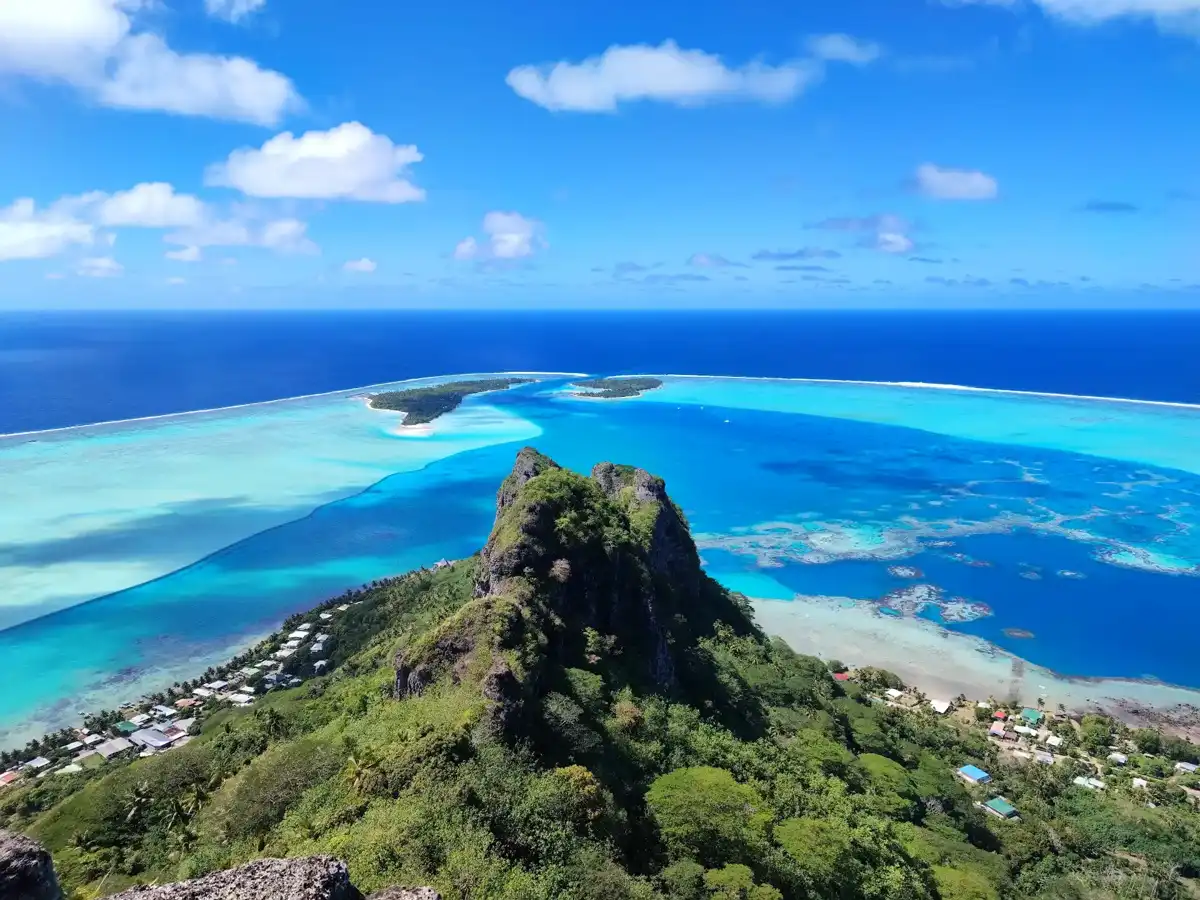
- Hike to Mount Teurafaatiu (the summit viewpoint)
A short but steep walk up Maupiti’s central peak rewards you with a 360° sweep of the lagoon, the ring of motus and the Pacific — the island’s best “you’re really small in the world” perspective. The trail is grassy, often muddy after rain, and feels properly remote compared with Bora Bora viewpoints. - Snorkel the lagoon pass
The channel between the reef and the motus funnels fish, rays and friendly reef sharks past snorkelers. Currents can be strong, so you get vivid life-packed drama you won’t see in sheltered bays — bring a guide or follow a seasoned local boatman. - Picnic and sandbar hopping on the outer motus
Spend an afternoon on the powdery sandbars that appear at low tide, scamper to nearby tiny motus and eat fresh fish pulled off the
- Hike to Mount Teurafaatiu (the summit viewpoint)
A short but steep walk up Maupiti’s central peak rewards you with a 360° sweep of the lagoon, the ring of motus and the Pacific — the island’s best “you’re really small in the world” perspective. The trail is grassy, often muddy after rain, and feels properly remote compared with Bora Bora viewpoints. - Snorkel the lagoon pass
The channel between the reef and the motus funnels fish, rays and friendly reef sharks past snorkelers. Currents can be strong, so you get vivid life-packed drama you won’t see in sheltered bays — bring a guide or follow a seasoned local boatman. - Picnic and sandbar hopping on the outer motus
Spend an afternoon on the powdery sandbars that appear at low tide, scamper to nearby tiny motus and eat fresh fish pulled off the boat — real desert-island vibes without the crowds. Locals will point you to the calmest lunch spots. - Ancient marae ruins
Scattered stone platforms and temple remains show Maupiti’s deep Polynesian past. They’re quieter and less “managed” than marae on bigger islands, so you can feel the archaeology and the storytelling from elders who still know the place names. - Maupiti village and the church
The single main village is where island rhythm lives: fishermen mending nets, kids playing near the jetty, small shops selling chilled drinks. The simple wooden church and the adjoining graveyard are central to local life — great for low-key, human-scale cultural observation. - Join an umu (traditional earth-oven) meal
Families still cook in underground ovens for celebrations. If you can join — and you usually can if you’re invited politely — you’ll get taro, fish and breadfruit cooked the old way, plus stories and laughter. That hands-on food experience is uniquely Maupiti. - Shallow coral gardens by paddle or snorkel
The lagoon’s patch reefs are easy to reach and packed with colorful fish, fragile corals and juvenile species. Because tourism is light, these gardens feel intimate — bring reef-safe sunscreen and a reef-hook attitude. - (Hidden gem) Small seabird motu
A teeny motu a short boat ride out is a local favorite for birdwatching and quiet sunbathing — not on tourist maps and often empty except for fishermen and nesting terns. Ask a captain for a drop-off and bring water; there’s zero infrastructure. - (Hidden gem) Lesser-known western shore marae and storytelling spots
Walk down an unmarked path on the quieter side of the island and you’ll find small stone platforms and petroglyph fragments where older islanders like to tell origin tales. It’s intimate history — no signs, just people and place. - (Hidden gem) Family coconut-processing and craft stalls
Skip the souvenir shop and visit a family who still presses copra, makes coconut oil and strings shells into necklaces. You’ll learn simple techniques, taste fresh coconut products and support locals directly — and get a better keepsake than anything mass-made.
Spotted a mistake or missing something? Contact us.

Pack Love - Romantic dive in the lagoon of Bora Bora

Half Day Eco Snorkeling Small Group Tour in Bora Bora

Bora Bora Private Solar Boat Experience

Private Full-Day Lagoon Adventure in Bora Bora with BBQ Lunch

Private Boat Rental on Cap Camarat 17ft

Bora Bora Watersports Center : Wakeboard-Ski-Tube-Foil
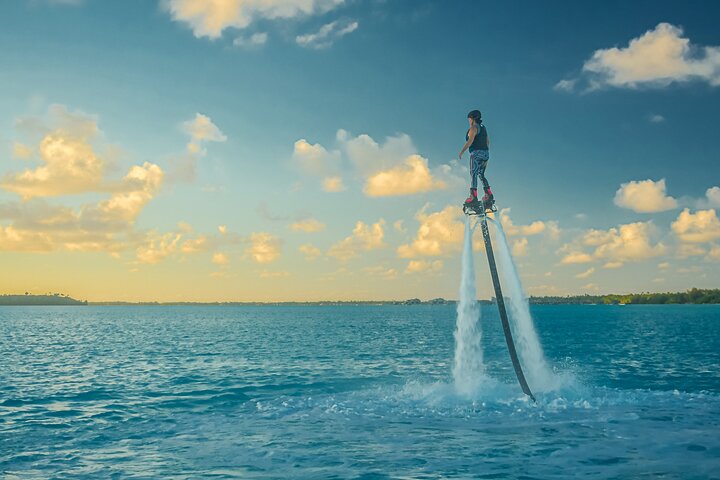
Private Flyboarding Experience in Bora Bora with Pickup

LUXURY PRIVATE Catamaran Bora Bora : Half-Day Trip

Bora Bora 30-minute Private Flight in a Light Aircraft

 Best Backpacking
.jpg) Hi, I’m Johan (Netherlands 🇳🇱), the creator of TakeYourBackpack. Over the past decade, I’ve backpacked through 80+ countries across six continents, gaining extensive experience with independent travel, long-term trips, and overland routes.
Hi, I’m Johan (Netherlands 🇳🇱), the creator of TakeYourBackpack. Over the past decade, I’ve backpacked through 80+ countries across six continents, gaining extensive experience with independent travel, long-term trips, and overland routes.