×

Gambia🇬🇲 | best regionsNo region found in The Gambia

Top regions elude us, but don’t let that stop your trip. The Gambia is packed with lots of other highlights and hidden gems, scenic views, and unique adventures. And, if you know of any great region to add here, just contact us.

By Johan Kruseman 🇳🇱 | Updated October 17, 2026
Explore the best cities in The Gambia

Why go?Key Factors That Shape the Experience

The Gambia works for regions because the River Gambia is the country’s single organizing line. Nearly everything sits within a few miles of the water, so a region here means a stretch of river, creek or beach rather than a separate climate zone. The country is about 480 kilometers long and rarely more than 50 kilometers wide, so distances are short but roads can be slow, with potholes, police checkpoints and shared taxis that leave only when full. Wolof, Mandinka and Fula communities share the banks, and English is the official language, which makes asking directions easy. The ferry crossings and bridge limits shape what is practical. Travelers should know that tourism infrastructure is concentrated at the coast, cash is king outside it, and power cuts and patchy mobile data are normal. Expect … read more 👉
The Gambia works for regions because the River Gambia is the country’s single organizing line. Nearly everything sits within a few miles of the water, so a region here means a stretch of river, creek or beach rather than a separate climate zone. The country is about 480 kilometers long and rarely more than 50 kilometers wide, so distances are short but roads can be slow, with potholes, police checkpoints and shared taxis that leave only when full. Wolof, Mandinka and Fula communities share the banks, and English is the official language, which makes asking directions easy. The ferry crossings and bridge limits shape what is practical. Travelers should know that tourism infrastructure is concentrated at the coast, cash is king outside it, and power cuts and patchy mobile data are normal. Expect red dust, humid air and the smell of woodsmoke and salt.
Our Approach to Ranking
The list of best regions in The Gambia is created based on landscapes, local culture, attractions, vibes, and overall appeal. If you feel a region is missing in this list, please let us know.

When to go?Timing Your Visit for the Best Experience

Best months and the dry season: The best months are November to February, when almost no rain falls, daytime temperatures sit around 30 to 34°C, and nights cool to 16 to 20°C. Skies are hazy with harmattan dust, and sunsets turn orange. Peak season runs December to February, when coastal hotel prices can be 30 to 60 percent higher and flights fill early.Shoulder and rainy seasons: March to May is the shoulder season, with heat climbing to 35 to 40°C upriver, so travel at dawn and rest at midday. Coastal breezes keep the west a few degrees cooler. June to October brings the rains, with roughly 800 to 1,000 mm falling mostly July to September. Laterite tracks turn to red mud, creeks swell, mosquitoes surge and some upriver camps close. Prices drop, and bird life and green fields improve, but remote regions are harder to reach.

region hoppingTips for Visiting Multiple Destinations

How many days and which direction: A trip linking several regions needs 10 to 14 days, because the roads are slow and the ferries unpredictable. Fly into Banjul and begin on the coast, where jet lag and heat can be absorbed near beaches, then head east along the river. Moving one way upriver and returning by a different bank avoids repeating the same dusty road. Allow 2 to 4 nights per stop, with the first stop longer for recovery.Transport and planning mistakes: Shared taxis and minibuses called gelleh-gelleh link the main towns. Expect 2 to 4 hours between neighboring regions and a full day to reach the far east. The usual mistake is cramming in too many stops, which turns the trip into hours of sweat on cracked seats. Another is arriving at a ferry late afternoon, when queues peak. Travel … read more 👉
How many days and which direction: A trip linking several regions needs 10 to 14 days, because the roads are slow and the ferries unpredictable. Fly into Banjul and begin on the coast, where jet lag and heat can be absorbed near beaches, then head east along the river. Moving one way upriver and returning by a different bank avoids repeating the same dusty road. Allow 2 to 4 nights per stop, with the first stop longer for recovery.Transport and planning mistakes: Shared taxis and minibuses called gelleh-gelleh link the main towns. Expect 2 to 4 hours between neighboring regions and a full day to reach the far east. The usual mistake is cramming in too many stops, which turns the trip into hours of sweat on cracked seats. Another is arriving at a ferry late afternoon, when queues peak. Travel early, carry small notes and build in a spare day.

Expert viewTips and Advice from Travelers

How many regions to visit: I advise two or three regions, no more. The country is small, but roads slow everything, and a ferry queue or a taxi waiting to fill can swallow half a day. Two or three gives you time to hear the morning call to prayer, eat peanut stew at a family table and watch kingfishers from a pirogue instead of staring through a windshield.Choosing by travel style: Choose coastal regions if you want easy food, beer, drumming lessons and social hostels. Choose river regions if you want birds, mangroves and villages where greetings last a full minute. Choose inland regions if you want silence, stars and few other foreigners, accepting basic rooms and cold-water bucket washes.What it costs: Budget US$25 to 45 a day on the coast and US$18 to 30 upriver, covering a simple room … read more 👉
How many regions to visit: I advise two or three regions, no more. The country is small, but roads slow everything, and a ferry queue or a taxi waiting to fill can swallow half a day. Two or three gives you time to hear the morning call to prayer, eat peanut stew at a family table and watch kingfishers from a pirogue instead of staring through a windshield.Choosing by travel style: Choose coastal regions if you want easy food, beer, drumming lessons and social hostels. Choose river regions if you want birds, mangroves and villages where greetings last a full minute. Choose inland regions if you want silence, stars and few other foreigners, accepting basic rooms and cold-water bucket washes.What it costs: Budget US$25 to 45 a day on the coast and US$18 to 30 upriver, covering a simple room (US$8 to 25), meals (US$2 to 6 for rice and fish or domoda) and shared transport (US$1 to 8 per leg). Guided boat trips cost roughly US$20 to 50 per boat, reserve entry fees are usually under US$10, and a local bird guide is about US$15 to 30 a day. Carry dalasi in cash, as ATMs outside the coast are scarce.Safety and culture: Petty theft and persistent bumsters on beaches are the main nuisances. Politely refuse, keep valuables out of sight and agree prices before a ride. Take malaria prophylaxis and use repellent at dusk. The country is predominantly Muslim, so cover shoulders and knees in villages, ask before photographing people, and use your right hand for greeting and eating. Photographing police, bridges or military sites is a bad idea. Expect warm hospitality in return for a patient hello.

✈️ The backpacker research shortcutThe Gambia Travel Guide

An offline-friendly backpacking guide with optimized travel routes, ranked highlights, transport advice, and the best areas to stay.
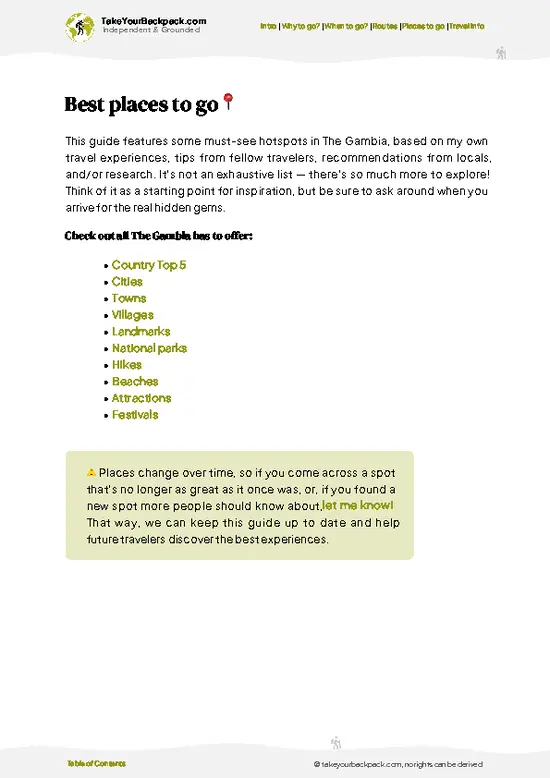
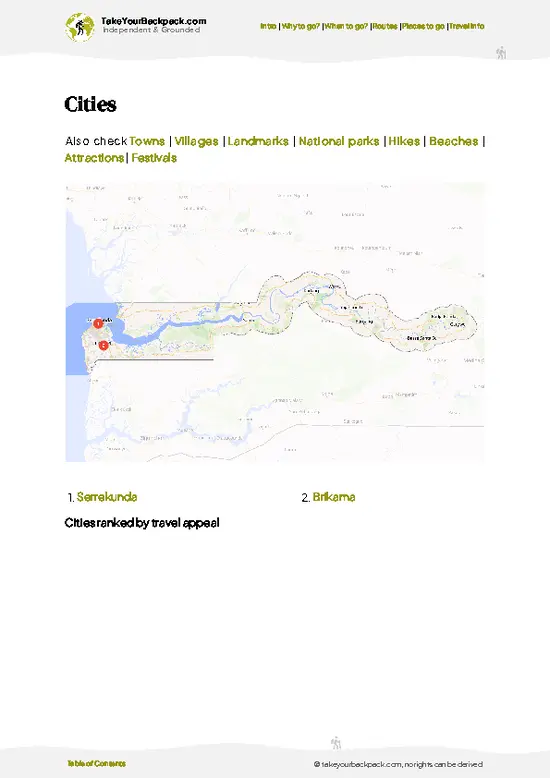
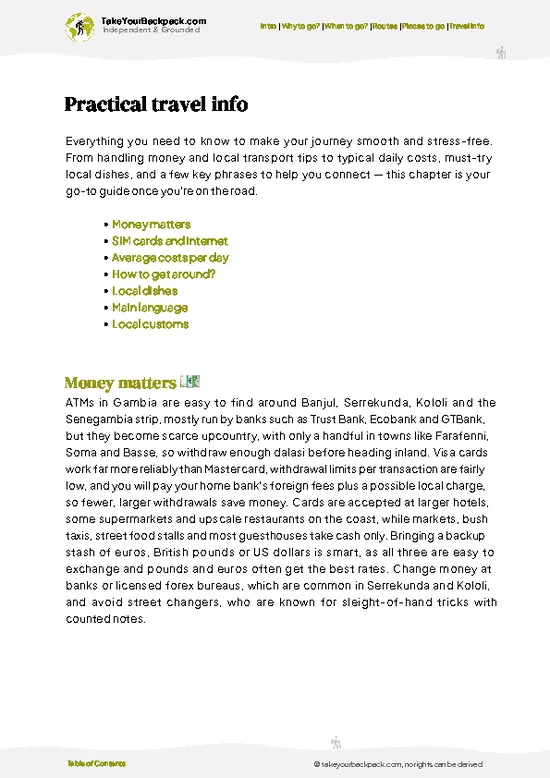
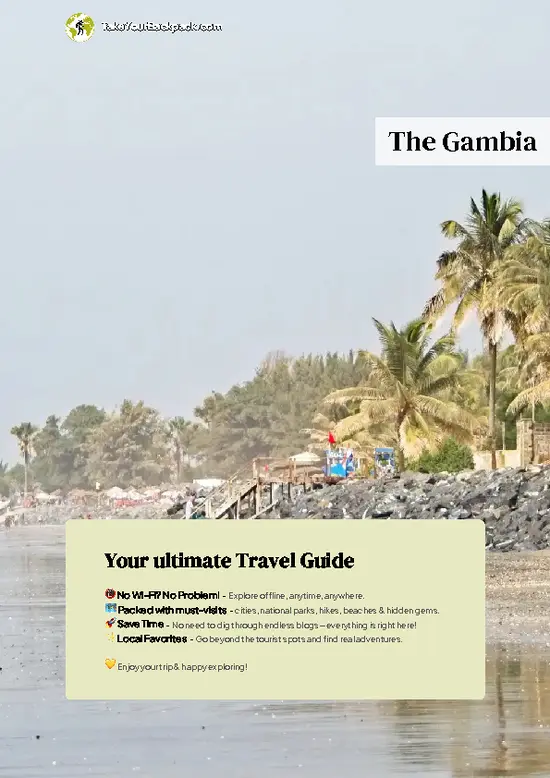
example page 0 from our offline Travel Guide for Gambia
example page 1 from our offline Travel Guide for Gambia
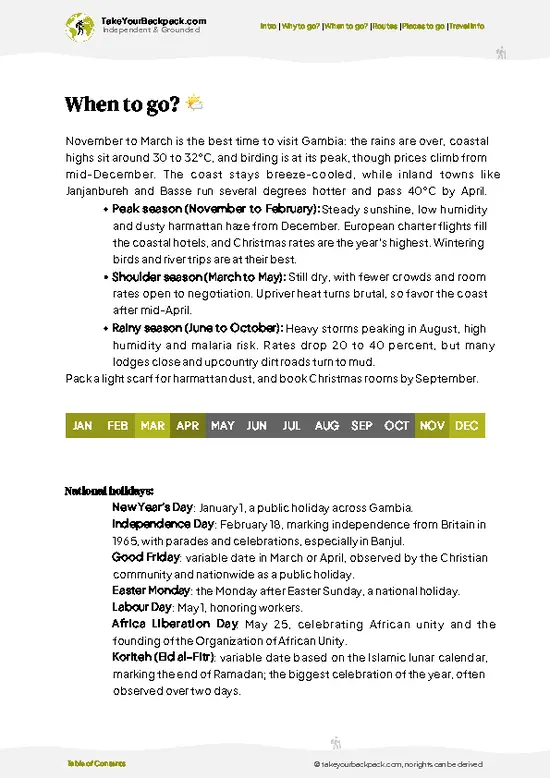
example page 2 from our offline Travel Guide for Gambia
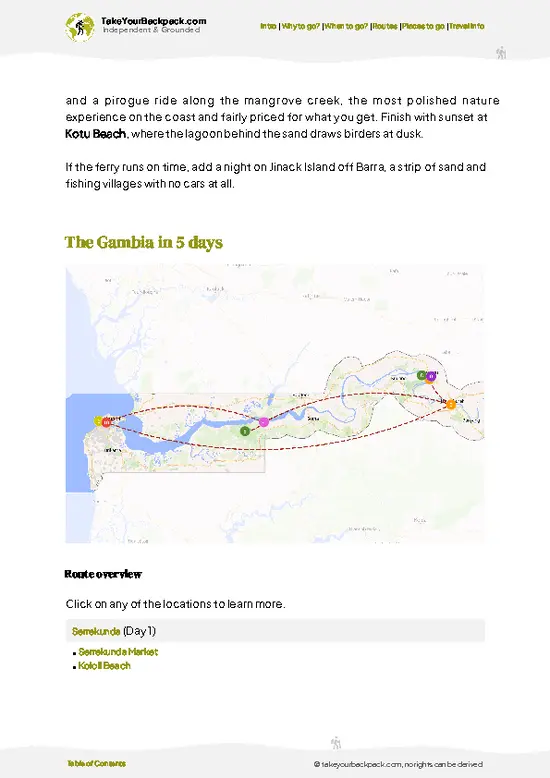
example page 3 from our offline Travel Guide for Gambia
example page 4 from our offline Travel Guide for Gambia
example page 5 from our offline Travel Guide for Gambia
example page 6 from our offline Travel Guide for Gambia
example page 7 from our offline Travel Guide for Gambia
The digital guide (223 pages) contains:
✅ 50 highlights, ranked by travel appeal
✅ Optimized 2, 3 & 5-day travel routes
✅ Cities, national parks, landmarks, beaches
✅ How to get around
✅ Offline-friendly for travel without Wi-Fi
👉 Click to see all 30+ guide features

📅 Plan smarter in minutes, not weeks
✅ Month by month travel advice
✅ Festivals & national holidays
✅ Budget expectations

🗺️ Go to the right places, skip the overrated ones
✅ Honest pros & cons of destinations
✅ Top hikes, parks & viewpoints
✅ Lesser-known places most travelers miss
✅ Clear “worth it vs skip it” guidance

🛏️ Travel smoothly without rookie mistakes
✅ Best areas to stay
✅ Transport systems explained simply
✅ Common scams & safety advice
✅ SIM cards, money & practical tips

🌍 Understand the country, not just visit it
✅ Culture & traditions
✅ 52 Essential phrases & customs
✅ Festivals worth planning around
✅ Traveler-friendly historical context
✅ Insights that make places more meaningful

📱 Built for real travel conditions
✅ Fully downloadable PDF
✅ Works completely offline
✅ Optimized for phone use
✅ Useful in remote areas & buses
✅ Everything in one place
Stop searching, start planning
Get instant access to your full guide. 30‑day money-back guarantee.
+ Add another guide for just

By proceeding you agree to our terms.
Sent to your inbox immediately after payment • 100% Secure Checkout
Best Backpacking Travel Advisor 2025 tourism awardBest Backpacking
Travel Advisor
2025
What others say about Take Your Backpack Guides:
⭐⭐⭐⭐⭐
Fantastic, amazing amount of information!
⭐⭐⭐⭐⭐
My goodness this is amazing, it's what I've been looking for hats off too you!
⭐⭐⭐⭐⭐
I think this is absolutely BRILLIANT
⭐⭐⭐⭐
Very complete and informative. It's still missing places, but I gotta to commend you
⭐⭐⭐⭐⭐
This is truly amazing, thank you, can't wait to explore it with my kids!
⭐⭐⭐⭐⭐
Awesome resource, thank you!
⭐⭐⭐⭐⭐
This is amazing! Can't wait to explore the ones I haven't seen
⭐⭐⭐⭐
I love this! Well done, great idea.
⭐⭐⭐⭐⭐
Thanks for taking the time to make this gem!
⭐⭐⭐⭐⭐
This might be the best website I've ever seen.
⭐⭐⭐⭐⭐
Congratulations, and thank you so much for your work; it's incredibly valuable.
⭐⭐⭐⭐
In all seriousness I think you did a great job pointing out the important spots
⭐⭐⭐⭐⭐
10/10 very good
⭐⭐⭐⭐⭐
As someone who's only just starting to visit regularly this is awesome, thank you.
⭐⭐⭐⭐
Thank you very much! I'm going to visit my dad, it's going to be very useful!
⭐⭐⭐⭐⭐
This is really cool! We'll be travelling for the first time and this definitely come in handy.
⭐⭐⭐⭐⭐
You are now our minister of culture, congratulations 👨‍💼
⭐⭐⭐⭐⭐
Just wanted to tell you that this is a pearl! Going to follow your recommendations.
⭐⭐⭐⭐⭐
This is so cool. I'll definitely be using the resource for my travels soon.
⭐⭐⭐⭐⭐
This is very impressive! Good work.
⭐⭐⭐⭐⭐
This is an amazing and informative site. Very well done!

🛏️ Where to stay?Top Places to Consider Staying

Budget accommodation in The Gambia means small guesthouses, family-run lodges and simple compounds rather than classic dorm hostels, with private rooms typically running US$15 to 35 a night. Kololi and the Senegambia strip have the most choice plus beach access and the liveliest nightlife, though touts are persistent and prices run higher, while Kotu and Fajara are quieter and calmer and Bakau trades polish for a local fishing-town feel close to Kachikally. Banjul itself has few options and goes quiet after dark, so the south-coast villages of Sanyang and Tanji suit you better if you want eco-lodges and empty beaches, at the cost of being far from transport and nightlife.

If you enjoy meeting … read more 👉
Budget accommodation in The Gambia means small guesthouses, family-run lodges and simple compounds rather than classic dorm hostels, with private rooms typically running US$15 to 35 a night. Kololi and the Senegambia strip have the most choice plus beach access and the liveliest nightlife, though touts are persistent and prices run higher, while Kotu and Fajara are quieter and calmer and Bakau trades polish for a local fishing-town feel close to Kachikally. Banjul itself has few options and goes quiet after dark, so the south-coast villages of Sanyang and Tanji suit you better if you want eco-lodges and empty beaches, at the cost of being far from transport and nightlife.

If you enjoy meeting fellow travelers, consider choosing hostels with high ratings for atmosphere. On the other hand, if you prefer having your own space, a hotel might be a better option.

The GambiaMore Places Across The Gambia

👋 Meet the founderWho’s Behind Take Your Backpack?

Johan, backpacker and founder of TakeYourBackpackHi, I’m Johan (Netherlands 🇳🇱), the creator of TakeYourBackpack. Over the past 3 decades, I’ve backpacked through 90+ countries across six continents, gaining extensive experience with independent travel, long-term trips, and overland routes.

This site is built on a combination of firsthand travel experience and carefully curated insights from other backpackers. Many guides are based on places I’ve personally visited, while others bring together tips, observations, and practical advice shared by trusted travelers I’ve met along the way.

The goal is to provide realistic, experience-driven guidance — not generic itineraries — so you can explore destinations with better context, clearer expectations, and more confidence.