×

Ghana🇬🇭 | national parksBoabeng-Fiema Monkey SanctuaryVillage mona monkeys, colobus canopy, monkey cemetery, sacred taboo | things to do and best time to go

Explore Tafi Atome Monkey SanctuaryExplore Wechiau Community Hippo Sanctuary

Backpacking in Boabeng-Fiema Monkey Sanctuary
🏆 Top picknational park ranked #3
By Johan Kruseman 🇳🇱 | Updated October 22, 2026

Boabeng-Fiema is not a safari park, and the monkeys are not caged or staged: they are wild mona and black-and-white colobus that live in the villages, because two communities protect them as sacred. The sanctuary sits in Ghana’s Bono East Region, about 20 km north of Nkoranza and roughly 2 to 3 hours’ drive from Kumasi. Expect a small forest of about 4.5 square km, not a trekking park like Kakum or Mole. Pros: close encounters, a cheap visit, a calm village feel. Cons: little real hiking, rough road sections, and tour buses on weekends. Delays catch people out, so start from Kumasi before 8 a.m. and book a guide on arrival. I stepped off the trolley into red dust and damp leaf smell, and a mona monkey dropped onto a tin roof beside me with a thud, then took a banana from my hand as gently as a child.

Discover everything you want to know in the 📖 Ghana Travel Guide.


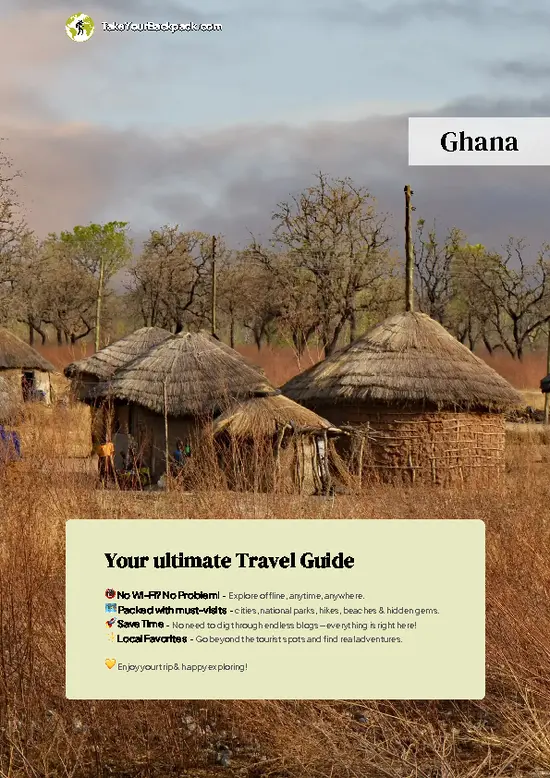
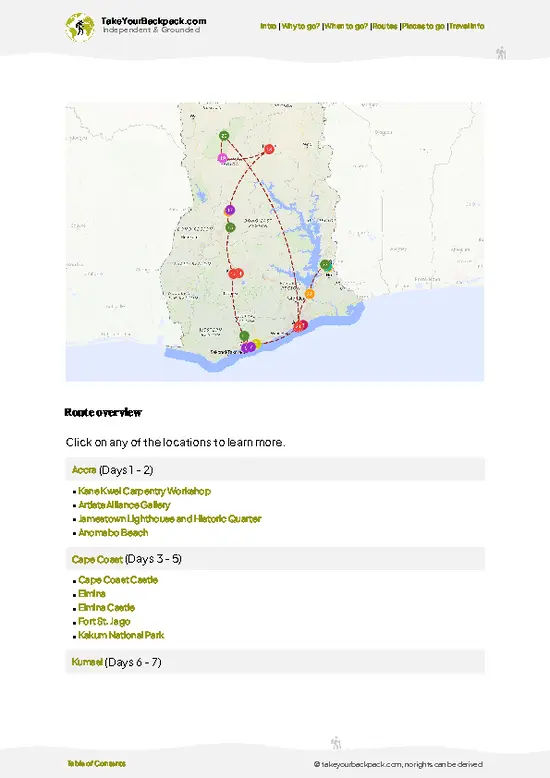
example page 0 from our offline Travel Guide for Ghana
example page 1 from our offline Travel Guide for Ghana
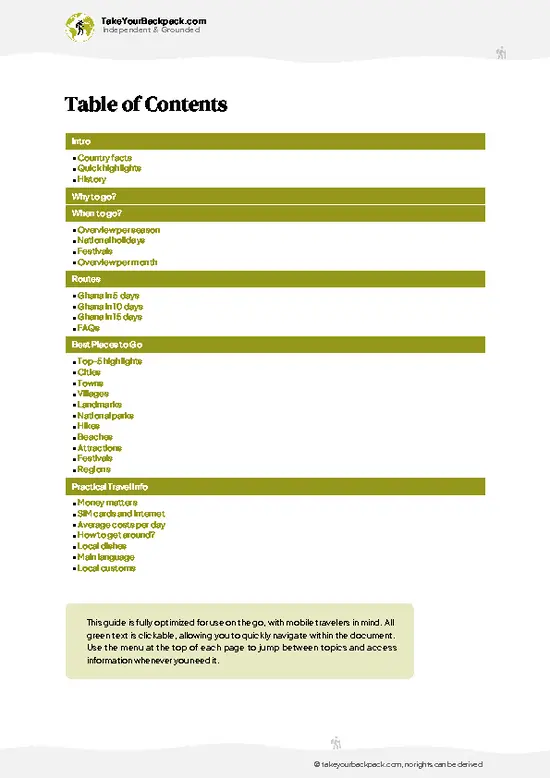
example page 2 from our offline Travel Guide for Ghana
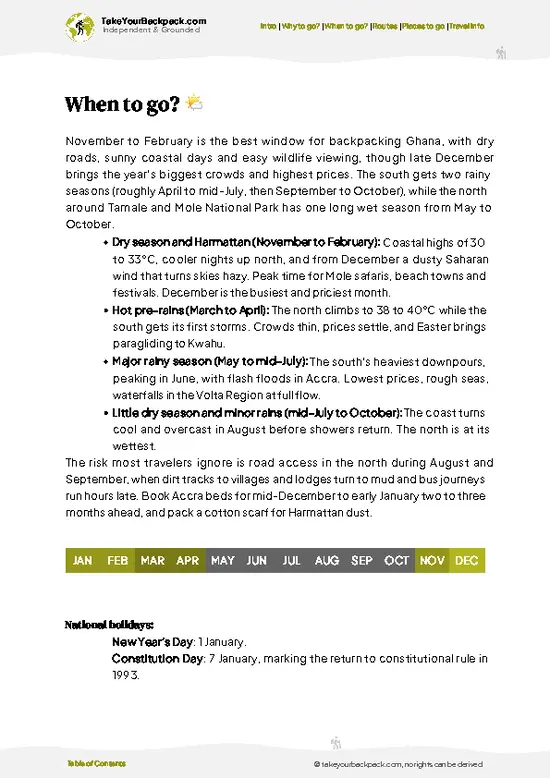
example page 3 from our offline Travel Guide for Ghana
example page 4 from our offline Travel Guide for Ghana
example page 5 from our offline Travel Guide for Ghana
example page 6 from our offline Travel Guide for Ghana
example page 7 from our offline Travel Guide for Ghana
Loading the map 🌍
CLICK TO FILTER
cities
towns
villages
landmarks
national parks
hikes
beaches
attractions
festivals
regions
SHOW COUNTRY’S BESTSHOW ALL

✨ Why go?
Ranked #3 national park in Ghana
The unique appeal for travelers

Backpackers pick Boabeng-Fiema because it can be done independently and cheaply. You arrive by shared taxi or trotro, pay a small guide fee at the visitor center, and walk the forest paths at your own pace with a local guide. No tour operator is needed. The village setting means monkeys cross the road, sit on rooftops and wander near the guesthouse, so you see them without trekking for hours. The trail variety is modest: a short forest loop, a visit to the monkey cemetery and a walk through the village. That suits a half-day stop between Kumasi and Tamale, or on the way to Mole National Park. Basic budget lodging and local chop bars keep daily spending low. If you want a long multi-day hike, look elsewhere. If you want an easy, respectful wildlife encounter and a look at a community-led conservation … read more 👉
Backpackers pick Boabeng-Fiema because it can be done independently and cheaply. You arrive by shared taxi or trotro, pay a small guide fee at the visitor center, and walk the forest paths at your own pace with a local guide. No tour operator is needed. The village setting means monkeys cross the road, sit on rooftops and wander near the guesthouse, so you see them without trekking for hours. The trail variety is modest: a short forest loop, a visit to the monkey cemetery and a walk through the village. That suits a half-day stop between Kumasi and Tamale, or on the way to Mole National Park. Basic budget lodging and local chop bars keep daily spending low. If you want a long multi-day hike, look elsewhere. If you want an easy, respectful wildlife encounter and a look at a community-led conservation tradition, this is a stop that rewards slow travelers.

💡 HighlightsWhat this place is best known for

  1. Mona monkeys in the villages: These are the stars. Troops of Campbell’s mona monkeys wander the lanes of Boabeng and Fiema, drop onto tin roofs and sit on compound walls. Locals treat them as sacred kin, so nobody chases them. Bring a few bananas from the village and you will have monkeys on your shoulders fast.
  2. Black-and-white colobus in the forest: The sanctuary’s second primate is far shyer and far more striking, with long white tail tassels and a white fringe around a black body. Guides know the leafy stretches where they feed, and a slow, quiet approach often puts them directly overhead.
  3. The monkey cemetery: When a monkey dies, the community buries it with a small funeral, and the graves sit in a marked area near the village. It explains the whole place better than any sign could, because
… read more 👉
  1. Mona monkeys in the villages: These are the stars. Troops of Campbell’s mona monkeys wander the lanes of Boabeng and Fiema, drop onto tin roofs and sit on compound walls. Locals treat them as sacred kin, so nobody chases them. Bring a few bananas from the village and you will have monkeys on your shoulders fast.
  2. Black-and-white colobus in the forest: The sanctuary’s second primate is far shyer and far more striking, with long white tail tassels and a white fringe around a black body. Guides know the leafy stretches where they feed, and a slow, quiet approach often puts them directly overhead.
  3. The monkey cemetery: When a monkey dies, the community buries it with a small funeral, and the graves sit in a marked area near the village. It explains the whole place better than any sign could, because the taboo against harming monkeys is a living custom here.
  4. The guided forest walk: A short loop through the semi-deciduous forest patch brings you under tall canopy trees, over leaf litter and past climbers. Expect birds, butterflies and the crackle of colobus moving in the branches. The shade is welcome, and so is the guide’s sharp eye.
  5. The visitor center and its village story: A small information point explains how the two villages came to protect their primates for generations, and how the community now manages the sanctuary. Read it before you walk; the monkeys make more sense afterward.
  6. Boabeng and Fiema themselves: Two quiet farming villages with earthen compounds, goats crossing the paths and kids who grow up beside wild monkeys. Wander slowly and say hello. Evening is gentle, with cooking smoke and monkeys settling into the trees.
Boabeng-Fiema Monkey Sanctuary is best started with the mona monkeys in the village lanes, since they are most active and relaxed in the cooler early hours, and meeting them first makes the quieter colobus search feel like a second act.
Spotted a mistake or missing something? Contact us.

Things to do near Boabeng-Fiema Monkey Sanctuary

Ratings based on Tripadvisor reviews. When you book through this link, you support our work at no extra cost to you.

🌤️ When to go?Best time to explore Boabeng-Fiema Monkey Sanctuary

The best time is the dry season from November to March, when roads are firmest and forest paths are easy to walk.
  • Dry Season (November to March): Days reach 30 to 35°C (86 to 95°F), nights fall to 20 to 23°C (68 to 73°F). Harmattan haze can dim morning light, especially December to February. Sunrise is around 6 a.m., sunset around 6 p.m.
  • Early Rains (April to June): Warm and humid at 27 to 32°C (81 to 90°F). Showers make laterite roads slick, but the forest is green and crowds are thin.
  • Peak Rains (July to October): Heavy downpours, potential delays on the unpaved approach, and muddy trails. Monkeys are still easy to find.
  • Holidays and Weekends: Easter, Christmas and Saturdays bring school groups and day trippers. Prices stay fixed, but guides get busy.
Arrive by 7 a.m. when monkeys are most active and the heat is mild.

source: climatestotravel.comJANJanuary: excellent for travelingFEBFebruary: excellent for travelingMARMarch: highly recommended for travelingAPRApril: fair for travelingMAYMay: fair for travelingJUNJune: fair for travelingJULJuly: fair for travelingAUGAugust: fair for travelingSEPSeptember: fair for travelingOCTOctober: fair for travelingNOVNovember: excellent for travelingDECDecember: excellent for traveling
when-to-go

✈️ The backpacker research shortcutGhana Travel Guide

An offline-friendly backpacking guide with optimized travel routes, ranked highlights, transport advice, and the best areas to stay.
example page 0 from our offline Travel Guide for Ghana
example page 1 from our offline Travel Guide for Ghana
example page 2 from our offline Travel Guide for Ghana
example page 3 from our offline Travel Guide for Ghana
example page 4 from our offline Travel Guide for Ghana
example page 5 from our offline Travel Guide for Ghana
example page 6 from our offline Travel Guide for Ghana
example page 7 from our offline Travel Guide for Ghana
The digital guide (321 pages) contains:
✅ 105 highlights, ranked by travel appeal
✅ Optimized 5, 10 & 15-day travel routes
✅ Cities, national parks, landmarks, beaches
✅ How to get around
✅ Offline-friendly for travel without Wi-Fi
👉 Click to see all 30+ guide features

📅 Plan smarter in minutes, not weeks
✅ Month by month travel advice
✅ Festivals & national holidays
✅ Budget expectations

🗺️ Go to the right places, skip the overrated ones
✅ Honest pros & cons of destinations
✅ Top hikes, parks & viewpoints
✅ Lesser-known places most travelers miss
✅ Clear “worth it vs skip it” guidance

🛏️ Travel smoothly without rookie mistakes
✅ Best areas to stay
✅ Transport systems explained simply
✅ Common scams & safety advice
✅ SIM cards, money & practical tips

🌍 Understand the country, not just visit it
✅ Culture & traditions
✅ 52 Essential phrases & customs
✅ Festivals worth planning around
✅ Traveler-friendly historical context
✅ Insights that make places more meaningful

📱 Built for real travel conditions
✅ Fully downloadable PDF
✅ Works completely offline
✅ Optimized for phone use
✅ Useful in remote areas & buses
✅ Everything in one place
Stop searching, start planning
Get instant access to your full guide. 30‑day money-back guarantee.
+ Add another guide for just

By proceeding you agree to our terms.
Sent to your inbox immediately after payment • 100% Secure Checkout
Best Backpacking Travel Advisor 2025 tourism awardBest Backpacking
Travel Advisor
2025
What others say about Take Your Backpack Guides:
⭐⭐⭐⭐⭐
Fantastic, amazing amount of information!
⭐⭐⭐⭐⭐
My goodness this is amazing, it's what I've been looking for hats off too you!
⭐⭐⭐⭐⭐
I think this is absolutely BRILLIANT
⭐⭐⭐⭐
Very complete and informative. It's still missing places, but I gotta to commend you
⭐⭐⭐⭐⭐
This is truly amazing, thank you, can't wait to explore it with my kids!
⭐⭐⭐⭐⭐
Awesome resource, thank you!
⭐⭐⭐⭐⭐
This is amazing! Can't wait to explore the ones I haven't seen
⭐⭐⭐⭐
I love this! Well done, great idea.
⭐⭐⭐⭐⭐
Thanks for taking the time to make this gem!
⭐⭐⭐⭐⭐
This might be the best website I've ever seen.
⭐⭐⭐⭐⭐
Congratulations, and thank you so much for your work; it's incredibly valuable.
⭐⭐⭐⭐
In all seriousness I think you did a great job pointing out the important spots
⭐⭐⭐⭐⭐
10/10 very good
⭐⭐⭐⭐⭐
As someone who's only just starting to visit regularly this is awesome, thank you.
⭐⭐⭐⭐
Thank you very much! I'm going to visit my dad, it's going to be very useful!
⭐⭐⭐⭐⭐
This is really cool! We'll be travelling for the first time and this definitely come in handy.
⭐⭐⭐⭐⭐
You are now our minister of culture, congratulations 👨‍💼
⭐⭐⭐⭐⭐
Just wanted to tell you that this is a pearl! Going to follow your recommendations.
⭐⭐⭐⭐⭐
This is so cool. I'll definitely be using the resource for my travels soon.
⭐⭐⭐⭐⭐
This is very impressive! Good work.
⭐⭐⭐⭐⭐
This is an amazing and informative site. Very well done!

🛏️ Where to stay?Best areas to stay in Ghana

The simplest bed is in the twin villages of Boabeng and Fiema themselves, where the sanctuary runs a small guesthouse and a few basic rooms sit within a short walk of the visitor center. Expect plain rooms with a fan, shared or simple private bathrooms, and a bucket-wash feel. Rooms cost roughly US$10 to 25 a night. Mosquito nets are worth bringing, and power cuts happen. Meals come from the village kitchens or small stalls, usually ordered ahead.

Staying in the village is the best choice because the mona monkeys and black-and-white colobus move through the houses and the sacred grove at first … read more 👉
The simplest bed is in the twin villages of Boabeng and Fiema themselves, where the sanctuary runs a small guesthouse and a few basic rooms sit within a short walk of the visitor center. Expect plain rooms with a fan, shared or simple private bathrooms, and a bucket-wash feel. Rooms cost roughly US$10 to 25 a night. Mosquito nets are worth bringing, and power cuts happen. Meals come from the village kitchens or small stalls, usually ordered ahead.

Staying in the village is the best choice because the mona monkeys and black-and-white colobus move through the houses and the sacred grove at first light, and you are already there. Some rooms are rented through the community, so arrive by mid-afternoon to sort things out.

For more choice, Nkoranza (about 30 km south) and Techiman (about 20 km to the northwest) have hotels and guesthouses at around US$15 to 40 a night, plus banks, ATMs and markets. Techiman is the main transport hub of the region, so many travelers sleep there when they arrive late. Kumasi is the larger city option, but it is a long day trip rather than a convenient stay. Bring cash, since the village has no ATM.

👛 Costs (as of 22 October 2026)Typical daily expenses

A day at Boabeng-Fiema Monkey Sanctuary costs roughly US$35 to 55 for a backpacker, with a total of about US$45 in high season. Most costs are modest, and the largest outlay is the bed and getting out to the village. Payment is in cash, and there is no ATM on site.
CategoryBudget RangeLocal Reality
Entrance fee and guideUS$6 to 12Foreign visitors pay a fee at the visitor center, and the guided walk through the sacred grove is usually included or costs a small extra amount.
Accommodation (high season)US$10 to 25Simple village rooms with a fan and basic bathroom. Nearby towns such as Techiman and Nkoranza cost slightly more.
Accommodation (low season)US$8 to 20Prices barely move, but rainy months may let you bargain a little.
Local transportUS$3 to 8Shared minibuses (trotros) from Techiman or Nkoranza,
… read more 👉
A day at Boabeng-Fiema Monkey Sanctuary costs roughly US$35 to 55 for a backpacker, with a total of about US$45 in high season. Most costs are modest, and the largest outlay is the bed and getting out to the village. Payment is in cash, and there is no ATM on site.
CategoryBudget RangeLocal Reality
Entrance fee and guideUS$6 to 12Foreign visitors pay a fee at the visitor center, and the guided walk through the sacred grove is usually included or costs a small extra amount.
Accommodation (high season)US$10 to 25Simple village rooms with a fan and basic bathroom. Nearby towns such as Techiman and Nkoranza cost slightly more.
Accommodation (low season)US$8 to 20Prices barely move, but rainy months may let you bargain a little.
Local transportUS$3 to 8Shared minibuses (trotros) from Techiman or Nkoranza, then a short taxi or motorbike hop to the villages.
Food and waterUS$6 to 12Rice, banku or fufu with soup in the village. Meals are often prepared to order, so ask early.
Tips and extrasUS$1 to 3A small tip for the guide is customary and appreciated.
Total Daily BudgetUS$35 to 55About US$45 on a typical high-season day.
⚠️ Prices can change and everyone travels differently, so take this as a rough guide. Hope it helps you plan your adventure!

🥾 TrailsDiscover Boabeng-Fiema Monkey Sanctuary's top trails and natural wonders

Boabeng-Fiema Monkey Sanctuary is a small, gentle place to walk: a forest patch of a few hundred hectares, so this is about guided, slow, wildlife-focused strolls rather than long-distance trekking. Guides are required, and they set the pace.
  • Village walk: You start in Boabeng or Fiema, where mona monkeys live among the houses. Flat, sandy lanes, easy for anyone, about 30 to 45 minutes if you linger with the monkeys.
  • Forest loop: A guided circuit under the canopy to look for black-and-white colobus. Terrain is mostly packed earth and leaf litter with some roots and gentle slopes. Plan on 1 to 2
… read more 👉
Boabeng-Fiema Monkey Sanctuary is a small, gentle place to walk: a forest patch of a few hundred hectares, so this is about guided, slow, wildlife-focused strolls rather than long-distance trekking. Guides are required, and they set the pace.
  • Village walk: You start in Boabeng or Fiema, where mona monkeys live among the houses. Flat, sandy lanes, easy for anyone, about 30 to 45 minutes if you linger with the monkeys.
  • Forest loop: A guided circuit under the canopy to look for black-and-white colobus. Terrain is mostly packed earth and leaf litter with some roots and gentle slopes. Plan on 1 to 2 hours, easy to moderate, and expect to stop often with your neck craned upward.
  • Monkey cemetery visit: A short detour from the village to the graves of monkeys that have died. Flat and quick, around 10 to 15 minutes, with a guide explaining the burial customs.
  • Birds and butterflies: Early morning and the forest edges are the best times for birdsong and butterflies, particularly after rain. Carry binoculars if you have them, and keep your voice low.
  • Wildlife notes: Monas are habituated and bold, so keep bags zipped and food out of sight. Colobus stay high and are warier. Both species are protected by a village taboo, so never feed or touch them beyond what the guide permits.
Wear closed shoes with grip, light long sleeves against insects, and carry water. The forest is humid and the paths turn slick after rain. The walks are short enough that a good pair of sandals is nearly workable, but shoes are better for the roots.
The sanctuary lies in Ghana’s Bono East Region, reached by road from Kumasi, Techiman or Nkoranza. Public transport gets you to the junction towns, and from there a local taxi or motorbike covers the last stretch, so allow plenty of slack in the day. Crowds are rarely an issue; on most days you will share the forest with only a handful of visitors, and school groups are the main exception. An entrance fee covers the guide and is modest, roughly US$5 to 10 for foreign adults, paid in cedis at the visitor center. Tipping the guide is customary.
⚠️ Hiking info can sometimes be outdated or inaccurate. Before you hit the trail, check the latest conditions with locals. If you do spot anything that's off, I'd love to hear from you, so I can update it for fellow travelers.

🛡️ SafetyScams, Hazards, and Annoyances

Boabeng-Fiema is a gentle, well-managed place, and the main hazards are heat and a few cheeky monkeys. The sanctuary is small and the forest paths are flat and easy to follow, usually with a local guide who is required anyway. Walk in the early morning or late afternoon when it is cooler and the monkeys are most active. Carry water, wear closed shoes and apply insect repellent, since mosquitoes and malaria are present across this region of Ghana, so talk to a doctor about prophylaxis before you go.

The monkeys are considered sacred by the villagers and are not afraid of people. Do not feed them. Keep snacks hidden in your bag, as the mona monkeys will grab fruit and bananas from open hands. Follow your guide’s lead on distance and never touch them or enter the grove with shoes if asked not … read more 👉
Boabeng-Fiema is a gentle, well-managed place, and the main hazards are heat and a few cheeky monkeys. The sanctuary is small and the forest paths are flat and easy to follow, usually with a local guide who is required anyway. Walk in the early morning or late afternoon when it is cooler and the monkeys are most active. Carry water, wear closed shoes and apply insect repellent, since mosquitoes and malaria are present across this region of Ghana, so talk to a doctor about prophylaxis before you go.

The monkeys are considered sacred by the villagers and are not afraid of people. Do not feed them. Keep snacks hidden in your bag, as the mona monkeys will grab fruit and bananas from open hands. Follow your guide’s lead on distance and never touch them or enter the grove with shoes if asked not to. The rainy season makes paths muddy, so pack a light rain jacket.

FAQCommon questions from travelers

One night and two mornings is ideal for Boabeng-Fiema Monkey Sanctuary, although a rushed half-day visit works if you come from Techiman. The guided walk through the forest takes about 1 to 2 hours, and the monkeys are most active early and late in the day. Staying overnight in the village lets you catch both, and a second day suits birdwatchers or those visiting the nearby Fiema grove.
Yes, Boabeng-Fiema Monkey Sanctuary can be reached by public transport. Shared minibuses run to Techiman (about 20 km away) and Nkoranza, from where you take a local taxi or motorbike to the villages for roughly US$3 to 8 in total. Direct service from Kumasi takes around 3 to 4 hours with a change at Techiman. Walking within the villages and the sanctuary needs no vehicle at all.
Yes, Boabeng-Fiema Monkey Sanctuary charges a modest entrance fee, typically about US$6 to 12 for foreign visitors, paid in cash at the visitor center. A local guide is required for the walk and is usually included in that price, with a small tip expected. No advance permit is needed, and the center is open daily from morning until late afternoon.
⚠️ Things can change over time, so always validate details locally before you go.

Other Ghanaian national parks near Boabeng-Fiema Monkey Sanctuary

Explore more nearby:


💡 Not sure where to go next?
Create a personalized itinerary for Ghana including Boabeng-Fiema Monkey Sanctuary and the places that fit your trip.

Generate my itinerary

👉 Discover all national parks

Or checkout all Ghana has to offer (think cities, towns, villages, national parks, hikes, beaches, festivals)
Country photo of Ghana

We 💚 feedbackKey takeaways before you go

Boabeng-Fiema Monkey Sanctuary fits neatly between Kumasi and the north, so I would link it with Kintampo Waterfalls on the way to Mole National Park, turning a long road day into a primate-to-elephant arc. Go early, give the village a full morning, and bring small bills for the guide and a bunch of bananas.

✈️ When did I visit Ghana?
Ghana I visited in December 2024, starting in Accra following the coast, then up north to Mole National park to finish in the Volta Region.

✍️ Help improve this page!
The information on this page is based on my own backpacking experience in Ghana, supplemented with up-to-date research and feedback from other travelers. Travel details can change, so if you notice anything outdated or incomplete, feel free to let me know.


🙋‍♂️ Give feedback

👋 Meet the founderWho’s Behind Take Your Backpack?

Johan, backpacker and founder of TakeYourBackpackHi, I’m Johan (Netherlands 🇳🇱), the creator of TakeYourBackpack. Over the past 3 decades, I’ve backpacked through 90+ countries across six continents, gaining extensive experience with independent travel, long-term trips, and overland routes.

This site is built on a combination of firsthand travel experience and carefully curated insights from other backpackers. Many guides are based on places I’ve personally visited, while others bring together tips, observations, and practical advice shared by trusted travelers I’ve met along the way.

The goal is to provide realistic, experience-driven guidance — not generic itineraries — so you can explore destinations with better context, clearer expectations, and more confidence.