×

Ghana🇬🇭 | best national parksExplore the 10 Best national parks in Ghana

Ghana’s national parks are few, small by East African standards, and nothing like a drive-through safari. Mole in the northern savanna is the headline act, with red laterite tracks, harmattan dust and the dry rattle of grass in the heat. Down south, the parks turn to rainforest and coast: dripping canopy, red mud, the whine of cicadas and a sticky, salty air. Entry fees are modest, crowds are thin, and public transport thins out fast near the gates. Independent travelers and backpackers can reach most parks, but expect long hauls, shared taxis and a few unpaved final kilometers.

By Johan Kruseman 🇳🇱 | Updated October 23, 2026
Explore the best hikes in Ghana

Why go?Understanding Their Importance

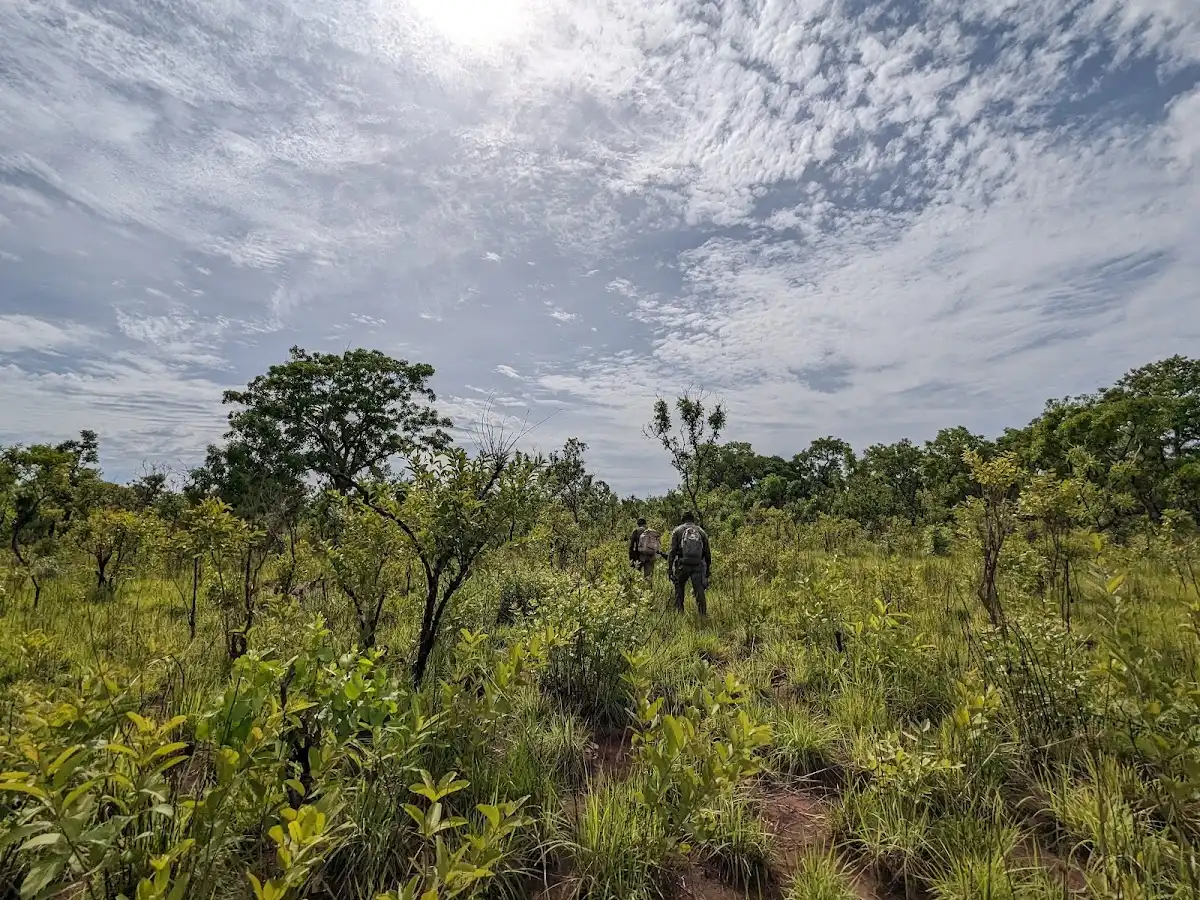
Ghana is a West African country with a gradient that suits compact, varied parks: dry Guinea savanna in the north, thick tropical forest in the southwest and a hot, humid coastal belt in between. Wildlife here is shy and scarce compared with East or Southern Africa, partly because of centuries of farming, hunting and logging, and partly because the parks protect modest patches of habitat. You come for walking safaris, birds, monkeys and forest canopy, not for dense herds.

The infrastructure is uneven. Main highways are paved and shared minibuses (trotros) run constantly between cities, but roads to the gates often turn to red dust in the dry months and slick mud in the rains. Fuel, cash and phone signal can vanish quickly. Park fees are set separately for Ghanaians, residents and foreigners, … read more 👉
Ghana is a West African country with a gradient that suits compact, varied parks: dry Guinea savanna in the north, thick tropical forest in the southwest and a hot, humid coastal belt in between. Wildlife here is shy and scarce compared with East or Southern Africa, partly because of centuries of farming, hunting and logging, and partly because the parks protect modest patches of habitat. You come for walking safaris, birds, monkeys and forest canopy, not for dense herds.

The infrastructure is uneven. Main highways are paved and shared minibuses (trotros) run constantly between cities, but roads to the gates often turn to red dust in the dry months and slick mud in the rains. Fuel, cash and phone signal can vanish quickly. Park fees are set separately for Ghanaians, residents and foreigners, and are paid in cedis. Guides are compulsory on nearly every trail, which means you meet rangers who know the animal calls and the plants, and who often come from the nearby villages.

Before choosing Ghana for its parks, know that the setting is hot, humid and unhurried. Plans slip, distances are long, and the reward is quiet trails, birdsong and local hospitality rather than polished facilities.
Behind the Scenes of Selection
The list of best national parks in Ghana is created based on landscapes, wildlife, adventure opportunities, facilities, and overall experience. If you feel a national park is missing in this list, please let us know.

When to go?Optimal Periods for Travel

Best months and the dry season: The best months for Ghana’s national parks are November to March, when the dry season thins the vegetation, animals gather at waterholes and roads are passable. In the north, daytime temperatures reach 33 to 38°C by February and March, and the harmattan wind brings a pale haze and cooler nights of 18 to 22°C from December to February. Dust coats your lips and clothes, and photos come out washed in beige, but wildlife sightings are best now.

Shoulder seasons and the rains: In the south, rain falls in two stretches: roughly April to July (the heavier one) and September to November. Annual rainfall in the forest belt runs about 1,500 to 2,000 mm, and trails turn to thick red mud, with leeches and biting flies. The north has one rainy season, around May to September, … read more 👉
Best months and the dry season: The best months for Ghana’s national parks are November to March, when the dry season thins the vegetation, animals gather at waterholes and roads are passable. In the north, daytime temperatures reach 33 to 38°C by February and March, and the harmattan wind brings a pale haze and cooler nights of 18 to 22°C from December to February. Dust coats your lips and clothes, and photos come out washed in beige, but wildlife sightings are best now.

Shoulder seasons and the rains: In the south, rain falls in two stretches: roughly April to July (the heavier one) and September to November. Annual rainfall in the forest belt runs about 1,500 to 2,000 mm, and trails turn to thick red mud, with leeches and biting flies. The north has one rainy season, around May to September, with 1,000 to 1,100 mm, when grass grows tall and the animals are harder to spot. April and October are decent compromises, with fewer visitors and greener landscapes.

Crowds and prices: Crowds peak around Christmas and Easter, when Ghanaians and expats visit, and nearby guesthouses can fill. Prices barely shift seasonally, but rooms near the gates tighten during these windows, so book ahead. Outside them, you may share trails with only your guide.

national park hoppingSuggested Travel Strategies

How many days to plan: A trip linking several national parks in Ghana needs 10 to 14 days once you count the long transfers. The north and the south sit on opposite ends of the country, so the smart structure is to treat them as two clusters: the northern savanna around Tamale and the southern forest and coast around Accra, Cape Coast and Takoradi.

Direction and time per stop: Fly or take a long bus between Accra and Tamale (about 10 to 12 hours by road, or a domestic flight of roughly one hour), then work back south. Spend 2 to 3 nights at a savanna park to cover a dawn and dusk walk, and 1 to 2 nights at a forest or coastal stop. Between Cape Coast and Takoradi regions, transfers run 2 to 4 hours by trotro or shared taxi, though the last stretch to a gate can add another hour on rough tracks. … read more 👉
How many days to plan: A trip linking several national parks in Ghana needs 10 to 14 days once you count the long transfers. The north and the south sit on opposite ends of the country, so the smart structure is to treat them as two clusters: the northern savanna around Tamale and the southern forest and coast around Accra, Cape Coast and Takoradi.

Direction and time per stop: Fly or take a long bus between Accra and Tamale (about 10 to 12 hours by road, or a domestic flight of roughly one hour), then work back south. Spend 2 to 3 nights at a savanna park to cover a dawn and dusk walk, and 1 to 2 nights at a forest or coastal stop. Between Cape Coast and Takoradi regions, transfers run 2 to 4 hours by trotro or shared taxi, though the last stretch to a gate can add another hour on rough tracks.

Planning mistakes: The most common error is cramming the whole country into a week, which leaves you in vehicles under the midday glare with sore backs and little trail time. Another is trusting a map distance: a 100 km hop can take four hours on potholed roads. Travel in the morning, when it is cooler, aim to arrive before dark, and carry cash because ATMs are scarce near the gates. Leave a buffer day before any flight home.

The ListThe Best national parks of Ghana

1 Mole National Park

Walking safaris, waterhole terrace, savanna elephants

Join an armed ranger on foot at dawn, then watch elephants drink from the motel terrace overlooking a dry-season waterhole.

Ghana - Mole National Park

2 Kakum National Park

Canopy walkway, Cape Coast hinterland, rainforest birds

Cross seven rope bridges strung 30 meters above the forest floor, then stay for dusk or night walks to hear hyrax and owls.

3 Boabeng-Fiema Monkey Sanctuary

Village mona monkeys, colobus canopy, monkey cemetery, sacred taboo

Follow a guide through a small forest patch to spot colobus overhead, then wander two farming villages where wild monas drop onto roofs.

4 Ankasa Conservation Area

Rainforest interior, elephant tracks, Western Region border

Walk guided trails through dense wet forest near the Ivory Coast border, listening for forest elephants, bongo, and over 700 butterfly species.

5 Wechiau Community Hippo Sanctuary

Black Volta hippos, canoe pods, riverbank platforms, Upper West villages

Paddle a wooden canoe along the Black Volta at dawn or dusk to find surfacing hippos, then visit the communities that run the sanctuary.

ghana-national-park-wechiau-community-hippo-sanctuary
© Google |

6 Shai Hills Resource Reserve

Granite outcrops, bat cave, savanna zebras, baboon troops

Climb rocky ledges for views toward the coast, enter a cave packed with fruit bats, and scan the grassland for zebras and antelope.

ghana-national-park-shai-hills-resource-reserve
© Google |

7 Bia National Park

Ivorian frontier, closed-canopy forest, Black Volta basin

Track elephants and forest monkeys through quiet timber-rich woodland on the western edge of Ghana, with few other visitors and basic access.

8 Tafi Atome Monkey Sanctuary

Sacred grove, mona monkeys, Volta Region village, Wli Falls day trip

Meet banana-hungry monas in a protected grove, learn its folklore on an hour-long guided loop, then walk the red-earth village lanes.

9 Digya National Park

Volta Lake shore, savanna woodland, remote camp

Reach one of Ghana’s least visited parks by rough track to look for elephants, hippos, and roan antelope along the lake margin.

ghana-national-park-digya-national-park
© Google |

10 Kyabobo National Park

Togo Hills, eastern ridges, Oti valley, rock outcrops

Climb steep forested ridges along the Togo border for views over the Oti plain, with butterflies and elephant sign along the paths.

ghana-national-park-kyabobo-national-park
© Google |

11 Agumatsa Wildlife Sanctuary

Mount Afadja foothills, fruit bat colonies, Wli Falls trail

Hike through forest to the tallest waterfall in West Africa, then watch thousands of straw-colored fruit bats leave their roosts at dusk.

12 Owabi Wildlife Sanctuary

Kumasi reservoir, canopy walkway, 200+ bird species, fruit bats

Walk short shaded trails and a suspended walkway around the old Kumasi dam, listening for hornbills, kingfishers and monkeys before dusk bats leave their roosts.

13 Kalakpa Resource Reserve

Volta Region savanna, Afram plains edge, buffalo trails

Drive in from Ho for guided walks across dry grassland and riverine thickets where buffalo, kob, and bushbuck move between seasonal waterholes.

14 Kogyae Strict Nature Reserve

Strict reserve, Ashanti-Bono grassland, research access

Arrange permits in advance for this closed reserve of transitional forest and savanna, which welcomes researchers and rare, escorted visits.

15 Amansuri Wetlands

Stilt villages, raffia swamp, canoe channels

Paddle a dugout through flooded raffia forest toward Beyin, where homes stand on stilts above water and manatees and sitatunga live in the reeds.

16 Avu Lagoon Ramsar Site

Volta-side lagoon, waterbird counts, Keta plain

Scan the lagoon edge near Denu for herons, plovers, and sandpipers, best at dawn when migratory flocks feed in the shallows.

17 Densu Delta Ramsar Site

Accra coastline, salt pans, wader flocks

Bring binoculars to a coastal wetland west of Accra, where mudflats and mangrove patches hold flocks of waders within sight of the highway.

18 Muni-Pomadze Ramsar Site

Winneba lagoon, mangrove edge, Mount Bawjiase fields

Visit the lagoon near Winneba to spot waterbirds in shallow brackish water, easily combined with a stop at the nearby coastal town.

19 Songor Ramsar Site

Salt pans, Volta mouth, mangrove canoes, wader flats

Cross brackish water by small boat, watch salt raked by hand from shallow pans, and paddle mangrove channels where herons and kingfishers hunt.

20 Nini-Suhien National Park

Ankasa fringe, Ashanti timber belt, small forest block

Walk through a compact patch of semi-deciduous forest in the west, where guides point out monkeys, hornbills, and old forest trees.

ghana-national-park-nini-suhien-national-park
© Google |

Think you know Ghana?

Prove you’re a true local — uncover 10 lesser-known national parks in Ghana that locals tend to keep to themselves.
Loading the map 🌍

Expert viewExpert Commentary on national parks

How many parks to visit: I recommend two or three national parks, no more. Ghana’s parks sit far apart, the roads are slow, and each one rewards a full day of walking rather than a quick tick. Three gives you a mix of savanna and forest without turning the trip into a series of dusty transfers. You leave with time for dawn bird calls, a long lunch of fufu or rice and stew in the nearest village, and the quiet that comes after the guide stops talking.

Which kind suits your style: If you want big animals and classic walking safaris, put the northern savanna first. Elephants, antelope and baboons show up in the dry season, and the open light is good for photos. If you prefer canopy, butterflies and monkeys, choose a southern forest park, where trails are shaded, humid and loud with insects. … read more 👉
How many parks to visit: I recommend two or three national parks, no more. Ghana’s parks sit far apart, the roads are slow, and each one rewards a full day of walking rather than a quick tick. Three gives you a mix of savanna and forest without turning the trip into a series of dusty transfers. You leave with time for dawn bird calls, a long lunch of fufu or rice and stew in the nearest village, and the quiet that comes after the guide stops talking.

Which kind suits your style: If you want big animals and classic walking safaris, put the northern savanna first. Elephants, antelope and baboons show up in the dry season, and the open light is good for photos. If you prefer canopy, butterflies and monkeys, choose a southern forest park, where trails are shaded, humid and loud with insects. Beach-leaning travelers can pick a coastal park, where the draw is sea air, birds and mangrove paddling. Travelers short on time or money should skip the far north and stick to one southern park, since it is closer to Accra.

What it costs: Budget about US$30 to 60 a day including food, guesthouse and local transport. Foreigner entry fees usually run the equivalent of US$8 to 25 per person, in cedis, and a compulsory guide or walking safari adds roughly US$5 to 15. A vehicle safari, where offered, costs more, typically US$20 to 50 per vehicle. Cheap guesthouses near the gates cost US$15 to 40 a night, while park lodges run higher. Shared taxis and trotros cost a few dollars per leg, but chartering a car for the final stretch to a gate may cost US$20 to 60. Carry cedis in small notes, because card machines and ATMs are unreliable.

Safety and culture: Daytime walking is generally safe with a ranger. Keep a respectful distance from elephants and baboons, which can be aggressive around food. In the forest, wear long sleeves, closed shoes and insect repellent against mosquitoes and tsetse flies, and take malaria prophylaxis. A yellow fever certificate is required for entry into Ghana. Drink only filtered or bottled water, and bring enough for heat that can top 35°C.

Culturally, greet people first, with a handshake and a “good morning,” before asking for help. Use your right hand to give and receive. Ask before photographing villagers, and tip your guide, usually US$3 to 8 per group, which they earn gladly after hours of walking with you in the sun.

✈️ The backpacker research shortcutGhana Travel Guide

An offline-friendly backpacking guide with optimized travel routes, ranked highlights, transport advice, and the best areas to stay.
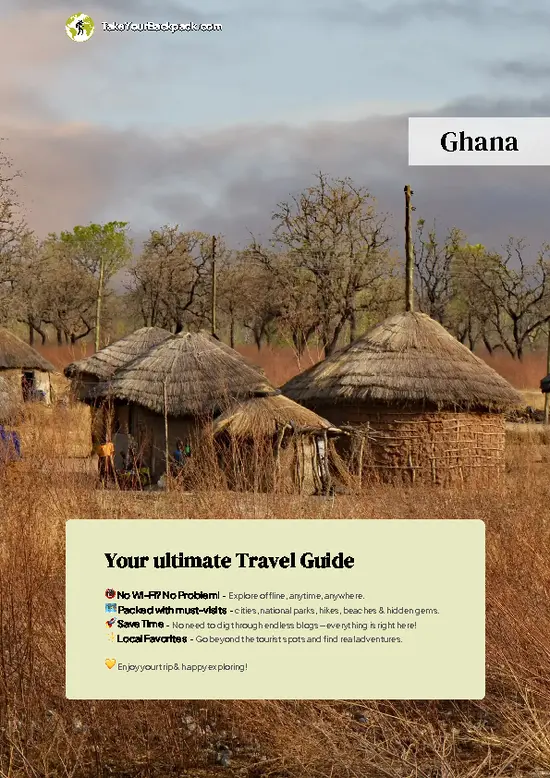
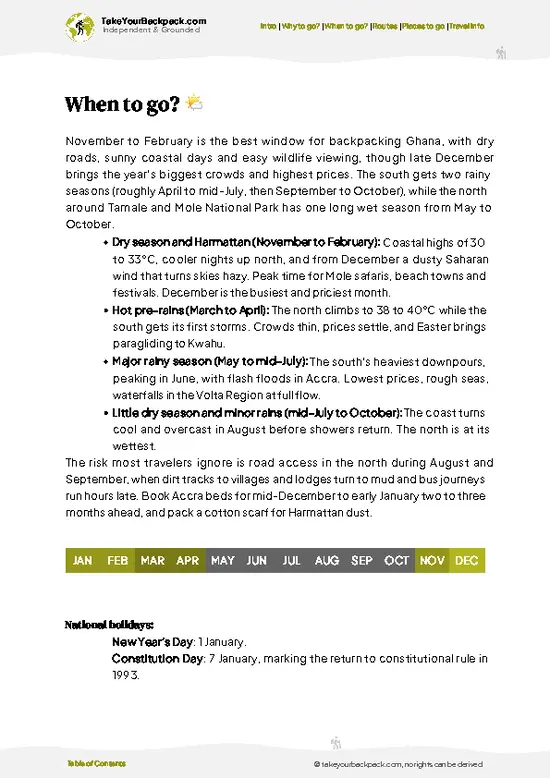
example page 0 from our offline Travel Guide for Ghana
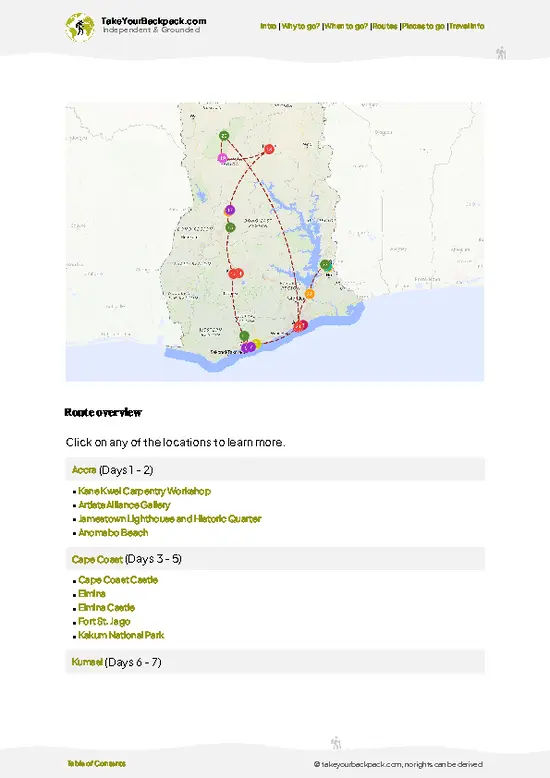
example page 1 from our offline Travel Guide for Ghana
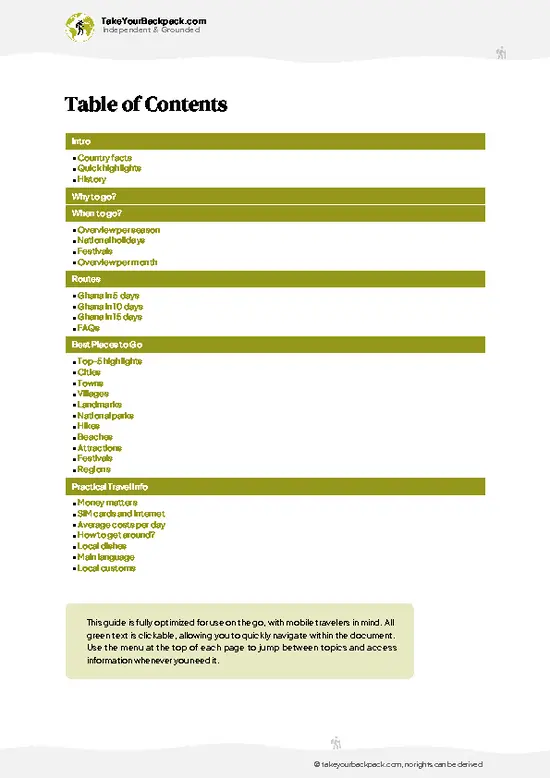
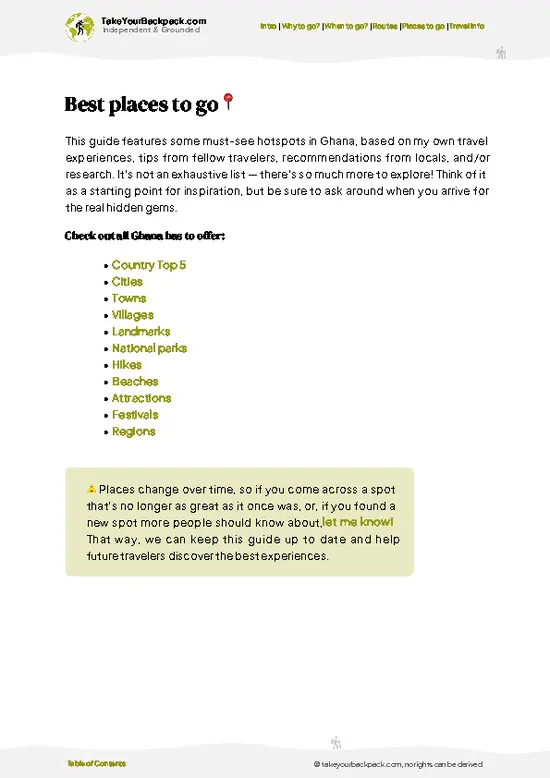
example page 2 from our offline Travel Guide for Ghana
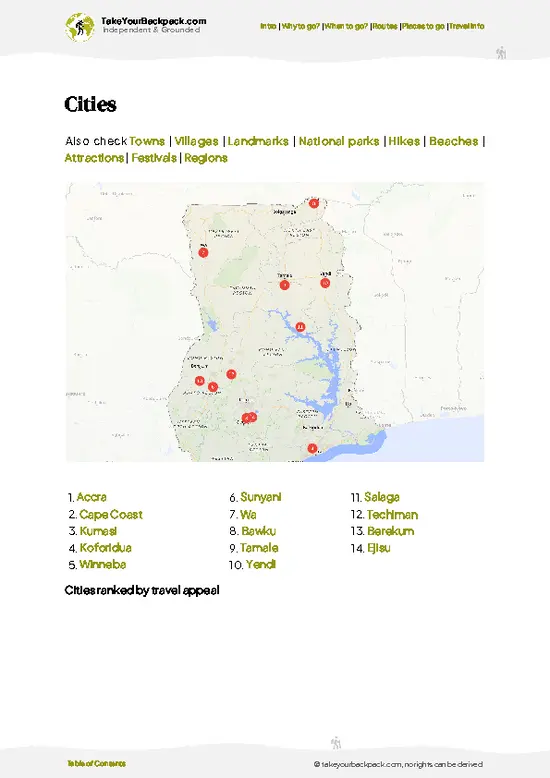
example page 3 from our offline Travel Guide for Ghana
example page 4 from our offline Travel Guide for Ghana
example page 5 from our offline Travel Guide for Ghana
example page 6 from our offline Travel Guide for Ghana
example page 7 from our offline Travel Guide for Ghana
The digital guide (321 pages) contains:
✅ 105 highlights, ranked by travel appeal
✅ Optimized 5, 10 & 15-day travel routes
✅ Cities, national parks, landmarks, beaches
✅ How to get around
✅ Offline-friendly for travel without Wi-Fi
👉 Click to see all 30+ guide features

📅 Plan smarter in minutes, not weeks
✅ Month by month travel advice
✅ Festivals & national holidays
✅ Budget expectations

🗺️ Go to the right places, skip the overrated ones
✅ Honest pros & cons of destinations
✅ Top hikes, parks & viewpoints
✅ Lesser-known places most travelers miss
✅ Clear “worth it vs skip it” guidance

🛏️ Travel smoothly without rookie mistakes
✅ Best areas to stay
✅ Transport systems explained simply
✅ Common scams & safety advice
✅ SIM cards, money & practical tips

🌍 Understand the country, not just visit it
✅ Culture & traditions
✅ 52 Essential phrases & customs
✅ Festivals worth planning around
✅ Traveler-friendly historical context
✅ Insights that make places more meaningful

📱 Built for real travel conditions
✅ Fully downloadable PDF
✅ Works completely offline
✅ Optimized for phone use
✅ Useful in remote areas & buses
✅ Everything in one place
Stop searching, start planning
Get instant access to your full guide. 30‑day money-back guarantee.
+ Add another guide for just

By proceeding you agree to our terms.
Sent to your inbox immediately after payment • 100% Secure Checkout
Best Backpacking Travel Advisor 2025 tourism awardBest Backpacking
Travel Advisor
2025
What others say about Take Your Backpack Guides:
⭐⭐⭐⭐⭐
Fantastic, amazing amount of information!
⭐⭐⭐⭐⭐
My goodness this is amazing, it's what I've been looking for hats off too you!
⭐⭐⭐⭐⭐
I think this is absolutely BRILLIANT
⭐⭐⭐⭐
Very complete and informative. It's still missing places, but I gotta to commend you
⭐⭐⭐⭐⭐
This is truly amazing, thank you, can't wait to explore it with my kids!
⭐⭐⭐⭐⭐
Awesome resource, thank you!
⭐⭐⭐⭐⭐
This is amazing! Can't wait to explore the ones I haven't seen
⭐⭐⭐⭐
I love this! Well done, great idea.
⭐⭐⭐⭐⭐
Thanks for taking the time to make this gem!
⭐⭐⭐⭐⭐
This might be the best website I've ever seen.
⭐⭐⭐⭐⭐
Congratulations, and thank you so much for your work; it's incredibly valuable.
⭐⭐⭐⭐
In all seriousness I think you did a great job pointing out the important spots
⭐⭐⭐⭐⭐
10/10 very good
⭐⭐⭐⭐⭐
As someone who's only just starting to visit regularly this is awesome, thank you.
⭐⭐⭐⭐
Thank you very much! I'm going to visit my dad, it's going to be very useful!
⭐⭐⭐⭐⭐
This is really cool! We'll be travelling for the first time and this definitely come in handy.
⭐⭐⭐⭐⭐
You are now our minister of culture, congratulations 👨‍💼
⭐⭐⭐⭐⭐
Just wanted to tell you that this is a pearl! Going to follow your recommendations.
⭐⭐⭐⭐⭐
This is so cool. I'll definitely be using the resource for my travels soon.
⭐⭐⭐⭐⭐
This is very impressive! Good work.
⭐⭐⭐⭐⭐
This is an amazing and informative site. Very well done!

🛏️ Where to stay?Accommodation Highlights

Ghana has a modest but growing hostel scene, with dorm beds typically around GH₵150 to 300 (US$12 to 25) and basic guesthouse rooms from about GH₵350 (US$30), concentrated mostly in Accra and along the coast. In Accra, Osu puts you on Oxford Street’s bars, cheap chop bars and late nights but comes with noise and heavy traffic, while East Legon and Airport Residential are quieter, leafier and handy for flights yet far from the action and pricier per night. Elsewhere, beachy Kokrobite west of Accra is laid-back and drum-filled on weekends, Cape Coast keeps you walking distance from the castle and the fishing harbor, and Adum in Kumasi is central and cheap but loud and chaotic around the market. … read more 👉
Ghana has a modest but growing hostel scene, with dorm beds typically around GH₵150 to 300 (US$12 to 25) and basic guesthouse rooms from about GH₵350 (US$30), concentrated mostly in Accra and along the coast. In Accra, Osu puts you on Oxford Street’s bars, cheap chop bars and late nights but comes with noise and heavy traffic, while East Legon and Airport Residential are quieter, leafier and handy for flights yet far from the action and pricier per night. Elsewhere, beachy Kokrobite west of Accra is laid-back and drum-filled on weekends, Cape Coast keeps you walking distance from the castle and the fishing harbor, and Adum in Kumasi is central and cheap but loud and chaotic around the market.

If you enjoy meeting fellow travelers, consider choosing hostels with high ratings for atmosphere. On the other hand, if you prefer having your own space, a hotel might be a better option.

GhanaSee More of Ghana

👋 Meet the founderWho’s Behind Take Your Backpack?

Johan, backpacker and founder of TakeYourBackpackHi, I’m Johan (Netherlands 🇳🇱), the creator of TakeYourBackpack. Over the past 3 decades, I’ve backpacked through 90+ countries across six continents, gaining extensive experience with independent travel, long-term trips, and overland routes.

This site is built on a combination of firsthand travel experience and carefully curated insights from other backpackers. Many guides are based on places I’ve personally visited, while others bring together tips, observations, and practical advice shared by trusted travelers I’ve met along the way.

The goal is to provide realistic, experience-driven guidance — not generic itineraries — so you can explore destinations with better context, clearer expectations, and more confidence.