×

Ghana🇬🇭 | national parksOwabi Wildlife SanctuaryKumasi reservoir, canopy walkway, 200+ bird species, fruit bats | things to do and best time to go

Explore Kogyae Strict Nature ReserveExplore Kalakpa Resource Reserve

Backpacking in Owabi Wildlife Sanctuary
👍 Recommendednational park ranked #12
By Johan Kruseman 🇳🇱 | Updated October 22, 2026

Listen for the drums and the shrine rituals tied to the Owabi River catchment, which supplies water to Kumasi and is protected partly because local Ashanti custom treats rivers as spiritual property. Few visitors notice that. The sanctuary sits about 20 km northwest of Kumasi in Ghana’s Ashanti Region, around the Owabi Dam. I remember the hot, wet-leaf smell and a green-gold light on the water while weaver birds chattered overhead. Expect short, flat trails, a canopy walkway, birds and monkeys, and almost no crowds. The catch: it is small, with few large mammals, and rain turns paths to red mud. Compared with Kakum or Mole, it is quicker and cheaper, but far less wild. Bring cash, because there is no card machine at the gate.

Discover everything you want to know in the 📖 Ghana Travel Guide.


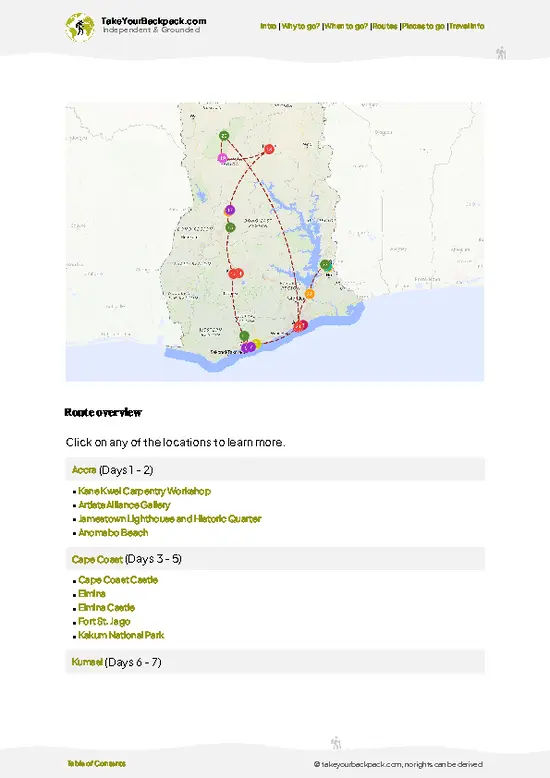
example page 0 from our offline Travel Guide for Ghana
example page 1 from our offline Travel Guide for Ghana
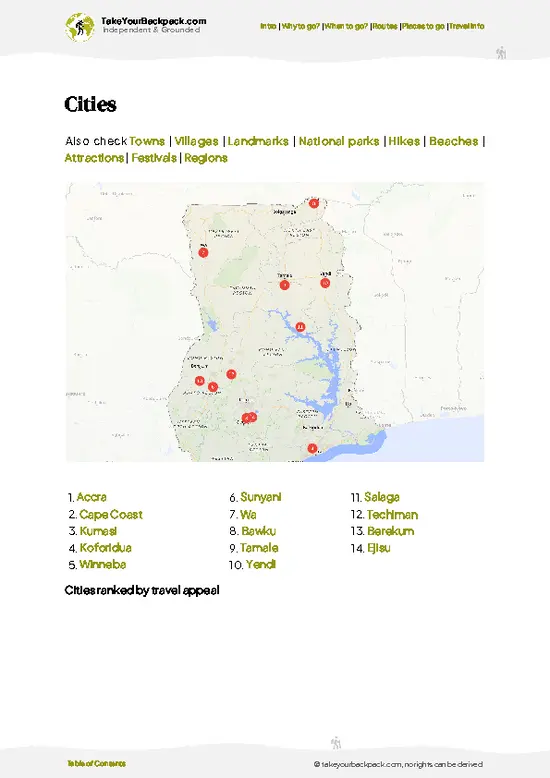
example page 2 from our offline Travel Guide for Ghana
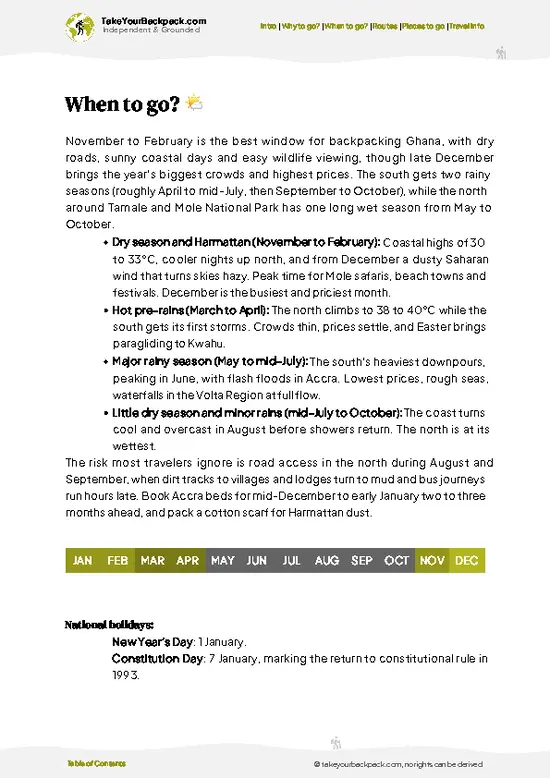
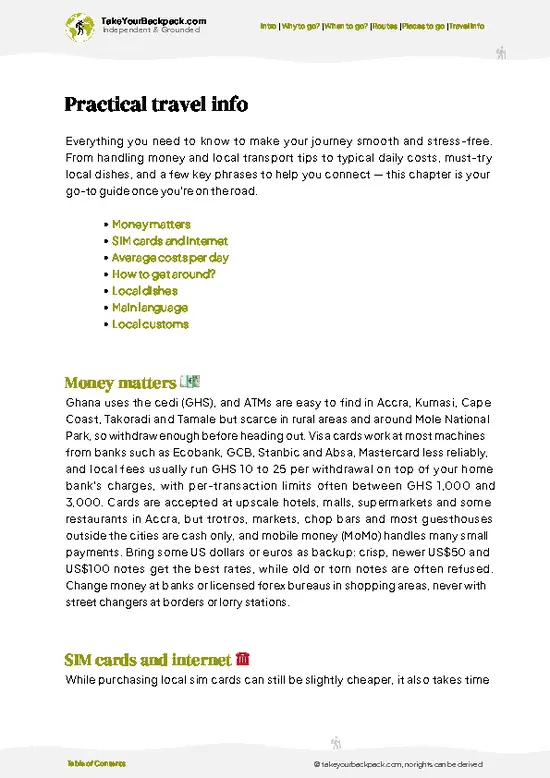
example page 3 from our offline Travel Guide for Ghana
example page 4 from our offline Travel Guide for Ghana
example page 5 from our offline Travel Guide for Ghana
example page 6 from our offline Travel Guide for Ghana
example page 7 from our offline Travel Guide for Ghana
Loading the map 🌍
CLICK TO FILTER
cities
towns
villages
landmarks
national parks
hikes
beaches
attractions
festivals
regions
SHOW COUNTRY’S BESTSHOW ALL

✨ Why go?
Ranked #12 national park in Ghana
Reasons people choose to explore here

Backpackers choose Owabi because it is the easiest independent nature stop near Kumasi, reachable without a tour. You can arrive by shared taxi, walk the forest trails at your own pace, and be back in town for dinner. It suits budget travelers because Kumasi hostels and guesthouses cost far less than lodging near Kakum, and the entry fee is modest. Trail variety is limited, but you get birdwatching along the dam, forest paths with butterflies, and a canopy walkway for a different angle. Guides are available if you want species names, yet self-guided wandering works fine on the short, obvious routes. It also pairs neatly with a day of Kumasi markets, so you spend little and see more.

💡 HighlightsTop highlights of Owabi Wildlife Sanctuary

  1. Owabi Dam and Reservoir: The sanctuary exists to protect this reservoir, built in the 1920s to supply Kumasi. Edges are good for waterbirds, kingfishers and calm sunrise views.
  2. Canopy Walkway: A suspended walkway lifts you into the treetops, where you can watch birds and monkeys at eye level. It is shorter than Kakum’s but much quieter.
  3. Birdlife: Over 200 bird species have been recorded, including hornbills, weavers, kingfishers and sunbirds. Dawn gives the best chances.
  4. Spot-nosed and Mona Monkeys: Troops move through the forest edge, often heard before seen. Watch quietly and keep food hidden.
  5. Forest Nature Trails: Short paths pass big trees, lianas and butterflies. Footing is easy in the dry season, with plenty of shade.
  6. Bat Colony: Fruit bats roost in trees in and around the sanctuary and fill
… read more 👉
  1. Owabi Dam and Reservoir: The sanctuary exists to protect this reservoir, built in the 1920s to supply Kumasi. Edges are good for waterbirds, kingfishers and calm sunrise views.
  2. Canopy Walkway: A suspended walkway lifts you into the treetops, where you can watch birds and monkeys at eye level. It is shorter than Kakum’s but much quieter.
  3. Birdlife: Over 200 bird species have been recorded, including hornbills, weavers, kingfishers and sunbirds. Dawn gives the best chances.
  4. Spot-nosed and Mona Monkeys: Troops move through the forest edge, often heard before seen. Watch quietly and keep food hidden.
  5. Forest Nature Trails: Short paths pass big trees, lianas and butterflies. Footing is easy in the dry season, with plenty of shade.
  6. Bat Colony: Fruit bats roost in trees in and around the sanctuary and fill the evening sky when they leave to feed.
  7. Bamboo and Picnic Areas: Bamboo stands and shaded spots near the dam make a good resting place and a simple lunch stop.
I would pick the Owabi Dam shoreline first. It gives you birds, light and quiet in one place, and it explains why the sanctuary was protected before you tackle the walkway or trails.
Spotted a mistake or missing something? Contact us.

🌤️ When to go?Weather, crowds, and seasonal trade-offs

  • Dry Season (November to March): Best for walking, with trails firm and days of 30 to 35°C (86 to 95°F). Harmattan haze can dull views and morning temperatures dip to about 20°C (68°F). Daylight runs roughly 6am to 6pm.
  • Major Rains (April to July): Humid, 25 to 31°C (77 to 88°F), with muddy paths, leeches rare but slippery slopes common. The forest is greenest and quiet.
  • Short Dry Spell (August): Cooler and cloudier, with fewer showers and few crowds.
  • Minor Rains (September to October): Showers return, but mornings are often clear.
  • Crowds and Prices: Weekends and school holidays bring local groups. Fees stay fixed year round, though Kumasi rooms rise around Christmas.
Go early on a weekday morning, when birds are active and the heat is gentle.

source: climatestotravel.comJANJanuary: excellent for travelingFEBFebruary: excellent for travelingMARMarch: highly recommended for travelingAPRApril: fair for travelingMAYMay: fair for travelingJUNJune: fair for travelingJULJuly: fair for travelingAUGAugust: fair for travelingSEPSeptember: fair for travelingOCTOctober: fair for travelingNOVNovember: highly recommended for travelingDECDecember: excellent for traveling
when-to-go

✈️ The backpacker research shortcutGhana Travel Guide

An offline-friendly backpacking guide with optimized travel routes, ranked highlights, transport advice, and the best areas to stay.
example page 0 from our offline Travel Guide for Ghana
example page 1 from our offline Travel Guide for Ghana
example page 2 from our offline Travel Guide for Ghana
example page 3 from our offline Travel Guide for Ghana
example page 4 from our offline Travel Guide for Ghana
example page 5 from our offline Travel Guide for Ghana
example page 6 from our offline Travel Guide for Ghana
example page 7 from our offline Travel Guide for Ghana
The digital guide (321 pages) contains:
✅ 105 highlights, ranked by travel appeal
✅ Optimized 5, 10 & 15-day travel routes
✅ Cities, national parks, landmarks, beaches
✅ How to get around
✅ Offline-friendly for travel without Wi-Fi
👉 Click to see all 30+ guide features

📅 Plan smarter in minutes, not weeks
✅ Month by month travel advice
✅ Festivals & national holidays
✅ Budget expectations

🗺️ Go to the right places, skip the overrated ones
✅ Honest pros & cons of destinations
✅ Top hikes, parks & viewpoints
✅ Lesser-known places most travelers miss
✅ Clear “worth it vs skip it” guidance

🛏️ Travel smoothly without rookie mistakes
✅ Best areas to stay
✅ Transport systems explained simply
✅ Common scams & safety advice
✅ SIM cards, money & practical tips

🌍 Understand the country, not just visit it
✅ Culture & traditions
✅ 52 Essential phrases & customs
✅ Festivals worth planning around
✅ Traveler-friendly historical context
✅ Insights that make places more meaningful

📱 Built for real travel conditions
✅ Fully downloadable PDF
✅ Works completely offline
✅ Optimized for phone use
✅ Useful in remote areas & buses
✅ Everything in one place
Stop searching, start planning
Get instant access to your full guide. 30‑day money-back guarantee.
+ Add another guide for just

By proceeding you agree to our terms.
Sent to your inbox immediately after payment • 100% Secure Checkout
Best Backpacking Travel Advisor 2025 tourism awardBest Backpacking
Travel Advisor
2025
What others say about Take Your Backpack Guides:
⭐⭐⭐⭐⭐
Fantastic, amazing amount of information!
⭐⭐⭐⭐⭐
My goodness this is amazing, it's what I've been looking for hats off too you!
⭐⭐⭐⭐⭐
I think this is absolutely BRILLIANT
⭐⭐⭐⭐
Very complete and informative. It's still missing places, but I gotta to commend you
⭐⭐⭐⭐⭐
This is truly amazing, thank you, can't wait to explore it with my kids!
⭐⭐⭐⭐⭐
Awesome resource, thank you!
⭐⭐⭐⭐⭐
This is amazing! Can't wait to explore the ones I haven't seen
⭐⭐⭐⭐
I love this! Well done, great idea.
⭐⭐⭐⭐⭐
Thanks for taking the time to make this gem!
⭐⭐⭐⭐⭐
This might be the best website I've ever seen.
⭐⭐⭐⭐⭐
Congratulations, and thank you so much for your work; it's incredibly valuable.
⭐⭐⭐⭐
In all seriousness I think you did a great job pointing out the important spots
⭐⭐⭐⭐⭐
10/10 very good
⭐⭐⭐⭐⭐
As someone who's only just starting to visit regularly this is awesome, thank you.
⭐⭐⭐⭐
Thank you very much! I'm going to visit my dad, it's going to be very useful!
⭐⭐⭐⭐⭐
This is really cool! We'll be travelling for the first time and this definitely come in handy.
⭐⭐⭐⭐⭐
You are now our minister of culture, congratulations 👨‍💼
⭐⭐⭐⭐⭐
Just wanted to tell you that this is a pearl! Going to follow your recommendations.
⭐⭐⭐⭐⭐
This is so cool. I'll definitely be using the resource for my travels soon.
⭐⭐⭐⭐⭐
This is very impressive! Good work.
⭐⭐⭐⭐⭐
This is an amazing and informative site. Very well done!

🛏️ Where to stay?Best areas and accommodation options

Most backpackers stay in Kumasi, about 20 to 30 minutes away, because Owabi has no real accommodation for independent travelers. Basic camping or simple facilities near the gate have been offered at times, but you should confirm with the sanctuary office before relying on them. Kumasi has hostels, guesthouses and budget hotels, mostly around Adum, Ahodwo, Asokwa and the Kejetia area. Dorms and basic rooms typically run US$10 to 30 a night, with mid-range hotels at US$40 to 80. Staying central makes it easy to eat at chop bars, visit Kejetia Market and the Manhyia Palace Museum, and catch transport … read more 👉
Most backpackers stay in Kumasi, about 20 to 30 minutes away, because Owabi has no real accommodation for independent travelers. Basic camping or simple facilities near the gate have been offered at times, but you should confirm with the sanctuary office before relying on them. Kumasi has hostels, guesthouses and budget hotels, mostly around Adum, Ahodwo, Asokwa and the Kejetia area. Dorms and basic rooms typically run US$10 to 30 a night, with mid-range hotels at US$40 to 80. Staying central makes it easy to eat at chop bars, visit Kejetia Market and the Manhyia Palace Museum, and catch transport to Owabi in the morning. Ask your guesthouse to arrange a driver if you want a sunrise start, since trotros run less often early.

👛 Costs (as of 22 October 2026)Typical daily expenses

A day trip to Owabi costs roughly US$15 to 40 per person, including transport and entry, with most of the budget going to getting there and back. The table below shows typical ranges, with prices in USD and subject to change.
CategoryBudget RangeLocal Reality
Entrance feeUS$2 to 8Foreign visitors pay more than Ghanaians. Paid in cash at the gate.
Canopy walkway and guideUS$3 to 10Extra fees for the walkway, cameras and guide, usually negotiated at the gate.
Accommodation (Kumasi)US$10 to 30Dorms and basic rooms. Mid-range hotels cost more.
Local transportUS$2 to 15Shared taxi and trotro are cheapest. A private taxi round trip with waiting costs more.
Food and suppliesUS$4 to 12Chop bars serve rice, jollof or fufu for a few dollars. Bring water from Kumasi.
⚠️ Prices can change and everyone travels differently, so take this as a rough guide. Hope it helps you plan your adventure!

🥾 TrailsBest hikes in Owabi Wildlife Sanctuary national park

Owabi’s hiking is gentle: short, mostly flat forest trails, a lakeside shoreline and a canopy walkway, all manageable in half a day. Terrain is packed red earth with roots, turning slick after rain. Wildlife is mainly birds, butterflies, monkeys and bats, with large mammals rare. Trails are not widely signposted online by name, so a local guide is useful at the gate.
  • Forest Nature Walk: Length about 2 to 4 km, 1 to 2 hours, easy, shaded forest floor, big trees and birds.
  • Canopy Walkway: Length a few hundred meters, 20 to 40 minutes, easy but not for those afraid of heights, treetop views.
  • Dam Shoreline
… read more 👉
Owabi’s hiking is gentle: short, mostly flat forest trails, a lakeside shoreline and a canopy walkway, all manageable in half a day. Terrain is packed red earth with roots, turning slick after rain. Wildlife is mainly birds, butterflies, monkeys and bats, with large mammals rare. Trails are not widely signposted online by name, so a local guide is useful at the gate.
  • Forest Nature Walk: Length about 2 to 4 km, 1 to 2 hours, easy, shaded forest floor, big trees and birds.
  • Canopy Walkway: Length a few hundred meters, 20 to 40 minutes, easy but not for those afraid of heights, treetop views.
  • Dam Shoreline Walk: Length about 1 to 3 km, 1 hour, easy, open edges with waterbirds and kingfishers.
Getting there: from Kumasi, take a shared taxi or trotro toward Asuofua or Offinso, then a short motorbike or taxi hop to the entrance. A private taxi from Kumasi costs roughly GH₵100 to 200 round trip with waiting. Crowds are light, except for school groups on weekends. There is an entrance fee, charged at the gate, with extra charges for the canopy walkway, camera use and guides. Bring cash, water, insect repellent and shoes with grip.
⚠️ Hiking info can sometimes be outdated or inaccurate. Before you hit the trail, check the latest conditions with locals. If you do spot anything that's off, I'd love to hear from you, so I can update it for fellow travelers.

🛡️ SafetyStaying Safe: What Travelers Should Know

Owabi is straightforward and low risk for hikers, with the main issues being heat, mud and insects. Wear shoes with grip, because red clay turns slick fast after rain. Carry at least 1.5 liters of water, repellent and a rain layer, and start early to avoid midday heat. Malaria is present in Ghana, so take prophylaxis and cover up at dusk. Snakes exist but are rarely seen, and monkeys may grab food, so keep snacks zipped away and never feed them. Stay on marked paths and hire a guide if you are unsure, as trails can fork. Keep valuables minimal and carry cash discreetly.

FAQCommon questions from travelers

Half a day is enough for Owabi Wildlife Sanctuary. Most visitors spend 3 to 5 hours walking the forest trails, the dam shoreline and the canopy walkway. Add a second day only if you want a dawn birding session and a Kumasi sightseeing stop, such as Kejetia Market or Manhyia Palace.
Yes, Owabi is reachable without a car from Kumasi, about 20 km away. Take a shared taxi or trotro toward Asuofua or Offinso, then a short taxi or motorbike hop to the gate, roughly 30 to 60 minutes in total. A private taxi with waiting costs about GH₵100 to 200 for the round trip, and trotros run less often after midday.
Yes, there is an entrance fee, paid in cash at the gate. Foreign visitors pay more than Ghanaians, and the typical cost is roughly US$2 to 8, with extra charges for the canopy walkway, cameras and guides. No advance permit is normally needed for a day visit, but camping should be confirmed with the sanctuary office.
⚠️ Things can change over time, so always validate details locally before you go.

Other Ghanaian national parks near Owabi Wildlife Sanctuary

Explore more nearby:


💡 Not sure where to go next?
Create a personalized itinerary for Ghana including Owabi Wildlife Sanctuary and the places that fit your trip.

Generate my itinerary

👉 Discover all national parks

Or checkout all Ghana has to offer (think cities, towns, villages, national parks, hikes, beaches, festivals)
Country photo of Ghana

We 💚 feedbackFinal thoughts on exploring Owabi Wildlife Sanctuary

Owabi is worth it for the calm: dawn birdsong over the dam, a quiet canopy walk and Kumasi only 30 minutes away. The drawback is its size. Wildlife is mostly birds and monkeys, trails are short, and rain can turn paths to sticky mud. Treat it as a half-day escape, not a full expedition.

✈️ When did I visit Ghana?
Ghana I visited in December 2024, starting in Accra following the coast, then up north to Mole National park to finish in the Volta Region.

✍️ Help improve this page!
The information on this page is based on my own backpacking experience in Ghana, supplemented with up-to-date research and feedback from other travelers. Travel details can change, so if you notice anything outdated or incomplete, feel free to let me know.


🙋‍♂️ Give feedback

👋 Meet the founderWho’s Behind Take Your Backpack?

Johan, backpacker and founder of TakeYourBackpackHi, I’m Johan (Netherlands 🇳🇱), the creator of TakeYourBackpack. Over the past 3 decades, I’ve backpacked through 90+ countries across six continents, gaining extensive experience with independent travel, long-term trips, and overland routes.

This site is built on a combination of firsthand travel experience and carefully curated insights from other backpackers. Many guides are based on places I’ve personally visited, while others bring together tips, observations, and practical advice shared by trusted travelers I’ve met along the way.

The goal is to provide realistic, experience-driven guidance — not generic itineraries — so you can explore destinations with better context, clearer expectations, and more confidence.