×

Ghana🇬🇭 | national parksWechiau Community Hippo SanctuaryBlack Volta hippos, canoe pods, riverbank platforms, Upper West villages | things to do and best time to go

Explore Boabeng-Fiema Monkey SanctuaryExplore Amansuri Wetlands

Backpacking in Wechiau Community Hippo Sanctuary
🌟 Highlightnational park ranked #5
By Johan Kruseman 🇳🇱 | Updated October 22, 2026

Common misconception: the hippos here do not pose for you. Wechiau is a community-run sanctuary on the Black Volta in Ghana’s Upper West Region, about 50 km west of Wa, and sightings are a patient game, not a safari guarantee. Arrive late or at the wrong season and you may see only nostrils and ripples. Costs and delays catch people out too: the Wa road has potholes, vehicles leave late, and the guide fee is separate from the entry fee, so carry small cedi notes and book ahead. I paddled out in a wooden canoe at dusk, the water smelling of mud and woodsmoke, when a hippo grunted a few meters away like a wet barrel being dragged. Compared with Mole National Park, you get no big wildlife list and no long trails, just a quiet river, villages and real community tourism.

Discover everything you want to know in the 📖 Ghana Travel Guide.


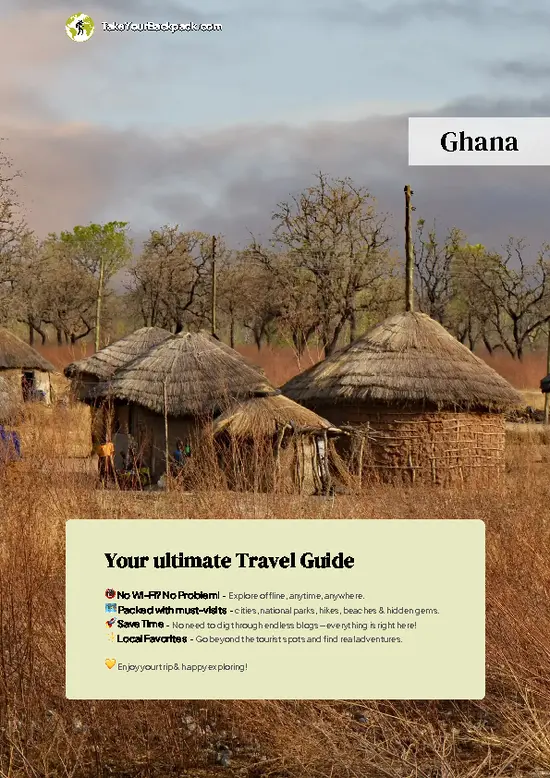
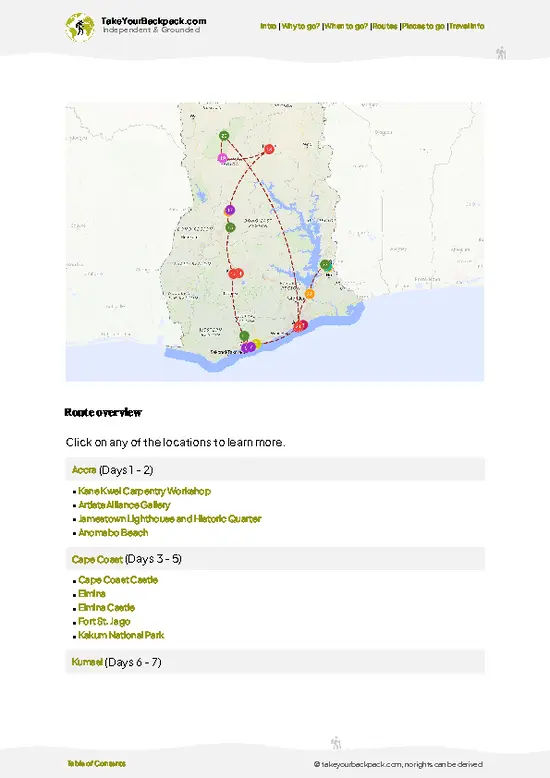
example page 0 from our offline Travel Guide for Ghana
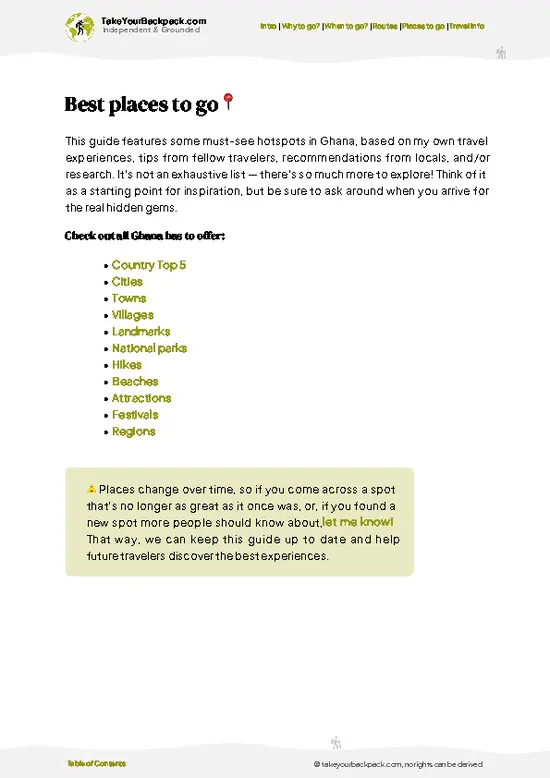
example page 1 from our offline Travel Guide for Ghana
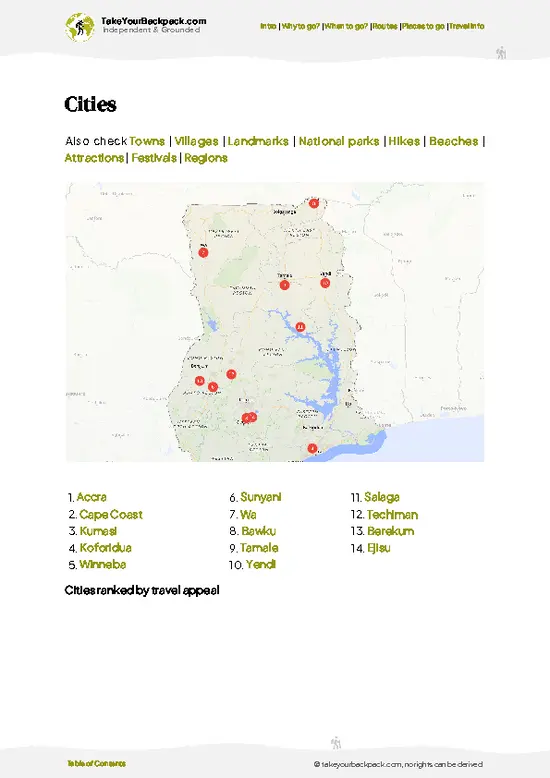
example page 2 from our offline Travel Guide for Ghana
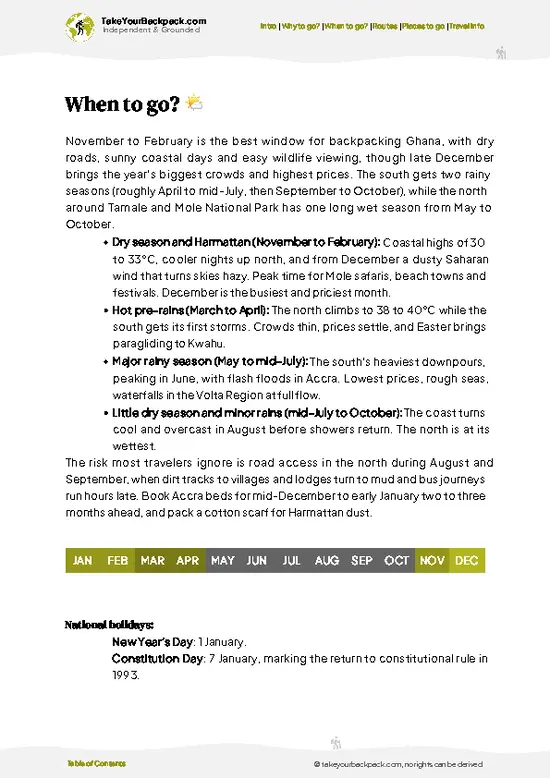
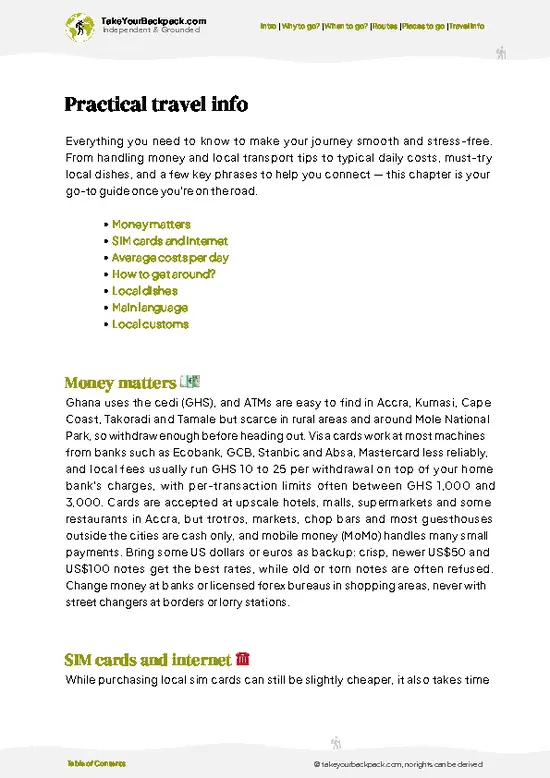
example page 3 from our offline Travel Guide for Ghana
example page 4 from our offline Travel Guide for Ghana
example page 5 from our offline Travel Guide for Ghana
example page 6 from our offline Travel Guide for Ghana
example page 7 from our offline Travel Guide for Ghana
Loading the map 🌍
CLICK TO FILTER
cities
towns
villages
landmarks
national parks
hikes
beaches
attractions
festivals
regions
SHOW COUNTRY’S BESTSHOW ALL

✨ Why go?
Ranked #5 national park in Ghana
The unique appeal for travelers

Backpackers choose Wechiau because it rewards independent exploration without the price tag or crowds of Mole National Park. You can arrange a canoe trip directly at the community office, hire a local guide for a modest fee, and skip tour operators altogether. It suits self-guided travelers who like improvising. Lodging is simple and budget friendly: the sanctuary runs basic eco-lodge rooms and camping, and Wa has guesthouses for those who want a bed with a fan. Trail variety is limited, but short guided walks along the riverbank and through savanna woodland let you spot birds, monkeys and, with luck, hippo tracks. The real draw is the village experience: fees support the surrounding communities, and you can visit Wechiau and nearby settlements, see traditional mud houses and meet people who … read more 👉
Backpackers choose Wechiau because it rewards independent exploration without the price tag or crowds of Mole National Park. You can arrange a canoe trip directly at the community office, hire a local guide for a modest fee, and skip tour operators altogether. It suits self-guided travelers who like improvising. Lodging is simple and budget friendly: the sanctuary runs basic eco-lodge rooms and camping, and Wa has guesthouses for those who want a bed with a fan. Trail variety is limited, but short guided walks along the riverbank and through savanna woodland let you spot birds, monkeys and, with luck, hippo tracks. The real draw is the village experience: fees support the surrounding communities, and you can visit Wechiau and nearby settlements, see traditional mud houses and meet people who protect the river. It is slow, rural travel, best for anyone who enjoys sitting on a riverbank until something happens.

💡 HighlightsEssential experiences to have while exploring Wechiau Community Hippo Sanctuary

  1. Hippo Canoe Trip on the Black Volta: The main event. Local guides paddle you quietly along the river to spot hippos surfacing, snorting and yawning. Early morning and late afternoon give the best chances and the softest light.
  2. Hippo Viewing Platform: Platforms along the riverbank offer a safer, dry alternative to canoeing. Bring binoculars and patience, as pods rise and sink without warning.
  3. Birdwatching Along the River: Kingfishers, egrets, herons and other waterbirds line the banks. Dawn is best, with calls carrying across the water.
  4. Guided Savanna Walks: Short walks with local guides through open woodland let you see tracks, monkeys and birds, and learn about the plants villagers use.
  5. Village Visits: The sanctuary is managed by surrounding communities, and visiting their settlements shows traditional
… read more 👉
  1. Hippo Canoe Trip on the Black Volta: The main event. Local guides paddle you quietly along the river to spot hippos surfacing, snorting and yawning. Early morning and late afternoon give the best chances and the softest light.
  2. Hippo Viewing Platform: Platforms along the riverbank offer a safer, dry alternative to canoeing. Bring binoculars and patience, as pods rise and sink without warning.
  3. Birdwatching Along the River: Kingfishers, egrets, herons and other waterbirds line the banks. Dawn is best, with calls carrying across the water.
  4. Guided Savanna Walks: Short walks with local guides through open woodland let you see tracks, monkeys and birds, and learn about the plants villagers use.
  5. Village Visits: The sanctuary is managed by surrounding communities, and visiting their settlements shows traditional mud-built compounds, farming life and how tourism income is shared.
  6. Wechiau Eco-Lodge Sunsets: Sitting at the lodge as the sun drops, with frogs and insects starting up, is a quiet highlight that costs nothing extra.
If I could pick one first, it would be the canoe trip. Being at water level, a few meters from a hippo’s grunting breath, tells you why the community protects this stretch of river, and nothing from the bank matches it.
Spotted a mistake or missing something? Contact us.

🌤️ When to go?When to go for the best experience

  • Dry Season (November to March): Best for hippo viewing, as lower water concentrates them in pools. Days reach 33 to 40°C (91 to 104°F), nights 18 to 24°C (64 to 75°F). The harmattan dust haze can dull light and views in December and January.
  • Hot Season (March to May): Very hot, often 38 to 42°C (100 to 108°F). Go out at dawn and late afternoon. Sunrise is around 6 am and sunset around 6 pm all year.
  • Rainy Season (June to October): Highs of 28 to 33°C (82 to 91°F). Hippos spread out along the river, roads get muddy, and canoe trips may be less reliable.
  • Crowds and Prices: Visitor numbers stay small year-round. Prices are fixed and barely change between seasons.
Plan to arrive in the dry season and book your afternoon canoe slot a day ahead.

source: climatestotravel.comJANJanuary: excellent for travelingFEBFebruary: excellent for travelingMARMarch: highly recommended for travelingAPRApril: fair for travelingMAYMay: fair for travelingJUNJune: fair for travelingJULJuly: fair for travelingAUGAugust: fair for travelingSEPSeptember: fair for travelingOCTOctober: fair for travelingNOVNovember: highly recommended for travelingDECDecember: excellent for traveling
ghana-national-park-wechiau-community-hippo-sanctuary v1
© Google |

✈️ The backpacker research shortcutGhana Travel Guide

An offline-friendly backpacking guide with optimized travel routes, ranked highlights, transport advice, and the best areas to stay.
example page 0 from our offline Travel Guide for Ghana
example page 1 from our offline Travel Guide for Ghana
example page 2 from our offline Travel Guide for Ghana
example page 3 from our offline Travel Guide for Ghana
example page 4 from our offline Travel Guide for Ghana
example page 5 from our offline Travel Guide for Ghana
example page 6 from our offline Travel Guide for Ghana
example page 7 from our offline Travel Guide for Ghana
The digital guide (321 pages) contains:
✅ 105 highlights, ranked by travel appeal
✅ Optimized 5, 10 & 15-day travel routes
✅ Cities, national parks, landmarks, beaches
✅ How to get around
✅ Offline-friendly for travel without Wi-Fi
👉 Click to see all 30+ guide features

📅 Plan smarter in minutes, not weeks
✅ Month by month travel advice
✅ Festivals & national holidays
✅ Budget expectations

🗺️ Go to the right places, skip the overrated ones
✅ Honest pros & cons of destinations
✅ Top hikes, parks & viewpoints
✅ Lesser-known places most travelers miss
✅ Clear “worth it vs skip it” guidance

🛏️ Travel smoothly without rookie mistakes
✅ Best areas to stay
✅ Transport systems explained simply
✅ Common scams & safety advice
✅ SIM cards, money & practical tips

🌍 Understand the country, not just visit it
✅ Culture & traditions
✅ 52 Essential phrases & customs
✅ Festivals worth planning around
✅ Traveler-friendly historical context
✅ Insights that make places more meaningful

📱 Built for real travel conditions
✅ Fully downloadable PDF
✅ Works completely offline
✅ Optimized for phone use
✅ Useful in remote areas & buses
✅ Everything in one place
Stop searching, start planning
Get instant access to your full guide. 30‑day money-back guarantee.
+ Add another guide for just

By proceeding you agree to our terms.
Sent to your inbox immediately after payment • 100% Secure Checkout
Best Backpacking Travel Advisor 2025 tourism awardBest Backpacking
Travel Advisor
2025
What others say about Take Your Backpack Guides:
⭐⭐⭐⭐⭐
Fantastic, amazing amount of information!
⭐⭐⭐⭐⭐
My goodness this is amazing, it's what I've been looking for hats off too you!
⭐⭐⭐⭐⭐
I think this is absolutely BRILLIANT
⭐⭐⭐⭐
Very complete and informative. It's still missing places, but I gotta to commend you
⭐⭐⭐⭐⭐
This is truly amazing, thank you, can't wait to explore it with my kids!
⭐⭐⭐⭐⭐
Awesome resource, thank you!
⭐⭐⭐⭐⭐
This is amazing! Can't wait to explore the ones I haven't seen
⭐⭐⭐⭐
I love this! Well done, great idea.
⭐⭐⭐⭐⭐
Thanks for taking the time to make this gem!
⭐⭐⭐⭐⭐
This might be the best website I've ever seen.
⭐⭐⭐⭐⭐
Congratulations, and thank you so much for your work; it's incredibly valuable.
⭐⭐⭐⭐
In all seriousness I think you did a great job pointing out the important spots
⭐⭐⭐⭐⭐
10/10 very good
⭐⭐⭐⭐⭐
As someone who's only just starting to visit regularly this is awesome, thank you.
⭐⭐⭐⭐
Thank you very much! I'm going to visit my dad, it's going to be very useful!
⭐⭐⭐⭐⭐
This is really cool! We'll be travelling for the first time and this definitely come in handy.
⭐⭐⭐⭐⭐
You are now our minister of culture, congratulations 👨‍💼
⭐⭐⭐⭐⭐
Just wanted to tell you that this is a pearl! Going to follow your recommendations.
⭐⭐⭐⭐⭐
This is so cool. I'll definitely be using the resource for my travels soon.
⭐⭐⭐⭐⭐
This is very impressive! Good work.
⭐⭐⭐⭐⭐
This is an amazing and informative site. Very well done!

🛏️ Where to stay?Best areas and accommodation options

The best base for most backpackers is the sanctuary’s own simple accommodation, with camping and basic rooms near the river, which puts you at the canoe launch for dawn trips. Facilities are basic, with limited power and cold-water bucket showers, so bring a flashlight, insect repellent and a mosquito net. Meals can usually be arranged but should be requested in advance, and bringing snacks and water is wise.
The alternative is Wa, about 50 km east, the regional capital, with budget guesthouses and hotels, restaurants, ATMs and markets. Staying in Wa gives comfort and transport options, but the … read more 👉
The best base for most backpackers is the sanctuary’s own simple accommodation, with camping and basic rooms near the river, which puts you at the canoe launch for dawn trips. Facilities are basic, with limited power and cold-water bucket showers, so bring a flashlight, insect repellent and a mosquito net. Meals can usually be arranged but should be requested in advance, and bringing snacks and water is wise.
The alternative is Wa, about 50 km east, the regional capital, with budget guesthouses and hotels, restaurants, ATMs and markets. Staying in Wa gives comfort and transport options, but the road to Wechiau takes roughly one to two hours depending on conditions, so you will lose the best early and late hours at the river unless you hire transport.
Wechiau town itself has little formal lodging. Some travelers arrange homestays through the community office, which gives a more authentic and cheaper experience. Contact the office a day or two ahead to confirm availability, and keep small cash on hand, as there are no card facilities.

👛 Costs (as of 22 October 2026)How expensive it really is

A visit to Wechiau Community Hippo Sanctuary is inexpensive, with most spending going to transport and the guided canoe trip. Prices are approximate and quoted in US dollars, though payment is in Ghanaian cedi.
CategoryBudget RangeLocal Reality
Entrance and guide feesUSD 5 to 15A sanctuary fee plus guide, with rates higher for foreign visitors. Pay in cash at the community office.
Canoe tripUSD 5 to 15Charged per boat or per person, depending on group size. Sharing reduces the cost.
AccommodationUSD 5 to 30Camping and basic eco-lodge rooms are cheapest. Wa guesthouses cost more but include fans or air conditioning.
Local transportUSD 5 to 25Shared minibuses from Wa to Wechiau are cheap but infrequent. Chartering a taxi or motorbike costs more but saves time.
Food and suppliesUSD 5 to 12Local meals
… read more 👉
A visit to Wechiau Community Hippo Sanctuary is inexpensive, with most spending going to transport and the guided canoe trip. Prices are approximate and quoted in US dollars, though payment is in Ghanaian cedi.
CategoryBudget RangeLocal Reality
Entrance and guide feesUSD 5 to 15A sanctuary fee plus guide, with rates higher for foreign visitors. Pay in cash at the community office.
Canoe tripUSD 5 to 15Charged per boat or per person, depending on group size. Sharing reduces the cost.
AccommodationUSD 5 to 30Camping and basic eco-lodge rooms are cheapest. Wa guesthouses cost more but include fans or air conditioning.
Local transportUSD 5 to 25Shared minibuses from Wa to Wechiau are cheap but infrequent. Chartering a taxi or motorbike costs more but saves time.
Food and suppliesUSD 5 to 12Local meals such as rice, banku or fufu are inexpensive. Bring snacks and water, as shops are limited.
Budget around USD 25 to 60 a day. Carry plenty of small cedi notes, since change is scarce and there are no card machines in Wechiau.
⚠️ Prices can change and everyone travels differently, so take this as a rough guide. Hope it helps you plan your adventure!

🥾 TrailsTrail guide for Wechiau Community Hippo Sanctuary national park

Wechiau Community Hippo Sanctuary is a river-and-woodland reserve along the Black Volta, close to the Burkina Faso border, and its walking is gentle, flat and short. There are no marked named trails, so the outings below are the ones visitors actually do.
  • Canoe-and-hippo outing: Visits start at the sanctuary’s visitor center, where a guide takes you down to the river. You paddle a wooden canoe along the Black Volta, or sometimes walk the bank to a viewing spot, and watch for hippos surfacing in the pools. It takes about 2 to 3 hours, and the difficulty is easy, though the sun on the water is strong.
… read more 👉
Wechiau Community Hippo Sanctuary is a river-and-woodland reserve along the Black Volta, close to the Burkina Faso border, and its walking is gentle, flat and short. There are no marked named trails, so the outings below are the ones visitors actually do.
  • Canoe-and-hippo outing: Visits start at the sanctuary’s visitor center, where a guide takes you down to the river. You paddle a wooden canoe along the Black Volta, or sometimes walk the bank to a viewing spot, and watch for hippos surfacing in the pools. It takes about 2 to 3 hours, and the difficulty is easy, though the sun on the water is strong.
  • Riverbank walk: A guided stroll over flat, sandy ground and dry grass follows the river through scrub and gallery forest. Expect 1 to 2 hours at an easy pace. Birds are common, and monkeys and butterflies show up along the trees.
  • Village walk: Some visitors add a stroll through nearby Wechiau villages, passing mud-brick compounds, farm plots and the occasional market day. It is flat and easy, and it lets you see how the community runs the reserve.
  • Terrain and difficulty: Everything is low-lying savanna and river edge, with no climbs. Paths can be muddy in the rainy season and hard-baked in the dry months.
  • Wildlife: Hippos are the headline, but they are shy and often only show ears and nostrils. Early morning and late afternoon give the best odds. Bring binoculars, as hippos often stay at a distance, and keep your voice low so the animals stay put.
Getting here takes some effort. The sanctuary lies about 50 km west of Wa, and the usual route is a trotro or shared taxi from Wa to Wechiau town, then a local motorbike or arranged ride out to the visitor center. Services are infrequent, so start early and expect to arrange the return in advance. The roads are rough dirt in places and can turn difficult after heavy rain.
Crowds are essentially absent. You may share the river with just a guide and a few other visitors, and some days nobody else turns up. Entrance and guide fees are paid at the visitor center, and they support the community that manages the sanctuary. Bring water, a hat, sun protection, insect repellent and cash, since there are no cash machines nearby.
⚠️ Hiking info can sometimes be outdated or inaccurate. Before you hit the trail, check the latest conditions with locals. If you do spot anything that's off, I'd love to hear from you, so I can update it for fellow travelers.

🛡️ SafetyStaying Safe: What Travelers Should Know

Wechiau is straightforward and well managed by local guides, and the main risks are heat, dehydration and hippos, which are dangerous when approached. Always go in a canoe with a guide, follow instructions, stay seated and keep your distance. Never walk the riverbank alone at dusk. Carry at least 3 liters of water, wear a hat and sun protection, and use repellent, as malaria is present in northern Ghana. Rough roads from Wa are the biggest practical hazard, so travel in daylight. Phone signal is patchy, so tell someone your plan. Bring cash, as there are no ATMs nearby.

FAQCommon questions from travelers

One to two days is enough for Wechiau. Most travelers do a dawn or dusk canoe trip, which takes roughly two hours, and add a village visit or savanna walk. Staying one night at the sanctuary lets you do both trips, while a day trip from Wa, about 50 km away, works but is tight.
Yes, but it takes planning. Shared taxis and minibuses run from Wa to Wechiau town, usually taking one to two hours, and then you need a motorbike or arranged transfer for the last stretch to the river. Hiring a taxi from Wa for the day typically costs more but gives flexibility, and it is smart to confirm your return ride before the afternoon.
Yes, you pay a fee at the community office, with foreign visitors paying more than Ghanaians, and a guide is required for canoe trips. Expect roughly USD 5 to 15 for entry and guiding, plus another USD 5 to 15 for the canoe. No special permit is needed, but bring cash in cedi, as cards are not accepted.
⚠️ Things can change over time, so always validate details locally before you go.

Other Ghanaian national parks near Wechiau Community Hippo Sanctuary

Explore more nearby:


💡 Not sure where to go next?
Create a personalized itinerary for Ghana including Wechiau Community Hippo Sanctuary and the places that fit your trip.

Generate my itinerary

👉 Discover all national parks

Or checkout all Ghana has to offer (think cities, towns, villages, national parks, hikes, beaches, festivals)
Country photo of Ghana

We 💚 feedbackWhat to keep in mind

Wechiau is worth it for the quiet: paddling a river at dusk while hippos grunt nearby, with villagers who run the place and benefit directly. The drawback is the effort. Roads from Wa are rough, transport is irregular, facilities are basic and sightings are never guaranteed. Go with patience, cash and low expectations, and you will leave happy.

✈️ When did I visit Ghana?
Ghana I visited in December 2024, starting in Accra following the coast, then up north to Mole National park to finish in the Volta Region.

✍️ Help improve this page!
The information on this page is based on my own backpacking experience in Ghana, supplemented with up-to-date research and feedback from other travelers. Travel details can change, so if you notice anything outdated or incomplete, feel free to let me know.


🙋‍♂️ Give feedback

👋 Meet the founderWho’s Behind Take Your Backpack?

Johan, backpacker and founder of TakeYourBackpackHi, I’m Johan (Netherlands 🇳🇱), the creator of TakeYourBackpack. Over the past 3 decades, I’ve backpacked through 90+ countries across six continents, gaining extensive experience with independent travel, long-term trips, and overland routes.

This site is built on a combination of firsthand travel experience and carefully curated insights from other backpackers. Many guides are based on places I’ve personally visited, while others bring together tips, observations, and practical advice shared by trusted travelers I’ve met along the way.

The goal is to provide realistic, experience-driven guidance — not generic itineraries — so you can explore destinations with better context, clearer expectations, and more confidence.