v2.webp)
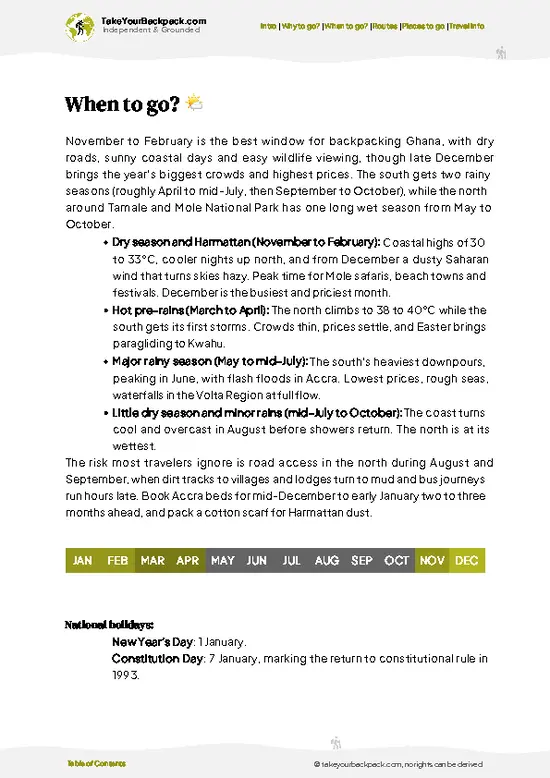
- Cape Coast Castle: The signature site, a whitewashed fortress where captives were held before shipment across the Atlantic. The guided tour takes you through the dungeons and the Door of No Return, and the museum inside covers Ghanaian and diaspora history. Go at opening (about 9 a.m.) to beat tour groups and heat. Entry for foreign adults is roughly US$8 to 12; allow 2 to 2.5 hours.
- Fort William: A small 18th-century lighthouse fort on a hill above town. Climb the tower for a view of red-roofed houses, the castle and the fishing fleet. Late afternoon light is best. Expect a small fee, usually under US$3 to 5, and 30 to 45 minutes, preferably with a guide.
- Fort Victoria: The highest, quietest lookout, built in the 1800s and rarely crowded. You get a wide coastal panorama, especially at golden
- Cape Coast Castle: The signature site, a whitewashed fortress where captives were held before shipment across the Atlantic. The guided tour takes you through the dungeons and the Door of No Return, and the museum inside covers Ghanaian and diaspora history. Go at opening (about 9 a.m.) to beat tour groups and heat. Entry for foreign adults is roughly US$8 to 12; allow 2 to 2.5 hours.
- Fort William: A small 18th-century lighthouse fort on a hill above town. Climb the tower for a view of red-roofed houses, the castle and the fishing fleet. Late afternoon light is best. Expect a small fee, usually under US$3 to 5, and 30 to 45 minutes, preferably with a guide.
- Fort Victoria: The highest, quietest lookout, built in the 1800s and rarely crowded. You get a wide coastal panorama, especially at golden hour, and sometimes the caretaker will explain its origins. Plan 30 minutes and a few dollars.
- Bakaano Fishing Beach: Painted canoes, nets spread on sand, and women smoking fish in huge piles. Early morning (6 to 8 a.m.) shows the busiest landing. It’s free, though a small tip for a local guide is polite. Allow an hour and wear shoes you can get dirty.
- Kotokuraba Market: Loud, tightly packed and strongly local, selling cloth, spices, dried fish and secondhand clothes. Go in the morning when it is cooler and busiest. Entry is free, bring small cedi notes, and budget 1 to 1.5 hours.
- Fosu Lagoon: A calm lagoon edge where fishing boats rest and egrets gather at dusk. It offers a rare quiet pocket of town and works well for sunset. Free, and 30 to 45 minutes is plenty.
- Oguaa Fetu Afahye: The town’s annual festival, held in early September, with durbars, drumming and chiefs in kente. Public events are free, but accommodation fills, so book early. Plan a full day.
Spotted a mistake or missing something? Contact us.

 Best Backpacking
.jpg) Hi, I’m Johan (Netherlands 🇳🇱), the creator of TakeYourBackpack. Over the past 3 decades, I’ve backpacked through 90+ countries across six continents, gaining extensive experience with independent travel, long-term trips, and overland routes.
Hi, I’m Johan (Netherlands 🇳🇱), the creator of TakeYourBackpack. Over the past 3 decades, I’ve backpacked through 90+ countries across six continents, gaining extensive experience with independent travel, long-term trips, and overland routes.