×

Ghana🇬🇭 | citiesAccraMakola Market, street art, nightlife districts, coastal forts | things to do and best time to go

Explore Cocoloco BeachExplore Cape Coast

Backpacking in Accra
🏆 Top pickcity ranked #1
By Johan Kruseman 🇳🇱 | Updated June 6, 2026

A taxi door slams behind you, and the air hits like a hairdryer—thick with heat, fried plantains, and the low thump of Afrobeats leaking from a roadside bar. You dodge a hawker balancing pineapples on her head, then catch the sea breeze rolling in from the Gulf of Guinea. This is Accra, Ghana’s coastal capital, sprawled on the southern edge of West Africa. Accra is a city that rewards curiosity but doesn’t spoon-feed you. The colonial-era Jamestown lighthouse, Makola Market’s organized chaos, and the sobering history at the Independence Arch and Kwame Nkrumah Mausoleum—these are worth your time. Backpackers will find Accra affordable, especially if you eat local and ride tro-tros (minibuses), but it’s pricier and more hectic than Kumasi or Cape Coast. Meeting other travelers is hit-or-miss; hostels exist, but the scene is scattered. Safety is decent if you keep your wits. The city’s energy is relentless, sometimes overwhelming, but if you like your travel with a side of improvisation, Accra delivers.

Discover everything you want to know in the 📖 Ghana Travel Guide.


Get your Ghana guide
111 ranked highlights, routes & tips, works offline (424 pages)
Loading the map 🌍
CLICK TO FILTER
cities
towns
villages
landmarks
national parks
hikes
beaches
attractions
festivals
regions
SHOW COUNTRY’S BESTSHOW ALL

✨ Why go?
Ranked #1 city in Ghana
Reasons people choose to visit here

Accra is a backpacker’s hub that strikes a balance between affordability and vibrancy. It’s not just a stopover; it’s a basecamp for exploring Ghana. The hostel scene is diverse, offering everything from budget dorms to cozy private rooms, making it easy to meet fellow travelers. You’ll find delicious street food that won’t break the bank, from spicy kebabs to fresh fruit, fueling your adventures without draining your wallet.

The city is walkable, allowing you to soak in the local culture as you navigate bustling markets and lively neighborhoods. When the sun sets, the nightlife kicks in, with bars and live music venues that cater to all tastes. This is where you can unwind and share stories with other backpackers.

Accra also serves as a gateway for day trips to nearby attractions, making … read more 👉
Accra is a backpacker’s hub that strikes a balance between affordability and vibrancy. It’s not just a stopover; it’s a basecamp for exploring Ghana. The hostel scene is diverse, offering everything from budget dorms to cozy private rooms, making it easy to meet fellow travelers. You’ll find delicious street food that won’t break the bank, from spicy kebabs to fresh fruit, fueling your adventures without draining your wallet.

The city is walkable, allowing you to soak in the local culture as you navigate bustling markets and lively neighborhoods. When the sun sets, the nightlife kicks in, with bars and live music venues that cater to all tastes. This is where you can unwind and share stories with other backpackers.

Accra also serves as a gateway for day trips to nearby attractions, making it a strategic choice for those wanting to explore more of Ghana. The ease of onward travel—whether by bus or flight—means you can seamlessly continue your journey. If you’re looking for a city that offers a mix of culture, community, and convenience, Accra is a solid choice.
Get the complete Travel Guide for Ghana
Everything organized for offline planning — routes, highlights, costs & tips

See what’s inside 👉

Get the Travel Guide -

💡 HighlightsEssential experiences to have while visiting Accra

  • Kwame Nkrumah Mausoleum and Memorial Park — The resting place and park for Ghana’s first president; great for learning post-colonial history, seeing his statue and mausoleum architecture, and catching occasional speeches or ceremonies.
  • Jamestown (James Town Lighthouse & streets) — One of Accra’s oldest neighborhoods: gritty, lively, full of colonial-era buildings, fishing harbors, murals and the lighthouse you can climb for classic city/sea views—best experienced on foot with a local guide.
  • Makola Market — The city’s frenetic central market where vendors sell everything from fabric and gold beads to foodstuffs; perfect for soaking up daily life, bargaining, and practicing sharp observational skills (and a little patience).
  • W. E. B. Du Bois Center — A calm, profound museum and research
read more 👉
  • Kwame Nkrumah Mausoleum and Memorial Park — The resting place and park for Ghana’s first president; great for learning post-colonial history, seeing his statue and mausoleum architecture, and catching occasional speeches or ceremonies.
  • Jamestown (James Town Lighthouse & streets) — One of Accra’s oldest neighborhoods: gritty, lively, full of colonial-era buildings, fishing harbors, murals and the lighthouse you can climb for classic city/sea views—best experienced on foot with a local guide.
  • Makola Market — The city’s frenetic central market where vendors sell everything from fabric and gold beads to foodstuffs; perfect for soaking up daily life, bargaining, and practicing sharp observational skills (and a little patience).
  • W. E. B. Du Bois Center — A calm, profound museum and research center dedicated to the Black scholar-activist who chose to spend his final years in Ghana; includes his study, library, and a small gallery—powerful context for Pan-African history.
  • Gallery 1957 — A compact, high-quality contemporary art space showcasing Ghanaian and West African painters, sculptors and photographers; excellent for seeing the cutting edge of local visual culture in a polished setting.
  • Accra Arts Centre (Artists’ Crafts Market) — The go-to place for Kente, wood carvings, masks and souvenirs; more than shopping, it’s a place to watch artisans, haggle, and find real Ghanaian handicrafts if you know what to look for.
  • Black Star Square (Independence Square) — Monumental national plaza with the Black Star Gate and Liberation Day parade grounds; visually striking and useful for understanding Ghana’s independence narrative and national ceremonies.
  • Osu Castle / Christiansborg Castle — A complex layered with colonial history (Portuguese, Danish, British) and modern political use; guided visits let you see dungeons, fortifications and the harbor—check visiting hours but the site is physically visitable.
  • Labadi Beach (La Pleasure Beach) — Accra’s busiest public beach where drumming, horse rides, and evening parties happen; not a tranquil escape but an essential slice of city life, especially at sunset when the music starts.
  • National Museum of Ghana — Small but packed with artifacts, ethnographic displays and Ghanaian art that trace the country’s cultural and archaeological story—efficient, informative, and an easy stop on a history-themed day.
A few great day trips just outside Accra: Aburi Botanical Gardens for greenery and colonial bandstand views, Shai Hills Resource Reserve for short safaris and rock formations, and (for longer days) Cape Coast Castle and Kakum National Park to dive deep into Ghana’s coastal history and rainforest canopy.
Spotted a mistake or missing something? Contact us.

Things to do in Accra

Ratings based on Tripadvisor reviews. When you book through this link, you support our work at no extra cost to you.

🏘️ NeighborhoodsHow different areas shape the experience

Accra is a vibrant city where each neighborhood offers a unique flavor for backpackers. Understanding the trade-offs between time, money, and comfort can help you make the most of your stay.

Osu: This area is a backpacker’s paradise, buzzing with energy. It’s packed with affordable hostels, restaurants, and bars. Walkability is high; you can easily explore local shops and street food. Nightlife is lively, making it perfect for those who want to socialize. However, it can be pricier than other neighborhoods, especially at night. Ideal for short stays where you want to soak up the atmosphere quickly.

Labadi: Known for its beach, Labadi offers a more relaxed vibe. It’s a bit quieter, perfect for those looking to unwind. Accommodation ranges from budget hostels to mid-range hotels. While it’s … read more 👉
Accra is a vibrant city where each neighborhood offers a unique flavor for backpackers. Understanding the trade-offs between time, money, and comfort can help you make the most of your stay.

Osu: This area is a backpacker’s paradise, buzzing with energy. It’s packed with affordable hostels, restaurants, and bars. Walkability is high; you can easily explore local shops and street food. Nightlife is lively, making it perfect for those who want to socialize. However, it can be pricier than other neighborhoods, especially at night. Ideal for short stays where you want to soak up the atmosphere quickly.

Labadi: Known for its beach, Labadi offers a more relaxed vibe. It’s a bit quieter, perfect for those looking to unwind. Accommodation ranges from budget hostels to mid-range hotels. While it’s not as walkable as Osu, you can still find local eateries nearby. The beach scene is great for daytime lounging, but nightlife is limited. Best for longer stays if you want a mix of beach and city life.

Kotobabi: A local favorite, Kotobabi is less touristy and offers a more authentic experience. Prices are lower, making it budget-friendly. The area is walkable, but you might need to rely on public transport for longer distances. Nightlife is subdued, focusing more on local hangouts. This neighborhood suits longer stays, especially if you want to immerse yourself in everyday Ghanaian life.

East Legon: This upscale neighborhood is a bit of a splurge. It’s well-connected by transport, but you’ll find fewer budget options. The vibe is more residential, with some trendy cafes and shops. Nightlife is quieter, making it suitable for those who prefer a more laid-back evening. Good for short stays if you want a taste of luxury without going overboard.

⌛️ 1 dayWhat you can realistically do in a day

Accra, Ghana’s bustling capital, is a vibrant mix of history, culture, and modernity. From the lively markets to the serene beaches, it’s a city that invites exploration. You can easily spend a day here, soaking in its unique energy while uncovering hidden treasures.

Start your morning in Osu, a neighborhood known for its eclectic vibe. Grab breakfast at Buka Restaurant, where the waakye (rice and beans) is a must-try. The locals gather here, and you’ll feel the pulse of the city as you enjoy your meal. Afterward, stroll down Oxford Street, where you can pop into local shops and maybe pick up some handmade crafts.

As the sun climbs higher, head to the Kwame Nkrumah Mausoleum. This site honors Ghana’s first president and is a peaceful spot to reflect on the country’s history. The lush gardens … read more 👉
Accra, Ghana’s bustling capital, is a vibrant mix of history, culture, and modernity. From the lively markets to the serene beaches, it’s a city that invites exploration. You can easily spend a day here, soaking in its unique energy while uncovering hidden treasures.

Start your morning in Osu, a neighborhood known for its eclectic vibe. Grab breakfast at Buka Restaurant, where the waakye (rice and beans) is a must-try. The locals gather here, and you’ll feel the pulse of the city as you enjoy your meal. Afterward, stroll down Oxford Street, where you can pop into local shops and maybe pick up some handmade crafts.

As the sun climbs higher, head to the Kwame Nkrumah Mausoleum. This site honors Ghana’s first president and is a peaceful spot to reflect on the country’s history. The lush gardens and impressive statues provide a backdrop that’s both educational and serene. Spend an hour here, absorbing the stories of resilience and independence.

In the afternoon, make your way to Jamestown, one of Accra’s oldest districts. This area is often overlooked by tourists, but it’s a canvas of street art and local life. Join a guided walking tour to meet artists and learn about the community’s efforts to revitalize the area. The colorful murals tell stories that resonate deeply, and you’ll leave with a sense of connection to the people.

As evening approaches, head to Labadi Beach. It’s a popular spot, but the atmosphere is electric as locals gather for music, dance, and food. Grab a fresh coconut and watch the sunset paint the sky. If you’re feeling adventurous, join in on a game of beach soccer or simply relax and soak in the vibrant scene.

Accra is a city that rewards those who wander. Each moment spent here, from the bustling streets of Osu to the artistic heart of Jamestown, offers a glimpse into the soul of Ghana. Embrace the rhythm of the city, and you’ll find that every choice you make adds to the richness of your experience.
Build the Right Itinerary
Use the Ghana Travel Guide’s 5, 10 & 15-day routes as a starting point to plan a trip that actually works on the ground.

Get the Travel Guide -

🌤️ When to go?Seasonal considerations and timing


  • Topic: Weather – Accra’s climate is tropical, with a wet season from April to June and a shorter rainy spell in September and October. The dry season, from November to March, offers the most reliable sunshine and less humidity, making it easier to explore without constant downpours.

  • Topic: Temperature – Temperatures hover between 24°C and 31°C (75°F to 88°F) year-round, but the dry season feels more comfortable thanks to lower humidity. The wet season can feel hotter and stickier, which might drain your energy faster on long walks or market hunts.

  • Topic: Daylight Hours – Daylight is fairly consistent, around 12 hours daily, with sunrise near 6:00 AM and sunset around 6:00 PM. This steady rhythm means you don’t have to rush your sightseeing or worry about early darkness cutting your
read more 👉

  • Topic: Weather – Accra’s climate is tropical, with a wet season from April to June and a shorter rainy spell in September and October. The dry season, from November to March, offers the most reliable sunshine and less humidity, making it easier to explore without constant downpours.

  • Topic: Temperature – Temperatures hover between 24°C and 31°C (75°F to 88°F) year-round, but the dry season feels more comfortable thanks to lower humidity. The wet season can feel hotter and stickier, which might drain your energy faster on long walks or market hunts.

  • Topic: Daylight Hours – Daylight is fairly consistent, around 12 hours daily, with sunrise near 6:00 AM and sunset around 6:00 PM. This steady rhythm means you don’t have to rush your sightseeing or worry about early darkness cutting your day short.

  • Topic: Crowds – Tourist numbers peak during the dry season, especially December through February, coinciding with holiday travel. If you prefer fewer people and more local vibes, aim for shoulder months like March or November, when the city feels more authentic and less touristy.

  • Topic: Seasonal Activities – The dry season hosts major festivals like Homowo in August and Chale Wote Street Art Festival in late August, but these can bring crowds and higher prices. Visiting just before or after these events lets you enjoy the buzz without the full tourist surge.

  • Topic: Price Fluctuations – Accommodation and flights spike during the dry season and festival periods. Booking in the shoulder months can save you 20-30% on lodging and give you leverage to negotiate local transport fares.


Pro-tip: Target late November or early March for a sweet spot—good weather, manageable crowds, and better prices. You’ll feel like you cracked the code on Accra’s timing.


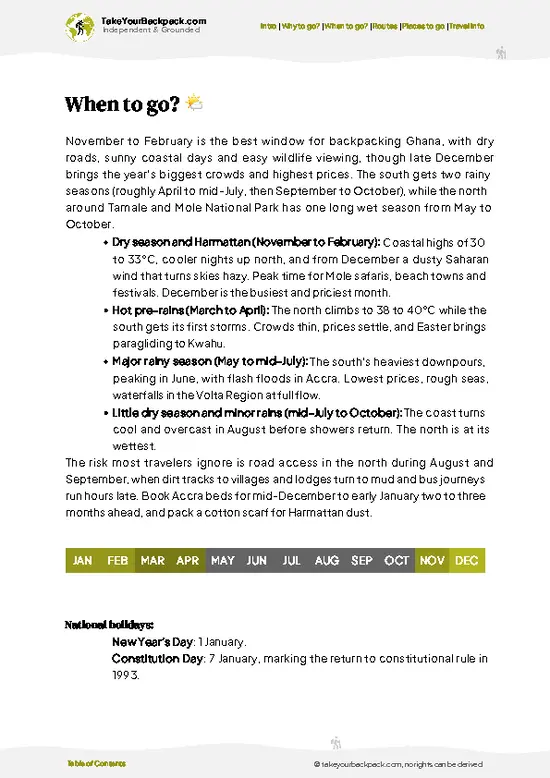
source: climatestotravel.comJANJanuary: highly recommended for travelingFEBFebruary: highly recommended for travelingMARMarch: highly recommended for travelingAPRApril: fair for travelingMAYMay: fair for travelingJUNJune: fair for travelingJULJuly: good for travelingAUGAugust: good for travelingSEPSeptember: fair for travelingOCTOctober: fair for travelingNOVNovember: highly recommended for travelingDECDecember: highly recommended for traveling
when-to-go

✈️ The backpacker research shortcutGhana Travel Guide

An offline-friendly backpacking guide with optimized travel routes, ranked highlights, transport advice, and the best areas to stay.
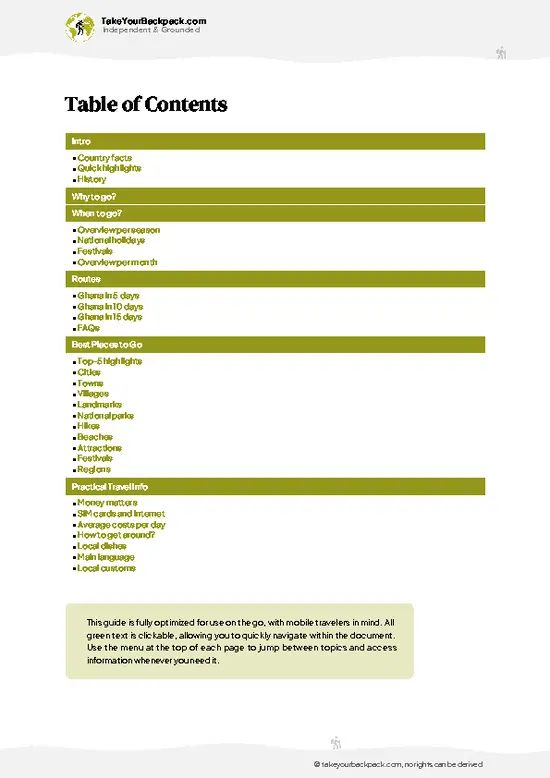
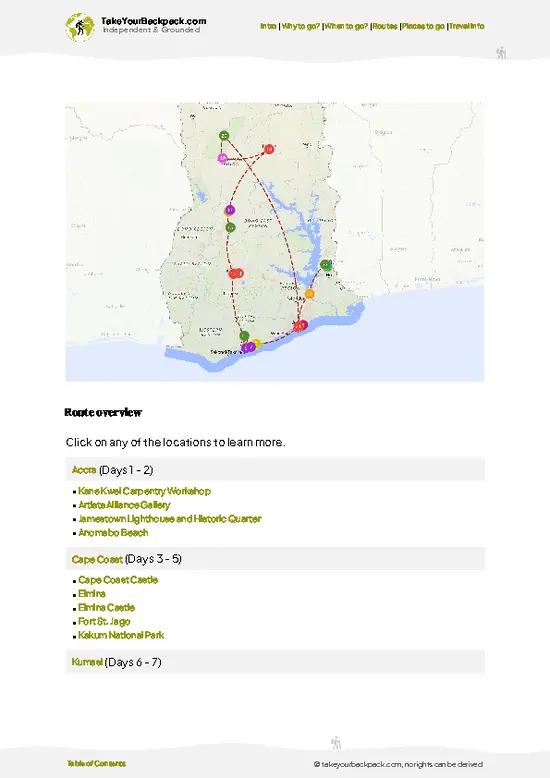
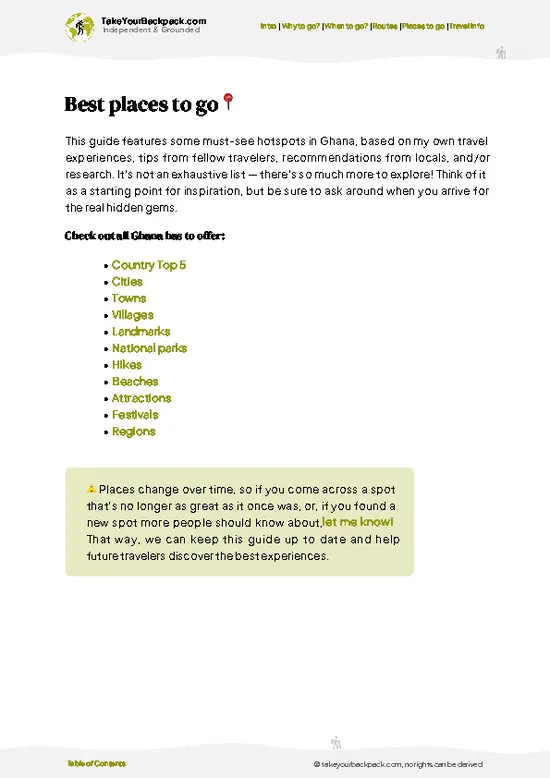
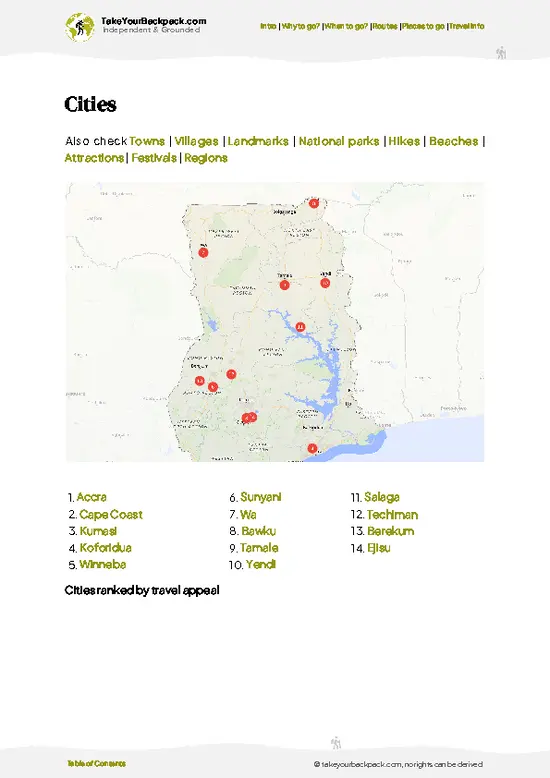
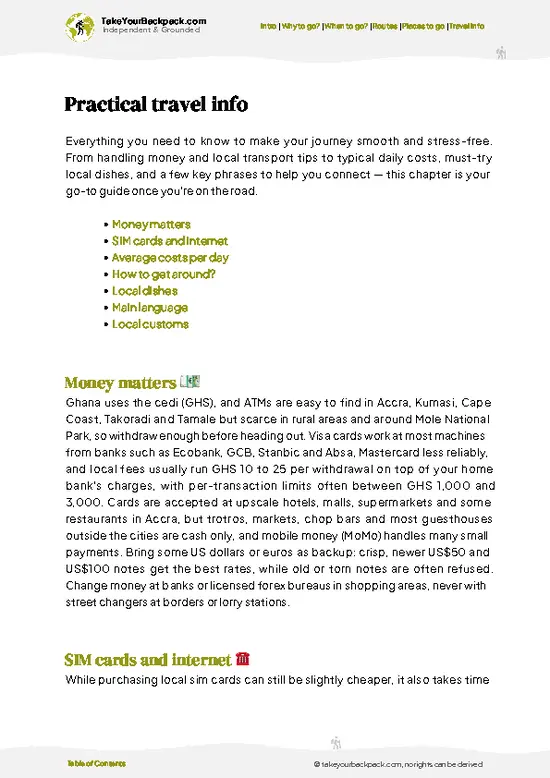
example page 0 from our offline Travel Guide for Ghanaexample page 1 from our offline Travel Guide for Ghanaexample page 2 from our offline Travel Guide for Ghanaexample page 3 from our offline Travel Guide for Ghanaexample page 4 from our offline Travel Guide for Ghanaexample page 5 from our offline Travel Guide for Ghanaexample page 6 from our offline Travel Guide for Ghanaexample page 7 from our offline Travel Guide for Ghana
The digital guide (424 pages) contains:
111 highlights, ranked by travel appeal
Optimized 5, 10 & 15-day travel routes
Cities, national parks, beaches, historical sites, ...
How to get around
Offline-friendly for travel without Wi-Fi
👉 Click to see all 30+ guide features

📅 Plan smarter in minutes, not weeks
Month by month travel advice
Festivals & national holidays
Budget expectations

🗺️ Go to the right places, skip the overrated ones
Honest pros & cons of destinations
Top hikes, parks & viewpoints
Lesser-known places most travelers miss
Clear “worth it vs skip it” guidance

🛏️ Travel smoothly without rookie mistakes
Best areas to stay
Transport systems explained simply
Common scams & safety advice
SIM cards, money & practical tips

🌍 Understand the country, not just visit it
Culture & traditions
52 Essential phrases & customs
Festivals worth planning around
Traveler-friendly historical context
Insights that make places more meaningful

📱 Built for real travel conditions
Fully downloadable PDF
Works completely offline
Optimized for phone use
Useful in remote areas & buses
Everything in one place
Save weeks of stressful planning
Get instant access to the full guide directly. 30-day money-back guarantee.


Sent to your inbox immediately after payment • 100% Secure Checkout
Best Backpacking Travel Advisor 2025 tourism awardBest Backpacking
Travel Advisor
2025
What others say about Take Your Backpack Guides:
⭐⭐⭐⭐⭐
Fantastic, amazing amount of information!
⭐⭐⭐⭐⭐
My goodness this is amazing, it's what I've been looking for hats off too you!
⭐⭐⭐⭐⭐
I think this is absolutely BRILLIANT
⭐⭐⭐⭐
Very complete and informative. It's still missing places, but I gotta to commend you
⭐⭐⭐⭐⭐
This is truly amazing, thank you, can't wait to explore it with my kids!
⭐⭐⭐⭐⭐
Awesome resource, thank you!
⭐⭐⭐⭐⭐
This is amazing! Can't wait to explore the ones I haven't seen
⭐⭐⭐⭐
I love this! Well done, great idea.
⭐⭐⭐⭐⭐
Thanks for taking the time to make this gem!
⭐⭐⭐⭐⭐
This might be the best website I've ever seen.
⭐⭐⭐⭐⭐
Congratulations, and thank you so much for your work; it's incredibly valuable.
⭐⭐⭐⭐
In all seriousness I think you did a great job pointing out the important spots
⭐⭐⭐⭐⭐
10/10 very good
⭐⭐⭐⭐⭐
As someone who's only just starting to visit regularly this is awesome, thank you.
⭐⭐⭐⭐
Thank you very much! I'm going to visit my dad, it's going to be very useful!
⭐⭐⭐⭐⭐
This is really cool! We'll be travelling for the first time and this definitely come in handy.
⭐⭐⭐⭐⭐
You are now our minister of culture, congratulations 👨‍💼
⭐⭐⭐⭐⭐
Just wanted to tell you that this is a pearl! Going to follow your recommendations.
⭐⭐⭐⭐⭐
This is so cool. I'll definitely be using the resource for my travels soon.
⭐⭐⭐⭐⭐
This is very impressive! Good work.
⭐⭐⭐⭐⭐
This is an amazing and informative site. Very well done!

🛏️ Where to stay?How to pick the right area

In Accra, the real backpacker sweet spot lies around Osu and Jamestown. Osu is where you’ll find the pulse of the city’s social life without the chaos of downtown traffic jams. It’s safe enough to wander after dark, with a lively mix of street food stalls, bars, and local markets that keep your wallet happy and your evenings buzzing. Hostels here cater to budget travelers and solo adventurers, offering communal spaces that make meeting others effortless. The vibe is casual but energetic—think laid-back afternoons turned into spontaneous nights.

Jamestown, on the other hand, is a different beast. … read more 👉
In Accra, the real backpacker sweet spot lies around Osu and Jamestown. Osu is where you’ll find the pulse of the city’s social life without the chaos of downtown traffic jams. It’s safe enough to wander after dark, with a lively mix of street food stalls, bars, and local markets that keep your wallet happy and your evenings buzzing. Hostels here cater to budget travelers and solo adventurers, offering communal spaces that make meeting others effortless. The vibe is casual but energetic—think laid-back afternoons turned into spontaneous nights.

Jamestown, on the other hand, is a different beast. It’s rougher around the edges but rich in character and history. This area draws travelers who want to dive deeper into Accra’s roots, with a strong community feel and plenty of street art and local music scenes. It’s less polished but more authentic, and hostels here tend to attract the kind of backpacker who values stories over comfort. Safety is decent if you stick to the main streets and go with a local guide or group.

Compared to the more upscale and expensive neighborhoods like East Legon or the business-heavy areas downtown, Osu and Jamestown offer the best trade-off: enough comfort and safety to relax, plus a social scene that’s genuinely welcoming without draining your budget. You’re choosing connection and character over sterile convenience, which is exactly what makes a trip stick in your memory.

🚌 Getting aroundGetting around like a local

Accra moves with a pulse that’s part rhythm, part improvisation. It’s not a city where you’ll find strict timetables or orderly queues. Instead, it’s a dance of honking tro-tros, weaving taxis, and pedestrians carving their own paths. The flow feels chaotic if you’re used to rigid schedules, but once you tune in, you’ll see a system that thrives on intuition and local know-how. Time here is elastic—sometimes you’re sprinting to catch a ride, other times you’re waiting, soaking in the street life. Understanding this ebb and flow is your first win in mastering Accra’s transit game.


  • Walking: The ultimate zero-cost option and the best way to absorb Accra’s street-level energy. Distances in central neighborhoods like Osu or Jamestown are manageable on foot, but be ready for uneven sidewalks
read more 👉
Accra moves with a pulse that’s part rhythm, part improvisation. It’s not a city where you’ll find strict timetables or orderly queues. Instead, it’s a dance of honking tro-tros, weaving taxis, and pedestrians carving their own paths. The flow feels chaotic if you’re used to rigid schedules, but once you tune in, you’ll see a system that thrives on intuition and local know-how. Time here is elastic—sometimes you’re sprinting to catch a ride, other times you’re waiting, soaking in the street life. Understanding this ebb and flow is your first win in mastering Accra’s transit game.


  • Walking: The ultimate zero-cost option and the best way to absorb Accra’s street-level energy. Distances in central neighborhoods like Osu or Jamestown are manageable on foot, but be ready for uneven sidewalks and the occasional street vendor blocking your path. Walking is slow but priceless for discovery and flexibility.


  • Tro-Tro: The backbone of Accra’s public transit. These shared minibuses run on semi-fixed routes but leave only when full, so timing is unpredictable. Fares are dirt cheap—usually under 2 GHS (about 20 cents USD). Tro-tros are cramped and noisy, with no air conditioning, but they’re fast through traffic and a direct line to local life. Expect a wild ride and a bit of a squeeze.


  • Shared Taxis: More comfortable than tro-tros, these are private cars that pick up multiple passengers going the same way. Prices hover around 5-10 GHS depending on distance. They’re quicker and less chaotic but still require some haggling and local savvy to avoid overpaying. Shared taxis run all day but taper off after dark.


  • Ride-Hailing Apps (Bolt, Uber): The modern convenience in Accra’s mix. Prices are higher—expect to pay 20-40 GHS for typical city trips—but you get air conditioning, door-to-door service, and fixed fares. Availability fluctuates, especially during rush hour or late night. Using apps means you trade money for comfort and reliability, a smart move if you’re on a tight schedule or carrying heavy gear.


  • City Buses: Government-run buses exist but are less popular among budget travelers due to infrequent schedules and limited routes. They’re cheap but slow and often crowded. If you’re not in a rush and want to blend in with locals, they’re an option, but don’t count on them for tight connections.


In Accra, every transit choice is a trade-off between time, money, and comfort. Walking costs nothing but demands time and stamina. Tro-tros save cash and offer speed but sacrifice comfort and predictability. Shared taxis balance cost and comfort but require local negotiation skills. Ride-hailing apps buy you time and ease at a premium. Knowing these trade-offs lets you craft your own rhythm in the city—whether you want to dive deep into local chaos or glide smoothly through the streets. The real mastery is in mixing these modes smartly, turning Accra’s transit puzzle into your personal advantage.

👛 Costs (as of 26 October 2025)Travel costs and budget guide for Accra

Backpacking in Accra, Ghana, is a balancing act between affordability and the occasional splurge for comfort or convenience. Here’s how the daily costs typically stack up for an independent traveler navigating the city’s rhythm.
  • Dorm Accommodation (High Season and Off-Season): In high season, expect to pay around $10-$15 per night for a bed in a basic dorm. Off-season drops that to about $7-$12. Prices vary with location and amenities, but this range covers most budget hostels.
  • Meals: Street food and local eateries dominate the scene. A filling meal like waakye or jollof rice costs between $1.50 and $3. If you opt for a mid-range restaurant, budget $5-$8 per meal. Cooking your own food can cut costs but isn’t always practical in dorm setups.
  • Local Transport: Tro-tros (shared minibuses)
read more 👉
Backpacking in Accra, Ghana, is a balancing act between affordability and the occasional splurge for comfort or convenience. Here’s how the daily costs typically stack up for an independent traveler navigating the city’s rhythm.
  • Dorm Accommodation (High Season and Off-Season): In high season, expect to pay around $10-$15 per night for a bed in a basic dorm. Off-season drops that to about $7-$12. Prices vary with location and amenities, but this range covers most budget hostels.
  • Meals: Street food and local eateries dominate the scene. A filling meal like waakye or jollof rice costs between $1.50 and $3. If you opt for a mid-range restaurant, budget $5-$8 per meal. Cooking your own food can cut costs but isn’t always practical in dorm setups.
  • Local Transport: Tro-tros (shared minibuses) are the cheapest way to get around, with fares typically between $0.20 and $0.50 depending on distance. They’re crowded and unpredictable but unbeatable for budget travelers.
  • City Transport Pass: Accra doesn’t have a unified city transport pass system. Instead, you’ll rely on tro-tros, taxis, or ride-hailing apps like Bolt. Ride-hailing fares start around $1.50 for short trips, offering more comfort at a higher price.
  • Basic Activities/Entry Fees: Museums and cultural sites usually charge between $2 and $5. Some markets and public spaces are free, but guided tours or special events can push costs higher.
  • Miscellaneous Expenses: This includes bottled water, snacks, SIM cards, and occasional tips. Budget around $2-$4 daily. Water is essential, as tap water isn’t safe to drink.

All told, a realistic daily budget for backpacking in Accra ranges from about $15 on the tightest shoestring to $30 if you lean into occasional comforts like ride-hailing or nicer meals. The key is knowing where to save and where a small extra spend unlocks a smoother, more enjoyable day.


source: ghana.travel
⚠️ Prices can change and everyone travels differently, so take this as a rough guide. Hope it helps you plan your adventure!

🚌 Day tripsExploring the surroundings

Accra is a fantastic launchpad for day trips that offer a taste of Ghana’s rich culture and stunning landscapes. Here are some high-value excursions that will make your backpacking experience truly memorable.

Kakum National Park
Just a couple of hours from Accra, Kakum National Park is a must-visit for nature lovers. The park features a canopy walkway that soars high above the rainforest, giving you a bird’s-eye view of the lush surroundings. Expect to pay around $10 for entry and a guided tour, which is well worth it for the insights into the local flora and fauna. The best time to visit is during the dry season, from November to March, when the trails are less muddy. A common mistake is underestimating the park’s size; plan for at least half a day to explore fully.
👉 Explore Kakum National read more 👉
Accra is a fantastic launchpad for day trips that offer a taste of Ghana’s rich culture and stunning landscapes. Here are some high-value excursions that will make your backpacking experience truly memorable.

Kakum National Park
Just a couple of hours from Accra, Kakum National Park is a must-visit for nature lovers. The park features a canopy walkway that soars high above the rainforest, giving you a bird’s-eye view of the lush surroundings. Expect to pay around $10 for entry and a guided tour, which is well worth it for the insights into the local flora and fauna. The best time to visit is during the dry season, from November to March, when the trails are less muddy. A common mistake is underestimating the park’s size; plan for at least half a day to explore fully.
👉 Explore Kakum National Park

Cape Coast Castle
A poignant reminder of Ghana’s history, Cape Coast Castle is about a 3-hour drive from Accra. This UNESCO World Heritage site offers guided tours that delve into the dark history of the transatlantic slave trade. Entry fees hover around $12, and the experience is both educational and emotional. Aim for a morning visit to avoid the midday heat and crowds. Many first-timers rush through the tour; take your time to absorb the stories and artifacts.
👉 Explore Cape Coast Castle

Aburi Botanical Gardens
Only about an hour from Accra, the Aburi Botanical Gardens are a serene escape from the city buzz. With a small entry fee of around $2, you can wander through beautifully landscaped gardens filled with exotic plants and towering trees. It’s a perfect spot for a picnic or a leisurely stroll. The best time to visit is early morning when the air is fresh and the light is just right for photos. A common oversight is not bringing enough water; it can get hot, especially in the afternoon.
👉 Explore Aburi Botanical Gardens

Labadi Beach
For a taste of local life, head to Labadi Beach, just a 30-minute drive from Accra. This vibrant beach is where you can soak up the sun, enjoy live music, and sample street food. Entry is usually free, but you might spend a few dollars on food and drinks. The weekends are bustling with locals, making it a great time to experience the culture. Many backpackers miss out on the beach’s lively atmosphere by arriving too early; aim for late afternoon to catch the sunset and the energy of the crowd.
👉 Explore Labadi Beach

Shai Hills Resource Reserve
A short drive of about an hour will take you to Shai Hills, where you can hike and spot wildlife like baboons and antelopes. The entry fee is around $5, and the trails offer stunning views of the surrounding landscape. The dry season is ideal for hiking, as the trails are more accessible. First-timers often overlook the importance of a guide; having one can enhance your experience with local knowledge and safety tips.
👉 Explore Shai Hills Resource Reserve
Want to know what more Ghana offers?
The Ghana Travel Guide describes 111 highlights, from cities to national parks, from beaches to hikes

Get the Travel Guide -

🍲 FoodLocal Cuisine & Drinks

In Accra, food and drink are not just sustenance; they’re a vibrant part of the city’s heartbeat. Dive into jollof rice, a spicy, tomato-infused dish that’s a staple at any gathering. Pair it with grilled tilapia, seasoned to perfection and served with a side of spicy pepper sauce. The smoky flavors will linger long after your meal.

Street food is where the magic happens. Wander through bustling markets, where vendors serve kebabs sizzling on open grills and waakye, a hearty mix of rice and beans, is dished out with stewed meats and fried plantains. The aroma of fufu, pounded cassava and plantain, fills the air, inviting you to join the locals in this communal experience.

When it comes to drinks, don’t miss out on sobolo, a refreshing hibiscus drink that’s both tart and sweet. It’s the perfect … read more 👉
In Accra, food and drink are not just sustenance; they’re a vibrant part of the city’s heartbeat. Dive into jollof rice, a spicy, tomato-infused dish that’s a staple at any gathering. Pair it with grilled tilapia, seasoned to perfection and served with a side of spicy pepper sauce. The smoky flavors will linger long after your meal.

Street food is where the magic happens. Wander through bustling markets, where vendors serve kebabs sizzling on open grills and waakye, a hearty mix of rice and beans, is dished out with stewed meats and fried plantains. The aroma of fufu, pounded cassava and plantain, fills the air, inviting you to join the locals in this communal experience.

When it comes to drinks, don’t miss out on sobolo, a refreshing hibiscus drink that’s both tart and sweet. It’s the perfect antidote to the heat. For something stronger, try palm wine, a traditional beverage that’s often enjoyed in social settings. Just remember, it’s customary to share a drink with friends, so don’t be shy about joining in.

Eating in Accra is a communal affair. Expect to share dishes and stories, creating connections that go beyond just food. Embrace the chaos, savor the flavors, and let the city’s culinary spirit guide you.

🛡️ SafetyTraveler Safety Guide

Accra is generally safe, but like any bustling city, it has its quirks. Staying aware in crowded markets like Makola is key; pickpockets can be a nuisance. Keep your belongings close and avoid flashy jewelry.

If you’re traveling solo, especially at night, stick to well-lit areas and use reputable taxis or ride-hailing apps. Walking alone after dark can lead to unwanted attention, so plan your evenings wisely.

Common scams include overly friendly locals offering unsolicited help, often with the intent to lead you to shops where they earn a commission. Politely decline assistance unless you’re sure of the person’s intentions.

Annoyances may come in the form of aggressive street vendors or persistent touts. A firm but friendly “no, thank you” usually does the trick.

By staying alert and … read more 👉
Accra is generally safe, but like any bustling city, it has its quirks. Staying aware in crowded markets like Makola is key; pickpockets can be a nuisance. Keep your belongings close and avoid flashy jewelry.

If you’re traveling solo, especially at night, stick to well-lit areas and use reputable taxis or ride-hailing apps. Walking alone after dark can lead to unwanted attention, so plan your evenings wisely.

Common scams include overly friendly locals offering unsolicited help, often with the intent to lead you to shops where they earn a commission. Politely decline assistance unless you’re sure of the person’s intentions.

Annoyances may come in the form of aggressive street vendors or persistent touts. A firm but friendly “no, thank you” usually does the trick.

By staying alert and setting clear boundaries, you can navigate Accra confidently, turning potential pitfalls into mere bumps in your adventure.

Other Ghanaian cities near Accra

Explore more nearby:

  • Winneba—Fishing port, university town, masquerade festival| 53 km away
  • Koforidua—bead markets, waterfalls, cocoa farms, forested hills| 58 km away
  • Cape Coast—castle museums, fishing harbors, colonial architecture, palm-lined beaches| 128 km away

👉 Discover all cities

Or checkout all Ghana has to offer (think cities, towns, villages, national parks, hikes, beaches, festivals)
Country photo of Ghana

We 💚 feedbackKey takeaways before you go

Accra pulses with life, a blend of vibrant markets and rich history. The street food alone—think spicy kelewele and fresh kelewele—is a culinary adventure you can’t miss. But be prepared: traffic can be a nightmare. It’s chaotic and time-consuming, so plan your days wisely. Embrace the hustle, and you’ll uncover the city’s soul. Just remember, patience is key; the experience is worth the wait.

✈️ When did I visit Ghana?
Ghana I visited in December 2024, starting in Accra following the coast, then up north to Mole National park to finish in the Volta Region.

✍️ Help improve this page!
The information on this page is based on my own backpacking experience in Ghana, supplemented with up-to-date research and feedback from other travelers. Travel details can change, so if you notice anything outdated or incomplete, feel free to let me know.


🙋‍♂️ Give feedback

👋 Meet the founderWho’s Behind Take Your Backpack?

Johan, backpacker and founder of TakeYourBackpackHi, I’m Johan (Netherlands 🇳🇱), the creator of TakeYourBackpack. Over the past decade, I’ve backpacked through 80+ countries across six continents, gaining extensive experience with independent travel, long-term trips, and overland routes.

This site is built on a combination of firsthand travel experience and carefully curated insights from other backpackers. Many guides are based on places I’ve personally visited, while others bring together tips, observations, and practical advice shared by trusted travelers I’ve met along the way.

The goal is to provide realistic, experience-driven guidance — not generic itineraries — so you can explore destinations with better context, clearer expectations, and more confidence.

Get full Ghana guide •
Instant download • 111 highlights • Full Offline guide