×

Ghana🇬🇭 | citiesEjisuYaa Asantewaa mausoleum, Asante history, craft stalls | things to do and best time to go

Explore ObuasiExplore Winneba

Backpacking in Ejisu
👀 For curious travelerscity ranked #26
By Johan Kruseman 🇳🇱 | Updated June 15, 2026

A rooster’s call cuts through the haze as you step into Ejisu’s morning—smoke from roadside grills mixing with the earthy scent of red dust and ripe mango. Ejisu sits just east of Kumasi, in Ghana’s Ashanti Region, and it’s more crossroads than destination. For backpackers, it’s a practical stop: less chaos than Kumasi, but not a place to linger unless you’re tracing Ashanti history or heading for the sacred forest at Bomfobiri. Buses and tro-tros run reliably, but you’ll need patience and small bills. The pace is slow, the market is local, and you’ll rarely spot another foreigner—hostels are basic, evenings are quiet, and the social scene is what you make of it. Costs are low, safety is typical for rural Ghana, and compared to Kumasi’s sprawl, Ejisu feels like a deep breath before the next leg.

Discover everything you want to know in the 📖 Ghana Travel Guide.


Get your Ghana guide
111 ranked highlights, routes & tips, works offline (424 pages)
Loading the map 🌍
CLICK TO FILTER
cities
towns
villages
landmarks
national parks
hikes
beaches
attractions
festivals
regions
SHOW COUNTRY’S BESTSHOW ALL

✨ Why go?
Ranked #26 city in Ghana
The unique appeal for travelers

Ejisu is a gateway for backpackers seeking both culture and nature. Its walkable streets lead to local markets where the scent of fried plantains fills the air, inviting you to savor authentic Ghanaian dishes. This town serves as a launchpad for nearby hikes in the lush hills and visits to historical sites, making it perfect for slow travelers and hikers. Small-scale guesthouses foster a friendly atmosphere, encouraging connections among solo travelers and small groups. Most backpackers stay a few days, soaking in the local vibe before moving on, making it a worthwhile stop rather than just a fleeting visit.
Want to include Ejisu in your Ghana route?
Create a personalized Ghana itinerary that includes Ejisu and the places that fit your trip — based on your travel style, budget, and available time. Get your route in seconds.

Generate my trip

💡 HighlightsPlaces and moments you shouldn't skip

  • Yaa Asantewaa Memorial / Mausoleum — The hometown memorial for the Queen Mother of Ejisu who led the 1900 resistance against British rule; visiting puts you right where local Ashanti pride and oral history meet, with statues, plaques and a strong sense of place.
  • Ejisuhene’s Palace (Ejisu Royal Palace) — The working seat of the Ejisu chiefdom where traditional stools, regalia and court ceremonies are kept alive; a visit gives direct insight into Ashanti chieftaincy, local protocol and seasonal festivals.
  • Ejisu Market — A busy, authentic West African market selling fresh produce, spices, fabrics and street food; great for people-watching, sampling local eats and seeing everyday commerce in the town.
  • Local cocoa farms and smallholder processing sites — Surrounding Ejisu are active cocoa
read more 👉
  • Yaa Asantewaa Memorial / Mausoleum — The hometown memorial for the Queen Mother of Ejisu who led the 1900 resistance against British rule; visiting puts you right where local Ashanti pride and oral history meet, with statues, plaques and a strong sense of place.
  • Ejisuhene’s Palace (Ejisu Royal Palace) — The working seat of the Ejisu chiefdom where traditional stools, regalia and court ceremonies are kept alive; a visit gives direct insight into Ashanti chieftaincy, local protocol and seasonal festivals.
  • Ejisu Market — A busy, authentic West African market selling fresh produce, spices, fabrics and street food; great for people-watching, sampling local eats and seeing everyday commerce in the town.
  • Local cocoa farms and smallholder processing sites — Surrounding Ejisu are active cocoa farms and simple fermenting/drying setups; walking a farm trail and watching pod-to-bean processing shows the hands-on side of Ghana’s cocoa economy.
A few excellent day trips just outside Ejisu are Kumasi’s Manhyia Palace and Komfo Anokye Shrine, the sprawling Kejetia Market, and the kente-weaving villages at Bonwire/Adanwomase — Bonwire’s kente weaving is my personal favorite.
Spotted a mistake or missing something? Contact us.

Things to do near Ejisu

Ratings based on Tripadvisor reviews. When you book through this link, you support our work at no extra cost to you.

🏘️ NeighborhoodsUnderstanding the local layout

Ejisu is a vibrant town that offers a rich blend of culture and accessibility for backpackers. Here’s how to navigate its neighborhoods:

Central Ejisu: This area buzzes with local markets and street food stalls. It’s affordable and walkable, perfect for short stays. The nightlife is low-key, with a few bars where you can mingle with locals.

Ejisu-Atwima: A quieter residential zone, ideal for longer stays. You’ll find cozy guesthouses and a slower pace. Transport options are decent, but you might need to rely on shared taxis for longer trips.

Ejisu-Kumasi Road: This stretch is lively and well-connected to Kumasi. It’s great for those who want a mix of action and accessibility. Expect a range of accommodations, from budget to mid-range, and a more vibrant nightlife scene.

⌛️ 1 daySeeing the highlights in 24 hours

Ejisu, Ghana, is a vibrant tapestry of culture and history, often overshadowed by its neighbor, Kumasi. Yet, it offers a rich experience that’s both authentic and rewarding. Start your morning at the Ejisu Market, where the air is thick with the scent of fresh produce and spices. Engage with local vendors; their smiles and stories add flavor to your visit.

In the afternoon, stroll through the quaint streets of the Old Ejisu neighborhood. Here, you’ll find the historic Asante Shrine, a serene spot that invites reflection. It’s less crowded than other attractions, allowing you to soak in the atmosphere.

As the sun begins to set, head to the nearby Lake Bosomtwe. The golden light dancing on the water is a sight to behold. Grab a local meal at a nearby eatery; the jollof rice here is a must-try. … read more 👉
Ejisu, Ghana, is a vibrant tapestry of culture and history, often overshadowed by its neighbor, Kumasi. Yet, it offers a rich experience that’s both authentic and rewarding. Start your morning at the Ejisu Market, where the air is thick with the scent of fresh produce and spices. Engage with local vendors; their smiles and stories add flavor to your visit.

In the afternoon, stroll through the quaint streets of the Old Ejisu neighborhood. Here, you’ll find the historic Asante Shrine, a serene spot that invites reflection. It’s less crowded than other attractions, allowing you to soak in the atmosphere.

As the sun begins to set, head to the nearby Lake Bosomtwe. The golden light dancing on the water is a sight to behold. Grab a local meal at a nearby eatery; the jollof rice here is a must-try.

Your day in Ejisu wraps up with the sounds of laughter and music echoing through the streets, a reminder of the community spirit that makes this town special.
Turn your Ejisu visit into an Ghana adventure
Build a complete Ghana route with Ejisu, hidden gems, must-see destinations, and realistic travel times included.

Generate my trip

🌤️ When to go?When to go for the best experience


  • Topic: Weather – Ejisu’s dry season from November to March offers clear skies and minimal rain, making trails less slippery and the air crisp. The wet season (April to October) brings heavy rains that can turn paths to mud and swell rivers, complicating travel.

  • Topic: Temperature – Daytime highs hover around 30–33°C (86–91°F) year-round, but the dry season’s lower humidity makes heat more bearable. Nights cool to about 20°C (68°F), perfect for camping under stars.

  • Topic: Daylight Hours – Near the equator, Ejisu enjoys roughly 12 hours of daylight year-round, so you can plan hikes without worrying about early sunsets.

  • Topic: Crowds – The dry season attracts more visitors, especially around local festivals, so expect livelier markets and fuller guesthouses. The wet season is quieter,
read more 👉

  • Topic: Weather – Ejisu’s dry season from November to March offers clear skies and minimal rain, making trails less slippery and the air crisp. The wet season (April to October) brings heavy rains that can turn paths to mud and swell rivers, complicating travel.

  • Topic: Temperature – Daytime highs hover around 30–33°C (86–91°F) year-round, but the dry season’s lower humidity makes heat more bearable. Nights cool to about 20°C (68°F), perfect for camping under stars.

  • Topic: Daylight Hours – Near the equator, Ejisu enjoys roughly 12 hours of daylight year-round, so you can plan hikes without worrying about early sunsets.

  • Topic: Crowds – The dry season attracts more visitors, especially around local festivals, so expect livelier markets and fuller guesthouses. The wet season is quieter, offering solitude but fewer open services.

  • Topic: Seasonal Activities – Harvest festivals and cultural events peak in the dry months, enriching your experience with authentic local rhythms and flavors.

  • Topic: Price Fluctuations – Accommodation and transport costs rise during the dry season’s high demand. Booking early can lock in better rates, while the wet season offers bargains but with trade-offs in comfort.


Pro-tip: Aim for late November or early December—dry, cool mornings greet you, crowds are manageable, and the festive energy is just kicking in.


source: climatestotravel.comJANJanuary: excellent for travelingFEBFebruary: excellent for travelingMARMarch: excellent for travelingAPRApril: fair for travelingMAYMay: fair for travelingJUNJune: fair for travelingJULJuly: fair for travelingAUGAugust: fair for travelingSEPSeptember: fair for travelingOCTOctober: fair for travelingNOVNovember: highly recommended for travelingDECDecember: highly recommended for traveling
when-to-go

✈️ The backpacker research shortcutGhana Travel Guide

An offline-friendly backpacking guide with optimized travel routes, ranked highlights, transport advice, and the best areas to stay.
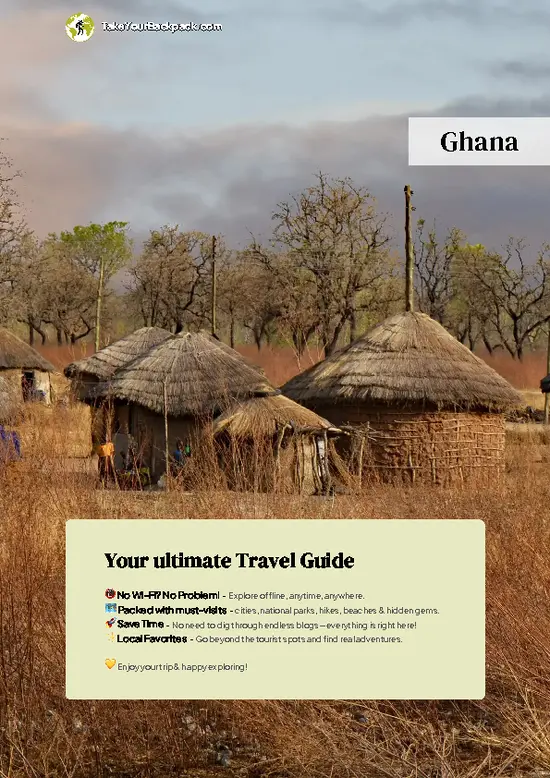
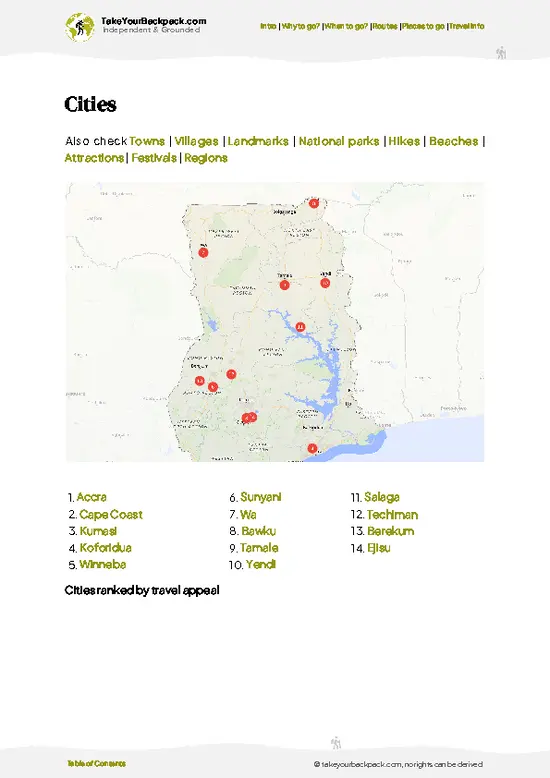
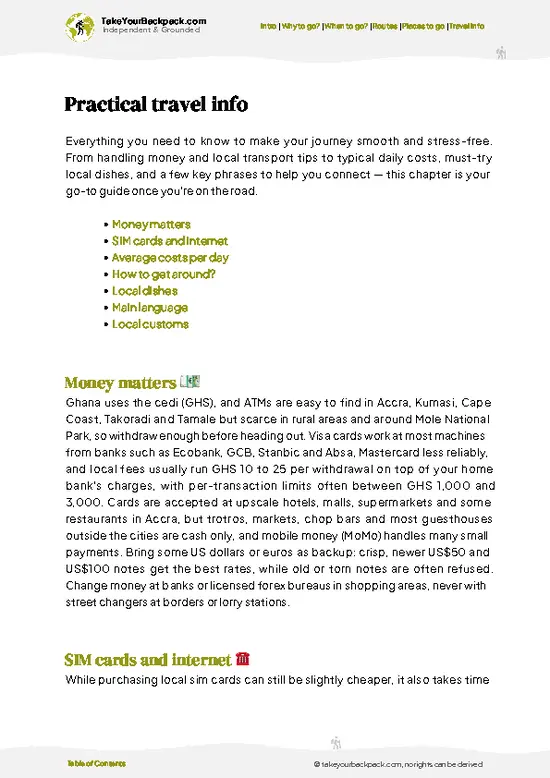
example page 0 from our offline Travel Guide for Ghana
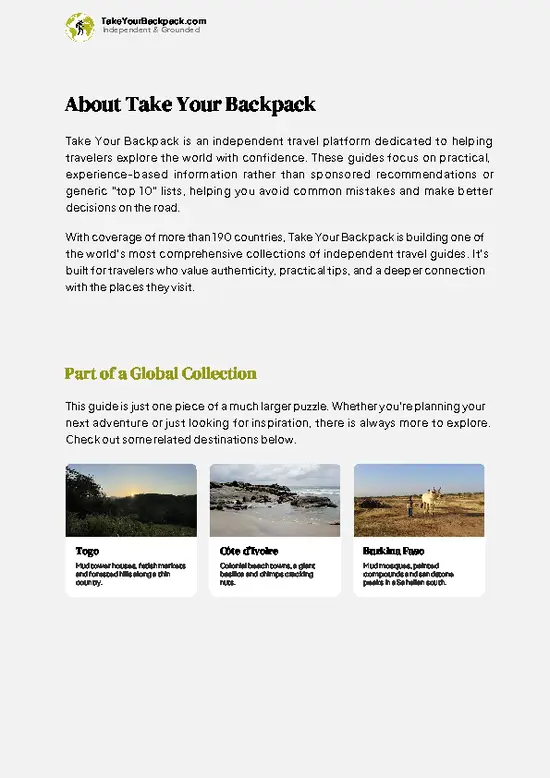
example page 1 from our offline Travel Guide for Ghana
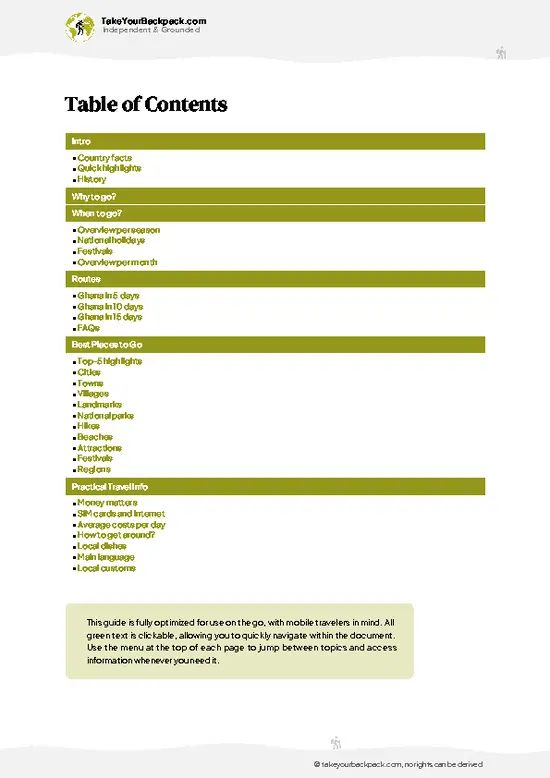
example page 2 from our offline Travel Guide for Ghana
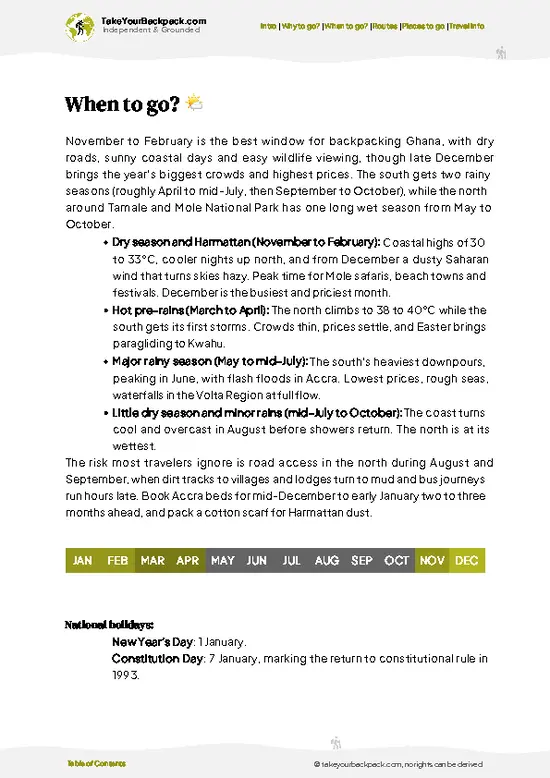
example page 3 from our offline Travel Guide for Ghana
example page 4 from our offline Travel Guide for Ghana
example page 5 from our offline Travel Guide for Ghana
example page 6 from our offline Travel Guide for Ghana
example page 7 from our offline Travel Guide for Ghana
The digital guide (424 pages) contains:
111 highlights, ranked by travel appeal
Optimized 5, 10 & 15-day travel routes
Cities, national parks, landmarks, beaches
How to get around
Offline-friendly for travel without Wi-Fi
👉 Click to see all 30+ guide features

📅 Plan smarter in minutes, not weeks
Month by month travel advice
Festivals & national holidays
Budget expectations

🗺️ Go to the right places, skip the overrated ones
Honest pros & cons of destinations
Top hikes, parks & viewpoints
Lesser-known places most travelers miss
Clear “worth it vs skip it” guidance

🛏️ Travel smoothly without rookie mistakes
Best areas to stay
Transport systems explained simply
Common scams & safety advice
SIM cards, money & practical tips

🌍 Understand the country, not just visit it
Culture & traditions
52 Essential phrases & customs
Festivals worth planning around
Traveler-friendly historical context
Insights that make places more meaningful

📱 Built for real travel conditions
Fully downloadable PDF
Works completely offline
Optimized for phone use
Useful in remote areas & buses
Everything in one place
Save weeks of stressful planning
Get instant access to your full guide. 30‑day money-back guarantee.


By proceeding you agree to our terms.
Sent to your inbox immediately after payment • 100% Secure Checkout
Best Backpacking Travel Advisor 2025 tourism awardBest Backpacking
Travel Advisor
2025
What others say about Take Your Backpack Guides:
⭐⭐⭐⭐⭐
Fantastic, amazing amount of information!
⭐⭐⭐⭐⭐
My goodness this is amazing, it's what I've been looking for hats off too you!
⭐⭐⭐⭐⭐
I think this is absolutely BRILLIANT
⭐⭐⭐⭐
Very complete and informative. It's still missing places, but I gotta to commend you
⭐⭐⭐⭐⭐
This is truly amazing, thank you, can't wait to explore it with my kids!
⭐⭐⭐⭐⭐
Awesome resource, thank you!
⭐⭐⭐⭐⭐
This is amazing! Can't wait to explore the ones I haven't seen
⭐⭐⭐⭐
I love this! Well done, great idea.
⭐⭐⭐⭐⭐
Thanks for taking the time to make this gem!
⭐⭐⭐⭐⭐
This might be the best website I've ever seen.
⭐⭐⭐⭐⭐
Congratulations, and thank you so much for your work; it's incredibly valuable.
⭐⭐⭐⭐
In all seriousness I think you did a great job pointing out the important spots
⭐⭐⭐⭐⭐
10/10 very good
⭐⭐⭐⭐⭐
As someone who's only just starting to visit regularly this is awesome, thank you.
⭐⭐⭐⭐
Thank you very much! I'm going to visit my dad, it's going to be very useful!
⭐⭐⭐⭐⭐
This is really cool! We'll be travelling for the first time and this definitely come in handy.
⭐⭐⭐⭐⭐
You are now our minister of culture, congratulations 👨‍💼
⭐⭐⭐⭐⭐
Just wanted to tell you that this is a pearl! Going to follow your recommendations.
⭐⭐⭐⭐⭐
This is so cool. I'll definitely be using the resource for my travels soon.
⭐⭐⭐⭐⭐
This is very impressive! Good work.
⭐⭐⭐⭐⭐
This is an amazing and informative site. Very well done!

🛏️ Where to stay?Best areas to stay in Ghana

Ejisu’s best backpacker base is the area around the town center, where the pulse of daily life hums steadily. This neighborhood balances safety with social energy—locals and travelers mingle in open-air markets and roadside eateries, filling the air with the scent of grilled fish and fresh plantains. It’s where budget accommodations cluster, offering simple dorms or private rooms that keep your wallet intact without sacrificing comfort. Staying here means you’re a short walk from transport hubs and local hangouts, making it easy to connect with other solo travelers or dive into community rhythms. … read more 👉
Ejisu’s best backpacker base is the area around the town center, where the pulse of daily life hums steadily. This neighborhood balances safety with social energy—locals and travelers mingle in open-air markets and roadside eateries, filling the air with the scent of grilled fish and fresh plantains. It’s where budget accommodations cluster, offering simple dorms or private rooms that keep your wallet intact without sacrificing comfort. Staying here means you’re a short walk from transport hubs and local hangouts, making it easy to connect with other solo travelers or dive into community rhythms. Other parts of Ejisu feel quieter but lack this blend of accessibility and atmosphere, making the center the smart choice for a grounded, authentic stay.

🚌 Getting aroundMoving around without the hassle

Ejisu moves at its own pace—neither frantic nor frozen. The sun casts long shadows over dusty streets where vendors shout their wares, and the scent of roasting plantains mingles with the earthy aroma of red clay. Time here is elastic; buses don’t always stick to schedules, but that’s part of the rhythm. You learn to read the crowd, catch the right moment, and roll with the flow. This isn’t a place for rigid timetables but for sharp eyes and a flexible spirit. Mastering transport here means blending patience with savvy timing, turning what could be a hassle into a local dance.


  • Tro-Tro: These shared minibuses are the backbone of Ejisu’s transit. They run from dawn until dusk, costing just a few cedis per ride. Expect a lively, cramped atmosphere and unpredictable departure times—buses leave
read more 👉
Ejisu moves at its own pace—neither frantic nor frozen. The sun casts long shadows over dusty streets where vendors shout their wares, and the scent of roasting plantains mingles with the earthy aroma of red clay. Time here is elastic; buses don’t always stick to schedules, but that’s part of the rhythm. You learn to read the crowd, catch the right moment, and roll with the flow. This isn’t a place for rigid timetables but for sharp eyes and a flexible spirit. Mastering transport here means blending patience with savvy timing, turning what could be a hassle into a local dance.


  • Tro-Tro: These shared minibuses are the backbone of Ejisu’s transit. They run from dawn until dusk, costing just a few cedis per ride. Expect a lively, cramped atmosphere and unpredictable departure times—buses leave when full, so timing is a mix of luck and local know-how.

  • Shared Taxis: Faster and more comfortable than tro-tros, shared taxis fill up quickly and depart on a similar “when full” basis. They’re pricier but cut travel time significantly, especially for longer routes out of town.

  • Walking: The town’s compact layout rewards those who explore on foot. Sidewalks are uneven, and the sun can be fierce midday, so mornings and late afternoons are prime walking times to soak in the street life without overheating.

  • Motorbike Taxis (Okada): For quick hops or places tro-tros don’t reach, okadas are your go-to. Negotiate fares upfront; rides are cheap but hold tight—these bikes weave through traffic with a fearless edge.

👛 Costs (as of 26 October 2025)What things cost and how to budget

Backpacking in Ejisu, Ghana, offers a straightforward, no-frills experience where your money stretches well if you know the local rhythm. The town hums with everyday life, and your budget reflects that grounded pace.
  • Dorm Accommodation: Ejisu isn’t a hotspot for hostels, so dorm-style lodging is rare. Expect to pay around $5 to $10 per night for a basic guesthouse room shared with others or a simple private room if you’re lucky. These places are modest but clean, often with a fan and a shared bathroom.
  • Meals: Street food and local eateries dominate. A hearty plate of waakye or jollof rice with protein runs about $1 to $2. If you opt for a sit-down meal at a small local restaurant, budget $2 to $4. Fresh fruit and snacks from markets are even cheaper, perfect for quick refuels.
  • Local Transport:
read more 👉
Backpacking in Ejisu, Ghana, offers a straightforward, no-frills experience where your money stretches well if you know the local rhythm. The town hums with everyday life, and your budget reflects that grounded pace.
  • Dorm Accommodation: Ejisu isn’t a hotspot for hostels, so dorm-style lodging is rare. Expect to pay around $5 to $10 per night for a basic guesthouse room shared with others or a simple private room if you’re lucky. These places are modest but clean, often with a fan and a shared bathroom.
  • Meals: Street food and local eateries dominate. A hearty plate of waakye or jollof rice with protein runs about $1 to $2. If you opt for a sit-down meal at a small local restaurant, budget $2 to $4. Fresh fruit and snacks from markets are even cheaper, perfect for quick refuels.
  • Local Transport: Tro-tros (shared minibuses) and motorbike taxis are the go-to. A typical tro-tro ride within town costs around $0.20 to $0.50, while motorbike taxis might charge $0.50 to $1 for short hops. Walking is also a solid option given Ejisu’s compact size and the chance to soak in the local vibe.
  • Basic Activities/Entry Fees: Ejisu is more about cultural immersion than paid attractions. Visiting local markets or community events is free, but if you want to explore nearby historical sites or museums, expect entry fees around $1 to $3. Guided tours are rare and usually arranged locally, adding a small premium.
  • Miscellaneous Expenses: Think bottled water ($0.50), occasional phone credit or SIM top-ups ($1 to $2), and small tips or snacks. These add up but remain modest, around $1 to $3 daily depending on your habits.

All told, you’re looking at roughly $8 to $18 per day to cover the essentials in Ejisu. This budget keeps you comfortably in the local flow without splurging on touristy extras. The real win here is how far a little cash goes—simple meals, easy transport, and a place to rest that feels like a pause in the everyday bustle.


source: ghana.travel
⚠️ Prices can change and everyone travels differently, so take this as a rough guide. Hope it helps you plan your adventure!

🚌 Day tripsWhere to go beyond the main area

Ejisu, Ghana, is a fantastic launchpad for day trips that blend culture, nature, and adventure. The town’s vibrant atmosphere and local markets set the stage for unforgettable experiences just a short ride away.

Kumasi Market
Just a 30-minute trot from Ejisu, Kumasi Market is a sensory overload. The air buzzes with the scent of spices and fresh produce, while the colors of textiles pop against the backdrop of bustling vendors. You can easily spend a few hours navigating the maze of stalls, sampling local dishes like fufu and light soup. Budget around 10 GHS for transport and a few extra for snacks. Aim for a weekday visit to avoid the weekend rush.


Lake Bosumtwi
About an hour’s drive from Ejisu, Lake Bosumtwi offers a serene escape. The lake, formed in a meteorite crater, is surrounded … read more 👉
Ejisu, Ghana, is a fantastic launchpad for day trips that blend culture, nature, and adventure. The town’s vibrant atmosphere and local markets set the stage for unforgettable experiences just a short ride away.

Kumasi Market
Just a 30-minute trot from Ejisu, Kumasi Market is a sensory overload. The air buzzes with the scent of spices and fresh produce, while the colors of textiles pop against the backdrop of bustling vendors. You can easily spend a few hours navigating the maze of stalls, sampling local dishes like fufu and light soup. Budget around 10 GHS for transport and a few extra for snacks. Aim for a weekday visit to avoid the weekend rush.


Lake Bosumtwi
About an hour’s drive from Ejisu, Lake Bosumtwi offers a serene escape. The lake, formed in a meteorite crater, is surrounded by lush hills and dotted with fishing villages. Rent a canoe for about 20 GHS and paddle out to soak in the tranquility. Bring your own picnic to enjoy by the water. The best time to visit is during the dry season, from November to March, when the skies are clear. A common mistake? Forgetting sunscreen; the sun can be relentless.


Bobiri Forest Reserve
Just 30 minutes away, Bobiri Forest Reserve is a birdwatcher’s paradise. The air is thick with the sounds of chirping and rustling leaves. A guided tour costs around 30 GHS, and you’ll get to see rare species in their natural habitat. Early mornings are best for spotting wildlife, so set out before dawn. Many first-timers miss the entrance; look for the signpost on the main road.
Want to know what more Ghana offers?
The Ghana Travel Guide describes 111 highlights, from cities to national parks, from beaches to hikes

Get the Travel Guide -

🍲 FoodEating & Drinking in Ejisu

Ejisu’s food scene is a playground for your taste buds, anchored by fufu—a doughy, hand-pounded staple paired with rich, spicy soups that demand you get your hands dirty. Don’t miss the smoky, savory punch of kebab stalls where meat grills over open flames, filling the air with irresistible aromas. Backpackers dive into bustling markets and street corners, where casual eateries serve up hearty, no-frills plates that fuel your day without breaking the bank. The drinking culture leans on palm wine, often shared in communal settings, inviting you into local rhythms and conversations. Here, eating is social, unhurried, and hands-on—expect to eat with your right hand and savor every bite as part of the experience.

🛡️ SafetyScams, Hazards, and Annoyances

Ejisu is generally safe, but staying aware enhances your experience. Stick to well-lit areas at night, especially around the market. Solo travelers should blend in; dress modestly and engage with locals to build rapport.

Watch for common scams, like inflated taxi fares or overly friendly strangers offering unsolicited help. If someone approaches you, a polite but firm “no thanks” usually suffices. Carry your belongings close, and keep your phone handy for navigation. With these simple practices, you’ll navigate Ejisu like a pro.

Other Ghanaian cities near Ejisu

Explore more nearby:

  • Kumasi—Kejetia Market, royal palace, craft villages, Ashanti traditions| 13 km away
  • Obuasi—gold mines, mining settlements, industrial landscape, workers’ quarters| 61 km away
  • Techiman—central market, transport crossroads, yam trading, rural outskirts| 108 km away

💡 Not sure where to go next?
Create a personalized itinerary for Ghana including Ejisu and the places that fit your trip.

Generate my itinerary

👉 Discover all cities

Or checkout all Ghana has to offer (think cities, towns, villages, national parks, hikes, beaches, festivals)
Country photo of Ghana

We 💚 feedbackWhat to keep in mind

Ejisu pulses with the vibrant energy of its markets, where the scent of spices dances in the air. But be ready for the heat; it can be relentless. Embrace the sweat, and you’ll find the warmth of the people makes every drop worth it.

✈️ When did I visit Ghana?
Ghana I visited in December 2024, starting in Accra following the coast, then up north to Mole National park to finish in the Volta Region.

✍️ Help improve this page!
The information on this page is based on my own backpacking experience in Ghana, supplemented with up-to-date research and feedback from other travelers. Travel details can change, so if you notice anything outdated or incomplete, feel free to let me know.


🙋‍♂️ Give feedback

👋 Meet the founderWho’s Behind Take Your Backpack?

Johan, backpacker and founder of TakeYourBackpackHi, I’m Johan (Netherlands 🇳🇱), the creator of TakeYourBackpack. Over the past decade, I’ve backpacked through 80+ countries across six continents, gaining extensive experience with independent travel, long-term trips, and overland routes.

This site is built on a combination of firsthand travel experience and carefully curated insights from other backpackers. Many guides are based on places I’ve personally visited, while others bring together tips, observations, and practical advice shared by trusted travelers I’ve met along the way.

The goal is to provide realistic, experience-driven guidance — not generic itineraries — so you can explore destinations with better context, clearer expectations, and more confidence.

Get full Ghana guide •
Instant download • 111 highlights • Full Offline guide