×

Ghana🇬🇭 | national parksMuni-Pomadze Ramsar SiteWinneba lagoon, mangrove edge, Mount Bawjiase fields | things to do and best time to go

Explore Avu Lagoon Ramsar SiteExplore Densu Delta Ramsar Site

Backpacking in Muni-Pomadze Ramsar Site
👀 For curious travelersnational park ranked #18
By Johan Kruseman 🇳🇱 | Updated October 2, 2026

The choice that shapes this visit is whether to hire a local guide from Bawjiase or wander the wetland alone. Go with a guide: the Muni lagoon edges are marshy, paths fade into grass, and the birds sit where only locals know. Muni-Pomadze sits on the coast in Ghana’s Central Region, west of Accra near Winneba. I stood at the lagoon at dawn, mud sucking at my boots, while egrets lifted off the reeds. It’s flat, quiet and modest, nothing like Kakum’s canopy, and there are no big mammals to chase.

Discover everything you want to know in the 📖 Ghana Travel Guide.


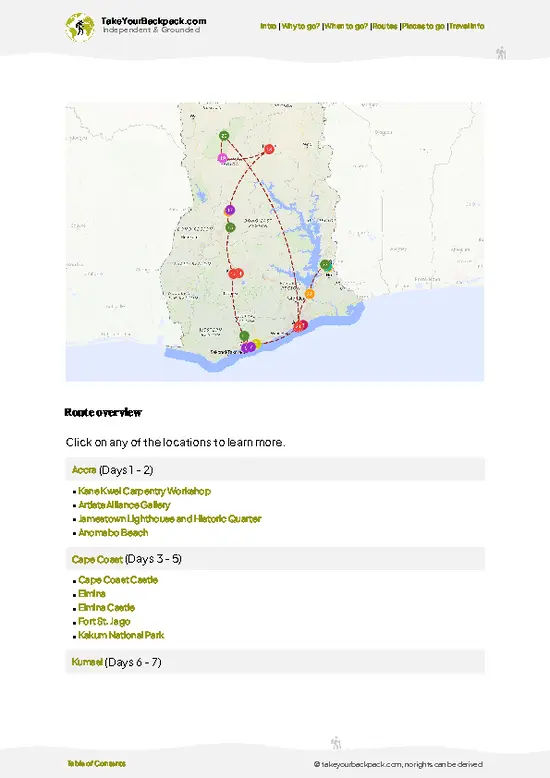
example page 0 from our offline Travel Guide for Ghana
example page 1 from our offline Travel Guide for Ghana
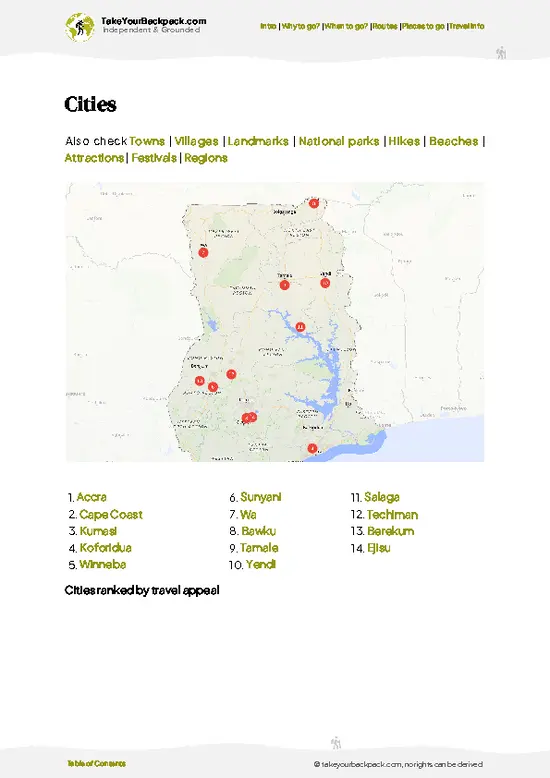
example page 2 from our offline Travel Guide for Ghana
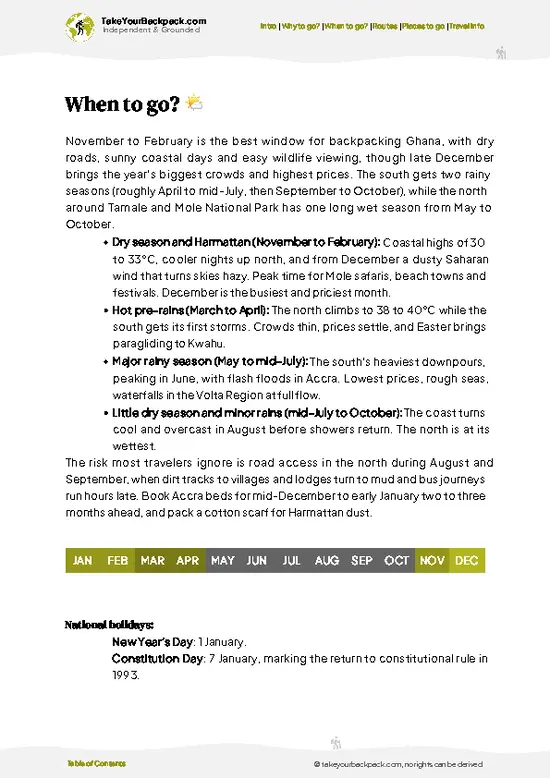
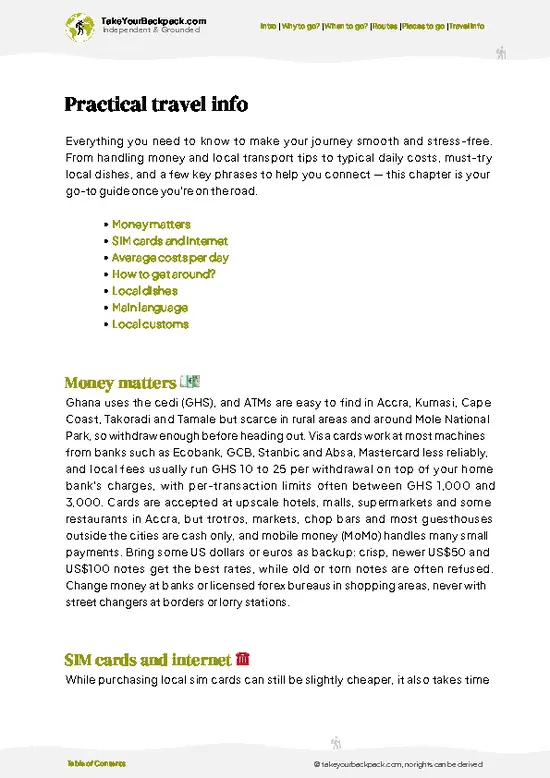
example page 3 from our offline Travel Guide for Ghana
example page 4 from our offline Travel Guide for Ghana
example page 5 from our offline Travel Guide for Ghana
example page 6 from our offline Travel Guide for Ghana
example page 7 from our offline Travel Guide for Ghana
Loading the map 🌍
CLICK TO FILTER
cities
towns
villages
landmarks
national parks
hikes
beaches
attractions
festivals
regions
SHOW COUNTRY’S BESTSHOW ALL

✨ Why go?
Ranked #18 national park in Ghana
What makes it a must-see national park

Backpackers choose this site for independent exploration without queues or ticket-office theater. It is a low-cost add-on to a coast trip, since budget guesthouses in Winneba and Accra are an easy hop away. The flat terrain suits relaxed walking, and birdwatching is the draw, with waders, terns and the occasional sea turtle track on the shore. A local guide is worth hiring for the wetland edges, but you set the pace. If you prefer self-guided days over packaged tours, this fits well.

💡 HighlightsDon't-miss highlights and experiences

  1. Muni Lagoon: The heart of the Ramsar site, a shallow brackish lagoon where waders and herons feed along reedy margins.
  2. Waterbird Flocks: The wetland is recognized internationally for migratory and resident birds, with terns, plovers, sandpipers and egrets among those you may see.
  3. Pomadze Wetland Fringe: Marsh, grassland and thicket meet here, giving varied habitats within a short walk.
  4. Coastal Shoreline: Sandy beach along the Gulf of Guinea, used by sea turtles for nesting in some seasons.
  5. Local Fishing Life: Villagers fish the lagoon and sea, and you see nets, canoes and drying catch in everyday use.
  6. Sunrise Light: Early morning gives soft light over open water and the best bird activity.
I would pick the lagoon first. It is the reason the site is protected, and one dawn walk along its edge shows … read more 👉
  1. Muni Lagoon: The heart of the Ramsar site, a shallow brackish lagoon where waders and herons feed along reedy margins.
  2. Waterbird Flocks: The wetland is recognized internationally for migratory and resident birds, with terns, plovers, sandpipers and egrets among those you may see.
  3. Pomadze Wetland Fringe: Marsh, grassland and thicket meet here, giving varied habitats within a short walk.
  4. Coastal Shoreline: Sandy beach along the Gulf of Guinea, used by sea turtles for nesting in some seasons.
  5. Local Fishing Life: Villagers fish the lagoon and sea, and you see nets, canoes and drying catch in everyday use.
  6. Sunrise Light: Early morning gives soft light over open water and the best bird activity.
I would pick the lagoon first. It is the reason the site is protected, and one dawn walk along its edge shows you the birdlife and the human use of the wetland at once.
Spotted a mistake or missing something? Contact us.

Things to do near Muni-Pomadze Ramsar Site

Ratings based on Tripadvisor reviews. When you book through this link, you support our work at no extra cost to you.

🌤️ When to go?When to go for the best experience

  • Major Dry Season (November to March): Hot, hazy days of 25 to 33°C (77 to 91°F), with firm paths and the best birding. Daylight runs roughly 6am to 6pm all year.
  • Main Rains (April to July): Humid 24 to 30°C (75 to 86°F), muddy trails and swollen wetlands. Few visitors and lower prices.
  • Short Dry Spell (August): Cooler, cloudier and breezy, around 23 to 27°C (73 to 81°F).
  • Minor Rains (September to October): Showers return, but crowds stay thin.
Go early in the morning in any season, before the heat and when birds are most active.

source: climatestotravel.comJANJanuary: excellent for travelingFEBFebruary: excellent for travelingMARMarch: excellent for travelingAPRApril: fair for travelingMAYMay: fair for travelingJUNJune: fair for travelingJULJuly: fair for travelingAUGAugust: fair for travelingSEPSeptember: fair for travelingOCTOctober: fair for travelingNOVNovember: excellent for travelingDECDecember: excellent for traveling
when-to-go

✈️ The backpacker research shortcutGhana Travel Guide

An offline-friendly backpacking guide with optimized travel routes, ranked highlights, transport advice, and the best areas to stay.
example page 0 from our offline Travel Guide for Ghana
example page 1 from our offline Travel Guide for Ghana
example page 2 from our offline Travel Guide for Ghana
example page 3 from our offline Travel Guide for Ghana
example page 4 from our offline Travel Guide for Ghana
example page 5 from our offline Travel Guide for Ghana
example page 6 from our offline Travel Guide for Ghana
example page 7 from our offline Travel Guide for Ghana
The digital guide (321 pages) contains:
✅ 105 highlights, ranked by travel appeal
✅ Optimized 5, 10 & 15-day travel routes
✅ Cities, national parks, landmarks, beaches
✅ How to get around
✅ Offline-friendly for travel without Wi-Fi
👉 Click to see all 30+ guide features

📅 Plan smarter in minutes, not weeks
✅ Month by month travel advice
✅ Festivals & national holidays
✅ Budget expectations

🗺️ Go to the right places, skip the overrated ones
✅ Honest pros & cons of destinations
✅ Top hikes, parks & viewpoints
✅ Lesser-known places most travelers miss
✅ Clear “worth it vs skip it” guidance

🛏️ Travel smoothly without rookie mistakes
✅ Best areas to stay
✅ Transport systems explained simply
✅ Common scams & safety advice
✅ SIM cards, money & practical tips

🌍 Understand the country, not just visit it
✅ Culture & traditions
✅ 52 Essential phrases & customs
✅ Festivals worth planning around
✅ Traveler-friendly historical context
✅ Insights that make places more meaningful

📱 Built for real travel conditions
✅ Fully downloadable PDF
✅ Works completely offline
✅ Optimized for phone use
✅ Useful in remote areas & buses
✅ Everything in one place
Stop searching, start planning
Get instant access to your full guide. 30‑day money-back guarantee.
+ Add another guide for just

By proceeding you agree to our terms.
Sent to your inbox immediately after payment • 100% Secure Checkout
Best Backpacking Travel Advisor 2025 tourism awardBest Backpacking
Travel Advisor
2025
What others say about Take Your Backpack Guides:
⭐⭐⭐⭐⭐
Fantastic, amazing amount of information!
⭐⭐⭐⭐⭐
My goodness this is amazing, it's what I've been looking for hats off too you!
⭐⭐⭐⭐⭐
I think this is absolutely BRILLIANT
⭐⭐⭐⭐
Very complete and informative. It's still missing places, but I gotta to commend you
⭐⭐⭐⭐⭐
This is truly amazing, thank you, can't wait to explore it with my kids!
⭐⭐⭐⭐⭐
Awesome resource, thank you!
⭐⭐⭐⭐⭐
This is amazing! Can't wait to explore the ones I haven't seen
⭐⭐⭐⭐
I love this! Well done, great idea.
⭐⭐⭐⭐⭐
Thanks for taking the time to make this gem!
⭐⭐⭐⭐⭐
This might be the best website I've ever seen.
⭐⭐⭐⭐⭐
Congratulations, and thank you so much for your work; it's incredibly valuable.
⭐⭐⭐⭐
In all seriousness I think you did a great job pointing out the important spots
⭐⭐⭐⭐⭐
10/10 very good
⭐⭐⭐⭐⭐
As someone who's only just starting to visit regularly this is awesome, thank you.
⭐⭐⭐⭐
Thank you very much! I'm going to visit my dad, it's going to be very useful!
⭐⭐⭐⭐⭐
This is really cool! We'll be travelling for the first time and this definitely come in handy.
⭐⭐⭐⭐⭐
You are now our minister of culture, congratulations 👨‍💼
⭐⭐⭐⭐⭐
Just wanted to tell you that this is a pearl! Going to follow your recommendations.
⭐⭐⭐⭐⭐
This is so cool. I'll definitely be using the resource for my travels soon.
⭐⭐⭐⭐⭐
This is very impressive! Good work.
⭐⭐⭐⭐⭐
This is an amazing and informative site. Very well done!

🛏️ Where to stay?Best areas and accommodation options

There is no accommodation inside the Ramsar site, so stay in Winneba, about 30 to 45 minutes away by shared taxi. It has simple guesthouses and small hotels for roughly US$15 to 40 a night, plus beach views and fresh fish at the market. Accra is the other base, with real hostels and more transport choice, but it adds a long tro-tro ride each way. Some travelers continue to Cape Coast and Kakum. Book ahead on weekends and around the Aboakyer festival in Winneba in early May, when rooms fill quickly.

👛 Costs (as of 2 October 2026)Travel costs and budget guide for Muni-Pomadze Ramsar Site

A visit to Muni-Pomadze is inexpensive, with most spending going to transport and a local guide. Figures below are typical ranges for budget travelers.
CategoryBudget RangeLocal Reality
Entrance and GuideUS$3 to 15No fixed ticket office. Expect a community or guide fee, negotiated on arrival.
AccommodationUS$12 to 40 per nightGuesthouses in Winneba. Accra hostels run a little higher.
Local TransportUS$3 to 10Tro-tro from Accra to Winneba, then shared taxi to the site.
Food and SuppliesUS$6 to 15Waakye, rice dishes and grilled fish at local chop bars cost US$2 to 5 a meal.
⚠️ Prices can change and everyone travels differently, so take this as a rough guide. Hope it helps you plan your adventure!

🥾 TrailsBest hikes in Muni-Pomadze Ramsar Site national park

Muni-Pomadze is a flat coastal wetland of lagoon, marsh, grassland and thicket, so effort is low and the challenge is mud and heat. There are no formally signed trails. Walks follow informal paths set by local guides and fishermen.
  • Lagoon Edge Walk: Length about 3 to 5 km, 2 to 3 hours, easy. Reed margins and mudflats, best for waders.
  • Coastal Beach Stroll: Length varies, 1 to 2 hours, easy. Soft sand and shoreline birds.
  • Grassland and Thicket Loop: Around 2 to 4 km, 1.5 to 2 hours, easy to moderate. Uneven ground that can flood in the rains.
Wildlife is mostly birds, plus small mammals, reptiles … read more 👉
Muni-Pomadze is a flat coastal wetland of lagoon, marsh, grassland and thicket, so effort is low and the challenge is mud and heat. There are no formally signed trails. Walks follow informal paths set by local guides and fishermen.
  • Lagoon Edge Walk: Length about 3 to 5 km, 2 to 3 hours, easy. Reed margins and mudflats, best for waders.
  • Coastal Beach Stroll: Length varies, 1 to 2 hours, easy. Soft sand and shoreline birds.
  • Grassland and Thicket Loop: Around 2 to 4 km, 1.5 to 2 hours, easy to moderate. Uneven ground that can flood in the rains.
Wildlife is mostly birds, plus small mammals, reptiles and sea turtle nesting on the beach in season. Bring binoculars, water and sun protection, because shade is scarce.
Getting there is simple but not direct: take a tro-tro or bus from Accra toward Winneba, then a shared taxi or tro-tro toward Bawjiase and the lagoon area, usually 1.5 to 2.5 hours in total. Crowds are essentially absent. I am not aware of a formal fixed entrance fee, so expect to pay a modest community or guide fee on arrival.
⚠️ Hiking info can sometimes be outdated or inaccurate. Before you hit the trail, check the latest conditions with locals. If you do spot anything that's off, I'd love to hear from you, so I can update it for fellow travelers.

🛡️ SafetyStaying Safe: What Travelers Should Know

This is a low-risk site, with heat and mud the main issues. Walk early, carry at least 2 liters of water and wear sturdy shoes you don’t mind soiling. Wetland edges can be soft, so follow your guide rather than cutting across marsh. Mosquitoes are active near dusk, so use repellent and keep up with malaria prevention. Keep a respectful distance from nesting turtles and roosting birds, and avoid flash photography. Stay on the beach side in daylight, and tell your guesthouse where you are going.

FAQFrequently asked questions about Muni-Pomadze Ramsar Site

One day is enough for most travelers. A dawn walk around the lagoon takes 3 to 5 hours, and the site sits 1.5 to 2.5 hours from Accra by public transport, so a full day trip works. Staying a night in Winneba lets you start at first light and add a beach stroll.
Yes, you can reach it without a car, though it takes several hops. Take a tro-tro from Accra to Winneba (about 1.5 to 2 hours), then a shared taxi toward Bawjiase and the lagoon for another 30 to 45 minutes. Fares typically total US$3 to 10, and a local guide can meet you on arrival.
There is no widely published fixed entrance fee or permit for independent visitors. Expect to pay a small community or guide fee on arrival, typically US$3 to 15 depending on group size and time. Carry cash in Ghanaian cedis, since card payments are not available on site.
⚠️ Things can change over time, so always validate details locally before you go.

Other Ghanaian national parks near Muni-Pomadze Ramsar Site

Explore more nearby:


💡 Not sure where to go next?
Create a personalized itinerary for Ghana including Muni-Pomadze Ramsar Site and the places that fit your trip.

Generate my itinerary

👉 Discover all national parks

Or checkout all Ghana has to offer (think cities, towns, villages, national parks, hikes, beaches, festivals)
Country photo of Ghana

We 💚 feedbackSumming up the experience

Come for the dawn birds over the lagoon, because it’s quiet, cheap and uncrowded. The catch is that nothing is set up for visitors: no signed trails, no facilities, and transport takes some patience. Bring water, hire a local guide, and keep expectations modest.

✈️ When did I visit Ghana?
Ghana I visited in December 2024, starting in Accra following the coast, then up north to Mole National park to finish in the Volta Region.

✍️ Help improve this page!
The information on this page is based on my own backpacking experience in Ghana, supplemented with up-to-date research and feedback from other travelers. Travel details can change, so if you notice anything outdated or incomplete, feel free to let me know.


🙋‍♂️ Give feedback

👋 Meet the founderWho’s Behind Take Your Backpack?

Johan, backpacker and founder of TakeYourBackpackHi, I’m Johan (Netherlands 🇳🇱), the creator of TakeYourBackpack. Over the past 3 decades, I’ve backpacked through 90+ countries across six continents, gaining extensive experience with independent travel, long-term trips, and overland routes.

This site is built on a combination of firsthand travel experience and carefully curated insights from other backpackers. Many guides are based on places I’ve personally visited, while others bring together tips, observations, and practical advice shared by trusted travelers I’ve met along the way.

The goal is to provide realistic, experience-driven guidance — not generic itineraries — so you can explore destinations with better context, clearer expectations, and more confidence.