×

Ghana🇬🇭 | townsPagaSacred crocodile ponds, border crossing, shrine visits | things to do and best time to go

Explore BolgatangaExplore Keta

Backpacking in Paga
🏆 Top picktown ranked #5
By Johan Kruseman 🇳🇱 | Updated July 30, 2026

Everyone comes to Paga for the crocodiles—those famous, almost domesticated reptiles lounging in the muddy ponds, mouths agape for a photo op. But if you’re chasing something deeper than a snapshot, what actually matters is the rhythm of borderland life and the slow, sun-baked pulse of northern Ghana. Paga sits right at the edge of Ghana, a stone’s throw from Burkina Faso, where the Sahel’s dry wind carries the scent of dust and charcoal fires. The town itself is small, more crossroads than destination, with a market that’s lively on good days and sleepy on others. It’s not a place for nightlife or urban thrills; think slow evenings, simple guesthouses, and the occasional traveler swapping stories over warm beer. Paga works best as a practical stopover—either to break up the long haul north from Bolgatanga or as a base for day trips to the border and nearby shrines. Getting here means a bumpy bus ride, and you’ll walk most places, though a moto-taxi is handy for the heat. It’s cheaper than Ghana’s bigger cities, and safety is more about sunstroke than scams. Compared to Bolgatanga, Paga is quieter, less hectic, and more about the journey than the destination.

Discover everything you want to know in the 📖 Ghana Travel Guide.


Get your Ghana guide
108 ranked highlights, routes & tips, works offline (399 pages)
Loading the map 🌍
CLICK TO FILTER
cities
towns
villages
landmarks
national parks
hikes
beaches
attractions
festivals
regions
SHOW COUNTRY’S BESTSHOW ALL

✨ Why go?
Ranked #5 town in Ghana
The unique appeal for travelers

Backpackers flock to Paga for its unique blend of convenience and charm, making it a strategic stop on the way to nearby adventures. The town serves as a gateway to hikes in the surrounding hills and the bustling atmosphere of local markets. You can stroll through walkable streets, where the scent of grilled plantains mingles with the chatter of friendly locals.

Accommodations range from small-scale hostels to cozy guesthouses, perfect for solo travelers or small groups looking to connect. The vibe is relaxed, encouraging you to linger a few days rather than just passing through. You’ll find plenty of opportunities for local food experiences, from street vendors to family-run eateries, where you can savor authentic Ghanaian dishes.

While Paga isn’t known for nightlife, it offers a social read more 👉
Backpackers flock to Paga for its unique blend of convenience and charm, making it a strategic stop on the way to nearby adventures. The town serves as a gateway to hikes in the surrounding hills and the bustling atmosphere of local markets. You can stroll through walkable streets, where the scent of grilled plantains mingles with the chatter of friendly locals.

Accommodations range from small-scale hostels to cozy guesthouses, perfect for solo travelers or small groups looking to connect. The vibe is relaxed, encouraging you to linger a few days rather than just passing through. You’ll find plenty of opportunities for local food experiences, from street vendors to family-run eateries, where you can savor authentic Ghanaian dishes.

While Paga isn’t known for nightlife, it offers a social atmosphere that appeals to slow travelers and those seeking genuine interactions. If you’re after a place that balances adventure with a sense of community, Paga is your spot.
Want to include Paga in your Ghana route?
Create a personalized Ghana itinerary that includes Paga and the places that fit your trip — based on your travel style, budget, and available time. Get your route in seconds.

Generate my trip

💡 HighlightsDon't-miss highlights and experiences

  1. Paga Sacred Crocodile Pond (the main crocodile pond) — The town’s signature sight: tame, sacred crocodiles that locals treat as part of the community. Guided visits let you get close for photos, hear the founding myths, and watch feeding rituals—an unmistakable Paga experience.
  2. Paga Naa’s Palace (the chief’s compound) — A working traditional palace where the chief holds court. The courtyard, architecture and regalia give real insight into local chieftaincy, protocols and the everyday governance that still shapes village life.
  3. Paga Main Market — A compact, lively market where farmers and traders sell millet, shea butter, smoked fish, fabrics and simple crafts. Great for people-watching, grabbing cheap street food and picking up locally-made souvenirs.
  4. Borderline spot / Ghana-Burkina Faso
read more 👉
  1. Paga Sacred Crocodile Pond (the main crocodile pond) — The town’s signature sight: tame, sacred crocodiles that locals treat as part of the community. Guided visits let you get close for photos, hear the founding myths, and watch feeding rituals—an unmistakable Paga experience.
  2. Paga Naa’s Palace (the chief’s compound) — A working traditional palace where the chief holds court. The courtyard, architecture and regalia give real insight into local chieftaincy, protocols and the everyday governance that still shapes village life.
  3. Paga Main Market — A compact, lively market where farmers and traders sell millet, shea butter, smoked fish, fabrics and simple crafts. Great for people-watching, grabbing cheap street food and picking up locally-made souvenirs.
  4. Borderline spot / Ghana-Burkina Faso crossing in town — Paga sits on the border; you can walk the demarcation, see the frontier bustle and watch cross-border trade. It’s a small-scale, very human illustration of how borders work here.
  5. Traditional shrines and small sacred sites — Scattered around the village are modest shrines linked to ancestor veneration and the crocodile myths. Visiting with a local guide teaches you about ritual life, taboos and how sacred space is woven into daily practice.
  6. Community craft workshops — Short, informal workshops where potters, weavers and blacksmiths still work by hand. You won’t find large tourist shops—just real people making everyday goods, and often you can watch or buy direct from the maker.
  7. Village walking routes through rice paddies and mango groves — Take a relaxed walk out of the cluster of houses into the surrounding fields. The landscape and small-scale farming life tell more about Paga than any photo: footpaths, irrigation channels, drying millet, children at play.
  8. Local churches and mosques (places of worship) — The modest mosques and churches are community hubs with simple but evocative architecture. Visiting services or talking to congregation members gives perspective on how faith and daily life intersect here.
  9. Crocodile-handling & storytelling sessions — Beyond the pond itself, some local guides combine hands-on crocodile moments with oral-history sessions—founding legends, settlement stories and personal memories that bring Paga’s past alive.
  10. Community schools and youth projects (visit by arrangement) — Small, visitable schools and community projects where travelers can see education initiatives in practice, meet students and sometimes support a class activity. Best visited respectfully and by prior arrangement.
A few real day-trip options just outside Paga include Navrongo’s cathedral and local museum, Bolgatanga’s craft markets and Tongo/rock formations, and the Gbele Resource Reserve for wildlife and birding.
Spotted a mistake or missing something? Contact us.

🏘️ NeighborhoodsNeighborhood guide to Paga

Paga, a vibrant town in northern Ghana, offers a unique blend of culture, community, and adventure. Here’s a breakdown of its neighborhoods to help you navigate like a pro.

Paga Main Town
This is the heart of Paga, where the pulse of daily life beats strongest. Expect a lively atmosphere with bustling markets and local eateries. It’s affordable, with plenty of budget accommodations. Walkability is high, making it easy to explore on foot. Nightlife is low-key, perfect for unwinding after a day of exploration. Ideal for short stays, you can soak in the local vibe without feeling rushed.

Paga Crocodile Pond
A must-visit for the adventurous, this area is famous for its sacred crocodiles. The vibe here is serene, with a focus on nature and wildlife. Accommodations are a bit pricier, but the … read more 👉
Paga, a vibrant town in northern Ghana, offers a unique blend of culture, community, and adventure. Here’s a breakdown of its neighborhoods to help you navigate like a pro.

Paga Main Town
This is the heart of Paga, where the pulse of daily life beats strongest. Expect a lively atmosphere with bustling markets and local eateries. It’s affordable, with plenty of budget accommodations. Walkability is high, making it easy to explore on foot. Nightlife is low-key, perfect for unwinding after a day of exploration. Ideal for short stays, you can soak in the local vibe without feeling rushed.

Paga Crocodile Pond
A must-visit for the adventurous, this area is famous for its sacred crocodiles. The vibe here is serene, with a focus on nature and wildlife. Accommodations are a bit pricier, but the experience is worth it. The pond is easily accessible, and you can spend a few hours or a full day here. It’s quieter, making it suitable for those seeking a peaceful retreat.

Paga Nania
This neighborhood offers a more residential feel, giving you a glimpse into local life. It’s less touristy, which means lower prices and a more authentic experience. Walkability varies, so be prepared for some longer treks. It’s great for longer stays, allowing you to truly immerse yourself in the community.

⌛️ 1 dayWhat you can realistically do in a day

Paga, Ghana, is a vibrant town known for its rich cultural tapestry and the fascinating Paga Crocodile Pond. Here, you can experience the unique blend of tradition and wildlife, making it a captivating stop on your journey.

Start your morning with a stroll through the lively market in the heart of Paga. The air is thick with the scent of spices and fresh produce, mingling with the chatter of vendors. Grab a breakfast of kelewele—spicy fried plantains—at a local stall. It’s a delicious way to fuel up for the day ahead.

After breakfast, head to the Paga Crocodile Pond. This isn’t just a tourist trap; it’s a chance to connect with nature. You’ll find local guides who know the crocs by name. The thrill of gently touching these ancient creatures is both exhilarating and humbling. The sun glints … read more 👉
Paga, Ghana, is a vibrant town known for its rich cultural tapestry and the fascinating Paga Crocodile Pond. Here, you can experience the unique blend of tradition and wildlife, making it a captivating stop on your journey.

Start your morning with a stroll through the lively market in the heart of Paga. The air is thick with the scent of spices and fresh produce, mingling with the chatter of vendors. Grab a breakfast of kelewele—spicy fried plantains—at a local stall. It’s a delicious way to fuel up for the day ahead.

After breakfast, head to the Paga Crocodile Pond. This isn’t just a tourist trap; it’s a chance to connect with nature. You’ll find local guides who know the crocs by name. The thrill of gently touching these ancient creatures is both exhilarating and humbling. The sun glints off the water, and the crocs bask lazily, reminding you of the wild beauty surrounding you.

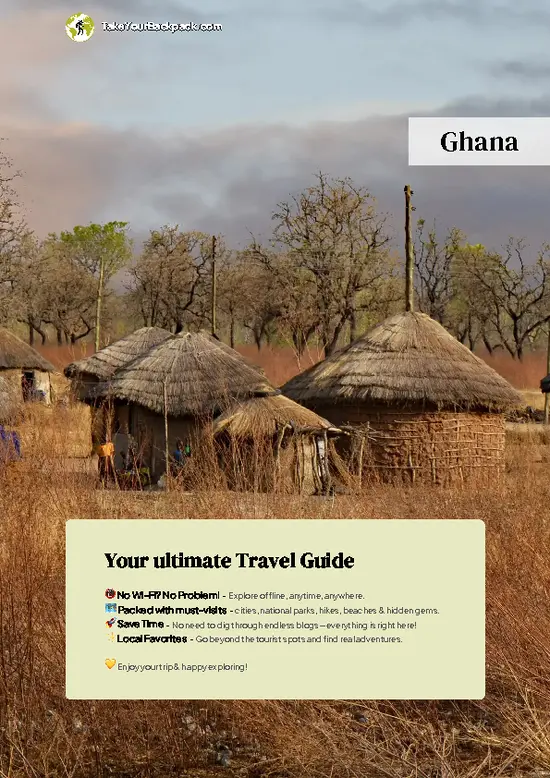
In the afternoon, wander over to the nearby village of Paga-Nania. This area isn’t on most itineraries, but it’s a treasure trove of traditional mud huts and vibrant local life. Engage with the friendly residents, who often share stories of their customs and daily routines. The warmth of their hospitality is palpable, and you might even catch a glimpse of a local craft being made.

As evening approaches, return to Paga and find a spot to watch the sunset. The sky transforms into a canvas of oranges and purples, reflecting the day’s adventures. For dinner, seek out a local eatery serving jollof rice and grilled chicken. The flavors are bold, and the atmosphere is filled with laughter and music.

Spending a day in Paga is about immersing yourself in the local rhythm. Each moment, from the bustling market to the serene pond, offers a piece of Ghana’s soul. Embrace it all, and you’ll leave with memories that linger long after the sun sets.
Turn your Paga visit into an Ghana adventure
Build a complete Ghana route with Paga, hidden gems, must-see destinations, and realistic travel times included.

Generate my trip

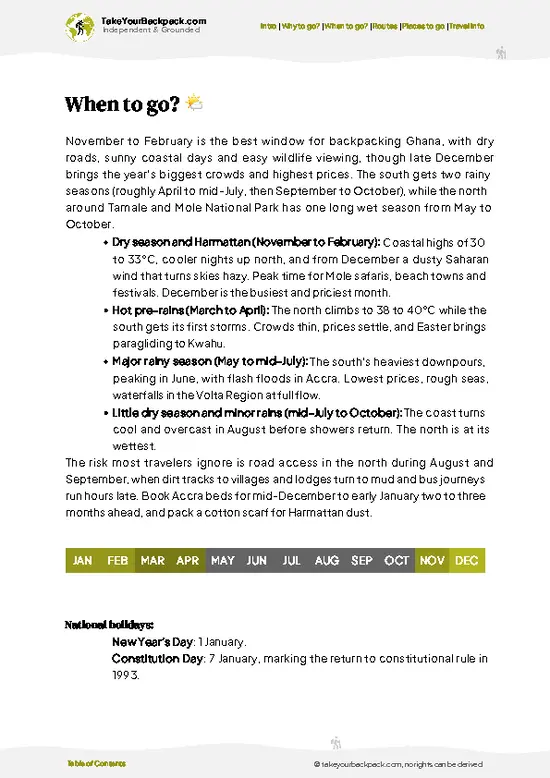
🌤️ When to go?Choosing the right time of year


  • Weather: Paga experiences a tropical climate with a distinct wet season from May to October. Heavy rains can turn dirt roads into mud traps, making travel tricky and slowing down your pace. The dry season, November to April, offers clearer skies and easier trekking conditions.

  • Temperature: Daytime highs hover around 30-35°C (86-95°F) year-round, but humidity spikes during the wet season, making it feel hotter and stickier. Dry season mornings and evenings cool to a comfortable 20-24°C (68-75°F), perfect for early hikes or exploring without overheating.

  • Daylight Hours: Near the equator, Paga enjoys roughly 12 hours of daylight year-round, with sunrise around 6:00 AM and sunset near 6:00 PM. This steady rhythm means you can plan your days confidently without worrying about shifting light.
read more 👉

  • Weather: Paga experiences a tropical climate with a distinct wet season from May to October. Heavy rains can turn dirt roads into mud traps, making travel tricky and slowing down your pace. The dry season, November to April, offers clearer skies and easier trekking conditions.

  • Temperature: Daytime highs hover around 30-35°C (86-95°F) year-round, but humidity spikes during the wet season, making it feel hotter and stickier. Dry season mornings and evenings cool to a comfortable 20-24°C (68-75°F), perfect for early hikes or exploring without overheating.

  • Daylight Hours: Near the equator, Paga enjoys roughly 12 hours of daylight year-round, with sunrise around 6:00 AM and sunset near 6:00 PM. This steady rhythm means you can plan your days confidently without worrying about shifting light.

  • Crowds: Tourist traffic peaks during the dry season, especially December to February, when visitors flock to Paga’s famous sacred crocodile ponds. Visiting just before or after this window means fewer people and a more intimate experience.

  • Seasonal Activities: The dry season is prime for cultural festivals and outdoor markets, where the air fills with the scent of grilled meats and fresh spices. The wet season brings lush greenery but fewer events, so plan accordingly if you want to dive into local life.

  • Price Fluctuations: Accommodation and transport costs rise during the dry season’s peak months. Booking in the shoulder months (November or March-April) can save money while still offering decent weather and access to local events.


Pro-tip: Aim for late November or early March to catch Paga’s best balance of dry trails, manageable crowds, and wallet-friendly prices—plus, the golden afternoon light makes the crocodile ponds glow with a rare magic.


source: climatestotravel.comJANJanuary: excellent for travelingFEBFebruary: excellent for travelingMARMarch: highly recommended for travelingAPRApril: highly recommended for travelingMAYMay: fair for travelingJUNJune: fair for travelingJULJuly: fair for travelingAUGAugust: fair for travelingSEPSeptember: fair for travelingOCTOctober: fair for travelingNOVNovember: highly recommended for travelingDECDecember: excellent for traveling
when-to-go

✈️ The backpacker research shortcutGhana Travel Guide

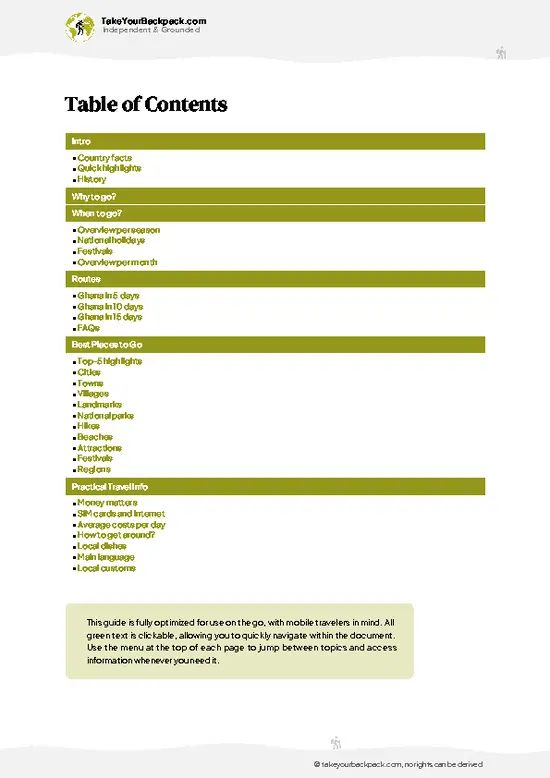
An offline-friendly backpacking guide with optimized travel routes, ranked highlights, transport advice, and the best areas to stay.
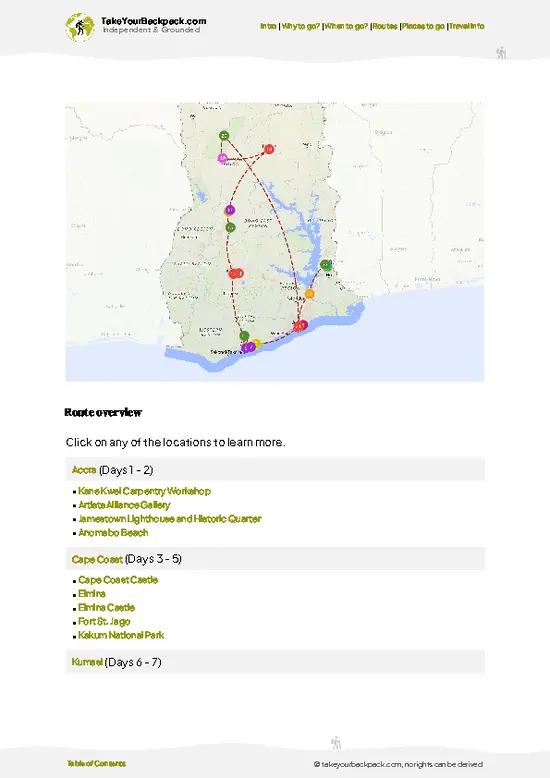
example page 0 from our offline Travel Guide for Ghana
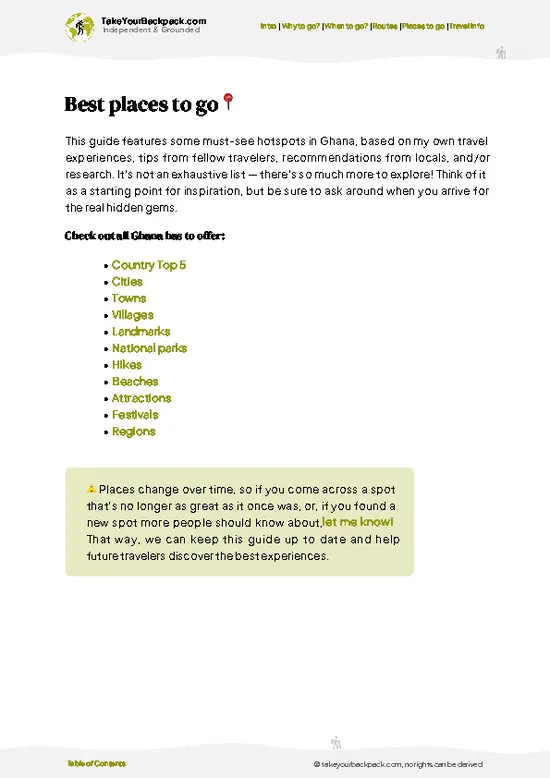
example page 1 from our offline Travel Guide for Ghana
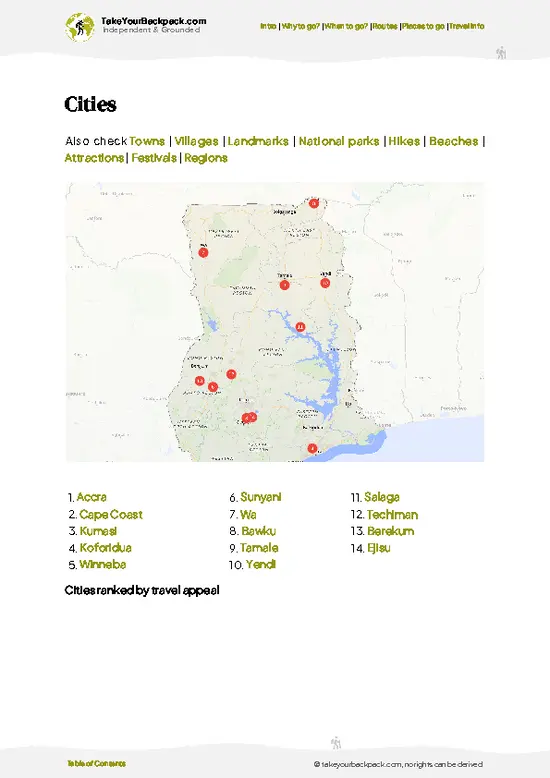
example page 2 from our offline Travel Guide for Ghana
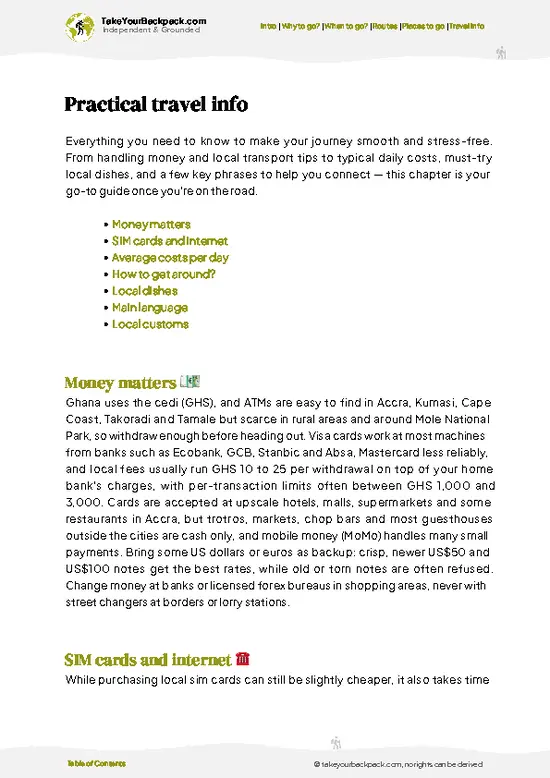
example page 3 from our offline Travel Guide for Ghana
example page 4 from our offline Travel Guide for Ghana
example page 5 from our offline Travel Guide for Ghana
example page 6 from our offline Travel Guide for Ghana
example page 7 from our offline Travel Guide for Ghana
The digital guide (399 pages) contains:
108 highlights, ranked by travel appeal
Optimized 5, 10 & 15-day travel routes
Cities, national parks, landmarks, beaches
How to get around
Offline-friendly for travel without Wi-Fi
👉 Click to see all 30+ guide features

📅 Plan smarter in minutes, not weeks
Month by month travel advice
Festivals & national holidays
Budget expectations

🗺️ Go to the right places, skip the overrated ones
Honest pros & cons of destinations
Top hikes, parks & viewpoints
Lesser-known places most travelers miss
Clear “worth it vs skip it” guidance

🛏️ Travel smoothly without rookie mistakes
Best areas to stay
Transport systems explained simply
Common scams & safety advice
SIM cards, money & practical tips

🌍 Understand the country, not just visit it
Culture & traditions
52 Essential phrases & customs
Festivals worth planning around
Traveler-friendly historical context
Insights that make places more meaningful

📱 Built for real travel conditions
Fully downloadable PDF
Works completely offline
Optimized for phone use
Useful in remote areas & buses
Everything in one place
Save weeks of stressful planning
Get instant access to your full guide. 30‑day money-back guarantee.


By proceeding you agree to our terms.
Sent to your inbox immediately after payment • 100% Secure Checkout
Best Backpacking Travel Advisor 2025 tourism awardBest Backpacking
Travel Advisor
2025
What others say about Take Your Backpack Guides:
⭐⭐⭐⭐⭐
Fantastic, amazing amount of information!
⭐⭐⭐⭐⭐
My goodness this is amazing, it's what I've been looking for hats off too you!
⭐⭐⭐⭐⭐
I think this is absolutely BRILLIANT
⭐⭐⭐⭐
Very complete and informative. It's still missing places, but I gotta to commend you
⭐⭐⭐⭐⭐
This is truly amazing, thank you, can't wait to explore it with my kids!
⭐⭐⭐⭐⭐
Awesome resource, thank you!
⭐⭐⭐⭐⭐
This is amazing! Can't wait to explore the ones I haven't seen
⭐⭐⭐⭐
I love this! Well done, great idea.
⭐⭐⭐⭐⭐
Thanks for taking the time to make this gem!
⭐⭐⭐⭐⭐
This might be the best website I've ever seen.
⭐⭐⭐⭐⭐
Congratulations, and thank you so much for your work; it's incredibly valuable.
⭐⭐⭐⭐
In all seriousness I think you did a great job pointing out the important spots
⭐⭐⭐⭐⭐
10/10 very good
⭐⭐⭐⭐⭐
As someone who's only just starting to visit regularly this is awesome, thank you.
⭐⭐⭐⭐
Thank you very much! I'm going to visit my dad, it's going to be very useful!
⭐⭐⭐⭐⭐
This is really cool! We'll be travelling for the first time and this definitely come in handy.
⭐⭐⭐⭐⭐
You are now our minister of culture, congratulations 👨‍💼
⭐⭐⭐⭐⭐
Just wanted to tell you that this is a pearl! Going to follow your recommendations.
⭐⭐⭐⭐⭐
This is so cool. I'll definitely be using the resource for my travels soon.
⭐⭐⭐⭐⭐
This is very impressive! Good work.
⭐⭐⭐⭐⭐
This is an amazing and informative site. Very well done!

🛏️ Where to stay?Best areas to stay in Ghana

In Paga, the best spot for backpackers is the area around the town center, close to the main market and the sacred crocodile ponds. This neighborhood hums with life from dawn till dusk—the smell of grilled fish and fresh spices drifts through the air, and locals gather in small clusters, making it easy to strike up conversations. It’s where you’ll find the most budget-friendly guesthouses and a handful of hostels that cater to solo travelers and small groups. The vibe here is relaxed but lively, with a steady flow of traders, tourists, and locals blending into a social atmosphere that’s both welcoming … read more 👉
In Paga, the best spot for backpackers is the area around the town center, close to the main market and the sacred crocodile ponds. This neighborhood hums with life from dawn till dusk—the smell of grilled fish and fresh spices drifts through the air, and locals gather in small clusters, making it easy to strike up conversations. It’s where you’ll find the most budget-friendly guesthouses and a handful of hostels that cater to solo travelers and small groups. The vibe here is relaxed but lively, with a steady flow of traders, tourists, and locals blending into a social atmosphere that’s both welcoming and safe.

Compared to the quieter outskirts or residential zones, staying near the center means you’re never far from the pulse of the town. You can walk to the crocodile ponds at sunrise when the light softens the landscape and the reptiles bask in the warmth, a moment that feels earned after navigating the bustling streets. This area’s compactness also means less reliance on transport, which keeps your budget lean and your experience authentic. Avoid the more isolated neighborhoods—they lack the social buzz and can feel a bit too still after dark. Staying central in Paga is your shortcut to both safety and the genuine local rhythm.

🚌 Getting aroundGetting around like a local

Paga moves at its own rhythm—less a strict timetable and more a pulse you feel in the dusty air and the chatter of market vendors. The sun hits hard by mid-morning, and the town’s pace shifts with it, slowing into a lazy, heat-soaked hum by midday before picking up again as the afternoon light softens. Expect a blend of informal hustle and patient waiting, where schedules are suggestions and local intuition rules. This is a place where knowing when to move is as important as knowing where to go.


  • Walking: The heart of Paga is compact enough to explore on foot, with dirt roads lined by small shops and open-air stalls. Walking lets you soak in the scent of fresh groundnuts roasting and the occasional waft of smoke from cooking fires. It’s free, flexible, and the best way to catch the town’s
read more 👉
Paga moves at its own rhythm—less a strict timetable and more a pulse you feel in the dusty air and the chatter of market vendors. The sun hits hard by mid-morning, and the town’s pace shifts with it, slowing into a lazy, heat-soaked hum by midday before picking up again as the afternoon light softens. Expect a blend of informal hustle and patient waiting, where schedules are suggestions and local intuition rules. This is a place where knowing when to move is as important as knowing where to go.


  • Walking: The heart of Paga is compact enough to explore on foot, with dirt roads lined by small shops and open-air stalls. Walking lets you soak in the scent of fresh groundnuts roasting and the occasional waft of smoke from cooking fires. It’s free, flexible, and the best way to catch the town’s subtle shifts in energy throughout the day.


  • Shared Trotros: These minibuses are the budget traveler’s lifeline for longer distances. They don’t run on a strict schedule but start filling up early in the morning and depart once full. Expect to pay a few Ghanaian cedis for trips to nearby towns. The ride is bumpy and slow, but it’s a direct window into local life, with stops dictated by passenger needs rather than a timetable.


  • Motorbike Taxis (Okada): When time is tight or the sun is relentless, motorbike taxis offer a quick, if slightly wild, way to get around. Prices are negotiable but generally low; always agree on a fare before hopping on. The breeze cuts through the heat, but hold on tight—the roads can be uneven and dust kicks up in clouds.


  • Private Car Hire: For those willing to spend a bit more, hiring a car with a driver is the smoothest way to navigate Paga and its surroundings. It’s pricier but offers comfort, air conditioning, and the freedom to set your own pace without waiting for full vehicles. Ideal if you’re heading to the border or planning day trips beyond the town.

👛 Costs (as of 30 July 2026)Money, prices, and spending tips

Backpacking through Paga, Ghana, means embracing a pace where every cedi counts and local rhythms shape your day. Here’s what you’ll typically spend to keep your adventure rolling smoothly.
  • Dorm Accommodation: Expect to pay around $5 to $10 per night for basic guesthouses or hostels. These places are simple but clean, often with shared bathrooms and a fan or two to cut through the tropical heat. It’s not luxury, but it’s enough to rest after a day exploring.
  • Meals: Street food and local eateries dominate the scene. For $2 to $5, you can get a hearty plate of waakye (rice and beans) or grilled tilapia with spicy pepper sauce. Fresh fruit and small snacks run cheaper, but if you want a Western-style meal, be ready to spend a bit more.
  • Local Transport: The main way to get around is by tro-tro
read more 👉
Backpacking through Paga, Ghana, means embracing a pace where every cedi counts and local rhythms shape your day. Here’s what you’ll typically spend to keep your adventure rolling smoothly.
  • Dorm Accommodation: Expect to pay around $5 to $10 per night for basic guesthouses or hostels. These places are simple but clean, often with shared bathrooms and a fan or two to cut through the tropical heat. It’s not luxury, but it’s enough to rest after a day exploring.
  • Meals: Street food and local eateries dominate the scene. For $2 to $5, you can get a hearty plate of waakye (rice and beans) or grilled tilapia with spicy pepper sauce. Fresh fruit and small snacks run cheaper, but if you want a Western-style meal, be ready to spend a bit more.
  • Local Transport: The main way to get around is by tro-tro (shared minibus) or motorbike taxis. A typical short ride costs about $0.50 to $1. For longer trips or private hires, budget closer to $3 to $5. Walking is often the best way to soak in the town’s atmosphere and avoid unnecessary costs.
  • Basic Activities/Entry Fees: Visiting the famous Paga Crocodile Pond is the highlight here. Entry fees hover around $1 to $2. Guided tours or local storytelling add a few dollars but deepen the experience. Other cultural sites are similarly affordable or free.
  • Miscellaneous Expenses: This covers essentials like bottled water, snacks, phone credit, or small souvenirs. Plan for about $1 to $3 daily. Water is crucial in the heat, so don’t skimp here.

All told, you’re looking at roughly $10 to $20 a day to cover the basics in Paga. It’s a place where modest spending unlocks genuine encounters and a pace that feels unhurried but rich. Keep your cash handy but your expectations grounded—this is travel that rewards patience and curiosity more than comfort.


source: ghana.travel
⚠️ Prices can change and everyone travels differently, so take this as a rough guide. Hope it helps you plan your adventure!

🚌 Day tripsShort trips worth adding

Paga, Ghana, is a fantastic launchpad for day trips that blend adventure with cultural immersion. The town’s vibrant atmosphere and welcoming locals set the stage for some unforgettable excursions.

1. Paga Crocodile Pond
Just a short 30-minute trot from Paga, the Crocodile Pond is a must-see. Here, you can interact with the resident crocodiles, a unique experience that’s both thrilling and educational. The guides are passionate about conservation and share stories that bring the reptiles to life. Expect to pay around 10 GHS for entry, and don’t forget your camera—these creatures are photogenic! Early morning visits are best; the light is softer, and the crocs are more active. A common mistake? Forgetting to wear sturdy shoes; the terrain can be slippery.


2. Navrongo
A 45-minute drive … read more 👉
Paga, Ghana, is a fantastic launchpad for day trips that blend adventure with cultural immersion. The town’s vibrant atmosphere and welcoming locals set the stage for some unforgettable excursions.

1. Paga Crocodile Pond
Just a short 30-minute trot from Paga, the Crocodile Pond is a must-see. Here, you can interact with the resident crocodiles, a unique experience that’s both thrilling and educational. The guides are passionate about conservation and share stories that bring the reptiles to life. Expect to pay around 10 GHS for entry, and don’t forget your camera—these creatures are photogenic! Early morning visits are best; the light is softer, and the crocs are more active. A common mistake? Forgetting to wear sturdy shoes; the terrain can be slippery.


2. Navrongo
A 45-minute drive will take you to Navrongo, where the stunning architecture of the Navrongo Cathedral stands out against the sky. This is a place where you can soak in local culture, with bustling markets and friendly faces. Grab a local meal for about 15 GHS at one of the street stalls—try the kelewele (spicy fried plantains). The best time to visit is during market days, typically Wednesdays and Saturdays, when the town buzzes with energy. Many first-timers miss the chance to explore the back alleys, where you’ll find hidden art and crafts.


3. Tongo Hills
About an hour from Paga, the Tongo Hills offer breathtaking views and a chance to connect with nature. The hike is moderate, taking roughly two hours to reach the top, where you’re rewarded with panoramic vistas. Entry is around 5 GHS, and the best time to go is during the dry season, from November to March. A common pitfall is underestimating the sun; bring plenty of water and a hat. The scent of wild herbs fills the air as you ascend, making every step worthwhile.


4. Bolgatanga
Just over an hour away, Bolgatanga is known for its vibrant craft scene. The market here is a treasure trove of handmade baskets and textiles. Expect to spend about 20 GHS on a few local crafts. The best time to visit is in the morning when the market is less crowded, allowing you to chat with artisans. Many travelers rush through; take your time to appreciate the craftsmanship and stories behind each piece.
👉 Explore Bolgatanga

Each of these trips offers a unique slice of Ghanaian life, making Paga an ideal base for exploration.
Want to know what more Ghana offers?
The Ghana Travel Guide describes 108 highlights, from cities to national parks, from beaches to hikes

Get the Travel Guide -

🛡️ SafetySafety Tips and Common Scams in Paga

Paga, Ghana, is generally safe, but a few practical tips can enhance your experience. The town has a relaxed vibe, yet it’s wise to stay alert in crowded markets, especially around the bus station. Keep your belongings close; petty theft can happen, particularly in busy areas.

If you’re traveling solo, consider your timing. While the streets are lively during the day, they can feel quieter at night. Stick to well-lit areas and avoid wandering too far from your accommodation after dark.

Scams are rare, but be cautious of overly friendly locals offering unsolicited help. Politely decline if someone insists on guiding you somewhere; it’s often a setup for a fee.

Overall, carry yourself with confidence, engage with locals, and trust your instincts. The warmth of Paga is worth the minor bumps along the way.

Other Ghanaian towns near Paga

Explore more nearby:

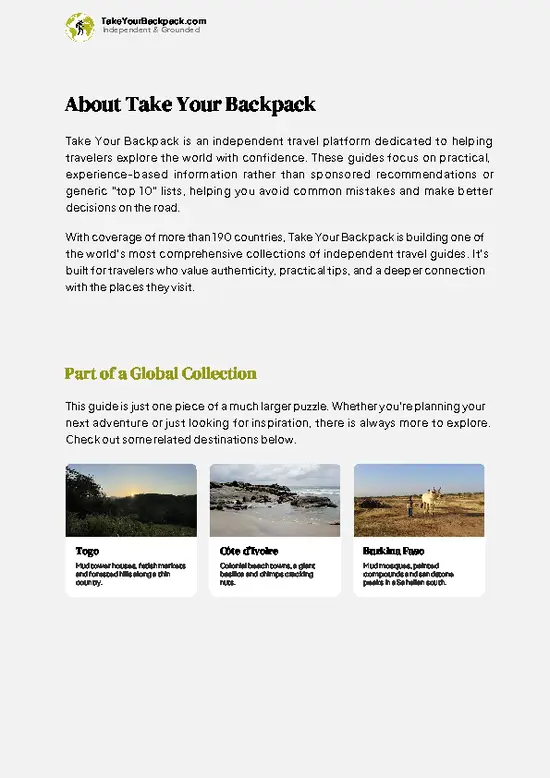
  • Bolgatanga—Basket markets, mud-brick compounds, Upper East crafts| 36 km away
  • Tongo—Tengzug shrine, granite outcrops, Talensi villages| 47 km away
  • Nalerigu—Ancient defensive wall, Mamprugu palace, hilltop views| 96 km away

💡 Not sure where to go next?
Create a personalized itinerary for Ghana including Paga and the places that fit your trip.

Generate my itinerary

👉 Discover all towns

Or checkout all Ghana has to offer (think cities, towns, villages, national parks, hikes, beaches, festivals)
Country photo of Ghana

We 💚 feedbackKey takeaways before you go

Paga’s vibrant culture and the mesmerizing sight of the sacred crocodiles at the local pond make it a must-visit. You’ll feel the pulse of life here, from the bustling market to the warm smiles of the locals. But be ready for the heat; it can be relentless. Hydration is key, and don’t underestimate the power of a good hat. Embrace the sweat; it’s part of the experience.

✈️ When did I visit Ghana?
Ghana I visited in December 2024, starting in Accra following the coast, then up north to Mole National park to finish in the Volta Region.

✍️ Help improve this page!
The information on this page is based on my own backpacking experience in Ghana, supplemented with up-to-date research and feedback from other travelers. Travel details can change, so if you notice anything outdated or incomplete, feel free to let me know.


🙋‍♂️ Give feedback

👋 Meet the founderWho’s Behind Take Your Backpack?

Johan, backpacker and founder of TakeYourBackpackHi, I’m Johan (Netherlands 🇳🇱), the creator of TakeYourBackpack. Over the past decade, I’ve backpacked through 80+ countries across six continents, gaining extensive experience with independent travel, long-term trips, and overland routes.

This site is built on a combination of firsthand travel experience and carefully curated insights from other backpackers. Many guides are based on places I’ve personally visited, while others bring together tips, observations, and practical advice shared by trusted travelers I’ve met along the way.

The goal is to provide realistic, experience-driven guidance — not generic itineraries — so you can explore destinations with better context, clearer expectations, and more confidence.

Get full Ghana guide •
Instant download • 108 highlights • Full Offline guide