×

Ghana🇬🇭 | townsNaleriguAncient defensive wall, Mamprugu palace, hilltop views | things to do and best time to go

Explore SogakopeExplore Damongo

Backpacking in Nalerigu
👀 For curious travelerstown ranked #19
By Johan Kruseman 🇳🇱 | Updated September 3, 2026

Forget the myth that Nalerigu is just a dusty outpost with nothing to offer—this town in Ghana’s far northeast, near the Burkina Faso border, rewards those who arrive with patience. Nalerigu is no backpacker party hub; it’s a slow-burn base for exploring the Gambaga Escarpment, the ancient NaYiri Palace, and the market’s earthy, sun-baked bustle. Buses are infrequent and the roads rattle your bones, but that’s the price for real quiet and honest hospitality. Compared to busier Tamale, Nalerigu feels more local, less polished, and far more relaxed—ideal for travelers who value genuine encounters over nightlife or convenience. Costs are low, safety is solid, and you’ll likely swap stories with locals rather than other backpackers.

Discover everything you want to know in the 📖 Ghana Travel Guide.


Get your Ghana guide
108 ranked highlights, routes & tips, works offline (399 pages)
Loading the map 🌍
CLICK TO FILTER
cities
towns
villages
landmarks
national parks
hikes
beaches
attractions
festivals
regions
SHOW COUNTRY’S BESTSHOW ALL

✨ Why go?
Ranked #19 town in Ghana
What makes it a must-see town

Nalerigu serves as a gateway for backpackers seeking a blend of culture and nature. Its walkable streets make it easy to navigate, while small-scale guesthouses offer a cozy place to recharge. The town is a convenient base for nearby hikes and cultural sites, allowing you to dive into local life without the rush. Expect a friendly atmosphere where solo travelers and small groups can connect over shared meals of spicy jollof rice or grilled tilapia from local vendors. Most backpackers stay a few days, soaking in the slow pace and genuine interactions. If you appreciate a mix of adventure and community, Nalerigu is your spot.
Want to include Nalerigu in your Ghana route?
Create a personalized Ghana itinerary that includes Nalerigu and the places that fit your trip — based on your travel style, budget, and available time. Get your route in seconds.

Generate my trip

💡 HighlightsThe experiences that define the visit

  1. Gbewaa (Nayiri) Palace — The living seat of the Mamprusi overlord (the Nayiri). You can walk the palace compound, see royal regalia and stools, and if you time it right catch a durbar or a meeting of elders. It’s the quickest way to feel the political and historic heart of Nalerigu.
  2. Nalerigu Central Market — Busy, colorful and noisy in the best way: fresh produce, smoked fish, shea kernels, fabrics and local snacks. Great for people-watching, bargaining, and grabbing a cheap hot meal while practicing a few words of Mampruli.
  3. Durbar Grounds / Chief’s Courtyard — The open compound where chiefs meet, public ceremonies happen and festivals are staged. Even when there’s no official event, walking the grounds and talking to locals gives a direct sense of how community life is organized.
  4. Palace
read more 👉
  1. Gbewaa (Nayiri) Palace — The living seat of the Mamprusi overlord (the Nayiri). You can walk the palace compound, see royal regalia and stools, and if you time it right catch a durbar or a meeting of elders. It’s the quickest way to feel the political and historic heart of Nalerigu.
  2. Nalerigu Central Market — Busy, colorful and noisy in the best way: fresh produce, smoked fish, shea kernels, fabrics and local snacks. Great for people-watching, bargaining, and grabbing a cheap hot meal while practicing a few words of Mampruli.
  3. Durbar Grounds / Chief’s Courtyard — The open compound where chiefs meet, public ceremonies happen and festivals are staged. Even when there’s no official event, walking the grounds and talking to locals gives a direct sense of how community life is organized.
  4. Palace Museum & Artifact Displays — Small, often informal displays near the palace showing Mamprusi history, stools, hunting gear and ritual objects. It’s not a big museum, but the context (inside the palace precinct) makes the objects meaningful.
  5. Traditional Quarter (Old Nalerigu) — Narrow lanes, mud-brick compounds and family compounds of long-standing Mamprusi households. Strolling through with a local guide or host lets you see vernacular architecture and everyday rituals you won’t find in guidebooks.
  6. Central Mosque — More than a place of prayer: the mosque is architecturally modest but socially central. Visit respectfully outside prayer times to observe community rhythms and the mosque’s role in town life.
  7. Shea-butter Cooperative / Processing Spot — Several small groups around Nalerigu process nuts into shea butter. Visiting one shows the labor, the technique and the economic importance of shea for local women’s incomes; most cooperatives welcome visitors if you ask.
  8. Weaving and Bead Workshops — Small, family-run workshops where women and men weave grasses, dye cloth and make beads. You can watch (and often buy) locally made baskets, bags and beaded jewelry—good for authentic souvenirs and supporting artisans directly.
  9. Traditional Healers’ Compounds & Medicinal Herb Sellers — A sensitive visit but worthwhile if handled respectfully: traditional healers and herb sellers remain an important part of health-care practice in Nalerigu. Go with a local fixers who can introduce you and explain protocols before taking photos.
  10. Community Cultural Events (market day, naming rites, durbar days) — Not a single fixed spot, but the recurring events are a highlight: weekly market days, festivals and naming or chieftaincy rites. If your trip coincides with one, you’ll get a concentrated dose of music, dress and social life.
A few great day-trip options just outside Nalerigu: Mole National Park for wildlife and sunsets, the Gambaga area (including the historical Gambaga Witch Camp) for layered local history, and the Tongo/Paga areas for rock formations and the famous crocodile ponds.
Spotted a mistake or missing something? Contact us.

🏘️ NeighborhoodsUnderstanding the local layout

Nalerigu is a vibrant hub in northern Ghana, offering a unique blend of culture and accessibility for backpackers. Here’s how to navigate its neighborhoods:

Central Nalerigu: This is the heartbeat of the town. The streets buzz with local markets and food stalls. It’s walkable, making it easy to explore on foot. Accommodations are budget-friendly, perfect for short stays. Nightlife is low-key, with a few bars where you can sip on local drinks and chat with residents.

Gambaga Road: A quieter area, ideal for those seeking a peaceful retreat. It’s slightly removed from the hustle, yet still accessible. Guesthouses here offer a more relaxed vibe, making it suitable for longer stays. The scent of fresh earth after rain adds to the charm, and you can enjoy leisurely walks.

St. Joseph’s Area: This … read more 👉
Nalerigu is a vibrant hub in northern Ghana, offering a unique blend of culture and accessibility for backpackers. Here’s how to navigate its neighborhoods:

Central Nalerigu: This is the heartbeat of the town. The streets buzz with local markets and food stalls. It’s walkable, making it easy to explore on foot. Accommodations are budget-friendly, perfect for short stays. Nightlife is low-key, with a few bars where you can sip on local drinks and chat with residents.

Gambaga Road: A quieter area, ideal for those seeking a peaceful retreat. It’s slightly removed from the hustle, yet still accessible. Guesthouses here offer a more relaxed vibe, making it suitable for longer stays. The scent of fresh earth after rain adds to the charm, and you can enjoy leisurely walks.

St. Joseph’s Area: This neighborhood has a mix of local life and expat presence. It’s a good spot for socializing, with cafes and community events. Transport links are solid, making it easy to venture out. Perfect for backpackers wanting a blend of quiet and connection.

⌛️ 1 dayHow to make the most of one day

Nalerigu, a vibrant town in Ghana’s Northern Region, pulses with life and culture. It’s a place where the air is rich with the scent of spices and the sounds of daily hustle create a unique rhythm. Start your day early at the local market, where vendors display colorful fabrics and fresh produce. The morning light dances off the vibrant wares, and you can chat with locals over a bowl of porridge, a staple breakfast that warms you up for the day ahead.

After soaking in the market’s energy, head to the nearby Nalerigu School of Nursing. It’s not on the typical tourist path, but the students often welcome visitors, offering a glimpse into their daily lives and aspirations. You might even catch a traditional dance rehearsal, showcasing the town’s rich cultural heritage.

In the afternoon, stroll … read more 👉
Nalerigu, a vibrant town in Ghana’s Northern Region, pulses with life and culture. It’s a place where the air is rich with the scent of spices and the sounds of daily hustle create a unique rhythm. Start your day early at the local market, where vendors display colorful fabrics and fresh produce. The morning light dances off the vibrant wares, and you can chat with locals over a bowl of porridge, a staple breakfast that warms you up for the day ahead.

After soaking in the market’s energy, head to the nearby Nalerigu School of Nursing. It’s not on the typical tourist path, but the students often welcome visitors, offering a glimpse into their daily lives and aspirations. You might even catch a traditional dance rehearsal, showcasing the town’s rich cultural heritage.

In the afternoon, stroll through the residential neighborhoods, where mud-brick houses and friendly faces greet you. Stop by the local craft shops to pick up handmade jewelry or woven baskets. As the sun begins to set, find a spot at a local eatery and savor a plate of jollof rice, infused with spices that tell stories of the region.

As night falls, the town transforms. Join the locals at a nearby gathering spot, where laughter and music fill the air. You’ll leave Nalerigu not just with souvenirs, but with a sense of connection to a community that thrives on warmth and resilience.
Turn your Nalerigu visit into an Ghana adventure
Build a complete Ghana route with Nalerigu, hidden gems, must-see destinations, and realistic travel times included.

Generate my trip

🌤️ When to go?Best time to visit Nalerigu


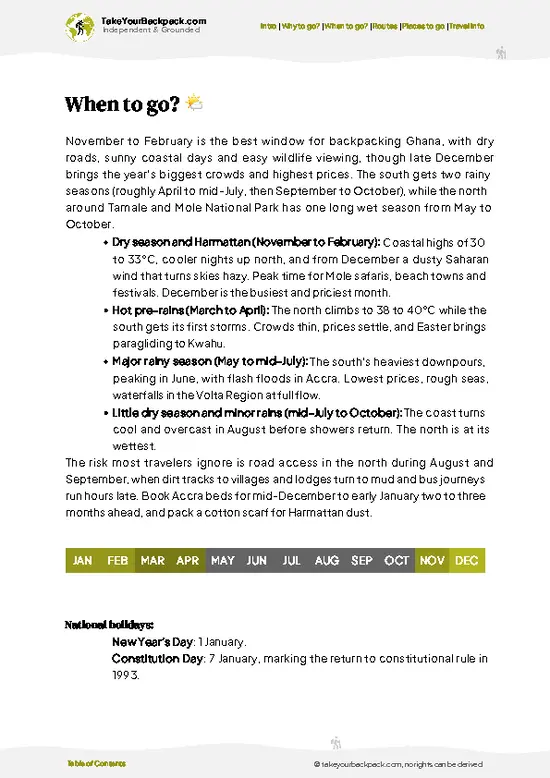
  • Weather: The dry season from November to March offers clear skies and minimal rain, making trails and roads easier to navigate without the sticky humidity or sudden downpours common in the wet season.

  • Temperature: Daytime highs hover around 30–35°C (86–95°F) during dry months, cooling to a comfortable 20–25°C (68–77°F) at night, which means you can hike without overheating or freezing.

  • Daylight Hours: Consistent 11–12 hours of daylight year-round, but dry season mornings bring crisp, golden light perfect for early starts and photography.

  • Crowds: Tourist numbers peak slightly in the dry season, but Nalerigu remains low-key, so you get a quiet vibe with just enough fellow travelers to share tips and stories.

  • Seasonal Activities: Dry months align with local festivals and market days,
read more 👉

  • Weather: The dry season from November to March offers clear skies and minimal rain, making trails and roads easier to navigate without the sticky humidity or sudden downpours common in the wet season.

  • Temperature: Daytime highs hover around 30–35°C (86–95°F) during dry months, cooling to a comfortable 20–25°C (68–77°F) at night, which means you can hike without overheating or freezing.

  • Daylight Hours: Consistent 11–12 hours of daylight year-round, but dry season mornings bring crisp, golden light perfect for early starts and photography.

  • Crowds: Tourist numbers peak slightly in the dry season, but Nalerigu remains low-key, so you get a quiet vibe with just enough fellow travelers to share tips and stories.

  • Seasonal Activities: Dry months align with local festivals and market days, offering authentic cultural encounters without the mud and mosquitoes of the rainy season.

  • Price Fluctuations: Accommodation and transport costs rise modestly in the dry season due to demand, but the trade-off is smoother logistics and better conditions.


Pro-tip: Aim for late November or early December—when the air is fresh, the light is sharp, and the town hums quietly with local life before the main tourist flow arrives.


source: climatestotravel.comJANJanuary: excellent for travelingFEBFebruary: excellent for travelingMARMarch: excellent for travelingAPRApril: good for travelingMAYMay: fair for travelingJUNJune: fair for travelingJULJuly: fair for travelingAUGAugust: fair for travelingSEPSeptember: fair for travelingOCTOctober: good for travelingNOVNovember: highly recommended for travelingDECDecember: excellent for traveling
when-to-go

✈️ The backpacker research shortcutGhana Travel Guide

An offline-friendly backpacking guide with optimized travel routes, ranked highlights, transport advice, and the best areas to stay.
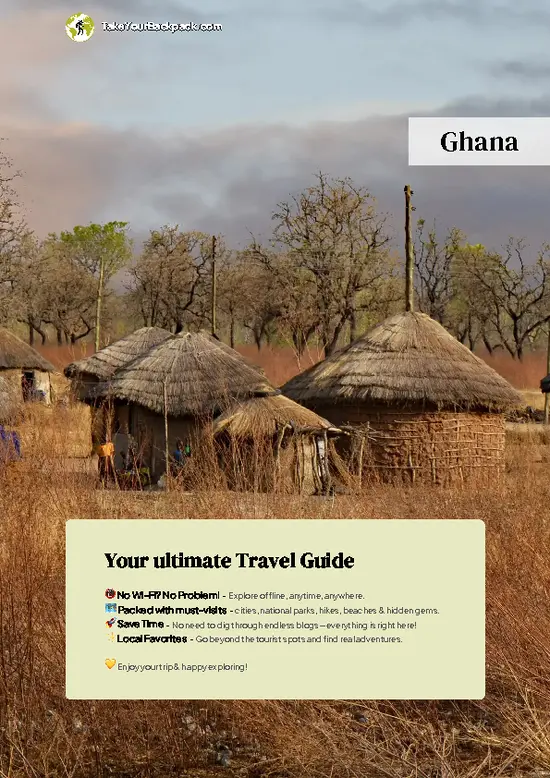
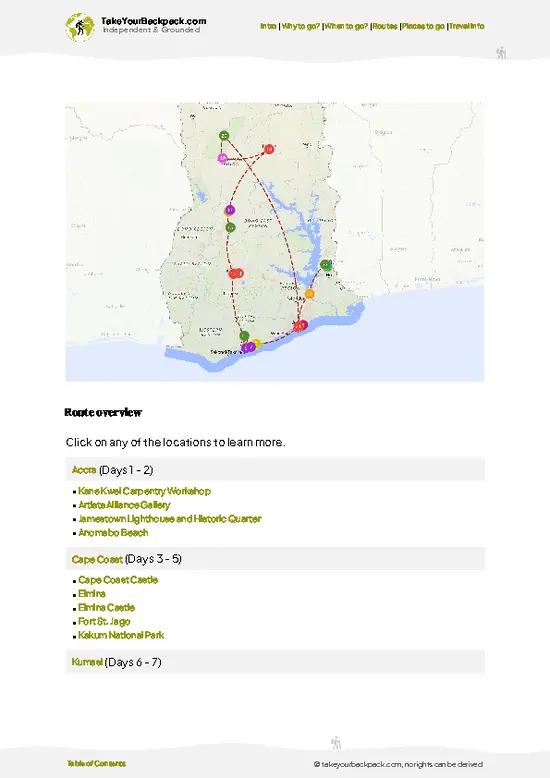
example page 0 from our offline Travel Guide for Ghana
example page 1 from our offline Travel Guide for Ghana
example page 2 from our offline Travel Guide for Ghana
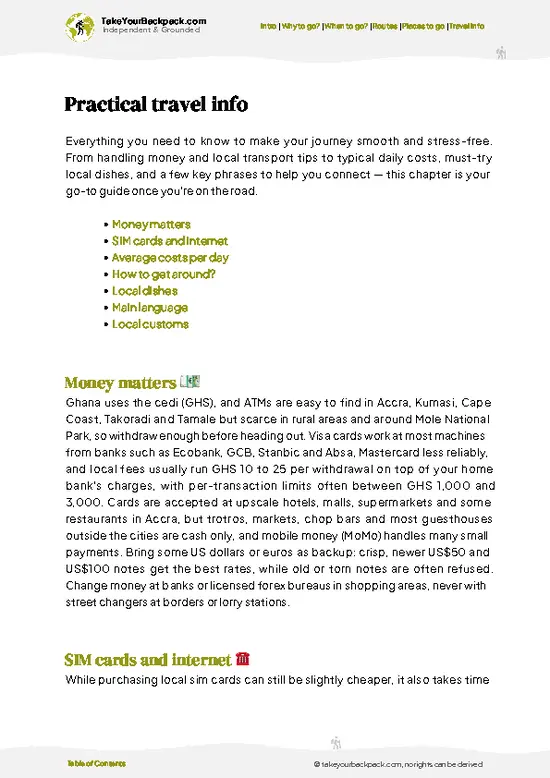
example page 3 from our offline Travel Guide for Ghana
example page 4 from our offline Travel Guide for Ghana
example page 5 from our offline Travel Guide for Ghana
example page 6 from our offline Travel Guide for Ghana
example page 7 from our offline Travel Guide for Ghana
The digital guide (399 pages) contains:
108 highlights, ranked by travel appeal
Optimized 5, 10 & 15-day travel routes
Cities, national parks, landmarks, beaches
How to get around
Offline-friendly for travel without Wi-Fi
👉 Click to see all 30+ guide features

📅 Plan smarter in minutes, not weeks
Month by month travel advice
Festivals & national holidays
Budget expectations

🗺️ Go to the right places, skip the overrated ones
Honest pros & cons of destinations
Top hikes, parks & viewpoints
Lesser-known places most travelers miss
Clear “worth it vs skip it” guidance

🛏️ Travel smoothly without rookie mistakes
Best areas to stay
Transport systems explained simply
Common scams & safety advice
SIM cards, money & practical tips

🌍 Understand the country, not just visit it
Culture & traditions
52 Essential phrases & customs
Festivals worth planning around
Traveler-friendly historical context
Insights that make places more meaningful

📱 Built for real travel conditions
Fully downloadable PDF
Works completely offline
Optimized for phone use
Useful in remote areas & buses
Everything in one place
Save weeks of stressful planning
Get instant access to your full guide. 30‑day money-back guarantee.
+ Add another guide for just US$7.80

By proceeding you agree to our terms.
Sent to your inbox immediately after payment • 100% Secure Checkout
Best Backpacking Travel Advisor 2025 tourism awardBest Backpacking
Travel Advisor
2025
What others say about Take Your Backpack Guides:
⭐⭐⭐⭐⭐
Fantastic, amazing amount of information!
⭐⭐⭐⭐⭐
My goodness this is amazing, it's what I've been looking for hats off too you!
⭐⭐⭐⭐⭐
I think this is absolutely BRILLIANT
⭐⭐⭐⭐
Very complete and informative. It's still missing places, but I gotta to commend you
⭐⭐⭐⭐⭐
This is truly amazing, thank you, can't wait to explore it with my kids!
⭐⭐⭐⭐⭐
Awesome resource, thank you!
⭐⭐⭐⭐⭐
This is amazing! Can't wait to explore the ones I haven't seen
⭐⭐⭐⭐
I love this! Well done, great idea.
⭐⭐⭐⭐⭐
Thanks for taking the time to make this gem!
⭐⭐⭐⭐⭐
This might be the best website I've ever seen.
⭐⭐⭐⭐⭐
Congratulations, and thank you so much for your work; it's incredibly valuable.
⭐⭐⭐⭐
In all seriousness I think you did a great job pointing out the important spots
⭐⭐⭐⭐⭐
10/10 very good
⭐⭐⭐⭐⭐
As someone who's only just starting to visit regularly this is awesome, thank you.
⭐⭐⭐⭐
Thank you very much! I'm going to visit my dad, it's going to be very useful!
⭐⭐⭐⭐⭐
This is really cool! We'll be travelling for the first time and this definitely come in handy.
⭐⭐⭐⭐⭐
You are now our minister of culture, congratulations 👨‍💼
⭐⭐⭐⭐⭐
Just wanted to tell you that this is a pearl! Going to follow your recommendations.
⭐⭐⭐⭐⭐
This is so cool. I'll definitely be using the resource for my travels soon.
⭐⭐⭐⭐⭐
This is very impressive! Good work.
⭐⭐⭐⭐⭐
This is an amazing and informative site. Very well done!

🛏️ Where to stay?Best areas to stay in Ghana

In Nalerigu, the best spot for backpackers is the town center around the main market and the area near the Nalerigu Palace. This zone hums with local life—vendors calling out, the scent of grilled meat mingling with fresh earth after rain. It’s safe, thanks to the steady flow of people and the watchful eyes of community elders. You’ll find a handful of budget guesthouses and simple hostels here, perfect for meeting fellow travelers without the touristy gloss. Compared to quieter outskirts, staying here means you’re plugged into the pulse of daily life, making it easier to navigate, socialize, … read more 👉
In Nalerigu, the best spot for backpackers is the town center around the main market and the area near the Nalerigu Palace. This zone hums with local life—vendors calling out, the scent of grilled meat mingling with fresh earth after rain. It’s safe, thanks to the steady flow of people and the watchful eyes of community elders. You’ll find a handful of budget guesthouses and simple hostels here, perfect for meeting fellow travelers without the touristy gloss. Compared to quieter outskirts, staying here means you’re plugged into the pulse of daily life, making it easier to navigate, socialize, and soak in authentic moments without feeling isolated.

🚌 Getting aroundTransportation options and practical tips

Nalerigu moves at its own rhythm—less clockwork, more pulse. The sun drapes the red earth in a warm glow by mid-morning, and the town wakes with a mix of deliberate steps and bursts of energy. You won’t find rigid timetables here; instead, expect a dance of informal schedules, where patience and a keen eye for local cues unlock the best rides. The scent of fresh millet bread mingles with the dusty air, and the chatter of market vendors sets the soundtrack. Navigating Nalerigu means embracing this flow—lean into the unpredictability, and you’ll find the town’s heartbeat syncing with your own.


  • Walking: The most reliable and immersive way to get around. Nalerigu’s compact center means you can cover most spots on foot within 20-30 minutes, soaking in the earthy smells and vibrant street life
read more 👉
Nalerigu moves at its own rhythm—less clockwork, more pulse. The sun drapes the red earth in a warm glow by mid-morning, and the town wakes with a mix of deliberate steps and bursts of energy. You won’t find rigid timetables here; instead, expect a dance of informal schedules, where patience and a keen eye for local cues unlock the best rides. The scent of fresh millet bread mingles with the dusty air, and the chatter of market vendors sets the soundtrack. Navigating Nalerigu means embracing this flow—lean into the unpredictability, and you’ll find the town’s heartbeat syncing with your own.


  • Walking: The most reliable and immersive way to get around. Nalerigu’s compact center means you can cover most spots on foot within 20-30 minutes, soaking in the earthy smells and vibrant street life without spending a cedi.

  • Shared Trotros: These minibuses run from dawn until early evening, costing around 1-2 GHS per trip. They don’t follow strict schedules but leave once full, so timing is flexible but unpredictable—perfect if you’re patient and want to travel like a local.

  • Motorbike Taxis (Okada): Available throughout the day, these are your fastest option for short hops, costing 3-5 GHS depending on distance. They’re nimble but require a steady nerve and a quick negotiation on price.

  • Private Car Hire: For longer trips outside town or when time is tight, you can hire a car with a driver. Prices vary widely, so bargain hard and clarify the route upfront. This is less budget-friendly but offers comfort and control.

👛 Costs (as of 3 September 2026)How expensive it really is

Backpacking in Nalerigu, Ghana, offers a raw, authentic experience where your money stretches further than you might expect, but knowing the local rhythm helps you avoid common pitfalls and savor the moment fully.
  • Dorm Accommodation: Expect to pay around $5 to $10 per night for basic dorm-style lodging. These places are simple—think mosquito nets, a fan or two, and a shared bathroom. It’s not luxury, but it’s clean enough to rest after a day of exploring the dusty streets and vibrant markets.
  • Meals: Street food and local eateries dominate the scene, with meals typically costing between $1.50 and $3.50. You’ll find hearty plates of rice balls with groundnut soup or spicy stews that fill you up without emptying your wallet. Fresh fruit and local snacks are even cheaper, perfect for quick bites
read more 👉
Backpacking in Nalerigu, Ghana, offers a raw, authentic experience where your money stretches further than you might expect, but knowing the local rhythm helps you avoid common pitfalls and savor the moment fully.
  • Dorm Accommodation: Expect to pay around $5 to $10 per night for basic dorm-style lodging. These places are simple—think mosquito nets, a fan or two, and a shared bathroom. It’s not luxury, but it’s clean enough to rest after a day of exploring the dusty streets and vibrant markets.
  • Meals: Street food and local eateries dominate the scene, with meals typically costing between $1.50 and $3.50. You’ll find hearty plates of rice balls with groundnut soup or spicy stews that fill you up without emptying your wallet. Fresh fruit and local snacks are even cheaper, perfect for quick bites on the go.
  • Local Transport: Getting around Nalerigu usually means hopping on shared tro-tros (minibuses) or motorbike taxis. A typical ride costs about $0.50 to $1.50 depending on distance. Walking is also a solid option for short trips, letting you soak in the town’s earthy smells and the chatter of daily life.
  • Basic Activities/Entry Fees: Most cultural sites and local attractions charge nominal fees, often under $2. Visiting the Gambaga Escarpment or local craft markets usually involves small donations or entry fees that keep the places maintained without breaking your budget.
  • Miscellaneous Expenses: This covers essentials like bottled water, snacks, or a sim card for data. Budget around $1 to $3 daily here. Water is crucial—tap water isn’t safe, so always have a bottle handy to stay hydrated in the warm, dry air.

All told, you’re looking at roughly $10 to $20 per day to cover the basics in Nalerigu. This range gives you enough flexibility to enjoy local flavors, get around comfortably, and dip into cultural experiences without stress. The town’s pace is unhurried, and your budget should reflect that—lean into simplicity, and the rewards come in the form of genuine encounters and a deep sense of place.


source: ghana.travel
⚠️ Prices can change and everyone travels differently, so take this as a rough guide. Hope it helps you plan your adventure!

🚌 Day tripsEasy escapes and nearby places

Nalerigu is a backpacker’s dream base, offering easy access to rich cultural experiences and stunning landscapes. Here are some day trips that make the most of your time in this vibrant town.

Bongo Rock Paintings
A short, 30-minute trot from Nalerigu, Bongo is home to ancient rock paintings that tell stories of the past. The hike to the site is a gentle climb, with the scent of wildflowers filling the air. Bring a packed lunch to enjoy while soaking in the views. Expect to spend around 10 GHS for transport and a few more for snacks. The best time to visit is during the dry season, when the trails are clear. Many first-timers miss the chance to engage with local guides who can share the legends behind the art.


Tamale Market
Just over an hour away, Tamale’s bustling market is a sensory … read more 👉
Nalerigu is a backpacker’s dream base, offering easy access to rich cultural experiences and stunning landscapes. Here are some day trips that make the most of your time in this vibrant town.

Bongo Rock Paintings
A short, 30-minute trot from Nalerigu, Bongo is home to ancient rock paintings that tell stories of the past. The hike to the site is a gentle climb, with the scent of wildflowers filling the air. Bring a packed lunch to enjoy while soaking in the views. Expect to spend around 10 GHS for transport and a few more for snacks. The best time to visit is during the dry season, when the trails are clear. Many first-timers miss the chance to engage with local guides who can share the legends behind the art.


Tamale Market
Just over an hour away, Tamale’s bustling market is a sensory overload. The vibrant colors of textiles, the aroma of spices, and the chatter of vendors create an electric atmosphere. You can catch a shared taxi for about 15 GHS. Aim for early morning to beat the heat and experience the market at its liveliest. A common mistake is not bargaining; it’s part of the experience and can save you a few cedis.


Mole National Park
A bit further afield, about two hours from Nalerigu, Mole National Park is worth every minute. The chance to see elephants in their natural habitat is a thrill. Entry fees are around 20 GHS, plus transport costs. Visit in the dry season for the best wildlife sightings. Many backpackers underestimate the park’s size and miss out on guided tours that enhance the experience.
👉 Explore Mole National Park

Navrongo
Only an hour away, Navrongo is known for its unique mud-brick architecture and the serene atmosphere of its Catholic Cathedral. The journey costs about 10 GHS. Late afternoon is ideal for photography, as the golden light casts beautiful shadows. A common oversight is not exploring the local eateries; the street food here is a must-try.


Each of these trips offers a unique slice of Ghanaian life, making your stay in Nalerigu not just a stopover, but a rich experience.
Want to know what more Ghana offers?
The Ghana Travel Guide describes 108 highlights, from cities to national parks, from beaches to hikes

Get the Travel Guide -

🛡️ SafetyStaying Safe: What Travelers Should Know

Nalerigu is generally safe, but awareness is key. Stick to well-lit areas at night, especially if you’re solo. The local market can be bustling, so keep your belongings close; pickpockets do exist, albeit rarely.

Be cautious with offers from overly friendly strangers—sometimes, they’re just looking for a way to earn a quick buck. If someone insists on guiding you, politely decline unless you’re sure of their intentions.

Embrace the local vibe, but trust your instincts. A confident demeanor goes a long way in blending in and enjoying the authentic experience without unnecessary hassle.

FAQTraveler FAQ

Nalerigu is worth visiting for its cultural significance and historical sites, including the Larabanga Mosque and the Gambaga Escarpment nearby. It offers a unique glimpse into northern Ghanaian traditions and architecture, making it more than just a stopover.
You need about 2 to 3 days in Nalerigu to explore the main attractions, experience local culture, and possibly take a day trip to nearby sites like the Mole National Park, which is around 2 hours away by car.
Yes, Nalerigu can be visited as a day trip from Tamale, which is approximately 3 to 4 hours away by road. However, the travel time means a long day, so staying overnight is recommended for a more relaxed visit.
⚠️ Things can change over time, so always validate details locally before you go.

Other Ghanaian towns near Nalerigu

Explore more nearby:

  • Tongo—Tengzug shrine, granite outcrops, Talensi villages| 52 km away
  • Bolgatanga—Basket markets, mud-brick compounds, Upper East crafts| 61 km away
  • Paga—Sacred crocodile ponds, border crossing, shrine visits| 96 km away

💡 Not sure where to go next?
Create a personalized itinerary for Ghana including Nalerigu and the places that fit your trip.

Generate my itinerary

👉 Discover all towns

Or checkout all Ghana has to offer (think cities, towns, villages, national parks, hikes, beaches, festivals)
Country photo of Ghana

We 💚 feedbackParting advice and final tips

Nalerigu’s vibrant market buzzes with life, where the scent of roasted plantains mingles with the chatter of locals. It’s a slice of authentic Ghana that feels like home. Just know, the roads can be rough, so brace for a bumpy ride. But that’s part of the adventure, right? Embrace it.

✈️ When did I visit Ghana?
Ghana I visited in December 2024, starting in Accra following the coast, then up north to Mole National park to finish in the Volta Region.

✍️ Help improve this page!
The information on this page is based on my own backpacking experience in Ghana, supplemented with up-to-date research and feedback from other travelers. Travel details can change, so if you notice anything outdated or incomplete, feel free to let me know.


🙋‍♂️ Give feedback

👋 Meet the founderWho’s Behind Take Your Backpack?

Johan, backpacker and founder of TakeYourBackpackHi, I’m Johan (Netherlands 🇳🇱), the creator of TakeYourBackpack. Over the past decade, I’ve backpacked through 80+ countries across six continents, gaining extensive experience with independent travel, long-term trips, and overland routes.

This site is built on a combination of firsthand travel experience and carefully curated insights from other backpackers. Many guides are based on places I’ve personally visited, while others bring together tips, observations, and practical advice shared by trusted travelers I’ve met along the way.

The goal is to provide realistic, experience-driven guidance — not generic itineraries — so you can explore destinations with better context, clearer expectations, and more confidence.

Get full Ghana guide •
Instant download • 108 highlights • Full Offline guide