×

Guinea-Bissau🇬🇼 | citiesBissaucolonial-era avenues, port markets, faded administrative buildings | things to do and best time to go

Explore Varela BeachExplore Cacheu

Backpacking in Bissau
🏆 Top pickcity ranked #1
By Johan Kruseman 🇳🇱 | Updated September 3, 2026

You land in Bissau and face your first real fork: do you spend precious time navigating the city’s slow, unpredictable minibus system to save cash, or pay for a private taxi and buy yourself hours of daylight—and a bit of sanity? This isn’t just about transport; it’s the classic backpacker’s triangle: time, money, comfort. Bissau, the capital of Guinea-Bissau, sits on the Atlantic coast, a humid, palm-fringed port that feels more like a faded outpost than a bustling metropolis. For backpackers, Bissau is a paradox: the colonial-era architecture around Praça Che Guevara and the crumbling Fortaleza d’Amura are genuinely atmospheric, but the city’s infrastructure is patchy and English is rare. Costs are low, but so is the density of other travelers—you’ll stand out, for better or worse. Safety is manageable with street smarts, but after dark, the city’s energy drops fast. Compared to Bafatá or Gabú, Bissau offers more history and nightlife, but less of the rural warmth. The vibe? Unhurried, a little rough around the edges, and absolutely its own.

Discover everything you want to know in the 📖 Guinea-Bissau Travel Guide.
Loading the map 🌍
CLICK TO FILTER
cities
towns
landmarks
national parks
hikes
beaches
attractions
festivals
regions
SHOW COUNTRY’S BESTSHOW ALL

✨ Why go?
Ranked #1 city in Guinea-Bissau
The unique appeal for travelers

Bissau is a strategic stop for backpackers weaving through West Africa. It offers a unique blend of affordability and authenticity that’s hard to find elsewhere. The hostel scene is solid, with budget-friendly options that foster a communal vibe, perfect for meeting fellow travelers. You’ll find local eateries serving up delicious, inexpensive meals that let you dive into the culture without breaking the bank.

The city’s walkability is a major plus. You can easily explore its vibrant streets, soaking in the sights and sounds without the hassle of transport. This makes it a great base for day trips to nearby islands or natural reserves, maximizing your time without the stress of logistics.

When it comes to nightlife, Bissau has a laid-back charm. You can unwind at local bars, enjoying the … read more 👉
Bissau is a strategic stop for backpackers weaving through West Africa. It offers a unique blend of affordability and authenticity that’s hard to find elsewhere. The hostel scene is solid, with budget-friendly options that foster a communal vibe, perfect for meeting fellow travelers. You’ll find local eateries serving up delicious, inexpensive meals that let you dive into the culture without breaking the bank.

The city’s walkability is a major plus. You can easily explore its vibrant streets, soaking in the sights and sounds without the hassle of transport. This makes it a great base for day trips to nearby islands or natural reserves, maximizing your time without the stress of logistics.

When it comes to nightlife, Bissau has a laid-back charm. You can unwind at local bars, enjoying the rhythm of the city as the sun sets. Plus, its easy onward travel options mean you can seamlessly continue your journey, whether you’re heading to Senegal or deeper into Guinea-Bissau.

In short, Bissau is more than just a stop; it’s a high-value experience that enriches your West African adventure.
Want to include Bissau in your Guinea-Bissau route?
Create a personalized Guinea-Bissau itinerary that includes Bissau and the places that fit your trip — based on your travel style, budget, and available time. Get your route in seconds.

Generate my trip

💡 HighlightsWhat this place is best known for

  1. Fortaleza de São José da Amura — The low, crumbling Portuguese fort on the waterfront is one of Bissau’s oldest landmarks; wandering the ramparts gives you coastal views, a sense of the city’s colonial past, and great photo ops at sunset.
  2. Mercado de Bandim (Bandim Market) — Raw, colorful and loud: this is where traditional healers, herbalists and everyday shoppers meet. It’s the best place to see local commerce, pick up cashews or crafts, and watch the living traditions that rarely make guidebooks.
  3. Bissau Velho (Old Quarter) — Narrow streets, faded Portuguese façades and neighborhood life. Walk here to soak up colonial architecture, street markets, small cafés and the local rhythms that define the city away from official buildings.
  4. Museu Nacional / National Ethnographic Museum — Small
read more 👉
  1. Fortaleza de São José da Amura — The low, crumbling Portuguese fort on the waterfront is one of Bissau’s oldest landmarks; wandering the ramparts gives you coastal views, a sense of the city’s colonial past, and great photo ops at sunset.
  2. Mercado de Bandim (Bandim Market) — Raw, colorful and loud: this is where traditional healers, herbalists and everyday shoppers meet. It’s the best place to see local commerce, pick up cashews or crafts, and watch the living traditions that rarely make guidebooks.
  3. Bissau Velho (Old Quarter) — Narrow streets, faded Portuguese façades and neighborhood life. Walk here to soak up colonial architecture, street markets, small cafés and the local rhythms that define the city away from official buildings.
  4. Museu Nacional / National Ethnographic Museum — Small but valuable: displays of masks, textiles, tools and objects from Guinea-Bissau’s ethnic groups. It’s the quickest way to get cultural context before you explore neighborhoods and markets.
  5. Praça 24 de Setembro & Government Palace — The city’s central square, flanked by government buildings and colonial-era architecture. It’s a good starting point for people-watching, political murals, and seeing how public life is centered in Bissau.
  6. Port of Bissau & Fish Market — The port area pulses with activity: wooden pirogues, fishermen sorting the catch and informal stalls grilling fresh fish. Visit early morning for the most authentic action and to watch the city’s supply chain in motion.
  7. Praia de Quebra Canela (Quebra Canela Beach) — The main urban beach where locals hang out at sunset. It’s not a tropical paradise, but it’s an authentic spot to swim, sample seaside snacks and mingle with Bissau residents.
  8. Catedral de Bissau (Sé Catedral) — The cathedral and its surrounding square are a colonial-era anchor in the Old Town. Even if you can’t go inside at all hours, the building and nearby streets convey the city’s layered history.
  9. Centro Cultural Nacional — The national cultural center hosts music nights, dance and exhibitions when events are on. Check the schedule: catching a live show here is one of the best ways to hear local music scenes and meet creatives.
  10. Estádio 24 de Setembro — Football (soccer) is a big deal here. If you can time a match, the stadium is an electric place to experience local passion, chants and community energy that you won’t get in a museum.
If you have extra time, easy day-trip highlights outside the city include the colonial ruins and relaxed beaches of Bolama (the old capital island), the riverside Fort of Cacheu and town of Cacheu to the north, and short boat excursions into nearby parts of the Bijagós archipelago — all reachable from Bissau with a bit of planning.
Spotted a mistake or missing something? Contact us.

🏘️ NeighborhoodsHow different areas shape the experience

Bissau, the capital of Guinea-Bissau, is a vibrant mix of cultures and experiences. Each neighborhood offers a unique flavor, catering to different backpacker needs.

Cidade Velha: This historic district is where you’ll find the remnants of colonial architecture and a laid-back vibe. It’s walkable, making it easy to explore on foot. Costs here are moderate; you can find budget accommodations and local eateries. The nightlife is low-key, perfect for those who prefer a quiet evening after a day of exploration. Ideal for short stays, as you can soak in the history without feeling rushed.

Praca dos Herois: The heart of the city, this area buzzes with energy. It’s a hub for transport, connecting you to other parts of Bissau and beyond. Prices are slightly higher due to its central location, but … read more 👉
Bissau, the capital of Guinea-Bissau, is a vibrant mix of cultures and experiences. Each neighborhood offers a unique flavor, catering to different backpacker needs.

Cidade Velha: This historic district is where you’ll find the remnants of colonial architecture and a laid-back vibe. It’s walkable, making it easy to explore on foot. Costs here are moderate; you can find budget accommodations and local eateries. The nightlife is low-key, perfect for those who prefer a quiet evening after a day of exploration. Ideal for short stays, as you can soak in the history without feeling rushed.

Praca dos Herois: The heart of the city, this area buzzes with energy. It’s a hub for transport, connecting you to other parts of Bissau and beyond. Prices are slightly higher due to its central location, but you’ll find a range of options. The nightlife is more vibrant here, with bars and music spilling into the streets. Great for longer stays if you want to immerse yourself in the local scene.

Bairro de Bandim: A bit off the tourist path, this neighborhood offers a more authentic experience. It’s less walkable, so be prepared for some transport costs. Accommodations are cheaper, and you’ll find local markets and eateries that won’t break the bank. The vibe is relaxed, making it suitable for longer stays where you can truly connect with the community.

Bairro Alto: This area is known for its nightlife, with clubs and bars that attract a younger crowd. It’s walkable, but expect higher prices for food and lodging. If you’re looking for a lively atmosphere, this is your spot. Best for short stays if you want to experience the nightlife without committing long-term.

Choose wisely, and you’ll find the right balance of time, money, and comfort in Bissau.

⌛️ 1 dayA smart one-day plan

Bissau, the capital of Guinea-Bissau, is a city where the pulse of West African culture beats strong. It’s a place where colonial architecture meets vibrant street life, and the scent of grilled fish wafts through the air. You’ll find a mix of Portuguese influence and local traditions, making it a fascinating spot for a day of exploration.

Start your morning in the historic neighborhood of Bissau Velho. Stroll through the cobblestone streets, where the remnants of colonial buildings stand as a testament to the city’s past. Don’t miss the iconic Fortaleza de São José da Amura, a fortress that offers a glimpse into the city’s history and a panoramic view of the harbor. The early hours are perfect for capturing the soft morning light and the locals going about their daily routines. Grab a coffee … read more 👉
Bissau, the capital of Guinea-Bissau, is a city where the pulse of West African culture beats strong. It’s a place where colonial architecture meets vibrant street life, and the scent of grilled fish wafts through the air. You’ll find a mix of Portuguese influence and local traditions, making it a fascinating spot for a day of exploration.

Start your morning in the historic neighborhood of Bissau Velho. Stroll through the cobblestone streets, where the remnants of colonial buildings stand as a testament to the city’s past. Don’t miss the iconic Fortaleza de São José da Amura, a fortress that offers a glimpse into the city’s history and a panoramic view of the harbor. The early hours are perfect for capturing the soft morning light and the locals going about their daily routines. Grab a coffee at a nearby café, where you can sip and watch the world wake up.

In the afternoon, head to the bustling Mercado Municipal. This market is a sensory overload in the best way. Fresh produce, spices, and handmade crafts fill the stalls. Engage with the vendors; they often have stories to share about their goods. This isn’t just a shopping stop; it’s a dive into local life. Afterward, take a leisurely walk along the waterfront at Praça dos Heróis Nacionais. The sea breeze is refreshing, and it’s a great spot to reflect on the morning’s adventures.

As evening approaches, make your way to the neighborhood of Bandim. Here, you’ll find a local eatery serving up delicious grilled fish and traditional dishes. It’s a chance to taste the local cuisine without the touristy flair. Enjoy your meal while soaking in the lively atmosphere, where laughter and music fill the air.

Bissau may not be on everyone’s radar, but it offers a unique blend of history, culture, and warmth. Spend your day here, and you’ll leave with a deeper understanding of this charming city.
Turn your Bissau visit into an Guinea-Bissau adventure
Build a complete Guinea-Bissau route with Bissau, hidden gems, must-see destinations, and realistic travel times included.

Generate my trip

🌤️ When to go?Choosing the right time of year


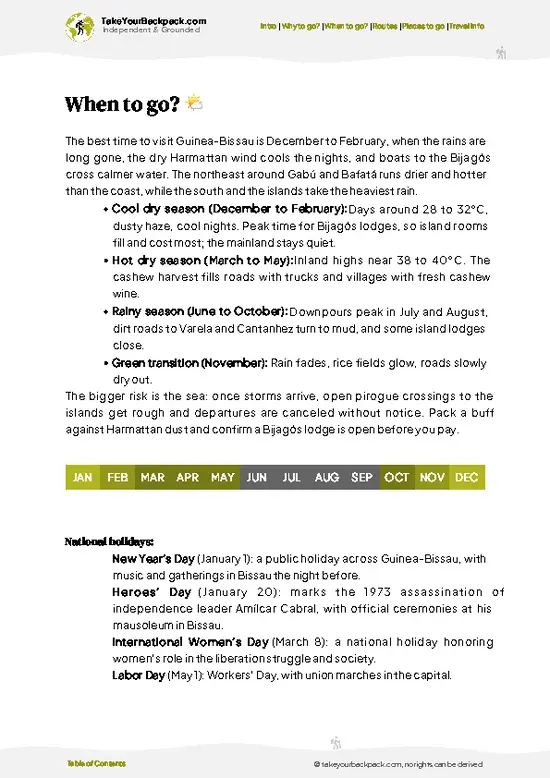
  • Topic: Weather and Temperature – Bissau’s climate is tropical, with a wet season from June to October and a dry season from November to May. Temperatures hover between 24-31°C (75-88°F) year-round, but humidity spikes during the wet months, making it feel hotter and stickier.

  • Topic: Daylight Hours – Near the equator, daylight is steady, roughly 11.5 to 12.5 hours daily throughout the year. This consistency means your hiking and exploring windows don’t fluctuate much, so timing isn’t about daylight but other factors.

  • Topic: Crowds and Seasonal Activities – The dry season attracts more visitors, especially December to February, when festivals like the Bijagós Archipelago’s cultural events kick off. This means more energy but also more competition for lodging and tours.

  • Topic: Price
read more 👉

  • Topic: Weather and Temperature – Bissau’s climate is tropical, with a wet season from June to October and a dry season from November to May. Temperatures hover between 24-31°C (75-88°F) year-round, but humidity spikes during the wet months, making it feel hotter and stickier.

  • Topic: Daylight Hours – Near the equator, daylight is steady, roughly 11.5 to 12.5 hours daily throughout the year. This consistency means your hiking and exploring windows don’t fluctuate much, so timing isn’t about daylight but other factors.

  • Topic: Crowds and Seasonal Activities – The dry season attracts more visitors, especially December to February, when festivals like the Bijagós Archipelago’s cultural events kick off. This means more energy but also more competition for lodging and tours.

  • Topic: Price Fluctuations – Expect higher prices during the dry season’s peak months due to demand. The wet season offers lower rates and fewer tourists, but the trade-off is muddy trails and occasional travel disruptions.


Pro-tip: Aim for the shoulder months of November or May to balance manageable weather, fewer crowds, and better prices—your sweet spot for smart backpacking in Bissau.


source: climatestotravel.comJANJanuary: highly recommended for travelingFEBFebruary: highly recommended for travelingMARMarch: good for travelingAPRApril: good for travelingMAYMay: highly recommended for travelingJUNJune: fair for travelingJULJuly: fair for travelingAUGAugust: fair for travelingSEPSeptember: fair for travelingOCTOctober: fair for travelingNOVNovember: highly recommended for travelingDECDecember: highly recommended for traveling
when-to-go

✈️ The backpacker research shortcutGuinea-Bissau Travel Guide

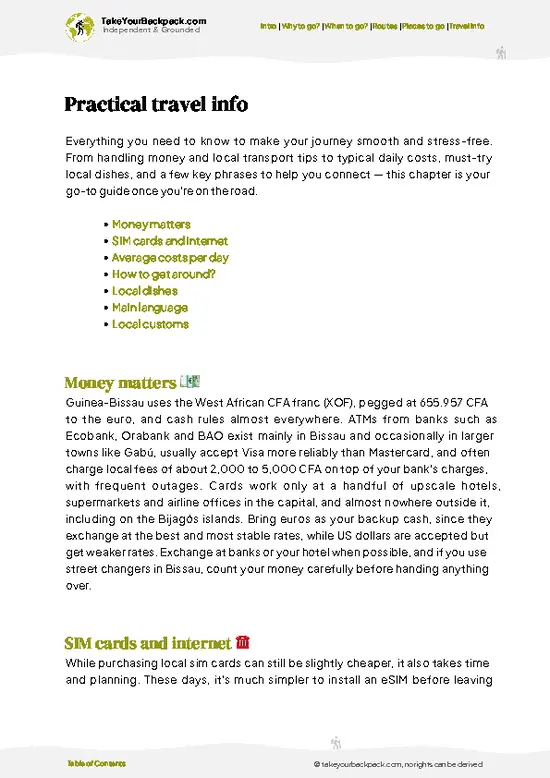
An offline-friendly backpacking guide with optimized travel routes, ranked highlights, transport advice, and the best areas to stay.
example page 0 from our offline Travel Guide for Guinea-Bissau
example page 1 from our offline Travel Guide for Guinea-Bissau
example page 2 from our offline Travel Guide for Guinea-Bissau
example page 3 from our offline Travel Guide for Guinea-Bissau
example page 4 from our offline Travel Guide for Guinea-Bissau
example page 5 from our offline Travel Guide for Guinea-Bissau
example page 6 from our offline Travel Guide for Guinea-Bissau
example page 7 from our offline Travel Guide for Guinea-Bissau
The digital guide (230 pages) contains:
53 highlights, ranked by travel appeal
Optimized 2, 3 & 5-day travel routes
Cities, national parks, landmarks, beaches
How to get around
Offline-friendly for travel without Wi-Fi
👉 Click to see all 30+ guide features

📅 Plan smarter in minutes, not weeks
Month by month travel advice
Festivals & national holidays
Budget expectations

🗺️ Go to the right places, skip the overrated ones
Honest pros & cons of destinations
Top hikes, parks & viewpoints
Lesser-known places most travelers miss
Clear “worth it vs skip it” guidance

🛏️ Travel smoothly without rookie mistakes
Best areas to stay
Transport systems explained simply
Common scams & safety advice
SIM cards, money & practical tips

🌍 Understand the country, not just visit it
Culture & traditions
52 Essential phrases & customs
Festivals worth planning around
Traveler-friendly historical context
Insights that make places more meaningful

📱 Built for real travel conditions
Fully downloadable PDF
Works completely offline
Optimized for phone use
Useful in remote areas & buses
Everything in one place
Save weeks of stressful planning
Get instant access to your full guide. 30‑day money-back guarantee.
+ Add another guide for just US$7.80

By proceeding you agree to our terms.
Sent to your inbox immediately after payment • 100% Secure Checkout
Best Backpacking Travel Advisor 2025 tourism awardBest Backpacking
Travel Advisor
2025
What others say about Take Your Backpack Guides:
⭐⭐⭐⭐⭐
Fantastic, amazing amount of information!
⭐⭐⭐⭐⭐
My goodness this is amazing, it's what I've been looking for hats off too you!
⭐⭐⭐⭐⭐
I think this is absolutely BRILLIANT
⭐⭐⭐⭐
Very complete and informative. It's still missing places, but I gotta to commend you
⭐⭐⭐⭐⭐
This is truly amazing, thank you, can't wait to explore it with my kids!
⭐⭐⭐⭐⭐
Awesome resource, thank you!
⭐⭐⭐⭐⭐
This is amazing! Can't wait to explore the ones I haven't seen
⭐⭐⭐⭐
I love this! Well done, great idea.
⭐⭐⭐⭐⭐
Thanks for taking the time to make this gem!
⭐⭐⭐⭐⭐
This might be the best website I've ever seen.
⭐⭐⭐⭐⭐
Congratulations, and thank you so much for your work; it's incredibly valuable.
⭐⭐⭐⭐
In all seriousness I think you did a great job pointing out the important spots
⭐⭐⭐⭐⭐
10/10 very good
⭐⭐⭐⭐⭐
As someone who's only just starting to visit regularly this is awesome, thank you.
⭐⭐⭐⭐
Thank you very much! I'm going to visit my dad, it's going to be very useful!
⭐⭐⭐⭐⭐
This is really cool! We'll be travelling for the first time and this definitely come in handy.
⭐⭐⭐⭐⭐
You are now our minister of culture, congratulations 👨‍💼
⭐⭐⭐⭐⭐
Just wanted to tell you that this is a pearl! Going to follow your recommendations.
⭐⭐⭐⭐⭐
This is so cool. I'll definitely be using the resource for my travels soon.
⭐⭐⭐⭐⭐
This is very impressive! Good work.
⭐⭐⭐⭐⭐
This is an amazing and informative site. Very well done!

🛏️ Where to stay?How to pick the right area

In Bissau, the real backpacker action centers around the Bairro Militar and the adjacent Bairro de Bandim. These neighborhoods strike a rare balance between safety, social buzz, and budget-friendly options. Bairro Militar, with its grid of streets shaded by mango trees, feels like the city’s unofficial backpacker hub. It’s where you’ll find the most hostels and guesthouses geared toward solo travelers and small groups. The vibe here is low-key but lively—think impromptu street chats, local markets, and easy access to cafés where you can nurse a cold drink while plotting your next move.

Bairro … read more 👉
In Bissau, the real backpacker action centers around the Bairro Militar and the adjacent Bairro de Bandim. These neighborhoods strike a rare balance between safety, social buzz, and budget-friendly options. Bairro Militar, with its grid of streets shaded by mango trees, feels like the city’s unofficial backpacker hub. It’s where you’ll find the most hostels and guesthouses geared toward solo travelers and small groups. The vibe here is low-key but lively—think impromptu street chats, local markets, and easy access to cafés where you can nurse a cold drink while plotting your next move.

Bairro de Bandim, just a short walk away, offers a slightly quieter scene but still keeps you close to the pulse. It’s a bit more residential, which means fewer tourists but more authentic interactions with locals. Both areas benefit from better street lighting and a stronger police presence compared to other parts of Bissau, which is crucial for solo travelers prioritizing safety without sacrificing the social element.

Compared to the city center or the waterfront, these neighborhoods avoid the tourist traps and inflated prices. You’re trading a bit of polished infrastructure for genuine local flavor and community. Hostels here tend to be simple but clean, with communal spaces that encourage mingling. If you want to maximize your time and budget while staying comfortable enough to recharge, these areas are your best bet.

🚌 Getting aroundMoving around without the hassle

Bissau moves at its own rhythm—somewhere between the laid-back pulse of a coastal town and the unpredictable energy of a city still finding its feet. Forget rigid timetables; here, intuition and local know-how rule the streets. The flow is organic, shaped by the ebb and flow of daily life rather than strict schedules. If you want to get around efficiently, you’ll need to read the room, or rather, the street. This is a place where waiting for the “right” moment to hop on a ride or cross a busy intersection is part of the game. Your choices boil down to a classic trade-off triangle: time, money, and comfort. Mastering this balance means you’re not just moving through Bissau—you’re navigating it like a pro.


  • Walking: The ultimate budget option and the best way to soak in Bissau’s character.
read more 👉
Bissau moves at its own rhythm—somewhere between the laid-back pulse of a coastal town and the unpredictable energy of a city still finding its feet. Forget rigid timetables; here, intuition and local know-how rule the streets. The flow is organic, shaped by the ebb and flow of daily life rather than strict schedules. If you want to get around efficiently, you’ll need to read the room, or rather, the street. This is a place where waiting for the “right” moment to hop on a ride or cross a busy intersection is part of the game. Your choices boil down to a classic trade-off triangle: time, money, and comfort. Mastering this balance means you’re not just moving through Bissau—you’re navigating it like a pro.


  • Walking: The ultimate budget option and the best way to soak in Bissau’s character. Most central neighborhoods are compact enough to explore on foot, saving you money and giving you freedom. It’s slow but reliable, and you control the pace. Just watch for uneven sidewalks and the occasional stray dog.


  • Minibuses (Chapas): These are the backbone of local transit—cheap, frequent, and packed. Expect to pay around 50-100 CFA francs (roughly 10-20 cents). They run from early morning until early evening but don’t expect a fixed schedule. They leave when full, so timing is flexible but unpredictable. Comfort is minimal, and space is tight, but you’ll get a real feel for daily life here.


  • Motorcycle Taxis (Motos): When time is tight and you want to skip the crowd, motos are your go-to. They’re fast and nimble, weaving through traffic with ease. Prices vary but usually hover around 200-500 CFA francs depending on distance. It’s a bit of a thrill ride—less comfortable and riskier than other options, but unbeatable for quick hops across town.


  • Shared Taxis: These operate on fixed routes and are a step up in comfort from chapas. They’re more expensive—around 500-1000 CFA francs—but faster and less cramped. They run mostly during the day and early evening. If you’re carrying luggage or want a bit more breathing room, this is a solid middle ground.


  • Private Taxis: The most comfortable and flexible, but also the priciest. Expect to negotiate fares upfront, often starting around 2000 CFA francs for short trips. Ideal if you’re traveling with a group or want door-to-door service without the hassle of waiting or crowding. Time saved here comes at a premium.


Understanding these options is your first step to cracking Bissau’s transit code. You’re balancing the clock, your wallet, and how much discomfort you’re willing to endure. Each choice shapes your experience—whether you’re savoring the slow, sensory walk through markets or zipping across town on a moto, you’re in control. The city’s flow isn’t just about getting from A to B; it’s about how you choose to move through its pulse.

👛 Costs (as of 3 September 2026)What things cost and how to budget

Backpacking in Bissau, Guinea-Bissau, demands a clear-eyed view of what your money buys, especially since the city balances modest costs with limited infrastructure.
  • Dorm Accommodation (High Season): Expect to pay around €10-€15 per night. High season drives prices up slightly due to demand, but options remain basic and sometimes inconsistent in quality.
  • Dorm Accommodation (Off-Season): Prices drop to about €7-€10. Off-season travelers can leverage lower rates but should be ready for fewer available beds and less reliable amenities.
  • Meals: Street food and local eateries offer meals for €2-€5. Simple dishes like grilled fish or rice with sauce dominate, providing filling, authentic fuel without breaking the bank.
  • Local Transport: Shared taxis and minibuses cost roughly €0.30-€0.50 per trip.
read more 👉
Backpacking in Bissau, Guinea-Bissau, demands a clear-eyed view of what your money buys, especially since the city balances modest costs with limited infrastructure.
  • Dorm Accommodation (High Season): Expect to pay around €10-€15 per night. High season drives prices up slightly due to demand, but options remain basic and sometimes inconsistent in quality.
  • Dorm Accommodation (Off-Season): Prices drop to about €7-€10. Off-season travelers can leverage lower rates but should be ready for fewer available beds and less reliable amenities.
  • Meals: Street food and local eateries offer meals for €2-€5. Simple dishes like grilled fish or rice with sauce dominate, providing filling, authentic fuel without breaking the bank.
  • Local Transport: Shared taxis and minibuses cost roughly €0.30-€0.50 per trip. These are the backbone of getting around but expect crowded conditions and irregular schedules.
  • City Transport Pass: There is no formal city transport pass system in Bissau. Budgeting for individual rides is necessary, so factor in daily transport costs based on your itinerary.
  • Basic Activities/Entry Fees: Cultural sites and museums typically charge €1-€3. These fees are modest but add up if you plan to explore multiple spots.
  • Miscellaneous Expenses: Budget around €2-€4 for essentials like bottled water, snacks, or small tips. These small costs can fluctuate depending on your habits and the season.

Summing it up, a daily budget for backpacking in Bissau ranges from about €15 on a shoestring to €30 if you lean toward more comfort or activity. Understanding these trade-offs lets you decide where to economize and where to invest for a trip that feels both manageable and memorable.
⚠️ Prices can change and everyone travels differently, so take this as a rough guide. Hope it helps you plan your adventure!

🚌 Day tripsExploring the surroundings

Bissau serves as an excellent launchpad for day trips that dive into the heart of Guinea-Bissau’s culture and natural beauty. Here are some standout options that pack a punch without draining your wallet.

Cacheu River Mangroves
A boat ride up the Cacheu River reveals a stunning landscape of mangroves teeming with wildlife. Expect to spend around 1.5 hours getting there, and the trip usually costs about $15 for a shared boat. Bring your binoculars; birdwatching here is top-notch, with species like the African fish eagle soaring overhead. The best time to visit is during the dry season, from November to April, when the river is calm. First-timers often underestimate the sun; pack sunscreen and a hat to avoid a sunburn while you soak in the scenery.
👉 Explore Cacheu River Mangroves

Orango read more 👉
Bissau serves as an excellent launchpad for day trips that dive into the heart of Guinea-Bissau’s culture and natural beauty. Here are some standout options that pack a punch without draining your wallet.

Cacheu River Mangroves
A boat ride up the Cacheu River reveals a stunning landscape of mangroves teeming with wildlife. Expect to spend around 1.5 hours getting there, and the trip usually costs about $15 for a shared boat. Bring your binoculars; birdwatching here is top-notch, with species like the African fish eagle soaring overhead. The best time to visit is during the dry season, from November to April, when the river is calm. First-timers often underestimate the sun; pack sunscreen and a hat to avoid a sunburn while you soak in the scenery.
👉 Explore Cacheu River Mangroves

Orango Islands
A day trip to the Orango Islands is like stepping into a postcard. The journey takes about two hours by boat, costing around $20. Once there, you can explore pristine beaches and meet the local Bijagó people, known for their rich traditions. The islands are best visited from December to March when the weather is pleasant. A common mistake is not checking the tide schedules; low tide can limit access to certain areas, so plan accordingly.


Bissau Velho
Strolling through Bissau Velho, the old town, is a cultural immersion you can’t miss. It’s just a short walk from the city center, making it an easy half-day trip. You can enjoy local street food for under $5 while exploring colonial architecture and vibrant markets. The best time to visit is early morning to avoid the heat and crowds. Newcomers often overlook the small alleys; take your time wandering off the beaten path to discover hidden murals and local artisans.


Bolama
Bolama, the former capital, is a fascinating day trip that takes about an hour by ferry, costing around $10. The island is rich in history, with crumbling colonial buildings and a laid-back vibe. Aim for the dry season for the best experience. Many first-timers rush through; take your time to chat with locals and soak in the slower pace of life.
👉 Explore Bolama

Cacine
For a taste of rural life, head to Cacine, about an hour’s drive from Bissau. The trip costs around $5, and you’ll find yourself in a world of traditional farming and local crafts. The best time to visit is during the harvest season, from September to November, when the fields are alive with activity. A common pitfall is not bringing enough water; it can get hot, and staying hydrated is key.
👉 Explore Cacine
Want to know what more Guinea-Bissau offers?
The Guinea-Bissau Travel Guide describes 53 highlights, from cities to national parks, from beaches to hikes

Get the Travel Guide -

🍲 FoodEating & Drinking in Bissau

In Bissau, the local cuisine is a vibrant reflection of its coastal culture, with an emphasis on fresh seafood. Try the caldeirada, a hearty fish stew simmered with spices and vegetables, or the jollof rice, a flavorful one-pot dish that’s a staple across West Africa. Don’t miss the piri-piri chicken, marinated in a spicy sauce that packs a punch, and pairs beautifully with a cold drink.

Backpackers often find their meals at bustling markets or from street vendors. The atmosphere is electric, filled with the sounds of sizzling pans and laughter. Grab a plate of grilled fish or a bowl of fufu, a starchy side made from cassava or yams, and enjoy it with locals. Casual eateries offer a chance to mingle and share stories over a meal, making every bite feel like a shared experience.

When it comes … read more 👉
In Bissau, the local cuisine is a vibrant reflection of its coastal culture, with an emphasis on fresh seafood. Try the caldeirada, a hearty fish stew simmered with spices and vegetables, or the jollof rice, a flavorful one-pot dish that’s a staple across West Africa. Don’t miss the piri-piri chicken, marinated in a spicy sauce that packs a punch, and pairs beautifully with a cold drink.

Backpackers often find their meals at bustling markets or from street vendors. The atmosphere is electric, filled with the sounds of sizzling pans and laughter. Grab a plate of grilled fish or a bowl of fufu, a starchy side made from cassava or yams, and enjoy it with locals. Casual eateries offer a chance to mingle and share stories over a meal, making every bite feel like a shared experience.

When it comes to drinking, the local palm wine is a must-try. It’s sweet, slightly effervescent, and best enjoyed in the company of friends. Etiquette here leans towards communal sharing; it’s customary to offer your drink to others. This spirit of togetherness permeates Bissau’s food scene, turning every meal into a celebration of flavors and connections.

🛡️ SafetyScams, Hazards, and Annoyances

Bissau is generally safe for backpackers, but a few practical tips can enhance your experience. Stay alert in crowded areas like the market; pickpockets can be a nuisance. If you’re wandering around at night, stick to well-lit streets and avoid isolated spots. Solo travelers should consider joining small groups for evening outings, as this can add a layer of comfort.

Scams are rare, but be cautious when approached by overly friendly locals offering unsolicited help. Politely decline and keep moving. Taxis can be a bit tricky; agree on a fare before getting in to avoid surprises.

Everyday annoyances include the occasional lack of reliable public transport, so be prepared for some walking. Carry a small amount of cash, as not all places accept cards. Overall, with a little awareness and a … read more 👉
Bissau is generally safe for backpackers, but a few practical tips can enhance your experience. Stay alert in crowded areas like the market; pickpockets can be a nuisance. If you’re wandering around at night, stick to well-lit streets and avoid isolated spots. Solo travelers should consider joining small groups for evening outings, as this can add a layer of comfort.

Scams are rare, but be cautious when approached by overly friendly locals offering unsolicited help. Politely decline and keep moving. Taxis can be a bit tricky; agree on a fare before getting in to avoid surprises.

Everyday annoyances include the occasional lack of reliable public transport, so be prepared for some walking. Carry a small amount of cash, as not all places accept cards. Overall, with a little awareness and a confident demeanor, you can navigate Bissau smoothly and enjoy its unique charm.

FAQTraveler FAQ

2 to 3 days are sufficient to explore Bissau, covering key sites like the Fortaleza d'Amura and the Bandim Market. This timeframe allows for a relaxed pace to experience local culture and nearby beaches.
Bissau is moderately safe for solo backpackers but requires caution, especially at night and in less populated areas. Petty crime like pickpocketing is common, so staying in well-known guesthouses and avoiding flashy displays of valuables is advised.
Bissau is known for its colonial Portuguese architecture, vibrant markets, and as a gateway to the Bijagós Archipelago. It also has a unique blend of African and Portuguese cultural influences visible in its food and music.
⚠️ Things can change over time, so always validate details locally before you go.

Other Bissau-Guinean cities near Bissau

Explore more nearby:

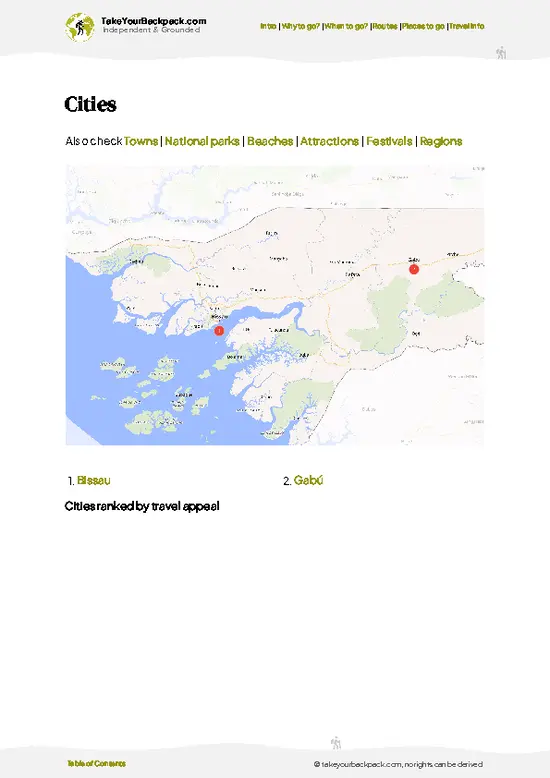
  • Cacheu—fortress ruins, mangrove estuary, riverfront promenade| 78 km away
  • Gabú—savanna edge, regional trading hub, Fula influences| 155 km away

💡 Not sure where to go next?
Create a personalized itinerary for Guinea-Bissau including Bissau and the places that fit your trip.

Generate my itinerary

👉 Discover all cities

Or checkout all Guinea-Bissau has to offer (think cities, towns, villages, national parks, hikes, beaches, festivals)
Country photo of Guinea-Bissau

We 💚 feedbackSumming up the experience

Bissau has a laid-back charm that sneaks up on you. The streets pulse with a mix of local markets and colonial remnants, creating a vibe that feels both alive and relaxed. Don’t miss the vibrant street food; the grilled fish is a revelation. Just be cautious with the water—stick to bottled. The best surprise? The friendliness of the locals. They’ll share stories that make you feel like you’re part of something bigger. Embrace the slow pace; it’s where the real magic happens.

✍️ Help improve this page!
The information on this page is based on in-depth research, insights shared by experienced travelers, and feedback from the local travel community in Guinea-Bissau. While every effort is made to keep the information accurate and current, conditions can change — so if you spot anything incorrect or outdated, please get in touch.


🙋‍♂️ Give feedback

👋 Meet the founderWho’s Behind Take Your Backpack?

Johan, backpacker and founder of TakeYourBackpackHi, I’m Johan (Netherlands 🇳🇱), the creator of TakeYourBackpack. Over the past decade, I’ve backpacked through 80+ countries across six continents, gaining extensive experience with independent travel, long-term trips, and overland routes.

This site is built on a combination of firsthand travel experience and carefully curated insights from other backpackers. Many guides are based on places I’ve personally visited, while others bring together tips, observations, and practical advice shared by trusted travelers I’ve met along the way.

The goal is to provide realistic, experience-driven guidance — not generic itineraries — so you can explore destinations with better context, clearer expectations, and more confidence.

Get full country guide •
Instant download • 53 highlights • Full Offline guide