×

Guinea-Bissau🇬🇼 | townsQuinhamelBijagós gateway, palm groves, riverside port | things to do and best time to go

Explore NiumanaExplore Sao Domingos

Backpacking in Quinhamel
👀 For curious travelerstown ranked #17
By Johan Kruseman 🇳🇱 | Updated September 3, 2026

If you crave nightlife, polished museums, or a parade of backpacker bars, Quinhamel will disappoint. But if you’re drawn to the slow pulse of river towns, the scent of woodsmoke at dusk, and the kind of market where you’re the only foreigner, Quinhamel quietly rewards. Tucked on the Rio Mansôa, west of Bissau, it’s a practical stopover—less a destination, more a hinge between the capital’s bustle and the mangrove-laced islands beyond. The town itself is modest: a handful of sandy streets, a riverside market, and the occasional faded colonial relic. Transport is basic—shared taxis from Bissau, then your feet or a moto-taxi. It’s not social in the hostel sense, but you’ll find a few guesthouses and plenty of curious locals. Compared to Bissau, Quinhamel is slower, cheaper, and more relaxed, but don’t expect scenery to rival the Bijagós. Safety is typical for rural Guinea-Bissau: keep your wits, but don’t stress.

Discover everything you want to know in the 📖 Guinea-Bissau Travel Guide.
Loading the map 🌍
CLICK TO FILTER
cities
towns
landmarks
national parks
hikes
beaches
attractions
festivals
regions
SHOW COUNTRY’S BESTSHOW ALL

✨ Why go?
Ranked #17 town in Guinea-Bissau
Reasons people choose to visit here

Quinhamel serves as a gateway for backpackers exploring Guinea-Bissau’s natural beauty and culture. Its walkable streets invite you to wander, with small-scale hostels and guesthouses offering a cozy base. The local food is a treat; savor fresh seafood and traditional dishes that reflect the region’s flavors. From here, you can easily access nearby hikes and beaches, making it a perfect spot for slow travelers and hikers. The atmosphere is friendly yet relaxed, ideal for solo adventurers or small groups looking to connect. Most visitors stay a few days, soaking in the laid-back vibe, but it’s also a solid stop for those on a tighter schedule.
Want to include Quinhamel in your Guinea-Bissau route?
Create a personalized Guinea-Bissau itinerary that includes Quinhamel and the places that fit your trip — based on your travel style, budget, and available time. Get your route in seconds.

Generate my trip

💡 HighlightsEssential experiences to have while visiting Quinhamel

  1. Quinhamel Central Market (mercado) — The beating heart of the village: stalls of fresh fish, vegetables, spices and bargaining locals. Great for people-watching, tasting street snacks and picking up a cheap woven basket or two.
  2. Pirogue Landing & Fish Market — Where dugout canoes come in with the morning catch. Watching the landing, gutting and sorting is a hands-on way to understand local fishing life — and you can often buy fish straight off the boats.
  3. Pirogue-building and Repair Yards — Small workshops along the waterfront where boats are carved, patched and painted. It’s honest craft you can smell and touch; ask and a builder will usually show how planks and caulking come together.
  4. Mangrove Estuary Walks — Short walks from the village lead into crisscrossed mangrove channels. The setting
read more 👉
  1. Quinhamel Central Market (mercado) — The beating heart of the village: stalls of fresh fish, vegetables, spices and bargaining locals. Great for people-watching, tasting street snacks and picking up a cheap woven basket or two.
  2. Pirogue Landing & Fish Market — Where dugout canoes come in with the morning catch. Watching the landing, gutting and sorting is a hands-on way to understand local fishing life — and you can often buy fish straight off the boats.
  3. Pirogue-building and Repair Yards — Small workshops along the waterfront where boats are carved, patched and painted. It’s honest craft you can smell and touch; ask and a builder will usually show how planks and caulking come together.
  4. Mangrove Estuary Walks — Short walks from the village lead into crisscrossed mangrove channels. The setting is quiet, full of birdlife and crab-hunting locals; bring mosquito repellent and a local guide if you want to go deeper.
  5. Village Square / Praça — The social hub where elders sit, kids play and traders gather. Timing your visit around late afternoon gives you a snapshot of everyday rhythm — drumming, banter and community business.
  6. Local Mosque — A modest, active place of worship that offers insight into daily Muslim life in Quinhamel. Observing (or respectfully asking to visit) during non-prayer times shows local architecture and communal practices.
  7. Catholic Chapel / Parish Spot — Reflects Guinea-Bissau’s Portuguese-era Catholic presence. Services and chapel life are open to visitors who come quietly; it’s a place to see how traditions blend with local culture.
  8. Cashew and Peanut Processing Areas — Small-scale processing piles and drying racks are common in and around the village during the season. Watching locals sort, dry and shell nuts is a window into one of the country’s most important crops.
  9. Traditional Craft Stalls & Workshops — A few tucked-away vendors and woodworkers sell carved spoons, small masks and woven goods. Buy directly from the maker when you can — it’s the most direct support and the stories are better.
  10. Rice Paddies and Nearby Salt Flats — Low, managed fields and seasonal salt-harvesting spots close to the village show traditional agriculture and labor patterns. Walk the edges with a local to learn about tidal rhythms and how salt is collected.
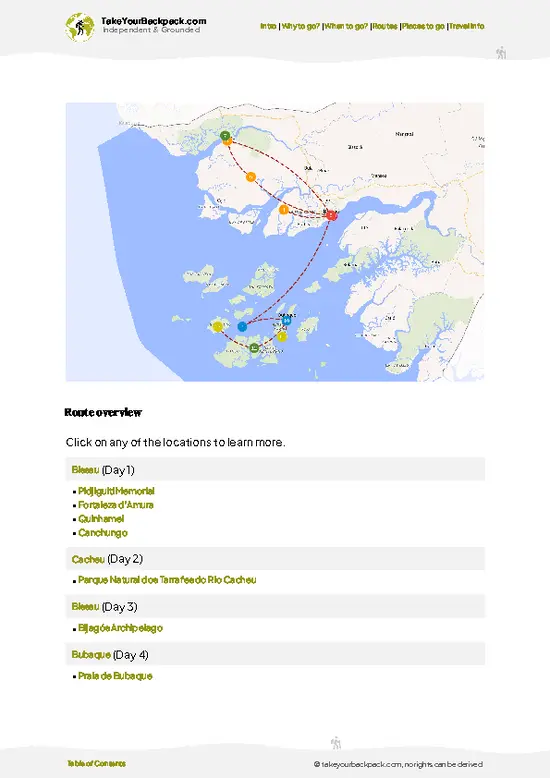
A few real, visitable day-trip options nearby: the capital Bissau for museums and big markets, the historic island town of Bolama (by boat) and the Cacheu river/fort area for riverside history and mangrove scenery.
Spotted a mistake or missing something? Contact us.

🏘️ NeighborhoodsUnderstanding the local layout

Quinhamel is a vibrant hub in Guinea-Bissau, offering a unique blend of local culture and backpacker-friendly vibes. Here’s how to navigate its neighborhoods:

Centro: This is the heartbeat of Quinhamel. You’ll find bustling markets and local eateries serving up fresh fish and spicy stews. It’s walkable, with a lively atmosphere that pulses day and night. Perfect for short stays, but the noise can be a bit much if you’re looking for peace.

Praia de Quinhamel: The beach area is a serene escape. Soft sands and gentle waves create a laid-back vibe. Ideal for longer stays, you can soak in the sun or explore nearby fishing villages. Transport options are limited, but the tranquility makes it worth it.

Alto da Vila: This elevated neighborhood offers stunning views and a quieter atmosphere. It’s … read more 👉
Quinhamel is a vibrant hub in Guinea-Bissau, offering a unique blend of local culture and backpacker-friendly vibes. Here’s how to navigate its neighborhoods:

Centro: This is the heartbeat of Quinhamel. You’ll find bustling markets and local eateries serving up fresh fish and spicy stews. It’s walkable, with a lively atmosphere that pulses day and night. Perfect for short stays, but the noise can be a bit much if you’re looking for peace.

Praia de Quinhamel: The beach area is a serene escape. Soft sands and gentle waves create a laid-back vibe. Ideal for longer stays, you can soak in the sun or explore nearby fishing villages. Transport options are limited, but the tranquility makes it worth it.

Alto da Vila: This elevated neighborhood offers stunning views and a quieter atmosphere. It’s less touristy, making it a great spot for those wanting to immerse themselves in local life. Walkability is decent, but be prepared for some steep climbs. Perfect for longer stays if you crave a slower pace.

⌛️ 1 daySeeing the highlights in 24 hours

Quinhamel, a small town in Guinea-Bissau, pulses with the rhythm of everyday life. The air is thick with the scent of grilled fish and spices, and the vibrant colors of local textiles catch the eye. It’s a place where you can feel the heartbeat of the country, away from the usual tourist paths.

Start your morning at the bustling market. The early sun casts a warm glow on the stalls, where vendors sell fresh produce and handmade crafts. Engage with the locals; their smiles are as bright as the fruits they offer. Grab a breakfast of *pão com chouriço*, a local bread stuffed with spicy sausage, and wash it down with sweet, strong coffee.

In the afternoon, wander through the narrow streets of the Bairro de São João. Here, you’ll find the charming *Igreja de São João*, a modest church that tells … read more 👉
Quinhamel, a small town in Guinea-Bissau, pulses with the rhythm of everyday life. The air is thick with the scent of grilled fish and spices, and the vibrant colors of local textiles catch the eye. It’s a place where you can feel the heartbeat of the country, away from the usual tourist paths.

Start your morning at the bustling market. The early sun casts a warm glow on the stalls, where vendors sell fresh produce and handmade crafts. Engage with the locals; their smiles are as bright as the fruits they offer. Grab a breakfast of *pão com chouriço*, a local bread stuffed with spicy sausage, and wash it down with sweet, strong coffee.

In the afternoon, wander through the narrow streets of the Bairro de São João. Here, you’ll find the charming *Igreja de São João*, a modest church that tells stories of the town’s history. Take a moment to sit on a bench and soak in the atmosphere, listening to children playing nearby.

As evening approaches, head to the waterfront. The sunset paints the sky in hues of orange and pink, a perfect backdrop for a leisurely stroll. Stop by a local eatery for dinner; try the *caldeirada*, a fish stew that captures the essence of the sea.

Quinhamel may not be on every tourist’s radar, but its authenticity and warmth make it a rewarding stop. Embrace the simplicity and let the town’s charm wash over you.
Turn your Quinhamel visit into an Guinea-Bissau adventure
Build a complete Guinea-Bissau route with Quinhamel, hidden gems, must-see destinations, and realistic travel times included.

Generate my trip

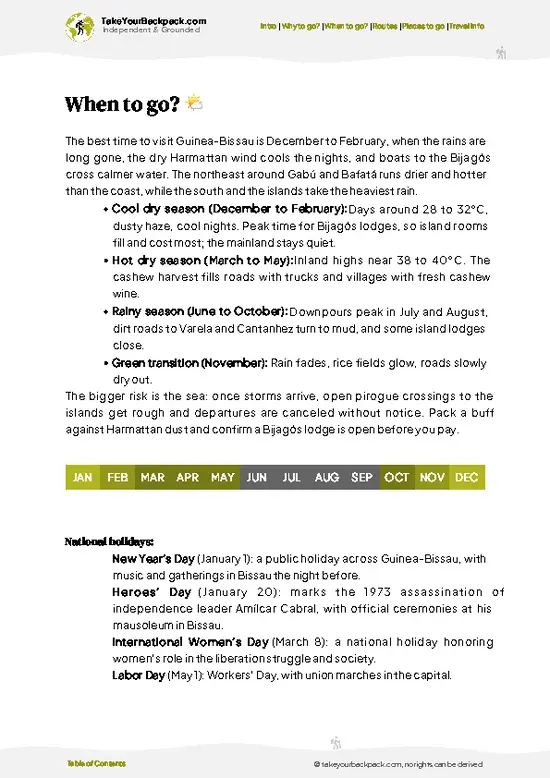
🌤️ When to go?Best time to visit Quinhamel


  • Weather: Quinhamel’s dry season from November to May offers clear skies and minimal rain, making trails less slippery and the air lighter. The wet season, June to October, brings heavy rains that can turn paths into mud baths and swell rivers, complicating travel.

  • Temperature: Expect highs around 30-33°C (86-91°F) in the dry season, with cooler nights dipping to 22°C (72°F). The wet season feels hotter and more humid, often pushing 34°C (93°F), which can sap your energy fast.

  • Daylight Hours: Daylight stays steady year-round, roughly 11 to 12 hours, but the dry season’s clearer skies mean more reliable sunrise and sunset times for planning hikes and village visits.

  • Crowds: Quinhamel is off the beaten path, so crowds are minimal year-round. However, the dry season sees a slight uptick
read more 👉

  • Weather: Quinhamel’s dry season from November to May offers clear skies and minimal rain, making trails less slippery and the air lighter. The wet season, June to October, brings heavy rains that can turn paths into mud baths and swell rivers, complicating travel.

  • Temperature: Expect highs around 30-33°C (86-91°F) in the dry season, with cooler nights dipping to 22°C (72°F). The wet season feels hotter and more humid, often pushing 34°C (93°F), which can sap your energy fast.

  • Daylight Hours: Daylight stays steady year-round, roughly 11 to 12 hours, but the dry season’s clearer skies mean more reliable sunrise and sunset times for planning hikes and village visits.

  • Crowds: Quinhamel is off the beaten path, so crowds are minimal year-round. However, the dry season sees a slight uptick as regional travelers arrive, making it lively but never overwhelming.

  • Seasonal Activities: Dry months are prime for fishing festivals and market days, where the scent of grilled fish and fresh spices fills the air. Wet season limits outdoor events but brings lush greenery and fewer tourists.

  • Price Fluctuations: Accommodation and transport costs dip during the wet season due to lower demand, but expect to pay a premium in the dry months when conditions are ideal for exploring.


Pro-tip: Aim for late dry season—March to May—when the heat softens, the crowds stay thin, and the landscape is still dry enough to move freely without the wet season’s mud and mosquitoes.


source: climatestotravel.comJANJanuary: highly recommended for travelingFEBFebruary: highly recommended for travelingMARMarch: excellent for travelingAPRApril: excellent for travelingMAYMay: excellent for travelingJUNJune: fair for travelingJULJuly: below average for travelingAUGAugust: below average for travelingSEPSeptember: fair for travelingOCTOctober: fair for travelingNOVNovember: highly recommended for travelingDECDecember: highly recommended for traveling
when-to-go

✈️ The backpacker research shortcutGuinea-Bissau Travel Guide

An offline-friendly backpacking guide with optimized travel routes, ranked highlights, transport advice, and the best areas to stay.
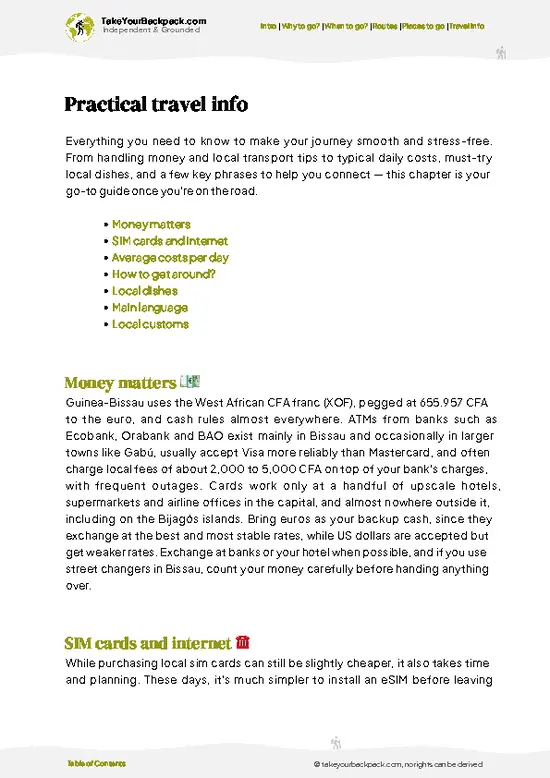
example page 0 from our offline Travel Guide for Guinea-Bissau
example page 1 from our offline Travel Guide for Guinea-Bissau
example page 2 from our offline Travel Guide for Guinea-Bissau
example page 3 from our offline Travel Guide for Guinea-Bissau
example page 4 from our offline Travel Guide for Guinea-Bissau
example page 5 from our offline Travel Guide for Guinea-Bissau
example page 6 from our offline Travel Guide for Guinea-Bissau
example page 7 from our offline Travel Guide for Guinea-Bissau
The digital guide (230 pages) contains:
53 highlights, ranked by travel appeal
Optimized 2, 3 & 5-day travel routes
Cities, national parks, landmarks, beaches
How to get around
Offline-friendly for travel without Wi-Fi
👉 Click to see all 30+ guide features

📅 Plan smarter in minutes, not weeks
Month by month travel advice
Festivals & national holidays
Budget expectations

🗺️ Go to the right places, skip the overrated ones
Honest pros & cons of destinations
Top hikes, parks & viewpoints
Lesser-known places most travelers miss
Clear “worth it vs skip it” guidance

🛏️ Travel smoothly without rookie mistakes
Best areas to stay
Transport systems explained simply
Common scams & safety advice
SIM cards, money & practical tips

🌍 Understand the country, not just visit it
Culture & traditions
52 Essential phrases & customs
Festivals worth planning around
Traveler-friendly historical context
Insights that make places more meaningful

📱 Built for real travel conditions
Fully downloadable PDF
Works completely offline
Optimized for phone use
Useful in remote areas & buses
Everything in one place
Save weeks of stressful planning
Get instant access to your full guide. 30‑day money-back guarantee.
+ Add another guide for just €6.50

By proceeding you agree to our terms.
Sent to your inbox immediately after payment • 100% Secure Checkout
Best Backpacking Travel Advisor 2025 tourism awardBest Backpacking
Travel Advisor
2025
What others say about Take Your Backpack Guides:
⭐⭐⭐⭐⭐
Fantastic, amazing amount of information!
⭐⭐⭐⭐⭐
My goodness this is amazing, it's what I've been looking for hats off too you!
⭐⭐⭐⭐⭐
I think this is absolutely BRILLIANT
⭐⭐⭐⭐
Very complete and informative. It's still missing places, but I gotta to commend you
⭐⭐⭐⭐⭐
This is truly amazing, thank you, can't wait to explore it with my kids!
⭐⭐⭐⭐⭐
Awesome resource, thank you!
⭐⭐⭐⭐⭐
This is amazing! Can't wait to explore the ones I haven't seen
⭐⭐⭐⭐
I love this! Well done, great idea.
⭐⭐⭐⭐⭐
Thanks for taking the time to make this gem!
⭐⭐⭐⭐⭐
This might be the best website I've ever seen.
⭐⭐⭐⭐⭐
Congratulations, and thank you so much for your work; it's incredibly valuable.
⭐⭐⭐⭐
In all seriousness I think you did a great job pointing out the important spots
⭐⭐⭐⭐⭐
10/10 very good
⭐⭐⭐⭐⭐
As someone who's only just starting to visit regularly this is awesome, thank you.
⭐⭐⭐⭐
Thank you very much! I'm going to visit my dad, it's going to be very useful!
⭐⭐⭐⭐⭐
This is really cool! We'll be travelling for the first time and this definitely come in handy.
⭐⭐⭐⭐⭐
You are now our minister of culture, congratulations 👨‍💼
⭐⭐⭐⭐⭐
Just wanted to tell you that this is a pearl! Going to follow your recommendations.
⭐⭐⭐⭐⭐
This is so cool. I'll definitely be using the resource for my travels soon.
⭐⭐⭐⭐⭐
This is very impressive! Good work.
⭐⭐⭐⭐⭐
This is an amazing and informative site. Very well done!

🛏️ Where to stay?How to pick the right area

Quinhamel’s best spot for backpackers is the town center, where the pulse of daily life hums strongest. This area is compact, making it easy to navigate on foot, which is crucial when you want to soak in the local rhythm without getting lost or overwhelmed. The streets here carry the scent of fresh market spices and the occasional waft of grilled fish from street vendors, grounding you in the town’s authentic vibe. Safety feels more tangible here—not because it’s a fortress, but because locals and travelers mingle openly, creating a natural watchfulness that’s missing in quieter, more isolated … read more 👉
Quinhamel’s best spot for backpackers is the town center, where the pulse of daily life hums strongest. This area is compact, making it easy to navigate on foot, which is crucial when you want to soak in the local rhythm without getting lost or overwhelmed. The streets here carry the scent of fresh market spices and the occasional waft of grilled fish from street vendors, grounding you in the town’s authentic vibe. Safety feels more tangible here—not because it’s a fortress, but because locals and travelers mingle openly, creating a natural watchfulness that’s missing in quieter, more isolated neighborhoods.

Compared to the outskirts, where accommodation options thin out and social opportunities dwindle, the center offers a handful of budget lodgings and guesthouses that cater to solo travelers. These spots aren’t polished hostels with neon signs but humble, welcoming places where you can swap stories over shared meals or a cold drink. Staying here means you’re plugged into Quinhamel’s social fabric, not just passing through it. The energy is low-key but alive, perfect for those who want connection without chaos.

🚌 Getting aroundGetting around like a local

Quinhamel moves at its own rhythm—less a clockwork town and more a pulse you feel in the air. The sun slants low, casting long shadows on cracked sidewalks where locals shuffle with purpose but no rush. It’s a place where schedules bend, and the scent of roasting coffee mingles with the dusty hum of engines. You won’t find strict timetables here; instead, transit feels like a dance between patience and intuition. Mastering this flow means embracing the unpredictability while knowing the best ways to get around without burning your budget or your spirit.


  • Walking: Quinhamel’s compact center is best explored on foot. Streets are uneven but manageable, and wandering lets you soak in the scent of street food stalls and the chatter of market vendors. Most key spots are within 20-30 minutes of
read more 👉
Quinhamel moves at its own rhythm—less a clockwork town and more a pulse you feel in the air. The sun slants low, casting long shadows on cracked sidewalks where locals shuffle with purpose but no rush. It’s a place where schedules bend, and the scent of roasting coffee mingles with the dusty hum of engines. You won’t find strict timetables here; instead, transit feels like a dance between patience and intuition. Mastering this flow means embracing the unpredictability while knowing the best ways to get around without burning your budget or your spirit.


  • Walking: Quinhamel’s compact center is best explored on foot. Streets are uneven but manageable, and wandering lets you soak in the scent of street food stalls and the chatter of market vendors. Most key spots are within 20-30 minutes of each other, making walking the cheapest and most immersive option.


  • Shared Minibuses (Chapas): These are the town’s lifeblood for budget travelers. Chapas run roughly from 6:30 AM to 7 PM, weaving through main routes with no fixed schedule—departures happen when full. Fares hover around $0.50, and while the ride can be cramped and noisy, it’s the fastest way to cover longer distances without breaking the bank.


  • Motorcycle Taxis: For quick hops or when you’re pressed for time, motorcycle taxis dart through traffic with nimble ease. Expect to pay about $1-$2 depending on distance. They don’t follow routes or schedules, so you’ll need to negotiate fares upfront. The wind in your face and the city’s smells rushing past make this a sensory ride, but not the most comfortable for longer trips.


  • Local Buses: Larger buses serve Quinhamel’s outskirts and connect to nearby towns. They run from 5 AM to 6 PM, with fares around $1.50. These are slower and less frequent than chapas but offer more space and a chance to observe daily life beyond the center.


  • Bicycle Rentals: If you want control over your pace and a bit of exercise, renting a bike is a solid choice. Rentals cost about $5 per day. The terrain is mostly flat but watch for potholes and occasional loose gravel. Early mornings and late afternoons are the best times to pedal—less heat, softer light, and quieter streets.

👛 Costs (as of 3 September 2026)Travel costs and budget guide for Quinhamel

Backpacking in Quinhamel, Guinea-Bissau, is a raw, off-the-beaten-path experience where costs stay modest but the infrastructure is basic, so budgeting smartly is key.
  • Dorm Accommodation: Expect simple guesthouses or local hostels with shared rooms. Prices hover around €5 to €10 per night. These places often lack modern amenities, but the low cost means you’re paying for a bed and a roof, not luxury.
  • Meals: Street food and local eateries dominate. A typical meal of rice, fish, or chicken with vegetables runs about €1.50 to €3. Fresh fruit and snacks are even cheaper. If you opt for something more Western or imported, prices can double, but sticking local keeps your food budget tight and authentic.
  • Local Transport: Transport options are limited and informal—think shared taxis or minibuses.
read more 👉
Backpacking in Quinhamel, Guinea-Bissau, is a raw, off-the-beaten-path experience where costs stay modest but the infrastructure is basic, so budgeting smartly is key.
  • Dorm Accommodation: Expect simple guesthouses or local hostels with shared rooms. Prices hover around €5 to €10 per night. These places often lack modern amenities, but the low cost means you’re paying for a bed and a roof, not luxury.
  • Meals: Street food and local eateries dominate. A typical meal of rice, fish, or chicken with vegetables runs about €1.50 to €3. Fresh fruit and snacks are even cheaper. If you opt for something more Western or imported, prices can double, but sticking local keeps your food budget tight and authentic.
  • Local Transport: Transport options are limited and informal—think shared taxis or minibuses. Short rides cost around €0.50 to €1.50. For longer trips or private hires, expect to pay up to €5. Walking is often the best way to soak in the atmosphere and save money.
  • Basic Activities/Entry Fees: Organized tours are rare and pricey, but local markets, beaches, and village visits are free or cost a small tip, usually under €2. If you want to explore natural reserves or cultural sites, budget around €3 to €5 for entry or guide fees.
  • Miscellaneous Expenses: This covers essentials like bottled water, which is crucial given the heat and can cost about €0.50 per liter. Mobile data and SIM cards are affordable, roughly €3 to €5 for a basic package. Small tips or unexpected expenses might add another €1 to €2 daily.

Quinhamel’s daily budget for a backpacker comfortably ranges between €10 and €20. It’s a place where simplicity reigns, and every euro stretches further if you embrace the local pace and offerings. The modest costs reflect the rawness of the experience—no frills, just the essentials that let you dive into the real Guinea-Bissau.
⚠️ Prices can change and everyone travels differently, so take this as a rough guide. Hope it helps you plan your adventure!

🚌 Day tripsExploring the surroundings

Quinhamel is a fantastic base for exploring the hidden treasures of Guinea-Bissau. The vibrant local life and easy access to stunning landscapes make it a backpacker’s dream. Here are some day trips that will elevate your experience.

Bijagós Archipelago
Hop on a boat early in the morning and feel the salty breeze as you head to the Bijagós Islands. The journey takes about an hour, and the cost is around $10. Once there, you can explore pristine beaches and lush mangroves. The best time is during the dry season, from November to April, when the waters are calm. A common mistake? Underestimating the sun—bring plenty of water and sunscreen.
👉 Explore Bijagós Archipelago

Cacheu River
A short bus ride of about 45 minutes will take you to the Cacheu River, where you can kayak through mangroves … read more 👉
Quinhamel is a fantastic base for exploring the hidden treasures of Guinea-Bissau. The vibrant local life and easy access to stunning landscapes make it a backpacker’s dream. Here are some day trips that will elevate your experience.

Bijagós Archipelago
Hop on a boat early in the morning and feel the salty breeze as you head to the Bijagós Islands. The journey takes about an hour, and the cost is around $10. Once there, you can explore pristine beaches and lush mangroves. The best time is during the dry season, from November to April, when the waters are calm. A common mistake? Underestimating the sun—bring plenty of water and sunscreen.
👉 Explore Bijagós Archipelago

Cacheu River
A short bus ride of about 45 minutes will take you to the Cacheu River, where you can kayak through mangroves teeming with wildlife. Expect to spend around $15 for a kayak rental. The river is particularly enchanting in the late afternoon when the light dances on the water. Many first-timers miss the chance to spot the local bird species—keep your eyes peeled!


Bolama Island
Just a 30-minute ferry ride away, Bolama Island offers a glimpse into colonial history with its crumbling buildings and serene beaches. The round trip costs about $5. Spend the day wandering through the quiet streets, soaking in the atmosphere. The best time to visit is early morning to avoid the heat. Don’t forget to bring a camera; the island’s charm is photogenic.
Want to know what more Guinea-Bissau offers?
The Guinea-Bissau Travel Guide describes 53 highlights, from cities to national parks, from beaches to hikes

Get the Travel Guide -

🛡️ SafetyStaying Safe: What Travelers Should Know

Quinhamel is generally safe, but a few practical tips can enhance your experience. Stay aware in crowded markets; pickpockets can be a nuisance. When wandering solo, especially after dark, stick to well-lit areas and avoid empty streets. Locals are friendly, but some may try to overcharge for goods or services. Always negotiate prices upfront, whether it’s for a taxi or a meal.

Keep your belongings close, and don’t flash valuables. The scent of grilled fish wafts through the air, inviting you to local eateries, but be cautious of street food if you have a sensitive stomach. Embrace the atmosphere, but stay grounded.

FAQTraveler FAQ

Quinhamel is primarily a stopover rather than a major destination. It offers a glimpse of local life and coastal scenery but lacks extensive tourist infrastructure or major attractions. Travelers usually pass through on their way to more prominent sites in Guinea-Bissau.
One day is generally sufficient to explore Quinhamel. This allows time to see the local market, enjoy the beach, and interact with residents. Staying longer is only recommended if you want a quiet retreat or to explore nearby rural areas.
Yes, Quinhamel can be visited as a day trip from Bissau, the capital city, which is about 30 kilometers away. The trip takes roughly an hour by car or local transport, making it feasible for a half-day or full-day excursion.
⚠️ Things can change over time, so always validate details locally before you go.

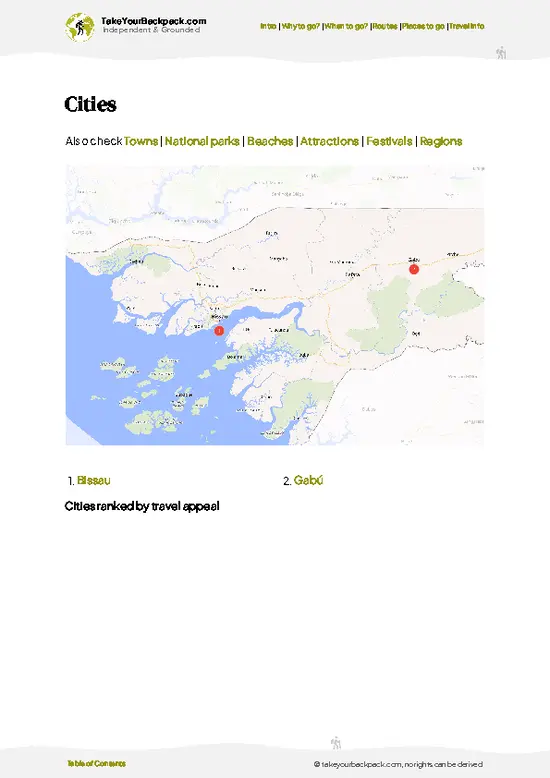
Other Bissau-Guinean towns near Quinhamel

Explore more nearby:

  • Canchungo—central plaza, faded colonial grid, local crafts| 28 km away
  • Nhacra—junction town, local eateries, market square| 35 km away
  • Bolama—island capital, crumbling mansions, tidal flats| 54 km away

💡 Not sure where to go next?
Create a personalized itinerary for Guinea-Bissau including Quinhamel and the places that fit your trip.

Generate my itinerary

👉 Discover all towns

Or checkout all Guinea-Bissau has to offer (think cities, towns, villages, national parks, hikes, beaches, festivals)
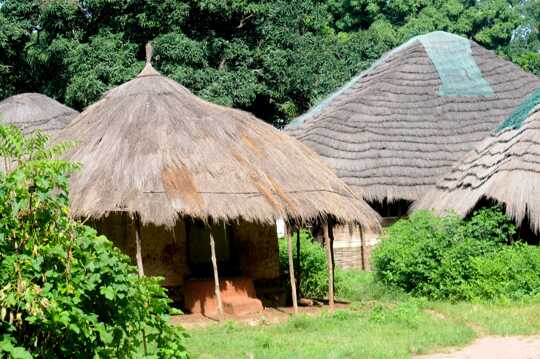
Country photo of Guinea-Bissau

We 💚 feedbackWhat to keep in mind

Quinhamel has a raw, unfiltered vibe that feels like stepping into a living postcard. The surprise? The locals’ warmth; they’ll share stories over fresh fish grilled right on the beach. Just watch the tides—some paths vanish at high water. Embrace the unpredictability; it’s part of the charm. You’ll leave with a piece of their spirit.

✍️ Help improve this page!
The information on this page is based on in-depth research, insights shared by experienced travelers, and feedback from the local travel community in Guinea-Bissau. While every effort is made to keep the information accurate and current, conditions can change — so if you spot anything incorrect or outdated, please get in touch.


🙋‍♂️ Give feedback

👋 Meet the founderWho’s Behind Take Your Backpack?

Johan, backpacker and founder of TakeYourBackpackHi, I’m Johan (Netherlands 🇳🇱), the creator of TakeYourBackpack. Over the past decade, I’ve backpacked through 80+ countries across six continents, gaining extensive experience with independent travel, long-term trips, and overland routes.

This site is built on a combination of firsthand travel experience and carefully curated insights from other backpackers. Many guides are based on places I’ve personally visited, while others bring together tips, observations, and practical advice shared by trusted travelers I’ve met along the way.

The goal is to provide realistic, experience-driven guidance — not generic itineraries — so you can explore destinations with better context, clearer expectations, and more confidence.

Get full country guide •
Instant download • 53 highlights • Full Offline guide