v2.webp)
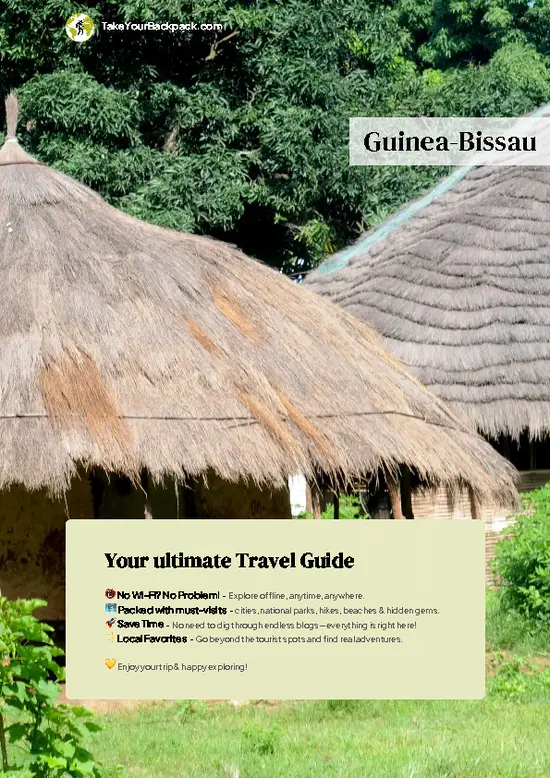
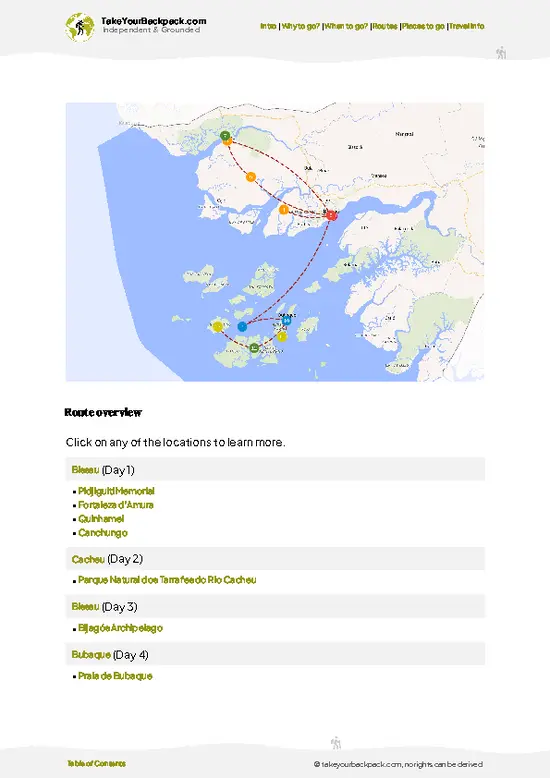
- Former Governor’s Palace (Palácio do Governo): The neoclassical colonial buildings along the main avenue are what Bolama is known for, and the old Governor’s Palace with its columned portico is the grandest of them. It stands roofless and overgrown, with trees growing through the walls, and you can walk around the outside freely. Go in the early morning, when the light is soft and the heat is low. Free, 30 to 45 minutes.
- Colonial Avenue and the Arcaded Ruins: Bolama was the capital of Portuguese Guinea until 1941, and the wide, straight streets laid out for that role are still here. Arcades, crumbling facades and empty civic buildings line them, many with mango trees pushing through the roofs. Walk it in the late afternoon when the stucco turns warm and goats and children have the road to themselves.
- Former Governor’s Palace (Palácio do Governo): The neoclassical colonial buildings along the main avenue are what Bolama is known for, and the old Governor’s Palace with its columned portico is the grandest of them. It stands roofless and overgrown, with trees growing through the walls, and you can walk around the outside freely. Go in the early morning, when the light is soft and the heat is low. Free, 30 to 45 minutes.
- Colonial Avenue and the Arcaded Ruins: Bolama was the capital of Portuguese Guinea until 1941, and the wide, straight streets laid out for that role are still here. Arcades, crumbling facades and empty civic buildings line them, many with mango trees pushing through the roofs. Walk it in the late afternoon when the stucco turns warm and goats and children have the road to themselves. Free, 1 to 1.5 hours.
- Praça do Império and the Monument Area: The central square holds the remains of the colonial administrative heart, with a faded monument and the former town hall nearby. It is a good place to sit in the shade with a cold drink from a nearby stall and watch daily life pass. Mornings are cooler and livelier. Free, 20 to 30 minutes.
- Bolama Waterfront and Old Port: The ferry landing and the old wharf are where the town meets the Bijagós channel. Fishermen unload catches in the morning, and pirogues come and go. It is the most animated part of Bolama and the best spot for conversation with locals. Arrive at the early ferry or at low tide for the most activity. Free, 30 to 60 minutes.
- Bolama Beach (Praia de Bolama): A quiet, sandy stretch on the island’s edge, reached on foot or by a short motorbike ride from the center. Expect almost no one else, a few cashew trees and open Atlantic light. Go in late afternoon at lower tide for the widest sand. Free, 1 to 2 hours.
Spotted a mistake or missing something? Contact us.

 Best Backpacking
.jpg) Hi, I’m Johan (Netherlands 🇳🇱), the creator of TakeYourBackpack. Over the past 3 decades, I’ve backpacked through 90+ countries across six continents, gaining extensive experience with independent travel, long-term trips, and overland routes.
Hi, I’m Johan (Netherlands 🇳🇱), the creator of TakeYourBackpack. Over the past 3 decades, I’ve backpacked through 90+ countries across six continents, gaining extensive experience with independent travel, long-term trips, and overland routes.