v2.webp)
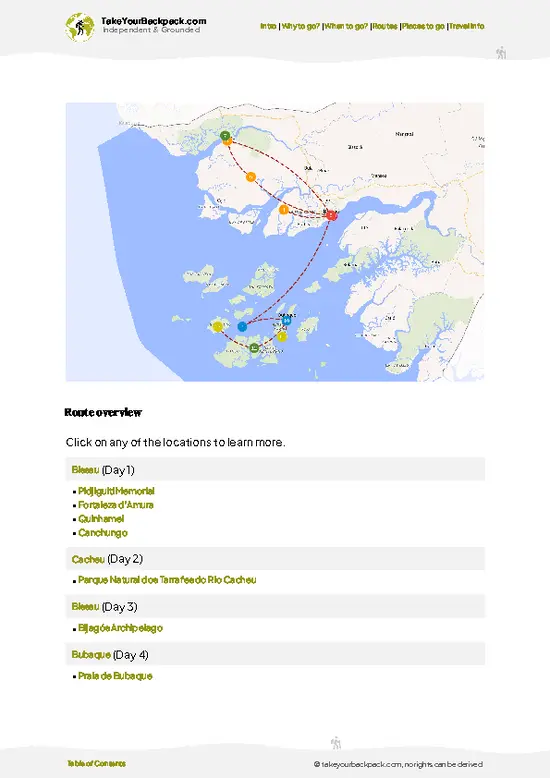
- Rio Grande de Buba waterfront: The reason to come. The estuary is wide, brown and tidal, lined with mangroves, and fishermen haul nets and launch pirogues from the bank. Come early morning or late afternoon when the heat eases and boats move most. It is free, and an hour or two is plenty.
- Buba market: Mornings are the time. Women sell dried and smoked fish, palm oil, cashews, rice, onions and bright cloth, and you hear Creole mixed with other local languages. Entry is free, wandering takes about an hour, and buying a small bag of cashews costs very little.
- Pirogue ride on the estuary: Ask fishermen at the landing about a short paddle or motor trip along the mangrove edge. Expect to agree a price on the spot, roughly €8 to 20 for an hour or two depending on the boat and your haggling. Go at high
- Rio Grande de Buba waterfront: The reason to come. The estuary is wide, brown and tidal, lined with mangroves, and fishermen haul nets and launch pirogues from the bank. Come early morning or late afternoon when the heat eases and boats move most. It is free, and an hour or two is plenty.
- Buba market: Mornings are the time. Women sell dried and smoked fish, palm oil, cashews, rice, onions and bright cloth, and you hear Creole mixed with other local languages. Entry is free, wandering takes about an hour, and buying a small bag of cashews costs very little.
- Pirogue ride on the estuary: Ask fishermen at the landing about a short paddle or motor trip along the mangrove edge. Expect to agree a price on the spot, roughly €8 to 20 for an hour or two depending on the boat and your haggling. Go at high tide for the easiest access to the channels.
- Bolanha rice fields: A walk on the tracks behind the town takes you past diked paddies reclaimed from the mangrove, a farming system typical of southern Guinea-Bissau. Early morning or late afternoon is best for light and cooler air. It costs nothing and takes 1 to 2 hours; carry water and wear closed shoes because the ground can be wet.
- Old colonial-era buildings along the main road: A few weathered Portuguese-period structures remain among the newer concrete houses, with peeling plaster and tall doorways. They are not museums, so view them from the street in a leisurely 30-minute stroll, ideally in the soft light of late afternoon. Free, and photographing buildings is fine, though ask before pointing a camera at people.
Spotted a mistake or missing something? Contact us.

 Best Backpacking
.jpg) Hi, I’m Johan (Netherlands 🇳🇱), the creator of TakeYourBackpack. Over the past 3 decades, I’ve backpacked through 90+ countries across six continents, gaining extensive experience with independent travel, long-term trips, and overland routes.
Hi, I’m Johan (Netherlands 🇳🇱), the creator of TakeYourBackpack. Over the past 3 decades, I’ve backpacked through 90+ countries across six continents, gaining extensive experience with independent travel, long-term trips, and overland routes.