×

Guinea-Bissau🇬🇼 | townsCatióforest fringe, regional trading post, ethnic diversity | things to do and best time to go

Explore EmpadaExplore Ingoré

Backpacking in Catió
🌟 Highlighttown ranked #5
By Johan Kruseman 🇳🇱 | Updated July 30, 2026

If you’re chasing nightlife, glossy museums, or a backpacker scene with smoothie bowls and hostel bar crawls, Catió will leave you restless. But if you want to feel the pulse of rural Guinea-Bissau—dusty roads, mango trees heavy with fruit, and the slow rhythm of market mornings—Catió rewards patience. Tucked in the country’s south, it’s a crossroads town: less a destination than a living waypoint, where red earth stains your boots and the air smells of woodsmoke and ripe cashew. The town itself is compact and walkable, with a few simple guesthouses and a market that’s more practical than picturesque. You won’t find crowds of travelers here; evenings are quiet, and the social scene is what you make of it—maybe a shared beer with locals, rarely with other backpackers. Transport is basic: bush taxis and battered minibuses connect Catió to Bissau and the southern border, but schedules are loose and patience is currency. Costs are low, safety is typical for rural West Africa—keep your wits, but don’t expect trouble. Compared to Buba or Quebo, Catió feels more like a pause than a hub: less scenic than the coast, less lively than the capital, but a real slice of everyday Guinea-Bissau, best used as a launchpad for exploring the forests and villages beyond.

Discover everything you want to know in the 📖 Guinea-Bissau Travel Guide.
Loading the map 🌍
CLICK TO FILTER
cities
towns
landmarks
national parks
hikes
beaches
attractions
festivals
regions
SHOW COUNTRY’S BESTSHOW ALL

✨ Why go?
Ranked #5 town in Guinea-Bissau
Why visitors keep coming back

Backpackers flock to Catió for its strategic location along the route to some of Guinea-Bissau’s most rewarding hikes and pristine beaches. The town serves as a gateway to the Bijagós Archipelago, where you can explore untouched landscapes and vibrant local culture. Streets are walkable, making it easy to navigate between small-scale guesthouses and hostels that offer a cozy, communal vibe. Here, you can savor local dishes that burst with flavor, often prepared with fresh ingredients from nearby markets.

Travelers typically linger for a few days, soaking in the friendly atmosphere that encourages connection among solo adventurers and small groups alike. It’s not a party hub, but rather a place where you can recharge before heading into the wild. If you appreciate a slower pace and the chance … read more 👉
Backpackers flock to Catió for its strategic location along the route to some of Guinea-Bissau’s most rewarding hikes and pristine beaches. The town serves as a gateway to the Bijagós Archipelago, where you can explore untouched landscapes and vibrant local culture. Streets are walkable, making it easy to navigate between small-scale guesthouses and hostels that offer a cozy, communal vibe. Here, you can savor local dishes that burst with flavor, often prepared with fresh ingredients from nearby markets.

Travelers typically linger for a few days, soaking in the friendly atmosphere that encourages connection among solo adventurers and small groups alike. It’s not a party hub, but rather a place where you can recharge before heading into the wild. If you appreciate a slower pace and the chance to engage with locals, Catió is more than a stopover; it’s a chance to immerse yourself in the heart of Guinea-Bissau.
Want to include Catió in your Guinea-Bissau route?
Create a personalized Guinea-Bissau itinerary that includes Catió and the places that fit your trip — based on your travel style, budget, and available time. Get your route in seconds.

Generate my trip

💡 HighlightsDon't-miss highlights and experiences

  • Catió Central Market (Mercado Municipal) — The town’s heartbeat: a dense swirl of stalls selling fresh fish, rice, palm oil, vegetables and second-hand clothes. Best place to see daily life, bargain with vendors and taste street food straight off the grill.
  • Catió Riverfront and Quay — Low wooden jetties where pirogues land and depart. Walk the quay for close-up views of river trade, fish auctions and the comings-and-goings of people who still travel primarily by boat.
  • Mangrove channels (dugout canoe trips) — Short boat rides straight from town into dense mangroves. Quiet, full of birdlife and the slow rhythm of tidal life; a practical way to see the ecosystems that shape local fishing and salt-harvesting livelihoods.
  • Fish-smoking yards along the riverside — Rows of smoking racks and open-air
read more 👉
  • Catió Central Market (Mercado Municipal) — The town’s heartbeat: a dense swirl of stalls selling fresh fish, rice, palm oil, vegetables and second-hand clothes. Best place to see daily life, bargain with vendors and taste street food straight off the grill.
  • Catió Riverfront and Quay — Low wooden jetties where pirogues land and depart. Walk the quay for close-up views of river trade, fish auctions and the comings-and-goings of people who still travel primarily by boat.
  • Mangrove channels (dugout canoe trips) — Short boat rides straight from town into dense mangroves. Quiet, full of birdlife and the slow rhythm of tidal life; a practical way to see the ecosystems that shape local fishing and salt-harvesting livelihoods.
  • Fish-smoking yards along the riverside — Rows of smoking racks and open-air processing where local women turn daily catches into the smoked fish that feed households and markets. Raw, sensory and very photographic (ask before shooting).
  • The main mosque of Catió — A central spiritual and social anchor for the town. Visiting around prayer times gives a feel for rhythms of life and the respectful etiquette of Muslim communities in the region.
  • Catholic mission/church compound — One of the town’s long-standing Christian presences; the compound often functions as a community hub (education, gatherings) and reflects the mixed religious fabric of Guinea-Bissau.
  • Town square and colonial-era buildings — Scattered Portuguese-era architecture and government offices around the square offer a window into the colonial past and how administration shaped the town’s layout. Not a grand museum, but tangible history in bricks and plaster.
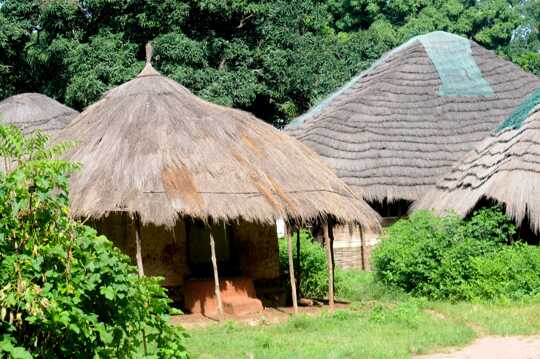
  • Tabanca neighbourhoods and traditional compounds — Walkable clusters of traditional houses and family compounds (tabancas) where you can witness local construction, family life, and customary social structures—best seen with a local guide or an introduction.
  • Local artisan workshops (boatbuilders, weavers, basket makers) — Small-scale craftsmen and women working with wood, palm and reed; visiting these yards shows how everyday tools, fishing gear and market baskets are made by hand.
  • Weekly market day & community gatherings (including the football pitch) — On market days the town expands: traders from nearby tabancas, musicians, and street vendors arrive. Nearby, football matches light up the pitch and are among the best ways to meet locals and feel the town’s pulse.
A few nearby day-trip options from Catió include short boat runs into the wider mangrove estuary and neighbouring fishing villages (Cacine area and small Tombali tabancas), plus coastal creeks and rice-field landscapes in the immediate countryside that are easy to explore from town.
Spotted a mistake or missing something? Contact us.

🏘️ NeighborhoodsKey areas and districts to know

Catió is a vibrant hub in Guinea-Bissau, where the rhythm of life pulses through its streets. Each neighborhood offers a unique flavor, making it essential for backpackers to choose wisely.

Centro: This is the heart of Catió. The vibe is lively, with local markets and street vendors filling the air with the scent of grilled fish and spices. It’s walkable, making it easy to explore on foot. Prices are reasonable, perfect for budget travelers. Nightlife here is casual; enjoy a cold drink at a local bar or chat with friendly locals. Ideal for short stays, but longer visits can feel repetitive.

Praia de Catió: A quieter area with stunning coastal views. The atmosphere is laid-back, perfect for those seeking relaxation. Accommodation options are slightly pricier, but the tranquility is worth … read more 👉
Catió is a vibrant hub in Guinea-Bissau, where the rhythm of life pulses through its streets. Each neighborhood offers a unique flavor, making it essential for backpackers to choose wisely.

Centro: This is the heart of Catió. The vibe is lively, with local markets and street vendors filling the air with the scent of grilled fish and spices. It’s walkable, making it easy to explore on foot. Prices are reasonable, perfect for budget travelers. Nightlife here is casual; enjoy a cold drink at a local bar or chat with friendly locals. Ideal for short stays, but longer visits can feel repetitive.

Praia de Catió: A quieter area with stunning coastal views. The atmosphere is laid-back, perfect for those seeking relaxation. Accommodation options are slightly pricier, but the tranquility is worth it. Walkability is decent, though you might want to rent a bike for longer distances. This area is great for longer stays, especially if you enjoy beachcombing and sunsets.

Alto Catió: A residential neighborhood that offers a glimpse into daily life. It’s less touristy, providing a more authentic experience. Prices are lower, and the walkability is moderate. While nightlife is minimal, the local eateries serve delicious, home-cooked meals. Perfect for longer stays, as you can immerse yourself in the community.

⌛️ 1 dayA smart one-day plan

Catió, the capital of Guinea-Bissau’s Cacheu region, is a vibrant tapestry of culture and history, where the scent of palm oil mingles with the salty breeze from the nearby Atlantic. The town’s charm lies in its blend of colonial architecture and local life, making it a perfect spot for an immersive day.

Start your morning at the bustling Mercado Municipal. The air is thick with the aroma of fresh produce and spices. Engage with local vendors selling everything from cassava to vibrant fabrics. Grab a breakfast of *pão com chouriço* (bread with sausage) from a nearby stall. It’s a simple pleasure that fuels your adventure.

In the afternoon, wander through the historic streets of the Bairro de São João. The faded pastel buildings tell stories of a bygone era. Don’t miss the chance to visit … read more 👉
Catió, the capital of Guinea-Bissau’s Cacheu region, is a vibrant tapestry of culture and history, where the scent of palm oil mingles with the salty breeze from the nearby Atlantic. The town’s charm lies in its blend of colonial architecture and local life, making it a perfect spot for an immersive day.

Start your morning at the bustling Mercado Municipal. The air is thick with the aroma of fresh produce and spices. Engage with local vendors selling everything from cassava to vibrant fabrics. Grab a breakfast of *pão com chouriço* (bread with sausage) from a nearby stall. It’s a simple pleasure that fuels your adventure.

In the afternoon, wander through the historic streets of the Bairro de São João. The faded pastel buildings tell stories of a bygone era. Don’t miss the chance to visit the *Fortaleza de Cacheu*, a short drive away. This fort, often overlooked by tourists, offers a glimpse into the region’s colonial past, with stunning views of the river.

As evening approaches, head back to Catió and find a spot along the waterfront. The sunset casts a golden hue over the water, creating a perfect backdrop for reflection. Enjoy a dinner of grilled fish at a local eatery, where the flavors of the ocean come alive.

This day in Catió isn’t just about ticking boxes; it’s about soaking in the essence of a place that feels both raw and welcoming. Embrace the rhythm of the town, and you’ll leave with stories that linger long after you’ve returned home.
Turn your Catió visit into an Guinea-Bissau adventure
Build a complete Guinea-Bissau route with Catió, hidden gems, must-see destinations, and realistic travel times included.

Generate my trip

🌤️ When to go?When to go for the best experience


  • Weather: The dry season from November to May is your best bet. Expect clear skies and minimal rain, which means trails won’t turn into mud baths and your gear stays dry. The wet season, June to October, brings heavy rains that can flood paths and make travel unpredictable.

  • Temperature: Daytime highs hover around 28-32°C (82-90°F) during the dry season, comfortable enough for trekking without overheating. Nights cool down to about 20-22°C (68-72°F), perfect for restful sleep under a mosquito net. The wet season is warmer and more humid, which can sap your energy faster.

  • Daylight Hours: Near the equator, daylight is steady year-round—roughly 12 hours. This consistency means you can plan hikes and activities without worrying about early sunsets cutting your day short.

  • Crowds: Catió isn’t
read more 👉

  • Weather: The dry season from November to May is your best bet. Expect clear skies and minimal rain, which means trails won’t turn into mud baths and your gear stays dry. The wet season, June to October, brings heavy rains that can flood paths and make travel unpredictable.

  • Temperature: Daytime highs hover around 28-32°C (82-90°F) during the dry season, comfortable enough for trekking without overheating. Nights cool down to about 20-22°C (68-72°F), perfect for restful sleep under a mosquito net. The wet season is warmer and more humid, which can sap your energy faster.

  • Daylight Hours: Near the equator, daylight is steady year-round—roughly 12 hours. This consistency means you can plan hikes and activities without worrying about early sunsets cutting your day short.

  • Crowds: Catió isn’t a tourist hotspot, so crowds are minimal year-round. However, the dry season sees a slight uptick in local festivals and markets, adding vibrant cultural layers without overwhelming the town.

  • Seasonal Activities: The dry season aligns with local harvests and traditional ceremonies, offering a richer cultural experience. The wet season’s lush greenery is tempting but comes with travel hassles and fewer events.

  • Price Fluctuations: Prices for accommodation and guides tend to rise slightly during the dry season due to increased demand, but the trade-off is worth it for reliable conditions and cultural access. The wet season offers lower prices but at the cost of comfort and accessibility.


Pro-tip: Aim for the shoulder months of November or May to catch good weather, fewer crowds, and better prices—a sweet spot where the town feels alive but not overwhelmed.


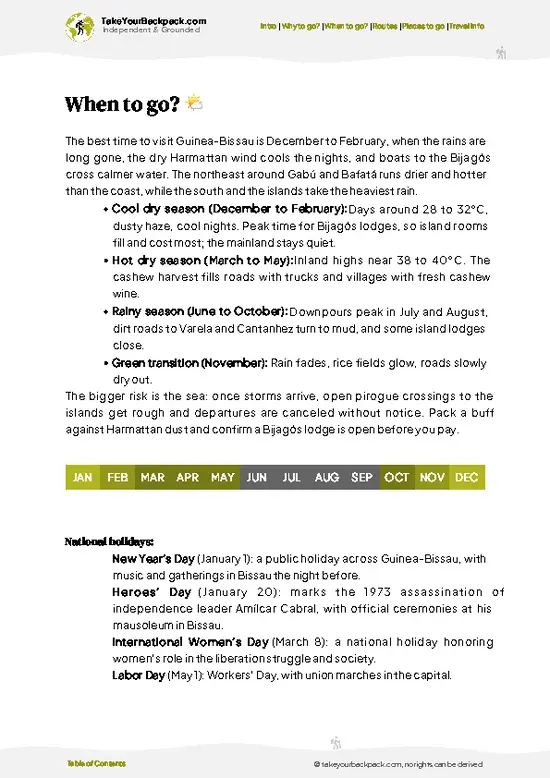
source: climatestotravel.comJANJanuary: excellent for travelingFEBFebruary: excellent for travelingMARMarch: excellent for travelingAPRApril: excellent for travelingMAYMay: highly recommended for travelingJUNJune: fair for travelingJULJuly: below average for travelingAUGAugust: below average for travelingSEPSeptember: fair for travelingOCTOctober: fair for travelingNOVNovember: highly recommended for travelingDECDecember: excellent for traveling
guinea-bissau-city-catio
© Google |

✈️ The backpacker research shortcutGuinea-Bissau Travel Guide

An offline-friendly backpacking guide with optimized travel routes, ranked highlights, transport advice, and the best areas to stay.
example page 0 from our offline Travel Guide for Guinea-Bissau
example page 1 from our offline Travel Guide for Guinea-Bissau
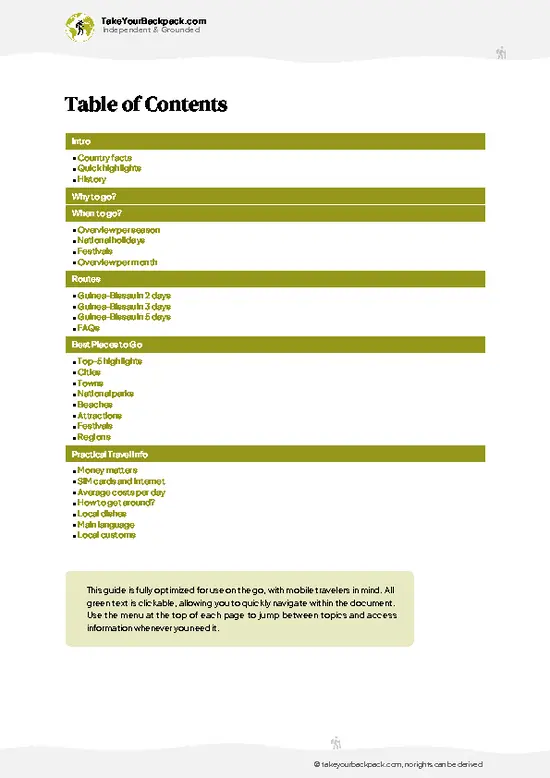
example page 2 from our offline Travel Guide for Guinea-Bissau
example page 3 from our offline Travel Guide for Guinea-Bissau
example page 4 from our offline Travel Guide for Guinea-Bissau
example page 5 from our offline Travel Guide for Guinea-Bissau
example page 6 from our offline Travel Guide for Guinea-Bissau
example page 7 from our offline Travel Guide for Guinea-Bissau
The digital guide (230 pages) contains:
53 highlights, ranked by travel appeal
Optimized 2, 3 & 5-day travel routes
Cities, national parks, landmarks, beaches
How to get around
Offline-friendly for travel without Wi-Fi
👉 Click to see all 30+ guide features

📅 Plan smarter in minutes, not weeks
Month by month travel advice
Festivals & national holidays
Budget expectations

🗺️ Go to the right places, skip the overrated ones
Honest pros & cons of destinations
Top hikes, parks & viewpoints
Lesser-known places most travelers miss
Clear “worth it vs skip it” guidance

🛏️ Travel smoothly without rookie mistakes
Best areas to stay
Transport systems explained simply
Common scams & safety advice
SIM cards, money & practical tips

🌍 Understand the country, not just visit it
Culture & traditions
52 Essential phrases & customs
Festivals worth planning around
Traveler-friendly historical context
Insights that make places more meaningful

📱 Built for real travel conditions
Fully downloadable PDF
Works completely offline
Optimized for phone use
Useful in remote areas & buses
Everything in one place
Save weeks of stressful planning
Get instant access to your full guide. 30‑day money-back guarantee.


By proceeding you agree to our terms.
Sent to your inbox immediately after payment • 100% Secure Checkout
Best Backpacking Travel Advisor 2025 tourism awardBest Backpacking
Travel Advisor
2025
What others say about Take Your Backpack Guides:
⭐⭐⭐⭐⭐
Fantastic, amazing amount of information!
⭐⭐⭐⭐⭐
My goodness this is amazing, it's what I've been looking for hats off too you!
⭐⭐⭐⭐⭐
I think this is absolutely BRILLIANT
⭐⭐⭐⭐
Very complete and informative. It's still missing places, but I gotta to commend you
⭐⭐⭐⭐⭐
This is truly amazing, thank you, can't wait to explore it with my kids!
⭐⭐⭐⭐⭐
Awesome resource, thank you!
⭐⭐⭐⭐⭐
This is amazing! Can't wait to explore the ones I haven't seen
⭐⭐⭐⭐
I love this! Well done, great idea.
⭐⭐⭐⭐⭐
Thanks for taking the time to make this gem!
⭐⭐⭐⭐⭐
This might be the best website I've ever seen.
⭐⭐⭐⭐⭐
Congratulations, and thank you so much for your work; it's incredibly valuable.
⭐⭐⭐⭐
In all seriousness I think you did a great job pointing out the important spots
⭐⭐⭐⭐⭐
10/10 very good
⭐⭐⭐⭐⭐
As someone who's only just starting to visit regularly this is awesome, thank you.
⭐⭐⭐⭐
Thank you very much! I'm going to visit my dad, it's going to be very useful!
⭐⭐⭐⭐⭐
This is really cool! We'll be travelling for the first time and this definitely come in handy.
⭐⭐⭐⭐⭐
You are now our minister of culture, congratulations 👨‍💼
⭐⭐⭐⭐⭐
Just wanted to tell you that this is a pearl! Going to follow your recommendations.
⭐⭐⭐⭐⭐
This is so cool. I'll definitely be using the resource for my travels soon.
⭐⭐⭐⭐⭐
This is very impressive! Good work.
⭐⭐⭐⭐⭐
This is an amazing and informative site. Very well done!

🛏️ Where to stay?How to pick the right area

Catió’s heart for backpackers beats strongest near the town center, where the streets hum with local life and the scent of grilled fish drifts from open-air markets. This area is your best bet for safety and social energy. It’s compact enough to explore on foot, which means you’ll catch the early morning light filtering through mango trees and hear the chatter of vendors setting up stalls before the heat settles in.

Compared to the quieter, more residential outskirts, the center offers a natural gathering spot for solo travelers and budget backpackers. You’ll find small guesthouses and informal … read more 👉
Catió’s heart for backpackers beats strongest near the town center, where the streets hum with local life and the scent of grilled fish drifts from open-air markets. This area is your best bet for safety and social energy. It’s compact enough to explore on foot, which means you’ll catch the early morning light filtering through mango trees and hear the chatter of vendors setting up stalls before the heat settles in.

Compared to the quieter, more residential outskirts, the center offers a natural gathering spot for solo travelers and budget backpackers. You’ll find small guesthouses and informal hostels here—nothing flashy, but places where you can swap stories with fellow adventurers over a cold drink. The vibe is unpretentious and welcoming, with a steady rhythm of locals going about their day, which keeps the atmosphere grounded and real.

Avoid the more isolated neighborhoods where transport options thin out and the pulse of the town fades. Staying central means you’re plugged into the daily flow, making it easier to navigate the town’s limited infrastructure and connect with others without feeling stranded. This is where Catió’s character lives—and where your trip will feel most alive.

🚌 Getting aroundHow to get around Catió

Catió moves at the pace of the coast—unhurried but never stagnant. The sun slants low in the late afternoon, casting long shadows over the red earth and the scattered market stalls where locals haggle with a rhythm that feels more like a conversation than a transaction. Time here isn’t dictated by clocks but by the tide of daily life, the ebb and flow of fishermen returning with their catch, and the slow, steady shuffle of people making their way through the town’s dusty streets. It’s a place where you learn quickly that patience isn’t just a virtue; it’s your best travel tool. The scent of salt and smoke lingers in the air, mixing with the occasional burst of tropical fruit from a roadside vendor. To navigate Catió like a local, you’ll want to embrace this relaxed tempo but also know the … read more 👉
Catió moves at the pace of the coast—unhurried but never stagnant. The sun slants low in the late afternoon, casting long shadows over the red earth and the scattered market stalls where locals haggle with a rhythm that feels more like a conversation than a transaction. Time here isn’t dictated by clocks but by the tide of daily life, the ebb and flow of fishermen returning with their catch, and the slow, steady shuffle of people making their way through the town’s dusty streets. It’s a place where you learn quickly that patience isn’t just a virtue; it’s your best travel tool. The scent of salt and smoke lingers in the air, mixing with the occasional burst of tropical fruit from a roadside vendor. To navigate Catió like a local, you’ll want to embrace this relaxed tempo but also know the practical routes that keep the town connected.


  • Walking: The heart of Catió is compact enough to explore on foot, with most key spots reachable within 20 to 30 minutes. Walking lets you soak in the textures—the cracked pavement, the chatter of children playing, the smell of grilled fish wafting from open-air kitchens. It’s free, flexible, and the best way to catch the town’s authentic pulse.


  • Motorcycle Taxis (Motos): These are the go-to for quick, affordable rides around town and to nearby villages. Expect to pay around 200 to 500 CFA francs per trip. They run from dawn until dusk but don’t follow a strict schedule—flag one down on the street and negotiate your fare upfront. The ride is bumpy but fast, perfect for when you want to cover ground without losing the wind in your face.


  • Shared Minibuses (Carros): For longer hauls, like trips to the regional capital or neighboring towns, shared minibuses are your budget lifeline. They leave when full, so timing is flexible but unpredictable. Fares vary between 1,000 and 2,500 CFA francs depending on distance. The ride can be cramped and hot, but it’s a chance to travel alongside locals and catch snippets of conversation in Creole and Portuguese.


  • Bicycle Rentals: If you want to explore at your own pace beyond the town center, renting a bicycle is a smart move. Rentals cost about 1,000 CFA francs per day. The terrain is mostly flat but dusty, so bring a scarf or bandana to keep the grit out of your face. Cycling gives you freedom without the noise and fumes of motorized transport.

👛 Costs (as of 30 July 2026)Money, prices, and spending tips

Backpacking in Catió, Guinea-Bissau, is a raw, off-the-beaten-path experience where costs stay modest but the infrastructure is basic, so your budget reflects both simplicity and occasional unpredictability.
  • Dorm Accommodation: Options are extremely limited here, mostly small guesthouses or local inns rather than formal hostels. Expect to pay around €5-10 per night for a basic, shared room. The rooms are simple, often with mosquito nets and a fan, but don’t count on hot water or reliable electricity.
  • Meals: Food is local and fresh, with markets offering fruits, rice, fish, and palm oil dishes. Street food and small eateries will cost about €2-4 per meal. If you stick to local staples, you can eat well on a tight budget, but imported or packaged goods will push costs higher.
  • Local Transport:
read more 👉
Backpacking in Catió, Guinea-Bissau, is a raw, off-the-beaten-path experience where costs stay modest but the infrastructure is basic, so your budget reflects both simplicity and occasional unpredictability.
  • Dorm Accommodation: Options are extremely limited here, mostly small guesthouses or local inns rather than formal hostels. Expect to pay around €5-10 per night for a basic, shared room. The rooms are simple, often with mosquito nets and a fan, but don’t count on hot water or reliable electricity.
  • Meals: Food is local and fresh, with markets offering fruits, rice, fish, and palm oil dishes. Street food and small eateries will cost about €2-4 per meal. If you stick to local staples, you can eat well on a tight budget, but imported or packaged goods will push costs higher.
  • Local Transport: Transport is mostly informal—shared taxis or minibuses. Short rides within town typically cost around €0.50-1. For longer trips or private hires, expect to pay €5-10 depending on distance. Walking is often the best way to soak in the atmosphere and save money.
  • Basic Activities/Entry Fees: Catió is more about the natural environment and local culture than paid attractions. Entry fees to any local sites or natural reserves are minimal or non-existent, usually under €2. Guided tours, if available, might cost €10-15 but are rare and should be booked locally.
  • Miscellaneous Expenses: This covers water, snacks, occasional phone credit, or small tips. Budget around €1-3 daily. Bottled water is essential due to limited safe tap water, and it’s best to buy in bulk to save.

All told, a realistic daily budget for backpacking in Catió ranges from about €10 to €25. This keeps you comfortable enough to enjoy the town’s quiet rhythms without overspending on scarce services. The modest costs reflect the simplicity of life here, where the payoff is in the unfiltered, authentic experience rather than polished tourist comforts.
⚠️ Prices can change and everyone travels differently, so take this as a rough guide. Hope it helps you plan your adventure!

🚌 Day tripsShort trips worth adding

Catió, Guinea-Bissau, is a backpacker’s dream base for exploring the region’s rich culture and stunning landscapes. With its laid-back vibe and friendly locals, you’ll find it’s easy to venture out for day trips that pack a punch.

Trip to the Bijagós Islands
Hop on a pirogue early in the morning for a ride to the Bijagós Islands. The journey takes about an hour, and you’ll be greeted by the salty breeze and the sound of waves lapping against the boat. Once there, explore the vibrant local markets and pristine beaches. The cost is around $15 for the boat ride and lunch. Best visited during the dry season from November to April, this trip is a chance to immerse yourself in the islanders’ unique way of life. A common mistake? Underestimating the sun—bring plenty of water and sunscreen.

read more 👉
Catió, Guinea-Bissau, is a backpacker’s dream base for exploring the region’s rich culture and stunning landscapes. With its laid-back vibe and friendly locals, you’ll find it’s easy to venture out for day trips that pack a punch.

Trip to the Bijagós Islands
Hop on a pirogue early in the morning for a ride to the Bijagós Islands. The journey takes about an hour, and you’ll be greeted by the salty breeze and the sound of waves lapping against the boat. Once there, explore the vibrant local markets and pristine beaches. The cost is around $15 for the boat ride and lunch. Best visited during the dry season from November to April, this trip is a chance to immerse yourself in the islanders’ unique way of life. A common mistake? Underestimating the sun—bring plenty of water and sunscreen.


Visit to the Cacheu River
A short bus ride from Catió, the Cacheu River offers a tranquil escape. The journey takes about 45 minutes, and you’ll find yourself surrounded by mangroves and the calls of exotic birds. Rent a canoe for about $10 and paddle through the serene waters, keeping an eye out for crocodiles and colorful fish. The best time to go is early morning when the light dances on the water. Many first-timers miss the chance to explore the riverbanks—don’t forget to bring binoculars for birdwatching!


Exploring Bolama
Bolama, the former capital of Guinea-Bissau, is just a ferry ride away. The trip takes about an hour, and you’ll step into a world of colonial architecture and lush greenery. Stroll through the abandoned streets, where nature is reclaiming its space, and enjoy a local meal for around $5. The ideal time to visit is during the dry season, when the weather is pleasant. A common oversight is not allowing enough time to wander; Bolama’s charm lies in its quiet corners.
👉 Explore Bolama

Each of these trips offers a unique slice of Guinea-Bissau’s soul, making your base in Catió not just a stopover, but a gateway to adventure.
Want to know what more Guinea-Bissau offers?
The Guinea-Bissau Travel Guide describes 53 highlights, from cities to national parks, from beaches to hikes

Get the Travel Guide -

🛡️ SafetyScams, Hazards, and Annoyances

Catió is generally safe, but staying aware enhances your experience. The bustling market is vibrant but can feel overwhelming; keep your belongings close and be mindful of your surroundings. Solo travelers should avoid wandering too far after dark, as the streets can feel deserted and less familiar.

While scams are rare, some vendors might inflate prices for tourists. A friendly smile and a bit of negotiation can go a long way. Expect the occasional hassle from eager locals wanting to guide you or sell you something. A polite “no, thank you” usually suffices.

Embrace the atmosphere, but trust your instincts. A confident demeanor and a little street smarts will unlock a smoother journey through this charming town.

Other Bissau-Guinean towns near Catió

Explore more nearby:

  • Empada—rice fields, small river port, local fishing| 30 km away
  • Cacine—remote river port, forested surroundings, fishing boats| 31 km away
  • Quebo—savanna edge, weekly market, crossroads village| 36 km away

💡 Not sure where to go next?
Create a personalized itinerary for Guinea-Bissau including Catió and the places that fit your trip.

Generate my itinerary

👉 Discover all towns

Or checkout all Guinea-Bissau has to offer (think cities, towns, villages, national parks, hikes, beaches, festivals)
Country photo of Guinea-Bissau

We 💚 feedbackWhat to keep in mind

Catió has a pulse that’s hard to ignore. The air is thick with the scent of grilled fish and spices, and the laughter of locals fills the streets. Don’t miss the vibrant market; it’s a sensory overload in the best way. Just be ready for the heat—hydrate and take it slow. The real magic happens when you let the rhythm of the town guide you. Embrace it.

✍️ Help improve this page!
The information on this page is based on in-depth research, insights shared by experienced travelers, and feedback from the local travel community in Guinea-Bissau. While every effort is made to keep the information accurate and current, conditions can change — so if you spot anything incorrect or outdated, please get in touch.


🙋‍♂️ Give feedback

👋 Meet the founderWho’s Behind Take Your Backpack?

Johan, backpacker and founder of TakeYourBackpackHi, I’m Johan (Netherlands 🇳🇱), the creator of TakeYourBackpack. Over the past decade, I’ve backpacked through 80+ countries across six continents, gaining extensive experience with independent travel, long-term trips, and overland routes.

This site is built on a combination of firsthand travel experience and carefully curated insights from other backpackers. Many guides are based on places I’ve personally visited, while others bring together tips, observations, and practical advice shared by trusted travelers I’ve met along the way.

The goal is to provide realistic, experience-driven guidance — not generic itineraries — so you can explore destinations with better context, clearer expectations, and more confidence.

Get full country guide •
Instant download • 53 highlights • Full Offline guide