
×

Guinea-Bissau🇬🇼 | townsIngoréborder proximity, roadside stalls, transport stop | things to do and best time to go

Explore CatióExplore Bigene

Backpacking in Ingoré
👌 Worth visitingtown ranked #15
By Johan Kruseman 🇳🇱 | Updated September 3, 2026

Most guides skip over Ingoré, but here’s the twist: it’s one of the few towns in northern Guinea-Bissau where you’ll hear Mandinka, Fula, and Portuguese in the same market, sometimes in the same sentence. Tucked close to the Senegal border, Ingoré isn’t a destination for nightlife or postcard views—it’s a crossroads, dusty and sunbaked, where the rhythm is slow and the air smells faintly of woodsmoke and mango. For backpackers, it’s a practical stopover: you’ll find shared taxis, a handful of basic guesthouses, and a market that’s more about daily life than souvenirs. Compared to Bissau or São Domingos, Ingoré is quieter, less scenic, but more authentic—ideal if you want to watch the world go by, not chase it. Costs are low, safety is typical for rural West Africa, and while you won’t find a hostel crowd, a shared beer at dusk can turn strangers into travel partners.

Discover everything you want to know in the 📖 Guinea-Bissau Travel Guide.
Loading the map 🌍
CLICK TO FILTER
cities
towns
landmarks
national parks
hikes
beaches
attractions
festivals
regions
SHOW COUNTRY’S BESTSHOW ALL

✨ Why go?
Ranked #15 town in Guinea-Bissau
The unique appeal for travelers

Ingoré serves as a gateway for backpackers exploring Guinea-Bissau, blending convenience with a laid-back vibe. The town’s walkable streets make it easy to navigate, allowing you to soak in the local atmosphere without the hassle of transport. It’s a prime spot for those looking to hike nearby trails or hit the beaches of the Bijagós archipelago. Small-scale guesthouses and hostels offer affordable stays, fostering a friendly, communal feel where solo travelers and small groups can easily connect. The local food scene is a treat, with fresh seafood and traditional dishes that invite you to linger over meals. Most travelers stay a few days, enjoying the slow pace and the chance to recharge before heading to more remote areas. If you appreciate a blend of culture and nature, Ingoré is your perfect pit stop.
Want to include Ingoré in your Guinea-Bissau route?
Create a personalized Guinea-Bissau itinerary that includes Ingoré and the places that fit your trip — based on your travel style, budget, and available time. Get your route in seconds.

Generate my trip

💡 HighlightsKey sights and experiences for travelers

  1. Ingoré central market (mercado) — The heartbeat of the village on market day: stalls of fresh fish, fruit, dried cashew, fabrics and chatter. Great for people-watching, bargaining small souvenirs, and seeing everyday commerce in action.
  2. Main mosque and prayer square — The simple mosque at the village center is more than a building: arriving at prayer time gives you a clear window into local life, and the square around it is where news and complaints get aired afterward.
  3. Regulo’s compound (traditional chief’s enclosure) — A visit here (always with permission) shows how local authority and kin networks actually work: talking to the regulo or elders gives oral history, dispute-resolution insight, and introductions to other community hosts.
  4. Cashew-drying yards and small-scale processing posts
read more 👉
  1. Ingoré central market (mercado) — The heartbeat of the village on market day: stalls of fresh fish, fruit, dried cashew, fabrics and chatter. Great for people-watching, bargaining small souvenirs, and seeing everyday commerce in action.
  2. Main mosque and prayer square — The simple mosque at the village center is more than a building: arriving at prayer time gives you a clear window into local life, and the square around it is where news and complaints get aired afterward.
  3. Regulo’s compound (traditional chief’s enclosure) — A visit here (always with permission) shows how local authority and kin networks actually work: talking to the regulo or elders gives oral history, dispute-resolution insight, and introductions to other community hosts.
  4. Cashew-drying yards and small-scale processing posts — Cashew is king in much of Guinea-Bissau; seeing the drying racks, shelling practices and local drying techniques teaches you about the village economy and seasonal rhythms.
  5. Riverbank / mangrove edge and the fishing landing — The riverside stretch where pirogues land is alive at dawn and dusk: fishermen mend nets, boats are stored, and you can get short pirogue rides to really feel the estuary environment.
  6. Village dance square and evening music spots — Not a formal venue, but this open space comes alive for communal dances, drumming and ceremonies. If you time it with a festival or market night you’ll see traditional music and social rituals up close.
  7. Women’s communal work areas and food stalls — Where women roast cashews, prepare street food and sell palm-wine or snacks; it’s the best place to taste home-style dishes and learn food-production methods that don’t make it into guidebooks.
  8. Local school compound and community mural/classroom visit — The primary school provides a direct, human connection to village life: visiting (with permission) lets you meet teachers, see student projects, and understand education challenges and hopes here.
  9. Herbalist’s garden and storyteller (griot) corner — Traditional healers and oral historians still matter. A guided, respectful visit reveals plant medicines, local cosmology and stories you won’t find in print.
  10. Boatbuilding sheds and carpentry spots — Small workshops where pirogues and tools are made: watching craftsmen is both practical and cultural, and you’ll see skills passed down through generations.
A few nearby day-trip highlights to consider are the historic Fort of Cacheu and the Cacheu River mangrove park (for river trips and birding), the larger riverside market at nearby towns, and coastal/mangrove stretches reachable by pirogue that offer excellent birdwatching and fishing experiences.
Spotted a mistake or missing something? Contact us.

🏘️ NeighborhoodsHow different areas shape the experience

Ingoré is a vibrant hub in Guinea-Bissau, where the pulse of local life intertwines with the rhythm of backpacker adventures. Each neighborhood offers a unique flavor, making it essential to choose wisely.

Centro: This is the heart of Ingoré. You’ll find bustling markets and street vendors serving up local dishes. It’s walkable, with a lively atmosphere that hums with energy. Perfect for short stays, but the noise can be overwhelming at night. Budget-friendly accommodations are abundant, making it a go-to for backpackers.

Praia de Ingoré: If you crave tranquility, head to this coastal area. The soft sound of waves and salty air create a serene backdrop. It’s less crowded, ideal for longer stays where you can unwind. While transport options are limited, the beach vibes make it worth it. Prices … read more 👉
Ingoré is a vibrant hub in Guinea-Bissau, where the pulse of local life intertwines with the rhythm of backpacker adventures. Each neighborhood offers a unique flavor, making it essential to choose wisely.

Centro: This is the heart of Ingoré. You’ll find bustling markets and street vendors serving up local dishes. It’s walkable, with a lively atmosphere that hums with energy. Perfect for short stays, but the noise can be overwhelming at night. Budget-friendly accommodations are abundant, making it a go-to for backpackers.

Praia de Ingoré: If you crave tranquility, head to this coastal area. The soft sound of waves and salty air create a serene backdrop. It’s less crowded, ideal for longer stays where you can unwind. While transport options are limited, the beach vibes make it worth it. Prices here can vary, but you’ll find some hidden budget spots.

Alto Ingoré: This elevated neighborhood offers stunning views and a quieter pace. It’s a bit of a trek from the main action, but the fresh air and local cafes provide a refreshing break. Great for those looking to immerse themselves in local culture, though nightlife is minimal. Perfect for longer stays if you want to escape the hustle.

⌛️ 1 daySeeing the highlights in 24 hours

Ingoré, a charming town in Guinea-Bissau, pulses with a unique rhythm. It’s a place where the scent of fresh fish mingles with the earthy aroma of palm fronds, and the vibrant colors of local textiles catch the sunlight just right. This town offers a glimpse into everyday life, far from the usual tourist trails.

Start your morning at the bustling market in the heart of Ingoré. The air buzzes with chatter as vendors display their wares—ripe mangoes, handmade crafts, and spices that tingle your senses. Grab a cup of locally brewed coffee from a nearby stall; it’s strong and rich, a perfect kickstart. Afterward, stroll through the narrow streets of the Bairro de São João, where you can admire the colorful houses and perhaps chat with locals who are often eager to share stories.

As the sun climbs … read more 👉
Ingoré, a charming town in Guinea-Bissau, pulses with a unique rhythm. It’s a place where the scent of fresh fish mingles with the earthy aroma of palm fronds, and the vibrant colors of local textiles catch the sunlight just right. This town offers a glimpse into everyday life, far from the usual tourist trails.

Start your morning at the bustling market in the heart of Ingoré. The air buzzes with chatter as vendors display their wares—ripe mangoes, handmade crafts, and spices that tingle your senses. Grab a cup of locally brewed coffee from a nearby stall; it’s strong and rich, a perfect kickstart. Afterward, stroll through the narrow streets of the Bairro de São João, where you can admire the colorful houses and perhaps chat with locals who are often eager to share stories.

As the sun climbs higher, head towards the waterfront. The beach here is less frequented by tourists, offering a serene spot to relax. Take a moment to dip your toes in the warm water or simply watch fishermen haul in their catch. For lunch, seek out a small eatery serving grilled fish with a side of spicy pepper sauce—simple but bursting with flavor.

In the evening, make your way to the Praça da Liberdade. As the sun sets, the square fills with laughter and music. Join in the local dance or simply soak in the atmosphere. This day in Ingoré isn’t just about sights; it’s about connecting with the heart of Guinea-Bissau, where every moment feels like a well-earned treasure.
Turn your Ingoré visit into an Guinea-Bissau adventure
Build a complete Guinea-Bissau route with Ingoré, hidden gems, must-see destinations, and realistic travel times included.

Generate my trip

🌤️ When to go?Best time to visit Ingoré


  • Weather: The dry season from November to May offers clear skies and minimal rain, making trails and roads more accessible. The wet season, June to October, brings heavy rains that can turn paths into mud baths and flood low areas.

  • Temperature: Expect highs around 30-33°C (86-91°F) during the dry months, with cooler nights near 20°C (68°F). The wet season feels hotter and more humid, often pushing 35°C (95°F), which can sap your energy fast.

  • Daylight Hours: Daylight stays steady year-round, roughly 12 hours, but the dry season’s clearer skies mean more reliable sunlight for early starts and late hikes.

  • Crowds: Ingoré remains off the beaten path, so crowds are light year-round. However, local festivals in the dry season bring a burst of activity and cultural immersion without overwhelming
read more 👉

  • Weather: The dry season from November to May offers clear skies and minimal rain, making trails and roads more accessible. The wet season, June to October, brings heavy rains that can turn paths into mud baths and flood low areas.

  • Temperature: Expect highs around 30-33°C (86-91°F) during the dry months, with cooler nights near 20°C (68°F). The wet season feels hotter and more humid, often pushing 35°C (95°F), which can sap your energy fast.

  • Daylight Hours: Daylight stays steady year-round, roughly 12 hours, but the dry season’s clearer skies mean more reliable sunlight for early starts and late hikes.

  • Crowds: Ingoré remains off the beaten path, so crowds are light year-round. However, local festivals in the dry season bring a burst of activity and cultural immersion without overwhelming the town.

  • Seasonal Activities: Dry months are prime for trekking, birdwatching, and fishing. The wet season transforms the landscape into lush green but limits outdoor plans and can disrupt transport.

  • Price Fluctuations: Accommodation and transport costs dip during the wet season due to lower demand, but the trade-off is rougher conditions and fewer services.


Pro-tip: Aim for late dry season—April or May—when the heat softens, the landscape is still dry, and local life buzzes with festivals, giving you the best balance of comfort and culture.


source: climatestotravel.comJANJanuary: excellent for travelingFEBFebruary: excellent for travelingMARMarch: excellent for travelingAPRApril: excellent for travelingMAYMay: excellent for travelingJUNJune: fair for travelingJULJuly: below average for travelingAUGAugust: below average for travelingSEPSeptember: fair for travelingOCTOctober: fair for travelingNOVNovember: highly recommended for travelingDECDecember: highly recommended for traveling
when-to-go

✈️ The backpacker research shortcutGuinea-Bissau Travel Guide

An offline-friendly backpacking guide with optimized travel routes, ranked highlights, transport advice, and the best areas to stay.
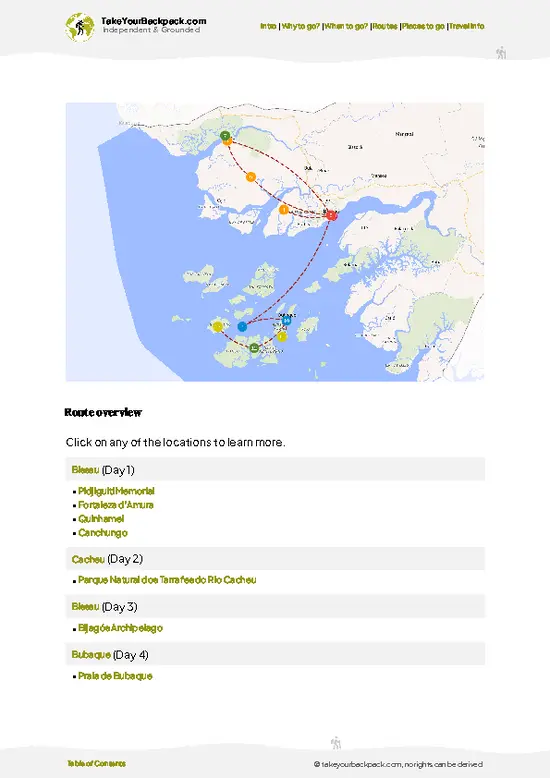
example page 0 from our offline Travel Guide for Guinea-Bissau
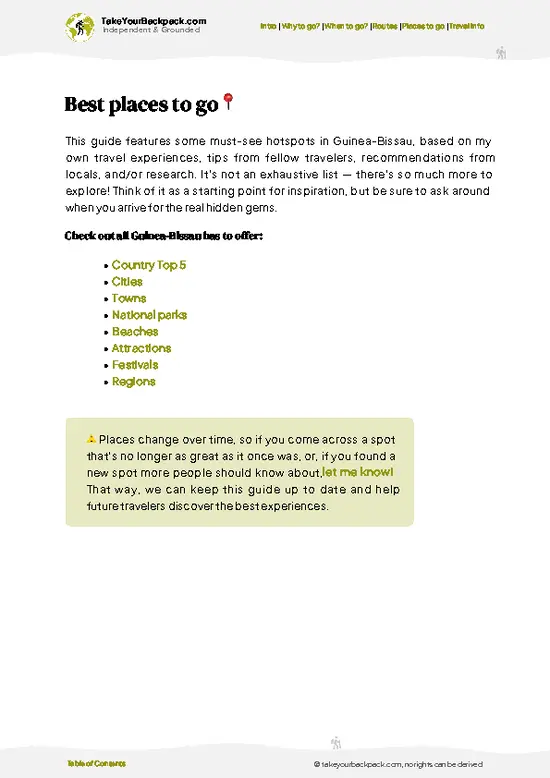
example page 1 from our offline Travel Guide for Guinea-Bissau
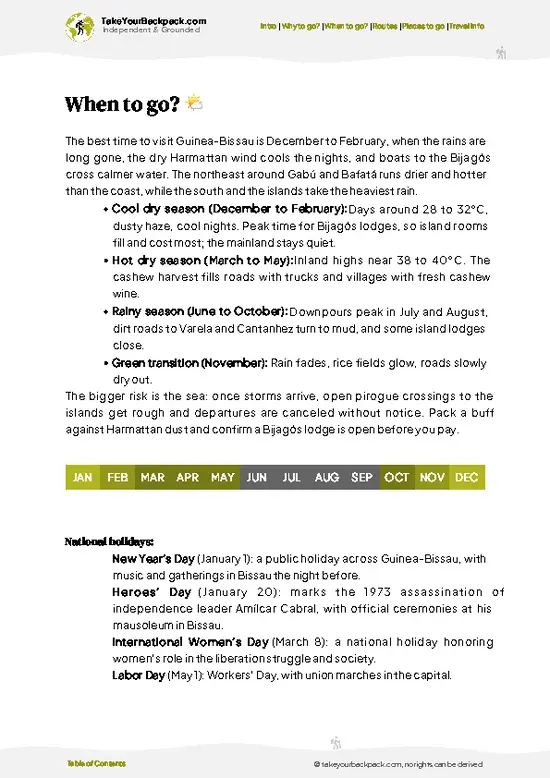
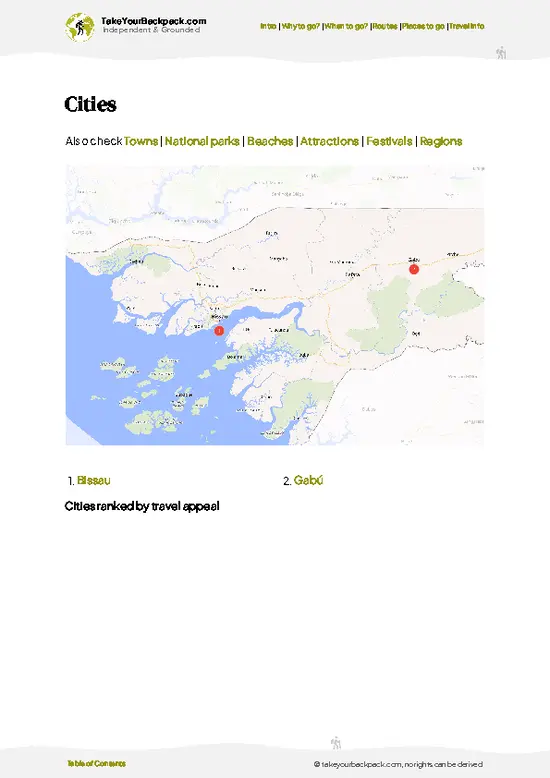
example page 2 from our offline Travel Guide for Guinea-Bissau
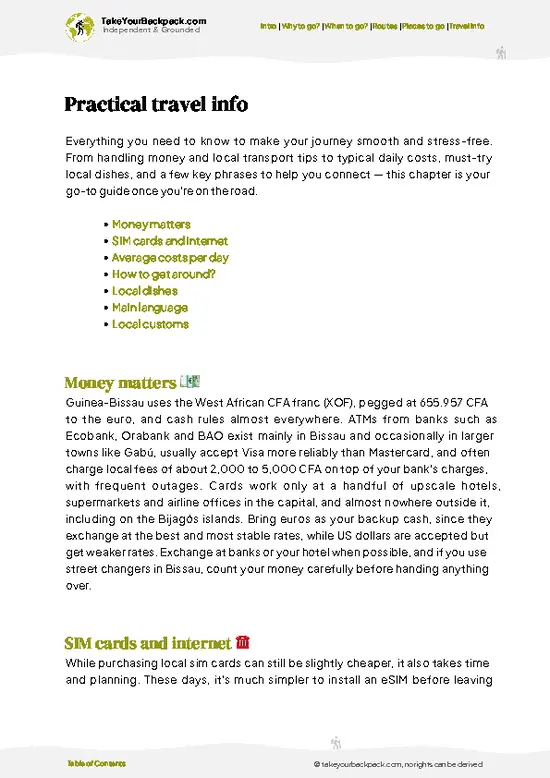
example page 3 from our offline Travel Guide for Guinea-Bissau
example page 4 from our offline Travel Guide for Guinea-Bissau
example page 5 from our offline Travel Guide for Guinea-Bissau
example page 6 from our offline Travel Guide for Guinea-Bissau
example page 7 from our offline Travel Guide for Guinea-Bissau
The digital guide (230 pages) contains:
53 highlights, ranked by travel appeal
Optimized 2, 3 & 5-day travel routes
Cities, national parks, landmarks, beaches
How to get around
Offline-friendly for travel without Wi-Fi
👉 Click to see all 30+ guide features

📅 Plan smarter in minutes, not weeks
Month by month travel advice
Festivals & national holidays
Budget expectations

🗺️ Go to the right places, skip the overrated ones
Honest pros & cons of destinations
Top hikes, parks & viewpoints
Lesser-known places most travelers miss
Clear “worth it vs skip it” guidance

🛏️ Travel smoothly without rookie mistakes
Best areas to stay
Transport systems explained simply
Common scams & safety advice
SIM cards, money & practical tips

🌍 Understand the country, not just visit it
Culture & traditions
52 Essential phrases & customs
Festivals worth planning around
Traveler-friendly historical context
Insights that make places more meaningful

📱 Built for real travel conditions
Fully downloadable PDF
Works completely offline
Optimized for phone use
Useful in remote areas & buses
Everything in one place
Save weeks of stressful planning
Get instant access to your full guide. 30‑day money-back guarantee.
+ Add another guide for just US$7.80

By proceeding you agree to our terms.
Sent to your inbox immediately after payment • 100% Secure Checkout
Best Backpacking Travel Advisor 2025 tourism awardBest Backpacking
Travel Advisor
2025
What others say about Take Your Backpack Guides:
⭐⭐⭐⭐⭐
Fantastic, amazing amount of information!
⭐⭐⭐⭐⭐
My goodness this is amazing, it's what I've been looking for hats off too you!
⭐⭐⭐⭐⭐
I think this is absolutely BRILLIANT
⭐⭐⭐⭐
Very complete and informative. It's still missing places, but I gotta to commend you
⭐⭐⭐⭐⭐
This is truly amazing, thank you, can't wait to explore it with my kids!
⭐⭐⭐⭐⭐
Awesome resource, thank you!
⭐⭐⭐⭐⭐
This is amazing! Can't wait to explore the ones I haven't seen
⭐⭐⭐⭐
I love this! Well done, great idea.
⭐⭐⭐⭐⭐
Thanks for taking the time to make this gem!
⭐⭐⭐⭐⭐
This might be the best website I've ever seen.
⭐⭐⭐⭐⭐
Congratulations, and thank you so much for your work; it's incredibly valuable.
⭐⭐⭐⭐
In all seriousness I think you did a great job pointing out the important spots
⭐⭐⭐⭐⭐
10/10 very good
⭐⭐⭐⭐⭐
As someone who's only just starting to visit regularly this is awesome, thank you.
⭐⭐⭐⭐
Thank you very much! I'm going to visit my dad, it's going to be very useful!
⭐⭐⭐⭐⭐
This is really cool! We'll be travelling for the first time and this definitely come in handy.
⭐⭐⭐⭐⭐
You are now our minister of culture, congratulations 👨‍💼
⭐⭐⭐⭐⭐
Just wanted to tell you that this is a pearl! Going to follow your recommendations.
⭐⭐⭐⭐⭐
This is so cool. I'll definitely be using the resource for my travels soon.
⭐⭐⭐⭐⭐
This is very impressive! Good work.
⭐⭐⭐⭐⭐
This is an amazing and informative site. Very well done!

🛏️ Where to stay?Where staying makes the most sense

Ingoré’s heart for backpackers pulses strongest around the central market district. This area hums with life from dawn, the scent of fresh cassava and grilled fish weaving through the air. It’s where you’ll find the best mix of safety and social buzz—locals and travelers mingle easily here, making it a natural spot to swap stories over a cold drink. Hostels cluster near the main streets, offering basic but clean digs that keep your wallet intact. Compared to quieter, more residential zones, this neighborhood’s energy means you’re never far from a friendly face or a street vendor’s call. It’s not … read more 👉
Ingoré’s heart for backpackers pulses strongest around the central market district. This area hums with life from dawn, the scent of fresh cassava and grilled fish weaving through the air. It’s where you’ll find the best mix of safety and social buzz—locals and travelers mingle easily here, making it a natural spot to swap stories over a cold drink. Hostels cluster near the main streets, offering basic but clean digs that keep your wallet intact. Compared to quieter, more residential zones, this neighborhood’s energy means you’re never far from a friendly face or a street vendor’s call. It’s not polished, but that rough edge is part of the charm—real, raw, and welcoming.

🚌 Getting aroundGetting around like a local

Ingoré moves at its own rhythm—less a clockwork town and more a place where the sun’s angle and the scent of fresh bread from corner stalls dictate your pace. Streets pulse with a mix of purposeful strides and meandering locals who know the best shade or the quietest bench. It’s not about catching a bus to the minute but reading the flow of people and vehicles, tuning into the subtle cues of when a shared taxi fills up or when the market’s energy shifts. This town rewards patience and a keen eye, turning what might feel like chaos into a dance you quickly learn to lead.


  • Walking: The heart of Ingoré is compact enough to explore on foot, with shaded alleys and vibrant street corners revealing the town’s character. Walking costs nothing and lets you absorb the smells of spices and hear the
read more 👉
Ingoré moves at its own rhythm—less a clockwork town and more a place where the sun’s angle and the scent of fresh bread from corner stalls dictate your pace. Streets pulse with a mix of purposeful strides and meandering locals who know the best shade or the quietest bench. It’s not about catching a bus to the minute but reading the flow of people and vehicles, tuning into the subtle cues of when a shared taxi fills up or when the market’s energy shifts. This town rewards patience and a keen eye, turning what might feel like chaos into a dance you quickly learn to lead.


  • Walking: The heart of Ingoré is compact enough to explore on foot, with shaded alleys and vibrant street corners revealing the town’s character. Walking costs nothing and lets you absorb the smells of spices and hear the chatter of vendors—best done early morning or late afternoon to avoid midday heat.

  • Shared Taxis (Taxi-Brousse): These minibuses run from dawn until early evening, about 200 CFA per ride. They leave when full, so timing is flexible but unpredictable—perfect if you’re patient and want to mingle with locals.

  • Motorcycle Taxis (Zémidjans): Quick and nimble, these dart through traffic and cost around 300 CFA for short hops. Negotiate the fare upfront and hold on tight; they’re the fastest way to cover short distances when time is tight.

  • Local Buses: Larger and slower than shared taxis, these run fixed routes with schedules posted at main stops, usually from 6 a.m. to 6 p.m. Tickets are cheap, around 150 CFA, but expect crowded rides and frequent stops.

👛 Costs (as of 3 September 2026)How expensive it really is

Backpacking in Ingoré, Guinea-Bissau, means embracing simplicity with a splash of local color, and your daily costs reflect that straightforward vibe.
  • Dorm Accommodation: Expect to pay around €5 to €10 per night for basic dorm beds. Options are limited and rustic, often with shared bathrooms and minimal amenities, but clean enough to rest after a day of exploring.
  • Meals: Local eateries serve up hearty, no-frills meals for about €2 to €4 each. Think rice, beans, fresh fish, and local vegetables, often cooked over open flames. Street food snacks can be even cheaper, around €1, perfect for quick bites.
  • Local Transport: Transport costs hover around €1 to €3 per trip within or near town. Shared taxis or minibuses are the norm, and while schedules are loose, the short distances keep fares low.
read more 👉
Backpacking in Ingoré, Guinea-Bissau, means embracing simplicity with a splash of local color, and your daily costs reflect that straightforward vibe.
  • Dorm Accommodation: Expect to pay around €5 to €10 per night for basic dorm beds. Options are limited and rustic, often with shared bathrooms and minimal amenities, but clean enough to rest after a day of exploring.
  • Meals: Local eateries serve up hearty, no-frills meals for about €2 to €4 each. Think rice, beans, fresh fish, and local vegetables, often cooked over open flames. Street food snacks can be even cheaper, around €1, perfect for quick bites.
  • Local Transport: Transport costs hover around €1 to €3 per trip within or near town. Shared taxis or minibuses are the norm, and while schedules are loose, the short distances keep fares low. Walking is also a solid option given the town’s compact size.
  • Basic Activities/Entry Fees: Most local attractions are either free or charge a nominal fee, typically under €2. This includes visits to markets, cultural sites, or natural spots nearby. Guided tours are rare and usually arranged informally at slightly higher costs.
  • Miscellaneous Expenses: Budget around €1 to €3 for essentials like bottled water, occasional snacks, or small tips. Internet access is patchy and often requires buying data bundles, which can cost about €2 for a modest amount.

Ingoré’s daily budget for a backpacker comfortably ranges from €11 to €22. This modest sum covers the basics without fuss, letting you focus on soaking in the raw, unpolished atmosphere of this off-the-beaten-path town.
⚠️ Prices can change and everyone travels differently, so take this as a rough guide. Hope it helps you plan your adventure!

🚌 Day tripsExploring the surroundings

Ingoré, Guinea-Bissau, is a backpacker’s dream base for exploring the region’s rich culture and stunning landscapes. The town’s laid-back vibe and affordable accommodations make it easy to launch into unforgettable day trips.

Bijagós Archipelago
Hop on a local boat for a day trip to the Bijagós Archipelago, a paradise of unspoiled beaches and vibrant wildlife. The journey takes about an hour, and you’ll be greeted by the scent of saltwater and the sound of waves lapping against the hull. Expect to spend around $20 for the boat ride and lunch. The best time to visit is during the dry season, from November to April, when the waters are calm and the sun shines bright. A common rookie mistake? Underestimating the sun—bring plenty of water and sunscreen.
👉 Explore Bijagós Archipelago

Cacheu read more 👉
Ingoré, Guinea-Bissau, is a backpacker’s dream base for exploring the region’s rich culture and stunning landscapes. The town’s laid-back vibe and affordable accommodations make it easy to launch into unforgettable day trips.

Bijagós Archipelago
Hop on a local boat for a day trip to the Bijagós Archipelago, a paradise of unspoiled beaches and vibrant wildlife. The journey takes about an hour, and you’ll be greeted by the scent of saltwater and the sound of waves lapping against the hull. Expect to spend around $20 for the boat ride and lunch. The best time to visit is during the dry season, from November to April, when the waters are calm and the sun shines bright. A common rookie mistake? Underestimating the sun—bring plenty of water and sunscreen.
👉 Explore Bijagós Archipelago

Cacheu River
A trip to the Cacheu River is a must for those who appreciate history and nature. Just a 45-minute drive from Ingoré, this area is rich in colonial history and offers stunning views of mangroves. You can rent a canoe for about $10 and paddle through the serene waters, keeping an eye out for birds and monkeys. The best time to go is early morning when the light filters through the trees, creating a magical atmosphere. Many first-timers miss the chance to explore the small villages along the river, which offer a glimpse into local life.


Orango Island
Take a day to explore Orango Island, known for its unique culture and beautiful landscapes. The boat ride takes about an hour and costs around $15. Once there, you can wander through traditional villages and enjoy the local cuisine. The best time to visit is during the dry season, when the island is lively with festivals. A common oversight is not planning for the return trip; be sure to check boat schedules to avoid getting stranded.


Farim
A visit to Farim, about an hour’s drive from Ingoré, offers a taste of local markets and authentic cuisine. The bustling market is a sensory overload—spices fill the air, and colorful textiles catch your eye. Expect to spend around $10 for transportation and snacks. The best time to visit is on market days, typically Wednesdays and Saturdays. Many travelers overlook the chance to engage with local vendors, which can lead to enriching conversations and experiences.
👉 Explore Farim
Want to know what more Guinea-Bissau offers?
The Guinea-Bissau Travel Guide describes 53 highlights, from cities to national parks, from beaches to hikes

Get the Travel Guide -

🛡️ SafetyScams, Hazards, and Annoyances

Ingoré is generally safe, but a few practical tips can enhance your experience. Stay aware in crowded markets; pickpockets can be a nuisance. When wandering solo, especially at night, stick to well-lit areas and avoid empty streets. The local vibe is friendly, but a few might try to overcharge for goods or services. Always negotiate prices upfront, whether it’s for a taxi or a meal.

Carry a small amount of cash; ATMs can be unreliable. Keep your belongings close, and don’t flash valuables. The scent of grilled fish wafts through the air, inviting you to explore, but a little caution goes a long way in ensuring you enjoy every moment without hassle.

FAQFrequently asked questions about Ingoré

Ingoré is primarily a stopover rather than a destination for extended visits due to its limited tourist infrastructure and attractions. It serves as a practical rest point for travelers moving between larger towns in Guinea-Bissau. The town offers basic amenities but lacks significant cultural or natural sites to explore extensively.
One day is generally sufficient to spend in Ingoré, mainly for rest and resupply. Given the town's small size and limited points of interest, travelers usually do not need more than 24 hours here. Planning for an overnight stay is practical if arriving late or departing early the next day.
Yes, Ingoré can be visited as a day trip from nearby larger towns such as Bafatá, which is about 50 kilometers away. The journey by road typically takes around 1.5 to 2 hours each way, making a day trip feasible for those interested in seeing rural life or passing through the region.
⚠️ Things can change over time, so always validate details locally before you go.

Other Bissau-Guinean towns near Ingoré

Explore more nearby:

  • Bigene—agricultural center, peanut fields, rural bus stop| 28 km away
  • Bissorã—local markets, cashew orchards, rural crossroads| 43 km away
  • Sao Domingos—border crossing, customs post, roadside market| 43 km away

💡 Not sure where to go next?
Create a personalized itinerary for Guinea-Bissau including Ingoré and the places that fit your trip.

Generate my itinerary

👉 Discover all towns

Or checkout all Guinea-Bissau has to offer (think cities, towns, villages, national parks, hikes, beaches, festivals)
Country photo of Guinea-Bissau

We 💚 feedbackWhat to keep in mind

Ingoré pulses with a raw, unfiltered energy. The scent of saltwater mingles with the earthy aroma of local markets. Don’t miss the sunset; it’s a fiery spectacle that feels like a secret shared among friends. Just be ready for the heat—stay hydrated and pace yourself. Embrace the chaos; it’s part of the charm. You’ll leave with stories that linger long after you’ve gone.

✍️ Help improve this page!
The information on this page is based on in-depth research, insights shared by experienced travelers, and feedback from the local travel community in Guinea-Bissau. While every effort is made to keep the information accurate and current, conditions can change — so if you spot anything incorrect or outdated, please get in touch.


🙋‍♂️ Give feedback

👋 Meet the founderWho’s Behind Take Your Backpack?

Johan, backpacker and founder of TakeYourBackpackHi, I’m Johan (Netherlands 🇳🇱), the creator of TakeYourBackpack. Over the past decade, I’ve backpacked through 80+ countries across six continents, gaining extensive experience with independent travel, long-term trips, and overland routes.

This site is built on a combination of firsthand travel experience and carefully curated insights from other backpackers. Many guides are based on places I’ve personally visited, while others bring together tips, observations, and practical advice shared by trusted travelers I’ve met along the way.

The goal is to provide realistic, experience-driven guidance — not generic itineraries — so you can explore destinations with better context, clearer expectations, and more confidence.

Get full country guide •
Instant download • 53 highlights • Full Offline guide