×

Guinea🇬🇳 | townsDinguirayeOmar Tall fortress traces, Tijani mosque, roadside tea | things to do and best time to go

Explore PitaExplore Gaoual

Backpacking in Dinguiraye
🏆 Top picktown ranked #3
By Johan Kruseman 🇳🇱 | Updated October 22, 2026

Dinguiraye once sat at the center of a fast-growing jihad state, with a walled fortress and a stream of pilgrims and fighters. Today it is a quiet laterite town of tin roofs, mango shade and motorbike taxis, where the loudest thing at dawn is the call to prayer. It lies in the north of Guinea, on the road corridor between the Faranah and Siguiri areas. You get red dust on your sandals, a cup of sweet tea poured at a roadside stall, and conversation that starts the second you sit down. There are few formal sights, no real nightlife and almost no other backpackers, so evenings are slow and lit by phone torches and charcoal fires. That is the appeal for anyone who wants history without a crowd. Roads are rough and rides are crowded, which is part of the story. Carry enough cash in Guinean francs before you arrive, because there is nowhere reliable to change money.

Discover everything you want to know in the 📖 Guinea Travel Guide.


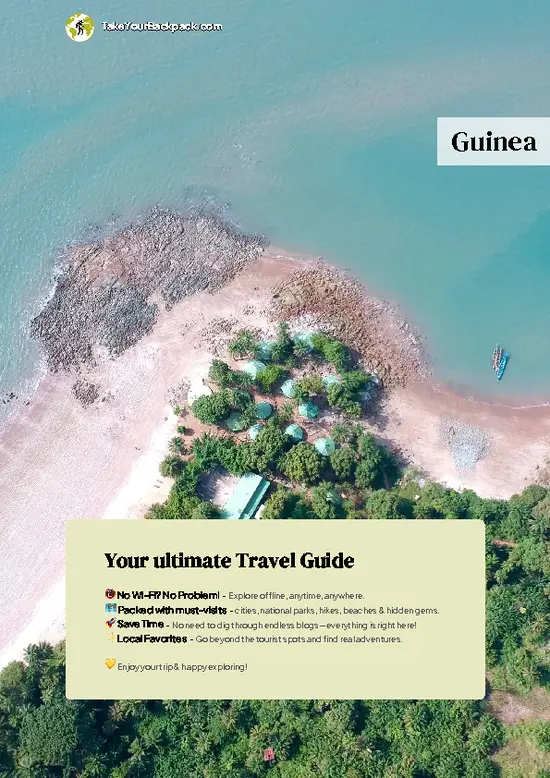
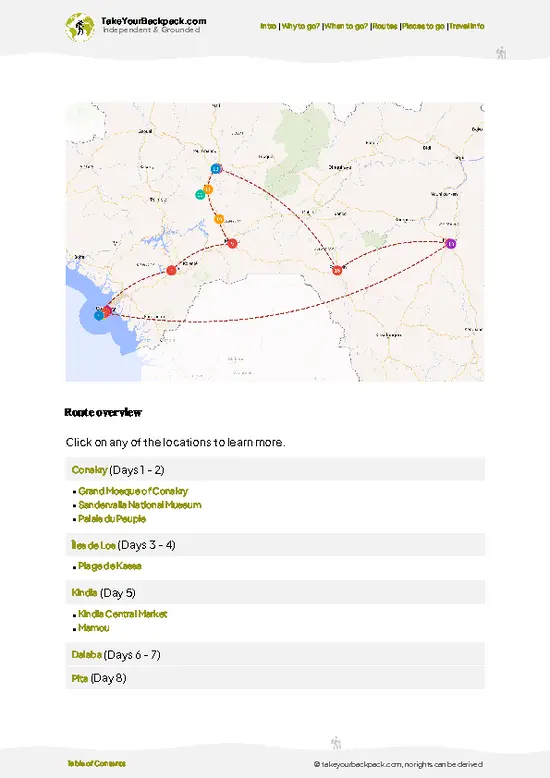
example page 0 from our offline Travel Guide for Guinea
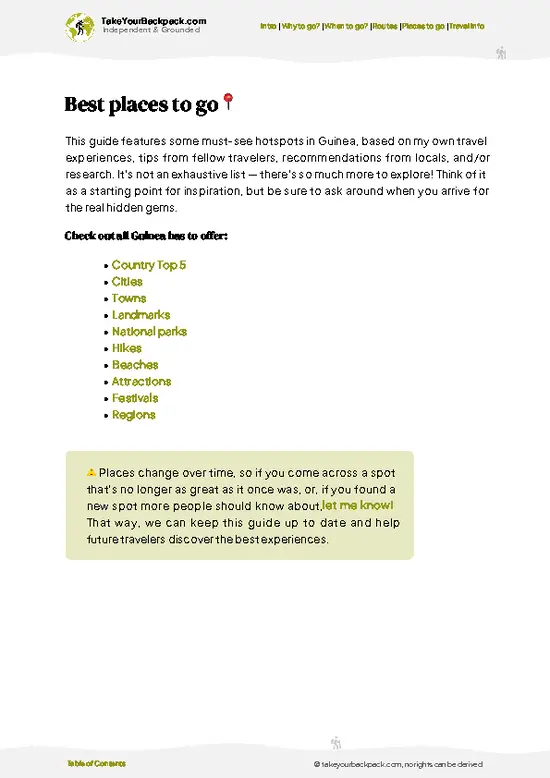
example page 1 from our offline Travel Guide for Guinea
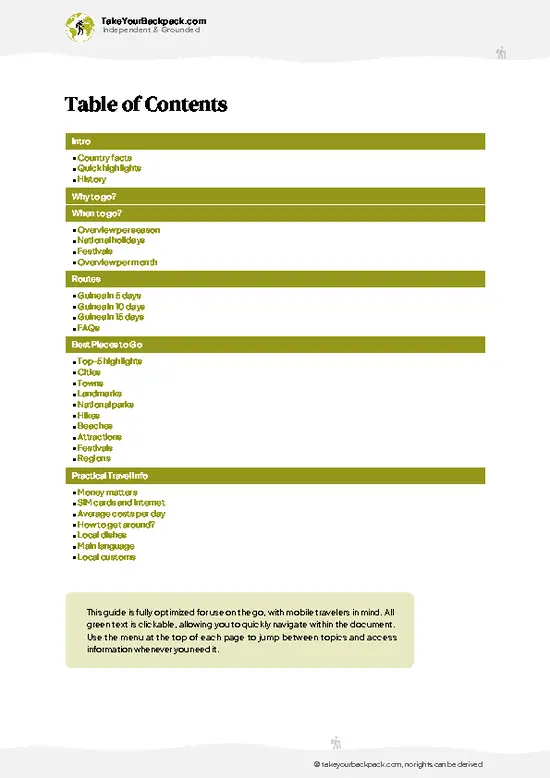
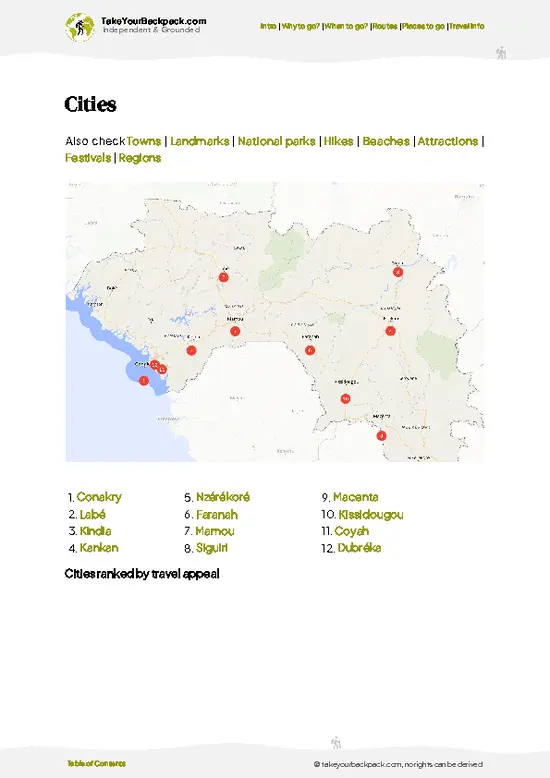
example page 2 from our offline Travel Guide for Guinea
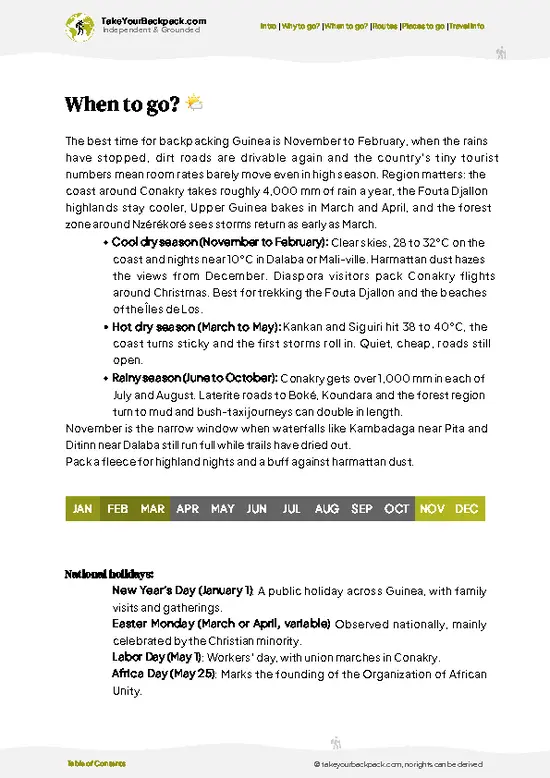
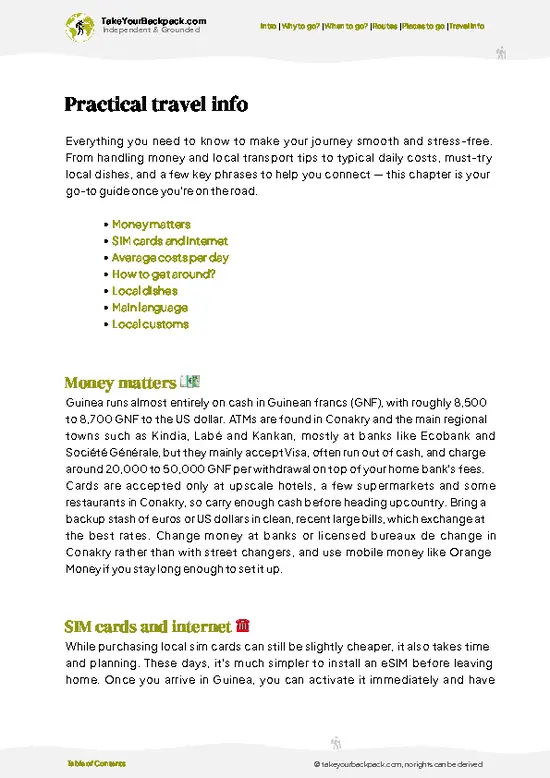
example page 3 from our offline Travel Guide for Guinea
example page 4 from our offline Travel Guide for Guinea
example page 5 from our offline Travel Guide for Guinea
example page 6 from our offline Travel Guide for Guinea
example page 7 from our offline Travel Guide for Guinea
Loading the map 🌍
CLICK TO FILTER
cities
towns
landmarks
national parks
hikes
beaches
attractions
festivals
regions
SHOW COUNTRY’S BESTSHOW ALL

✨ Why go?
Ranked #3 town in Guinea
The unique appeal for travelers

Dinguiraye suits the traveler who wants a real place in the interior rather than a checklist. Its draw is the legacy of El Hadj Omar Tall, whose Tijaniyya movement turned this town into a launch point for a West African empire. Few places in Guinea let you stand where that story began without a tour group in sight. The second reason is the people. Because visitors are rare, a greeting in French or Malinke leads to tea, questions and sometimes an invitation to see a courtyard or a mosque. The third is the setting, with gold-country savanna all around, red tracks and river valleys that reward anyone with a day to spare. Most people pass through in a night or two, and one full day is enough for the town itself. Slow travelers, history readers and confident solo travelers will like it best. If … read more 👉
Dinguiraye suits the traveler who wants a real place in the interior rather than a checklist. Its draw is the legacy of El Hadj Omar Tall, whose Tijaniyya movement turned this town into a launch point for a West African empire. Few places in Guinea let you stand where that story began without a tour group in sight. The second reason is the people. Because visitors are rare, a greeting in French or Malinke leads to tea, questions and sometimes an invitation to see a courtyard or a mosque. The third is the setting, with gold-country savanna all around, red tracks and river valleys that reward anyone with a day to spare. Most people pass through in a night or two, and one full day is enough for the town itself. Slow travelers, history readers and confident solo travelers will like it best. If you need hostels, menus in English or a social scene, treat it as a short stop on the way elsewhere.

💡 HighlightsWhat this place is best known for

  1. Remains of El Hadj Omar Tall’s fortress (tata): The town’s best-known historic site is tied to the mid-1800s, when Omar Tall gathered followers here and fortified his base. What survives is modest, mostly traces of walls and earth, so go with a local guide or a curious neighbor who can point out where things stood. Early morning or late afternoon is cooler and softer for photos. Free to see, though a small tip for a guide is fair. Allow about 1 hour.
  2. The central mosque and Tijani quarter: Dinguiraye remains an important place for followers of the Tijaniyya order, and the area around the main mosque is where that heritage feels alive. Visit between prayers, dress modestly with covered shoulders and knees, and ask before photographing anyone. Free, about 30 to 45 minutes.
  3. Dinguiraye market: The
… read more 👉
  1. Remains of El Hadj Omar Tall’s fortress (tata): The town’s best-known historic site is tied to the mid-1800s, when Omar Tall gathered followers here and fortified his base. What survives is modest, mostly traces of walls and earth, so go with a local guide or a curious neighbor who can point out where things stood. Early morning or late afternoon is cooler and softer for photos. Free to see, though a small tip for a guide is fair. Allow about 1 hour.
  2. The central mosque and Tijani quarter: Dinguiraye remains an important place for followers of the Tijaniyya order, and the area around the main mosque is where that heritage feels alive. Visit between prayers, dress modestly with covered shoulders and knees, and ask before photographing anyone. Free, about 30 to 45 minutes.
  3. Dinguiraye market: The market is the best place to see how the district lives, with piles of onions and peppers, dried fish, cloth, plastic basins and phone-charging stalls. Go in the morning when stalls are fully set up and the heat is bearable. Buying a snack or a few oranges costs under US$1. Plan 45 minutes to 1 hour.
  4. Evening on the main road and tea stalls: As the day cools, men and women gather by the roadside for tea, grilled meat and conversation. It is the easiest way to meet townspeople and ask about local history. A glass of tea or a skewer usually runs US$0.20 to 1. Stay 1 to 2 hours after sunset.
Nothing in town needs a ticket or advance booking, though arranging a local guide for the fortress site the day before saves time. Dinguiraye also makes a base for reaching Dabola, the junction town on the main road toward Conakry, and the Tinkisso river valley with its gold-mining villages.
Spotted a mistake or missing something? Contact us.

🏘️ NeighborhoodsNeighborhood guide to Dinguiraye

Dinguiraye is small enough to cover on foot in a morning, and its areas blur into one another along the main road and the red dirt lanes that branch off it.
  • Central market and main road: This is where the town wakes first. Women set out cassava, peanuts, onions, dried fish and bright cloth on the ground and on low tables, motorbike taxis idle and honk, and charcoal smoke hangs in the morning air. Dust coats everything in the dry months and turns to slick red mud in the rains. You come away with a cheap plate of rice and sauce, or fried dough with coffee, eaten on a bench among the noise.
  • Great mosque quarter: Dinguiraye is tied to the 19th-century leader El Hadj Omar Tall, and the older mosque district is the place to feel that history. Lanes narrow, mud walls and tin roofs press in, goats pick
… read more 👉
Dinguiraye is small enough to cover on foot in a morning, and its areas blur into one another along the main road and the red dirt lanes that branch off it.
  • Central market and main road: This is where the town wakes first. Women set out cassava, peanuts, onions, dried fish and bright cloth on the ground and on low tables, motorbike taxis idle and honk, and charcoal smoke hangs in the morning air. Dust coats everything in the dry months and turns to slick red mud in the rains. You come away with a cheap plate of rice and sauce, or fried dough with coffee, eaten on a bench among the noise.
  • Great mosque quarter: Dinguiraye is tied to the 19th-century leader El Hadj Omar Tall, and the older mosque district is the place to feel that history. Lanes narrow, mud walls and tin roofs press in, goats pick through the dust, and the call to prayer carries across the rooftops. Walk it at dusk, when the heat drops and you get the best light on the walls. Greet people first and ask before photographing.
  • Outskirts and surrounding villages: Past the last houses the road gives way to savanna, mango trees and small fields, with the smell of woodsmoke and dry grass. It is quiet, flat and walkable, though shade is scarce at midday. Evening brings kids playing football and a view across open country.
Nightlife is minimal. Expect a few generator-lit stalls selling grilled meat and sweet tea, and early bedtimes.

⌛️ 1 daySeeing the highlights in 24 hours

7:30 AM: Central market
Start where the town wakes up, because the stalls are busiest before the heat builds. Women sell cassava, peanuts, palm oil and fried dough from low tables, and a bag of hot beignets with a sweet, milky coffee from a street vendor makes a cheap, filling breakfast. Walk slowly, greet people first, and ask before pointing a camera.

9:30 AM: The old mosque quarter
Walk ten minutes uphill through the older lanes to the mosque area. Dinguiraye was a seat of the Tijaniyya movement under El Hadj Omar Tall, and the clay walls and shaded courtyards give a real sense of that Muslim scholarly heritage. Dress modestly, stay outside during prayer, and chat with elders who often enjoy explaining the town’s past.

11:30 AM: Tata ruins and old fortification traces
Head to the edge of … read more 👉
7:30 AM: Central market
Start where the town wakes up, because the stalls are busiest before the heat builds. Women sell cassava, peanuts, palm oil and fried dough from low tables, and a bag of hot beignets with a sweet, milky coffee from a street vendor makes a cheap, filling breakfast. Walk slowly, greet people first, and ask before pointing a camera.

9:30 AM: The old mosque quarter
Walk ten minutes uphill through the older lanes to the mosque area. Dinguiraye was a seat of the Tijaniyya movement under El Hadj Omar Tall, and the clay walls and shaded courtyards give a real sense of that Muslim scholarly heritage. Dress modestly, stay outside during prayer, and chat with elders who often enjoy explaining the town’s past.

11:30 AM: Tata ruins and old fortification traces
Head to the edge of town to look for remnants of the earthen defensive walls linked to the nineteenth-century Omar Tall state. Little is signposted, so hire a local teenager to guide you for a tip. The stones and packed earth are modest, but standing there you can picture a fortified capital on the savanna.

1:00 PM: Lunch at a roadside canteen
Sit down at a plain eatery near the main road for rice with peanut or leaf sauce and grilled chicken. Portions are generous, and eating with locals under a tin roof is a good way to start conversations. Rest through the hottest hours with a cold drink.

3:30 PM: Walk to the surrounding farmland
This is the part that rarely makes it into a standard itinerary. Follow dirt tracks past mango trees, small gardens and compounds with thatched granaries to the open savanna edge. Cattle drift along the paths, the air smells of woodsmoke, and the afternoon light is soft enough for good photos. Greet farmers as you pass.

5:30 PM: Evening on the main street
Return as the heat drops and the town fills with motorbikes, football games and charcoal grills. Buy skewers of grilled meat and a sweet tea from a roadside stand, then sit and watch the street. Nights are quiet, so plan on an early sleep.

🌤️ When to go?Best time to visit Dinguiraye

November to February is the most comfortable window for Dinguiraye, with clear skies and dry roads.
  • Cool Dry Season (Nov to Feb): Days reach 30 to 34°C (86 to 93°F), nights drop to 16 to 22°C (61 to 72°F), and the harmattan haze can dull the views. Roads are firmest and travel is easiest. Daylight lasts about 11.5 to 12 hours.
  • Hot Season (Mar to May): Afternoons hit 36 to 40°C (97 to 104°F). Dust and heat make midday walking miserable, so move early and rest in the shade. Few other visitors appear, and prices barely change.
  • Rainy Season (Jun to Oct): Expect highs of 28 to 32°C (82 to 90°F), heavy downpours, and the heaviest rain in July to September. Laterite tracks turn to mud, and rides can take much longer. Fields are green and the air is fresher. Transport fares often rise a little when roads
… read more 👉
November to February is the most comfortable window for Dinguiraye, with clear skies and dry roads.
  • Cool Dry Season (Nov to Feb): Days reach 30 to 34°C (86 to 93°F), nights drop to 16 to 22°C (61 to 72°F), and the harmattan haze can dull the views. Roads are firmest and travel is easiest. Daylight lasts about 11.5 to 12 hours.
  • Hot Season (Mar to May): Afternoons hit 36 to 40°C (97 to 104°F). Dust and heat make midday walking miserable, so move early and rest in the shade. Few other visitors appear, and prices barely change.
  • Rainy Season (Jun to Oct): Expect highs of 28 to 32°C (82 to 90°F), heavy downpours, and the heaviest rain in July to September. Laterite tracks turn to mud, and rides can take much longer. Fields are green and the air is fresher. Transport fares often rise a little when roads are bad.
Plan your arrival for the morning, since shared vehicles fill and leave early, and allow a buffer day in the rains.


source: climatestotravel.comJANJanuary: highly recommended for travelingFEBFebruary: excellent for travelingMARMarch: excellent for travelingAPRApril: excellent for travelingMAYMay: good for travelingJUNJune: fair for travelingJULJuly: fair for travelingAUGAugust: fair for travelingSEPSeptember: fair for travelingOCTOctober: good for travelingNOVNovember: highly recommended for travelingDECDecember: highly recommended for traveling
when-to-go

✈️ The backpacker research shortcutGuinea Travel Guide

An offline-friendly backpacking guide with optimized travel routes, ranked highlights, transport advice, and the best areas to stay.
example page 0 from our offline Travel Guide for Guinea
example page 1 from our offline Travel Guide for Guinea
example page 2 from our offline Travel Guide for Guinea
example page 3 from our offline Travel Guide for Guinea
example page 4 from our offline Travel Guide for Guinea
example page 5 from our offline Travel Guide for Guinea
example page 6 from our offline Travel Guide for Guinea
example page 7 from our offline Travel Guide for Guinea
The digital guide (238 pages) contains:
✅ 53 highlights, ranked by travel appeal
✅ Optimized 5, 10 & 15-day travel routes
✅ Cities, national parks, landmarks, beaches
✅ How to get around
✅ Offline-friendly for travel without Wi-Fi
👉 Click to see all 30+ guide features

📅 Plan smarter in minutes, not weeks
✅ Month by month travel advice
✅ Festivals & national holidays
✅ Budget expectations

🗺️ Go to the right places, skip the overrated ones
✅ Honest pros & cons of destinations
✅ Top hikes, parks & viewpoints
✅ Lesser-known places most travelers miss
✅ Clear “worth it vs skip it” guidance

🛏️ Travel smoothly without rookie mistakes
✅ Best areas to stay
✅ Transport systems explained simply
✅ Common scams & safety advice
✅ SIM cards, money & practical tips

🌍 Understand the country, not just visit it
✅ Culture & traditions
✅ 52 Essential phrases & customs
✅ Festivals worth planning around
✅ Traveler-friendly historical context
✅ Insights that make places more meaningful

📱 Built for real travel conditions
✅ Fully downloadable PDF
✅ Works completely offline
✅ Optimized for phone use
✅ Useful in remote areas & buses
✅ Everything in one place
Stop searching, start planning
Get instant access to your full guide. 30‑day money-back guarantee.
+ Add another guide for just

By proceeding you agree to our terms.
Sent to your inbox immediately after payment • 100% Secure Checkout
Best Backpacking Travel Advisor 2025 tourism awardBest Backpacking
Travel Advisor
2025
What others say about Take Your Backpack Guides:
⭐⭐⭐⭐⭐
Fantastic, amazing amount of information!
⭐⭐⭐⭐⭐
My goodness this is amazing, it's what I've been looking for hats off too you!
⭐⭐⭐⭐⭐
I think this is absolutely BRILLIANT
⭐⭐⭐⭐
Very complete and informative. It's still missing places, but I gotta to commend you
⭐⭐⭐⭐⭐
This is truly amazing, thank you, can't wait to explore it with my kids!
⭐⭐⭐⭐⭐
Awesome resource, thank you!
⭐⭐⭐⭐⭐
This is amazing! Can't wait to explore the ones I haven't seen
⭐⭐⭐⭐
I love this! Well done, great idea.
⭐⭐⭐⭐⭐
Thanks for taking the time to make this gem!
⭐⭐⭐⭐⭐
This might be the best website I've ever seen.
⭐⭐⭐⭐⭐
Congratulations, and thank you so much for your work; it's incredibly valuable.
⭐⭐⭐⭐
In all seriousness I think you did a great job pointing out the important spots
⭐⭐⭐⭐⭐
10/10 very good
⭐⭐⭐⭐⭐
As someone who's only just starting to visit regularly this is awesome, thank you.
⭐⭐⭐⭐
Thank you very much! I'm going to visit my dad, it's going to be very useful!
⭐⭐⭐⭐⭐
This is really cool! We'll be travelling for the first time and this definitely come in handy.
⭐⭐⭐⭐⭐
You are now our minister of culture, congratulations 👨‍💼
⭐⭐⭐⭐⭐
Just wanted to tell you that this is a pearl! Going to follow your recommendations.
⭐⭐⭐⭐⭐
This is so cool. I'll definitely be using the resource for my travels soon.
⭐⭐⭐⭐⭐
This is very impressive! Good work.
⭐⭐⭐⭐⭐
This is an amazing and informative site. Very well done!

🛏️ Where to stay?Best areas to stay in Guinea

The streets around the central market and main road are the best base in Dinguiraye, because the few guesthouses and basic lodgings cluster there. Budget rooms usually cost about US$8 to 20 a night, and dorm beds are not a standard offer, so expect a simple private room with a fan or a bucket shower. Book nothing far ahead, but arrive by mid-afternoon to choose.
This area keeps you close to the motor park, so early departures are easy, and shops and food stalls are a short walk away. Noise starts early with roosters, motorbikes and market traders, so earplugs help. Electricity can be patchy, so … read more 👉
The streets around the central market and main road are the best base in Dinguiraye, because the few guesthouses and basic lodgings cluster there. Budget rooms usually cost about US$8 to 20 a night, and dorm beds are not a standard offer, so expect a simple private room with a fan or a bucket shower. Book nothing far ahead, but arrive by mid-afternoon to choose.
This area keeps you close to the motor park, so early departures are easy, and shops and food stalls are a short walk away. Noise starts early with roosters, motorbikes and market traders, so earplugs help. Electricity can be patchy, so ask whether a generator runs at night and charge devices when you can.
The mosque quarter is a quieter second option for a calmer night, with a few family-run rooms, though it sits a little further from the transport and from food after dark. Streets are poorly lit, so carry a headlamp. Both areas are generally calm at night, and the owners know everyone, which helps with security. Pick a room with a lockable door and a working mosquito net.

🚌 Getting aroundHow to get around Dinguiraye

Walking is the easiest way around Dinguiraye, because the market, mosque quarter and main road all sit within about 20 minutes of each other on foot. Traffic is light, mostly motorbikes and the odd truck, and there is no formal public transport inside town. Go early, before the heat and the dust build up.
  • Walking: Free, and it gets you into side lanes where you hear pounding grain, radios and greetings from every doorway. Wear closed shoes in the rains, when the red mud sticks.
  • Motorbike taxis: The standard local ride, usually US$0.50 to 2 for a trip across town and more for outlying villages. Agree the price before you climb on, and hold the rear rack as the bike bounces over ruts. You get dust in your teeth and a fast, open-air view.
  • Shared bush taxis: Old sedans and minibuses link Dinguiraye
… read more 👉
Walking is the easiest way around Dinguiraye, because the market, mosque quarter and main road all sit within about 20 minutes of each other on foot. Traffic is light, mostly motorbikes and the odd truck, and there is no formal public transport inside town. Go early, before the heat and the dust build up.
  • Walking: Free, and it gets you into side lanes where you hear pounding grain, radios and greetings from every doorway. Wear closed shoes in the rains, when the red mud sticks.
  • Motorbike taxis: The standard local ride, usually US$0.50 to 2 for a trip across town and more for outlying villages. Agree the price before you climb on, and hold the rear rack as the bike bounces over ruts. You get dust in your teeth and a fast, open-air view.
  • Shared bush taxis: Old sedans and minibuses link Dinguiraye with larger towns such as Siguiri and Kouroussa and onward toward Kankan, filling up at the motor park before leaving, often in the morning. Expect roughly US$5 to 15 depending on distance, bad roads, and a slow ride of several hours with stops for passengers, goats and sacks. Fewer vehicles run in the afternoon, and almost none after dark. Sit by a window for the air and the passing savanna.
  • Private moto or car hire: Arrange through your guesthouse or a driver at the motor park for trips to nearby villages, roughly US$15 to 40 a day depending on vehicle and fuel. This gives flexibility to stop where you like, and you pay for the comfort.
Carry small bills for every ride, and bring water and a scarf against dust.

👛 Costs (as of 22 October 2026)What things cost and how to budget

Dinguiraye costs roughly US$19 to 58 a day for a backpacker, and the table below puts the high-season total at US$45.
CategoryBudget RangeLocal Reality
Dorm accommodationUS$8 to 20 (high season US$15)No true dorms. A simple private room with fan and shared bathroom is the norm, and prices dip a little in the rains.
MealsUS$6 to 12 (US$10)Rice with sauce, grilled meat and fried dough from stalls cost little, and a sit-down meal costs more.
Local transportUS$2 to 8 (US$6)Motorbike taxis cost US$0.50 to 2 a ride, and a day of village hopping costs more.
Basic activities/entry feesUS$0 to 10 (US$5)Most sights are free, but a guide or small gift for village hosts adds up.
Miscellaneous expensesUS$3 to 8 (US$9)Water, phone credit, power charging and the occasional cold drink.
Total Daily BudgetUS$19 to
… read more 👉
Dinguiraye costs roughly US$19 to 58 a day for a backpacker, and the table below puts the high-season total at US$45.
CategoryBudget RangeLocal Reality
Dorm accommodationUS$8 to 20 (high season US$15)No true dorms. A simple private room with fan and shared bathroom is the norm, and prices dip a little in the rains.
MealsUS$6 to 12 (US$10)Rice with sauce, grilled meat and fried dough from stalls cost little, and a sit-down meal costs more.
Local transportUS$2 to 8 (US$6)Motorbike taxis cost US$0.50 to 2 a ride, and a day of village hopping costs more.
Basic activities/entry feesUS$0 to 10 (US$5)Most sights are free, but a guide or small gift for village hosts adds up.
Miscellaneous expensesUS$3 to 8 (US$9)Water, phone credit, power charging and the occasional cold drink.
Total Daily BudgetUS$19 to 58US$45 a day is a comfortable figure in high season.
Carry plenty of cash in small notes, since cards and ATMs are unreliable, and change money in a larger town beforehand. Eating where locals do saves the most.
⚠️ Prices can change and everyone travels differently, so take this as a rough guide. Hope it helps you plan your adventure!

🚌 Day tripsExploring the surroundings

Dinguiraye is a workable base for short rural trips, but there are no tour operators, so you arrange transport yourself through a moto driver or the motor park.
Historic villages around Dinguiraye:
Villages in the surrounding savanna hold the legacy of the 19th-century Tijaniyya movement, and an elder will often explain it if you arrive politely. Hire a moto for the day for about US$10 to 25 and expect one to two hours each way on rough tracks. Go in the dry months, and bring a small gift such as kola nuts for hosts. First-timers often arrive at midday and find everyone resting.

Siguiri:
Siguiri is a gold-mining town on the Niger River basin, with an active market and artisanal mining scenes nearby. A bush taxi takes about 3 to 5 hours depending on the road, and the round trip costs roughly … read more 👉
Dinguiraye is a workable base for short rural trips, but there are no tour operators, so you arrange transport yourself through a moto driver or the motor park.
Historic villages around Dinguiraye:
Villages in the surrounding savanna hold the legacy of the 19th-century Tijaniyya movement, and an elder will often explain it if you arrive politely. Hire a moto for the day for about US$10 to 25 and expect one to two hours each way on rough tracks. Go in the dry months, and bring a small gift such as kola nuts for hosts. First-timers often arrive at midday and find everyone resting.

Siguiri:
Siguiri is a gold-mining town on the Niger River basin, with an active market and artisanal mining scenes nearby. A bush taxi takes about 3 to 5 hours depending on the road, and the round trip costs roughly US$15 to 30 with food. Leave at dawn, because afternoon return vehicles are scarce. Dry season gives the safest roads.
👉 Explore Siguiri
Kouroussa:
Kouroussa sits on the Niger River, with riverbank views and a lively market, and is linked with Camara Laye, author of The African Child. Expect a long ride of around 4 to 6 hours each way, so it only works as a very early start and late return, and many travelers prefer to stay over. Budget US$15 to 30 for fares and meals. The dry months are best, as river levels fall and tracks firm up.

🛡️ SafetySafety Tips and Common Scams in Dinguiraye

Dinguiraye is a calm, low-crime town where the usual trouble is a misunderstanding or a bureaucratic hurdle, not theft or violence. Gold-mining money passes through the area, so strangers are noticed and people tend to be curious rather than hostile. Greet people first, in French or a few words of Pular or Malinke, and most friction melts away.

The situations that need care are practical. Military and police checkpoints on the roads in and out are routine, and officers may ask for your passport, visa and sometimes a small payment. Keep photocopies handy, stay polite and unhurried, and never hand over your original documents without a clear reason. Photographing officials, checkpoints or mining sites without permission causes real problems, so ask first.

Solo travelers, women included, generally … read more 👉
Dinguiraye is a calm, low-crime town where the usual trouble is a misunderstanding or a bureaucratic hurdle, not theft or violence. Gold-mining money passes through the area, so strangers are noticed and people tend to be curious rather than hostile. Greet people first, in French or a few words of Pular or Malinke, and most friction melts away.

The situations that need care are practical. Military and police checkpoints on the roads in and out are routine, and officers may ask for your passport, visa and sometimes a small payment. Keep photocopies handy, stay polite and unhurried, and never hand over your original documents without a clear reason. Photographing officials, checkpoints or mining sites without permission causes real problems, so ask first.

Solo travelers, women included, generally report respectful attention, though dress modestly in this mostly Muslim town. After dark, the town goes quiet fast and power cuts are common, so finish errands before nightfall and walk with a headlamp. Mining sites outside town are best visited with a local guide. Keep cash spread across a few pockets, since there are no ATMs to fall back on.

FAQCommon questions from travelers

Dinguiraye is worth a stop if you care about West African history and everyday village life rather than sights. It is tied to the 19th-century leader El Hadj Omar Tall, and the mosque quarter and the Monday-to-Saturday market are the main draws. Facilities are basic, with rooms at about US$8 to 20 a night, so it suits flexible travelers.
One to two days is enough in Dinguiraye. A full day covers the market, mosque quarter and an evening walk, and a second day lets you add a moto trip to nearby villages for roughly US$10 to 25. Add a buffer day in the rainy season from June to October, when roads slow down.
Dinguiraye is hard to see as a day trip from a larger city, since the roads are rough and vehicles are infrequent. Siguiri and Kouroussa are each around 3 to 6 hours away by shared taxi, so a round trip leaves almost no time on the ground. Staying at least one night in Dinguiraye is far more practical.
⚠️ Things can change over time, so always validate details locally before you go.

Other Guinean towns near Dinguiraye

Explore more nearby:

  • Tougué—remote plateau, Fulani settlements, seasonal rivers| 105 km away
  • Dalaba—colonial villas, cool climate, pine groves| 181 km away
  • Pita—waterfalls, plateau scenery, cool climate| 185 km away

💡 Not sure where to go next?
Create a personalized itinerary for Guinea including Dinguiraye and the places that fit your trip.

Generate my itinerary

👉 Discover all towns

Or checkout all Guinea has to offer (think cities, towns, villages, national parks, hikes, beaches, festivals)
Country photo of Guinea

We 💚 feedbackParting advice and final tips

Dinguiraye is for the history reader and the patient solo traveler who likes talking more than sightseeing. Bring small bills, a French greeting or two and a head torch for evenings. I would skip any plan that relies on cards, fast internet or a packed schedule, and just leave one afternoon free for tea and stories.

✍️ Help improve this page!
The information on this page is based on in-depth research, insights shared by experienced travelers, and feedback from the local travel community in Guinea. While every effort is made to keep the information accurate and current, conditions can change — so if you spot anything incorrect or outdated, please get in touch.


🙋‍♂️ Give feedback

👋 Meet the founderWho’s Behind Take Your Backpack?

Johan, backpacker and founder of TakeYourBackpackHi, I’m Johan (Netherlands 🇳🇱), the creator of TakeYourBackpack. Over the past 3 decades, I’ve backpacked through 90+ countries across six continents, gaining extensive experience with independent travel, long-term trips, and overland routes.

This site is built on a combination of firsthand travel experience and carefully curated insights from other backpackers. Many guides are based on places I’ve personally visited, while others bring together tips, observations, and practical advice shared by trusted travelers I’ve met along the way.

The goal is to provide realistic, experience-driven guidance — not generic itineraries — so you can explore destinations with better context, clearer expectations, and more confidence.