How many towns: I advise
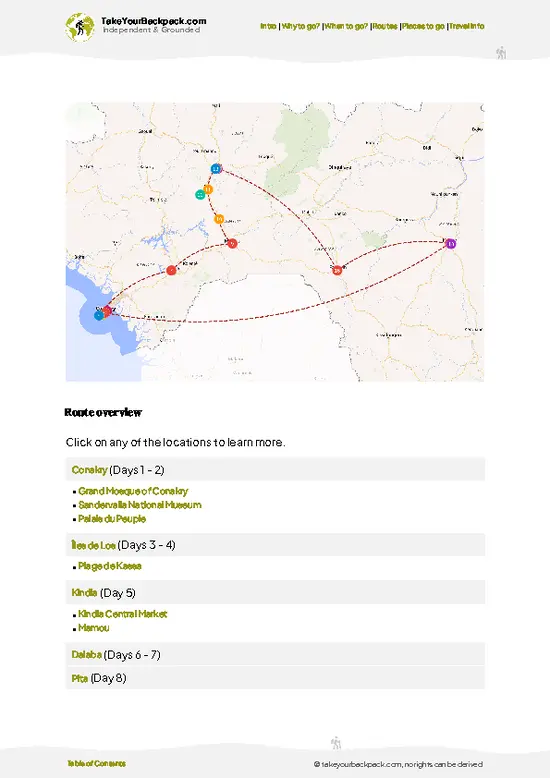
four to six towns on a first trip. Guinea’s roads are slow, a single leg often swallows a full day, and two nights at each stop is what lets you actually walk the market, find a good meal and talk to someone. More than six turns the trip into a series of dusty taxi seats.
Choosing by travel style: If you want
scenery and walking, prioritize highland towns, where sandstone ridges, cool evenings and villages with bean stews and fresh bread make the days easy. If
culture and trade pull you, head for the savanna: Upper Guinea’s big markets, Malinke music and mosque-lined streets. If you need
comfort and ease, keep the coast, which has the most guesthouses, restaurants and working ATMs. The Forest Region suits seasoned travelers who enjoy long rough rides and little infrastructure, …
read more 👉 How many towns: I advise
four to six towns on a first trip. Guinea’s roads are slow, a single leg often swallows a full day, and two nights at each stop is what lets you actually walk the market, find a good meal and talk to someone. More than six turns the trip into a series of dusty taxi seats.
Choosing by travel style: If you want
scenery and walking, prioritize highland towns, where sandstone ridges, cool evenings and villages with bean stews and fresh bread make the days easy. If
culture and trade pull you, head for the savanna: Upper Guinea’s big markets, Malinke music and mosque-lined streets. If you need
comfort and ease, keep the coast, which has the most guesthouses, restaurants and working ATMs. The Forest Region suits seasoned travelers who enjoy long rough rides and little infrastructure, with the reward of green hills, rainforest and masked-ceremony culture.
What it costs: Budget
US$25 to 45 a day, or roughly 215,000 to 390,000 Guinean francs. A basic guesthouse room runs about US$10 to 25, a rice-and-sauce meal at a street stall US$1.50 to 4, and shared-taxi fares between towns typically US$5 to 20 depending on distance. Local guides for waterfalls or village walks usually ask US$10 to 25 for a day, plus small village or site fees of a few dollars. A moto-taxi inside town costs US$0.50 to 2. Carry clean, undamaged US dollars or euros to change, as small bills get worse rates.
Safety and conduct: Political demonstrations in Conakry and some larger towns can turn tense and close roads, so avoid crowds and check with your guesthouse each morning. Keep your passport copy handy for checkpoints, and expect to be asked politely for a “cadeau” by officials now and then; smile, stay calm and wait. Travel by day, since unlit roads and broken-down trucks make night driving risky. Tap water is unsafe, so use filtered or bottled water. Malaria is present, so carry prophylaxis and a net.
Respect and etiquette: Guinea is largely
Muslim, with a strong Fulani and Malinke tradition of hospitality. Dress modestly, use your right hand to greet and eat, and always say hello before asking anything. Ask before photographing people, markets, military sites or bridges. A greeting that lasts a full minute is normal and earns you a warmer evening on the veranda.
v2.webp)
 Best Backpacking
.jpg) Hi, I’m Johan (Netherlands 🇳🇱), the creator of TakeYourBackpack. Over the past 3 decades, I’ve backpacked through 90+ countries across six continents, gaining extensive experience with independent travel, long-term trips, and overland routes.
Hi, I’m Johan (Netherlands 🇳🇱), the creator of TakeYourBackpack. Over the past 3 decades, I’ve backpacked through 90+ countries across six continents, gaining extensive experience with independent travel, long-term trips, and overland routes.