×

Guinea🇬🇳 | townsPitawaterfalls, plateau scenery, cool climate | things to do and best time to go

Explore BeylaExplore Dinguiraye

Backpacking in Pita
🏆 Top picktown ranked #2
By Johan Kruseman 🇳🇱 | Updated May 26, 2026

A decade ago, Pita was the kind of place where the only sound after dark was the wind in the eucalyptus and the distant thump of a generator. Today, the town still feels like a pause button in the middle of Guinea’s highlands, but the edges are softer: a few more motorbikes, a couple of guesthouses with Wi-Fi, and the occasional traveler swapping stories over Nescafé in the morning chill. Pita sits in the Fouta Djallon, a region that feels carved out for walkers and waterfall-chasers—think cool mornings, red-dust roads, and air that smells of woodsmoke and wet earth after rain. For backpackers, Pita isn’t a destination you brag about for its nightlife or urban buzz; it’s a practical, low-key base for day trips to the region’s waterfalls and plateaus, or a restful stop between Labé’s bustle and Dalaba’s colonial ghosts. The town is compact enough to cross on foot, but you’ll need a bush taxi or moto to reach the real scenery. Costs are low, safety is mostly a matter of common sense, and while you won’t find a hostel crowd, the slow pace makes it easy to strike up a conversation with locals or the rare fellow traveler. Compared to Labé, Pita is quieter and more scenic, with less chaos and more sky—perfect if you want to trade noise for the sound of water and wind.

Discover everything you want to know in the 📖 Guinea Travel Guide.
Loading the map 🌍
CLICK TO FILTER
city
town
unique site
national park
hike
beach
attraction
festival
region
SHOW COUNTRY’S BESTSHOW ALL

✨ Why go?
Ranked #2 town in Guinea
What sets this place apart

Backpackers flock to Pita in Guinea for its strategic location along popular hiking routes and proximity to cultural sites. The town serves as a convenient base for exploring the lush landscapes of the surrounding hills, where trails lead to breathtaking views and hidden waterfalls. You’ll find a handful of small-scale hostels and guesthouses that foster a friendly atmosphere, perfect for solo travelers or small groups looking to connect. The walkable streets are lined with local food stalls, where the aroma of grilled fish and spicy stews fills the air, inviting you to linger. Most travelers stay a few days, soaking in the slow pace and vibrant community vibe, making it an ideal stop for those seeking both adventure and a taste of local life.
Get the complete Travel Guide for Guinea
Everything organized for offline planning — routes, highlights, costs & tips

See what’s inside 👉

Get the Travel Guide -

💡 HighlightsDon't-miss highlights and experiences

  • Marché de Pita (Central Market): The town’s main market is the single best place to feel Pita’s pulse — vendors selling fresh produce, spices, Fulani leather goods, and live animals; bargaining is lively, the foods are authentic, and it’s where locals handle most commerce and social life, so it’s great for people-watching, cheap street food, and picking up simple handicrafts.
A few real, visitable highlights just outside Pita that make excellent day trips: the cooler town of Dalaba, scenic parts of the Fouta Djallon highlands with their walking routes and waterfalls, and nearby mountain villages and granite outcrops that showcase the region’s landscape and pastoral Fulani culture.
Spotted a mistake or missing something? Contact us.

🏘️ NeighborhoodsHow different areas shape the experience

Pita, a vibrant town in Guinea, offers a mix of culture and adventure, perfect for backpackers looking to dive deep into local life. Here’s how to navigate its neighborhoods:

Centre Ville: The heart of Pita, this area buzzes with energy. Street vendors fill the air with the scent of grilled fish and spices. It’s walkable and affordable, making it ideal for short stays. Nightlife is lively but not overwhelming, with local bars offering a taste of Guinean music.

Quartier Koulia: A quieter neighborhood, perfect for those seeking a peaceful retreat. It’s slightly more upscale, with guesthouses that provide comfort without breaking the bank. The atmosphere is relaxed, making it suitable for longer stays. Public transport is accessible, but walking is best to soak in the surroundings.

Quartier read more 👉
Pita, a vibrant town in Guinea, offers a mix of culture and adventure, perfect for backpackers looking to dive deep into local life. Here’s how to navigate its neighborhoods:

Centre Ville: The heart of Pita, this area buzzes with energy. Street vendors fill the air with the scent of grilled fish and spices. It’s walkable and affordable, making it ideal for short stays. Nightlife is lively but not overwhelming, with local bars offering a taste of Guinean music.

Quartier Koulia: A quieter neighborhood, perfect for those seeking a peaceful retreat. It’s slightly more upscale, with guesthouses that provide comfort without breaking the bank. The atmosphere is relaxed, making it suitable for longer stays. Public transport is accessible, but walking is best to soak in the surroundings.

Quartier Kourouma: This area is a blend of local life and backpacker-friendly spots. It’s affordable and well-connected, making it easy to explore. The vibe is social, with cafes and communal spaces where travelers can share stories. Perfect for both short and extended visits, it balances activity with downtime.

⌛️ 1 day1-day itinerary for Pita

Pita, Guinea, is a vibrant tapestry of life, where the pulse of local culture beats strong. The air is thick with the scent of spices and the sounds of laughter echo through the bustling streets. This town, often overlooked by travelers, offers a genuine glimpse into everyday Guinean life.

Start your morning at the local market. The sun filters through the colorful awnings, casting playful shadows on the ground. Here, you can sip on sweet, strong attaya tea while chatting with vendors. Try to snag some fresh mangoes or local pastries—fuel for your day ahead.

As the sun climbs higher, wander through the narrow streets of the Kankan neighborhood. The architecture tells stories of colonial history, and the vibrant murals add a splash of modernity. Stop by the small art studios where local … read more 👉
Pita, Guinea, is a vibrant tapestry of life, where the pulse of local culture beats strong. The air is thick with the scent of spices and the sounds of laughter echo through the bustling streets. This town, often overlooked by travelers, offers a genuine glimpse into everyday Guinean life.

Start your morning at the local market. The sun filters through the colorful awnings, casting playful shadows on the ground. Here, you can sip on sweet, strong attaya tea while chatting with vendors. Try to snag some fresh mangoes or local pastries—fuel for your day ahead.

As the sun climbs higher, wander through the narrow streets of the Kankan neighborhood. The architecture tells stories of colonial history, and the vibrant murals add a splash of modernity. Stop by the small art studios where local artists showcase their work. This isn’t just a photo op; it’s a chance to connect with the creators and understand their inspirations.

In the afternoon, head to the serene banks of the Konkouré River. The gentle lapping of water against the shore invites you to relax. Bring a book or simply soak in the atmosphere. As evening approaches, make your way to a local eatery in the heart of town. The grilled fish, seasoned to perfection, paired with a side of spicy sauce, is a must-try.

As night falls, the streets come alive with music and laughter. Join in the festivities, dance with locals, and feel the warmth of community. This day in Pita isn’t just about sights; it’s about the connections you forge and the stories you carry home.
Build the Right Itinerary
Use the Guinea Travel Guide’s 5, 10 & 15-day routes as a starting point to plan a trip that actually works on the ground.

Get the Travel Guide -

🌤️ When to go?Weather, crowds, and seasonal trade-offs


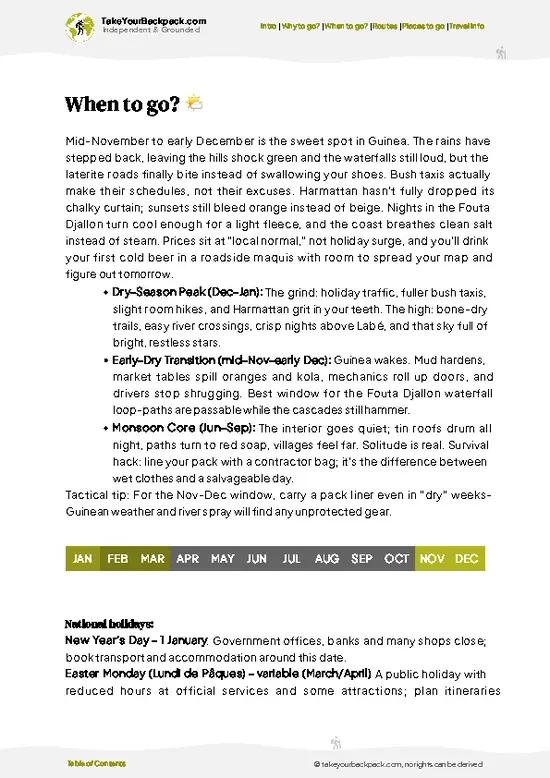
  • Topic: Weather – Pita’s climate swings between a hot, humid rainy season from June to October and a drier, cooler stretch from November to May. The rains can turn trails into mud baths, so aim for the dry months to keep your boots clean and your spirits high.

  • Topic: Temperature – During the dry season, expect daytime highs around 28-32°C (82-90°F), with nights dropping to a comfortable 18-22°C (64-72°F). The rainy season cranks up humidity, making 30-34°C (86-93°F) feel sticky and oppressive.

  • Topic: Daylight Hours – Near the equator, daylight stays steady year-round, roughly 12 hours a day. This consistency means you can plan your hikes and explorations without worrying about early sunsets cutting your adventure short.

  • Topic: Crowds – Pita isn’t a tourist hotspot, but the dry season
read more 👉

  • Topic: Weather – Pita’s climate swings between a hot, humid rainy season from June to October and a drier, cooler stretch from November to May. The rains can turn trails into mud baths, so aim for the dry months to keep your boots clean and your spirits high.

  • Topic: Temperature – During the dry season, expect daytime highs around 28-32°C (82-90°F), with nights dropping to a comfortable 18-22°C (64-72°F). The rainy season cranks up humidity, making 30-34°C (86-93°F) feel sticky and oppressive.

  • Topic: Daylight Hours – Near the equator, daylight stays steady year-round, roughly 12 hours a day. This consistency means you can plan your hikes and explorations without worrying about early sunsets cutting your adventure short.

  • Topic: Crowds – Pita isn’t a tourist hotspot, but the dry season draws more local visitors and occasional international backpackers. You’ll find a livelier atmosphere without the crush of high-season crowds, especially outside major holidays.

  • Topic: Seasonal Activities – Dry months open up trekking routes and river crossings that become impassable in the wet season. Cultural festivals often align with the harvest period around November, adding a rich layer of local color to your visit.

  • Topic: Price Fluctuations – Accommodation and transport costs dip during the rainy season due to lower demand, but the trade-off is tougher travel conditions. The dry season commands a slight premium but rewards you with smoother logistics and more reliable services.


Pro-tip: Visit Pita between November and February to balance pleasant weather, manageable crowds, and vibrant local life—perfect for unlocking the town’s authentic rhythm without the soggy setbacks.


source: climatestotravel.comJANJanuary: excellent for travelingFEBFebruary: excellent for travelingMARMarch: highly recommended for travelingAPRApril: highly recommended for travelingMAYMay: highly recommended for travelingJUNJune: fair for travelingJULJuly: below average for travelingAUGAugust: below average for travelingSEPSeptember: fair for travelingOCTOctober: fair for travelingNOVNovember: excellent for travelingDECDecember: excellent for traveling
when-to-go

✈️ The backpacker research shortcutGuinea Travel Guide

An offline-friendly backpacking guide with optimized travel routes, ranked highlights, transport advice, and the best areas to stay.
example page 0 from our offline Travel Guide for Guineaexample page 1 from our offline Travel Guide for Guineaexample page 2 from our offline Travel Guide for Guineaexample page 3 from our offline Travel Guide for Guineaexample page 4 from our offline Travel Guide for Guineaexample page 5 from our offline Travel Guide for Guineaexample page 6 from our offline Travel Guide for Guineaexample page 7 from our offline Travel Guide for Guinea
The digital guide (282 pages) contains:
67 highlights, ranked by travel appeal
Optimized 5, 10 & 15-day travel routes
Cities, national parks, beaches, historical sites, ...
How to get around
Offline-friendly for travel without Wi-Fi
👉 Click to see all 30+ guide features

📅 Plan smarter in minutes, not weeks
Month by month travel advice
Festivals & national holidays
Budget expectations

🗺️ Go to the right places, skip the overrated ones
Honest pros & cons of destinations
Top hikes, parks & viewpoints
Lesser-known places most travelers miss
Clear “worth it vs skip it” guidance

🛏️ Travel smoothly without rookie mistakes
Best areas to stay
Transport systems explained simply
Common scams & safety advice
SIM cards, money & practical tips

🌍 Understand the country, not just visit it
Culture & traditions
52 Essential phrases & customs
Festivals worth planning around
Traveler-friendly historical context
Insights that make places more meaningful

📱 Built for real travel conditions
Fully downloadable PDF
Works completely offline
Optimized for phone use
Useful in remote areas & buses
Everything in one place
Save weeks of stressful planning
Get instant access to the full guide directly. 30-day money-back guarantee.


Sent to your inbox immediately after payment • 100% Secure Checkout
Best Backpacking Travel Advisor 2025 tourism awardBest Backpacking
Travel Advisor
2025
What others say about Take Your Backpack Guides:
⭐⭐⭐⭐⭐
Fantastic, amazing amount of information!
⭐⭐⭐⭐⭐
My goodness this is amazing, it's what I've been looking for hats off too you!
⭐⭐⭐⭐⭐
I think this is absolutely BRILLIANT
⭐⭐⭐⭐
Very complete and informative. It's still missing places, but I gotta to commend you
⭐⭐⭐⭐⭐
This is truly amazing, thank you, can't wait to explore it with my kids!
⭐⭐⭐⭐⭐
Awesome resource, thank you!
⭐⭐⭐⭐⭐
This is amazing! Can't wait to explore the ones I haven't seen
⭐⭐⭐⭐
I love this! Well done, great idea.
⭐⭐⭐⭐⭐
Thanks for taking the time to make this gem!
⭐⭐⭐⭐⭐
This might be the best website I've ever seen.
⭐⭐⭐⭐⭐
Congratulations, and thank you so much for your work; it's incredibly valuable.
⭐⭐⭐⭐
In all seriousness I think you did a great job pointing out the important spots
⭐⭐⭐⭐⭐
10/10 very good
⭐⭐⭐⭐⭐
As someone who's only just starting to visit regularly this is awesome, thank you.
⭐⭐⭐⭐
Thank you very much! I'm going to visit my dad, it's going to be very useful!
⭐⭐⭐⭐⭐
This is really cool! We'll be travelling for the first time and this definitely come in handy.
⭐⭐⭐⭐⭐
You are now our minister of culture, congratulations 👨‍💼
⭐⭐⭐⭐⭐
Just wanted to tell you that this is a pearl! Going to follow your recommendations.
⭐⭐⭐⭐⭐
This is so cool. I'll definitely be using the resource for my travels soon.
⭐⭐⭐⭐⭐
This is very impressive! Good work.
⭐⭐⭐⭐⭐
This is an amazing and informative site. Very well done!

🛏️ Where to stay?Best areas and accommodation options

In Pita, Guinea, the best spot for backpackers is the central district around the main market and the town square. This area hums with life from dawn to dusk—vendors shouting, spices mingling with the earth’s dry heat, and locals weaving through narrow streets. It’s the social heart where you’ll find other travelers, making it easier to swap stories or find a walking buddy. Safety here is noticeably better because of the constant foot traffic and the presence of local shops and cafés that keep an informal watch.

Compared to the quieter, more residential outskirts, this central zone offers a practical … read more 👉
In Pita, Guinea, the best spot for backpackers is the central district around the main market and the town square. This area hums with life from dawn to dusk—vendors shouting, spices mingling with the earth’s dry heat, and locals weaving through narrow streets. It’s the social heart where you’ll find other travelers, making it easier to swap stories or find a walking buddy. Safety here is noticeably better because of the constant foot traffic and the presence of local shops and cafés that keep an informal watch.

Compared to the quieter, more residential outskirts, this central zone offers a practical advantage: hostels and budget guesthouses cluster here. They’re modest but clean, often run by locals who know the ins and outs of the town and can hook you up with authentic experiences or reliable guides. The vibe is informal and welcoming, with a mix of solo travelers and small groups, which means you won’t feel isolated or overwhelmed.

Avoid the peripheral neighborhoods after dark—they’re less patrolled and lack the communal buzz that makes Pita feel alive and safe. Staying central means you wake up to the scent of fresh bread and the chatter of early risers, not the silence of empty streets. This is where the real Pita rhythm lives, and where your trip starts to feel like an adventure rather than a gamble.

🚌 Getting aroundTransportation options and practical tips

Pita moves at its own rhythm—neither a frantic rush nor a lazy drift. The air carries a faint mix of spices and sea salt, hinting at the nearby markets and harbor. Streets pulse with a blend of purposeful locals and curious travelers, where timing is flexible but not absent. You won’t find rigid timetables plastered everywhere, but the town’s pulse is steady enough to catch the right ride without standing around forever. It’s a place where intuition meets practicality: knowing when to hop on a bus or stroll a few blocks can save you time and money, and unlock the town’s real character beyond the tourist spots.

Walking: The heart of Pita is compact, making walking the most reliable and immersive way to get around. Expect cobblestone streets that can be slippery when wet, so sturdy shoes are … read more 👉
Pita moves at its own rhythm—neither a frantic rush nor a lazy drift. The air carries a faint mix of spices and sea salt, hinting at the nearby markets and harbor. Streets pulse with a blend of purposeful locals and curious travelers, where timing is flexible but not absent. You won’t find rigid timetables plastered everywhere, but the town’s pulse is steady enough to catch the right ride without standing around forever. It’s a place where intuition meets practicality: knowing when to hop on a bus or stroll a few blocks can save you time and money, and unlock the town’s real character beyond the tourist spots.

Walking: The heart of Pita is compact, making walking the most reliable and immersive way to get around. Expect cobblestone streets that can be slippery when wet, so sturdy shoes are a must. Most neighborhoods are within 20-30 minutes on foot, letting you soak in the scent of fresh bread from corner bakeries and the chatter spilling from open-air cafés. Walking costs nothing, and the slower pace reveals details missed from a vehicle window—like the faded murals and street vendors selling local snacks.

City Minibuses: These are the budget traveler’s lifeline, running from dawn until about 9 PM. Fares hover around $0.50, making them dirt cheap. Minibuses don’t follow strict schedules but run frequently enough—every 10 to 15 minutes during peak hours. They’re cramped and noisy, but that’s part of the charm. You’ll share space with locals, hear snippets of daily gossip, and get a real feel for the town’s rhythm. Flag one down anywhere along the route; just be ready to hop off quickly when you reach your stop.

Shared Taxis: If you want to cover longer distances faster without breaking the bank, shared taxis are your best bet. They operate on fixed routes but leave only when full, which can mean waiting 10-20 minutes. Prices range from $1 to $3 depending on distance. These vehicles are more comfortable than minibuses, with cushioned seats and less jostling. They run until about 10 PM, making them a solid option for evening returns.

Bicycle Rentals: For the adventurous, renting a bike offers freedom and speed without the cost of motorized transport. Daily rentals go for roughly $5-$7, with helmets rarely provided, so bring your own if safety is a priority. The terrain is mostly flat, but watch for uneven pavement and occasional potholes. Early morning or late afternoon rides are best to avoid the midday heat and catch the golden light that makes the town’s colors pop.

Harbor Ferries: If your itinerary includes nearby islands or coastal villages, the harbor ferry is essential. Departures are somewhat irregular, often influenced by weather and tides, so flexibility is key. Tickets cost around $2-$4, and the ride offers a refreshing breeze and panoramic views that reward the wait. Ferries run from early morning until late afternoon, with fewer trips in the off-season.

Mastering Pita’s transit means blending patience with local cues—watch the light, listen for the calls of drivers, and don’t rush the flow. This town rewards those who move with its pulse rather than against it.

👛 Costs (as of 28 April 2026)What things cost and how to budget

Backpacking in Pita, Guinea, means embracing a raw, unpolished West African town where your budget stretches but the experience demands a bit of savvy. Here’s what you’re looking at day-to-day:
  • Dorm Accommodation: Expect basic guesthouses or hostels with shared rooms. Prices hover around €5 to €10 per night. These places often have minimal amenities—think a mosquito net, a fan if you’re lucky, and a shared bathroom that might not always have hot water.
  • Meals: Street food and local eateries dominate. A filling meal of rice, sauce, and some protein runs about €1 to €3. If you opt for something a bit more substantial or a small café, budget up to €5. Fresh fruit and snacks are cheap but watch for hygiene.
  • Local Transport: Transport is mostly by bush taxis or shared minibuses. Short rides within
read more 👉
Backpacking in Pita, Guinea, means embracing a raw, unpolished West African town where your budget stretches but the experience demands a bit of savvy. Here’s what you’re looking at day-to-day:
  • Dorm Accommodation: Expect basic guesthouses or hostels with shared rooms. Prices hover around €5 to €10 per night. These places often have minimal amenities—think a mosquito net, a fan if you’re lucky, and a shared bathroom that might not always have hot water.
  • Meals: Street food and local eateries dominate. A filling meal of rice, sauce, and some protein runs about €1 to €3. If you opt for something a bit more substantial or a small café, budget up to €5. Fresh fruit and snacks are cheap but watch for hygiene.
  • Local Transport: Transport is mostly by bush taxis or shared minibuses. Short rides within town cost around €0.20 to €0.50. For longer trips to nearby villages, expect €1 to €3. Walking is often your best bet to soak in the atmosphere and save cash.
  • Basic Activities/Entry Fees: Pita isn’t a tourist hotspot with formal entry fees. Visiting local markets, wandering the town, or hiking nearby hills is free. If you hire a local guide for cultural or nature walks, budget around €5 to €10 for a half-day.
  • Miscellaneous Expenses: Bottled water, phone credit, and small tips add up. Plan for about €1 to €3 daily. Keep cash handy, as card payments are rare and ATMs scarce.

All told, you’re looking at roughly €8 to €20 per day to cover the essentials without cutting corners. This range lets you stay safe, eat well, and move around comfortably while soaking in Pita’s unvarnished charm.
⚠️ Prices can change and everyone travels differently, so take this as a rough guide. Hope it helps you plan your adventure!

🚌 Day tripsBest day trips from Pita

Pita, Guinea, is a fantastic launchpad for day trips that immerse you in the region’s raw beauty and culture. Each adventure offers a unique slice of life, making the effort to get there feel like a rewarding journey.

Mount Nimba
A trek to Mount Nimba is a must. The hike is challenging but the payoff is breathtaking. You’ll encounter lush vegetation and the scent of wildflowers as you ascend. It takes about two hours to reach the trailhead from Pita, and the hike itself can take around four to six hours, depending on your pace. Expect to spend around $10 for transport and a small fee for park entry. The best time to go is during the dry season, from November to April. Many first-timers underestimate the need for sturdy footwear; don’t skimp on your boots.


Fouta Djallon
Head to Fouta … read more 👉
Pita, Guinea, is a fantastic launchpad for day trips that immerse you in the region’s raw beauty and culture. Each adventure offers a unique slice of life, making the effort to get there feel like a rewarding journey.

Mount Nimba
A trek to Mount Nimba is a must. The hike is challenging but the payoff is breathtaking. You’ll encounter lush vegetation and the scent of wildflowers as you ascend. It takes about two hours to reach the trailhead from Pita, and the hike itself can take around four to six hours, depending on your pace. Expect to spend around $10 for transport and a small fee for park entry. The best time to go is during the dry season, from November to April. Many first-timers underestimate the need for sturdy footwear; don’t skimp on your boots.


Fouta Djallon
Head to Fouta Djallon for stunning waterfalls and vibrant local culture. The drive takes about an hour, and you can spend the day exploring the cascading falls and enjoying a picnic by the water. Budget around $15 for transport and snacks. The rainy season can make the falls more impressive, but be cautious of slippery paths. A common mistake is not bringing enough water; the heat can be intense.
👉 Explore Fouta Djallon

Local Markets in Pita
If you want to stay close, dive into the local markets of Pita itself. Spend a few hours wandering through stalls filled with spices, textiles, and fresh produce. It’s a sensory overload, with the aroma of grilled street food wafting through the air. This is a free experience, but set aside about $5 for snacks. Mornings are best for a lively atmosphere. Many travelers miss the chance to engage with locals—don’t be shy; a smile goes a long way.
Want to know what more Guinea offers?
The Guinea Travel Guide describes 67 highlights, from cities to national parks, from beaches to hikes

Get the Travel Guide -

🛡️ SafetySafety Tips and Common Scams in Pita

In Pita, safety is generally solid, but a few mindful practices can enhance your experience. Stay aware in crowded markets; pickpockets can be opportunistic. If you’re solo, avoid wandering too far after dark. The streets can feel different at night, and it’s best to stick to well-lit areas.

Common scams are rare, but be cautious with overly friendly locals offering unsolicited help; they might expect a tip. Carry your belongings close, and keep your phone out of sight when not in use. Embrace the atmosphere, engage with locals, and trust your instincts. This way, you’ll navigate Pita like a pro.

Other Guinean towns near Pita

Explore more nearby:

  • Dalaba—colonial villas, cool climate, pine groves| 44 km away
  • Gaoual—cattle herding, forest edge, weekly fair| 117 km away
  • Dinguiraye—historic mosque, religious pilgrimage, Sahel edge| 185 km away

👉 Discover all towns

Or checkout all Guinea has to offer (think cities, towns, villages, national parks, hikes, beaches, festivals)
Country photo of Guinea

We 💚 feedbackIs it worth it?

Pita pulses with life, its streets alive with the scent of grilled fish and spices. The best surprise? The warmth of the locals; they’ll invite you into their world. Just a heads-up: the roads can be rough, so pack patience. Embrace the chaos; it’s part of the charm that makes Pita unforgettable.

✍️ Help improve this page!
The information on this page is based on in-depth research, insights shared by experienced travelers, and feedback from the local travel community in Guinea. While every effort is made to keep the information accurate and current, conditions can change — so if you spot anything incorrect or outdated, please get in touch.


🙋‍♂️ Give feedback

👋 Meet the founderWho’s Behind Take Your Backpack?

Johan, backpacker and founder of TakeYourBackpackHi, I’m Johan (Netherlands 🇳🇱), the creator of TakeYourBackpack. Over the past decade, I’ve backpacked through 80+ countries across six continents, gaining extensive experience with independent travel, long-term trips, and overland routes.

This site is built on a combination of firsthand travel experience and carefully curated insights from other backpackers. Many guides are based on places I’ve personally visited, while others bring together tips, observations, and practical advice shared by trusted travelers I’ve met along the way.

The goal is to provide realistic, experience-driven guidance — not generic itineraries — so you can explore destinations with better context, clearer expectations, and more confidence.

Get full Guinea guide •
Instant download • 67 highlights • Full Offline guide