×

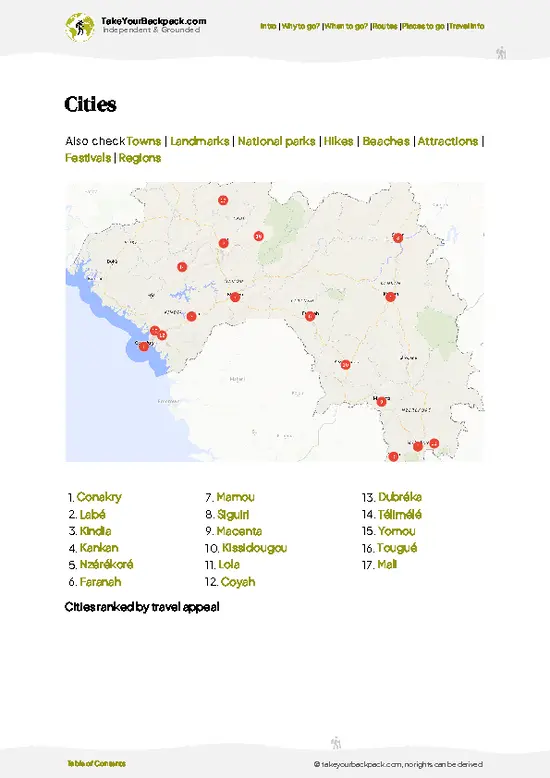
Guinea🇬🇳 | citiesSiguirigold mining center, Niger River, border trade | things to do and best time to go

Explore NzérékoréExplore Mamou

Backpacking in Siguiri
🌟 Highlightcity ranked #5
By Johan Kruseman 🇳🇱 | Updated June 7, 2026

The dust clings to your ankles as you step off the battered bush taxi, the air thick with the scent of river mud and diesel, and somewhere nearby, a radio crackles with laughter and old Mandingue pop. Siguiri sits in the far northeast of Guinea, hugging the Niger River, closer to Mali than to Conakry’s chaos. For backpackers, Siguiri is less a destination and more a crossroads—gold-mining town, trading post, and a necessary pause on the long, hot road between Kankan and Bamako. The town’s rhythm is slow, with a market that hums in the morning and empties by dusk, and evenings that settle into quiet, save for the clink of tea glasses. There’s little in the way of hostels or backpacker cafés, so you’ll find yourself among locals, not travelers. Costs are low, but so is comfort—expect basic rooms, patchy power, and plenty of dust. Siguiri is practical, not pretty, and compared to Kankan or Bamako, it’s more relaxed but less social. If you want river views, a taste of gold country, or a real sense of Guinea’s interior, Siguiri is a gritty, honest stop—best for the traveler who values the story over the selfie.

Discover everything you want to know in the 📖 Guinea Travel Guide.


Get your Guinea guide
67 ranked highlights, routes & tips, works offline (282 pages)
Loading the map 🌍
CLICK TO FILTER
cities
towns
landmarks
national parks
hikes
beaches
attractions
festivals
regions
SHOW COUNTRY’S BESTSHOW ALL

✨ Why go?
Ranked #5 city in Guinea
Why visitors keep coming back

Siguiri is a strategic stop for backpackers navigating Guinea. It’s a gateway to nearby hikes and cultural sites, making it easy to dive into the region’s rich history. The local food scene is vibrant, with street vendors serving up spicy stews that fill the air with mouthwatering aromas. The walkable streets invite exploration, allowing you to soak in the town’s atmosphere at your own pace.

Accommodations range from small-scale hostels to cozy guesthouses, fostering a friendly social vibe where solo travelers and small groups can connect. Most backpackers tend to stay a few days, enjoying the balance of quiet moments and the occasional lively chat with locals. If you’re a slow traveler or a hiker, Siguiri offers a perfect blend of convenience and charm, making it more than just a pit stop.
Want to include Siguiri in your Guinea route?
Create a personalized Guinea itinerary that includes Siguiri and the places that fit your trip — based on your travel style, budget, and available time. Get your route in seconds.

Generate my trip

💡 HighlightsMust-see experiences and standout moments

  1. Niger Riverfront / Quai de Siguiri — The river is the town’s heartbeat: fishermen, pirogues, and busy loading points give a real sense of life by the Niger. Best at dawn or sunset for light, people-watching, and boats coming and going.
  2. Marché Central (the main market) — Color, noise and trade: fresh produce, fabrics, everyday goods and small traders who buy and sell gold-adjacent wares. Great place to feel the town’s rhythm and pick up basics or affordable souvenirs. Bring small notes and a bargain attitude.
  3. Artisanal gold-panning areas along the riverbanks — Siguiri is a gold town; watching local panners work by the water is a raw, eye-opening cultural and economic experience. Keep a respectful distance, ask before photographing, and consider hiring a local guide to navigate safety and
read more 👉
  1. Niger Riverfront / Quai de Siguiri — The river is the town’s heartbeat: fishermen, pirogues, and busy loading points give a real sense of life by the Niger. Best at dawn or sunset for light, people-watching, and boats coming and going.
  2. Marché Central (the main market) — Color, noise and trade: fresh produce, fabrics, everyday goods and small traders who buy and sell gold-adjacent wares. Great place to feel the town’s rhythm and pick up basics or affordable souvenirs. Bring small notes and a bargain attitude.
  3. Artisanal gold-panning areas along the riverbanks — Siguiri is a gold town; watching local panners work by the water is a raw, eye-opening cultural and economic experience. Keep a respectful distance, ask before photographing, and consider hiring a local guide to navigate safety and etiquette.
  4. The central mosque (Grand Mosque / mosquée principale) — Architecturally modest but socially central. Observing prayer times and the flow of daily life around the mosque gives insight into local religious and community routines. Dress respectfully and watch for quiet photography rules.
  5. Old neighborhood / traditional quarter — Walkable lanes of mud-brick houses, small courtyards and family compounds where you can see traditional building styles and everyday domestic life. A good place to stroll slowly, meet residents, and practice polite greetings.
  6. River crossing / ferry and transport hub — The ferry/landing is a lively logistical node: traders, motorcycles, and cargo moves across the Niger here. It’s noisy, gritty, and superb for candid snapshots of commerce and movement.
  7. Local craft and repair workshops — Small metalworkers, leather ateliers and tailors hide in side streets. They’re practical, unpolished places where things are mended or made to order—ideal for seeing traditional skills in action and commissioning a simple item.
  8. Weekly market day (les jours de marché) — Market days in Siguiri draw people from surrounding hamlets for livestock, grains and household goods. Timed right, this is the best way to experience regional trade patterns and folk socializing—ask locally which day is the busiest.
  9. Community meeting spots and cafés by the river — Informal benches, small cafés and shaded meeting places where elders, traders and young people swap news and stories. These are low-cost, authentic spots to listen to local conversation and watch town life unfold.
  10. Municipal stadium / football pitch — Football matches are social events in Siguiri; catching a local game gives a lively, communal view of the town. Even if you don’t speak the language, the excitement is universal.
A few nearby day-trip options: boat rides upriver to small Mandinka villages, visiting the nearby artisanal mining villages outside town, or arranging (with permission) a visit to the larger Siguiri gold-mine facilities and community offices.
Spotted a mistake or missing something? Contact us.

🏘️ NeighborhoodsUnderstanding the local layout

Siguiri offers a unique blend of culture and adventure, making it a captivating stop for backpackers. Here’s how to navigate its neighborhoods:

Centre Ville: This is the heart of Siguiri. Bustling markets and local eateries fill the streets, offering a vibrant atmosphere. It’s walkable, with everything you need within reach. Prices are reasonable, making it ideal for budget travelers. The nightlife is low-key, with a few bars where locals gather, perfect for a relaxed evening.

Quartier Kourouma: A bit quieter, this area is great for longer stays. You’ll find guesthouses with more amenities and a more laid-back vibe. The streets are less crowded, allowing for peaceful walks. Transport options are available, but you might need to negotiate for better rates. It’s a good spot if you want to … read more 👉
Siguiri offers a unique blend of culture and adventure, making it a captivating stop for backpackers. Here’s how to navigate its neighborhoods:

Centre Ville: This is the heart of Siguiri. Bustling markets and local eateries fill the streets, offering a vibrant atmosphere. It’s walkable, with everything you need within reach. Prices are reasonable, making it ideal for budget travelers. The nightlife is low-key, with a few bars where locals gather, perfect for a relaxed evening.

Quartier Kourouma: A bit quieter, this area is great for longer stays. You’ll find guesthouses with more amenities and a more laid-back vibe. The streets are less crowded, allowing for peaceful walks. Transport options are available, but you might need to negotiate for better rates. It’s a good spot if you want to immerse yourself in local life without the hustle.

Quartier Djakaria: This neighborhood is more residential, offering a glimpse into daily life. It’s less touristy, which means you can enjoy authentic interactions. Prices are lower here, but amenities may be limited. It’s best for those looking to stay longer and experience Siguiri beyond the surface.

⌛️ 1 daySeeing the highlights in 24 hours

Siguiri, Guinea, is a vibrant town steeped in gold mining history and rich cultural traditions. The air buzzes with the sounds of daily life, and the scent of grilled fish wafts through the streets, inviting you to explore.

Start your morning at the bustling market in the heart of town. Vendors display colorful fabrics, fresh produce, and handmade crafts. Engage with the locals; their warmth is infectious. Grab a breakfast of akara—fried bean cakes—paired with sweet, milky tea. This is not just food; it’s a taste of community.

As the sun climbs higher, head to the nearby Kankou Moussa Mosque. Its striking architecture stands out against the blue sky, and the atmosphere is serene. Spend some time wandering the grounds, absorbing the peaceful energy.

In the afternoon, venture to the outskirts … read more 👉
Siguiri, Guinea, is a vibrant town steeped in gold mining history and rich cultural traditions. The air buzzes with the sounds of daily life, and the scent of grilled fish wafts through the streets, inviting you to explore.

Start your morning at the bustling market in the heart of town. Vendors display colorful fabrics, fresh produce, and handmade crafts. Engage with the locals; their warmth is infectious. Grab a breakfast of akara—fried bean cakes—paired with sweet, milky tea. This is not just food; it’s a taste of community.

As the sun climbs higher, head to the nearby Kankou Moussa Mosque. Its striking architecture stands out against the blue sky, and the atmosphere is serene. Spend some time wandering the grounds, absorbing the peaceful energy.

In the afternoon, venture to the outskirts of Siguiri to visit the lesser-known village of Kouroussa. Here, you’ll find traditional mud-brick homes and locals engaged in artisanal crafts. This isn’t on the typical tourist path, but it offers a genuine glimpse into daily life.

As evening approaches, return to Siguiri and stroll along the banks of the Niger River. The sunset paints the sky in shades of orange and pink, a perfect backdrop for reflection. End your day at a local eatery, savoring grilled tilapia while listening to the rhythmic beats of traditional music. This day in Siguiri isn’t just a visit; it’s an immersion into the soul of Guinea.
Turn your Siguiri visit into an Guinea adventure
Build a complete Guinea route with Siguiri, hidden gems, must-see destinations, and realistic travel times included.

Generate my trip

🌤️ When to go?Seasonal considerations and timing


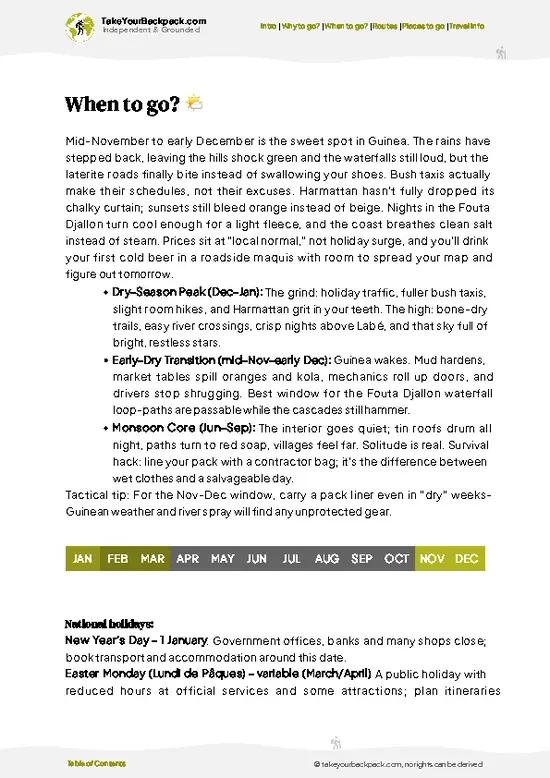
  • Topic: Weather – Siguiri’s climate swings between a hot, humid wet season from June to October and a dry, dusty season from November to May. The wet months bring heavy rains that can turn dirt roads into mud traps, slowing your pace and soaking your gear. The dry season offers clearer skies and easier trekking conditions.

  • Topic: Temperature – Expect highs around 32-38°C (90-100°F) during the dry season, with nights cooling to a comfortable 20-24°C (68-75°F). The wet season is slightly cooler but stickier, with humidity making the heat feel more intense.

  • Topic: Daylight Hours – Near the equator, daylight is steady year-round, roughly 12 hours a day. This consistency means you can plan your hikes and explorations without worrying about early sunsets.

  • Topic: Crowds – Siguiri isn’t a
read more 👉

  • Topic: Weather – Siguiri’s climate swings between a hot, humid wet season from June to October and a dry, dusty season from November to May. The wet months bring heavy rains that can turn dirt roads into mud traps, slowing your pace and soaking your gear. The dry season offers clearer skies and easier trekking conditions.

  • Topic: Temperature – Expect highs around 32-38°C (90-100°F) during the dry season, with nights cooling to a comfortable 20-24°C (68-75°F). The wet season is slightly cooler but stickier, with humidity making the heat feel more intense.

  • Topic: Daylight Hours – Near the equator, daylight is steady year-round, roughly 12 hours a day. This consistency means you can plan your hikes and explorations without worrying about early sunsets.

  • Topic: Crowds – Siguiri isn’t a tourist hotspot, so crowds are minimal year-round. However, local festivals during the dry season can bring a lively buzz, offering a chance to experience authentic cultural rhythms without tourist overload.

  • Topic: Seasonal Activities – The dry season is prime for outdoor adventures like hiking and river excursions. The wet season, while challenging for travel, transforms the landscape into lush green, rewarding those willing to brave the elements with vibrant scenery and fewer visitors.

  • Topic: Price Fluctuations – Accommodation and transport costs dip during the wet season due to lower demand, but factor in potential delays and limited services. The dry season commands higher prices but guarantees smoother logistics and more reliable access.


Pro-tip: Aim for the shoulder months of May or November—when rains taper off or just begin—to catch fresh landscapes without the full brunt of mud or heat, balancing comfort and spectacle.


source: climatestotravel.comJANJanuary: excellent for travelingFEBFebruary: excellent for travelingMARMarch: excellent for travelingAPRApril: excellent for travelingMAYMay: highly recommended for travelingJUNJune: fair for travelingJULJuly: below average for travelingAUGAugust: below average for travelingSEPSeptember: fair for travelingOCTOctober: fair for travelingNOVNovember: highly recommended for travelingDECDecember: excellent for traveling
when-to-go

✈️ The backpacker research shortcutGuinea Travel Guide

An offline-friendly backpacking guide with optimized travel routes, ranked highlights, transport advice, and the best areas to stay.
example page 0 from our offline Travel Guide for Guineaexample page 1 from our offline Travel Guide for Guineaexample page 2 from our offline Travel Guide for Guineaexample page 3 from our offline Travel Guide for Guineaexample page 4 from our offline Travel Guide for Guineaexample page 5 from our offline Travel Guide for Guineaexample page 6 from our offline Travel Guide for Guineaexample page 7 from our offline Travel Guide for Guinea
The digital guide (282 pages) contains:
67 highlights, ranked by travel appeal
Optimized 5, 10 & 15-day travel routes
Cities, national parks, landmarks, beaches
How to get around
Offline-friendly for travel without Wi-Fi
👉 Click to see all 30+ guide features

📅 Plan smarter in minutes, not weeks
Month by month travel advice
Festivals & national holidays
Budget expectations

🗺️ Go to the right places, skip the overrated ones
Honest pros & cons of destinations
Top hikes, parks & viewpoints
Lesser-known places most travelers miss
Clear “worth it vs skip it” guidance

🛏️ Travel smoothly without rookie mistakes
Best areas to stay
Transport systems explained simply
Common scams & safety advice
SIM cards, money & practical tips

🌍 Understand the country, not just visit it
Culture & traditions
52 Essential phrases & customs
Festivals worth planning around
Traveler-friendly historical context
Insights that make places more meaningful

📱 Built for real travel conditions
Fully downloadable PDF
Works completely offline
Optimized for phone use
Useful in remote areas & buses
Everything in one place
Save weeks of stressful planning
Get instant access to your full guide. 30‑day money-back guarantee.


By proceeding you agree to our terms.
Sent to your inbox immediately after payment • 100% Secure Checkout
Best Backpacking Travel Advisor 2025 tourism awardBest Backpacking
Travel Advisor
2025
What others say about Take Your Backpack Guides:
⭐⭐⭐⭐⭐
Fantastic, amazing amount of information!
⭐⭐⭐⭐⭐
My goodness this is amazing, it's what I've been looking for hats off too you!
⭐⭐⭐⭐⭐
I think this is absolutely BRILLIANT
⭐⭐⭐⭐
Very complete and informative. It's still missing places, but I gotta to commend you
⭐⭐⭐⭐⭐
This is truly amazing, thank you, can't wait to explore it with my kids!
⭐⭐⭐⭐⭐
Awesome resource, thank you!
⭐⭐⭐⭐⭐
This is amazing! Can't wait to explore the ones I haven't seen
⭐⭐⭐⭐
I love this! Well done, great idea.
⭐⭐⭐⭐⭐
Thanks for taking the time to make this gem!
⭐⭐⭐⭐⭐
This might be the best website I've ever seen.
⭐⭐⭐⭐⭐
Congratulations, and thank you so much for your work; it's incredibly valuable.
⭐⭐⭐⭐
In all seriousness I think you did a great job pointing out the important spots
⭐⭐⭐⭐⭐
10/10 very good
⭐⭐⭐⭐⭐
As someone who's only just starting to visit regularly this is awesome, thank you.
⭐⭐⭐⭐
Thank you very much! I'm going to visit my dad, it's going to be very useful!
⭐⭐⭐⭐⭐
This is really cool! We'll be travelling for the first time and this definitely come in handy.
⭐⭐⭐⭐⭐
You are now our minister of culture, congratulations 👨‍💼
⭐⭐⭐⭐⭐
Just wanted to tell you that this is a pearl! Going to follow your recommendations.
⭐⭐⭐⭐⭐
This is so cool. I'll definitely be using the resource for my travels soon.
⭐⭐⭐⭐⭐
This is very impressive! Good work.
⭐⭐⭐⭐⭐
This is an amazing and informative site. Very well done!

🛏️ Where to stay?Best areas and accommodation options

In Siguiri, the best spot for backpackers is the town center, where the pulse of daily life beats strongest. This area is compact, making it easy to navigate on foot, which is a blessing when you’re carrying a pack and want to avoid the hassle of local transport. The streets here hum with market chatter, the scent of grilled street food, and the occasional clatter of motorbikes weaving through the crowd. It’s where you’ll find the most budget-friendly guesthouses and a handful of basic hostels that cater to solo travelers and small groups.

Why choose the center? Safety and social energy. The … read more 👉
In Siguiri, the best spot for backpackers is the town center, where the pulse of daily life beats strongest. This area is compact, making it easy to navigate on foot, which is a blessing when you’re carrying a pack and want to avoid the hassle of local transport. The streets here hum with market chatter, the scent of grilled street food, and the occasional clatter of motorbikes weaving through the crowd. It’s where you’ll find the most budget-friendly guesthouses and a handful of basic hostels that cater to solo travelers and small groups.

Why choose the center? Safety and social energy. The town center is well-lit after dark compared to the outskirts, and locals are used to visitors, so you’ll find it easier to strike up conversations or get tips on where to eat or explore next. Other neighborhoods tend to be quieter and less welcoming to outsiders, with fewer accommodation options and a more isolated feel. Staying central means you’re plugged into the rhythm of Siguiri, with easy access to markets, eateries, and transport hubs—making your stay smoother and richer without the need for taxis or complicated directions.

🚌 Getting aroundMoving around without the hassle

Siguiri moves at its own rhythm—less a clock-bound town and more a place where the sun’s position and the hum of daily chatter dictate the pace. The air carries a mix of dust and earth, punctuated by the occasional clatter of motorbikes weaving through narrow streets. Here, schedules are loose suggestions, not ironclad rules. You’ll find the market bustling by mid-morning, but don’t expect buses or taxis to run like clockwork. Instead, the flow is intuitive, shaped by local needs and the slow pulse of a town that’s more about connection than speed. Embracing this means you’re not just passing through—you’re syncing with Siguiri’s heartbeat.


  • Walking: The best way to soak in Siguiri’s texture. Streets are compact, and the town’s core is easily navigable on foot. Walking lets you catch the
read more 👉
Siguiri moves at its own rhythm—less a clock-bound town and more a place where the sun’s position and the hum of daily chatter dictate the pace. The air carries a mix of dust and earth, punctuated by the occasional clatter of motorbikes weaving through narrow streets. Here, schedules are loose suggestions, not ironclad rules. You’ll find the market bustling by mid-morning, but don’t expect buses or taxis to run like clockwork. Instead, the flow is intuitive, shaped by local needs and the slow pulse of a town that’s more about connection than speed. Embracing this means you’re not just passing through—you’re syncing with Siguiri’s heartbeat.


  • Walking: The best way to soak in Siguiri’s texture. Streets are compact, and the town’s core is easily navigable on foot. Walking lets you catch the scent of fresh produce, overhear market banter, and spot the colorful fabrics drying in the sun. It’s free, flexible, and the pace matches the town’s natural rhythm.


  • Motorbike Taxis (Moto): These are the workhorses of local transit. Expect to negotiate fares upfront—usually around 500 to 1,000 Guinean francs for short hops. They dart through traffic and unpaved roads with ease, making them faster than walking but still intimate enough to feel the breeze and street sounds. They operate from dawn until dusk, but after dark, availability drops sharply.


  • Shared Minibuses: Known locally as “Gbaka,” these minibuses run set routes connecting Siguiri to nearby villages and towns. They leave when full, so timing is unpredictable—plan for waits but enjoy the communal vibe. Fares are cheap, often under 2,000 Guinean francs, but expect cramped conditions and a bumpy ride on rough roads.


  • Private Taxis: Less common and pricier, private taxis offer more comfort and speed, especially for longer trips outside town. Negotiate fares before hopping in; expect to pay significantly more than motos or gbakas. They’re best if you’re traveling with a group or carrying heavy gear.

👛 Costs (as of 25 April 2026)Typical daily expenses

Backpacking in Siguiri, Guinea, means embracing a raw, off-the-beaten-path vibe where costs stay low but the experience feels rich and real. Here’s what you can expect to spend day-to-day:
  • Dorm Accommodation: Options are limited and basic, often guesthouses rather than formal hostels. Expect to pay around €5-€10 per night for a simple shared room with a fan and mosquito net. Don’t count on luxury—think clean but minimal, with a local feel.
  • Meals: Street food and small local eateries dominate. A filling meal of rice, sauce, and some protein will run you about €1.50-€3. If you want something a bit more substantial or imported, prices can creep up to €4-€6. Fresh fruit and snacks are cheap and plentiful, perfect for quick bites.
  • Local Transport: The town is small, so walking is your best bet.
read more 👉
Backpacking in Siguiri, Guinea, means embracing a raw, off-the-beaten-path vibe where costs stay low but the experience feels rich and real. Here’s what you can expect to spend day-to-day:
  • Dorm Accommodation: Options are limited and basic, often guesthouses rather than formal hostels. Expect to pay around €5-€10 per night for a simple shared room with a fan and mosquito net. Don’t count on luxury—think clean but minimal, with a local feel.
  • Meals: Street food and small local eateries dominate. A filling meal of rice, sauce, and some protein will run you about €1.50-€3. If you want something a bit more substantial or imported, prices can creep up to €4-€6. Fresh fruit and snacks are cheap and plentiful, perfect for quick bites.
  • Local Transport: The town is small, so walking is your best bet. For longer trips, shared taxis or bush taxis cost roughly €0.50-€1 per ride within town or nearby villages. These rides are informal but reliable if you’re flexible with timing.
  • Basic Activities/Entry Fees: Siguiri isn’t a tourist hotspot, so organized activities are rare. Visiting local markets or cultural spots is usually free or costs a nominal fee under €1. If you hire a local guide for a day trip, expect to pay around €10-€15, which supports the community directly.
  • Miscellaneous Expenses: Bottled water, phone credit, and small essentials add up to about €1-€2 daily. Internet access is spotty and often requires buying data bundles, which cost around €3-€5 for a decent amount of data.

All told, you’re looking at roughly €10-€25 per day to cover the basics in Siguiri. This range keeps you grounded in local life without overspending on unnecessary comforts, letting you focus on the texture of the place—the dusty streets, the chatter in the markets, and the slow rhythm of daily life.


source: guineaembassyusa.org
⚠️ Prices can change and everyone travels differently, so take this as a rough guide. Hope it helps you plan your adventure!

🚌 Day tripsExploring the surroundings

Siguiri, Guinea, is a fantastic launchpad for day trips that blend adventure with cultural immersion. The town’s vibrant atmosphere and local markets set the stage for exploring the surrounding wonders.

Mount Nimba
A trek to Mount Nimba is a must. This UNESCO World Heritage site offers breathtaking views and a chance to see unique flora and fauna. The hike takes about 3-4 hours from Siguiri, but the effort is rewarded with panoramic vistas that stretch for miles. Expect to pay around $10 for transport and a small fee for park entry. The best time to go is during the dry season, from November to April, when the trails are less muddy. A common mistake? Underestimating the altitude; bring plenty of water and snacks to keep your energy up.


Banankoro Waterfalls
Just a short ride away, … read more 👉
Siguiri, Guinea, is a fantastic launchpad for day trips that blend adventure with cultural immersion. The town’s vibrant atmosphere and local markets set the stage for exploring the surrounding wonders.

Mount Nimba
A trek to Mount Nimba is a must. This UNESCO World Heritage site offers breathtaking views and a chance to see unique flora and fauna. The hike takes about 3-4 hours from Siguiri, but the effort is rewarded with panoramic vistas that stretch for miles. Expect to pay around $10 for transport and a small fee for park entry. The best time to go is during the dry season, from November to April, when the trails are less muddy. A common mistake? Underestimating the altitude; bring plenty of water and snacks to keep your energy up.


Banankoro Waterfalls
Just a short ride away, the Banankoro Waterfalls are a refreshing escape. The journey takes about 1.5 hours, and the sound of cascading water greets you as you approach. A small entrance fee of about $5 gets you access to this serene spot, perfect for a picnic or a quick dip. Visit in the early morning to catch the sun filtering through the trees, creating a magical atmosphere. Many first-timers forget to bring a swimsuit; trust me, you’ll want to take a dip!


Local Gold Mines
For a unique experience, visit the local gold mines. It’s a 30-minute ride from Siguiri, and you’ll get an insider’s view of the artisanal mining process. Expect to pay around $7 for transport and a small fee to enter the mining area. The best time to visit is during the dry season when the miners are most active. A common pitfall is not engaging with the miners; they often share fascinating stories about their work and the local culture.


Fouta Djallon Region
If you’re up for a longer day, head to the Fouta Djallon region. It’s about a 2-hour drive, but the stunning landscapes and rich culture make it worthwhile. The region is known for its lush greenery and traditional villages. Budget around $15 for transport. The best time to visit is during the cooler months, from December to February. Many travelers miss out on the local cuisine; don’t skip trying the traditional dishes served in village homes.
Want to know what more Guinea offers?
The Guinea Travel Guide describes 67 highlights, from cities to national parks, from beaches to hikes

Get the Travel Guide -

🍲 FoodWhat to Eat & Drink

In Siguiri, food is a lively negotiation between simplicity and bold flavors. The city’s signature dish, , is a must-try—imagine a dense, doughy ball made from cassava or millet, paired with a rich, spicy peanut or tomato-based sauce that clings to your fingers and demands licking. It’s not just a meal; it’s a hands-on experience that pulls you into local rhythms.

Backpackers won’t find polished eateries here but will thrive in the street markets and casual stalls where food is fresh, fast, and fiercely authentic. Vendors grill fish over open flames, and bowls of jollof rice steam alongside spicy stews, filling the air with smoky, inviting aromas. These spots are social hubs, where locals chat over shared plates, and you’re invited to join the communal vibe.

Drinking culture leans on millet beer, a slightly sour, earthy brew served in calabashes. It’s less about the buzz and more about connection—sharing a calabash is a gesture of trust and friendship. Expect to eat with your right hand, and don’t be surprised if meals stretch long; here, food is a conversation, not a checklist. Embrace the mess, the noise, and the flavor—it’s the real Siguiri.

🛡️ SafetySafety Tips and Common Scams in Siguiri

Siguiri is generally safe, but a few practical tips can enhance your experience. Stay aware in crowded markets, where distractions can lead to pickpocketing. If you’re solo, avoid wandering too far after dark; the streets can feel deserted, and it’s best to stick to well-lit areas.

When it comes to scams, be cautious of overly friendly locals offering unsolicited help; they may expect payment. Always negotiate prices upfront, especially for taxis or guided tours, to avoid surprises. Carry yourself confidently, and engage with locals; a friendly demeanor often disarms potential annoyances. Embrace the rhythm of Siguiri, and you’ll find its charm outweighs any minor inconveniences.

Other Guinean cities near Siguiri

Explore more nearby:

  • Kankan—savanna landscape, university town, Manding culture| 116 km away
  • Faranah—Niger River bend, administrative center, rice fields| 229 km away
  • Kérouané—diamond trading, savanna landscape, remote outpost| 239 km away

💡 Not sure where to go next?
Create a personalized itinerary for Guinea including Siguiri and the places that fit your trip.

Generate my itinerary

👉 Discover all cities

Or checkout all Guinea has to offer (think cities, towns, villages, national parks, hikes, beaches, festivals)
Country photo of Guinea

We 💚 feedbackKey takeaways before you go

Siguiri pulses with life, a vibrant mix of laughter and the scent of grilled fish wafting through the air. The best surprise? The warmth of the locals; they’ll share stories that make you feel like family. Just a heads-up: the roads can be rough. Embrace the bumps; they lead to unforgettable moments. Trust me, it’s worth it.

✍️ Help improve this page!
The information on this page is based on in-depth research, insights shared by experienced travelers, and feedback from the local travel community in Guinea. While every effort is made to keep the information accurate and current, conditions can change — so if you spot anything incorrect or outdated, please get in touch.


🙋‍♂️ Give feedback

👋 Meet the founderWho’s Behind Take Your Backpack?

Johan, backpacker and founder of TakeYourBackpackHi, I’m Johan (Netherlands 🇳🇱), the creator of TakeYourBackpack. Over the past decade, I’ve backpacked through 80+ countries across six continents, gaining extensive experience with independent travel, long-term trips, and overland routes.

This site is built on a combination of firsthand travel experience and carefully curated insights from other backpackers. Many guides are based on places I’ve personally visited, while others bring together tips, observations, and practical advice shared by trusted travelers I’ve met along the way.

The goal is to provide realistic, experience-driven guidance — not generic itineraries — so you can explore destinations with better context, clearer expectations, and more confidence.

Get full Guinea guide •
Instant download • 67 highlights • Full Offline guide