×

Guinea🇬🇳 | citiesFaranahNiger River bend, administrative center, rice fields | things to do and best time to go

Explore ConakryExplore Kankan

Backpacking in Faranah
🌟 Highlightcity ranked #4
By Johan Kruseman 🇳🇱 | Updated June 10, 2026

A decade ago, Faranah was the kind of place where the red dust settled on everything and the riverfront felt like a secret. Today, the dust is still there—fine, ochre, clinging to your boots—but the secret’s out, at least among the rare breed of travelers who cut inland through Guinea. Faranah sits in the heart of the country, hugging the upper Niger River, a long haul from Conakry’s chaos and a world away from the coastal humidity. For backpackers, it’s not a destination for urban thrills or nightlife—think slow evenings, the scent of woodsmoke, and the sound of goats more than clinking glasses. The market is lively but not overwhelming, and the real draw is the access: Faranah is a practical base for forays into the Haut Niger National Park, or as a rest stop between the Fouta Djallon highlands and the southeast. Transport is basic—bush taxis, battered minibuses, and plenty of waiting—but the town is small enough to cross on foot. You won’t find hostels or a backpacker scene, but you might share a beer with a local teacher or NGO worker. Costs are low, safety is typical for rural Guinea (watch your valuables, but the vibe is relaxed), and compared to busier towns like Kankan, Faranah feels quieter, more honest, and less interested in impressing anyone.

Discover everything you want to know in the 📖 Guinea Travel Guide.


Get your Guinea guide
67 ranked highlights, routes & tips, works offline (282 pages)
Loading the map 🌍
CLICK TO FILTER
cities
towns
landmarks
national parks
hikes
beaches
attractions
festivals
regions
SHOW COUNTRY’S BESTSHOW ALL

✨ Why go?
Ranked #4 city in Guinea
The unique appeal for travelers

Faranah is a backpacker’s waypoint that strikes a balance between convenience and charm. Nestled along the Niger River, it serves as a launchpad for nearby hikes and cultural sites. The walkable streets invite exploration, with small-scale guesthouses offering a cozy, intimate vibe. You can savor local dishes like fufu and soup at street stalls, where the aroma of spices fills the air, creating a genuine connection to the culture.

Travelers often find themselves lingering for a few days, soaking in the friendly atmosphere and engaging with locals. It’s a place where slow travelers and solo adventurers thrive, sharing stories over shared meals or during casual strolls. While nightlife isn’t the main draw, the sense of community makes it easy to connect with fellow backpackers. Faranah is not … read more 👉
Faranah is a backpacker’s waypoint that strikes a balance between convenience and charm. Nestled along the Niger River, it serves as a launchpad for nearby hikes and cultural sites. The walkable streets invite exploration, with small-scale guesthouses offering a cozy, intimate vibe. You can savor local dishes like fufu and soup at street stalls, where the aroma of spices fills the air, creating a genuine connection to the culture.

Travelers often find themselves lingering for a few days, soaking in the friendly atmosphere and engaging with locals. It’s a place where slow travelers and solo adventurers thrive, sharing stories over shared meals or during casual strolls. While nightlife isn’t the main draw, the sense of community makes it easy to connect with fellow backpackers. Faranah is not just a stop; it’s a chance to slow down, breathe in the local life, and prepare for the next leg of your journey.
Want to include Faranah in your Guinea route?
Create a personalized Guinea itinerary that includes Faranah and the places that fit your trip — based on your travel style, budget, and available time. Get your route in seconds.

Generate my trip

💡 HighlightsTop highlights of Faranah

  1. Grand Marché de Faranah — The town’s busiest hub: stalls packed with fruit, rice, spices, fabrics and yakata. Great for people-watching, bargaining, and seeing daily life up close (go early to catch the best energy).
  2. Rive du Niger (riverbank and landing) — Wide sandy banks and the working boat landings are where fishermen, boatmen and traders gather. Walkable, photogenic at golden hour and the best place to feel how the river shapes life here.
  3. Grande Mosquée de Faranah — The main mosque in town and a focal point of community life. Even if you don’t enter during prayer, the courtyard and surrounding streets give a clear sense of local rhythms and architecture.
  4. Site commémoratif / quartier natal de Sékou Touré — Faranah is closely associated with Guinea’s first president; there are local
read more 👉
  1. Grand Marché de Faranah — The town’s busiest hub: stalls packed with fruit, rice, spices, fabrics and yakata. Great for people-watching, bargaining, and seeing daily life up close (go early to catch the best energy).
  2. Rive du Niger (riverbank and landing) — Wide sandy banks and the working boat landings are where fishermen, boatmen and traders gather. Walkable, photogenic at golden hour and the best place to feel how the river shapes life here.
  3. Grande Mosquée de Faranah — The main mosque in town and a focal point of community life. Even if you don’t enter during prayer, the courtyard and surrounding streets give a clear sense of local rhythms and architecture.
  4. Site commémoratif / quartier natal de Sékou Touré — Faranah is closely associated with Guinea’s first president; there are local memorials, plaques and an area of the old quarter where people point out his birthplace. Not a polished museum, but valuable for oral history and local stories.
  5. Marché aux bestiaux (livestock market) — A lively, very local scene where cattle, goats and donkeys change hands. Best visited in the morning; a raw, honest look at rural commerce that feeds the region.
  6. Stade Municipal de Faranah — Catch a local football match to see the town come alive: music, drums, vendors and fiercely loyal fans. Sporting events are a genuine way to meet people.
  7. Quartier traditionnel (old town compounds) — Narrow lanes, family compounds and small courtyards where traditional life continues. Walkable with a local guide or a friendly resident; great for photos and casual conversations.
  8. Ateliers d’artisans et tisserands — Small workshops where tailors, dyers and woodworkers make everyday goods. These are scattered around the market area; visiting supports local makers and gives insight into traditional crafts.
  9. Place du Préfet / bâtiments coloniaux — The administrative square and a few colonial-era buildings near the centre show the town’s layered history. They’re modest, but useful for understanding Faranah’s role as a regional capital.
  10. Maquis et restos locaux (street restaurants) — Simple open-air spots serving grilled fish, chicken, rice and sauces — the best way to taste Faranah. Eat where the locals eat, ask for recommendations, and bring cash.
A few real, visitable highlights just outside town that make easy day trips are the river-port town of Kouroussa (historic trading hub), the traditional villages and river landscapes upriver along the Niger, and nearby prefectural towns (for more markets and regional scenery).
Spotted a mistake or missing something? Contact us.
🏘️ NeighborhoodsHow different areas shape the experience

Faranah offers a unique blend of culture and community, making it an intriguing stop for backpackers. Here’s how to navigate its neighborhoods:

Centre Ville: This is the heartbeat of Faranah. You’ll find bustling markets and local eateries where the aroma of grilled fish fills the air. It’s walkable, with plenty of affordable guesthouses. The nightlife is low-key, perfect for winding down after a day of exploration. Ideal for short stays, you can soak in the local vibe without feeling rushed.

Quartier Kouria: A bit quieter, this area is known for its lush greenery and friendly locals. It’s slightly more residential, offering a peaceful retreat. Transport options are decent, with shared taxis available. If you’re looking for a longer stay, this is a great spot to settle in and connect with … read more 👉
Faranah offers a unique blend of culture and community, making it an intriguing stop for backpackers. Here’s how to navigate its neighborhoods:

Centre Ville: This is the heartbeat of Faranah. You’ll find bustling markets and local eateries where the aroma of grilled fish fills the air. It’s walkable, with plenty of affordable guesthouses. The nightlife is low-key, perfect for winding down after a day of exploration. Ideal for short stays, you can soak in the local vibe without feeling rushed.

Quartier Kouria: A bit quieter, this area is known for its lush greenery and friendly locals. It’s slightly more residential, offering a peaceful retreat. Transport options are decent, with shared taxis available. If you’re looking for a longer stay, this is a great spot to settle in and connect with the community.

Quartier Daka: This neighborhood is where you’ll find a mix of traditional and modern influences. The streets are lively, and you can easily access local transport. It’s a good balance of activity and relaxation, making it suitable for both short and extended visits. The evenings here are vibrant, with local music spilling into the streets.

Each area has its own charm, so choose based on your mood and travel style.

⌛️ 1 day1-day itinerary for Faranah

Faranah, Guinea, pulses with a vibrant local culture that’s often overlooked by travelers. Nestled along the banks of the Niger River, this town is a tapestry of bustling markets, rich history, and warm smiles. You’ll find a blend of traditional and modern life, making it a perfect spot for an immersive day.

Start your morning at the lively Faranah Market. The air is thick with the scent of spices and fresh produce. Vendors call out, their voices mingling with the chatter of locals. Grab a breakfast of *fufu* and *sauce arachide* from a street stall. It’s a hearty way to fuel up for the day ahead. Afterward, wander through the narrow streets of the Kankan neighborhood, where you can admire the colorful mud-brick houses and the intricate designs that tell stories of the past.

In the afternoon, … read more 👉
Faranah, Guinea, pulses with a vibrant local culture that’s often overlooked by travelers. Nestled along the banks of the Niger River, this town is a tapestry of bustling markets, rich history, and warm smiles. You’ll find a blend of traditional and modern life, making it a perfect spot for an immersive day.

Start your morning at the lively Faranah Market. The air is thick with the scent of spices and fresh produce. Vendors call out, their voices mingling with the chatter of locals. Grab a breakfast of *fufu* and *sauce arachide* from a street stall. It’s a hearty way to fuel up for the day ahead. Afterward, wander through the narrow streets of the Kankan neighborhood, where you can admire the colorful mud-brick houses and the intricate designs that tell stories of the past.

In the afternoon, head to the nearby Faranah Waterfall. It’s a bit off the beaten path, but the trek is worth it. The sound of cascading water fills the air as you approach, and the lush greenery envelops you. Take a moment to soak in the beauty; the light filtering through the leaves creates a magical atmosphere. Bring a book or simply relax by the water’s edge, letting the tranquility wash over you.

As evening falls, return to the town center. Grab dinner at a local eatery, where you can savor grilled fish seasoned with local spices. The atmosphere is lively, with laughter and music filling the air. After your meal, stroll along the riverbank as the sun sets, painting the sky in hues of orange and pink. This day in Faranah isn’t just a series of activities; it’s a journey into the heart of Guinea, where every moment feels earned and deeply rewarding.
Turn your Faranah visit into an Guinea adventure
Build a complete Guinea route with Faranah, hidden gems, must-see destinations, and realistic travel times included.

Generate my trip

🌤️ When to go?Best time to visit Faranah


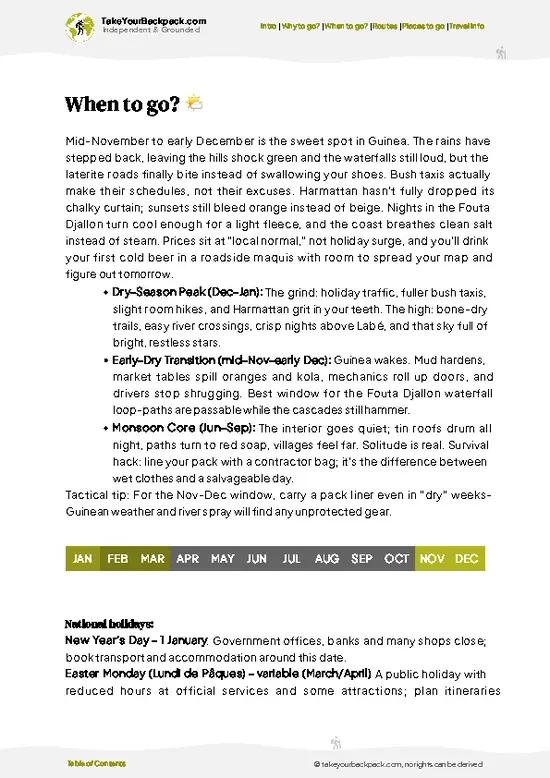
  • Weather: Faranah’s climate swings between a wet season from May to October and a dry season from November to April. The wet months bring heavy, humid rains that can turn dirt roads into mud traps, making trekking and exploring a slog rather than a joy.

  • Temperature: Expect highs around 30-35°C (86-95°F) during the dry season, with nights cooling to a comfortable 20°C (68°F). The wet season is warmer and stickier, often pushing daytime temps above 35°C (95°F), which can sap your energy fast.

  • Daylight Hours: Daylight is fairly consistent year-round, roughly 12 hours daily, but the dry season’s clearer skies mean more reliable sunlight for early starts and late afternoon hikes.

  • Crowds: Faranah isn’t a tourist hotspot, so crowds are minimal year-round. However, local festivals and market
read more 👉

  • Weather: Faranah’s climate swings between a wet season from May to October and a dry season from November to April. The wet months bring heavy, humid rains that can turn dirt roads into mud traps, making trekking and exploring a slog rather than a joy.

  • Temperature: Expect highs around 30-35°C (86-95°F) during the dry season, with nights cooling to a comfortable 20°C (68°F). The wet season is warmer and stickier, often pushing daytime temps above 35°C (95°F), which can sap your energy fast.

  • Daylight Hours: Daylight is fairly consistent year-round, roughly 12 hours daily, but the dry season’s clearer skies mean more reliable sunlight for early starts and late afternoon hikes.

  • Crowds: Faranah isn’t a tourist hotspot, so crowds are minimal year-round. However, local festivals and market days during the dry season bring a lively buzz that’s worth timing your visit for.

  • Seasonal Activities: The dry season is prime for wildlife spotting and village visits, as animals gather near water sources and trails are accessible. The wet season’s lush greenery is beautiful but can limit outdoor plans.

  • Price Fluctuations: Accommodation and transport costs dip slightly during the wet season due to fewer visitors, but the trade-off is tougher travel conditions and fewer open services.


Pro-tip: Aim for the shoulder months of November or April—dry enough for smooth travel, with fewer crowds and a landscape that’s just shaking off or gearing up for the rains, offering a balanced, authentic experience.


source: climatestotravel.comJANJanuary: excellent for travelingFEBFebruary: excellent for travelingMARMarch: excellent for travelingAPRApril: highly recommended for travelingMAYMay: fair for travelingJUNJune: fair for travelingJULJuly: below average for travelingAUGAugust: below average for travelingSEPSeptember: fair for travelingOCTOctober: fair for travelingNOVNovember: highly recommended for travelingDECDecember: excellent for traveling
when-to-go

✈️ The backpacker research shortcutGuinea Travel Guide

An offline-friendly backpacking guide with optimized travel routes, ranked highlights, transport advice, and the best areas to stay.
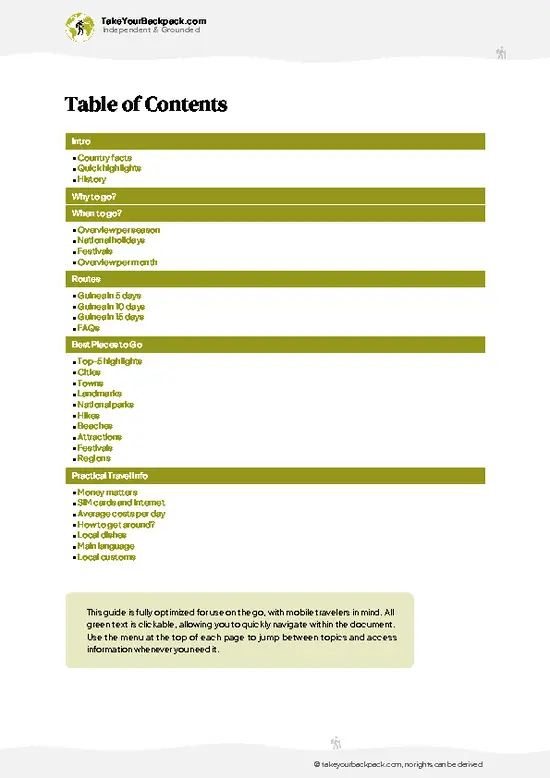
example page 0 from our offline Travel Guide for Guinea
example page 1 from our offline Travel Guide for Guinea
example page 2 from our offline Travel Guide for Guinea
example page 3 from our offline Travel Guide for Guinea
example page 4 from our offline Travel Guide for Guinea
example page 5 from our offline Travel Guide for Guinea
example page 6 from our offline Travel Guide for Guinea
example page 7 from our offline Travel Guide for Guinea
The digital guide (282 pages) contains:
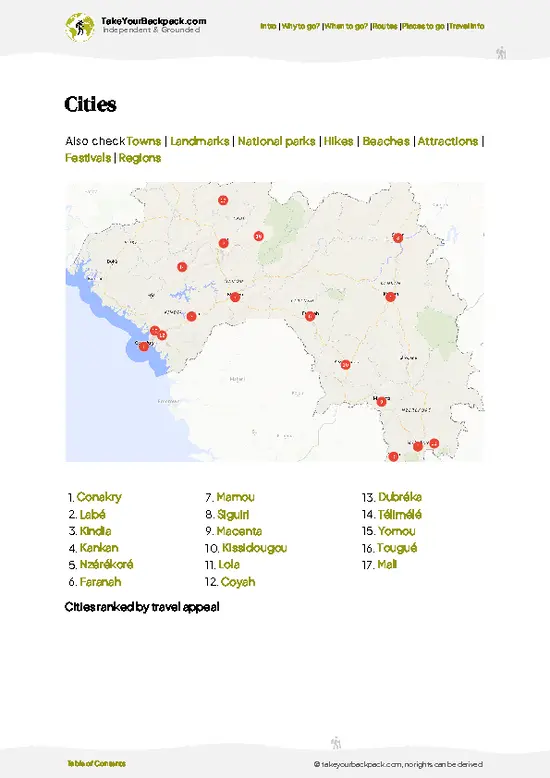
67 highlights, ranked by travel appeal
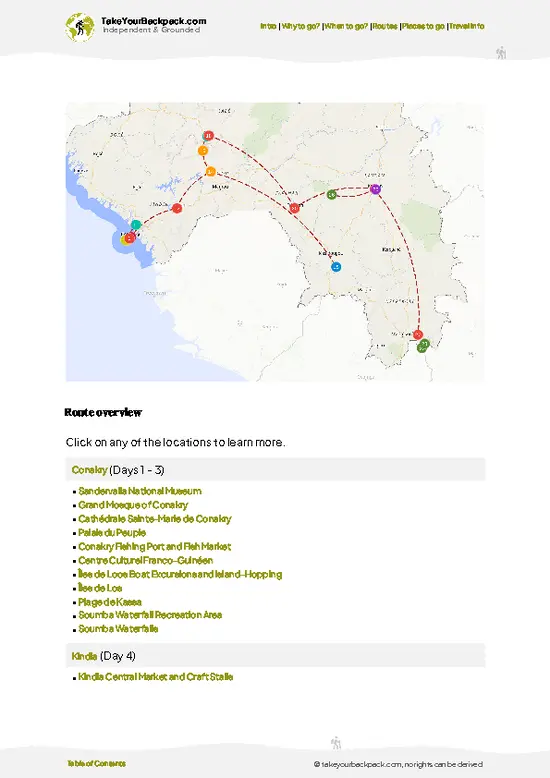
Optimized 5, 10 & 15-day travel routes
Cities, national parks, landmarks, beaches
How to get around
Offline-friendly for travel without Wi-Fi
👉 Click to see all 30+ guide features

📅 Plan smarter in minutes, not weeks
Month by month travel advice
Festivals & national holidays
Budget expectations

🗺️ Go to the right places, skip the overrated ones
Honest pros & cons of destinations
Top hikes, parks & viewpoints
Lesser-known places most travelers miss
Clear “worth it vs skip it” guidance

🛏️ Travel smoothly without rookie mistakes
Best areas to stay
Transport systems explained simply
Common scams & safety advice
SIM cards, money & practical tips

🌍 Understand the country, not just visit it
Culture & traditions
52 Essential phrases & customs
Festivals worth planning around
Traveler-friendly historical context
Insights that make places more meaningful

📱 Built for real travel conditions
Fully downloadable PDF
Works completely offline
Optimized for phone use
Useful in remote areas & buses
Everything in one place
Save weeks of stressful planning
Get instant access to your full guide. 30‑day money-back guarantee.


By proceeding you agree to our terms.
Sent to your inbox immediately after payment • 100% Secure Checkout
Best Backpacking Travel Advisor 2025 tourism awardBest Backpacking
Travel Advisor
2025
What others say about Take Your Backpack Guides:
⭐⭐⭐⭐⭐
Fantastic, amazing amount of information!
⭐⭐⭐⭐⭐
My goodness this is amazing, it's what I've been looking for hats off too you!
⭐⭐⭐⭐⭐
I think this is absolutely BRILLIANT
⭐⭐⭐⭐
Very complete and informative. It's still missing places, but I gotta to commend you
⭐⭐⭐⭐⭐
This is truly amazing, thank you, can't wait to explore it with my kids!
⭐⭐⭐⭐⭐
Awesome resource, thank you!
⭐⭐⭐⭐⭐
This is amazing! Can't wait to explore the ones I haven't seen
⭐⭐⭐⭐
I love this! Well done, great idea.
⭐⭐⭐⭐⭐
Thanks for taking the time to make this gem!
⭐⭐⭐⭐⭐
This might be the best website I've ever seen.
⭐⭐⭐⭐⭐
Congratulations, and thank you so much for your work; it's incredibly valuable.
⭐⭐⭐⭐
In all seriousness I think you did a great job pointing out the important spots
⭐⭐⭐⭐⭐
10/10 very good
⭐⭐⭐⭐⭐
As someone who's only just starting to visit regularly this is awesome, thank you.
⭐⭐⭐⭐
Thank you very much! I'm going to visit my dad, it's going to be very useful!
⭐⭐⭐⭐⭐
This is really cool! We'll be travelling for the first time and this definitely come in handy.
⭐⭐⭐⭐⭐
You are now our minister of culture, congratulations 👨‍💼
⭐⭐⭐⭐⭐
Just wanted to tell you that this is a pearl! Going to follow your recommendations.
⭐⭐⭐⭐⭐
This is so cool. I'll definitely be using the resource for my travels soon.
⭐⭐⭐⭐⭐
This is very impressive! Good work.
⭐⭐⭐⭐⭐
This is an amazing and informative site. Very well done!

🛏️ Where to stay?Best areas to stay in Guinea

In Faranah, the best spot for backpackers is the central district around the main market and the town square. This area pulses with daily life—the scent of fresh spices and grilled street food mingles with the dust kicked up by motorbikes and pedestrians. It’s where locals gather, making it naturally safer thanks to constant foot traffic and informal neighborhood watchfulness. Staying here means you’re never far from the pulse of the town, which is crucial when you’re solo and want to feel connected without wandering into quieter, less secure neighborhoods after dark.

Compared to the outskirts, … read more 👉
In Faranah, the best spot for backpackers is the central district around the main market and the town square. This area pulses with daily life—the scent of fresh spices and grilled street food mingles with the dust kicked up by motorbikes and pedestrians. It’s where locals gather, making it naturally safer thanks to constant foot traffic and informal neighborhood watchfulness. Staying here means you’re never far from the pulse of the town, which is crucial when you’re solo and want to feel connected without wandering into quieter, less secure neighborhoods after dark.

Compared to the outskirts, where streets can be deserted and navigation tricky, the central district offers a social vibe that’s hard to beat. You’ll find small guesthouses and budget lodgings clustered here, often run by friendly locals who can help you tap into authentic experiences. Hostels are rare, but the guesthouses fill that gap with communal spaces where you can meet other travelers or locals over a shared meal or a game of cards.

The light here in late afternoon softens the red earth and casts long shadows, inviting you to linger in open-air cafés or on benches where the hum of conversation and laughter feels like a quiet welcome. This neighborhood isn’t just a place to crash—it’s the gateway to Faranah’s rhythm, making your stay smoother and richer.

🚌 Getting aroundTransportation options and practical tips

Faranah moves at its own rhythm—neither frantic nor sluggish, but a steady pulse shaped by the sun’s arc and the calls of daily life. The town’s streets hum with a mix of purposeful strides and casual pauses, where vendors shout their wares and children dart between shadows cast by mango trees. Time here isn’t dictated by clocks but by the flow of light and the scent of earth after rain. If you want to move like a local, you’ll need to sync with this natural cadence, blending patience with a readiness to jump on the next ride or stroll when the moment feels right.

Walking: The heart of Faranah is compact enough to explore on foot. Walking lets you soak in the smells of fresh bread from corner bakeries and the dust rising from unpaved alleys. It’s free, obviously, and the best way to catch … read more 👉
Faranah moves at its own rhythm—neither frantic nor sluggish, but a steady pulse shaped by the sun’s arc and the calls of daily life. The town’s streets hum with a mix of purposeful strides and casual pauses, where vendors shout their wares and children dart between shadows cast by mango trees. Time here isn’t dictated by clocks but by the flow of light and the scent of earth after rain. If you want to move like a local, you’ll need to sync with this natural cadence, blending patience with a readiness to jump on the next ride or stroll when the moment feels right.

Walking: The heart of Faranah is compact enough to explore on foot. Walking lets you soak in the smells of fresh bread from corner bakeries and the dust rising from unpaved alleys. It’s free, obviously, and the best way to catch the town’s subtle shifts in light and sound. Expect to cover most of the central market and riverside areas within an hour or two.

Shared Taxis (Taxi Collectifs): These are the backbone of local transit. They run from dawn until dusk, roughly 6 a.m. to 6 p.m., and cost a fraction of private taxis—around 500 to 1,000 GNF per ride. They’re not about comfort; expect cramped seats and frequent stops, but they’re fast and efficient for hopping between neighborhoods or heading out to nearby villages.

Motorcycle Taxis (Moto-Taxis): When time is tight or you’re carrying a load, moto-taxis are your go-to. They weave through traffic with a buzz, cutting travel time in half compared to shared taxis. Prices start at about 1,000 GNF for short trips, and drivers often negotiate fares upfront. Helmets aren’t always guaranteed, so hold on tight and keep your wits about you.

Minibus Buses: For longer hauls, minibuses connect Faranah to other regional hubs. They leave when full, so schedules are loose—plan for some waiting. Tickets cost around 3,000 to 5,000 GNF depending on distance. The ride can be bumpy and slow, but it’s a budget-friendly way to see the countryside beyond town.

Bicycle Rentals: If you want to blend speed with immersion, renting a bike is a smart move. Bikes cost about 10,000 GNF per day and give you freedom to explore at your own pace, especially on the quieter outskirts where the air smells of dry grass and distant smoke. Just be ready for uneven roads and the occasional curious glance from locals.

Mastering Faranah’s transit means embracing its mix of predictability and improvisation. Walk when you want to linger, jump on a shared taxi when the sun climbs high, and trust a moto-taxi to slice through the heat and dust. This flow isn’t just about getting from A to B—it’s about tuning into the town’s pulse and making every trip part of the experience.

👛 Costs (as of 25 April 2026)How expensive it really is

Backpacking in Faranah, Guinea, means embracing a pace where the small details—like the scent of fresh market spices or the hum of local chatter—shape your daily rhythm. Understanding the cost structure here helps you move through the town with confidence, avoiding surprises and making your money stretch.
  • Dorm Accommodation: Expect basic guesthouses or small hostels offering dorm beds around €5 to €10 per night. These places are simple, often with shared bathrooms and limited hot water, but they put you right in the heart of town life.
  • Meals: Street food and local eateries dominate. A filling meal of rice, grilled fish or chicken, and vegetables will cost between €1.50 and €3.50. Fresh fruit and snacks from markets are even cheaper, perfect for quick energy boosts.
  • Local Transport: Transport
read more 👉
Backpacking in Faranah, Guinea, means embracing a pace where the small details—like the scent of fresh market spices or the hum of local chatter—shape your daily rhythm. Understanding the cost structure here helps you move through the town with confidence, avoiding surprises and making your money stretch.
  • Dorm Accommodation: Expect basic guesthouses or small hostels offering dorm beds around €5 to €10 per night. These places are simple, often with shared bathrooms and limited hot water, but they put you right in the heart of town life.
  • Meals: Street food and local eateries dominate. A filling meal of rice, grilled fish or chicken, and vegetables will cost between €1.50 and €3.50. Fresh fruit and snacks from markets are even cheaper, perfect for quick energy boosts.
  • Local Transport: Transport options are mostly shared taxis or minibuses. A short ride within town typically costs about €0.30 to €0.60. Walking is common and often the best way to soak in the atmosphere, but for longer trips, budget around €1 to €2.
  • Basic Activities/Entry Fees: Faranah isn’t a tourist hotspot with formal entry fees. Visiting local markets, cultural sites, or natural spots usually costs nothing or just a small donation, around €0.50 to €1 if you want a guide or a more structured visit.
  • Miscellaneous Expenses: This covers essentials like bottled water, snacks, or phone credit. Plan for about €1 to €2 daily, depending on your needs and how much you rely on convenience items.

Altogether, a realistic daily budget for backpacking in Faranah falls between €10 and €18. This range balances basic comfort with the freedom to explore local flavors and rhythms without rushing or cutting corners.
⚠️ Prices can change and everyone travels differently, so take this as a rough guide. Hope it helps you plan your adventure!

🚌 Day tripsWhere to go beyond the main area

Faranah, Guinea, is a backpacker’s dream base for day trips, offering a blend of culture, nature, and adventure. The vibrant atmosphere of the town sets the stage for exploring the surrounding wonders.

Kankan
Just a couple of hours from Faranah, Kankan is a lively town steeped in history. The bustling markets are a sensory overload—spices wafting through the air, the chatter of locals, and vibrant textiles everywhere. You can soak in the local culture while enjoying a meal of fufu and soup for around $5. The best time to visit is during the dry season, from November to April, when the weather is pleasant. A common mistake is underestimating the time needed to explore; plan for a full day to truly absorb the atmosphere.
👉 Explore Kankan

Mount Nimba
For the adventurous spirit, a trek … read more 👉
Faranah, Guinea, is a backpacker’s dream base for day trips, offering a blend of culture, nature, and adventure. The vibrant atmosphere of the town sets the stage for exploring the surrounding wonders.

Kankan
Just a couple of hours from Faranah, Kankan is a lively town steeped in history. The bustling markets are a sensory overload—spices wafting through the air, the chatter of locals, and vibrant textiles everywhere. You can soak in the local culture while enjoying a meal of fufu and soup for around $5. The best time to visit is during the dry season, from November to April, when the weather is pleasant. A common mistake is underestimating the time needed to explore; plan for a full day to truly absorb the atmosphere.
👉 Explore Kankan

Mount Nimba
For the adventurous spirit, a trek to Mount Nimba is a must. It’s about a 90-minute drive from Faranah, and the journey takes you through lush landscapes. The hike itself can be challenging, but the panoramic views at the summit are worth every drop of sweat. Expect to spend around $10 for transport and a guide. The dry season is ideal for this trek, as the trails can get muddy during the rainy months. Many first-timers forget to bring enough water; pack extra to stay hydrated.


Kankou Moussa Waterfall
A hidden treasure, Kankou Moussa Waterfall is a serene escape just over an hour away. The sound of cascading water and the lush greenery create a peaceful atmosphere. You can take a dip in the cool water, making it a refreshing stop on a hot day. The trip costs about $8 for transport. Visit in the early morning to avoid crowds and enjoy the tranquility. A common mistake is not bringing a picnic; the setting is perfect for a leisurely lunch.


Faranah Cultural Center
Stay local with a visit to the Faranah Cultural Center. Just a short walk from the town center, this spot offers insights into the region’s traditions and crafts. Admission is usually free, making it a budget-friendly option. The best time to visit is during cultural events, which happen sporadically throughout the year. Many travelers overlook this gem, but it’s a fantastic way to connect with the local community.
Want to know what more Guinea offers?
The Guinea Travel Guide describes 67 highlights, from cities to national parks, from beaches to hikes

Get the Travel Guide -

🍲 FoodLocal Cuisine & Drinks

In Faranah, food is a lively puzzle of bold flavors and simple ingredients that tell stories of the land. The must-try dish is definitely Poulet Yassa—chicken marinated in tangy lemon and caramelized onions, a perfect balance of sour and savory that hits your taste buds like a local handshake. Another staple is Fufu, a dense, doughy side made from cassava or plantains, which you’ll scoop up with your fingers, dipping into rich, spicy stews.

Backpackers will find themselves drawn to the markets and street stalls, where the air is thick with the scent of grilled meat and smoky spices. These spots are less about fancy plating and more about community—sharing a meal here means joining a rhythm of chatter, laughter, and the clatter of plates. Casual eateries offer a break from the heat, serving … read more 👉
In Faranah, food is a lively puzzle of bold flavors and simple ingredients that tell stories of the land. The must-try dish is definitely Poulet Yassa—chicken marinated in tangy lemon and caramelized onions, a perfect balance of sour and savory that hits your taste buds like a local handshake. Another staple is Fufu, a dense, doughy side made from cassava or plantains, which you’ll scoop up with your fingers, dipping into rich, spicy stews.

Backpackers will find themselves drawn to the markets and street stalls, where the air is thick with the scent of grilled meat and smoky spices. These spots are less about fancy plating and more about community—sharing a meal here means joining a rhythm of chatter, laughter, and the clatter of plates. Casual eateries offer a break from the heat, serving up hearty bowls of rice and peanut sauce, often enjoyed with a cold local beer or bissap, a hibiscus flower drink that’s tart, sweet, and refreshingly bright.

Eating in Faranah is hands-on and social. Don’t be surprised if you’re invited to share from a communal bowl—using your right hand is the unspoken rule. This is food as connection, not just fuel. Embrace the messiness, the spice, and the warmth; it’s the real taste of Guinea.

🛡️ SafetyStaying Safe: What Travelers Should Know

Faranah is generally safe, but staying aware enhances your experience. The bustling market is vibrant, but keep your belongings close. Pickpockets can blend in with the crowd, so wear a crossbody bag and keep your phone tucked away.

If you’re solo, avoid wandering too far after dark. The streets can feel deserted, and it’s best to stick to well-lit areas.

Scams are rare, but some locals might overcharge for goods or services. Always negotiate prices upfront, especially for taxis. A firm but friendly demeanor goes a long way.

Embrace the local culture, but trust your instincts. If something feels off, it probably is. By being mindful and prepared, you’ll unlock the true essence of Faranah without unnecessary stress.

Other Guinean cities near Faranah

Explore more nearby:

  • Kissidougou—forest-savanna transition, coffee production, crossroads town| 118 km away
  • Mamou—mountain crossroads, regional markets, transport hub| 151 km away
  • Kankan—savanna landscape, university town, Manding culture| 162 km away

💡 Not sure where to go next?
Create a personalized itinerary for Guinea including Faranah and the places that fit your trip.

Generate my itinerary

👉 Discover all cities

Or checkout all Guinea has to offer (think cities, towns, villages, national parks, hikes, beaches, festivals)
Country photo of Guinea

We 💚 feedbackSumming up the experience

Faranah has a raw, unfiltered vibe that pulls you in. The air is thick with the scent of spices and the laughter of locals fills the streets. Don’t miss the bustling market—it’s a sensory overload in the best way. Just be ready for the heat; it can be relentless. Embrace the sweat, and you’ll find the warmth of the people makes every drop worth it. This place is a beautiful challenge, and you’ll leave richer for it.

✍️ Help improve this page!
The information on this page is based on in-depth research, insights shared by experienced travelers, and feedback from the local travel community in Guinea. While every effort is made to keep the information accurate and current, conditions can change — so if you spot anything incorrect or outdated, please get in touch.


🙋‍♂️ Give feedback

👋 Meet the founderWho’s Behind Take Your Backpack?

Johan, backpacker and founder of TakeYourBackpackHi, I’m Johan (Netherlands 🇳🇱), the creator of TakeYourBackpack. Over the past decade, I’ve backpacked through 80+ countries across six continents, gaining extensive experience with independent travel, long-term trips, and overland routes.

This site is built on a combination of firsthand travel experience and carefully curated insights from other backpackers. Many guides are based on places I’ve personally visited, while others bring together tips, observations, and practical advice shared by trusted travelers I’ve met along the way.

The goal is to provide realistic, experience-driven guidance — not generic itineraries — so you can explore destinations with better context, clearer expectations, and more confidence.

Get full Guinea guide •
Instant download • 67 highlights • Full Offline guide