×

Guinea🇬🇳 | citiesMamoumountain crossroads, regional markets, transport hub | things to do and best time to go

Explore SiguiriExplore Macenta

Backpacking in Mamou
👍 Recommendedcity ranked #6
By Johan Kruseman 🇳🇱 | Updated June 12, 2026

If you crave cosmopolitan buzz, gourmet coffee shops, or a nightlife scene that runs on anything stronger than local tea, Mamou is not your city. But here’s the trade: for backpackers, Mamou is the real Guinea in microcosm—raw, unvarnished, and refreshingly unpretentious. Wedged in the heart of the country, it’s a crossroads town where battered bush taxis pause, and so do you. There’s no grand museum, but the central market is a living anthropology lesson, and the colonial-era train station—crumbling but charismatic—offers a rare glimpse of Guinea’s past. Costs are low, safety is decent by regional standards, and while you won’t trip over other travelers, the few you meet are usually up for a shared beer and a story. Compared to Conakry’s chaos or Kindia’s humidity, Mamou feels manageable—dusty, yes, but honest.

Discover everything you want to know in the 📖 Guinea Travel Guide.


Get your Guinea guide
67 ranked highlights, routes & tips, works offline (282 pages)
Loading the map 🌍
CLICK TO FILTER
cities
towns
landmarks
national parks
hikes
beaches
attractions
festivals
regions
SHOW COUNTRY’S BESTSHOW ALL

✨ Why go?
Ranked #6 city in Guinea
What makes it a must-see city

Mamou is a strategic basecamp for backpackers navigating Guinea. It’s not just a pit stop; it’s a hub that offers a blend of affordability and accessibility. The hostels here are budget-friendly, providing a cozy atmosphere to recharge after a day of exploration. You’ll find a variety of local food options, from street vendors to small eateries, serving up authentic flavors without breaking the bank.

The city’s walkability makes it easy to soak in the local vibe, while the nightlife offers a taste of Guinean culture, with lively bars and music spots that keep the energy high. Plus, Mamou’s location allows for easy onward travel to stunning day trips, making it a smart choice for those looking to maximize their experience.

In short, if you’re after a place that balances high-value experiencesread more 👉
Mamou is a strategic basecamp for backpackers navigating Guinea. It’s not just a pit stop; it’s a hub that offers a blend of affordability and accessibility. The hostels here are budget-friendly, providing a cozy atmosphere to recharge after a day of exploration. You’ll find a variety of local food options, from street vendors to small eateries, serving up authentic flavors without breaking the bank.

The city’s walkability makes it easy to soak in the local vibe, while the nightlife offers a taste of Guinean culture, with lively bars and music spots that keep the energy high. Plus, Mamou’s location allows for easy onward travel to stunning day trips, making it a smart choice for those looking to maximize their experience.

In short, if you’re after a place that balances high-value experiences with comfort and convenience, Mamou is worth more than just a fleeting visit.
Want to include Mamou in your Guinea route?
Create a personalized Guinea itinerary that includes Mamou and the places that fit your trip — based on your travel style, budget, and available time. Get your route in seconds.

Generate my trip

💡 HighlightsTop highlights of Mamou

  • Grand Marché de Mamou (Central Market) — The beating heart of the city: rows of fruit, peanuts, spices, second-hand clothes and cheap hot food. Best place for people-watching, bargaining practice and quick, honest meals on the go.
  • Gare de Mamou (Railway station and junction) — A genuine transport hub where you can see the comings and goings of regional life. The station atmosphere — porters, traders and long-distance passengers — is a great snapshot of Guinea’s overland travel culture.
  • Grande Mosquée Centrale — The main mosque in town, important both architecturally and socially. Visiting (respectfully, outside prayer times if you’re not participating) lets you observe community life and local religious practice up close.
  • Stade Municipal de Mamou — Catching a local football match here
read more 👉
  • Grand Marché de Mamou (Central Market) — The beating heart of the city: rows of fruit, peanuts, spices, second-hand clothes and cheap hot food. Best place for people-watching, bargaining practice and quick, honest meals on the go.
  • Gare de Mamou (Railway station and junction) — A genuine transport hub where you can see the comings and goings of regional life. The station atmosphere — porters, traders and long-distance passengers — is a great snapshot of Guinea’s overland travel culture.
  • Grande Mosquée Centrale — The main mosque in town, important both architecturally and socially. Visiting (respectfully, outside prayer times if you’re not participating) lets you observe community life and local religious practice up close.
  • Stade Municipal de Mamou — Catching a local football match here is a proper local experience: loud, passionate fans and a chance to meet Mamou residents over a shared love of the game.
  • Marché aux bestiaux (Livestock market) — A lively weekly event where cattle, goats and sheep are traded. It’s noisy, earthy and one of the clearest windows into rural economies that feed the town.
  • Préfecture and colonial administrative quarter — A short walk around the administrative center reveals older French-era buildings and streets where you can feel the layers of Mamou’s recent history while watching everyday life unfold.
  • Riverside and local riverbanks — The river edges around town are where people wash, fish and socialize. A relaxed place for a walk at dusk and to see how water shapes daily routines outside the market bustle.
  • Artisan workshops and tailors’ streets — Small shops and open-front workshops where woodcarvers, leatherworkers and tailors shape everyday goods. You can haggle for a simple souvenir and watch skilled hands at work.
  • Maison des Jeunes / community cultural spots — Local youth and cultural centers host dance nights, meetings and occasional performances. If you time it right you’ll catch traditional music or community events that aren’t on any tourist map.
  • Street-food alleys and small cafés in town center — The best way to get to know Mamou: try brochettes, grilled fish, fresh fruit and the strong tea stalls favored by locals. Cheap, immediate and social — meals here are an experience, not just fuel.
A few easy day trips from Mamou include the Fouta Djallon highlands (waterfalls and plateaux around Pita and Dalaba) and the larger regional market towns such as Labé — all reachable by road for a full day out.
Spotted a mistake or missing something? Contact us.
🏘️ NeighborhoodsNeighborhood guide to Mamou

Mamou is a vibrant hub in Guinea, offering a unique blend of culture and accessibility for backpackers. Here’s a breakdown of key neighborhoods to help you navigate your stay:

Centre Ville: This is the heart of Mamou. It’s bustling, with local markets and street food that will tantalize your taste buds. Costs are moderate, and you can easily walk to most attractions. The nightlife here is lively, with bars and music venues that come alive after dark. Perfect for short stays where you want to soak up the local vibe.

Quartier Koulia: A quieter area, ideal for those seeking a more relaxed atmosphere. It’s slightly more residential, with affordable guesthouses and a few local eateries. Walkability is decent, but you might need to rely on taxis for longer distances. This neighborhood suits longer … read more 👉
Mamou is a vibrant hub in Guinea, offering a unique blend of culture and accessibility for backpackers. Here’s a breakdown of key neighborhoods to help you navigate your stay:

Centre Ville: This is the heart of Mamou. It’s bustling, with local markets and street food that will tantalize your taste buds. Costs are moderate, and you can easily walk to most attractions. The nightlife here is lively, with bars and music venues that come alive after dark. Perfect for short stays where you want to soak up the local vibe.

Quartier Koulia: A quieter area, ideal for those seeking a more relaxed atmosphere. It’s slightly more residential, with affordable guesthouses and a few local eateries. Walkability is decent, but you might need to rely on taxis for longer distances. This neighborhood suits longer stays, especially if you want to immerse yourself in local life.

Quartier Daka: Known for its scenic views and greenery, this area offers a peaceful retreat from the city’s hustle. Costs are on the lower end, and it’s a bit less walkable, so plan for some transport. It’s great for longer stays, especially if you enjoy nature walks and a slower pace.

Each neighborhood has its own flavor, allowing you to choose based on what you value most in your travel experience.

⌛️ 1 daySeeing the highlights in 24 hours

Mamou, often called the ”capital of the forest,” is a vibrant hub in Guinea, known for its rich culture and lively markets. This city pulses with the rhythm of daily life, where the sounds of traditional music fill the air and the aroma of local dishes wafts from street vendors.

Start your day in the bustling neighborhood of Kankan, where the morning market comes alive. Grab a fresh baguette from a local vendor and pair it with some spicy pepper sauce. As you wander through the stalls, soak in the colors and sounds—vendors selling everything from handcrafted textiles to fresh produce. This is a great spot to practice your French and connect with locals who are eager to share their stories.

In the afternoon, head to the nearby Mount Nimba, a bit off the typical tourist path. The hike is … read more 👉
Mamou, often called the ”capital of the forest,” is a vibrant hub in Guinea, known for its rich culture and lively markets. This city pulses with the rhythm of daily life, where the sounds of traditional music fill the air and the aroma of local dishes wafts from street vendors.

Start your day in the bustling neighborhood of Kankan, where the morning market comes alive. Grab a fresh baguette from a local vendor and pair it with some spicy pepper sauce. As you wander through the stalls, soak in the colors and sounds—vendors selling everything from handcrafted textiles to fresh produce. This is a great spot to practice your French and connect with locals who are eager to share their stories.

In the afternoon, head to the nearby Mount Nimba, a bit off the typical tourist path. The hike is manageable and offers stunning views of the surrounding landscape. The flora and fauna here are unique, making it a rewarding experience for nature lovers. After your hike, return to the city and explore the vibrant streets of the downtown area. Stop by the local art galleries showcasing the work of Guinean artists, and don’t miss the chance to chat with them about their inspirations.

As evening falls, find a cozy spot at a local eatery in the heart of Mamou. Try the traditional dish of rice and fish, accompanied by a refreshing bissap drink. The atmosphere is relaxed, perfect for reflecting on your day. With the sun setting, you’ll feel the pulse of Mamou—an experience that’s both enriching and unforgettable.
Turn your Mamou visit into an Guinea adventure
Build a complete Guinea route with Mamou, hidden gems, must-see destinations, and realistic travel times included.

Generate my trip

🌤️ When to go?When to go for the best experience


  • Topic: Weather — Mamou’s climate is tropical savanna, with a clear wet season from May to October and a dry season from November to April. The wet months bring heavy rains that can turn trails into mudslides, making trekking a slog rather than a joy.

  • Topic: Temperature — Expect highs around 30–33°C (86–91°F) year-round, but humidity spikes during the rainy season, making it feel hotter. Dry season mornings and evenings cool down to a comfortable 18–22°C (64–72°F), perfect for early hikes.

  • Topic: Daylight Hours — Daylight remains fairly consistent, roughly 12 hours daily, so your planning doesn’t need to juggle shifting sunrise or sunset times.

  • Topic: Crowds — Mamou isn’t a tourist hotspot, so crowds are minimal year-round. However, local festivals during the dry season can bring a
read more 👉

  • Topic: Weather — Mamou’s climate is tropical savanna, with a clear wet season from May to October and a dry season from November to April. The wet months bring heavy rains that can turn trails into mudslides, making trekking a slog rather than a joy.

  • Topic: Temperature — Expect highs around 30–33°C (86–91°F) year-round, but humidity spikes during the rainy season, making it feel hotter. Dry season mornings and evenings cool down to a comfortable 18–22°C (64–72°F), perfect for early hikes.

  • Topic: Daylight Hours — Daylight remains fairly consistent, roughly 12 hours daily, so your planning doesn’t need to juggle shifting sunrise or sunset times.

  • Topic: Crowds — Mamou isn’t a tourist hotspot, so crowds are minimal year-round. However, local festivals during the dry season can bring a lively buzz, offering cultural immersion without overwhelming tourist traffic.

  • Topic: Seasonal Activities — The dry season is prime for trekking and exploring the Fouta Djallon highlands. Wet season limits outdoor activities but offers lush landscapes and fewer travelers.

  • Topic: Price Fluctuations — Accommodation and transport costs dip during the wet season due to lower demand, but the trade-off is tougher travel conditions and fewer open services.


Pro-tip: Aim for the shoulder months—April or November—when rains taper off or just begin, balancing manageable weather, fewer crowds, and better prices.


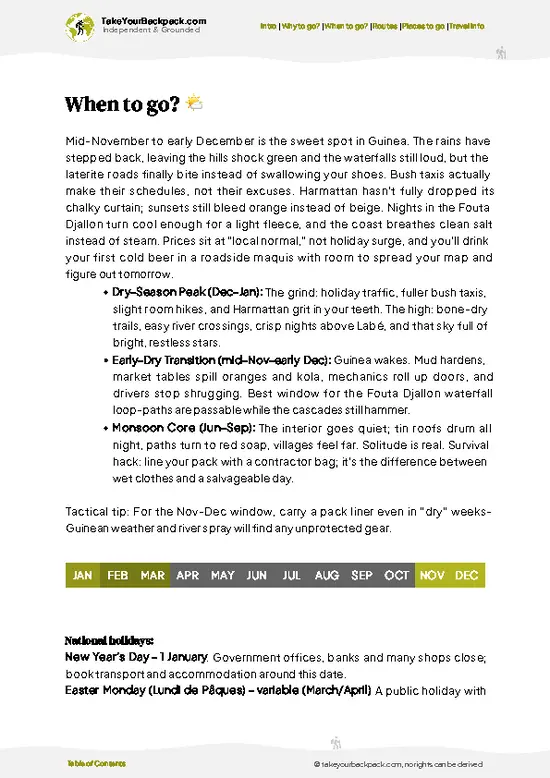
source: climatestotravel.comJANJanuary: excellent for travelingFEBFebruary: excellent for travelingMARMarch: excellent for travelingAPRApril: highly recommended for travelingMAYMay: fair for travelingJUNJune: fair for travelingJULJuly: fair for travelingAUGAugust: fair for travelingSEPSeptember: fair for travelingOCTOctober: fair for travelingNOVNovember: highly recommended for travelingDECDecember: excellent for traveling
when-to-go

✈️ The backpacker research shortcutGuinea Travel Guide

An offline-friendly backpacking guide with optimized travel routes, ranked highlights, transport advice, and the best areas to stay.
example page 0 from our offline Travel Guide for Guinea
example page 1 from our offline Travel Guide for Guinea
example page 2 from our offline Travel Guide for Guinea
example page 3 from our offline Travel Guide for Guinea
example page 4 from our offline Travel Guide for Guinea
example page 5 from our offline Travel Guide for Guinea
example page 6 from our offline Travel Guide for Guinea
example page 7 from our offline Travel Guide for Guinea
The digital guide (282 pages) contains:
67 highlights, ranked by travel appeal
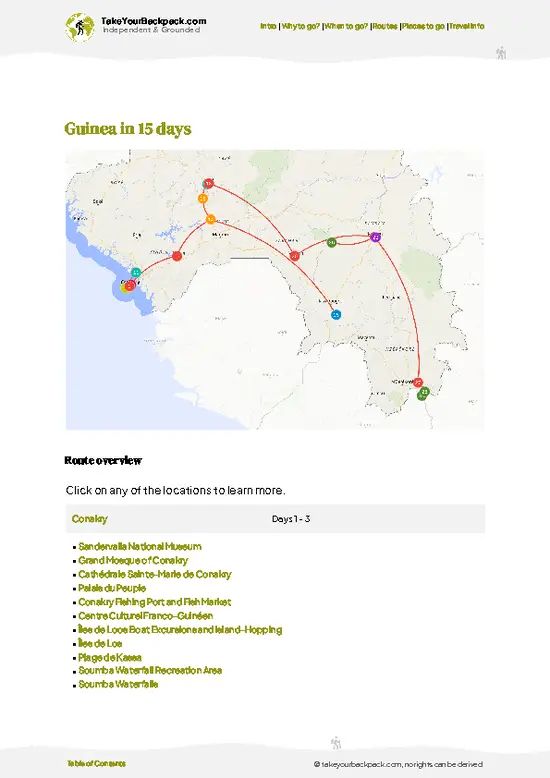
Optimized 5, 10 & 15-day travel routes
Cities, national parks, landmarks, beaches
How to get around
Offline-friendly for travel without Wi-Fi
👉 Click to see all 30+ guide features

📅 Plan smarter in minutes, not weeks
Month by month travel advice
Festivals & national holidays
Budget expectations

🗺️ Go to the right places, skip the overrated ones
Honest pros & cons of destinations
Top hikes, parks & viewpoints
Lesser-known places most travelers miss
Clear “worth it vs skip it” guidance

🛏️ Travel smoothly without rookie mistakes
Best areas to stay
Transport systems explained simply
Common scams & safety advice
SIM cards, money & practical tips

🌍 Understand the country, not just visit it
Culture & traditions
52 Essential phrases & customs
Festivals worth planning around
Traveler-friendly historical context
Insights that make places more meaningful

📱 Built for real travel conditions
Fully downloadable PDF
Works completely offline
Optimized for phone use
Useful in remote areas & buses
Everything in one place
Save weeks of stressful planning
Get instant access to your full guide. 30‑day money-back guarantee.


By proceeding you agree to our terms.
Sent to your inbox immediately after payment • 100% Secure Checkout
Best Backpacking Travel Advisor 2025 tourism awardBest Backpacking
Travel Advisor
2025
What others say about Take Your Backpack Guides:
⭐⭐⭐⭐⭐
Fantastic, amazing amount of information!
⭐⭐⭐⭐⭐
My goodness this is amazing, it's what I've been looking for hats off too you!
⭐⭐⭐⭐⭐
I think this is absolutely BRILLIANT
⭐⭐⭐⭐
Very complete and informative. It's still missing places, but I gotta to commend you
⭐⭐⭐⭐⭐
This is truly amazing, thank you, can't wait to explore it with my kids!
⭐⭐⭐⭐⭐
Awesome resource, thank you!
⭐⭐⭐⭐⭐
This is amazing! Can't wait to explore the ones I haven't seen
⭐⭐⭐⭐
I love this! Well done, great idea.
⭐⭐⭐⭐⭐
Thanks for taking the time to make this gem!
⭐⭐⭐⭐⭐
This might be the best website I've ever seen.
⭐⭐⭐⭐⭐
Congratulations, and thank you so much for your work; it's incredibly valuable.
⭐⭐⭐⭐
In all seriousness I think you did a great job pointing out the important spots
⭐⭐⭐⭐⭐
10/10 very good
⭐⭐⭐⭐⭐
As someone who's only just starting to visit regularly this is awesome, thank you.
⭐⭐⭐⭐
Thank you very much! I'm going to visit my dad, it's going to be very useful!
⭐⭐⭐⭐⭐
This is really cool! We'll be travelling for the first time and this definitely come in handy.
⭐⭐⭐⭐⭐
You are now our minister of culture, congratulations 👨‍💼
⭐⭐⭐⭐⭐
Just wanted to tell you that this is a pearl! Going to follow your recommendations.
⭐⭐⭐⭐⭐
This is so cool. I'll definitely be using the resource for my travels soon.
⭐⭐⭐⭐⭐
This is very impressive! Good work.
⭐⭐⭐⭐⭐
This is an amazing and informative site. Very well done!

🛏️ Where to stay?Where staying makes the most sense

Mamou is a modest city, but it’s a key crossroads in Guinea’s Fouta Djallon region, so where you stay shapes your entire experience. For backpackers, the best area is the central district around the main market and bus station. This zone is the city’s heartbeat—safe enough by local standards, buzzing with traders, travelers, and locals swapping stories. It’s where you’ll find the few budget guesthouses and informal hostels that cater to solo backpackers and those looking to stretch their francs. The vibe here is raw and authentic, with a steady flow of people coming and going, which means you’re … read more 👉
Mamou is a modest city, but it’s a key crossroads in Guinea’s Fouta Djallon region, so where you stay shapes your entire experience. For backpackers, the best area is the central district around the main market and bus station. This zone is the city’s heartbeat—safe enough by local standards, buzzing with traders, travelers, and locals swapping stories. It’s where you’ll find the few budget guesthouses and informal hostels that cater to solo backpackers and those looking to stretch their francs. The vibe here is raw and authentic, with a steady flow of people coming and going, which means you’re never isolated.

Compared to the quieter residential neighborhoods on the outskirts, which feel safer but lack social energy and traveler infrastructure, the central district offers a trade-off: a bit more noise and hustle for access to community and convenience. You sacrifice some comfort and polished amenities, but you gain immersion and connection. This is where you’ll meet other travelers, share rides, and get the real pulse of Mamou. If you want comfort and calm, you’ll pay more and miss out on that social buzz. For backpackers, the central district is the smart, high-value choice.

🚌 Getting aroundGetting around like a local

Mamou moves at its own rhythm—less about strict timetables and more about a pulse you feel in the streets. It’s a place where schedules are suggestions, and the real flow depends on the crowd, the weather, and the mood of the day. You won’t find a clock dictating your pace here; instead, you’ll navigate a dance between waiting and moving, where patience and flexibility pay off. This is a city where the journey itself is part of the experience, and understanding the trade-offs between time, money, and comfort is your secret weapon.


  • Walking: The most reliable and cost-free way to get around Mamou. Streets are compact, and many key spots are within a 20-30 minute stroll. It’s slow but gives you full control over your schedule and a chance to soak in local life. No cost, zero wait, but expect
read more 👉
Mamou moves at its own rhythm—less about strict timetables and more about a pulse you feel in the streets. It’s a place where schedules are suggestions, and the real flow depends on the crowd, the weather, and the mood of the day. You won’t find a clock dictating your pace here; instead, you’ll navigate a dance between waiting and moving, where patience and flexibility pay off. This is a city where the journey itself is part of the experience, and understanding the trade-offs between time, money, and comfort is your secret weapon.


  • Walking: The most reliable and cost-free way to get around Mamou. Streets are compact, and many key spots are within a 20-30 minute stroll. It’s slow but gives you full control over your schedule and a chance to soak in local life. No cost, zero wait, but expect some heat and uneven sidewalks.


  • Minibus Taxis: These shared vans are the backbone of Mamou’s transit. They run roughly from 6 AM to 7 PM, with fares around 200-300 GNF (Guinean Francs). They’re cheap and relatively quick, but comfort is minimal—expect crowded rides and frequent stops. Timing is flexible but unpredictable; they leave when full, not on a clock.


  • Motorcycle Taxis (Moto): For speed and door-to-door service, motos are unbeatable. Available all day and night, they cost about 500-1000 GNF depending on distance. They’re fast and nimble but less safe and less comfortable, especially if you’re carrying a backpack. Great for short hops when time is tight.


  • Private Car Hire: If you want to skip the hassle and don’t mind spending more, private cars can be arranged. Prices start around 50,000 GNF per day. This option maximizes comfort and control over your schedule but at a steep cost compared to local alternatives. Ideal if you’re traveling with a group or need to cover long distances quickly.


Mastering Mamou’s transit means balancing your priorities: save money by walking or hopping on a minibus, or pay for speed and comfort with motos or private cars. The city rewards those who read its tempo and choose their moves wisely.

👛 Costs (as of 27 April 2026)Money, prices, and spending tips

Backpacking in Mamou, Guinea, is a balancing act between stretching your budget and navigating limited infrastructure, but knowing the cost landscape lets you play it smart.
  • Dorm Accommodation (High Season): Expect to pay around €8 to €12 per night. High season sees a slight bump due to demand, but options remain basic—think simple rooms with shared facilities.
  • Dorm Accommodation (Off-Season): Prices drop to about €5 to €8. Fewer travelers mean more negotiating power, but amenities don’t improve much, so comfort stays modest.
  • Meals: Street food and local eateries dominate, with meals costing between €1.50 and €3.50. You’ll find filling dishes like rice, beans, and grilled meat, but expect simple preparation and limited variety.
  • Local Transport: Shared taxis and minibuses are the norm,
read more 👉
Backpacking in Mamou, Guinea, is a balancing act between stretching your budget and navigating limited infrastructure, but knowing the cost landscape lets you play it smart.
  • Dorm Accommodation (High Season): Expect to pay around €8 to €12 per night. High season sees a slight bump due to demand, but options remain basic—think simple rooms with shared facilities.
  • Dorm Accommodation (Off-Season): Prices drop to about €5 to €8. Fewer travelers mean more negotiating power, but amenities don’t improve much, so comfort stays modest.
  • Meals: Street food and local eateries dominate, with meals costing between €1.50 and €3.50. You’ll find filling dishes like rice, beans, and grilled meat, but expect simple preparation and limited variety.
  • Local Transport: Shared taxis and minibuses are the norm, costing roughly €0.30 to €0.70 per trip within the city. It’s cheap but can be crowded and irregular, so factor in some waiting time.
  • City Transport Pass: There is no formal city transport pass in Mamou. Budget travelers rely on pay-per-ride options, which keeps upfront costs low but requires constant small payments.
  • Basic Activities/Entry Fees: Cultural sites and local markets usually have no entry fee or a nominal charge around €0.50 to €1.50. Organized tours are rare and tend to be pricier if available.
  • Miscellaneous Expenses: Budget about €1 to €2 daily for essentials like bottled water, snacks, or minor supplies. Internet access is patchy and often requires buying data bundles, which can add to costs.

Mamou’s daily backpacking budget typically lands between €10 and €20. You’re trading off comfort and convenience for affordability and authenticity, but with clear expectations, you control where to save and where to invest for a trip that feels both manageable and genuinely immersive.
⚠️ Prices can change and everyone travels differently, so take this as a rough guide. Hope it helps you plan your adventure!

🚌 Day tripsBest day trips from Mamou

Mamou, Guinea, is a fantastic launchpad for day trips that reveal the country’s rich culture and stunning landscapes. Here’s how to make the most of your time without breaking the bank.

Mount Nimba
Just a couple of hours from Mamou, Mount Nimba offers breathtaking views and a chance to explore unique biodiversity. The hike is moderate, making it accessible for most backpackers. Expect to pay around $5 for transport and a small fee for park entry. The best time to visit is during the dry season, from November to April, when trails are less muddy. A common mistake is underestimating the weather; pack layers, as it can get chilly at higher altitudes.


Fouta Djallon
This region is a treasure trove of waterfalls and lush greenery, perfect for a day of exploration. It’s about a 90-minute … read more 👉
Mamou, Guinea, is a fantastic launchpad for day trips that reveal the country’s rich culture and stunning landscapes. Here’s how to make the most of your time without breaking the bank.

Mount Nimba
Just a couple of hours from Mamou, Mount Nimba offers breathtaking views and a chance to explore unique biodiversity. The hike is moderate, making it accessible for most backpackers. Expect to pay around $5 for transport and a small fee for park entry. The best time to visit is during the dry season, from November to April, when trails are less muddy. A common mistake is underestimating the weather; pack layers, as it can get chilly at higher altitudes.


Fouta Djallon
This region is a treasure trove of waterfalls and lush greenery, perfect for a day of exploration. It’s about a 90-minute drive from Mamou. You can easily spend the day hiking and swimming in natural pools, all for under $10, including transport. The rainy season (May to October) brings vibrant scenery, but be cautious of slippery paths. Many first-timers miss the best spots by sticking to well-trodden paths; venture off the beaten track for hidden gems.
👉 Explore Fouta Djallon

Kankan
A vibrant town known for its lively markets and cultural scene, Kankan is just a two-hour ride from Mamou. You can immerse yourself in local life, sampling street food and browsing artisan crafts. Budget around $8 for transport and snacks. The dry season is ideal for visiting, as the markets are bustling. A common pitfall is rushing through; take your time to chat with locals and soak in the atmosphere.
👉 Explore Kankan

Labe
Famous for its traditional music and crafts, Labe is a must-visit. It’s about a two-hour journey from Mamou. Enjoy the local music scene and shop for handmade goods, all for around $10. The best time to go is during festivals, which happen throughout the year. First-timers often overlook the music venues; ask locals for recommendations to catch authentic performances.
Want to know what more Guinea offers?
The Guinea Travel Guide describes 67 highlights, from cities to national parks, from beaches to hikes

Get the Travel Guide -

🍲 FoodWhat to Eat & Drink

In Mamou, food is a vibrant part of daily life, and you’ll want to dive right into the local scene. Start with fufu, a starchy staple made from cassava or yam, often served with rich, spicy sauces. Pair it with soupou kandja, a flavorful okra stew that packs a punch. Don’t miss out on grilled fish from the rivers, seasoned to perfection and served with a side of attieke, a fermented cassava dish that adds a tangy twist.

Street food is where the magic happens. Vendors line the bustling markets, offering everything from meat skewers to fried plantains. Grab a seat on a low bench and soak in the lively chatter around you. The atmosphere is electric, filled with the aroma of spices and sizzling meats.

When it comes to drinks, try the local palm wine—it’s sweet and slightly effervescent, perfect … read more 👉
In Mamou, food is a vibrant part of daily life, and you’ll want to dive right into the local scene. Start with fufu, a starchy staple made from cassava or yam, often served with rich, spicy sauces. Pair it with soupou kandja, a flavorful okra stew that packs a punch. Don’t miss out on grilled fish from the rivers, seasoned to perfection and served with a side of attieke, a fermented cassava dish that adds a tangy twist.

Street food is where the magic happens. Vendors line the bustling markets, offering everything from meat skewers to fried plantains. Grab a seat on a low bench and soak in the lively chatter around you. The atmosphere is electric, filled with the aroma of spices and sizzling meats.

When it comes to drinks, try the local palm wine—it’s sweet and slightly effervescent, perfect for toasting with new friends. Remember, sharing food is a sign of hospitality here, so don’t hesitate to dig in with your hands and enjoy the communal vibe.

🛡️ SafetyScams, Hazards, and Annoyances

Mamou, Guinea, is generally safe for backpackers, but a few situational awareness tips can enhance your experience. Stick to well-lit areas at night, especially if you’re solo. The streets can be quiet, and it’s wise to avoid wandering too far from your accommodation after dark.

Watch for common scams, like overly friendly locals offering unsolicited guidance. Politely decline and keep moving. Street vendors can be persistent, but a firm “no” usually does the trick.

Keep your belongings close, especially in crowded markets. Pickpocketing isn’t rampant, but it can happen. Carry a small daypack with essentials and leave valuables at your accommodation.

Overall, a confident demeanor and a bit of street smarts will serve you well in Mamou. Enjoy the local culture, and don’t let minor annoyances dampen your adventure.

Other Guinean cities near Mamou

Explore more nearby:

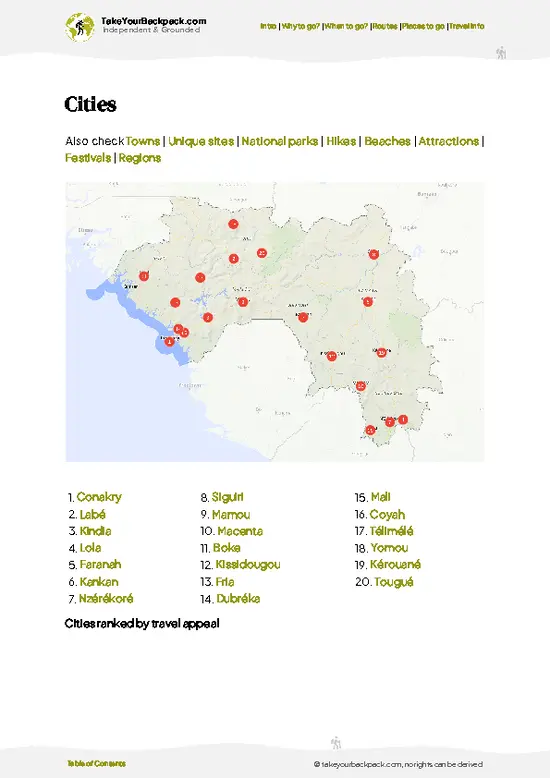
  • Kindia—waterfalls, agricultural center, fruit markets| 93 km away
  • Labé—Fouta Djallon plateau, Peulh heritage, cool climate| 107 km away
  • Télimélé—Fouta Djallon foothills, Fulani villages, local livestock markets| 119 km away

💡 Not sure where to go next?
Create a personalized itinerary for Guinea including Mamou and the places that fit your trip.

Generate my itinerary

👉 Discover all cities

Or checkout all Guinea has to offer (think cities, towns, villages, national parks, hikes, beaches, festivals)
Country photo of Guinea

We 💚 feedbackParting advice and final tips

Mamou has a rhythm all its own. The market buzzes with life, and the locals are genuinely warm. Don’t miss the chance to try the grilled fish—it’s a flavor bomb you won’t forget. Just a heads-up: the roads can be rough, so plan your travel times wisely. Embrace the chaos; it’s part of the charm. You’ll leave with stories that linger long after you’re back home.

✍️ Help improve this page!
The information on this page is based on in-depth research, insights shared by experienced travelers, and feedback from the local travel community in Guinea. While every effort is made to keep the information accurate and current, conditions can change — so if you spot anything incorrect or outdated, please get in touch.


🙋‍♂️ Give feedback

👋 Meet the founderWho’s Behind Take Your Backpack?

Johan, backpacker and founder of TakeYourBackpackHi, I’m Johan (Netherlands 🇳🇱), the creator of TakeYourBackpack. Over the past decade, I’ve backpacked through 80+ countries across six continents, gaining extensive experience with independent travel, long-term trips, and overland routes.

This site is built on a combination of firsthand travel experience and carefully curated insights from other backpackers. Many guides are based on places I’ve personally visited, while others bring together tips, observations, and practical advice shared by trusted travelers I’ve met along the way.

The goal is to provide realistic, experience-driven guidance — not generic itineraries — so you can explore destinations with better context, clearer expectations, and more confidence.

Get full Guinea guide •
Instant download • 67 highlights • Full Offline guide