
×

Guinea🇬🇳 | citiesKankansavanna landscape, university town, Manding culture | things to do and best time to go

Explore FaranahExplore Kindia

Backpacking in Kankan
🌟 Highlightcity ranked #4
By Johan Kruseman 🇳🇱 | Updated June 9, 2026

Most backpackers expect Kankan to be a sleepy, sun-baked outpost, but here’s the twist: it’s actually Guinea’s unofficial “nightlife capital” east of Conakry, with a pulse that keeps beating long after sunset—think open-air bars, live music, and a street food scene that’s more lively than you’d guess from the dusty first impression. Kankan sits in eastern Guinea, a long haul from the capital, and it’s the country’s second-largest city—a crossroads for trade, culture, and the region’s famously friendly Malinké people. The city’s main square, Place de l’Indépendance, is a social magnet, and the colonial-era mosque is worth a look, but don’t expect a museum circuit or manicured parks. Kankan is gritty, chaotic, and real. It’s cheap, safe by West African standards, and easy to navigate, but you’ll rarely bump into other travelers. Compared to Conakry or Kindia, Kankan is less cosmopolitan but more welcoming, with a raw, communal energy that rewards curiosity.

Discover everything you want to know in the 📖 Guinea Travel Guide.


Get your Guinea guide
67 ranked highlights, routes & tips, works offline (282 pages)
Loading the map 🌍
CLICK TO FILTER
cities
towns
landmarks
national parks
hikes
beaches
attractions
festivals
regions
SHOW COUNTRY’S BESTSHOW ALL

✨ Why go?
Ranked #4 city in Guinea
The unique appeal for travelers

Kankan, Guinea, is a strategic stop for backpackers weaving through West Africa. It offers a basecamp value that’s hard to beat, making it a smart choice for day trips into the surrounding countryside. The hostels here are budget-friendly and often buzzing with fellow travelers, creating a community vibe that’s perfect for sharing tips and stories.

When it comes to food, you’ll find local eateries serving up hearty meals that won’t break the bank, allowing you to fuel up for your adventures. The city is walkable, making it easy to explore on foot, which is a bonus when you want to soak in the local atmosphere without the hassle of transport.

As for nightlife, Kankan has a laid-back scene where you can unwind after a day of exploration, often with live music that showcases local talent. … read more 👉
Kankan, Guinea, is a strategic stop for backpackers weaving through West Africa. It offers a basecamp value that’s hard to beat, making it a smart choice for day trips into the surrounding countryside. The hostels here are budget-friendly and often buzzing with fellow travelers, creating a community vibe that’s perfect for sharing tips and stories.

When it comes to food, you’ll find local eateries serving up hearty meals that won’t break the bank, allowing you to fuel up for your adventures. The city is walkable, making it easy to explore on foot, which is a bonus when you want to soak in the local atmosphere without the hassle of transport.

As for nightlife, Kankan has a laid-back scene where you can unwind after a day of exploration, often with live music that showcases local talent. Plus, its easy onward travel options mean you can seamlessly continue your journey, whether you’re heading deeper into Guinea or beyond.

In short, Kankan is more than just a stop; it’s a hub that balances time, money, and comfort, making it a worthwhile addition to your backpacking route.
Want to include Kankan in your Guinea route?
Create a personalized Guinea itinerary that includes Kankan and the places that fit your trip — based on your travel style, budget, and available time. Get your route in seconds.

Generate my trip

💡 HighlightsTop highlights of Kankan

  • Grande Mosquée de Kankan — The city’s main mosque and visual anchor, where daily prayers shape the rhythm of life; great for observing local religious architecture and the bustle around prayer times (dress respectfully and visit outside major prayer moments).
  • Tinkisso Riverfront and Bridge — The Tinkisso runs past Kankan and its riverfront is a real slice of local life: fishermen, boat traffic, laundry scenes, and colorful sunsets. Walking the bridge gives a good feel for the town’s geography and daily rhythms.
  • Marché Central de Kankan — A lively, crowded market selling everything from fresh produce and spices to textiles and kola nuts; the best place to experience commerce, local food, and Manding trade networks up close.
  • Université de Kankan (campus area) — The public university campus
read more 👉
  • Grande Mosquée de Kankan — The city’s main mosque and visual anchor, where daily prayers shape the rhythm of life; great for observing local religious architecture and the bustle around prayer times (dress respectfully and visit outside major prayer moments).
  • Tinkisso Riverfront and Bridge — The Tinkisso runs past Kankan and its riverfront is a real slice of local life: fishermen, boat traffic, laundry scenes, and colorful sunsets. Walking the bridge gives a good feel for the town’s geography and daily rhythms.
  • Marché Central de Kankan — A lively, crowded market selling everything from fresh produce and spices to textiles and kola nuts; the best place to experience commerce, local food, and Manding trade networks up close.
  • Université de Kankan (campus area) — The public university campus is a youthful, social hub with cheap cafés, student-run events, and informal cultural exchanges; useful for seeing contemporary life and meeting locals outside the tourist circuit.
  • Old Quarter and Artisan Streets — Walkable neighborhoods near the city center where small workshops, tailors, and traditional vendors still operate; good for noticing vernacular architecture, local crafts, and everyday neighborhood life.
For day trips outside the city: visit Kouroussa (historic river town and market), Siguiri (gold-mining town on the Niger with lively local markets), and the smaller villages along the Tinkisso valley for straightforward, visitable cultural excursions.
Spotted a mistake or missing something? Contact us.

🏘️ NeighborhoodsWhere things are and how it's laid out

Kankan, a vibrant hub in Guinea, offers a mix of cultural experiences and practical logistics for backpackers. Here’s a breakdown of key neighborhoods to help you navigate your stay.

Centre Ville
This is the heart of Kankan. It’s bustling, with local markets and street vendors. You’ll find affordable accommodations and easy access to transport. The vibe is lively, perfect for those who thrive on energy. Walkability is high, making it easy to explore. Ideal for short stays, but the constant activity might wear you out if you’re looking for peace.

Quartier Kankankoro
A bit quieter, this area offers a more local experience. It’s less touristy, which means you can immerse yourself in daily life. Costs are low, and you’ll find cozy guesthouses. Walkability is decent, but some spots may require … read more 👉
Kankan, a vibrant hub in Guinea, offers a mix of cultural experiences and practical logistics for backpackers. Here’s a breakdown of key neighborhoods to help you navigate your stay.

Centre Ville
This is the heart of Kankan. It’s bustling, with local markets and street vendors. You’ll find affordable accommodations and easy access to transport. The vibe is lively, perfect for those who thrive on energy. Walkability is high, making it easy to explore. Ideal for short stays, but the constant activity might wear you out if you’re looking for peace.

Quartier Kankankoro
A bit quieter, this area offers a more local experience. It’s less touristy, which means you can immerse yourself in daily life. Costs are low, and you’ll find cozy guesthouses. Walkability is decent, but some spots may require a short taxi ride. Great for longer stays if you want to settle in and soak up the culture.

Quartier Kankankoro
This area is known for its nightlife. Bars and music venues come alive after dark, making it a hotspot for socializing. Prices can vary, but you can find budget-friendly options. It’s walkable, but be cautious at night. Best for short stays if you’re looking to experience the local scene.

Quartier Sogbè
A residential area that feels more laid-back. It’s less frequented by tourists, offering a glimpse into everyday life. Accommodations are affordable, and it’s a short taxi ride to the city center. Walkability is moderate. Perfect for longer stays if you want a break from the hustle and bustle.

⌛️ 1 daySeeing the highlights in 24 hours

Kankan, Guinea, is a vibrant hub of culture and history, often overlooked by travelers. This city pulses with life, showcasing a blend of traditional and modern influences. You’ll find bustling markets, lively music, and a rich tapestry of local customs that make it a unique stop on your journey.

Start your day in the heart of Kankan at the lively Grand Marché. The air is thick with the scent of spices and fresh produce. Engage with local vendors selling everything from colorful fabrics to handmade crafts. Grab a breakfast of *foutou*, a starchy dish made from cassava or plantains, paired with a steaming cup of local coffee. This is not just a meal; it’s a chance to soak in the morning energy of the city.

After breakfast, head to the nearby Kankan Museum. It’s a small but fascinating place … read more 👉
Kankan, Guinea, is a vibrant hub of culture and history, often overlooked by travelers. This city pulses with life, showcasing a blend of traditional and modern influences. You’ll find bustling markets, lively music, and a rich tapestry of local customs that make it a unique stop on your journey.

Start your day in the heart of Kankan at the lively Grand Marché. The air is thick with the scent of spices and fresh produce. Engage with local vendors selling everything from colorful fabrics to handmade crafts. Grab a breakfast of *foutou*, a starchy dish made from cassava or plantains, paired with a steaming cup of local coffee. This is not just a meal; it’s a chance to soak in the morning energy of the city.

After breakfast, head to the nearby Kankan Museum. It’s a small but fascinating place that showcases the region’s history and culture, including artifacts from the Manding Empire. Spend an hour here, absorbing the stories that shaped this area.

In the afternoon, wander through the vibrant neighborhoods of Kankan, particularly around the Avenue Moussa Tavele. Here, you can find local artisans at work. Seek out the *boulangeries* for a mid-afternoon snack; the fresh bread is a must-try. If you’re feeling adventurous, visit the lesser-known *Fouta Djallon* area, where you can see traditional mud-brick houses and experience the local way of life.

As evening approaches, make your way to the banks of the Kankan River. The sunset here is a spectacle, painting the sky in hues of orange and pink. Find a local eatery nearby for dinner, where you can savor grilled fish or chicken with spicy sauce, a true taste of Guinea.

Kankan may not be on every traveler’s radar, but with its rich culture and warm hospitality, it offers a day full of authentic experiences that are well worth your time.
Turn your Kankan visit into an Guinea adventure
Build a complete Guinea route with Kankan, hidden gems, must-see destinations, and realistic travel times included.

Generate my trip

🌤️ When to go?Seasonal considerations and timing


  • Topic: Weather – Kankan’s climate is tropical savanna, swinging between a wet season (May to October) and a dry season (November to April). The wet months bring heavy rains that can turn trails into mudslides, slowing your pace and testing your gear.

  • Topic: Temperature – Expect highs around 30-35°C (86-95°F) year-round, but the dry season cools nights to a comfortable 20°C (68°F), while the wet season keeps nights sticky and warm, often above 24°C (75°F).

  • Topic: Daylight Hours – Near the equator, daylight is steady, roughly 12 hours year-round. This consistency means you won’t lose precious hiking time to short days, but you also won’t get extra daylight to stretch your explorations.

  • Topic: Crowds – Kankan isn’t a tourist hotspot, so crowds are minimal anytime. However, local festivals
read more 👉

  • Topic: Weather – Kankan’s climate is tropical savanna, swinging between a wet season (May to October) and a dry season (November to April). The wet months bring heavy rains that can turn trails into mudslides, slowing your pace and testing your gear.

  • Topic: Temperature – Expect highs around 30-35°C (86-95°F) year-round, but the dry season cools nights to a comfortable 20°C (68°F), while the wet season keeps nights sticky and warm, often above 24°C (75°F).

  • Topic: Daylight Hours – Near the equator, daylight is steady, roughly 12 hours year-round. This consistency means you won’t lose precious hiking time to short days, but you also won’t get extra daylight to stretch your explorations.

  • Topic: Crowds – Kankan isn’t a tourist hotspot, so crowds are minimal anytime. However, local festivals during the dry season can bring a lively buzz, offering cultural immersion without overwhelming tourist traffic.

  • Topic: Seasonal Activities – The dry season is prime for trekking and village visits, with clearer paths and easier travel. The wet season, while challenging, transforms the landscape into lush green, ideal for photography and birdwatching if you’re prepared.

  • Topic: Price Fluctuations – Accommodation and transport costs dip during the wet season due to lower demand, but factor in potential delays and limited services. The dry season commands higher prices but guarantees smoother logistics.


Pro-tip: Aim for the shoulder months—April or November—when rains taper off but prices and crowds haven’t peaked, striking a smart balance between comfort and cost.


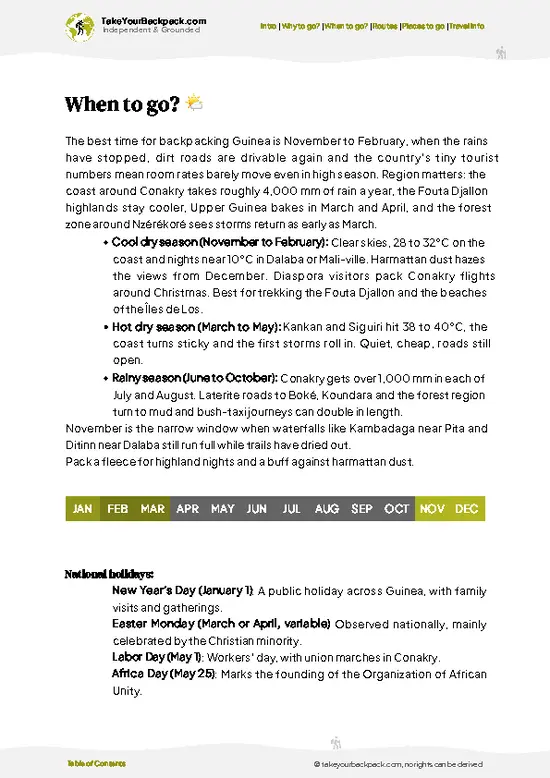
source: climatestotravel.comJANJanuary: excellent for travelingFEBFebruary: excellent for travelingMARMarch: excellent for travelingAPRApril: highly recommended for travelingMAYMay: fair for travelingJUNJune: fair for travelingJULJuly: fair for travelingAUGAugust: fair for travelingSEPSeptember: fair for travelingOCTOctober: fair for travelingNOVNovember: highly recommended for travelingDECDecember: excellent for traveling
when-to-go

✈️ The backpacker research shortcutGuinea Travel Guide

An offline-friendly backpacking guide with optimized travel routes, ranked highlights, transport advice, and the best areas to stay.
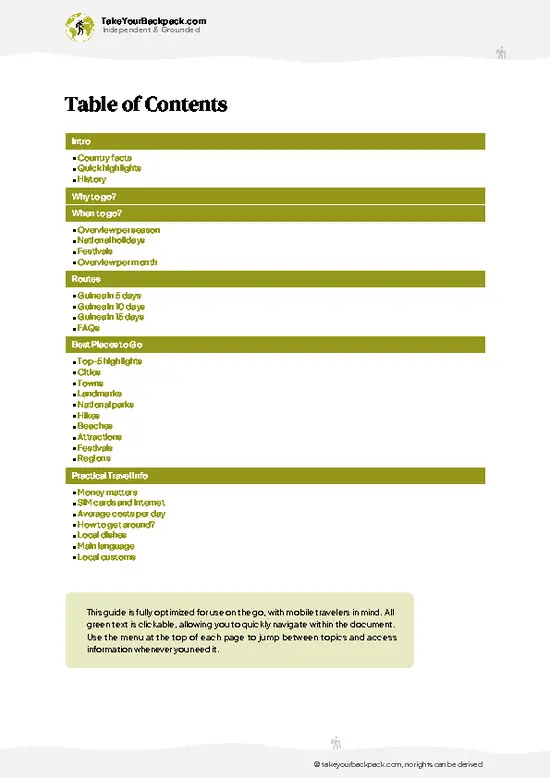
example page 0 from our offline Travel Guide for Guinea
example page 1 from our offline Travel Guide for Guinea
example page 2 from our offline Travel Guide for Guinea
example page 3 from our offline Travel Guide for Guinea
example page 4 from our offline Travel Guide for Guinea
example page 5 from our offline Travel Guide for Guinea
example page 6 from our offline Travel Guide for Guinea
example page 7 from our offline Travel Guide for Guinea
The digital guide (282 pages) contains:
67 highlights, ranked by travel appeal
Optimized 5, 10 & 15-day travel routes
Cities, national parks, landmarks, beaches
How to get around
Offline-friendly for travel without Wi-Fi
👉 Click to see all 30+ guide features

📅 Plan smarter in minutes, not weeks
Month by month travel advice
Festivals & national holidays
Budget expectations

🗺️ Go to the right places, skip the overrated ones
Honest pros & cons of destinations
Top hikes, parks & viewpoints
Lesser-known places most travelers miss
Clear “worth it vs skip it” guidance

🛏️ Travel smoothly without rookie mistakes
Best areas to stay
Transport systems explained simply
Common scams & safety advice
SIM cards, money & practical tips

🌍 Understand the country, not just visit it
Culture & traditions
52 Essential phrases & customs
Festivals worth planning around
Traveler-friendly historical context
Insights that make places more meaningful

📱 Built for real travel conditions
Fully downloadable PDF
Works completely offline
Optimized for phone use
Useful in remote areas & buses
Everything in one place
Save weeks of stressful planning
Get instant access to your full guide. 30‑day money-back guarantee.


By proceeding you agree to our terms.
Sent to your inbox immediately after payment • 100% Secure Checkout
Best Backpacking Travel Advisor 2025 tourism awardBest Backpacking
Travel Advisor
2025
What others say about Take Your Backpack Guides:
⭐⭐⭐⭐⭐
Fantastic, amazing amount of information!
⭐⭐⭐⭐⭐
My goodness this is amazing, it's what I've been looking for hats off too you!
⭐⭐⭐⭐⭐
I think this is absolutely BRILLIANT
⭐⭐⭐⭐
Very complete and informative. It's still missing places, but I gotta to commend you
⭐⭐⭐⭐⭐
This is truly amazing, thank you, can't wait to explore it with my kids!
⭐⭐⭐⭐⭐
Awesome resource, thank you!
⭐⭐⭐⭐⭐
This is amazing! Can't wait to explore the ones I haven't seen
⭐⭐⭐⭐
I love this! Well done, great idea.
⭐⭐⭐⭐⭐
Thanks for taking the time to make this gem!
⭐⭐⭐⭐⭐
This might be the best website I've ever seen.
⭐⭐⭐⭐⭐
Congratulations, and thank you so much for your work; it's incredibly valuable.
⭐⭐⭐⭐
In all seriousness I think you did a great job pointing out the important spots
⭐⭐⭐⭐⭐
10/10 very good
⭐⭐⭐⭐⭐
As someone who's only just starting to visit regularly this is awesome, thank you.
⭐⭐⭐⭐
Thank you very much! I'm going to visit my dad, it's going to be very useful!
⭐⭐⭐⭐⭐
This is really cool! We'll be travelling for the first time and this definitely come in handy.
⭐⭐⭐⭐⭐
You are now our minister of culture, congratulations 👨‍💼
⭐⭐⭐⭐⭐
Just wanted to tell you that this is a pearl! Going to follow your recommendations.
⭐⭐⭐⭐⭐
This is so cool. I'll definitely be using the resource for my travels soon.
⭐⭐⭐⭐⭐
This is very impressive! Good work.
⭐⭐⭐⭐⭐
This is an amazing and informative site. Very well done!

🛏️ Where to stay?How to pick the right area

In Kankan, Guinea, the best area for backpackers to base themselves is the neighborhood around the city center, often referred to simply as the ”Downtown” district. This zone strikes a smart balance between safety, social opportunities, and budget-friendly options. It’s where you’ll find the most guesthouses and hostels catering to solo travelers and those watching their wallets. The vibe here is practical and lively without tipping into chaos—locals and travelers mingle in small markets and street cafes, making it easy to connect without feeling overwhelmed.

Compared to the more residential … read more 👉
In Kankan, Guinea, the best area for backpackers to base themselves is the neighborhood around the city center, often referred to simply as the ”Downtown” district. This zone strikes a smart balance between safety, social opportunities, and budget-friendly options. It’s where you’ll find the most guesthouses and hostels catering to solo travelers and those watching their wallets. The vibe here is practical and lively without tipping into chaos—locals and travelers mingle in small markets and street cafes, making it easy to connect without feeling overwhelmed.

Compared to the more residential outskirts, Downtown offers better access to transport hubs and essential services, which means less time and money wasted on taxis or confusing routes. It’s also safer than the industrial zones or the less-developed neighborhoods on the city’s edge, where infrastructure and security can be unpredictable. While the Downtown area isn’t flashy, it’s functional and welcoming, with enough foot traffic to feel secure after dark but not so much that you lose your sense of calm.

For backpackers who want to stretch their budget without sacrificing comfort or social interaction, this is the sweet spot. You’re trading off luxury for authenticity and convenience, but that’s exactly the kind of trade that turns a trip into a memorable adventure.

🚌 Getting aroundGetting around like a local

Kankan moves at its own rhythm—neither a frantic rush nor a slow crawl, but a pulse that blends West African pragmatism with a touch of improvisational flow. Here, time is a flexible companion, not a strict taskmaster. You’ll find that schedules exist more as guidelines than ironclad rules. The city’s transport system reflects this: a mix of predictable routes and spontaneous detours, where knowing when to hop on or off is as much about reading the street vibe as it is about clocks. For the budget traveler, mastering this flow means understanding where you’re trading minutes for comfort, or a few francs for a smoother ride.


  • Walking: The ultimate zero-cost option. Kankan’s core is compact enough to explore on foot, especially around the central market and riverfront. Walking lets you absorb
read more 👉
Kankan moves at its own rhythm—neither a frantic rush nor a slow crawl, but a pulse that blends West African pragmatism with a touch of improvisational flow. Here, time is a flexible companion, not a strict taskmaster. You’ll find that schedules exist more as guidelines than ironclad rules. The city’s transport system reflects this: a mix of predictable routes and spontaneous detours, where knowing when to hop on or off is as much about reading the street vibe as it is about clocks. For the budget traveler, mastering this flow means understanding where you’re trading minutes for comfort, or a few francs for a smoother ride.


  • Walking: The ultimate zero-cost option. Kankan’s core is compact enough to explore on foot, especially around the central market and riverfront. Walking lets you absorb the city’s textures—dusty streets, vibrant stalls, and the occasional burst of local music. It’s free, flexible, and the best way to catch the city’s pulse, but expect heat and uneven sidewalks.


  • Minibus Taxis (Taxi-Brousse): These shared vans are the backbone of local transit. They run from early morning (around 6:30 AM) until dusk, with fares typically under 1,000 GNF for short hops. They’re cheap and relatively quick, but comfort is minimal—expect crowded seats and frequent stops. The trade-off here is clear: save money and time but sacrifice personal space and predictability.


  • Motorcycle Taxis (Moto-Taxis): For a slightly higher price (around 2,000–3,000 GNF per ride), moto-taxis offer speed and agility through Kankan’s often congested streets. They operate from dawn till late evening and are perfect for short to medium distances when you want to cut through traffic. The trade-off is safety and comfort—helmets are rare, and the ride can be bumpy, but you’ll shave off precious minutes.


  • Private Taxis: Less common and pricier, private taxis are your comfort option. They don’t run on fixed schedules and can be negotiated for longer trips or airport runs. Expect to pay significantly more (5,000 GNF and up), but you gain control over timing and a smoother ride. This is the choice when time is tight, and you want to avoid the unpredictability of shared transport.


Understanding Kankan’s transport is about balancing your priorities. If you’re chasing budget, walking and minibus taxis dominate your options, but they demand patience and a willingness to embrace the city’s organic tempo. If you value time and comfort, moto-taxis and private cars offer shortcuts—at a price. The city’s flow rewards those who read its signals, turning every trip into a strategic move rather than a mere commute.

👛 Costs (as of 26 April 2026)Typical daily expenses

Backpacking in Kankan, Guinea, demands a clear-eyed approach to spending. You’re balancing limited infrastructure with local pricing that’s modest but variable. Here’s the breakdown of what your daily costs look like, so you can plan with precision.
  • Dorm Accommodation (High Season): Expect to pay around €8 to €12 per night. High season sees a slight bump due to demand, but options remain basic—think simple beds in shared rooms with minimal amenities.
  • Dorm Accommodation (Off-Season): Prices drop to about €5 to €8. Fewer travelers mean more negotiating power, but don’t expect luxury; it’s about clean, safe, and functional.
  • Meals: Local street food and small eateries run about €2 to €4 per meal. You’ll find hearty, filling dishes like rice and sauce or grilled meats. Western-style or imported
read more 👉
Backpacking in Kankan, Guinea, demands a clear-eyed approach to spending. You’re balancing limited infrastructure with local pricing that’s modest but variable. Here’s the breakdown of what your daily costs look like, so you can plan with precision.
  • Dorm Accommodation (High Season): Expect to pay around €8 to €12 per night. High season sees a slight bump due to demand, but options remain basic—think simple beds in shared rooms with minimal amenities.
  • Dorm Accommodation (Off-Season): Prices drop to about €5 to €8. Fewer travelers mean more negotiating power, but don’t expect luxury; it’s about clean, safe, and functional.
  • Meals: Local street food and small eateries run about €2 to €4 per meal. You’ll find hearty, filling dishes like rice and sauce or grilled meats. Western-style or imported foods push prices higher, so stick local for budget efficiency.
  • Local Transport: Short rides on shared taxis or bush taxis cost roughly €0.30 to €0.60. It’s cheap but expect crowded conditions and irregular schedules.
  • City Transport Pass: Kankan doesn’t have a formal city transport pass system. Budgeting for daily transport means relying on individual fares rather than a flat pass.
  • Basic Activities/Entry Fees: Cultural sites and local attractions typically charge between €1 and €3. These are modest fees but add up if you’re hitting multiple spots in a day.
  • Miscellaneous Expenses: Budget around €1 to €3 for essentials like bottled water, snacks, or small tips. Internet access is limited and can be costly if you rely on data bundles.

Total daily costs for backpacking in Kankan hover between €12 and €25, depending on season and your appetite for comfort. This range covers essentials without padding for splurges, giving you a clear view of what it takes to navigate the city on a shoestring while still engaging with its pulse.
⚠️ Prices can change and everyone travels differently, so take this as a rough guide. Hope it helps you plan your adventure!

🚌 Day tripsExploring the surroundings

Kankan, Guinea, is a fantastic base for day trips that offer a taste of the region’s rich culture and stunning landscapes. Here’s how to make the most of your time without breaking the bank.

Mount Nimba
Just a couple of hours from Kankan, Mount Nimba is a paradise for nature lovers. The hike to the summit is challenging but rewarding, with breathtaking views of the surrounding forests and valleys. Expect to pay around $5 for transportation and a small fee for park access. The best time to go is during the dry season, from November to April, when the trails are more manageable. A common mistake is underestimating the hike’s difficulty; bring plenty of water and snacks to keep your energy up.


Kankan Market
Staying local can be just as exhilarating. The Kankan Market is a sensory overload … read more 👉
Kankan, Guinea, is a fantastic base for day trips that offer a taste of the region’s rich culture and stunning landscapes. Here’s how to make the most of your time without breaking the bank.

Mount Nimba
Just a couple of hours from Kankan, Mount Nimba is a paradise for nature lovers. The hike to the summit is challenging but rewarding, with breathtaking views of the surrounding forests and valleys. Expect to pay around $5 for transportation and a small fee for park access. The best time to go is during the dry season, from November to April, when the trails are more manageable. A common mistake is underestimating the hike’s difficulty; bring plenty of water and snacks to keep your energy up.


Kankan Market
Staying local can be just as exhilarating. The Kankan Market is a sensory overload of colors, sounds, and smells. Spend a few hours wandering through stalls filled with spices, textiles, and local crafts. It’s free to explore, but set aside about $10 for snacks and small purchases. Early mornings are best to avoid the crowds and catch the freshest produce. First-timers often miss the chance to engage with vendors; don’t be shy—ask questions and practice your French!


Siguiri
A short bus ride away, Siguiri offers a glimpse into the gold mining industry that shapes the local economy. You can take a guided tour of the mines for about $15, which includes transportation. The trip is best during the cooler months, from December to February. Many backpackers overlook the cultural significance of the area, so take time to chat with miners and learn about their daily lives.
👉 Explore Siguiri

Kankou Moussa Waterfalls
For a refreshing escape, head to Kankou Moussa Waterfalls, about an hour from Kankan. The sound of cascading water is a perfect backdrop for a picnic. The trip will cost around $10 for transport and entry. Visit during the rainy season for the fullest flow, but be cautious of slippery paths. A common mistake is not bringing a swimsuit; you’ll want to take a dip!


Faranah
Faranah is another nearby town worth exploring, known for its vibrant community and traditional crafts. The journey takes about 90 minutes and costs around $7. The best time to visit is during local festivals, which showcase music and dance. Many travelers overlook the chance to participate in these events, so check local calendars and plan accordingly.
👉 Explore Faranah
Want to know what more Guinea offers?
The Guinea Travel Guide describes 67 highlights, from cities to national parks, from beaches to hikes

Get the Travel Guide -

🍲 FoodEating & Drinking in Kankan

In Kankan, food is a vibrant tapestry of flavors that tells the story of its people. You can’t miss trying fufu, a starchy staple made from cassava or yam, often served with a rich, spicy sauce. Pair it with soup made from groundnut or okra, and you’ll understand why locals savor every bite.

Street food is where the magic happens. Vendors line the bustling markets, serving up grilled fish and chicken skewers marinated in local spices. The aroma wafts through the air, drawing you in. Grab a plate and enjoy it with a side of attieke, a fermented cassava dish that adds a tangy twist.

When it comes to drinks, don’t overlook the local palm wine. It’s sweet, slightly fizzy, and best enjoyed in a communal setting. Sharing a drink with locals is a rite of passage, fostering connections and laughter. … read more 👉
In Kankan, food is a vibrant tapestry of flavors that tells the story of its people. You can’t miss trying fufu, a starchy staple made from cassava or yam, often served with a rich, spicy sauce. Pair it with soup made from groundnut or okra, and you’ll understand why locals savor every bite.

Street food is where the magic happens. Vendors line the bustling markets, serving up grilled fish and chicken skewers marinated in local spices. The aroma wafts through the air, drawing you in. Grab a plate and enjoy it with a side of attieke, a fermented cassava dish that adds a tangy twist.

When it comes to drinks, don’t overlook the local palm wine. It’s sweet, slightly fizzy, and best enjoyed in a communal setting. Sharing a drink with locals is a rite of passage, fostering connections and laughter.

Etiquette is simple: eat with your right hand, and don’t rush. Meals are a time to bond, so take your time and soak in the lively atmosphere. In Kankan, every meal is an experience, a chance to dive deep into the culture.

🛡️ SafetyStaying Safe: What Travelers Should Know

Kankan, Guinea, is generally safe for travelers, but a few situational awareness tips can enhance your experience. Stick to well-lit areas at night, especially if you’re solo. The streets can be quiet, and it’s best to avoid wandering too far from your accommodations after dark.

While scams aren’t rampant, be cautious around markets. Vendors may inflate prices for tourists, so a little haggling can go a long way. If someone offers unsolicited help, it’s wise to politely decline; they might expect a tip for their “assistance.”

Keep your belongings secure and be mindful of your surroundings, especially in crowded areas. A confident demeanor can deter unwanted attention. Engaging with locals is rewarding, but trust your instincts. If something feels off, it’s okay to walk away. By staying … read more 👉
Kankan, Guinea, is generally safe for travelers, but a few situational awareness tips can enhance your experience. Stick to well-lit areas at night, especially if you’re solo. The streets can be quiet, and it’s best to avoid wandering too far from your accommodations after dark.

While scams aren’t rampant, be cautious around markets. Vendors may inflate prices for tourists, so a little haggling can go a long way. If someone offers unsolicited help, it’s wise to politely decline; they might expect a tip for their “assistance.”

Keep your belongings secure and be mindful of your surroundings, especially in crowded areas. A confident demeanor can deter unwanted attention. Engaging with locals is rewarding, but trust your instincts. If something feels off, it’s okay to walk away. By staying aware and grounded, you can navigate Kankan with ease and enjoy its vibrant culture without unnecessary stress.

Other Guinean cities near Kankan

Explore more nearby:

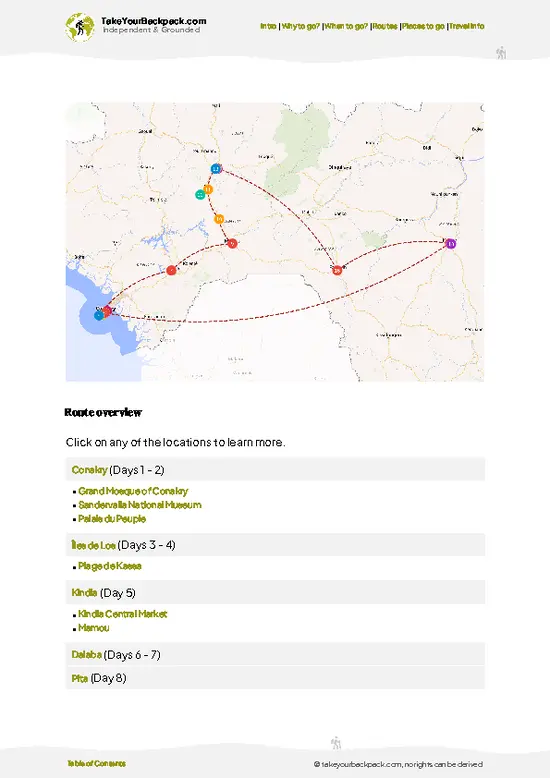
  • Siguiri—gold mining center, Niger River, border trade| 116 km away
  • Kérouané—diamond trading, savanna landscape, remote outpost| 128 km away
  • Kissidougou—forest-savanna transition, coffee production, crossroads town| 159 km away

💡 Not sure where to go next?
Create a personalized itinerary for Guinea including Kankan and the places that fit your trip.

Generate my itinerary

👉 Discover all cities

Or checkout all Guinea has to offer (think cities, towns, villages, national parks, hikes, beaches, festivals)
Country photo of Guinea

We 💚 feedbackSumming up the experience

Kankan has a raw energy that’s hard to shake off. The bustling markets pulse with life, and you’ll find locals eager to share stories over a cup of attaya. Don’t miss the vibrant music scene; it’s a delightful surprise that’ll have you dancing in the streets. Just be mindful of the heat—stay hydrated and pace yourself. Embrace the chaos, and you’ll leave with a piece of Kankan in your heart. It’s not polished, but that’s where its charm lies.

✍️ Help improve this page!
The information on this page is based on in-depth research, insights shared by experienced travelers, and feedback from the local travel community in Guinea. While every effort is made to keep the information accurate and current, conditions can change — so if you spot anything incorrect or outdated, please get in touch.


🙋‍♂️ Give feedback

👋 Meet the founderWho’s Behind Take Your Backpack?

Johan, backpacker and founder of TakeYourBackpackHi, I’m Johan (Netherlands 🇳🇱), the creator of TakeYourBackpack. Over the past decade, I’ve backpacked through 80+ countries across six continents, gaining extensive experience with independent travel, long-term trips, and overland routes.

This site is built on a combination of firsthand travel experience and carefully curated insights from other backpackers. Many guides are based on places I’ve personally visited, while others bring together tips, observations, and practical advice shared by trusted travelers I’ve met along the way.

The goal is to provide realistic, experience-driven guidance — not generic itineraries — so you can explore destinations with better context, clearer expectations, and more confidence.

Get full Guinea guide •
Instant download • 67 highlights • Full Offline guide