×

Guinea🇬🇳 | townsMandianagold mining, savanna plains, rural settlements | things to do and best time to go

Explore GaoualExplore Diana

Backpacking in Mandiana
👌 Worth visitingtown ranked #19
By Johan Kruseman 🇳🇱 | Updated June 6, 2026

A rooster’s call cuts through the haze as you step into Mandiana’s morning—red dust underfoot, the metallic tang of the air hinting at the gold mines nearby. Mandiana sits in eastern Guinea, close to the Mali border, and it’s not a place that flatters itself for tourists. For backpackers, it’s a functional crossroads: a gritty, real West African town where you’ll find a market worth a wander, but little in the way of nightlife or hostels. It’s more relaxed than Kankan, less scenic than the Fouta Djallon, but useful as a launchpad for rural adventures or a necessary stop on the long, slow road east. Transport is mostly bush taxis—expect waits and dust. Costs are low, but so is comfort. You’ll meet few other travelers, but the town’s rhythm is honest, and the welcome, if reserved, is genuine.

Discover everything you want to know in the 📖 Guinea Travel Guide.


Get your Guinea guide
67 ranked highlights, routes & tips, works offline (282 pages)
Loading the map 🌍
CLICK TO FILTER
cities
towns
landmarks
national parks
hikes
beaches
attractions
festivals
regions
SHOW COUNTRY’S BESTSHOW ALL

✨ Why go?
Ranked #19 town in Guinea
What makes it a must-see town

Backpackers flock to Mandiana for its strategic location near stunning hikes and cultural sites. The walkable streets invite exploration, while small-scale guesthouses offer a cozy, communal vibe. You’ll find local food stalls serving up hearty dishes that connect you to the culture. Many travelers stay a few days, soaking in the friendly atmosphere and sharing stories with fellow adventurers. It’s perfect for slow travelers and solo explorers who appreciate a blend of quiet moments and the chance to connect. If you’re looking for a quick stop, you might miss the heart of Mandiana; linger a bit to truly feel its pulse.
Want to include Mandiana in your Guinea route?
Create a personalized Guinea itinerary that includes Mandiana and the places that fit your trip — based on your travel style, budget, and available time. Get your route in seconds.

Generate my trip

💡 HighlightsThe experiences that define the visit

  • Marché central de Mandiana (Central Market) — The real heartbeat of the town: stalls selling fresh produce, rice, spices, second-hand clothes and small household goods. Walk through to see daily life, haggle a little, and sample street food while watching trade rhythms that haven’t changed much.
  • Grande mosquée de Mandiana — The main mosque anchors community life and daily routines. Even if you’re not Muslim, the architecture, the call to prayer and the congregation provide a clear window into local rhythm and social structure.
  • Place de la Préfecture / Hôtel de ville — The administrative and civic center where local government and public announcements happen. Good spot for people-watching, catching local festivals or public gatherings, and getting a feel for the town’s layout.
  • Quartiers
read more 👉
  • Marché central de Mandiana (Central Market) — The real heartbeat of the town: stalls selling fresh produce, rice, spices, second-hand clothes and small household goods. Walk through to see daily life, haggle a little, and sample street food while watching trade rhythms that haven’t changed much.
  • Grande mosquée de Mandiana — The main mosque anchors community life and daily routines. Even if you’re not Muslim, the architecture, the call to prayer and the congregation provide a clear window into local rhythm and social structure.
  • Place de la Préfecture / Hôtel de ville — The administrative and civic center where local government and public announcements happen. Good spot for people-watching, catching local festivals or public gatherings, and getting a feel for the town’s layout.
  • Quartiers d’orpaillage artisanaux (artisanal gold-panning neighbourhoods) — Mandiana prefecture is known for small-scale gold work; within town you can safely observe workshops and traders who buy and sell gold. It’s an intense, hands-on glimpse of regional livelihoods (take a guide and ask permission before photographing).
  • Gare routière / hub des taxis-brousse — This chaotic transport hub is more than a transit point: it’s where news, gossip and goods arrive. Watching the comings and goings gives insight into regional connections and is the practical place to sort onward travel.
  • Quartier traditionnel malinké — Older sections of town where extended families live in compounds, craftsmen work, and elders gather. Walking these lanes you’ll see traditional house layouts, local craftspeople and everyday social customs up close.
  • Ateliers et tailleurs locaux — Small workshops where tailors, carpenters and metalworkers repair tools, stitch garments and carve wooden wares. Visiting a workshop is a great way to meet makers, commission a simple item, and see local skills you won’t find in tourist shops.
  • Stade municipal — Local football matches draw a lively crowd and are one of the best ways to plug into community spirit. Even small fixtures are intense and social; grab a seat, a soda, and let the game be your local introduction.
  • Maison des jeunes / centre culturel local — The youth or cultural center hosts music, dance and occasional performances. If your timing is right you can catch live local music, rehearsals or meetings that show modern cultural life alongside tradition.
  • Rives saisonnières et points d’eau urbains — The town’s seasonal streams, watering spots and wells are social places where people wash, gather and meet. They’re informal, everyday sites that reveal local routines, agricultural ties and community networks—especially vivid in the late afternoon.
For day trips from Mandiana, consider the regional hub of Kankan, the larger gold-fields and river towns around Siguiri, and nearby border villages toward Mali — all are real, visitable places that work well as single-day excursions from Mandiana.
Spotted a mistake or missing something? Contact us.
🏘️ NeighborhoodsNeighborhood guide to Mandiana

Mandiana offers a unique blend of culture and adventure, making it a captivating stop for backpackers.

Centre Ville: This is the heartbeat of Mandiana. Bustling markets and local eateries fill the streets. It’s walkable, with a vibrant atmosphere perfect for short stays. Nightlife is low-key, ideal for those who prefer a quiet evening after a day of exploration.

Quartier Koulia: A bit more laid-back, this neighborhood is great for longer stays. You’ll find cozy guesthouses and friendly locals. The vibe is relaxed, with easy access to transport options. It’s a good spot for immersing yourself in daily life.

Quartier Kankou Moussa: Known for its lively music scene, this area is where you’ll find local bars and live performances. It’s less walkable, but worth the trip for those seeking a taste of Mandiana’s nightlife.

⌛️ 1 day1-day itinerary for Mandiana

Mandiana, a vibrant town in Guinea, pulses with life and culture, offering a unique glimpse into local traditions. Start your morning at the bustling market in the heart of the town. The air is thick with the scent of spices and fresh produce, and the chatter of vendors creates a lively backdrop. Grab a warm baguette from a street vendor and pair it with some local mango—sweet and juicy, it’s a perfect fuel for your day.

In the afternoon, head to the nearby Mount Nimba. The hike is challenging but rewarding, with panoramic views that make every step worthwhile. The trail winds through lush greenery, where the sounds of birds and rustling leaves accompany you. This isn’t on the typical tourist path, but the serenity and beauty are worth the effort.

As evening falls, return to Mandiana and … read more 👉
Mandiana, a vibrant town in Guinea, pulses with life and culture, offering a unique glimpse into local traditions. Start your morning at the bustling market in the heart of the town. The air is thick with the scent of spices and fresh produce, and the chatter of vendors creates a lively backdrop. Grab a warm baguette from a street vendor and pair it with some local mango—sweet and juicy, it’s a perfect fuel for your day.

In the afternoon, head to the nearby Mount Nimba. The hike is challenging but rewarding, with panoramic views that make every step worthwhile. The trail winds through lush greenery, where the sounds of birds and rustling leaves accompany you. This isn’t on the typical tourist path, but the serenity and beauty are worth the effort.

As evening falls, return to Mandiana and explore the vibrant neighborhood of Kankan. Enjoy a meal at a local eatery, where you can savor traditional dishes like rice and fish, infused with local spices. The warm atmosphere and friendly faces will make you feel right at home. This day in Mandiana isn’t just about sights; it’s about immersing yourself in the rhythm of daily life.
Turn your Mandiana visit into an Guinea adventure
Build a complete Guinea route with Mandiana, hidden gems, must-see destinations, and realistic travel times included.

Generate my trip

🌤️ When to go?Best time to visit Mandiana


  • Weather: The dry season from November to April is your best bet—expect clear skies and minimal rain, making trails and roads more reliable. The wet season (May to October) turns paths into mud traps and floods can disrupt plans.

  • Temperature: Daytime highs hover around 30-35°C (86-95°F) during the dry months, cooling off at night to a comfortable 20-24°C (68-75°F). The wet season feels hotter and more humid, which can sap your energy fast.

  • Daylight Hours: Daylight stays steady year-round, roughly 12 hours a day, but the dry season’s clearer skies mean you’ll get more usable daylight for hiking and exploring without the threat of sudden downpours.

  • Crowds: Mandiana is off the beaten path, so crowds are rare anytime. However, local festivals in the dry season bring a lively buzz—perfect
read more 👉

  • Weather: The dry season from November to April is your best bet—expect clear skies and minimal rain, making trails and roads more reliable. The wet season (May to October) turns paths into mud traps and floods can disrupt plans.

  • Temperature: Daytime highs hover around 30-35°C (86-95°F) during the dry months, cooling off at night to a comfortable 20-24°C (68-75°F). The wet season feels hotter and more humid, which can sap your energy fast.

  • Daylight Hours: Daylight stays steady year-round, roughly 12 hours a day, but the dry season’s clearer skies mean you’ll get more usable daylight for hiking and exploring without the threat of sudden downpours.

  • Crowds: Mandiana is off the beaten path, so crowds are rare anytime. However, local festivals in the dry season bring a lively buzz—perfect if you want cultural immersion without tourist chaos.

  • Seasonal Activities: Dry months open up opportunities for trekking and village visits. The wet season is better for birdwatching but requires patience and waterproof gear.

  • Price Fluctuations: Prices for lodging and transport tend to rise slightly during the dry season when access improves and demand nudges up, but the difference is modest compared to more tourist-heavy spots.


Pro-tip: Aim for late November or early December—dusty trails, cool mornings, and the scent of dry earth make every step feel earned before the heat fully kicks in.


source: climatestotravel.comJANJanuary: excellent for travelingFEBFebruary: excellent for travelingMARMarch: excellent for travelingAPRApril: highly recommended for travelingMAYMay: fair for travelingJUNJune: fair for travelingJULJuly: below average for travelingAUGAugust: below average for travelingSEPSeptember: fair for travelingOCTOctober: fair for travelingNOVNovember: excellent for travelingDECDecember: excellent for traveling
when-to-go

✈️ The backpacker research shortcutGuinea Travel Guide

An offline-friendly backpacking guide with optimized travel routes, ranked highlights, transport advice, and the best areas to stay.
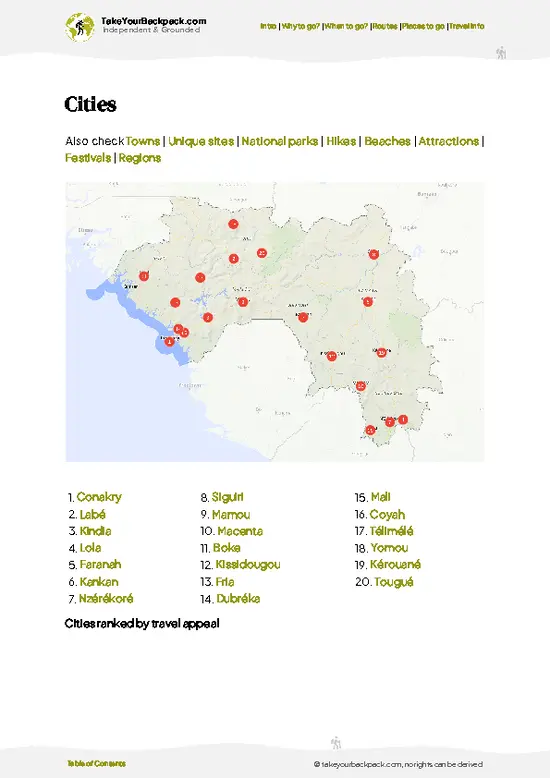
example page 0 from our offline Travel Guide for Guinea
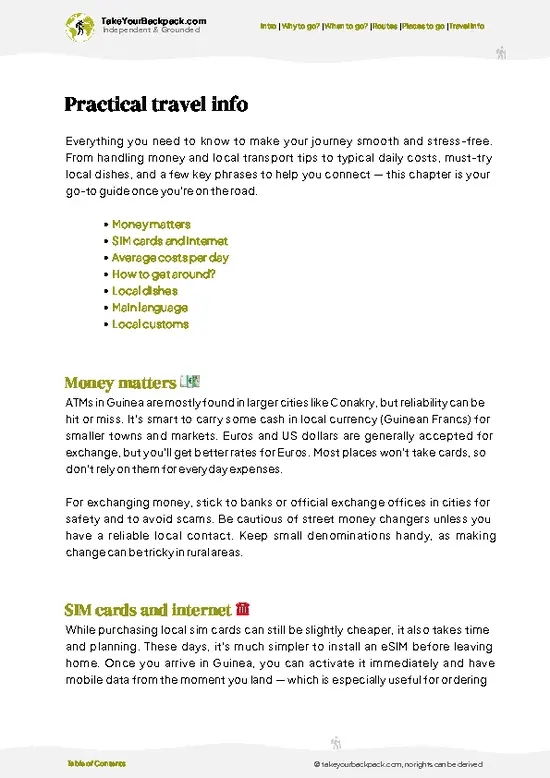
example page 1 from our offline Travel Guide for Guinea
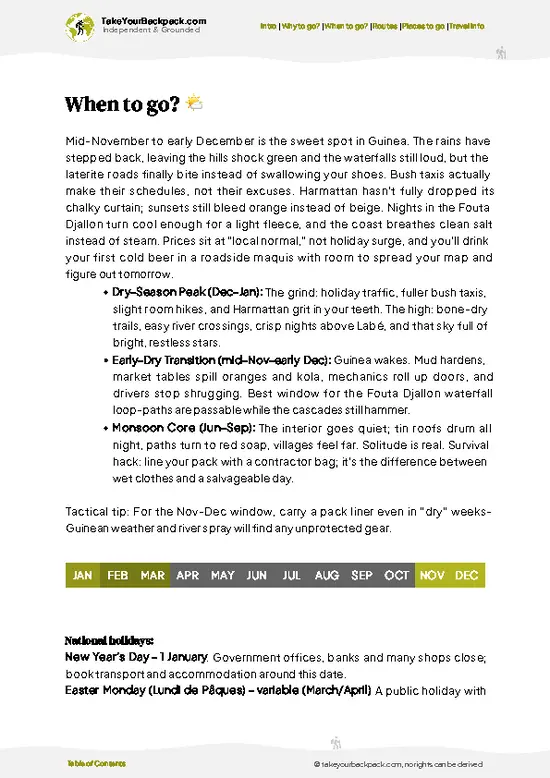
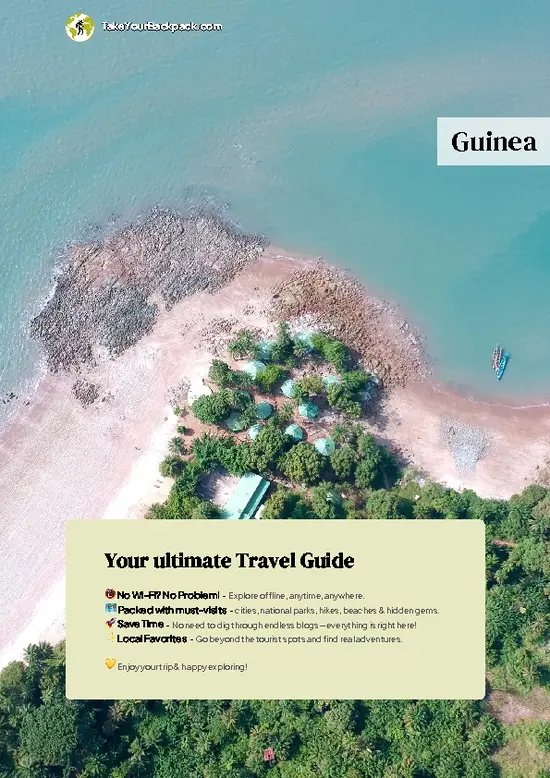
example page 2 from our offline Travel Guide for Guinea
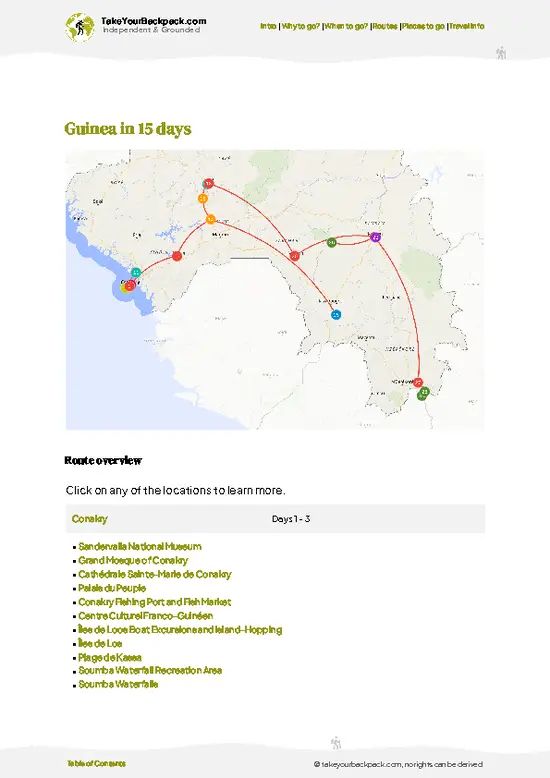
example page 3 from our offline Travel Guide for Guinea
example page 4 from our offline Travel Guide for Guinea
example page 5 from our offline Travel Guide for Guinea
example page 6 from our offline Travel Guide for Guinea
example page 7 from our offline Travel Guide for Guinea
The digital guide (282 pages) contains:
67 highlights, ranked by travel appeal
Optimized 5, 10 & 15-day travel routes
Cities, national parks, landmarks, beaches
How to get around
Offline-friendly for travel without Wi-Fi
👉 Click to see all 30+ guide features

📅 Plan smarter in minutes, not weeks
Month by month travel advice
Festivals & national holidays
Budget expectations

🗺️ Go to the right places, skip the overrated ones
Honest pros & cons of destinations
Top hikes, parks & viewpoints
Lesser-known places most travelers miss
Clear “worth it vs skip it” guidance

🛏️ Travel smoothly without rookie mistakes
Best areas to stay
Transport systems explained simply
Common scams & safety advice
SIM cards, money & practical tips

🌍 Understand the country, not just visit it
Culture & traditions
52 Essential phrases & customs
Festivals worth planning around
Traveler-friendly historical context
Insights that make places more meaningful

📱 Built for real travel conditions
Fully downloadable PDF
Works completely offline
Optimized for phone use
Useful in remote areas & buses
Everything in one place
Save weeks of stressful planning
Get instant access to your full guide. 30‑day money-back guarantee.


By proceeding you agree to our terms.
Sent to your inbox immediately after payment • 100% Secure Checkout
Best Backpacking Travel Advisor 2025 tourism awardBest Backpacking
Travel Advisor
2025
What others say about Take Your Backpack Guides:
⭐⭐⭐⭐⭐
Fantastic, amazing amount of information!
⭐⭐⭐⭐⭐
My goodness this is amazing, it's what I've been looking for hats off too you!
⭐⭐⭐⭐⭐
I think this is absolutely BRILLIANT
⭐⭐⭐⭐
Very complete and informative. It's still missing places, but I gotta to commend you
⭐⭐⭐⭐⭐
This is truly amazing, thank you, can't wait to explore it with my kids!
⭐⭐⭐⭐⭐
Awesome resource, thank you!
⭐⭐⭐⭐⭐
This is amazing! Can't wait to explore the ones I haven't seen
⭐⭐⭐⭐
I love this! Well done, great idea.
⭐⭐⭐⭐⭐
Thanks for taking the time to make this gem!
⭐⭐⭐⭐⭐
This might be the best website I've ever seen.
⭐⭐⭐⭐⭐
Congratulations, and thank you so much for your work; it's incredibly valuable.
⭐⭐⭐⭐
In all seriousness I think you did a great job pointing out the important spots
⭐⭐⭐⭐⭐
10/10 very good
⭐⭐⭐⭐⭐
As someone who's only just starting to visit regularly this is awesome, thank you.
⭐⭐⭐⭐
Thank you very much! I'm going to visit my dad, it's going to be very useful!
⭐⭐⭐⭐⭐
This is really cool! We'll be travelling for the first time and this definitely come in handy.
⭐⭐⭐⭐⭐
You are now our minister of culture, congratulations 👨‍💼
⭐⭐⭐⭐⭐
Just wanted to tell you that this is a pearl! Going to follow your recommendations.
⭐⭐⭐⭐⭐
This is so cool. I'll definitely be using the resource for my travels soon.
⭐⭐⭐⭐⭐
This is very impressive! Good work.
⭐⭐⭐⭐⭐
This is an amazing and informative site. Very well done!

🛏️ Where to stay?Best areas and accommodation options

In Mandiana, the best spot for backpackers is the central market district. It’s where the town’s pulse is strongest—early morning light filters through dust and chatter, vendors calling out over the scent of fresh produce and grilled street food. This area is naturally social, with plenty of small guesthouses and budget lodgings that cater to solo travelers looking to connect without sacrificing safety. Unlike the quieter residential zones, here you’re never far from a friendly face or a shared meal. The streets hum with life well into the evening, making it easier to find companions or local … read more 👉
In Mandiana, the best spot for backpackers is the central market district. It’s where the town’s pulse is strongest—early morning light filters through dust and chatter, vendors calling out over the scent of fresh produce and grilled street food. This area is naturally social, with plenty of small guesthouses and budget lodgings that cater to solo travelers looking to connect without sacrificing safety. Unlike the quieter residential zones, here you’re never far from a friendly face or a shared meal. The streets hum with life well into the evening, making it easier to find companions or local tips. Staying here means embracing the town’s rhythm rather than just passing through it.

🚌 Getting aroundMoving around without the hassle

Mandiana moves at its own pace—less a clock-driven city, more a rhythm you feel in the dust and chatter. The sun hits hard by mid-morning, and the streets pulse with a mix of purposeful steps and spontaneous stops. It’s not about catching a bus to the minute but reading the flow of people and vehicles, sensing when the market buzz peaks or when the quiet lull invites a slow stroll. This town rewards patience and a keen eye more than rigid schedules. The scent of earth and smoke lingers, blending with the calls of vendors and the occasional rumble of engines. To navigate Mandiana like a local, you’ll lean into this blend of intuition and practicality.


  • Walking: The most reliable way to soak in Mandiana’s atmosphere, especially in the central market and residential areas. Distances are manageable,
read more 👉
Mandiana moves at its own pace—less a clock-driven city, more a rhythm you feel in the dust and chatter. The sun hits hard by mid-morning, and the streets pulse with a mix of purposeful steps and spontaneous stops. It’s not about catching a bus to the minute but reading the flow of people and vehicles, sensing when the market buzz peaks or when the quiet lull invites a slow stroll. This town rewards patience and a keen eye more than rigid schedules. The scent of earth and smoke lingers, blending with the calls of vendors and the occasional rumble of engines. To navigate Mandiana like a local, you’ll lean into this blend of intuition and practicality.


  • Walking: The most reliable way to soak in Mandiana’s atmosphere, especially in the central market and residential areas. Distances are manageable, and walking lets you catch the scents, sounds, and street life up close—free and flexible.

  • Shared Minibuses: These operate roughly from 6:30 AM to 6 PM, costing around 300 CFA francs per ride. They’re slow but frequent, packed with locals, and a great way to experience the town’s pulse without breaking the bank.

  • Motorcycle Taxis (Okadas): Available from dawn till dusk, expect to pay 500–700 CFA francs for short hops. They dart through traffic and narrow alleys, shaving time off your trip but requiring a steady nerve and a helmet if you can find one.

  • Private Taxis: Less common and pricier, around 2,000 CFA francs for a typical intra-town trip. Best for early mornings or late nights when other options dwindle, offering more comfort and speed but at a premium.

👛 Costs (as of 24 April 2026)What things cost and how to budget

Backpacking in Mandiana, Guinea, means stepping into a place where every dollar counts and the rhythm of daily life sets your pace. The costs here are modest but knowing where to spend smartly makes your experience smoother and richer.
  • Dorm Accommodation: Options are limited and basic, often in guesthouses rather than formal hostels. Expect to pay around €5 to €10 per night. Rooms might be simple with shared bathrooms, but they offer a clean, safe place to rest after a day in the heat and dust.
  • Meals: Street food and local eateries dominate. A filling meal of rice, sauce, and grilled meat or fish typically costs between €1.50 and €3. Fresh fruit and snacks are even cheaper. Avoid imported goods—they hike prices and don’t add much to the authentic experience.
  • Local Transport: Transport is
read more 👉
Backpacking in Mandiana, Guinea, means stepping into a place where every dollar counts and the rhythm of daily life sets your pace. The costs here are modest but knowing where to spend smartly makes your experience smoother and richer.
  • Dorm Accommodation: Options are limited and basic, often in guesthouses rather than formal hostels. Expect to pay around €5 to €10 per night. Rooms might be simple with shared bathrooms, but they offer a clean, safe place to rest after a day in the heat and dust.
  • Meals: Street food and local eateries dominate. A filling meal of rice, sauce, and grilled meat or fish typically costs between €1.50 and €3. Fresh fruit and snacks are even cheaper. Avoid imported goods—they hike prices and don’t add much to the authentic experience.
  • Local Transport: Transport is mostly informal—shared taxis or bush taxis. Short rides within town usually cost about €0.50 to €1. For longer trips to nearby villages, budget around €2 to €5. Walking is often the best way to soak in the atmosphere and save money.
  • Basic Activities/Entry Fees: Mandiana isn’t a tourist hotspot, so entry fees are minimal or nonexistent. Visiting local markets, cultural sites, or natural spots usually costs nothing or just a small tip if you hire a local guide, which can be around €3 to €5 for a half-day.
  • Miscellaneous Expenses: Bottled water, phone credit, and small essentials add up. Plan on spending about €1 to €2 daily. Water quality is a concern, so bottled water is a must, and phone credit is cheap but essential for navigation and communication.

All told, a realistic daily budget for backpacking in Mandiana falls between €10 and €20. This range covers basic comfort without cutting corners, letting you focus on the textures of daily life—the smells of cooking fires, the chatter in markets, and the slow, steady pulse of a town off the beaten path.


source: guineaembassyusa.org
⚠️ Prices can change and everyone travels differently, so take this as a rough guide. Hope it helps you plan your adventure!

🚌 Day tripsEasy escapes and nearby places

Mandiana, Guinea, is a fantastic launchpad for day trips that immerse you in the region’s raw beauty and culture. Each journey offers a unique slice of life, making the effort worthwhile.

Mount Nimba
A trek to Mount Nimba is a must. The hike takes about 2-3 hours, leading you through lush forests filled with the scent of damp earth and wildflowers. The summit rewards you with sweeping views of the surrounding landscape, a patchwork of greens and browns. Expect to spend around $10 for transport and a small fee for guides. The best time to go is during the dry season, from November to April. Many first-timers underestimate the trail’s difficulty; wear sturdy shoes and bring plenty of water.


Lake Kossou
Just a short ride from Mandiana, Lake Kossou is perfect for a day of relaxation. … read more 👉
Mandiana, Guinea, is a fantastic launchpad for day trips that immerse you in the region’s raw beauty and culture. Each journey offers a unique slice of life, making the effort worthwhile.

Mount Nimba
A trek to Mount Nimba is a must. The hike takes about 2-3 hours, leading you through lush forests filled with the scent of damp earth and wildflowers. The summit rewards you with sweeping views of the surrounding landscape, a patchwork of greens and browns. Expect to spend around $10 for transport and a small fee for guides. The best time to go is during the dry season, from November to April. Many first-timers underestimate the trail’s difficulty; wear sturdy shoes and bring plenty of water.


Lake Kossou
Just a short ride from Mandiana, Lake Kossou is perfect for a day of relaxation. The journey takes about an hour, and you’ll find yourself surrounded by the tranquil sounds of water lapping against the shore. Pack a picnic and enjoy the local fish dishes from nearby vendors. Total costs can be around $15, including transport and food. Visit in the early morning to catch the sunrise reflecting off the water. A common mistake is arriving too late and missing the serene atmosphere.


Fouta Djallon Highlands
The Fouta Djallon Highlands offer breathtaking scenery and rich culture. It’s about a two-hour drive, but the winding roads through villages and hills are part of the charm. Expect to spend around $20 for transport and snacks. The best time to visit is during the cooler months, from December to February. Many travelers rush through; take your time to engage with locals and savor the landscape.
👉 Explore Fouta Djallon Highlands
Want to know what more Guinea offers?
The Guinea Travel Guide describes 67 highlights, from cities to national parks, from beaches to hikes

Get the Travel Guide -

🛡️ SafetyStaying Safe: What Travelers Should Know

Mandiana is generally safe, but awareness is key. Stick to well-lit areas at night; the streets can feel deserted, and a little caution goes a long way. When solo, blend in—avoid flashy gear that screams “tourist.”

Watch for common scams, like overly friendly locals offering unsolicited help that leads to a price tag. Keep your belongings close; petty theft can happen in crowded spots. Trust your instincts, stay alert, and you’ll navigate the town smoothly, soaking in its vibrant atmosphere without a hitch.

Other Guinean towns near Mandiana

Explore more nearby:

  • Kouroussa—river port, Manding culture, artisanal gold panning| 130 km away
  • Beyla—Malinke heritage, rural crossroads, agricultural hub| 215 km away
  • Dinguiraye—historic mosque, religious pilgrimage, Sahel edge| 233 km away

💡 Not sure where to go next?
Create a personalized itinerary for Guinea including Mandiana and the places that fit your trip.

Generate my itinerary

👉 Discover all towns

Or checkout all Guinea has to offer (think cities, towns, villages, national parks, hikes, beaches, festivals)
Country photo of Guinea

We 💚 feedbackParting advice and final tips

Mandiana pulses with an authentic energy. The laughter of locals mingles with the scent of grilled fish at sunset. Don’t miss the vibrant market; it’s a feast for the senses. Just be ready for the heat—it’s relentless but worth every bead of sweat.

✍️ Help improve this page!
The information on this page is based on in-depth research, insights shared by experienced travelers, and feedback from the local travel community in Guinea. While every effort is made to keep the information accurate and current, conditions can change — so if you spot anything incorrect or outdated, please get in touch.


🙋‍♂️ Give feedback

👋 Meet the founderWho’s Behind Take Your Backpack?

Johan, backpacker and founder of TakeYourBackpackHi, I’m Johan (Netherlands 🇳🇱), the creator of TakeYourBackpack. Over the past decade, I’ve backpacked through 80+ countries across six continents, gaining extensive experience with independent travel, long-term trips, and overland routes.

This site is built on a combination of firsthand travel experience and carefully curated insights from other backpackers. Many guides are based on places I’ve personally visited, while others bring together tips, observations, and practical advice shared by trusted travelers I’ve met along the way.

The goal is to provide realistic, experience-driven guidance — not generic itineraries — so you can explore destinations with better context, clearer expectations, and more confidence.

Get full Guinea guide •
Instant download • 67 highlights • Full Offline guide